With A Three-Fold Increase in Cat Thefts, UK Chooses Microchip Mandate

With breed cats commanding prices in the thousands, thieves see pet theft as a quick score. Lack of prosecution has made it an almost zero-risk crime in the UK.

Mandates in the wake of COVID-19 haven’t been especially popular with a weary public, but surveys show one proposed directive has almost universal support in the UK: Requiring all cat owners get their pets microchipped.

Cat thefts in the UK have tripled in the last five years, with the pandemic contributing to the increase since early 2020, police say. Authorities say they hope compulsory microchipping — and consolidating the many chip ID databases into one — will help discourage people from stealing while making it easier to reunite felines with their families.

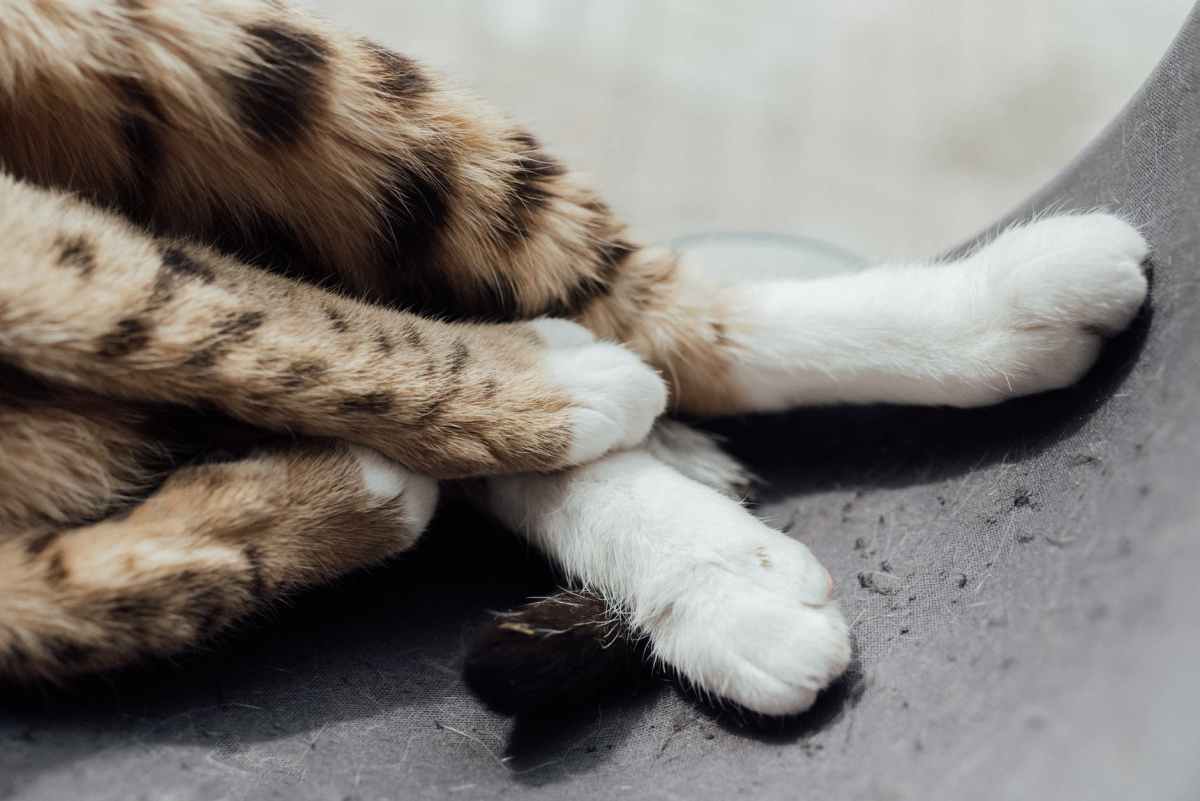
Thieves mostly target pedigreed kitties over moggies, with Bengals as the most commonly-stolen cats, followed by British Shorthairs and Persians, according to police statistics. Thieves try for breed cats because of resale value, police say.

Dog thefts have skyrocketed as well, with thieves targeting Chihuahuas, Jack Russell Terriers and German Shepards, among other popular breeds. The price of breed dogs has ballooned by as much as 89 percent since the beginning of the pandemic, when demand for new pets and a slowdown in breeding created a boom market.

For context, an estimated 3.2 million British families welcomed new pets, mostly cats and dogs, into their homes since the first lockdowns in late winter and spring of 2020, the BBC reported. Like their counterparts here in the States, UK shelters experienced unprecedented adoption rates as people battled loneliness and depression during the initial COVID waves and last year’s long winter when the virus came back with a vengeance.

“The number one reason behind pet theft is because the prices for pets have gone up drastically,” Becky Thwaites, spokeswoman for UK pet charity Blue Cross, told SWLondoner. “This happened exponentially over lockdown, as responsible breeders stopped breeding due to social distancing guidance, but more people were wanting pets.”

Despite the spike in animal thefts, only about one percent of all such crimes have led to an arrest, according to a public information request by a UK animal welfare group. 

Police have been reluctant to pour resources into those cases, partly because the law lacks serious consequences for people who steal animals. While the maximum sentence for stealing a pet is seven years in jail, under current UK law sentences are pegged to the value of the stolen item. (Unlike the US, the UK does not make a distinction between prison and jail.)

But for people who love their cats, it’s not about the monetary value — it’s about sentiment, love and the distress to human and animal when they’re separated.

Abductions instead of thefts

To change that, a new pet theft task force — set up earlier this year to study the growing problem — recommended a change in the law. Instead of treating pet thefts as property thefts, under the proposal they would be treated as abductions, with all the increased charges and consequences that come with the classification.

Treating animal thefts as abductions “acknowledges that animals are far more than just property and will give police an additional tool to bring these sickening individuals to justice,” UK Home Secretary Priti Patel told the BBC.

Advocates say treating pet thefts as abductions makes sense not just as a legal adjustment, but also as a reflection of the way cats and dogs are stolen. While some thieves stalk dog parks and lure pets away with treats, others have taken to more brazen and violent means like taking animals by force and jumping people while they’re walking their dogs.

The change would require owners to have their kittens chipped by 20 weeks and adult cats chipped upon adoption from a shelter or rescue.  Failure to microchip a pet would result in a warning and a three-week grace period. After that, cat owners would face a steep fine of £500, equal to $660 in USD.

Consolidating chip databases

There are about 10.8 million pet cats in the UK, although widespread chipping alone won’t solve the problem of pet thefts and lost pets flooding shelters. There are currently 16 different microchip databases in the UK. They don’t always share information and scans don’t cover each of the databases, so even if a cat is recovered, brought to a shelter and scanned, there’s no guarantee the kitty will be returned home.

The existence of so many non-cooperating databases operated by private companies “can pose a huge barrier to successful reunification of pets” said the British Veterinary Association’s Malcolm Morley.

UK authorities and the animal welfare groups pushing for the change are cognizant of the problem and want to streamline the 16 existing database into one central repository of cat microchip registration. That will take time and will have to include compromise on the part of the various private companies running the existing fractured databases.

“Every day, we see how important microchipping is for cats and for the people who love them,” said Pet Protection’s Jacqui Cuff, “whether it’s reuniting a lost cat with their owner, identifying an injured cat, or helping to ensure an owner can be informed in the sad event that their cat has been hit and killed by a car.”

TikTokers Are Intentionally Traumatizing Their Cats With Christmas Trees

The newest trend on TikTok is terrorizing cats with Christmas trees so they’ll leave the trees alone during the holidays. Not cool.

Proving once again that social media has little or no redeeming value, TikTokers have latched onto a trend that has them using Christmas trees to terrify their cats.

The trend was started by a user who shared a “hack” she’d invented: Chase your chat around your home while wielding your new Christmas tree like a weapon, she said, and the cat won’t mess with the tree or its ornaments the rest of the holiday season.

“If you chase your cat around with the Christmas tree, it’ll be too scared to f**k with it,” said the “hack” originator, @alexisjj_.

User “@becs.richards” racked up more than 25 million views with a video that shows her holding her Christmas tree and thrusting it like a lance toward her confused and scared cat. She wore a big smile as she did so, and set the video to upbeat Christmas music.

Terrorizing your cat is a bad idea, author Anita Kelsey told Newsweek.

“A cat will not have any idea why you are causing them stress or fear and, more than likely, frightening a cat with a Christmas tree can lead to the cat being fearful of the room the tree is in, fearful of the tree, urinating around the home or on the tree and urinating on anything around the tree—like presents,” said Kelsey, author of Let’s Talk About Cats. “It also can cause a breakdown of trust between the cat and the person trying to frighten them.”

Daniel Cummings of the UK’s Cat Protection nonprofit said the method may seem successful, but it “doesn’t take into account how cats learn” and could cause long term problems.

“No cat owner would want to intentionally stress out their cat,” he said, “and part of cat ownership is accepting their natural behaviors.”

Unfortunately this newest trend isn’t surprising, especially coming from a user base of people who happily hand over their user data to the Chinese government, which controls TikTok and makes use of its data just as it does with any other ostensibly “private” company operating in China. There have been more than enough investigative stories illustrating how the Chinese government weaponizes data for any reasonable person to avoid platforms like TikTok.

I’m fortunate that Buddy is a good boy and mostly doesn’t mess with Christmas trees. He’s swiped a handful of ornaments off branches in the past, but so what? He’s a living being with feelings, and ornaments are just things.

Besides, as Cummings notes, curiosity and playfulness are part of the deal when we adopt cats. If people aren’t up for that, they shouldn’t adopt.

Top photo credit Jessica Lynn Lewis/Pexels.

Why Do Americans Love Shooting Cats?

Americans are exceptionally cruel to cats, especially strays and outdoor kitties. Why?

Seriously, what the hell is wrong with people in this country?

American cruelty to cats is even more upsetting within the context of human behavior elsewhere. In Turkey, where it’s practically a national pastime to care for felines, people build shelters for strays, welcome them into their shops with food and affection, and kitties are so trusting of humans that mother cats have on several instances brought their kittens into human hospitals and clinics for help.

Then we have ‘Merica, where apparently it’s a sport for people to sit on their front porches drinking beer and shooting stray cats with pellet guns.

Like, for instance, in Long Island this past weekend, where some stain on the human race shot a ginger tabby named Abraham and left him with a pellet lodged in his spine. Or in northern California, where a couple brought their cat to the vet because they thought he’d been attacked by a coyote, only for x-rays to show the little one had been shot several times by someone with a pellet gun. Or Augusta, South Carolina, where a cat was shot with what appears to be a bullet from a 9mm handgun. Or tiny Brookville, Pa., where a man shot his neighbor’s cat for the unthinkable crime of exploring his porch.

hipster with tattoos stroking cute cats on stony fence
Credit: Dmitriy Ganin/Pexels

I have Google News alerts set up for cat-related stuff to mention here on PITB, and a lot of it is great: Compassionate rescues, feline hi-jinx, heroic cats saving kids.

But those stories are always sandwiched in between articles about people shooting cats. Constantly, incessantly, apparently without a thought about the suffering they’re causing sentient animals who have feelings just like we do and experience pain, anxiety and fear the same as us. That’s not conjecture, contrary to what some people might believe, but objective scientific fact as proven experimentally many times over in recent years.

When Americans aren’t shooting cats they’re stealing them, mutilating them and killing them, like the recent nightmare case out of Tennessee: A woman left her cat in the care of a friend while she was traveling, and the friend allowed the cat to roam outside. Another woman saw the cat wandering, didn’t like what she saw and stole the kitty, eventually giving it away to 19-year-old Deamion Robert Davis via Craigslist. Davis now faces charges of animal cruelty for allegedly binding the cat’s paws and stabbing it to death with a screw driver, according to police. Detectives said they traced the killing to Davis by lifting fingerprints from the tape Davis allegedly used to bind the cat.

So because some busybody saw a pet cat on the street and decided a random, sketchy 19-year-old who responded to a Craigslist ad would provide a better home, a woman’s cat was brutally killed.

Meanwhile hatred for cats continues to be driven by bad science, like this meta-analysis of 202 toxoplasma gondii studies by researchers who need to be reminded that correlation does not imply causation. The research team looked at data on toxoplasma infections recorded in wild animals, then with no evidence whatsoever framed their study around the suggestion that cats “may” be and “probably” are transmitting the parasite to wild animals because the rates of infection are higher in urban areas.

Never mind that humans are much more likely to be infected by eating under-cooked food, certain meats, touching contaminated soil, or using utensils that were used to cut contaminated meat and shellfish. The study ignored that fact and posited — again without evidence — that cats are the primary vector for other animals and humans.

It would be nice if people in the scientific community took responsibility for the fact that their research influences the behavior of others, and blaming cats for everything from bird extinctions to parasite infections drives people to do cruel things like cull cats or poison their food. If they’re going to publish studies drawing a link between cats and extinctions or diseases, scientists have a responsibility to make sure there’s a connection more substantial than “we think, therefore we publish.”

That will conclude this rant on human cruelty to animals.

Why We Need Stronger Animal Protection Laws: Example #233

A Pennsylvania man faces a minor misdemeanor charge for disemboweling a kitten.

Take a good look at the mugshot.

That winner-at-life is 21-year-old Mylo Latour, who used a sword to attack a kitten and said the experience was “magic,” according to Pennsylvania State Police.

Latour, who lives in York, Pa — a city of 44,000 in southern Pennsylvania, about 50 miles north of Baltimore — is accused of slashing his sister’s kitten, Mittens.

Latour told the cops he killed the baby cat because “it came into his room and it had power over him,” adding “my eyes dilated and I chopped it with my sword. It was magic.”

Mittens “had injuries consistent with disembowelment,” according to WHTM, a local ABC affiliate. Paperwork from an arrest report reviewed by the TV news station noted “there appeared to be a clean cut to the rear of the cat’s body.”

Latour was charged with cruelty to animals, a second-degree misdemeanor in the Pennsylvania penal code. That’s a charge on par with shoplifting, bigamy or stealing property worth less than $200. If he’s convicted, he faces a maximum penalty of $5,000 and up to a year in jail.

A more severe charge, aggravated cruelty to animals, does exist in the state. It’s defined as torturing an animal or “causing serious bodily injury to the animal or the death of the animal.” It’s not clear why Latour was hit with the lesser charge, and only one of more than a half dozen media reports specifies the charge against him.

We’ll keep an eye on this case and update accordingly.

Reason #53 To Keep Your Cats Indoors: Vigilantes

A cat killer warns people in one neighborhood to get their cats off the streets.

One bad thing about having Google News alerts for cat-related stories is the sheer, sickening volume of articles about cats who are maimed, tortured, killed by vigilante lunatics, dispatched by overzealous birders, shot with BB guns or arrows, poisoned with antifreeze, murdered as proxies in domestic violence incidents, kicked like soccer balls by juvenile psychopaths, or tragically killed by someone’s epic stupidity.

The amount of violence directed at felines is mind-boggling, and it doesn’t reflect well on the US: For example in Istanbul, a city of more than 15 million people, there are some 130,000 cats living on the streets, not including pets. While many ‘Mericans see an animal and think “Let’s shoot it!” the people of Turkey are overwhelmingly compassionate, going to incredible lengths to make sure street cats are fed, watered, sheltered and have access to veterinary care.

Today’s story fits in the “vigilante lunatics” category.

It’s not clear if the person in question simply hates cats or is acting out of some misguided campaign to “protect” small wildlife, but we do know that a would-be cat killer is threatening to kill outdoor kitties in Joplin, Missouri, a city about 230 miles east of Oklahoma City.

photo of british shorthair cat sitting on grass field
Credit: Kirsten Bu00fchne/Pexels

The suspect slapped warning letters and posters on the front doors of homes along four separate streets between 2:40 and 5 a.m. on Monday, local police said.

Cops haven’t released the full text of the letters, but said the letter-writer threatened to kill any stray or feral cats he or she comes across in the neighborhood. Likewise, while police did say images of the letter-writer were captured on doorbell cameras, they’re holding the identifying details close to the vest right now, which they may do for any number of reasons.

One of the homeowner who received the letter said he fears his two missing cats are now dead. Another neighbor said the letters follow similar threats by a woman wearing a red jacket, who told some people in the neighborhood to keep their cats inside or else.

“The lady, she was walking up and down the streets going door to door telling everybody that they better watch out for our cats because they were going to start being euthanized,” the neighbor told WKSN, the local NBC affiliate.

Joplin police are offering $2,500 to anyone with information that leads to the arrest of the letter-writer.