Woman Fined $130 After Her Cat Meowed ‘Too Loudly’ On Train To Paris

The Europeans aren’t messing around when it comes to noise on public transportation, and a loud pet can cost you.

Note to self: Never take Buddy on a French train, unless I want to be out a few hundred bucks by the time I reach my destination.

That’s my takeaway after coming across this story about a woman who was fined €110 (about $130 in ‘Merican dollars) by the French National Railway Company after another passenger complained that her cat was causing “acute tensions” by vocalizing.

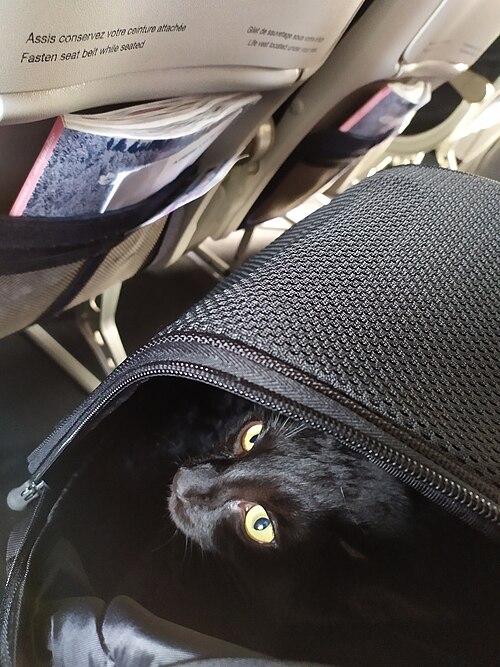
Naturally, the passenger and the railroad have two different versions of events. Camille, who was identified only by her first name, said she’d purchased a ticket (about $8) for her cat, Monet, and had the feline in a carrier for the trip from Vannes, Brittany, to Paris, per railroad rules.

Monet “meowed a bit at the start” at the beginning of the journey, Camille admitted, but wasn’t excessively loud.

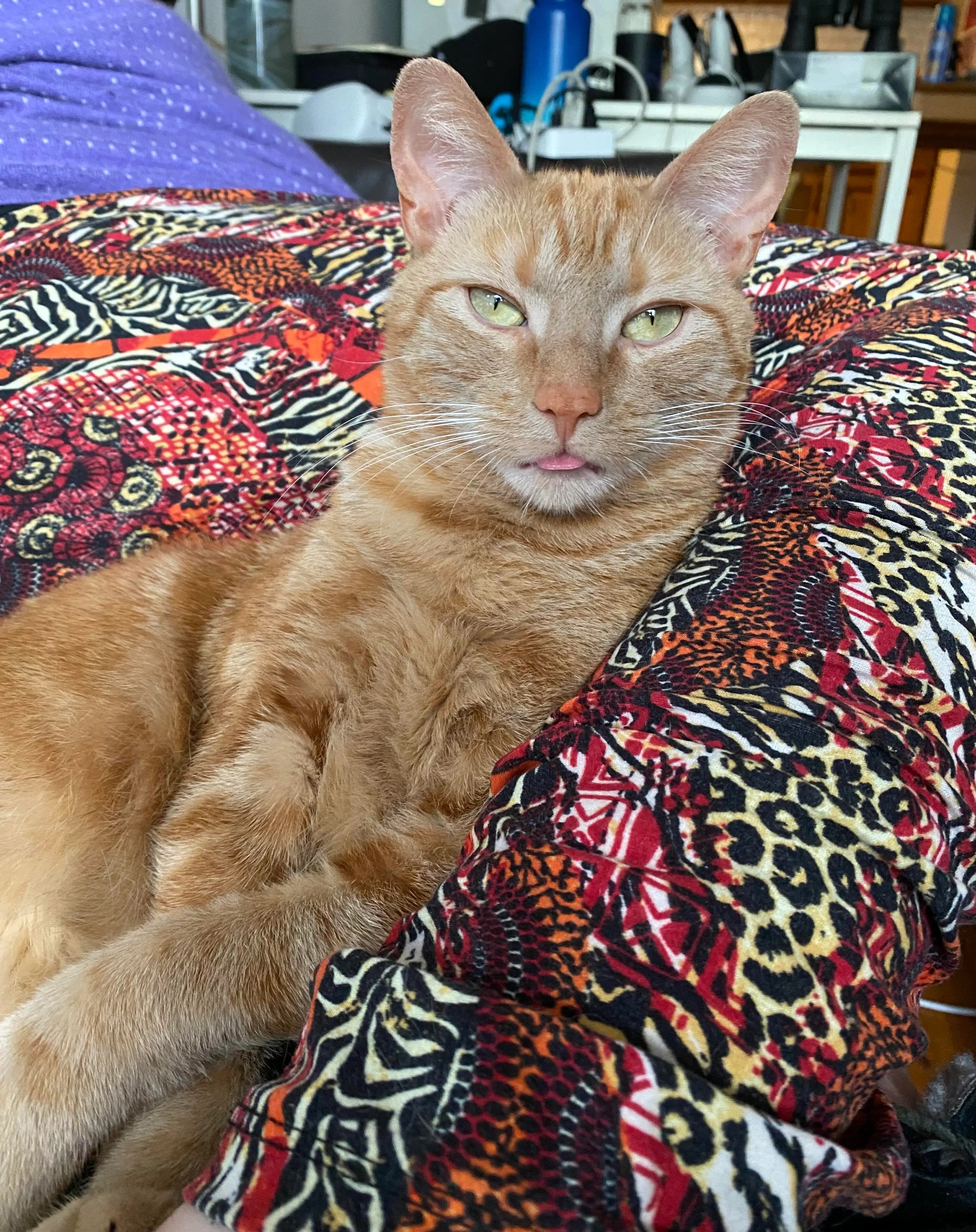
Buddy the Cat, a gray tabby cat, with a synthwave background.
“Loud? I’m merely expressing my displeasure with the level of service around here!”

Railroad operators said there were multiple complaints, not just one, and claimed a conductor asked Camille and her boyfriend, Pierre, to switch to a mostly-empty car as a compromise with other passengers.

A conductor ticketed Camille when she declined the “simple and common sense solution,” according to French broadcaster BFM.

I’ve joked in the past about sedating the Budster before flights so the other passengers won’t toss him out at 40,000 feet, but there’s truth at the heart of it: Buddy is a naturally chatty cat, he’s got strong opinions, and he doesn’t hesitate to share them with anyone.

Of course you don’t want your companion animal to create a scene or make other passengers uncomfortable. I still wince when ai think about the woman who forced fellow passengers to endure the smell, proximity and potential defecation of her “emotional support horse,” and when people began abusing the privilege of going places with emotional support animals (emotional support alligator, anyone?), it was only a matter of time before companies that operate common spaces — be they in a fuselage, a baseball stadium or a grocery store — tightened the rules to avoid conflict.

Still, unless the cat was wailing, or Camille really did refuse to switch seats, a $130 fine is excessive.

Just something to think about for those of us who have plans to travel with our cats.

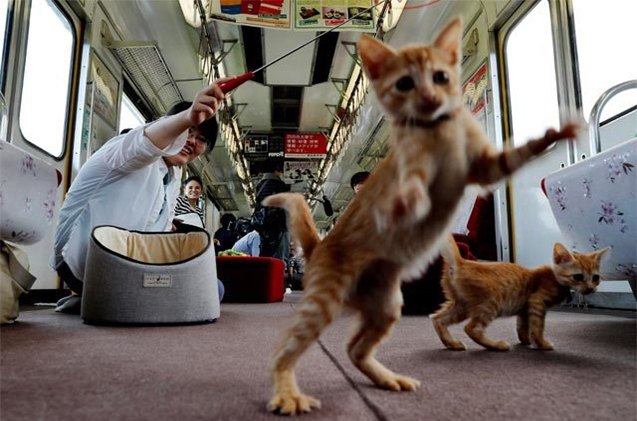
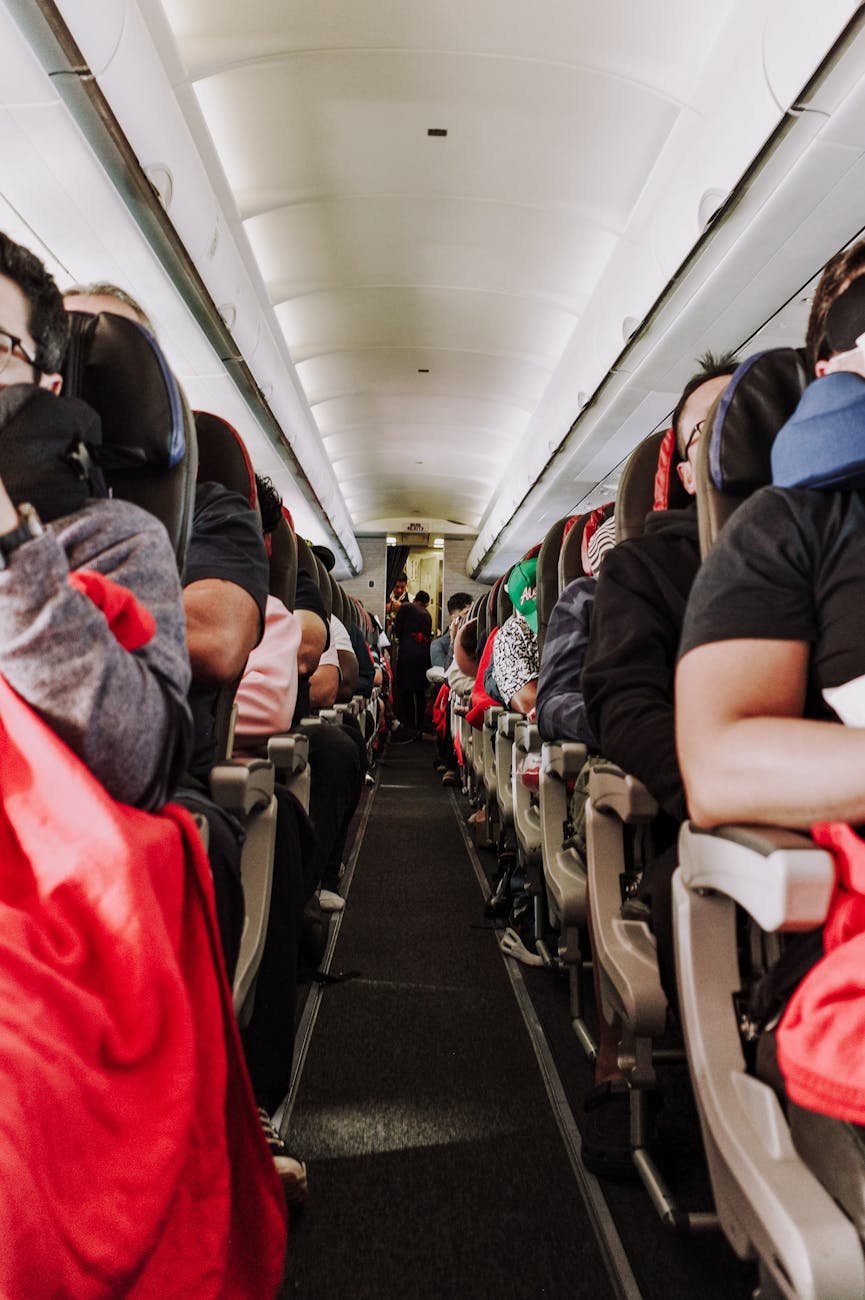
Header image of a cat cafe train car in Japan, credit: Wikimedia Commons

Wordy Wednesday: Visiting Japan’s Snow Monkeys

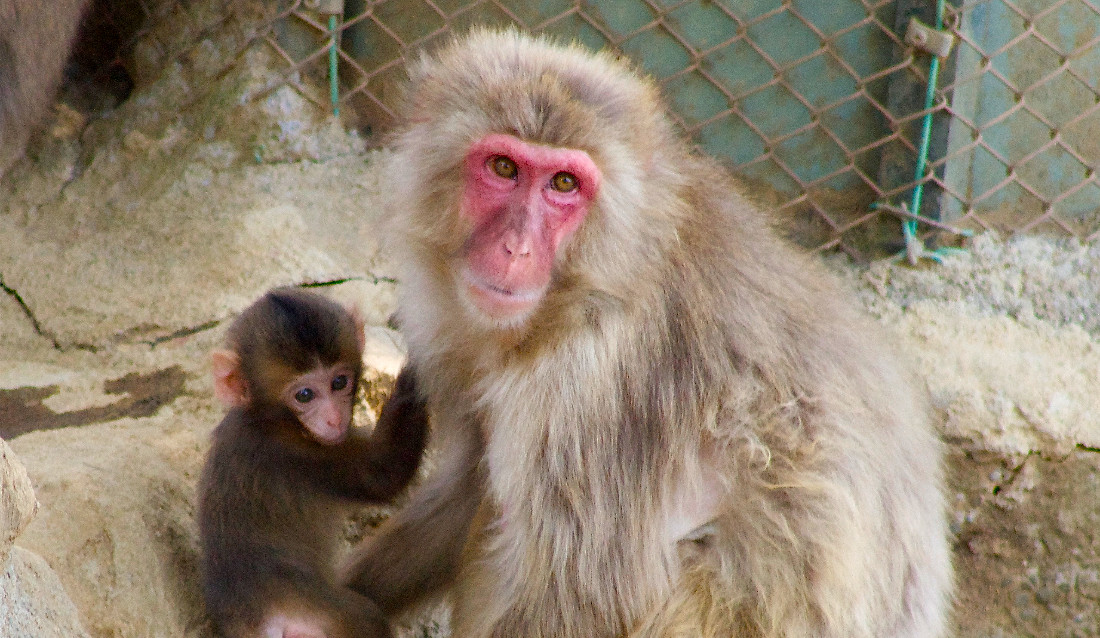
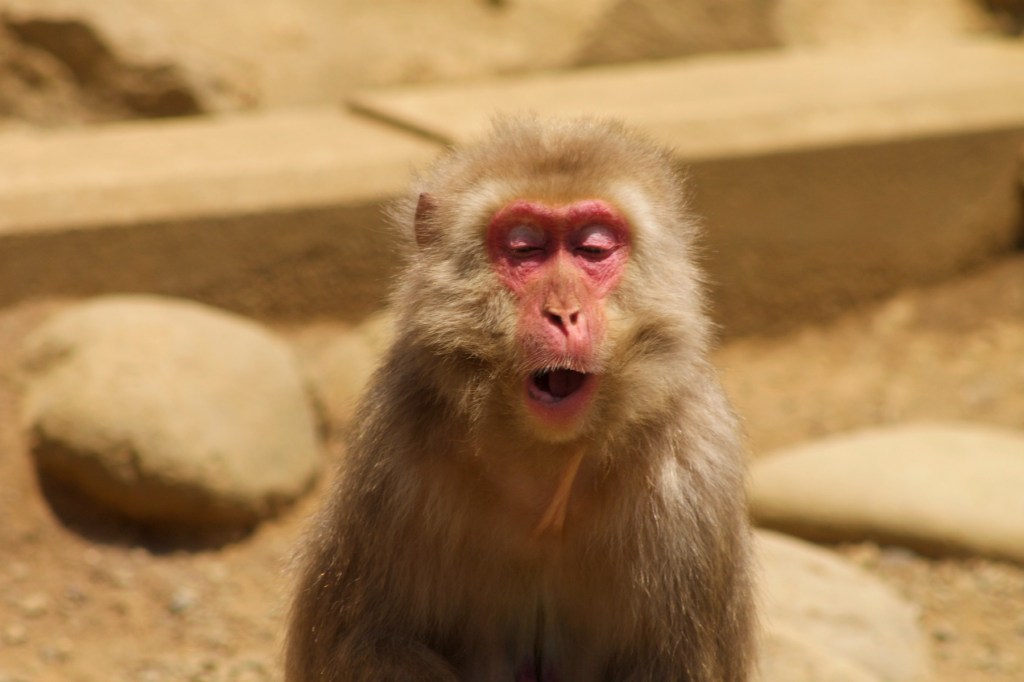
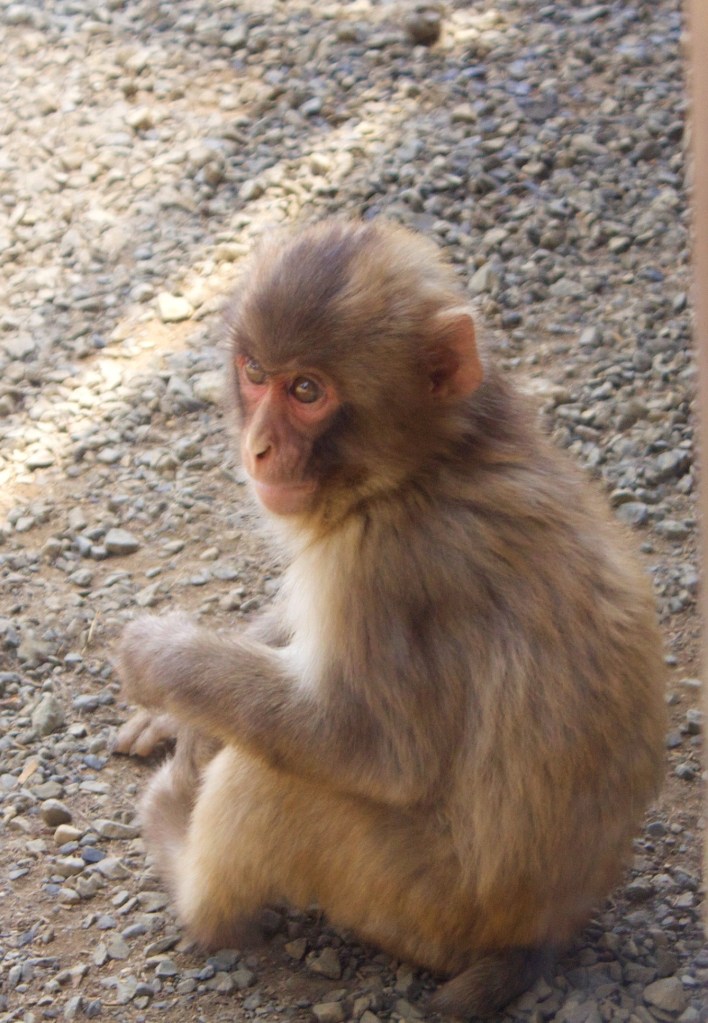
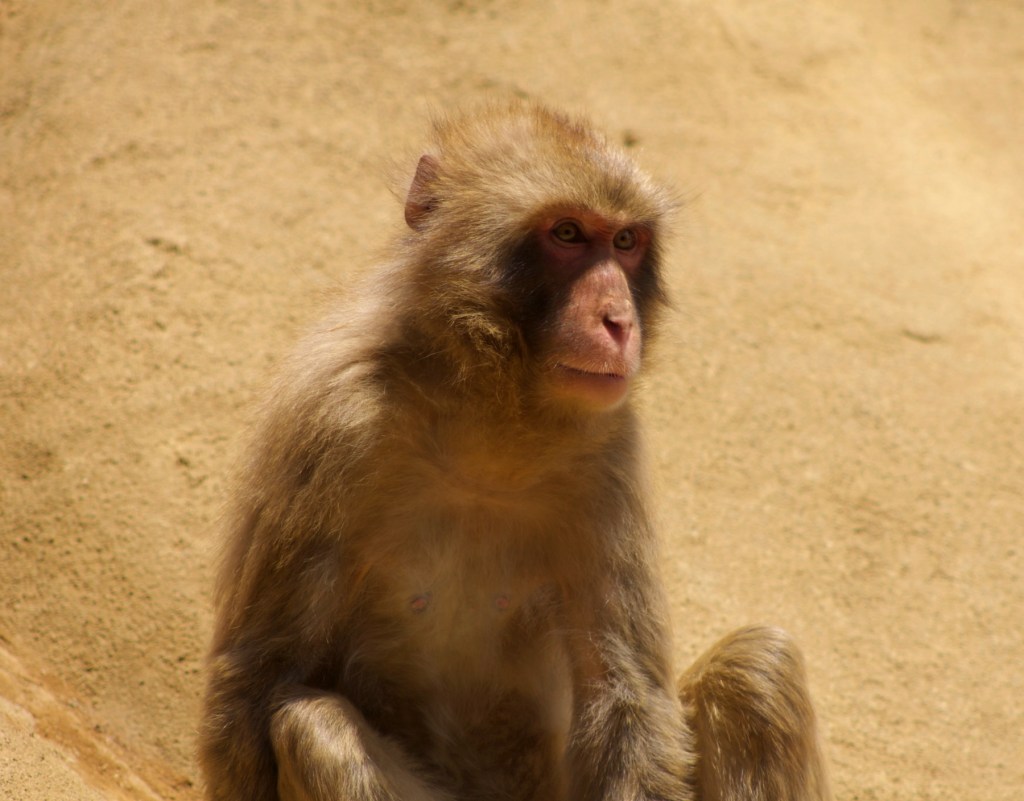
Meet the Japanese macaques, also known as snow monkeys, living in an enclosure on the side of Mt. Takao, about an hour from Tokyo.

A note on this series: Although I published some of these photos earlier, the majority have been recovered from an old drive that took a circuitous route of more than five years, three continents and four countries to get back to me. I plan to run them in themed segments on Wednesdays this summer, including Tokyo nightlife, shrines, cityscapes and more. This week’s photos are from the snow monkey exhibit at Mt. Takao.

Japanese macaques are the northernmost-dwelling of any non-human primate species.

They’re built for the cold, with heavier coats than their cousins, the rhesus, long-tailed and bonnet macaques. They also sleep in well-organized groups, rotating so each monkey gets time in the center to soak up body heat, and they’re famous for keeping warm in northern Japan’s hot springs.

But as these photos show, snow monkeys are also adaptable, and they make the best of things during the hot, humid summers at Mt. Takao, about 51 km (30 miles) from Tokyo.

These photos were taken on a hot day in June when I was one of only a handful of visitors.

Welcome to Mount Takao! So you want to see snow monkeys?
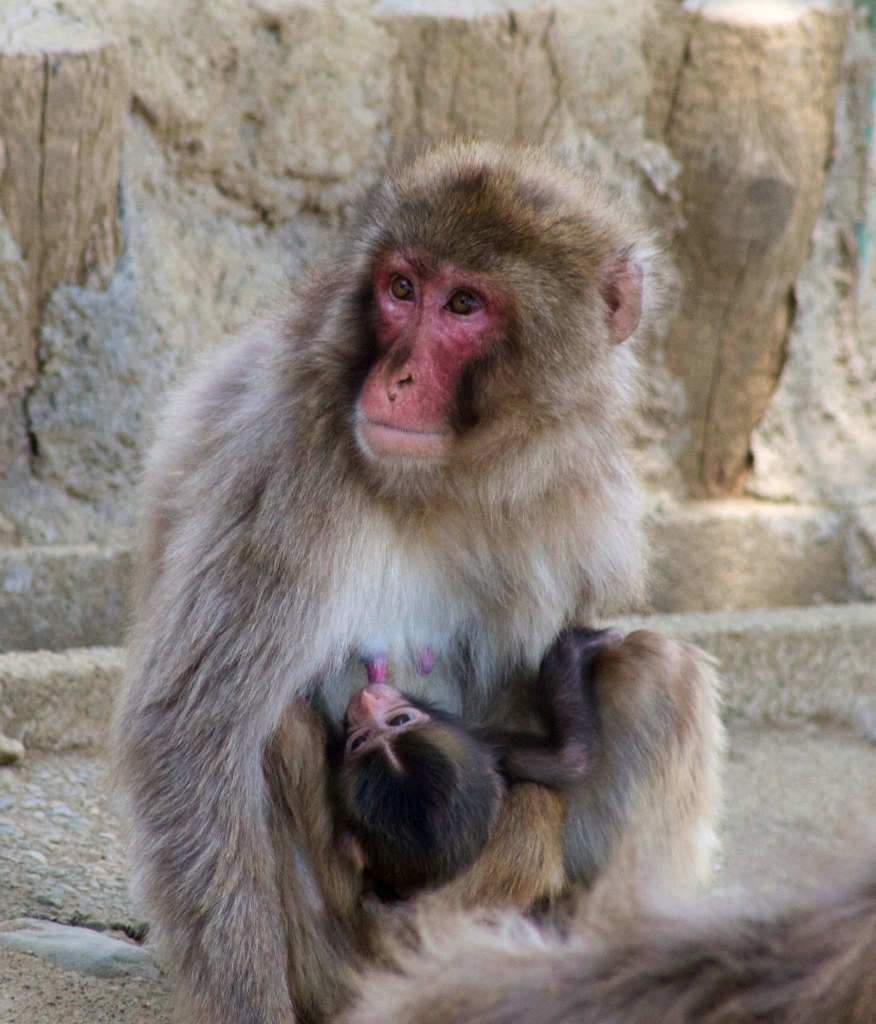
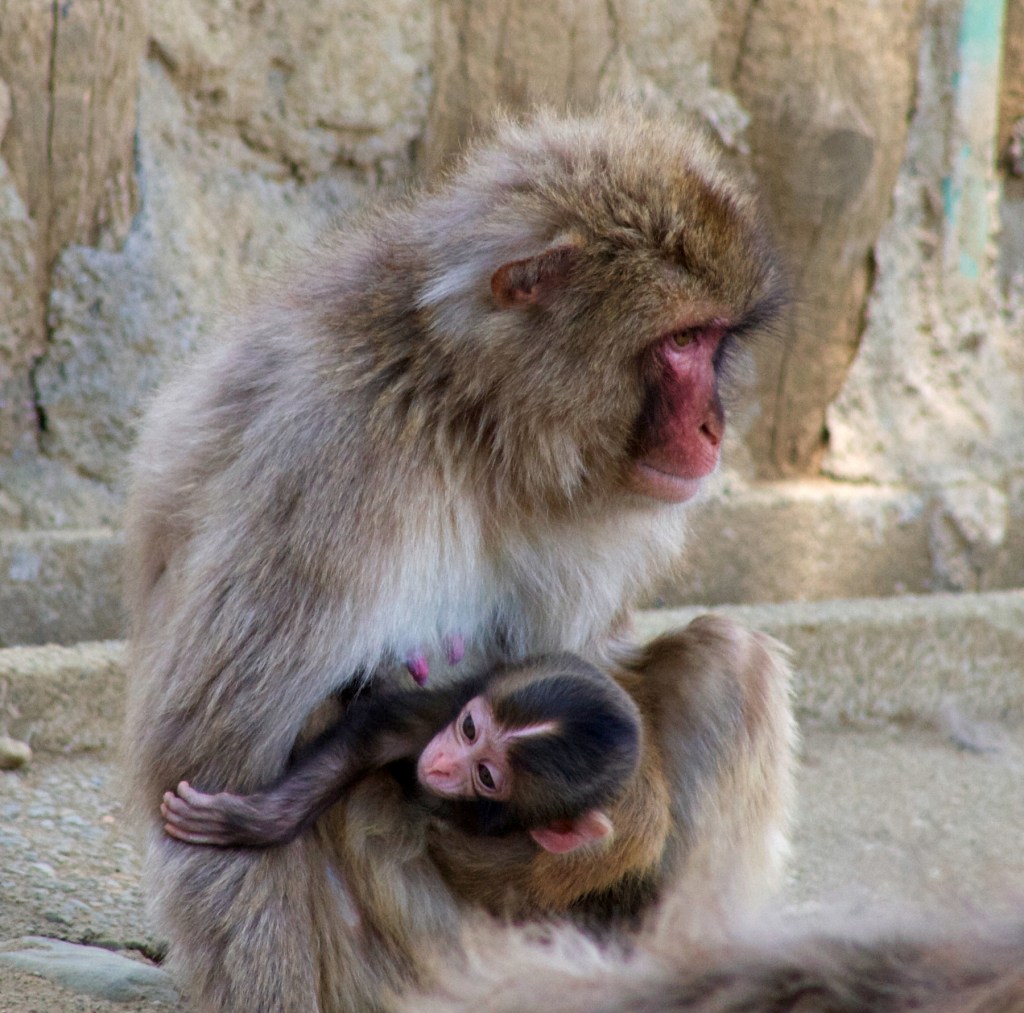
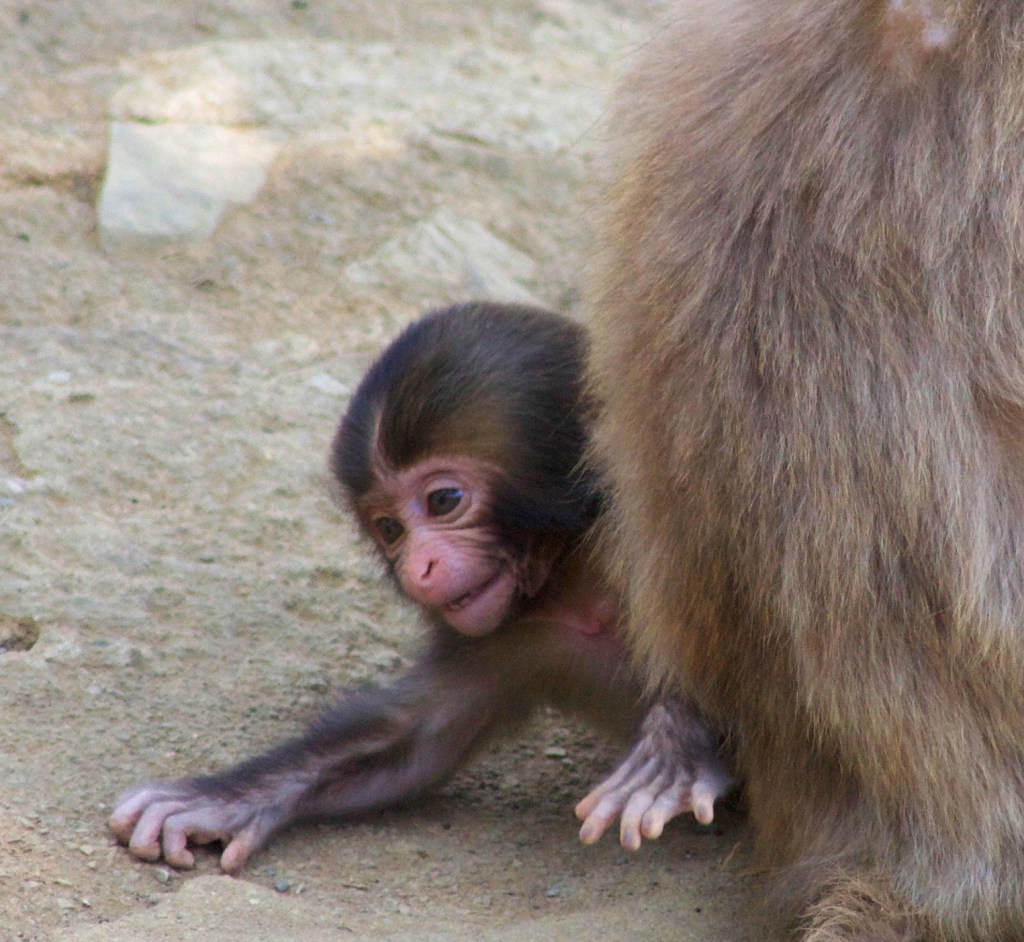
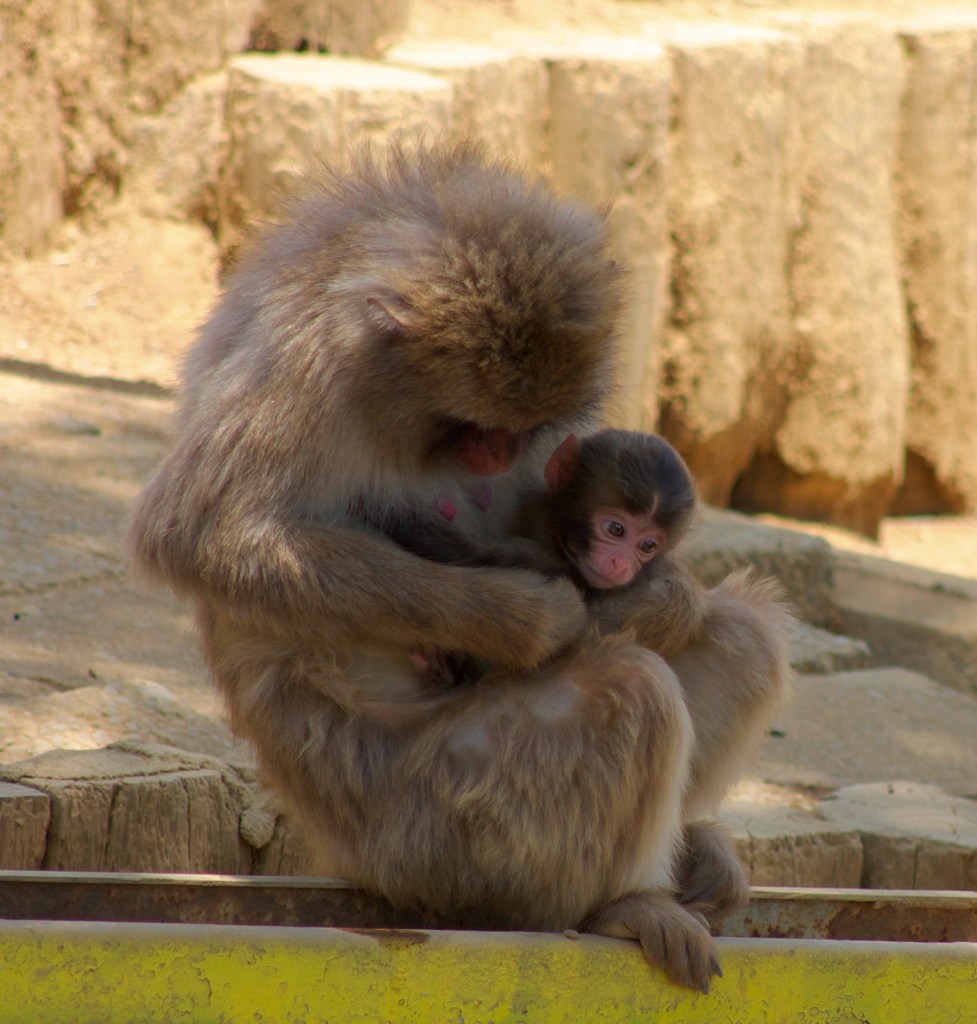
“The milk bar’s open!” Snow monkeys, aka Japanese macaques, are extremely attentive mothers. This baby is is about 8 to 10 weeks old and completely dependent on mom.
“I’ve had my fill of milk, now it’s time to explore!”
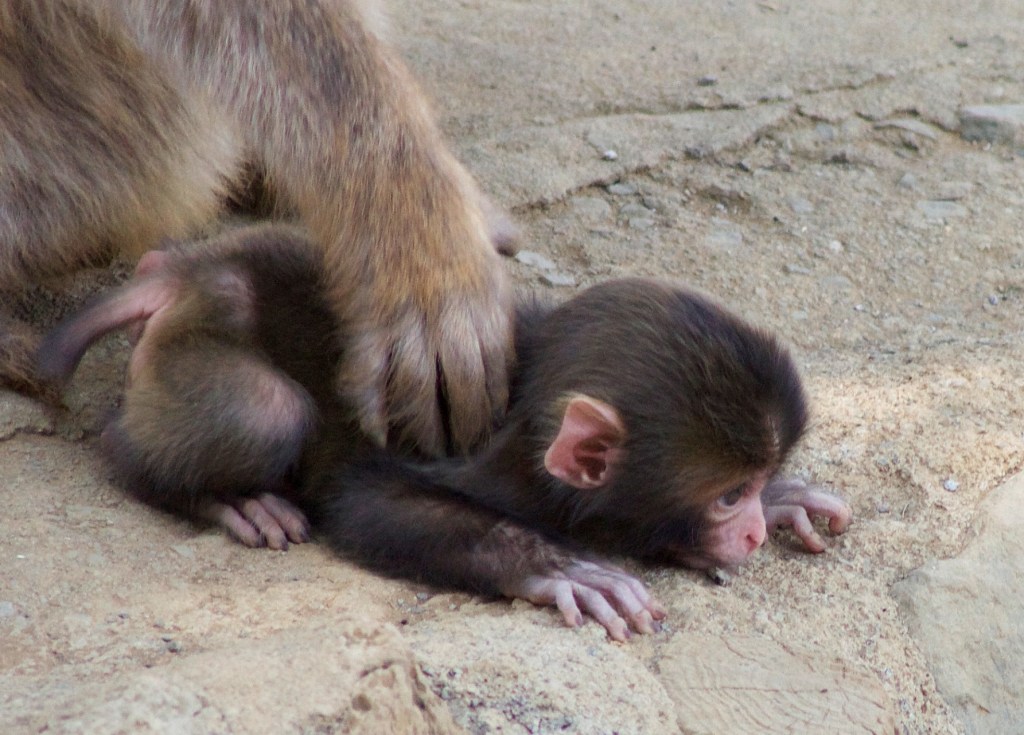
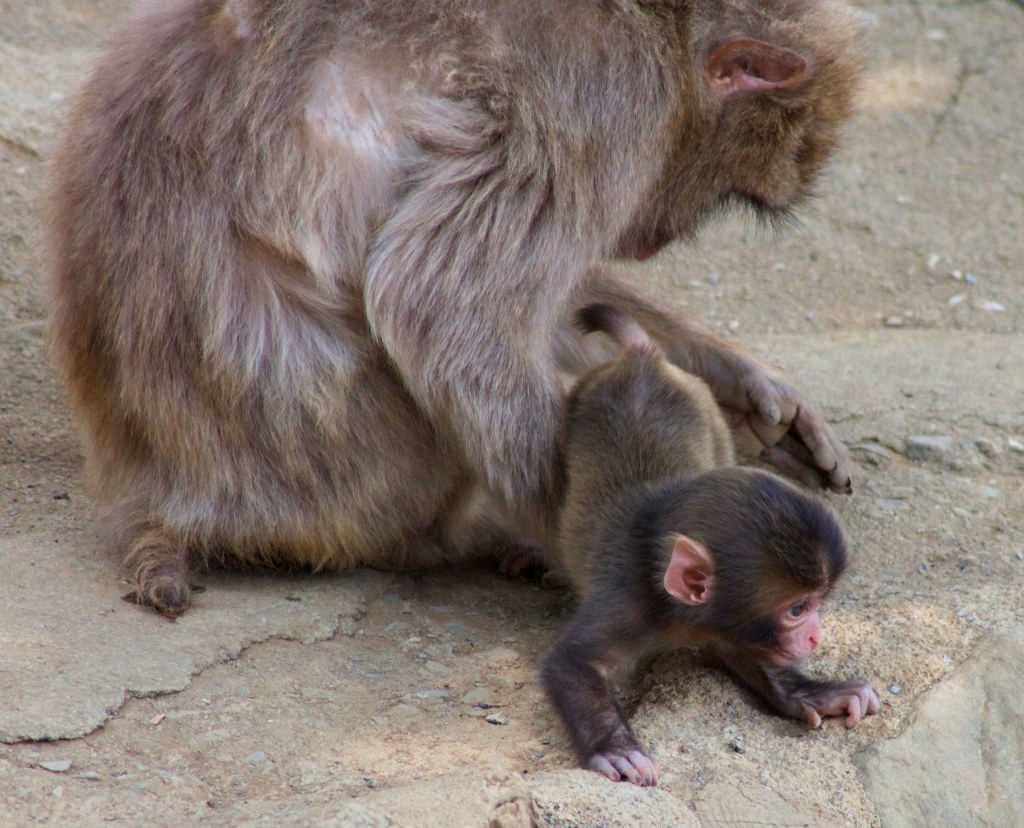
“But mom won’t let me go far! I’m too young to go off on my own, and mom is really protective of me.”
“If I could…just…get away…for a sec!”
“Come on, mom! Let me play!”
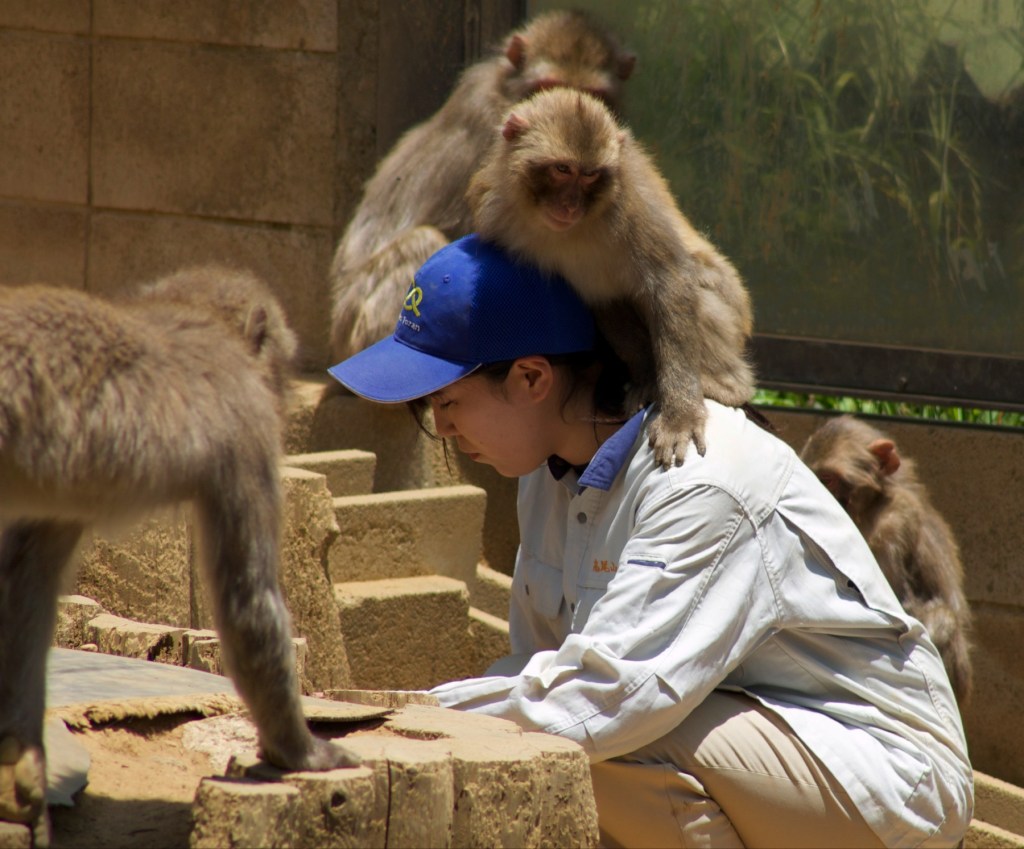
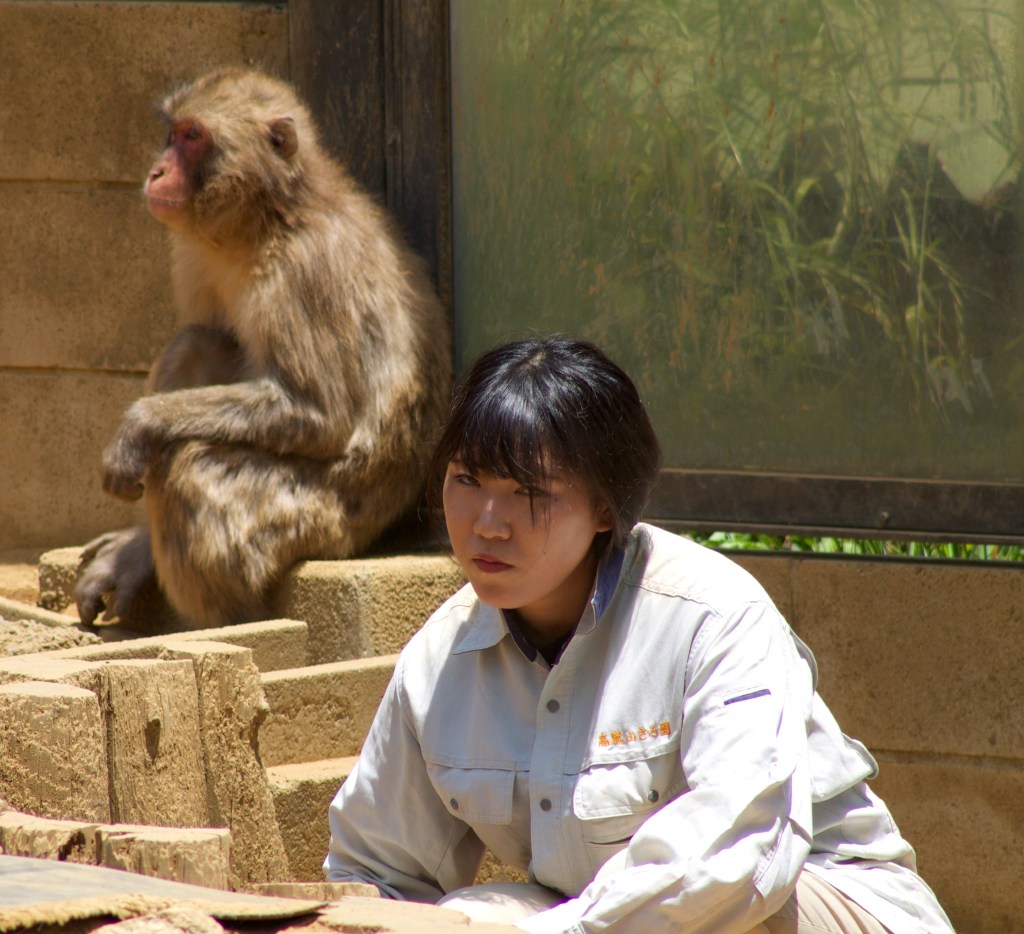
A keeper at the Mt. Takao monkey enclosure. She has a hat…but not for long. Note the mischievous monkey on her shoulders, who’s waiting for just the right moment to grab her hat and run.
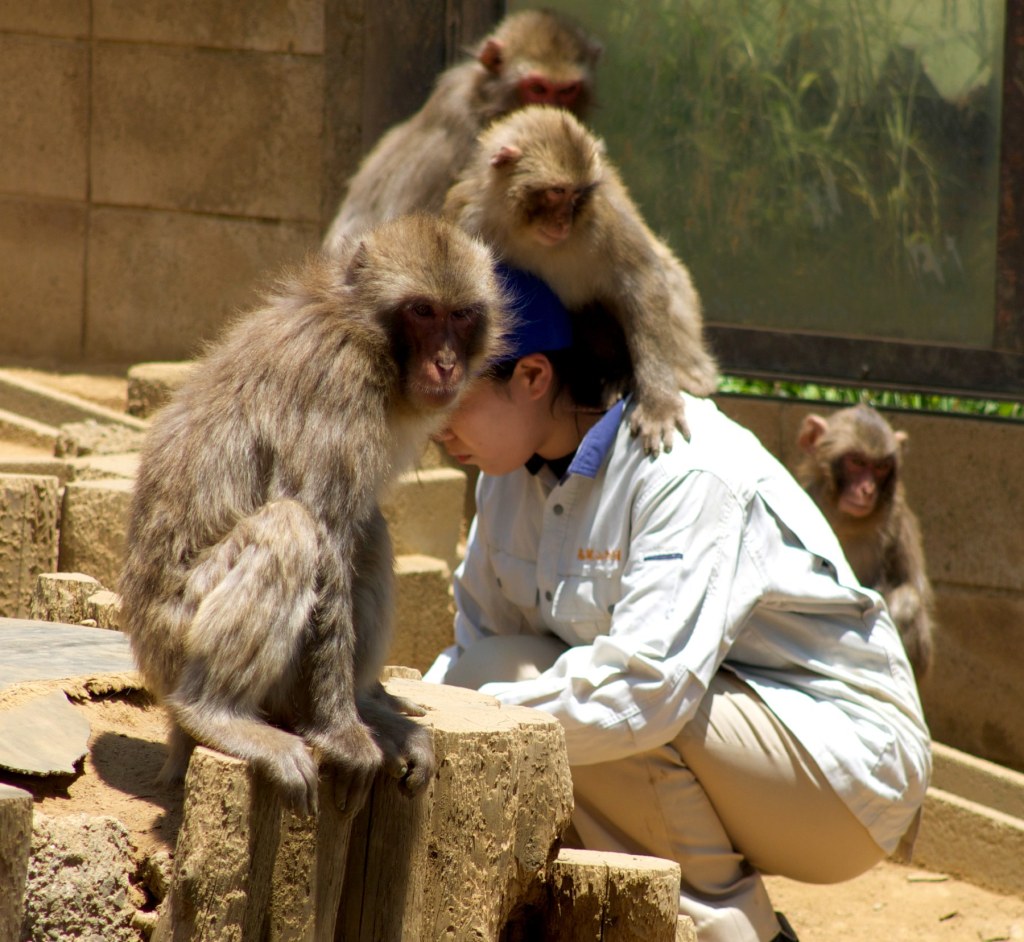
The monkey on the left is like: “Oh crap, here it comes!”
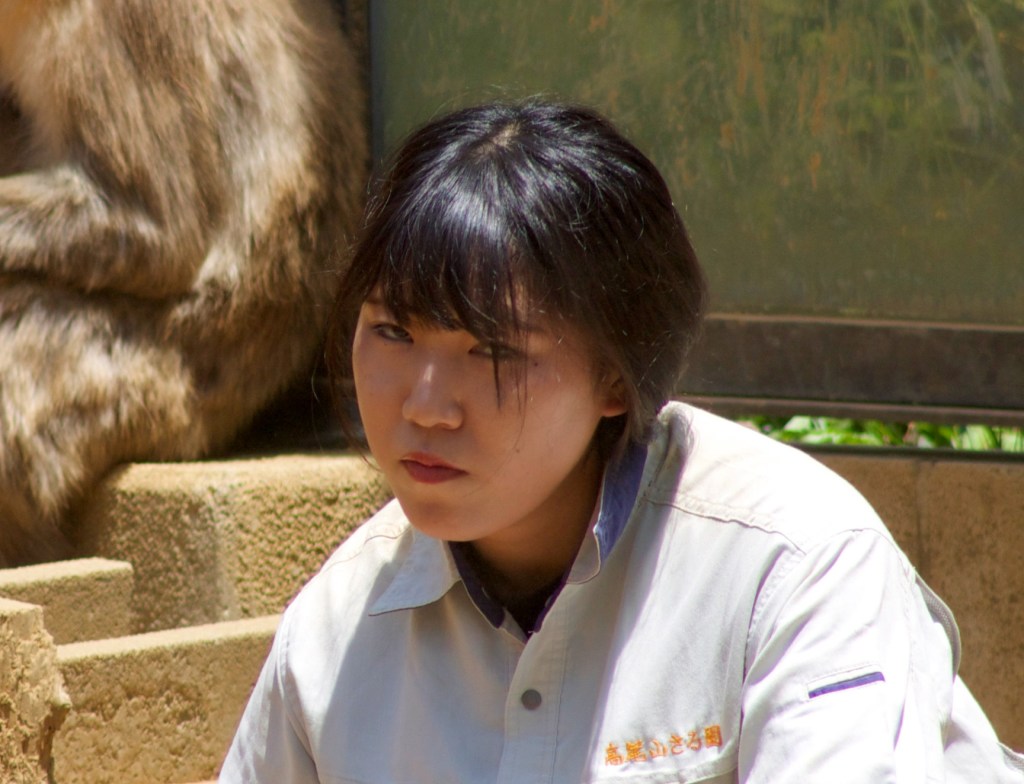
The keeper is staring daggers directly at me. There was a small crowd at the Mt. Takao snow monkey exhibit that day, and while the Hat Incident delighted the onlookers, the keeper was not amused when she saw me snapping away. I’m pretty sure she wanted to throttle me. Sorry!
Yeah, she definitely hates me.
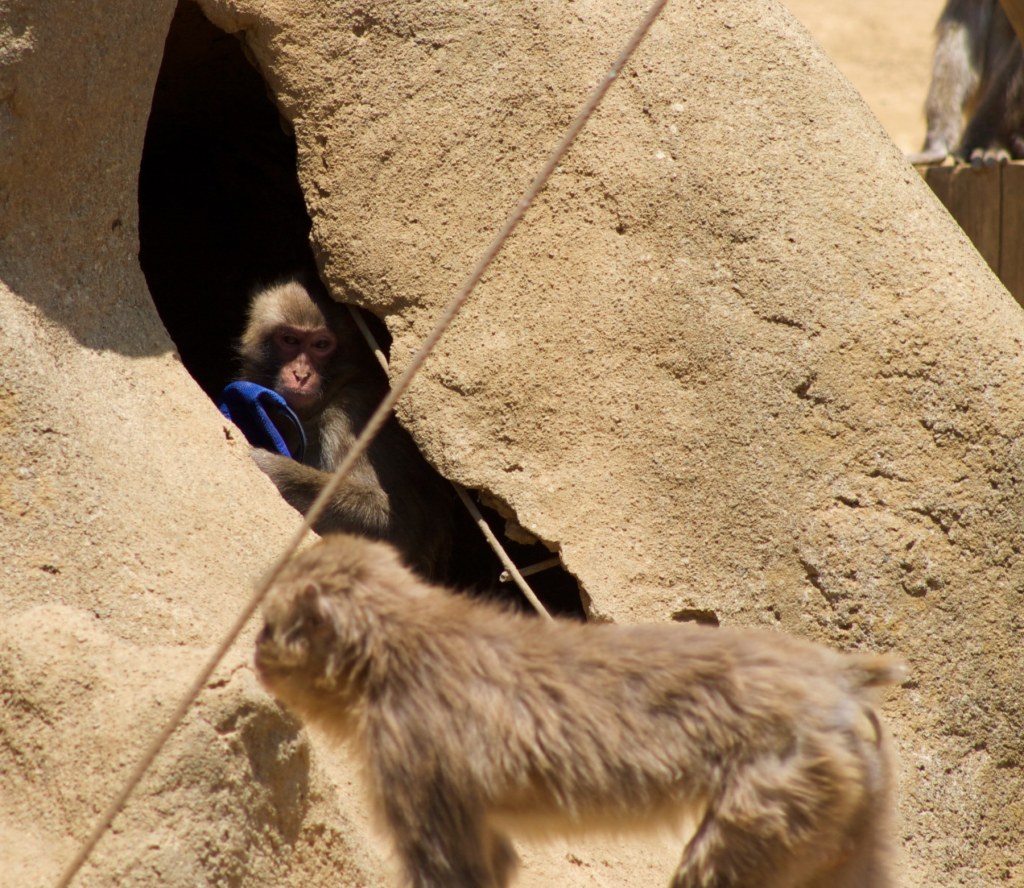
Getting her hat back was not an easy task. The devious little monkey who made off with it immediately retreated into a small cave/shelter system big enough for the macaques, but too small for humans to enter. Making matters worse, there were at least four or five entrances and exits. Every time the keeper approached, the little monkey darted inside and popped up through a different hole, like a game of wack a mole. Eventually it took both keepers to retrieve the hat.
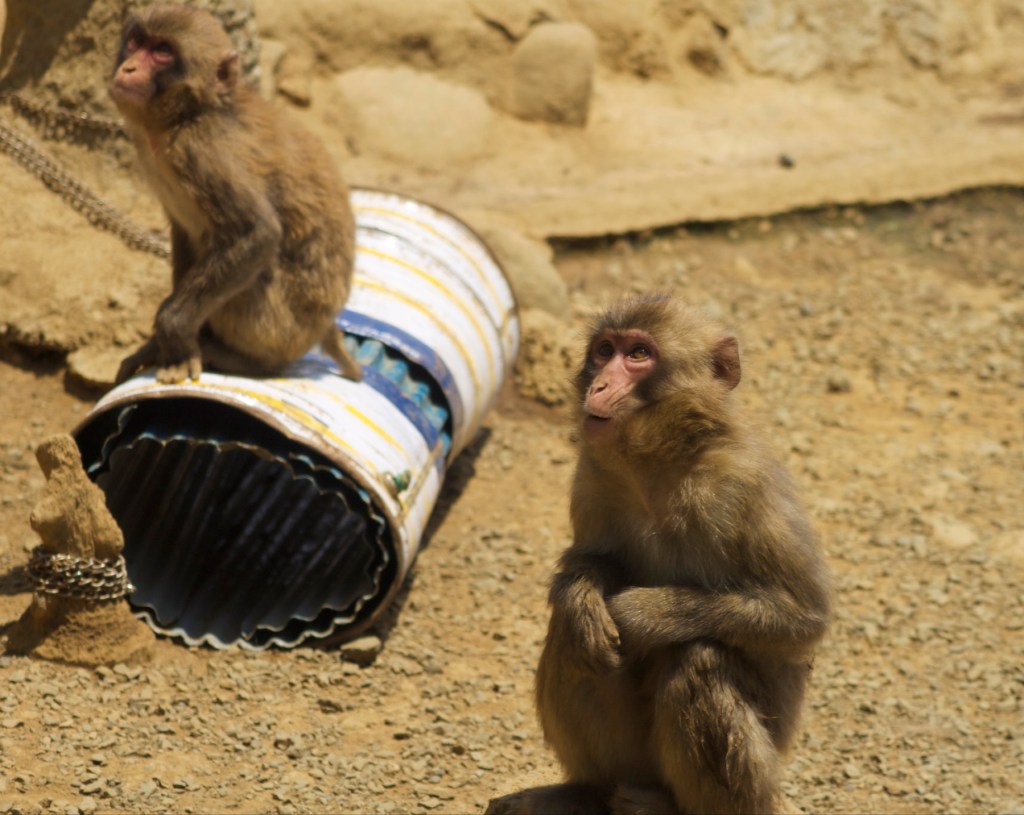
“Oh, you know, just chillin’.”
I was super close to this little lady. She was probably about two or three years old.
Macaques live in troops of up to 300 members, and their societies are matrilinear, meaning an individual monkey’s “rank” in the troop’s social hierarchy is determined by who their mother is.

Macaque troops are headed by alphas who are the strongest males and deal directly with protecting troop members, but the matriarch runs most aspects of troop life.

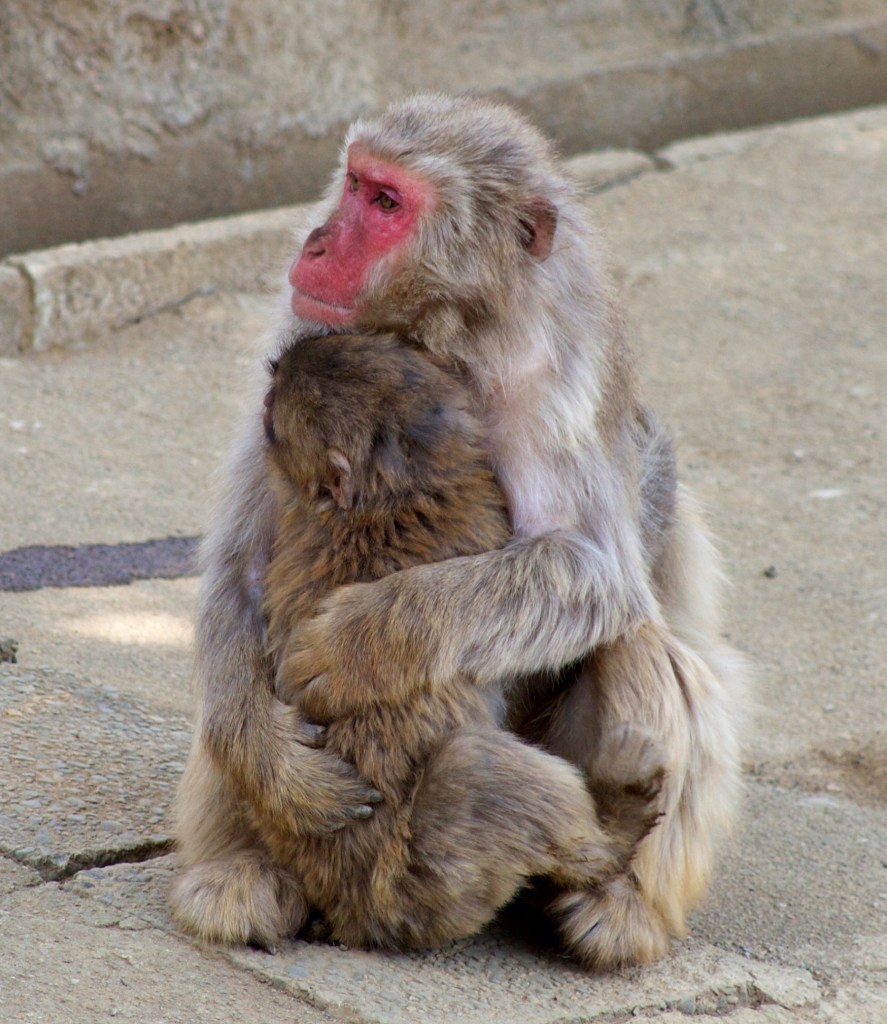
Here, a snow monkey mom hugs her child. The bond between moms and their kids is strong. Daughters stay with their mothers and their troops for life, while sons remain in the troop until they’re about five years old, at which time they depart to avoid inbreeding. They often go on to live as bachelors in small groups before joining or starting their own troops.
This baby is geckering. A gecker is a “loud, pulsed vocalization” usually described as a “broken, staccato noise.” People often think of it as a baby macaque throwing a temper tantrum, but it’s more than that, and it’s involuntary, meaning the babies can’t control it. In plain English, it’s a noise, accompanied by spasms and made by babies and young macaques when they’re particularly upset. Babies usually gecker when they’re separated from their mothers, being bullied by older monkeys, or in situations when they want to nurse but their moms won’t let them.
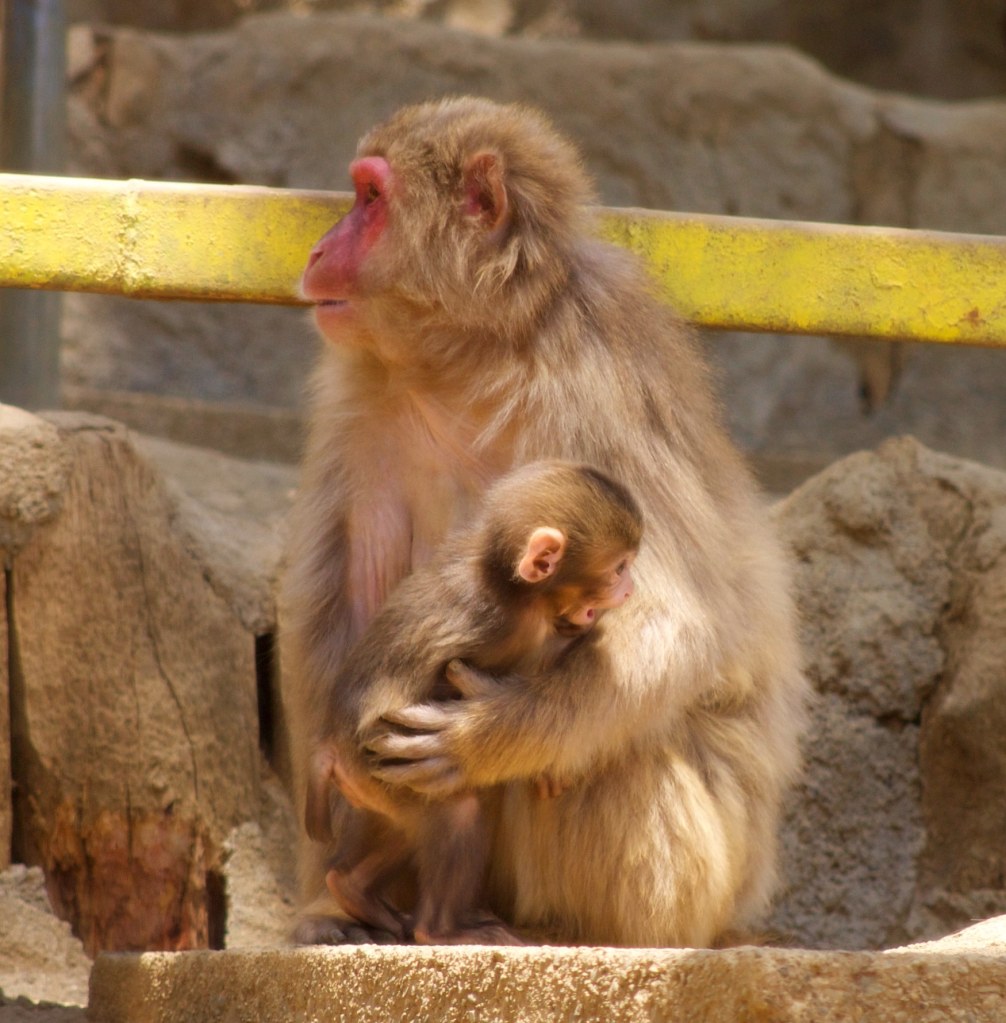
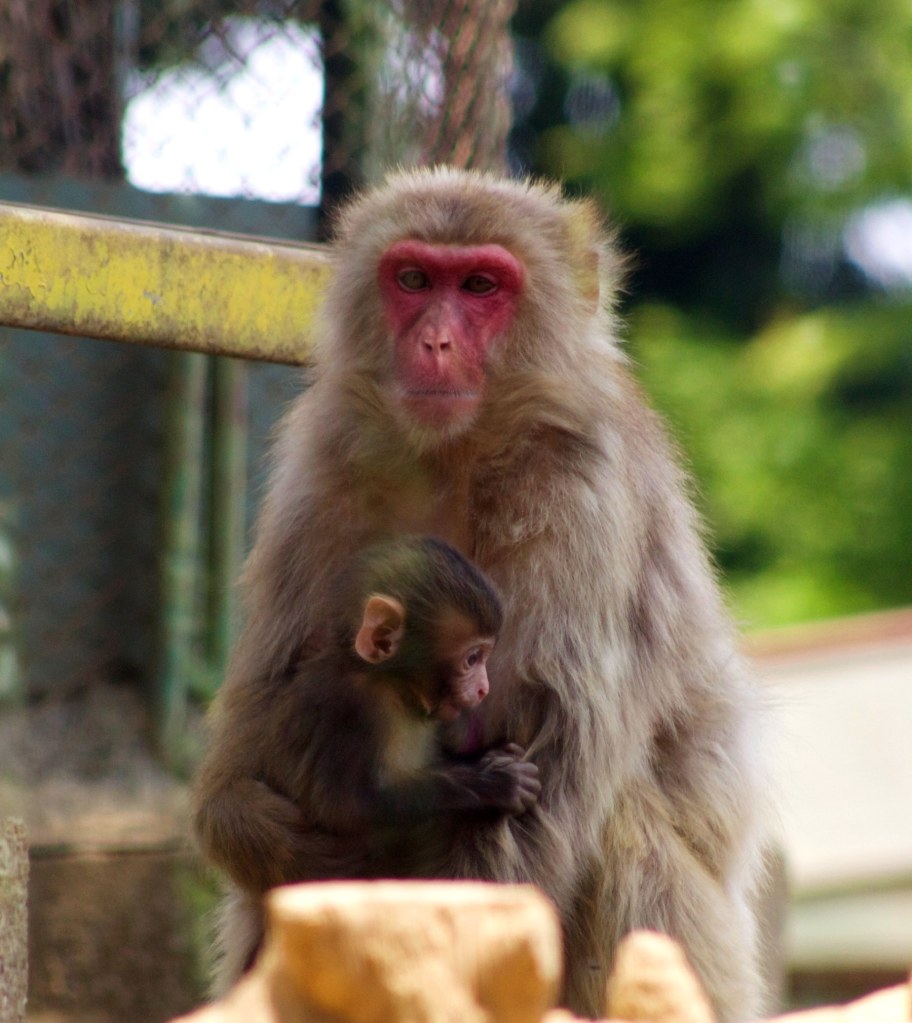
Another mom with a young nursing baby. This baby is a bit older than the one above, probably about three months old.
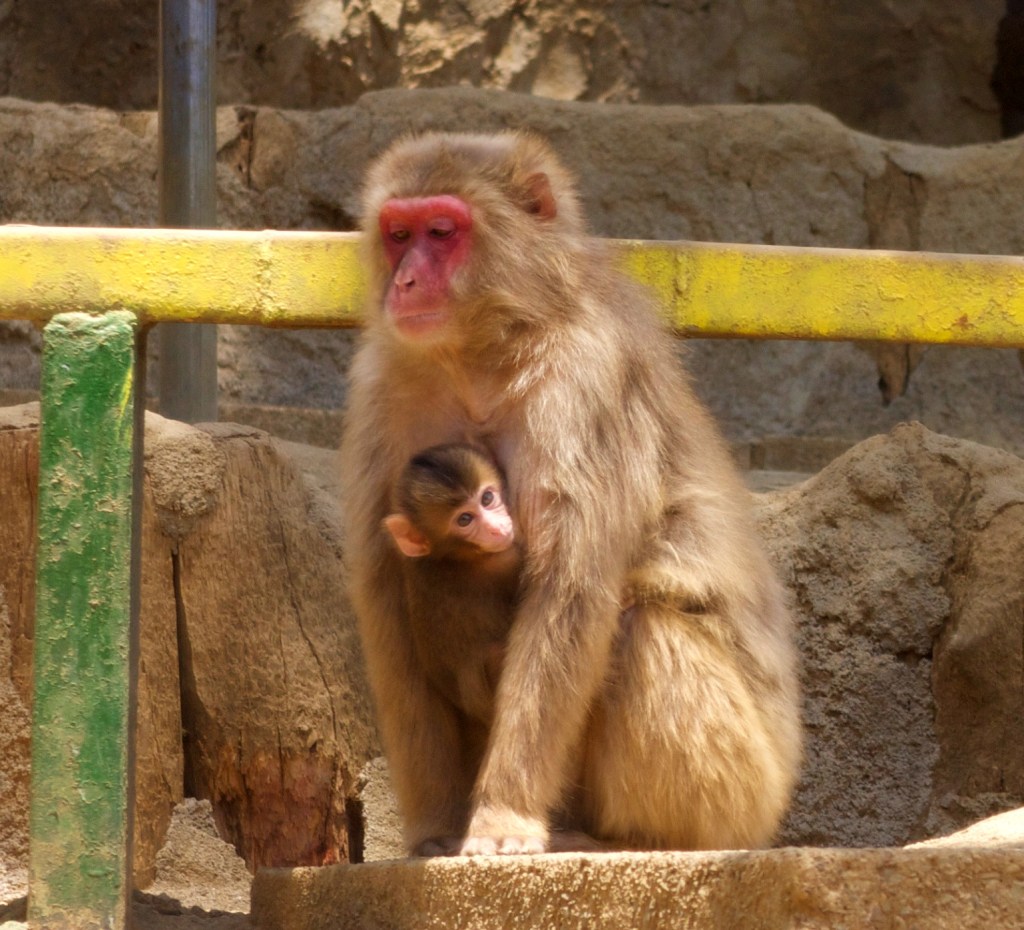
The first baby again. Notice how mom is grooming the baby. Grooming is an important aspect of macaque social relations, in addition to serving the practical function of clearing insects and other debris from fur.
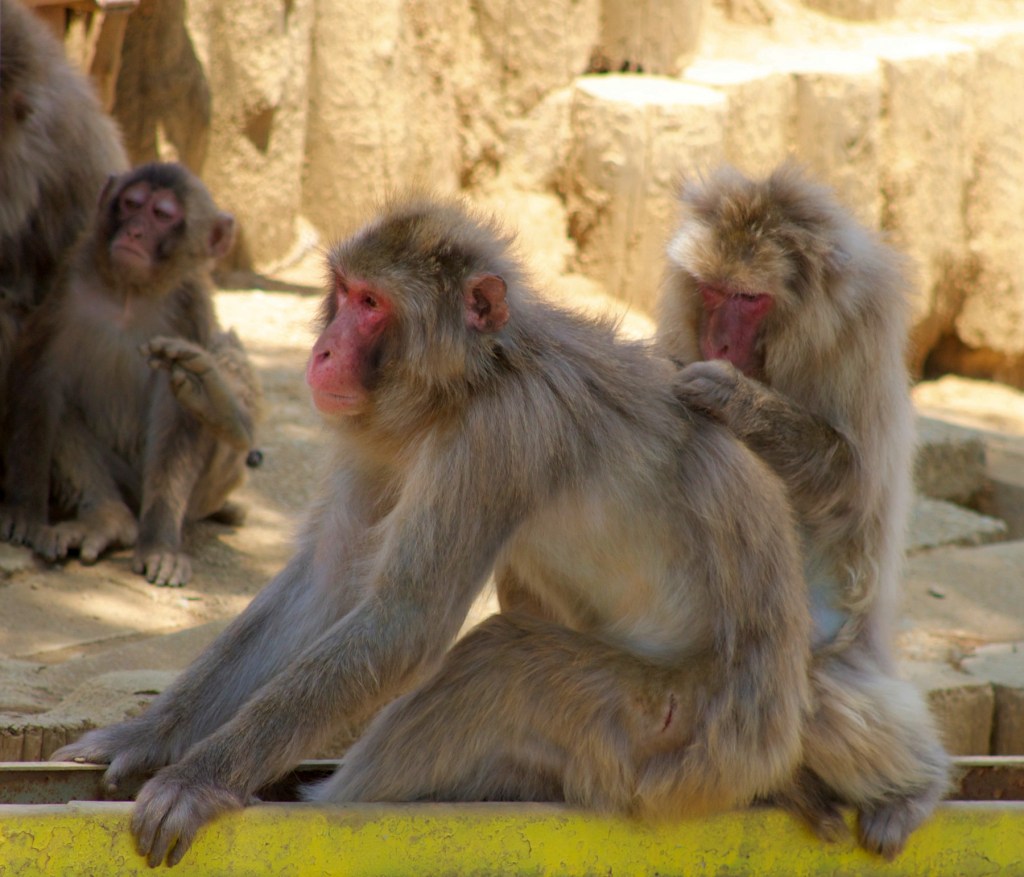
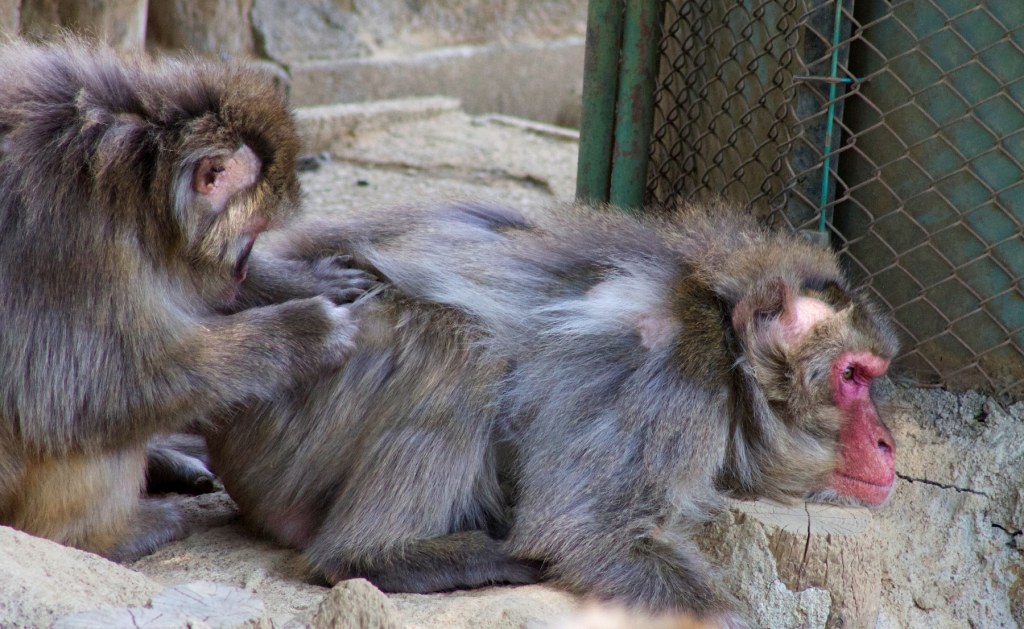
More social grooming. The monkey on the right is attentively picking insects from the fur of the monkey on the left.
He’s big, he’s old, he’s battle-scarred. He’s the alpha, and he always gets groomed first, whenever he wants. He also eats first, enjoys the best lounging spots, and gets to mate with his choice of females. In the wild, alphas don’t retain their thrones long, often being deposed within a year or two. Extraordinary alphas who keep their troops in good stead and enjoy an aura of invincibility can last a decade or longer.
Babies nurse for as many as two years and spend almost the entire first year of their lives holding onto their moms. That’s one reason why the practice of buying baby monkeys — or any monkeys — as pets is incredibly cruel, and it’s why pet monkeys are always seen clinging to stuffed animals. They’re taken from their mothers within hours or days, and they need the tactile comfort of holding onto — and being held by — their mothers.

Harry Harlowe’s infamous experiments in the 1960s proved that the physical comfort of being held is crucial to the psychological development of all primates, humans included. If a baby is denied that, the consequences manifest as severe psychological issues later in life.
A male member of the troop. It’s not clear if this guy was brought in from another captive troop elsewhere in the country, or if he’s native to the Mt. Takao troop. If it’s the latter, at his age — about four or five years old, give or take — he’ll be expected to soon depart. Young males leave their troops to avoid inbreeding and potential violence as they become stronger and are viewed as potential rivals to the alpha and/or his lieutenants.

Adios, humans!

Tokyo’s ‘Waving Cat’ Temple, Gōtoku-ji, Has Run Out Of Cats

The world-famous cat shrine has experienced a surge in tourism, leaving it bereft of the familiar statues that are inspired by the legend of a friendly cat.

Gōtoku-ji temple has a unique problem.

The complex, where legend says a friendly waving cat led a Japanese feudal lord and his men to warmth and safety ahead of a brutal storm, has seen an influx of travelers since Japan relaxed its COVID-era restrictions and tourists have returned.

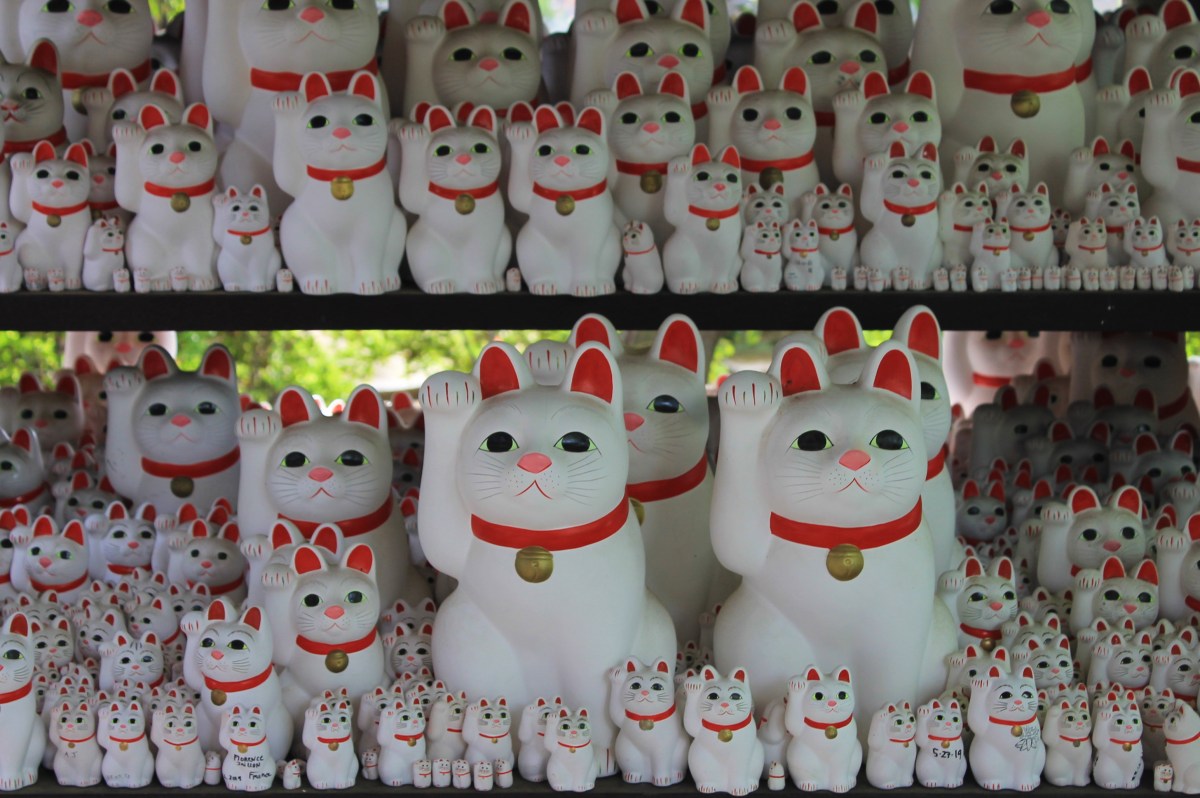
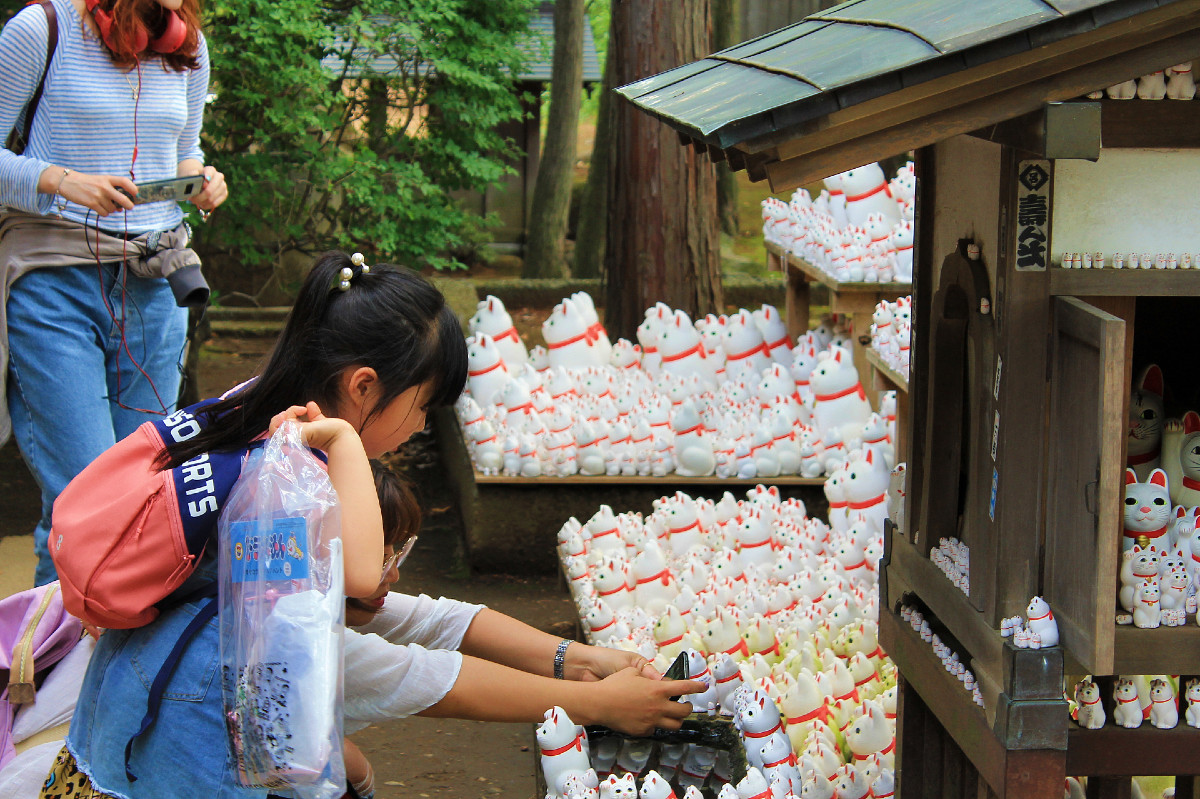
Now Gōtoku-ji can’t keep up with the demand for maneki neko, the ubiquitous “beckoning cat” statues that visitors purchase at the shrine’s tiny gift shop, the Washington Post says in a new report. People who come to the temple write prayers on the statues and place them in a perpetually-expanding section of the shrine grounds.

The cats are said to bring good luck, with variations in their designs and colors: red for health, pink for love, gold for success and so on. White maneki neko, which are sold at the shrine, are the original and “all purpose” prayer cats. The shrine is Buddhist, but practitioners of Shinto, Jainism, Christianity and other religions write prayers on the little cats, hoping they’ll be heard by whichever version of God they believe in.

The manufacturer, which also makes statues for the Lunar New Year and other festivities, can’t keep up with the demand. Now staff at Gōtoku-ji have put up signs apologizing to visitors. They say they don’t know when they’ll get more maneki neko.

When I visited in 2019 there were many thousands of the iconic statues, but the photos from Monday’s WaPo story show thousands more placed on recently-built shelves. Temple staff have begun asking visitors to take their maneki neko home with them instead of leaving them at Gōtoku-ji. They clean, shelve and organize the thousands of statues currently there and won’t dispose of them because they represent the prayers of visitors, but the volume has become unmanageable.

Maneki Neko at Setagaya Tokyo
Visitors leave their own maneki neko statues at the shrine, often with personal messages asking for different blessings and written in black marker on the back of the statues. Credit: Pain In The Bud

Despite Gōtoku-ji’s rise in popularity, I still recommend checking it out, especially for cat lovers who are headed to Japan. While most of Tokyo’s most famous shrines are located in the city proper, with modern skyscrapers looming above temples that date to pre-modern Japan — never letting you forget you’re in a bustling metropolis — Gōtoku-ji is in Setagaya, a mostly-residential ward.

The temple grounds are surrounded by homes and they’re quiet in a way that others aren’t. The shrine is well-manicured and beautiful, dotted with statuary as well as centuries-old wooden temple structures.

When I was there a smiling elderly docent walked the grounds carrying a photo album that showed the temple and its structures over the years. With my sister-in-law’s rudimentary Japanese we were able to get a bit around the language barrier, and he told me one of the most striking buildings, a three-story tiered wooden tower, was home to one of the resident cats who liked to sleep on its second floor.

I wasn’t able to catch a glimpse of the little one but I imagine Gōtoku-ji is one of the best places on the planet a stray cat could call home. Like the people of Turkey, respect for cats is ingrained in Japanese culture and temple cats in particular are treated extremely well. Some even have their own Instagram pages and fan clubs, becoming tourist draws in their own right.

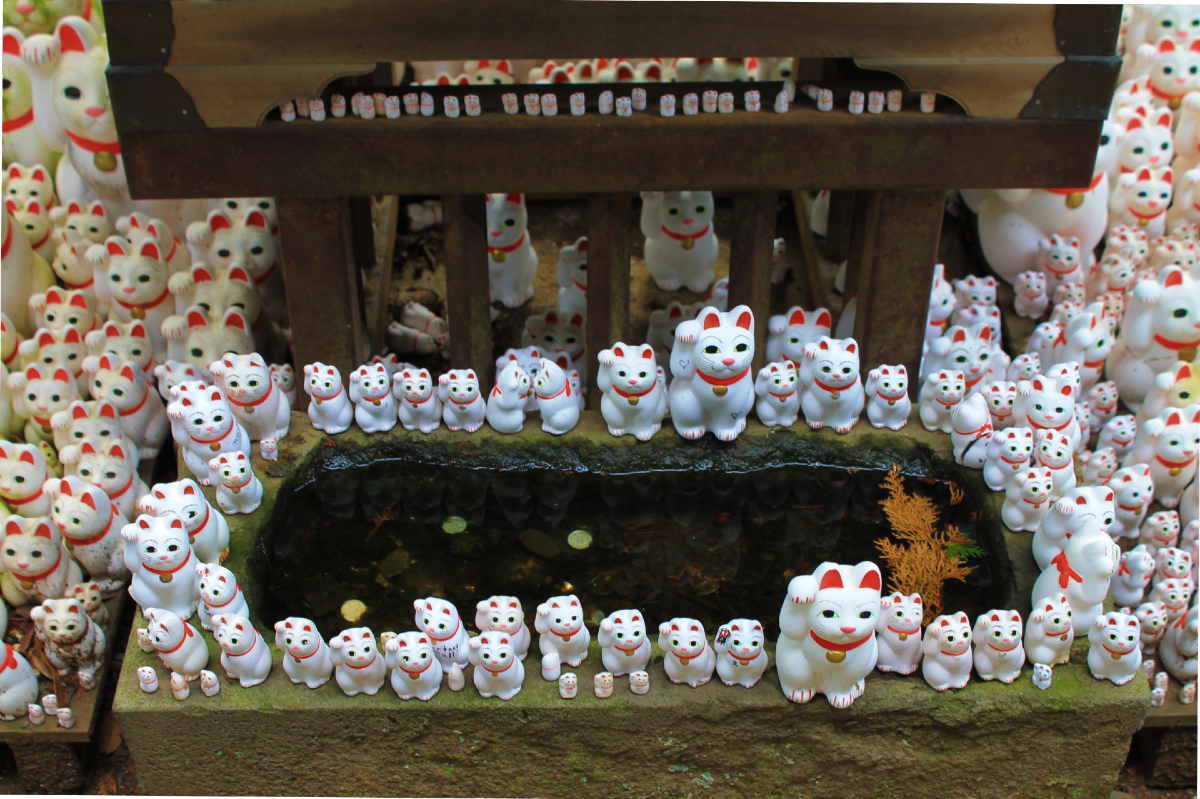
Maneki Neko Setagaya Tokyo
Maneki Neko statues at Setagaya shrine. Credit: PITB

TSA Baggage Scan Reveals Kitty Stowaway In Luggage

Smells loves boxes just as much as any other cat, but his affinity for tight spaces almost landed him in Florida, a long way from his home in Brooklyn.

It was a tuft of orange hair poking out from the zipper of a carry-on suitcase that first alerted a TSA agent that something weird was going on.

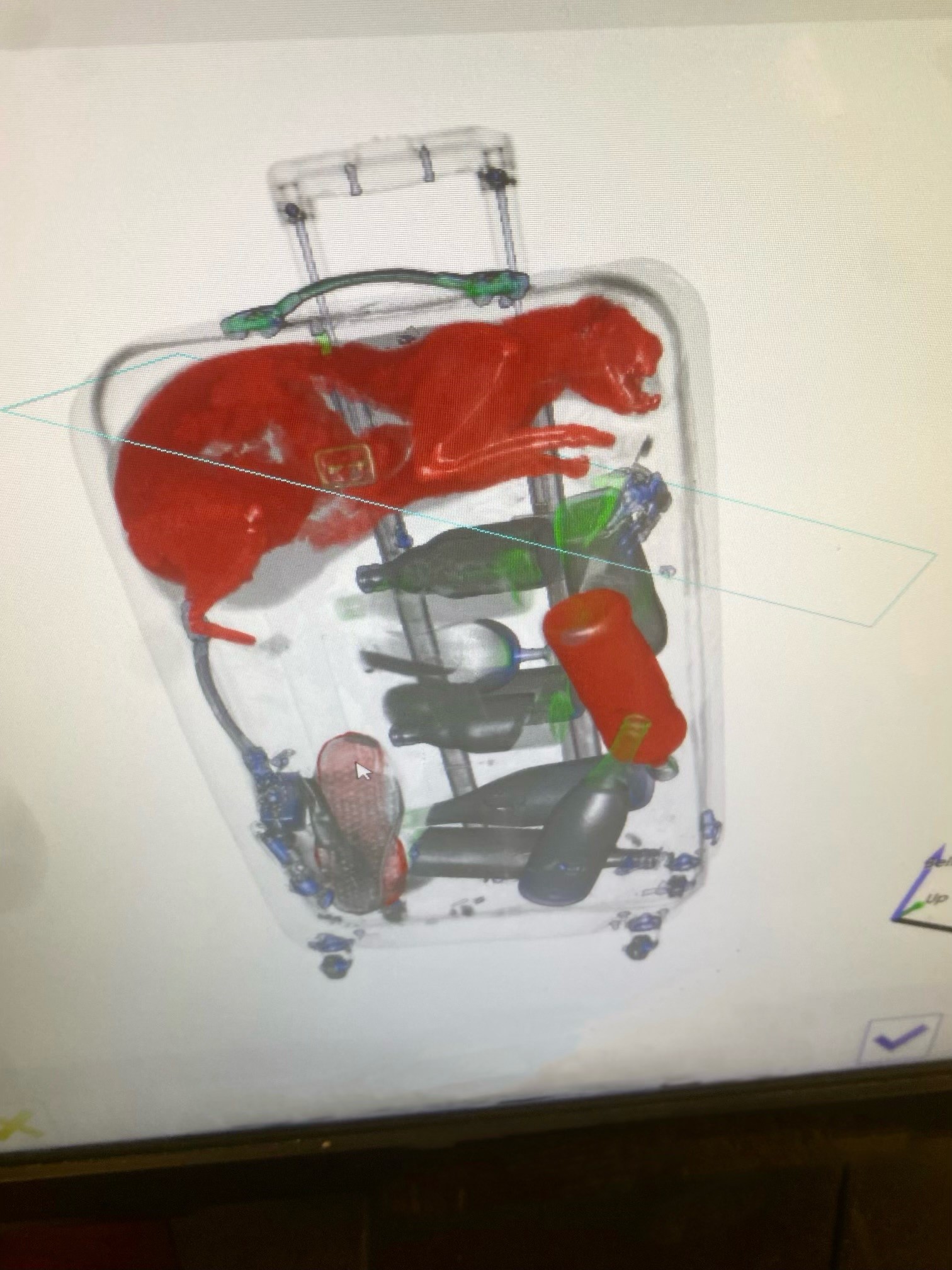
The agent, who was processing a traveler departing from New York’s JFK airport on Tuesday morning, then consulted an x-ray scan, confirming the suitcase contained some unusual cargo — a ginger tabby cat tucked in among toiletries, snug and napping comfortably in the enclosed space.

X-Ray TSA scan
An x-ray scan revealed Smells tucked snugly into the suitcase. Credit: TSA

tsasmellycat
The incriminatory tuft of orange hair that gave away Smells’ hiding spot. Credit: TSA

As for the traveler, the cat didn’t belong to him, nor was he aware kitty had climbed inside. It turned out he had been a house guest of friends living in Brooklyn, and the cat named Smells had slipped into the luggage before he left for home, for what is a suitcase if not just another box?

The TSA confirmed the story with the cat’s owner before letting the traveler board his Florida-bound flight.

“An officer called and asked if I wanted to press charges” said Alix, Smells’ 37-year-old human. “He wanted to know if there was any reason [the passenger] was trying to steal my cat and go to Florida.”

Smells the Cat
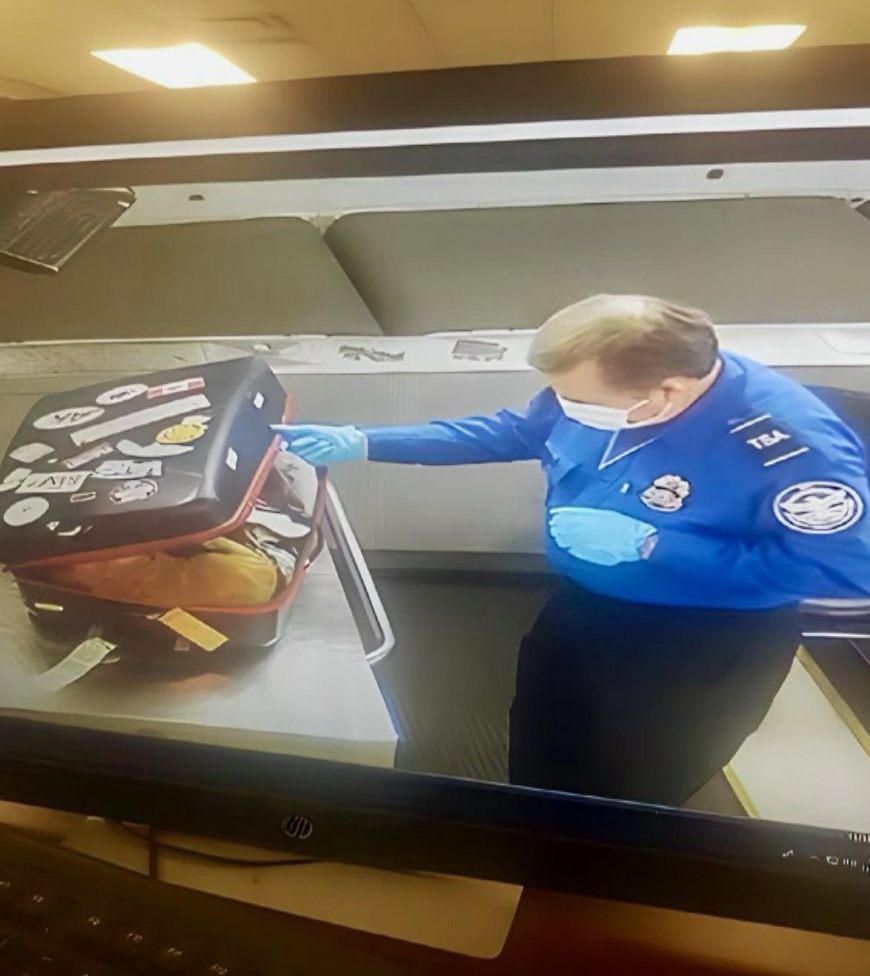
A TSA security agent opens the suitcase to reveal its unauthorized would-be stowaway. Credit: TSA

After Alix assured the TSA agent that Smells “really likes to check out boxes” and definitely would have climbed in on his own, she hired a driver to retrieve the kitty, who was unperturbed by the adventure.

“I was worried he’d be freaked out but he wasn’t even meowing on the way back,” Alix told the New York Post. “I went to give him some extra treats and he acted like nothing had happened.”

As for the TSA — which often deals with more serious finds like guns and drugs secreted into passengers’ luggage — the saga of Smells was a welcome change that gave them a good story and some laughs.

“On the bright side,” TSA spokesman Lisa Farbstein wrote on Twitter, “the cat’s out of the bag and safely back home.”

Smells the Cat
Smells the cat. Credit: His humans

“I was worried he’d be freaked out but he wasn’t even meowing on the way back,” she said. “I went to give him some extra treats and he acted like nothing had happened.”

Sue, My Dear Cat Sitter, I Love You!

A couple trusted their neighbor’s 16-year-old son to look after their cat for a few days, and he lost the kitty.

Have I mentioned how much I love my cat sitter?

Not only has she fed and watered Buddy almost every time I’ve been away these last few years, she’s done a great job and she even continues to watch Buddy despite the fact that Bud attacked hertwice.

She doesn’t play with him anymore since the second incident, and I don’t blame her. He’s known her since he was a kitten, for crying out loud. I’m sure he attacked her out of bratty frustration that she wasn’t me coming through the door, not because he was scared an unknown intruder was coming in.

Still, Sue’s so good that she was reluctant to tell me Bud attacked her because she didn’t want me to think there was a problem.

I appreciate Sue even more after reading this Reddit post about a couple who entrusted their neighbor’s 16-year-old son to watch their cat and dog while they were away for a few days.

Here’s the gist of it straight from the source:

He was supposed to let the dog out twice a day and keep an eye on the food and water. The cat is an indoor cat and he was to feed her.

Two days in he lost our key so I had to give him the garage code so he could get in.

We got home after 4 days and the cat was no where to be found. I called him and asked when the last time was he saw the cat, he told me that morning. Well we knew the cat was gone and checked our security cameras. We saw her at 5:30am on the camera outside so at a minimum she had been out since the day before. (I can see the history of when the garage opens and closes in our app) and he hasn’t been there that early. I had also checked her litter box and it was pretty clean, so she was probably gone for 2 nights.

When I told him the cat was gone he did come over and offer to go look for her and took off in his car. We saw him come back on our camera with a grocery store bag, so not sure if he actually went looking for her or not like he claimed.

We left the door open over night and she did come home and is fine. There was a good chance she couldn’t have, as we live 1 street over from open space where a pack of coyotes frequent and she is only 8lbs so a lot of other animals could have gotten her too.

Here’s the main part: we decided not to pay him. It’s a pay what you want agreement and given that we now need to rekey the house and he lost our cat we didn’t feel that he took his responsibilities seriously. And the bigger the mistake the bigger the consequence. You may say, well any job would have to still pay you. Yes, but they also can deduct or charge you the cost of damages which in this case will be more than what we would have paid him and we aren’t asking for it, just not paying him. Is that wrong?

The story was posted to the popular AITA subreddit, short for Am I The Asshole?, a place where people can solicit advice from strangers on whether they were justified for acting a certain way in a situation, or whether they were in fact “the asshole.”

Most people who responded said no, the poster and her husband are not in the wrong, and for the most part I agree.

In their situation, if my cat had come back, I would have given the kid something just to keep the peace with the neighbors and never hire him again, but I can see their side of it too. It’s expensive to get a locksmith, probably at least $200 if they only have two doors.

If the cat hadn’t come back, however, my rage would be incandescent. Nuclear. Scratch that. It would be beyond supernova level, akin to a gamma ray burst visible from millions of light years away, with a perpetual afterglow drifting in the void between galaxies. I would not be able to forgive myself nor shake the thought of my little Buddy lost, hungry, alone and terrified, and not knowing what happened to him.

It’s time to send Sue another bottle of wine and a card reminding her just how much I appreciate her.