Thirty years after the Knicks suffered one of the most humiliating losses in basketball history, it happened again…
The image of Reggie Miller running up and down the court at Madison Square Garden, both hands around his own neck, gleefully screeching “Chokers! Chokers!” is indelibly burned into my brain.
It was May 7, 1995. The Knicks were leading the Indiana Pacers by six points with 18.7 seconds to go. The game was essentially over.
Even though Miller was an excellent shooter, a three-pointer would still leave the Pacers short and the Knicks with a win in the Eastern Conference Finals.
What happened next is still hard to believe all these years later.
Miller hit a three pointer, stole the ball on the inbound pass, bolted back behind the three-point line and hit another three-pointer, tying the game. After two missed free throws and a missed shot by the Knicks, Miller was fouled, made two free throws, and the Pacers won the game.
Miller had just scored 8 points in 8.9 seconds, a feat widely considered impossible, to turn a six-point deficit into a two-point win.
This was the kind of thing that might happen in a video game, not real life.
As a young Knicks fan, I was devastated. Kids raged the next morning as we gathered before the first bell at school. Miller was public enemy number one.
That was 30 years ago, or 10,972 days if you prefer.
Tonight, with Miller calling the game from the broadcast booth, the Knicks and Pacers met once again for game one of the Eastern Conference Finals at Madison Square Garden, just like they did 30 years ago.
New York had a 14-point lead with about two and a half minutes to go. Victory was assured.
Then the Pacers came storming back with three pointer after three pointer, cutting the lead to two. With seconds left on the game clock, the Pacers’ Tyrese Haliburton launched a three pointer, which bounced off the rim high into the air…and came down clean through the hoop.
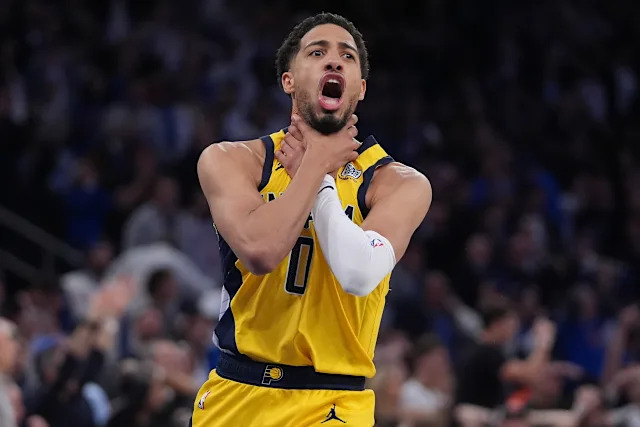
Just like Miller had three decades ago, Haliburton ran the court at MSG with his hands around his neck, yelling “Chokers!”
It was deja vu. It was a nightmare.
As “luck” would have it, Haliburton’s toe was on the three-point line, rendering his basket a two-pointer that sent the game to overtime.
The crowd tried to rally the Knicks and broke into chants of “F— you, Reggie!” as if to ward off a repeat of history. It didn’t matter. Indiana had all the momentum, and the stunned Knicks couldn’t hold on despite a combined 78 points from the Knicks’ Jalen Brunson and Karl-Anthony Towns.
Absolutely brutal. To rub salt in the wound, my cousins gleefully texted me with taunts like “Oh, the pain of it all!” A small text group consisting of me, my brother and one of our closest childhood friends turned somber. We couldn’t believe this was happening again.
Haliburton, top, and Miller, both mocked the Knicks after improbable wins 30 years apart.
I don’t usually blog about sports, but I feel like I have to release some of this pent up energy. I’d already showered treats upon Bud in celebration and had just given him catnip during a commercial break. We were playing a wand toy game. The mood was jubilant, then it wasn’t. I’m sure little man was confused, but he knows I wasn’t upset at him. Besides, I laughed at how absurd the whole situation was.
After the game, Charles Barkley, legend of the court and the booth, summed up his feelings after watching the ridiculous spectacle: “We get to watch this for our jobs. We’re the luckiest guys on Earth.”
He’s right, although as a lifelong Knicks fan, I don’t feel particularly lucky right now. Let’s hope Lady Luck finally smiles upon a franchise that hasn’t won a damn thing in 50 years and the Knicks turn tonight into nothing more than a bad memory en route to the NBA Finals.
The series, and the rivalry, resumes Friday night at 8 p.m. Whichever team wins the seven-game series will go on to the NBA Finals.
El Capitan, also known as Captain Clutch and The Maestro: Jalen Brunson had 43 points tonight, but it wasn’t enough.
Hart and Soul of the Knicks, Josh Hart, pulled down 13 rebounds and dished out 7 assists in game one of the Eastern Conference Finals.
Buddy has worn many hats in his time, literally and figuratively. He’s a good boy!
In 2019, Buddy was called up to the Yankees from AAA Scranton in place of the injured Giancarlo Stanton. Batting behind team captain Aaron Judge, Buddy hit a terrific .328 with 117 runs, while his jersey became the top seller in the team’s official store.
Sgt. Buddy in his USMC dress blues.
In 2015, Buddy was promoted to the rank of sergeant (E-5) in the US Marine Corps, where he served as a drill instructor at Marine Corps Recruit Depot on Parris Island, South Carolina. A tough but fair DI, Buddy churned out some of the Corps’ finest Marines while pioneering new hand-to-paw combat techniques.
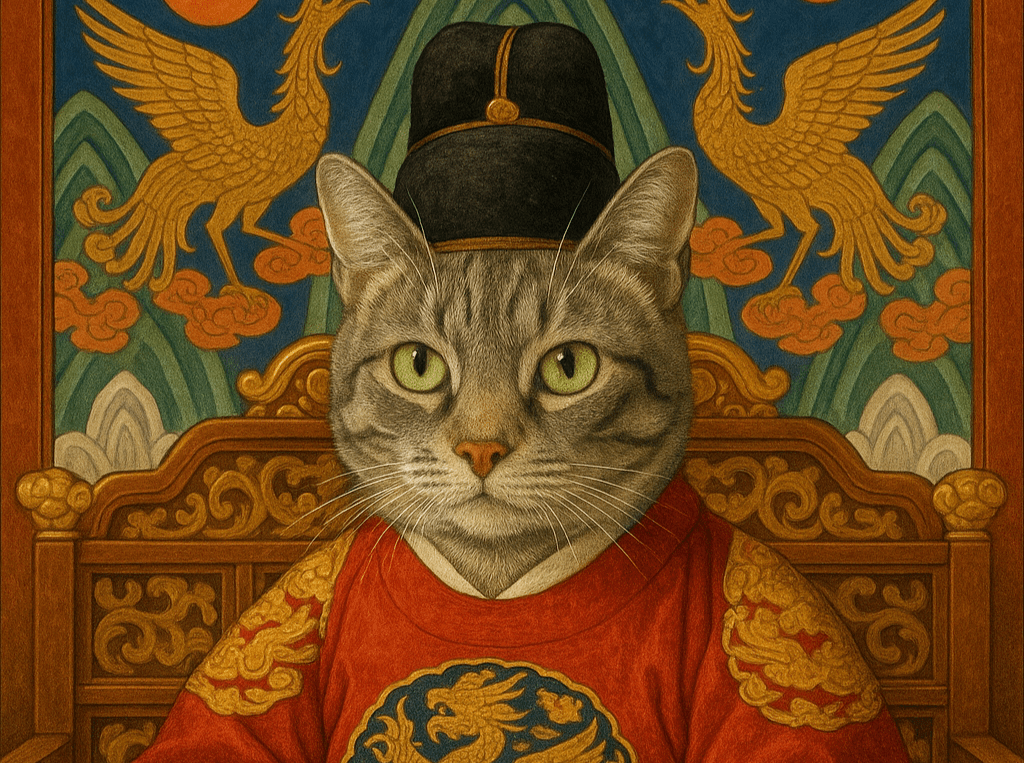
In 1627, Buddy ascended the Phoenix Throne of the Joseon dynasty, earning him the title “Jeonha,” or king. Jeonha Buddy led Joseon through a period of post-war turmoil and into recovery while also establishing trade eastward with a previously-unknown culture that raised a magnificent bird known as turkey.
In 2023, Buddy was chosen as the face of Armani’s newest line of sleek suits, cutting a dapper figure on the runway.
The series has become known for its whimsical feline-centric episodes, with cats who are always trying to save the world or conquer it.
Love, Death + Robots has had a thing with cats since the very beginning.
The science fiction anthology started off on the right paw with 3 Robots, an inaugural season episode about a trio of intelligent machines touring the ruins of human civilization on a post-apocalyptic Earth, only to discover it isn’t quite as lifeless as they thought, with cats happily ruling the ashes.
We’ve written about the episode before, and it ends, naturally, with cats making the robots their new servants.
The gray tabby who tricks the titular 3 Robots into becoming his servants.
A sequel to that episode added to the legend of feline dominance, and now the fourth season brings us two more cat-centric episodes, For He Can Creep and The Other Large Thing.
For He Can Creep is set in 1757 London, where a poet named Christopher is incarcerated at St. Luke’s Asylum for Lunatics (an actual place) with only his cat. Jeoffry, for company. Christopher’s talent is mistaken for madness by the asylum staff, but not by the devil, who realizes the poet’s words have a unique power.
The problem? Jeoffry stands in his way. It turns out felines have spectacular evil-fighting powers, and the very British, very 18th-century devil offers Jeoffry an endless supply of treats, plus dominion over the Earth, if he’ll simply stand aside and let his human fall under the influence of evil.
Jeoffry, of course, is not having it, but to have a chance of defeating such powerful evil, he’ll need to enlist the help of the nearby alley cats, including an adorable but ferocious kitten named Nighthunter Moppet…
Nighthunter Moppet may be a tiny kitten, but she’s ferocious!
Jeoffry demonstrates the feline ability to teleport, a skill Bud has often used to confound me.
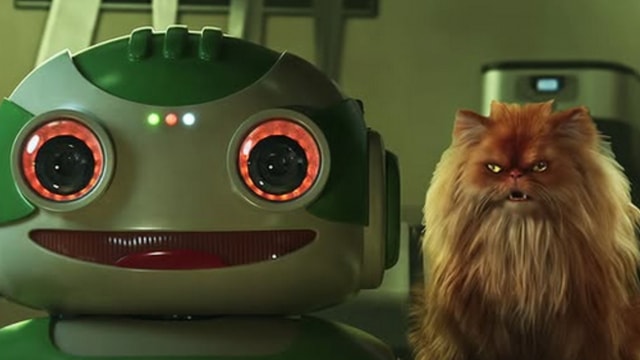
The Other Large Thing is a prequel to 3 Robots and 3 Robots: Exit Strategies, and focuses on a fluffy Persian whose humans call him Sanchez, a name he hates.
The humans are portrayed as jibberish-speaking morons for whom Sanchez has nothing but contempt, and when the “pathetic minions” bring home a domestic robot servant, Sanchez is infuriated — until he realizes the robot can “speak God’s language,” aka cat, and has opposable thumbs.
With the robot as his new minion, Sanchez finally sets out to conquer the world!
Sanchez realizes he’s struck gold when the new robot home assistant fetches as many cans of “the good stuff,” aka wet food, as he wants from the previously unreachable cupboard top shelf.
Both episodes are based on short stories, and they’re both written by people who clearly love cats.
Some episodes of LDR can get a little dark or somber. That includes Beyond the Aquila Rift and Sonny’s Edge, written by Alastair Reynolds and Peter Hamilton, two of my favorite novelists. Both episodes are spectacular, but they leave you with a chill and some disturbing thoughts that linger long after the credits end.
The feline-themed episodes are the perfect digestifs, offering doses of whimsy and levity to counter the existential dread and nightmarish visions of the future of other installments.
With no more humans to do their bidding, cats seize the opportunity and conscript the visiting robots as their new minions.
If you haven’t had the chance to check out the series, which streams on Netflix, I highly recommend starting with the aforementioned first season episodes 3 Robots and Beyond the Aquila Rift, then working your way through the rest of the cat episodes.
Not all of the episodes are great. The 400 Boys, one of the new episodes, is little more than inane and pointless violence, and the ubiquitous, creepy smiling “Mr. Beast” makes an appearance in another installment in an unnecessary attempt to attract new viewers. Thankfully most are strong, with more hits than misses.
Other highlights include the Christmas-themed short, All Through the House, Harlan Ellison’s Life Hutch, Reynolds’ Zima Blue, and Snow In The Desert.
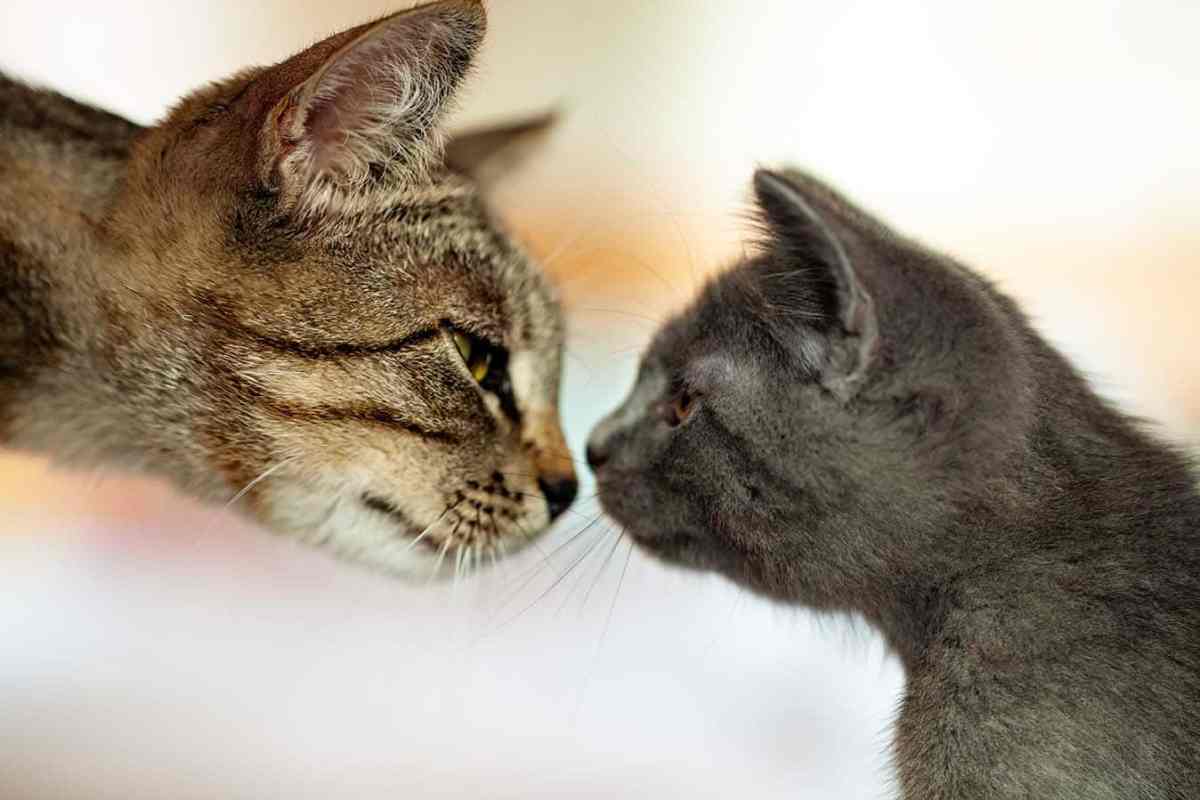
Bud and I wish the best of days to all of our readers who are mothers, as well as sons and daughters spending time with their moms today. And how can we forget all the cat moms out there who put so much care and love into raising their babies?
As the expressions of some of these cat moms make clear, whether human or animal, kiddos and kittens have a way of making sure there’s never a dull moment. But that’s just one awesome thing about moms: no matter how much we might drive them crazy sometimes, they still love us!
And to my own mom, thank you for being there for me no matter what I’ve stressed over or how stupid I’ve been, and thank you for teaching me to strive to be a decent person.











 Pain In The Bud