Another Amazon Driver Steals A Customer’s Cat

A Massachusetts woman hopes she’ll be reunited with her cat after an Amazon driver took the feline during a delivery.

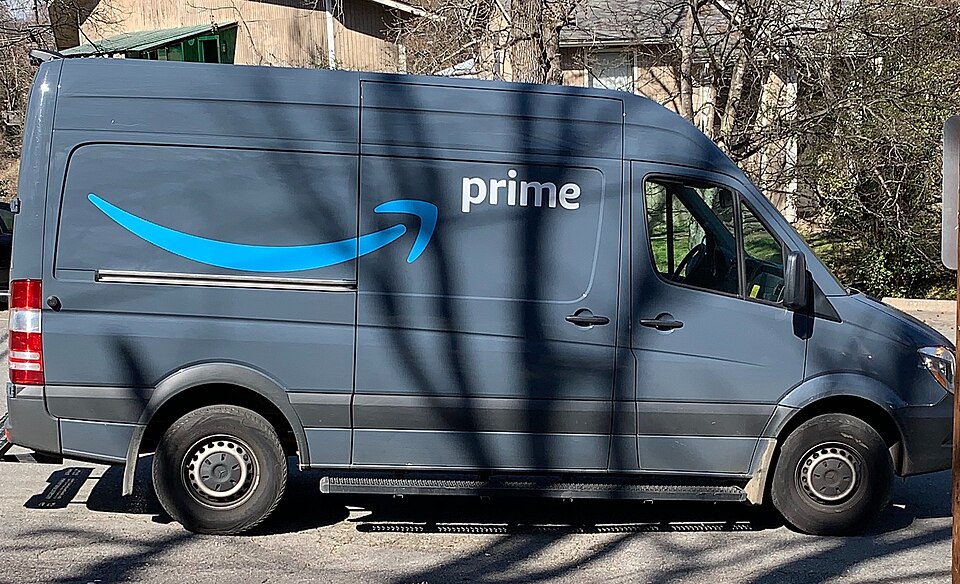
In one respect, it feels unfair to blame Amazon for its employees stealing cats.

The company’s drivers make millions of deliveries to American homes, and the vast amount of time there are no problems.

On the other hand, this has happened so many times now that you’d think Amazon would make it a priority to tell its drivers: Do not steal cats from customers. It’s not acceptable, it’s traumatic for the cats and their humans, and it’s horrible PR for the company.

The latest incident involves a driver who was caught on camera this week stealing 18-year-old Murphy, who belongs to Kathy Souza of Somerset, Massachusetts. Security camera footage shows the driver retrieving cat food from her vehicle and chasing after Murphy, then disappearing.

Souza told a local NBC affiliate that neighbors at an AirBnB saw the driver steal Murphy. The driver allegedly told them she was concerned about the cat, that it “didn’t seem right to her and she was going to take it,” Souza said.

Murphy. Credit: Kathy Souza

As of mid-morning Wednesday, Souza posted an update saying she was waiting at the Somerset Police Department, where the driver apparently agreed to return the cat.

Like so many others before her, Souza found Amazon tone deaf, minimally responsive and unhelpful.

“I spoke with someone at Amazon who asked, ‘Is the cat worth more or less than $200?'” an incredulous Souza wrote on Facebook.

A customer service representative also asked Souza to fill out a satisfaction survey, which mirrors the experience others have had when the company’s drivers have stolen pets. Amazon handles the cases as if their drivers stole or damaged property rather than taking living creatures often considered family by the people who love and care for them.

The company’s responses are similar to the way it handled the case of Feefee, a 13-year-old tabby cat stolen from a family in Everett, Washington, by an Amazon driver in late July of 2024.

In that case, Amazon offered to compensate the Ishak family by sending a stuffed animal resembling Feefee, and told owner Ray Ishak that the apologetic driver had contacted police to return the cat. That wasn’t true, and to make matters worse, the Amazon driver abandoned Feefee and wouldn’t tell the family where she’d dumped the cat. Ishak spent several days driving through his neighborhood and surrounding areas, looking for the driver’s car which was visible in his doorbell camera footage.

Ishak found his cat without Amazon’s help after a great deal of stress and effort.

Souza said she would post another update about Murphy “when I have him in my arms.”

Update, 2:05 pm: Souza has been reunited with Murphy.

In a statement, Amazon said the driver’s behavior doesn’t meet the company’s standards and promised an investigation, but a friend of Souza wrote on Facebook that it was pressure from social media posts and local news reports, not action from Amazon, that prompted the woman to return Murphy.

“Rescuing animals is honorable, but due diligence is imperative, and this woman did not do hers,” she wrote.

Murphy is well known among neighbors and doesn’t stray further than three houses from home, Souza wrote in an earlier post.

We’re glad Souza and Murphy have been reunited and this story has a happy ending.

As for the lessons learned here, anyone unfortunate enough to find themselves in this situation should not wait for Amazon to act. The company won’t have the same sense of urgency, and its customer service staff aren’t trained or equipped to take the necessary steps, like liaison with local law enforcement.

In cases where people have recovered their pets, the common thread is that they took the initiative, used social media and local news to get the story out, and were relentless. Time is crucial, because in some cases delivery drivers will panic and abandon stolen pets.

Header image credit Wikimedia Commons

‘More Purring, More Buying’: Bookstores Give Readers A Reason To Drop In

In the era of Amazon, America’s independent bookstores survive by offering things the online giant can’t.

Like everything else in the realm of print media, bookstores have been having a rough go of it the last decade or two.

Waldenbooks, Crown Books and Borders no longer exist, with the latter chain shuttering its last 400 stores in 2011. Barnes and Noble is the last surviving book chain thanks to an aggressive strategy of expanding their cafe and lounge space, encouraging shoppers to hang out while they sample books and drink coffee.

There are still some 14,000 bookstores in the US, depending on how some hybrid businesses are categorized, and independent booksellers now make up the majority of real-world retail while the giant that is Amazon looms.

The key to survival is offering things Amazon can’t. Some distinguish themselves by catering to specific customers, like fans of mystery or science fiction, offering rare and signed volumes alongside their regular stock. Some pursue a Barnes and Noble-like strategy, leaning heavily into the hybrid coffee shop model. And some become community spaces for book signings and poetry nights.

Others lure customers inside — and back after they’ve already visited — with pets.

In a new story, the New York Times highlights independent book shops around the country that have dogs, lizards, turtles, rabbits, and of course, cats.

When it comes to our furry and clawed friends, some shops are populated with adoptable felines:

At the Literary Cat Co. in Pittsburg, Kansas, readers have the opportunity to adopt a pet while they shop. The store partners with a local rescue organization, hosting about seven cats at a time, along with three permanent feline “employees”: Hank, the regional manager; Scarlett Toe’Hara, the assistant regional manager (she’s polydactyl); and Mike Meowski, the assistant to the assistant regional manager.

Jennifer Mowdy, the store’s owner, described each cat’s role, personality and origin story with the air of a matriarch ticking off successful grandchildren. Speaking of the upper respiratory illness that cost Mike Meowski an eye, she sounded stoic. He was a kitten; she was there for him. They soldiered through.

Mowdy created a glass alcove for allergic customers – and to deter escapees – and a “kitty conference room” (accessible by cat door) for litter boxes. With regular scooping, four air purifiers and daily mists of Mrs. Meyers Room Spray, she said the scent of the store is neutral to positive.

In the past year and a half, the Literary Cat Co. has facilitated 50 adoptions. “We’ve only had one cat that didn’t work out,” Mowdy said. “Too much fight in her.”

Kittens tend to wreak havoc; Mowdy prefers a mature animal of the “Don’t call me, I’ll call you” variety. Felines are welcome to scale shelves and interact with readers as they please, which is their way.

“They get to practice being a good house cat,” Mowdy said. “They get socialized.” Occasionally, the right cat finds the right reader’s lap. The rest is destiny (with the rescue organization handling logistics; the Literary Cat Co. simply makes the introduction).

Check out the entire story here. (No paywall.)

Animal Rights Groups Are Begging For This UK Influencer To Be Banned From Owning Pets

The woman has been dubbed a “serial killer” of animals after eight of her pets and one of her horses met early ends, and several others simply disappeared. She’s part of an unfortunate trend of influencers and quasi-celebrities popularizing exotic pets, with “ownership” of the animals frequently leading to tragedy.

So apparently Katie Price is some sort of proto-Kardashian, a pioneer of the “famous for being famous” genre of hybrid reality/online celebrity, to use the term loosely.

Wikipedia says she got her first taste of fame in the 90s posing topless for British tabloid newspapers before moving on to loftier pursuits, like appearing on Big Brother and holding court on important topics, like whether toes have bones.

The background really doesn’t matter, except to establish that Price is someone with a lot of money, minimal common sense and extraordinarily poor judgment who has gotten so many of her pets killed or injured, PETA and other animal rights groups in the UK have begged politicians to write new laws preventing serial pet-killers from purchasing more animals.

Sort of a “10 strikes and you’re out” rule, if you will.

Four of Price’s dogs have been hit by cars, including one killed by a pizza delivery driver on her property. Another got stuck in an electric armchair and was crushed after Price gave him cannabis oil, pleading ignorance on its effects.

Previously, one of her breed cats was euthanized under mysterious circumstances at five months old, her rare chameleon fell ill and died because he wasn’t kept in a properly heated enclosure, and her “guard dog” was apparently intentionally killed by someone, although the information on that death comes from Price so there’s no way of telling what the actual circumstances were.

A horse Price owned was killed on the same road where two of her dogs met their end, which would bring the tally to nine depending on whether you consider a horse a “pet.”

Price, pictured this year.

There have also been animals — kittens, puppies, animals gifted by boyfriends, fiances, and friends — who were featured on Price’s social media feeds as babies and never heard from again, according to the UK’s Mirror. Some of them were given away to assistants and acquaintances. The fates of the others are unknown.

Price currently owns at least four chihuahuas and five Sphynx cats. An incident with one of the Sphynxes has animal lovers and welfare groups renewing calls to prevent her from buying new pets. (Price, like so many social media influencers, exclusively purchases breed pets for thousands of dollars each.)

In a new video posted online, Price — who has been dubbed a “serial killer” of animals by PETA — makes duck lips at the camera and rubs one of her Sphynx cats, Kevin, explaining that the little guy suffered sunburns.

“Oh Kevin you have been in the sun today, you have got sun burnt despite us putting sun cream on you… look at his little face,” Price said in the video. A caption written by Price claims “Trying to keep the cats out of the sun is hard work.”

A screen shot from Price’s recent video in which she shows one of her cats who suffered sunburn during the ongoing heat wave.

The latest incident is drawing fresh attention to a petition that calls for the UK government to step in to stop Price from owning animals.

As of July 10, there were 37,728 verified signatures on the Change.org petition, which mentions a number of additional disturbing incidents involving Price’s pets. One accusation claims Price’s guard dog — it’s not clear if it was the dog who was killed, or a new guard dog — bit the tail off one of her cats.

“Anyone who warns Katie not to hurt the animals she takes in might as well be screaming into the wind, for all she seems to care,” PETA’s Elisa Allen said. “And here we go again: her cat is sunburnt – something she was likely warned about when acquiring a gimmick cat, bred to look odd and be hairless.”

For her part, Price claims the deaths and unfortunate incidents that have befallen animals in her care are simply the result of bad luck and circumstances outside her control. Her representatives have also accused animal welfare groups of using the influencer’s fame to raise money.

That has not changed the narrative as new incidents continue to pile up. In a 2023 live TikTok stream, Price allegedly slapped her then-puppy, Tank — who she’s since discarded — for sitting on a hoodie. “Get off! You’re sitting on my jumpers, my jumpers that I love,” Price said after the sound of a loud slap off camera, leaving viewers fuming.

Price is not alone in the world of influencers, quasi-celebrities, Real Housewife types and entertainers who apparently view animals as disposable amusements.

Hilaria Baldwin, Alec Baldwin’s wife, has earned the nickname “Cruella Seville” from her detractors for her alleged treatment of her breed cats and dogs. The nickname is a play on the character Cruella de Vil from 101 Dalmations and the Spanish city of Seville, where Baldwin claimed to have roots before claiming she was born in Mallorca.

Baldwin with two of her Bengal kittens. New kittens have appeared in her Instagram posts several times in recent years, apparently replacing older Bengals she’d purchased previously.

Baldwin, you may recall, was enthusiastically Spanish until she wasn’t. She was essentially exiled from celebrity-adjacent society in 2020 after Twitter users dug up videos of her fluctuating accent and performative “forgetting” of English words like cucumber, outlet and onion. Former classmates, acquaintances and friends came forward to say she was the Boston-born Hillary Hayward-Thomas and didn’t go by Hilaria — or speak with an accent — until around 2010, when she met Alec Baldwin.

But the actor’s wife never stopped posting to social media, and in addition to animal lovers calling foul on videos that show her allegedly mishandling her dogs, her online posts show a rotating cast of Bengal kittens. Critics have called for action against Baldwin for her alleged treatment of animals, as well as buying Bengals despite the fact that it’s against the law to keep them as pets in New York City. PETA, which previously worked with Alec and Hilaria Baldwin on a publicity campaign, also called on the couple to stop buying exotic pets.

In the music world, mainstream pop artists like Justin Bieber and Rihanna have both come under fire for purchasing baby monkeys — a capuchin in the case of Bieber, and a slow loris for Rihanna.

The Rihanna incident, in which she shared a photo of herself with a slow loris pet to social media, resulted in raids on illegal wildlife markets in Thailand, where Rihanna allegedly acquired the animal. There are nine subspecies of slow loris, ranging from vulnerable to critically endangered in conservation status, per the World Wildlife Fund.

Rihanna posing with a slow loris, a nocturnal, arboreal animal that is notably the world’s only venomous primate. The venom glands are removed from slow lorises sold on the illegal wildlife market. People continue to poach and sell them despite their declining numbers in the wild.

Bieber named his monkey Mally OG and famously ditched the then-infant in Germany in 2013, when officials there seized the primate from his private plane after it touched down in Munich, citing his lack of permits and purchase records for the animal. (They essentially accused Bieber of buying Mally on the illegal wildlife market.)

“Honestly, everyone told me not to bring the monkey. Everybody,” Bieber told GQ magazine in an interview several years later. “Everyone told me not to bring the monkey. I was like, ‘It’s gonna be fine, guys!’ It was the farthest thing from fine.”

Bieber with his pet capuchin monkey, Mally OG, who was just an infant when he was ripped from his mother’s arms so he could be sold to the pop singer.
Bieber with another capuchin monkey as part of a skit in which he joked about German authorities seizing his first monkey pet.

The singer said he’d return for his pet after retrieving the paperwork from one of his US homes, but he never did, and Mally OG was placed in a sanctuary after a long rehabilitation period.

In a follow-up story five years later, Asta Noth of Serengeti Wildlife Park said Mally was still trying to imitate human speech, and didn’t know how to communicate with his own species. That’s a common problem with monkeys who are former pets, as they do not understand the complex social dynamics of troops and family units.

His developmental problems stem from the fact that “he was taken away from his mother and natural family way too early,” Noth said. “He did not learn to be a monkey.”

A Surfing Cat? Toby Likes The Water And The Waves!

Most cats wouldn’t go near water if you promised them a barrel of Temptations, but a handful of special felines love to swim and play in the ocean.

Someone over at Hearst Television was digging through the company’s video archives and unearthed this gem from 30 years ago.

It’s a short news segment about Toby the cat, who liked to hang out with his human so much that he happily took to playing in the ocean.

“I’d jog on the beach at night, and he’d run into the water with me,” Toby’s human, Teddy Townsend, told Hearst.

A news crew caught up with the human-feline pair at Ormond-By-The-Sea, an oceanside community on Florida’s east coast, about an hour’s drive south of St. Augustine.

“I just started taking him out in the water,” Townsend said as Toby perched happily on his shoulder.

The surf board came later as Townsend looked for a way to make time in the water more fun for his pal.

“He surfs, I don’t surf,” Townsend explained, smiling.

Townsend didn’t have Toby on any harness or other restraint, and it was pretty clear the little guy wasn’t going anywhere without his human. Footage of the tubular tabby showed him skillfully balancing on the board while cresting and riding a series of small waves.

Check out the 1995 segment here:

Surfing cats are pretty rare, but not unheard of. A 2016 story detailed the adventures of Kuli, a one-eyed rescue cat from Honolulu who loves to surf with his humans. (Kuli is pictured in the header image, above, and in the image below.)

Kuli lost an eye at just four months old due to an infection, and endured lots of baths during his formative months to prevent another infection from taking hold. Alexandra, one of his humans, said she believes that’s why Kuli is so calm in the water.

“For a while I took Kuli out on my long boards, but it wasn’t until I was playing around with a boogie board one day that I realised he really loved to get his claws into the foamy material,” she said. “So we bought a board that Kuli would be able to get out on the surf with.”

Kuli on his board. Credit: Caters News Agency

Here at Casa de Buddy, I asked His Grace if he’d like to dip into the ocean and have fun by learning to surf.

His answer? “You must have a death wish, human.”

Ah, well. It’s not for every cat.

‘The Great Pet Awakening’: Theologians Say Bonding With Animals Can Be A ‘Religious Experience’

A new story from CNN examines how friendship with animals can enhance our spiritual lives.

If you ask Bud, I’m sure he’d agree that merely having the privilege of being friends with him is akin to a transcendental experience.

“Yes, human, by stroking my fur, you are brushing up against the divine!” he’d probably say. “Now make a proper offering, and don’t skimp out on me. I want the good snacks!”

The massive ego of my cat aside, some theologians and spiritualists say we’re in the midst of a “Great Pet Awakening,” with more people than ever welcoming animals into their homes, treating them like family, and coming to profound realizations by bonding with them.

Our pets can help us come to grips with our own mortality, amplify our own spiritual lives and even help us heal, they say. Some of it’s nebulous, including a Pew poll that found most Americans believe pets are imbued with some sort of vague supernatural energy, and some of it’s tangible, like studies that have found cat purring has a calming effect on people as well as cats.

If you’re interested in reading more, CNN’s story on the “awakening” quotes a Canadian theologian and author, a Buddhist, and, tragically, a “psychic medium.” In true grief vampire style, the latter says “pet psychics” can offer people “a chance to hear personalized messages from their pets in the Great Beyond.”

“Now leave the snack, bow, and retreat until I call for you again. That’s a good human.”

I don’t like thinking about a time when Bud will be gone, but when that day comes, if I encounter a “pet psychic” who tells me Bud sends his love and appreciation from the afterlife, it’ll reinforce my dim view of self-proclaimed mediums. If, however, the “psychic” tells me that Bud is still miffed about the times dinner was late, or he’s annoyed that I’ve adopted another cat who has inherited his toys, I’ll change my tune!

In any case, I think there’s one hugely important thing the CNN story does not touch on. It focuses on the way pets benefit people, but perhaps the most profound gift our animals give us — if we’re open to it — is a new appreciation for them, and what a miracle they are.

It’s 2025, but surprisingly, there are lots of people who are still stuck in a pre-cognitive revolution mindset, viewing animals as little more than biological automatons. They deny animal cognition, emotions and agency, as if B.F. Skinner and behaviorism remain the credible model. To do that, you’d have to ignore more than sixty years’ worth of research proving our furry friends have their own rich internal lives, their own thoughts and feelings.

Buddy’s ego may be slightly inflated.

That, to me, is one of the great things about cats. If I was a merely adequate servant, the Budster would take the free meals, the shelter and the warm bed, and ignore me until he wants something. Instead, he’s rarely more than three feet from me, he spends much of his day sitting on me or in direct physical contact, he can’t abide any barrier between us, and he expresses his love by marching up to me, purring up a storm, and rubbing his head against my face.

He chooses to do that, and it tells me that for all the boneheaded mistakes I’ve made, I must be doing a pretty decent job. He’s not my property, he’s my Buddy.