UK Soccer Player Pleads Guilty To Kicking, Slapping Cat

The 27-year-old UK soccer star was fined and lost sponsorships after the release of a video showing him brutally abusing one of his cats.

Remember Kurt Zouma, the soccer player who kicked and slapped his cat in a video posted online in February?

The West Ham United footballer pleaded guilty on May 24 to “causing unnecessary suffering to a protected animal,” the BBC reported. His 24-year-old brother Yoan, who is also a professional soccer player, pleaded guilty to a single charge of abetting the crime when he filmed the violence and posted it to Snapchat.

An RSPCA investigation uncovered new details about the incident. Zouma was reportedly enraged when the cat scratched a chair.

“I swear I’ll kill it, I swear I’ll kill it,” he says in the video.

In the video, the elder Zouma, 27, drop-kicks the Bengal cat “like a football” in the prosecutor’s description, and slaps it hard in the face with a shoe. Both brothers were laughing in the footage, and Zouma’s child was present.

His brother Yoan uploaded the clip to Snapchat, and it would have remained private if not for the disgusted reaction of a woman Yoan asked on a date.

“I don’t think hitting a cat like that is OK – don’t bother coming today,” she wrote in a message to Yoan  Zouma, canceling their meet-up.

“I do not want to associate with people who find that funny, in front of a child as well,” she wrote.

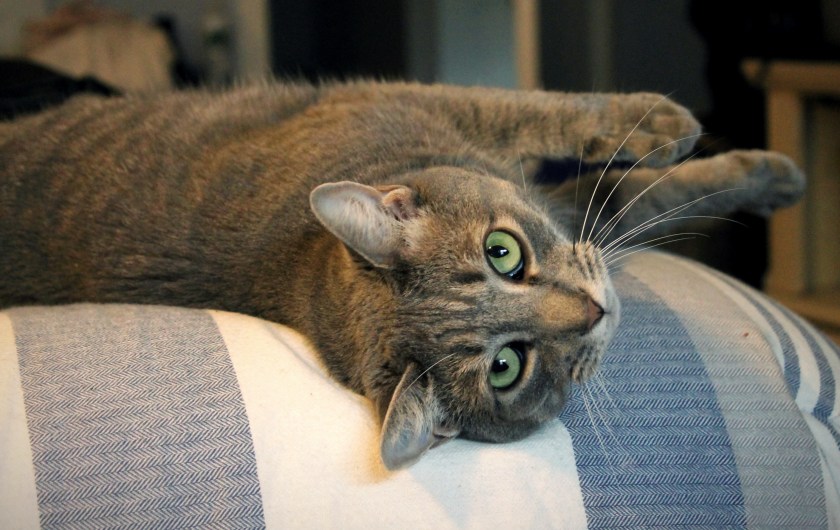
Bengal_Cat_(Fia)
A Bengal cat. Credit: Marius Engesrønning/Wikimedia Commons

The outraged woman reported the brothers, and condemnation was swift: Zouma lost several sponsorship contracts, including his most lucrative deal with Adidas, and he was fined $250,000 by his team, which is the maximum a Premier League club can levy against a player.

The brothers don’t yet know the full consequences of their actions. They’ll return to court for sentencing on June 1, and although Zouma has been contrite and has people vouching for him to the court, there may be other considerations after Zouma’s video apparently inspired others to hit their cats and post the videos online.

People who imitated Zouma’s animal abuse formed an online group, calling themselves the “Kick the Cat Club.”

“Since this footage was put in the public domain there has been a spate of people hitting cats and posting it on various social media sites,” Thames Magistrate’s Court prosecutor Hazel Stevens said.

In the meantime, Zouma’s two Bengal cats have been in the custody of the RSPCA. The cats, Bonbon and Cherie, didn’t suffer any lasting physical injuries from the abuse, and despite enduring trauma, the RSPCA said both cats are friendly and will be ready for rehoming soon.

“What makes this case even more sad is the way the video was filmed and shared, making light of such cruelty,” the RSPCA’s Dermot Murphy said. “We hope this case will serve as a reminder that all animals deserve to be treated with kindness, compassion and respect, and that we will not tolerate cruelty.”
Letting Your Cat Outside Could Cost You $50k In This German Town

Town officials say the step is necessary to protect a ground-nesting songbird native to western Europe.

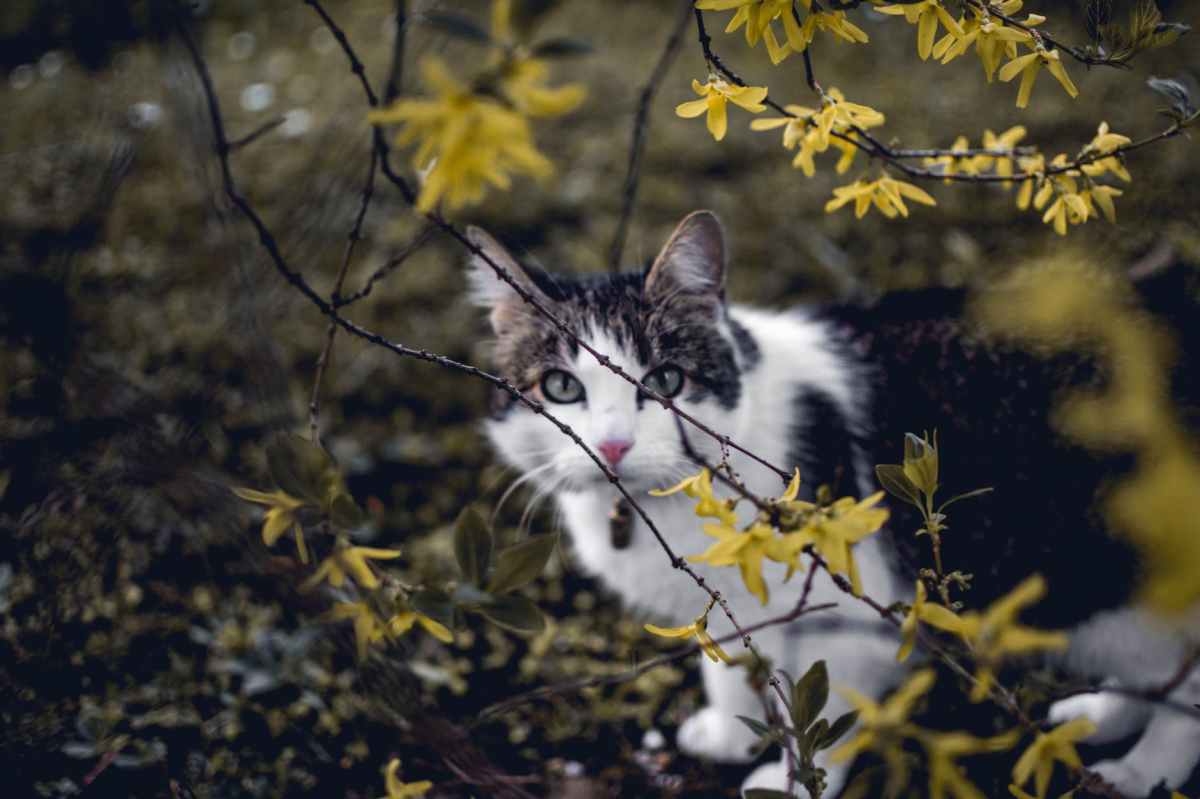
Elected leaders in Walldorf, Germany, are worried about the crested lark — so much so that they’ve decreed cats must be kept inside, with prohibitively painful fines for anyone whose cat harms one of the birds.

According to the decree, anyone who allows their cat(s) to roam outside from now until August will be fined €500, which is about $527. But if a cat kills or injures one of the European songbirds, Walldorf’s local government will fine the cat’s caretaker up to €50,000, almost $53,000 in USD.

That’s an eye-watering amount of money, especially in light of the fact that the crested lark is listed as a species of “least concern” by the International Union for Conservation of Nature. Experts say humans, not cats, are the biggest threat to the bird.

Officials in Walldorf — a town of about 15,000 people more than 600 kilometers southwest of Berlin — cited the same thoroughly-debunked studies that claim cats kill some 25 billion birds and small mammals annually in the US alone. They say they’re worried because the crested lark nests on the ground, making the birds, their eggs and their chicks particularly vulnerable to predators like domestic cats.

If you’re skeptical that local government officials — a mayor and town councilmen, essentially — are qualified to legislate on matters of conservation, you’re not alone. The decree has been met with pushback from animal rights advocates and feline fans.

“Suddenly preventing cats that are used to going outside from doing so, means immense restrictions and stress for the animals,” German animal welfare group Deutscher Tierschutzbund wrote in a statement. “The negative influence of cats on the population of songbirds is in any case controversial and, to our knowledge, has not yet been proven for the crested lark in Walldorf.”

And that cuts to the heart of the matter, doesn’t it? Like politicians in Australia and parts of the US, Walldorf’s elected leaders aren’t making decisions based on studies or reliable information. They’re taking action based on emotion and deeply flawed meta-analyses that aren’t even applicable to Europe.

We’ve always taken the position here at PITB that cats are much better off indoors. They’re domesticated animals, meaning if they have a “natural habitat” it’s human living rooms. They live much longer, healthier lives indoors and can be happy and fulfilled with a little effort on the part of their humans.

But we also believe decisions impacting living creatures should be based on real information gathered by people who don’t have an agenda. The landmark Washington, D.C. Cat Count is a great example, with birders, conservationists and cat lovers working together to complete an accurate census of domestic felines within city limits.

Now that they’ve established how many cats live in D.C. (about 200,000) and how many are truly feral without anyone caring for them (about 3,000), they can enact sensible solutions that are much more likely to successfully protect wildlife and cats without hysteria, agendas or inhuman proposals like enacting “cat hunting season” (as one US politician proposed), killing millions of cats with poisoned sausages (as Australia has done), or outright gunning cats down, as a rogue conservationist in California’s Bay Area did last year.

Cats are thinking, feeling animals. They deserve better than becoming the victims of human policies based on ignorance.

Survey: 7 In 10 Americans Say They Sleep Better With Pets In Bed, Obviously Haven’t Met Buddy

We’ll assume people who like to snooze with their furry buddies have normal cats. Buddy is not a normal cat.

Do you sleep better with your cat or dog in bed?

A significant majority of respondents in a recent survey said yes. British polling and survey firm OnePoll asked 2,000 Americans that question, with about 70 percent saying they get better rest with their furry friend next to them.

Most said having their cat or dog snoozing with them made them feel safer and more comfortable, while 58 percent admitted they sleep better with their pet in the bed than their significant other. While most people like having their animals sleep in their beds, some said pets could disrupt their sleep.

Of course if you’re like me, you never really had a choice. There was no adjustment period when I brought Buddy home for the first time. He didn’t hide under the bed and refuse to come out, or dash for the nearest small space.

That’s pedestrian behavior for a cat of his stature. Instead, the little guy came striding out of his carrier like a feline Genghis Khan and immediately started conquering territory.

PXL_20211212_072907627.NIGHT~4

“So this is my new bedroom, huh?” Buddy the Kitten seemed to say as he mewed excitedly. “Oh, look at this bed. Mine! Hey, that’s a sweet chair. Mine! I’m just gonna climb up onto your desk and survey my new territory if you don’t mind. The desk, by the way? Mine!”

He decided from the very beginning that my bed was his bed, and while I was to be his butler, waiter, masseur and personal groomer, I would also make a fine human mattress.

Thus our nightly routine: Buddy watches me impatiently as I get settled in bed, then makes himself comfortable either by draping himself over me, or wedging himself between my legs.

Readjusting and changing sleeping positions are severely frowned upon. I swear I can hear the annoyance in Bud’s voice, and his impatience as he waits for me to turn over so he can attend to what’s really important — his comfort.

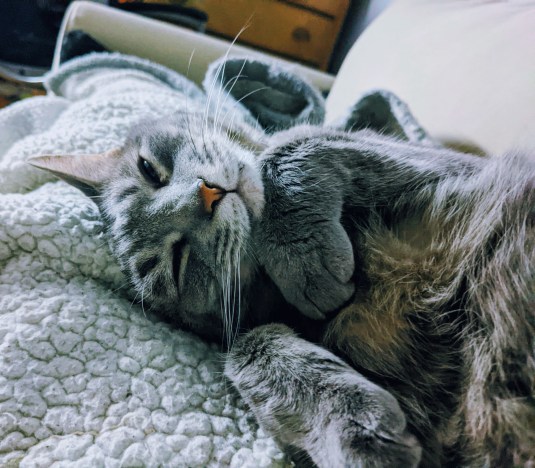
buddy_bed
“You should be deeply honored that I have deemed you acceptable to sleep upon. Now stop moving and don’t toss and turn during the night. I need my beauty sleep!”

Do I sleep better with him there? Mentally, yes. Physically, no.

Recently I wrote about his new habit of getting “sleep scritches,” which came about after he realized he could get me to raise my hand while I sleep. It took me a while to realize it was happening: At most I was dimly aware until I had a dream I was petting him, woke up and realized I was holding my hand up while Buddy was rubbing his face against my palm and purring happily.

He doesn’t wake me up for food, since I set aside a bowl of dry kibble and a bowl of fresh water for him before bed every night. If he gets hungry, he slides lazily off the bed, pads over to his little dining nook and quietly munches a snack before going back to sleep.

The little stinker’s proximity, and his tendency to meow in his sleep, also means he gate crashes my subconscious while I’m sleeping and appears in my dreams.

I can’t get away from him, but that’s okay with me.

The OnePoll survey was commissioned by Sealy, the mattress company.

Do your cats sleep in your bed? Does their presence make your quality of sleep better or worse?

NYC Cat Gets A Home After He Was Tied In A Trash Bag And Thrown In A Dumpster

Panda survived a traumatic experience but was rewarded with a happy ending in the home of a human who loves him.

Panda the cat would have suffered a brutal death in the jaws of a trash compactor if not for an eagle-eyed can collector who spotted the handsome tuxedo among the trash.

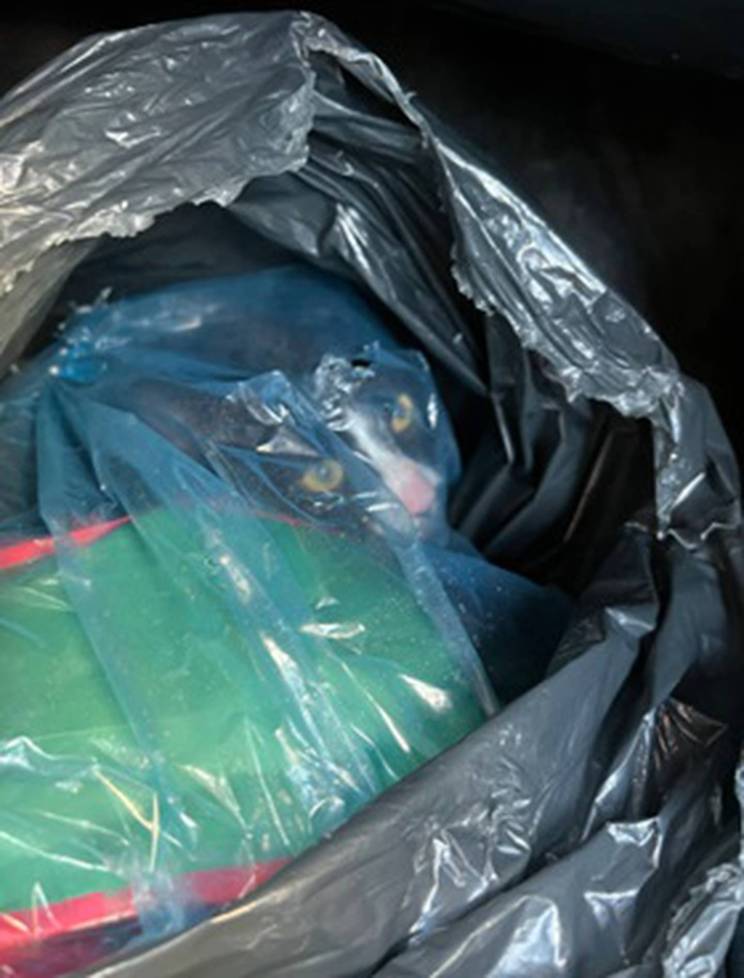
The little guy was literally double-bagged in a blue plastic bag and a larger trash bag, then thrown in a dumpster in the Bronx. There were holes in the inner bag where Panda had tried to claw his way out — and bits of plastic bag caught on his claws — but he had been unable to free himself.

Thankfully, someone looking for cans to recycle opened the outer bag, saw Panda and called 911. NYPD cops brought Panda to the ASPCA Animal Recovery Center in Manhattan, where staff began treating him for malnutrition, skin disease and a “minor gastrointestinal infection,” the Daily News reported.

Panda the cat
Panda a few moments after he was spotted in a dumpster in the Bronx by someone looking for recyclables. Credit: ASPCA

Despite all he’d been through — the neglect, abandonment and trauma of being tossed out like a piece of garbage — Panda was “sweet and social” with his rescuers.

They placed him in a foster home under the care of 22-year-old Abigail Jasak, who decided to keep him after he quickly made himself at home and won over Jasak and her roommates.

“Initially I had no intention of adopting him,” Jasak told the Daily News. ”Then I realized how comfortable he was around us. He already believed he was home.”

Jasak told the paper she was disturbed by the casual cruelty of tossing a cat in the garbage.

“There are other options,” said the Pace University student. ” You can bring it to a shelter. I truly cannot comprehend how someone threw away such a sweet cat.”

Big Buddy’s note: I’ve been to the ASPCA’s Upper East Side facility and visited in 0 B.B. (Before Bud, aka 2014) while I was looking to adopt. It’s a beautiful, incredibly clean, bright facility where each animal has significantly more space than they would in a normal shelter, and the staff are friendly and helpful. As awful as Panda’s situation was, I’m glad they were able to help him and pair him with a human who really cares for the little guy.

This Good Boy Has Helped Defuse 150 Russian Explosives In Ukraine

Ukranians are thankful for Patron, a Jack Russell Terrier who has become a prolific revealer of hidden landmines and other dangerous ordnance left as traps by Russian forces.

This is a cat blog, but every once in a while Little Buddy the Cat magnanimously allows us to issue well-deserved props to dogs who do extraordinary things, like Patron, a two-year-old Jack Russell terrier in Ukraine.

The bomb-sniffing good boy has so far sniffed out 150 dangerous explosives, including landmines and live ordnance left behind by the retreating Russians, according to Ukraine’s foreign ministry. He finds the explosives, tells his human buddies, and the de-miners go to work on neutralizing the devices.

Not only does Patron help save lives at a crucial time in the war, when Russian forces are covering their retreat with mines and other traps, he’s also a handsome little guy and he happily cuddles with kids who could really use a little brightness after what they’ve endured. Is there anything Patron can’t do?

Patron and other bomb-sniffing dogs perform a critical task as they help their human handlers sweep cities and towns before civilians can return. While some “experts” predicted Ukraine would fall in days, the country has shocked the world by not only enduring the Russian invasion, but pushing the invaders back after inflicting heavy losses on them.

Making home safe for returning refugees

As a result of their failure Russian units are consolidating in eastern Ukraine, and some Ukrainians are cautiously returning to what’s left of their cities and neighborhoods for the first time since the Feb. 24 invasion. Since Russia abandoned efforts to take Kyiv and the entire country, tens of thousands of Ukrainians have been returning home every day, according to a United Nations report.

While Kyiv was a ghost town just a few weeks ago, people have returned to the streets, bakeries and cafes have reopened, and churches are holding services again. Patron and his buddies are making sure hidden mines and other traps are neutralized before people come home, avoiding further tragedy after so much loss.

Patron has been helping clear Chernihiv and its surrounding environs. The northern Ukrainian city, which is about 150 kilometers northeast of Kyiv, has been designated a “Hero City” by Ukrainian President Volodymyr Zelensky. The title has also been given to cities like Kharkiv, Volnovakha and Mariupol, and marks sites where Ukrainians dug in to defend their homes despite the brutality of the Russian invasion.

“One day, Patron’s story will be turned into a film, but for now, he is faithfully performing his professional duties,” staffers at Ukraine’s Centre for Strategic Communications and Information Security wrote on Twitter when they shared a video of Patron last month.

Cats have your back, dawgs!

Buddy the Cat salutes Patron and says cats “would totally would help sniff out explosives, but the dogs seem to have a handle on that and we don’t want to steal anyone’s thunder.”

Instead, Buddy said, he’s sure the felines of Ukraine are engaged in some other kind of dangerous, patriotic work, such as reminding humans when it’s dinner time, keeping seats warm and providing delightful company to the war-weary.