The naturalist is excited to unveil his most striking documentary yet.
NEW YORK — All those hours trudging through the dense undergrowth of New York living rooms, hoping for a glance of an elusive feline, have finally paid off.
Speaking to reporters about his newest nature special, Sir David Cattenborough said he and his crew spent more than 200 hours in the natural habitat of the silver-furred Buddy.
Also known as the Buddinese tiger, the silver-furred Buddy is “native to the living rooms of New York” and, with his meowscular physique, “is the apex predator of his environment.”
“What a fascinating animal!” Cattenborough exclaimed.
The famous naturalist, conservationist and documentary narrator accompanied a camera crew into the thick jungles amid couches, pillows and carpets, where they observed the silver-furred Buddy at a safe distance as the fierce feline went about sleeping, eating and lounging.
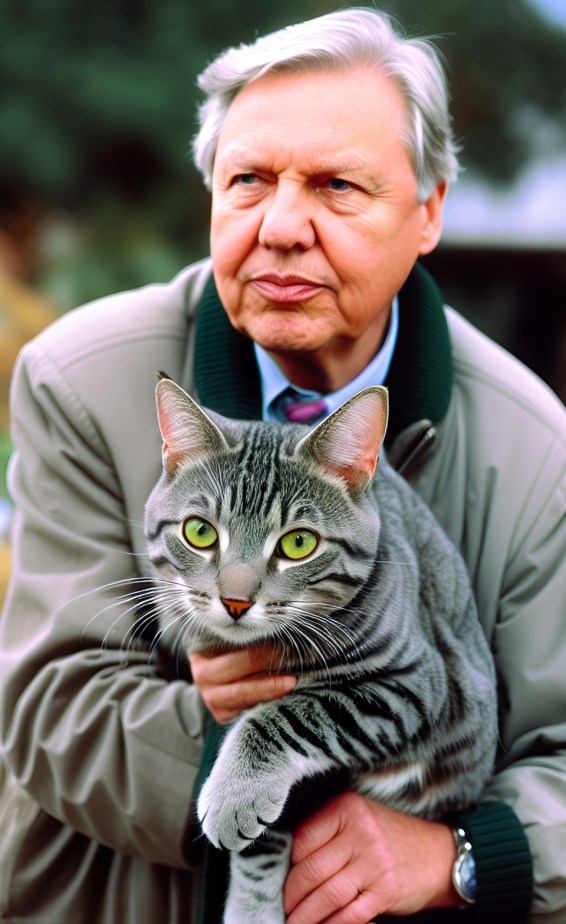
Sir David Cattenborough with Buddy the Cat.
Speaking excitedly in his familiar whimsical cadence, Cattenborough described the documentary crew’s luck in catching the Buddy on a hunt, when he ruthlessly brought down a red laser dot.
“People ask me, ‘Sir David, what makes the Buddy any different from other tigers and lions? Isn’t it basically the same animal?’ While they’re all famously fierce felids who strike fear into the hearts of other creatures, there are differences as well,” Cattenborough explained. “Thanks to the hard work of our dedicated crew, we’re able to bring our audience along as we take the closest look yet at this most elusive and fascinating beast.”
The new documentary, “Buddy: The Perfect Predator,” will be available to stream exclusively on Pain In The Bud, and was made possible by a grant from the Buddinese Foundation for Greater Buddesian Understanding, with additional financial support from the Coalition for Meowscular and Ripped Cats. Look for it this week on PITB!
Sir David Cattenborough was able to earn the trust of a silver-furred Buddy.
The famous cat takes to the skies in her latest movie cameo.
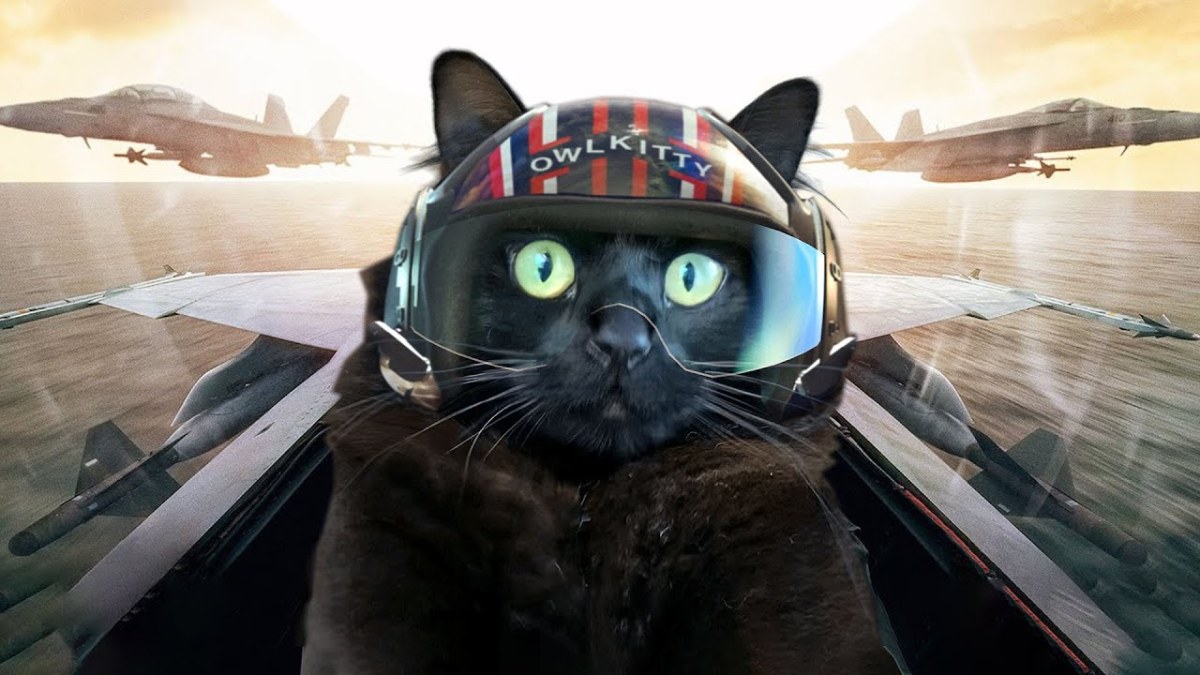
The infamous OwlKitty has returned to the big screen, this time flying wing alongside Tom Cruise’s Maverick in a meowified version of Top Gun.
OwlKitty’s patient humans are known for meticulously filming their beloved black cat in front of green screens and inserting the cute moggie into various movies and TV shows, from Jurassic Park to Titanic, Home Alone and even Netflix’s The Witcher.
OwlKitty’s female, so technically she’s Cruise’s wingwoman, and we see her in the cockpit of an F-18 Super Hornet, with Cruise getting a dressing down by the admiralty, and in the iconic beach volleyball scene.
The director was very specific about the way his cats should be treated in his absence.
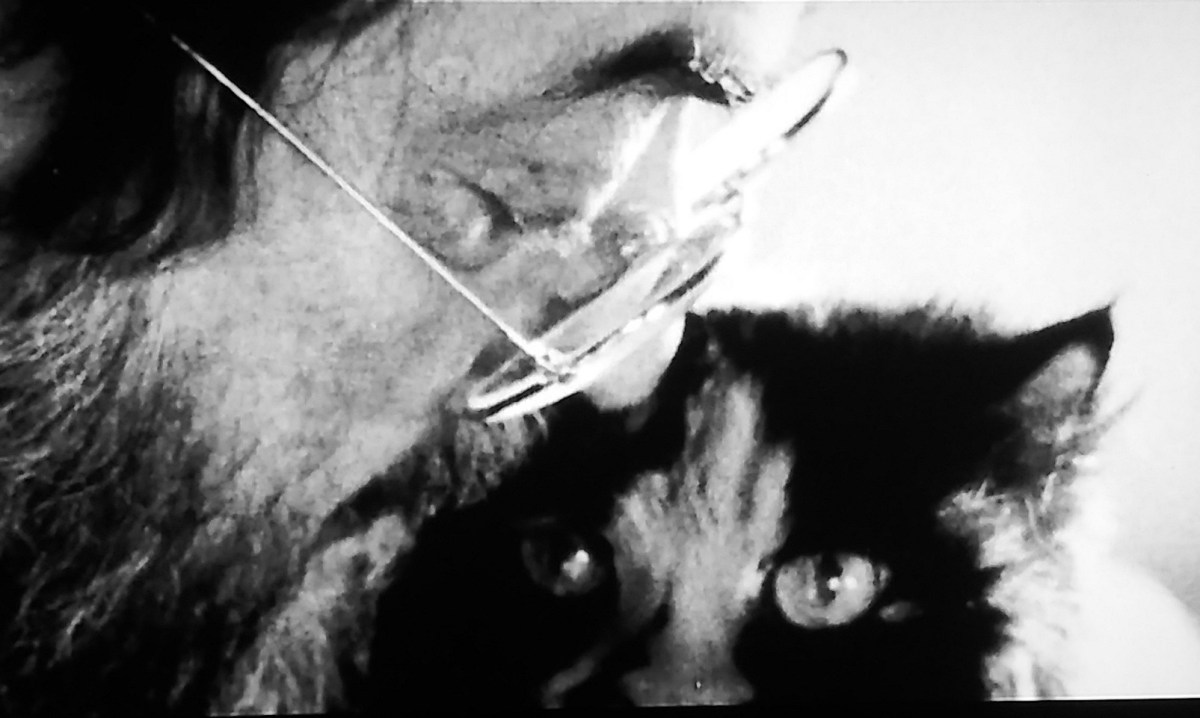
Stanley Kubrick was so particular about his cats, he created a 15-page guide to caring for the beloved felines while he was away making films.
Kubrick, who is considered one of the greatest film directors of all time, was a homebody and recluse — when he wasn’t working behind the camera — whose eccentricities have been documented in books and interviews over the decades.
Of course having cats isn’t an eccentricity, but Kubrick was very particular about how his pride of house lions should be treated, how they should eat and drink, and how their behavior should be monitored.
His lengthy instruction booklet detailing the particulars of their care had at least 37 sections!
His daughter, Katharina Kubrick-Hobbs, said the guide was titled Care Instructions: How To Look After The Animals, and the director left a version of it behind when he went to Ireland to shoot 1975’s Barry Lyndon. The 37th item dealt with breaking up potential fights among the kitties, Kubrick-Hobbs recalled:
“When we went to Ireland on Barry Lyndon, he left this 15-page document, Care Instructions: How To Look After The Animals. And the 37th instruction is: ‘If a fight should develop between Freddie and Leo–‘ and that was the father and son tomcats that we had– ‘the only way you can do anything about it is to dump water on them. Try to grab Freddie and run out of the room with him. Do NOT try and pick up Leo. Alternatively, if you open a door and just let Freddie get out, he can outrun Leo. But if he’s trapped in a place where you can’t separate them, just keep dumping water, shouting, screaming, jumping up and down, and distracting them, waving shirts, towels… just try and get them apart and grab Freddie.‘”
Kubrick died at age 70 in 1999 after a film career that spanned five decades, from 1953’s Fear and Desire, and 1960’s Spartacus starring Kirk Douglas as the eponymous warrior, to Full Metal Jacked (1987) and Eyes Wide Shut in 1999. One of his best-known works was 2001: A Space Odyssey, a 1968 collaboration between Kubrick and celebrated science fiction novelist Arthur C. Clarke. The film was groundbreaking for its realistic portrayal of space travel and exploration, and created a visual shorthand that still defines the genre today.
Stephen King adaptation The Shining (1980), Cold War black comedy Dr. Strangelove (1964) and A Clockwork Orange (1971) are among his most popular films.
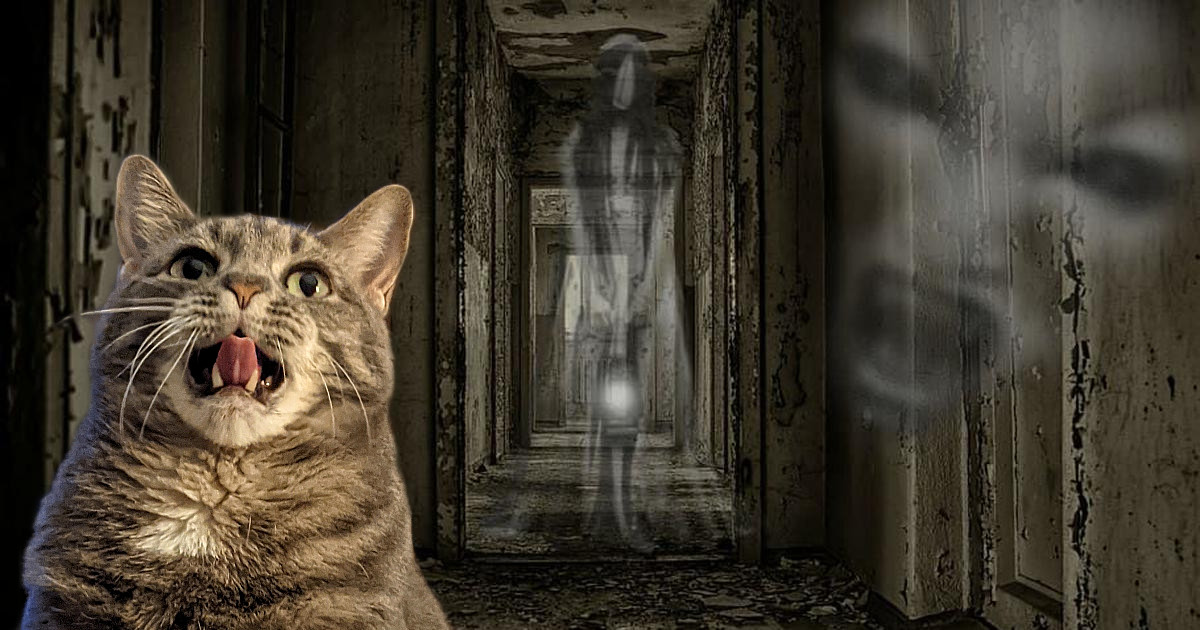
As one of the bravest cats on planet Earth, Buddy is uniquely qualified to advise scaredy cats who get easily freaked out by horror movies.
Dear Buddy,
My human likes to watch horror movies and they’re freaking me out! I can’t even look at mirrors since we watched Oculus, I jump at shadows ever since watching 30 Days of Night, and I wet my favorite napping spot the night we saw The Ring.
But it gets worse! My human spent almost two weeks watching a TV series called The Haunting of Hill House, which was so scary, scarier than vacuum cleaners and filled with terrifying scenes! It had all kinds of monsters and people dying and countless sinister-looking ghosts hidden in the background of every scene.
Buddy, I can’t sleep at night, even with my human. I’m scared of monsters in the closet or under the bed, and ghosts outside the bedroom door. I’m scared they’re gonna get me in my sleep!
Help me, Buddy!
Terrified in Tallahassee
Dear Tallahassee,
You’ve come to the right cat, amigo! Among our kind the name Buddy is synonymous with bravery as well as good looks and charm, and I’m known for keeping my cool in circumstances that would reduce lesser cats to frazzled, freaked-out messes.
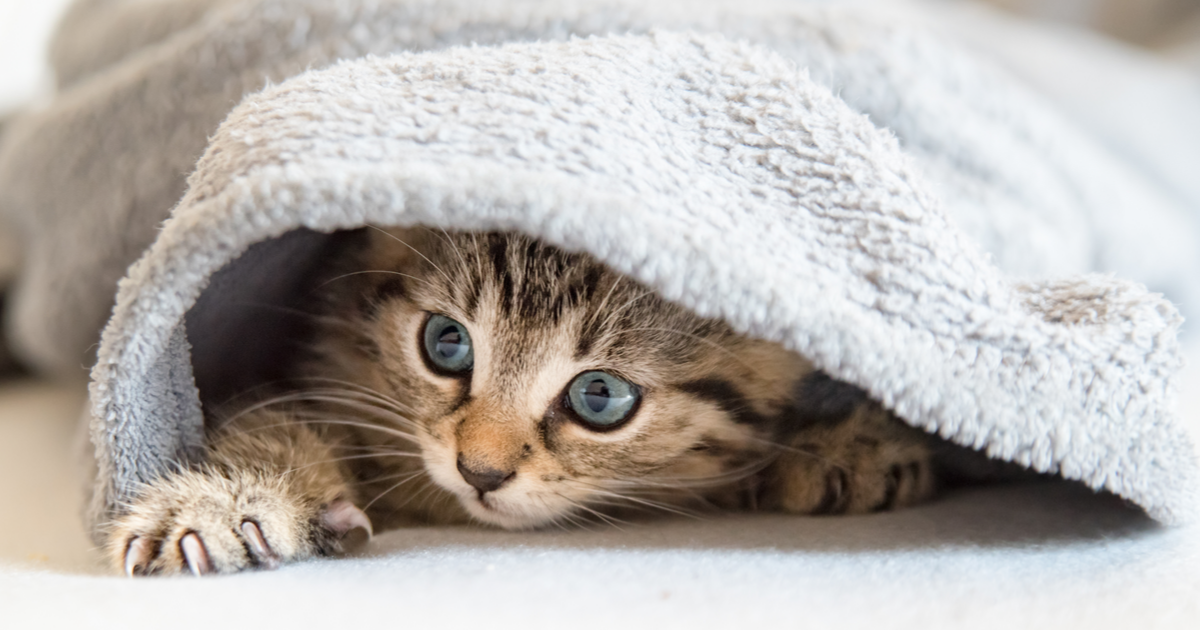
I’m going to let you in on a little secret, one they don’t teach to just any cat or kitten: Get under the blankets!
Blankets: The secret weapon.
You see, blankets are about more than keeping those furless humans warm when they sleep. Blankets have magical properties that repel monsters and ghosts. They’re like shields or magic force fields!
Humans know that if you’re scared and you think there might be monsters in your home, the best solution is to get completely under the blankets, wrap yourself up nice and cozy and rest easy knowing the safety they will afford you until sunrise, when ghosts and monsters have to retreat or die in the sunlight. (Or was that vampires? I get things mixed up sometimes.)
Anyway, being the brave cat I am, I’m totally not scared of anything and I don’t have to hide under blankets. In fact, my human sleeps easy knowing that I’m guarding him. But if I were scared, Tallahassee, I’d dive under some magical blankets and feel my worries melt away.
Your fearless friend,
Buddy
Buddy is widely regarded as one of the bravest cats in the world.
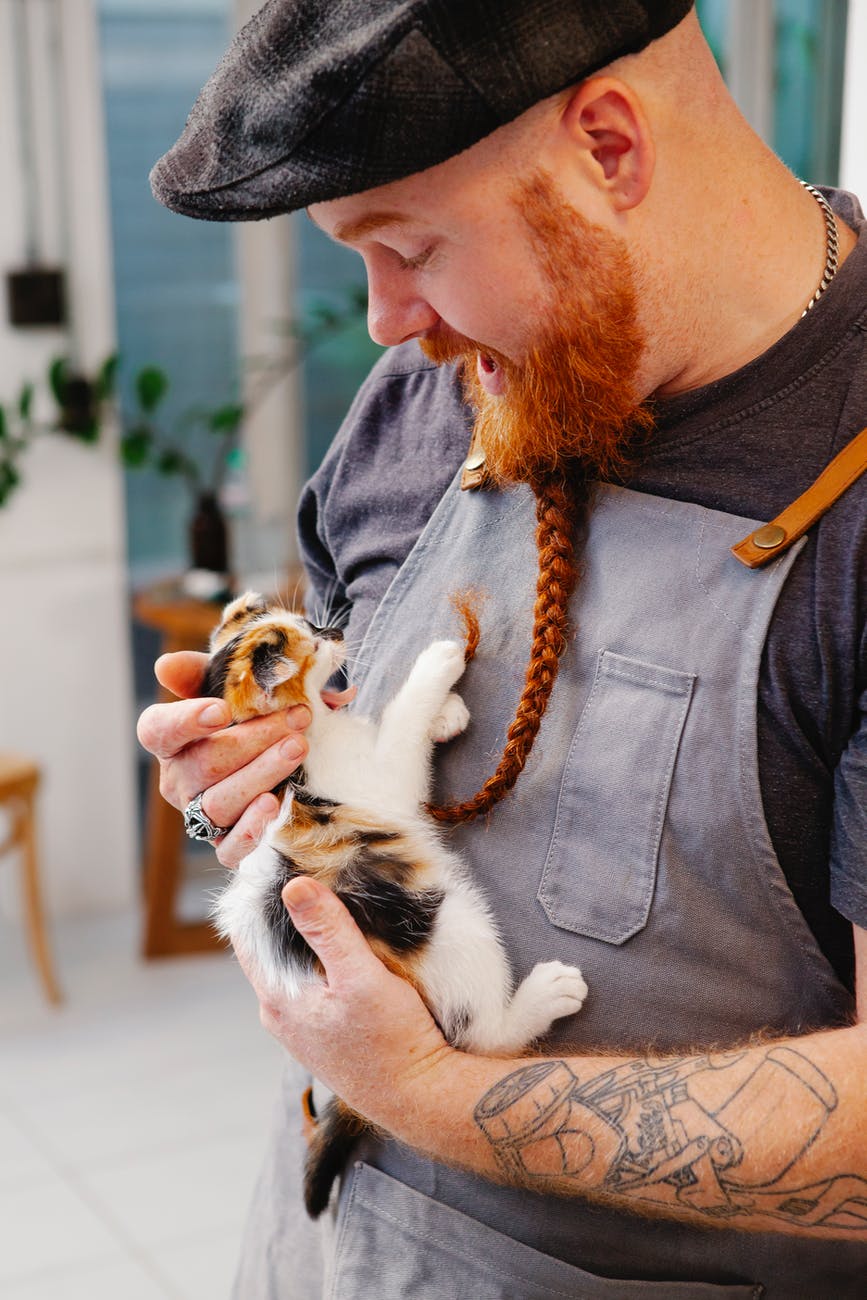
A screening of ‘Cat Daddies’ will benefit the Little Lion Foundation, which specializes in caring for neonatal and abandoned kittens.
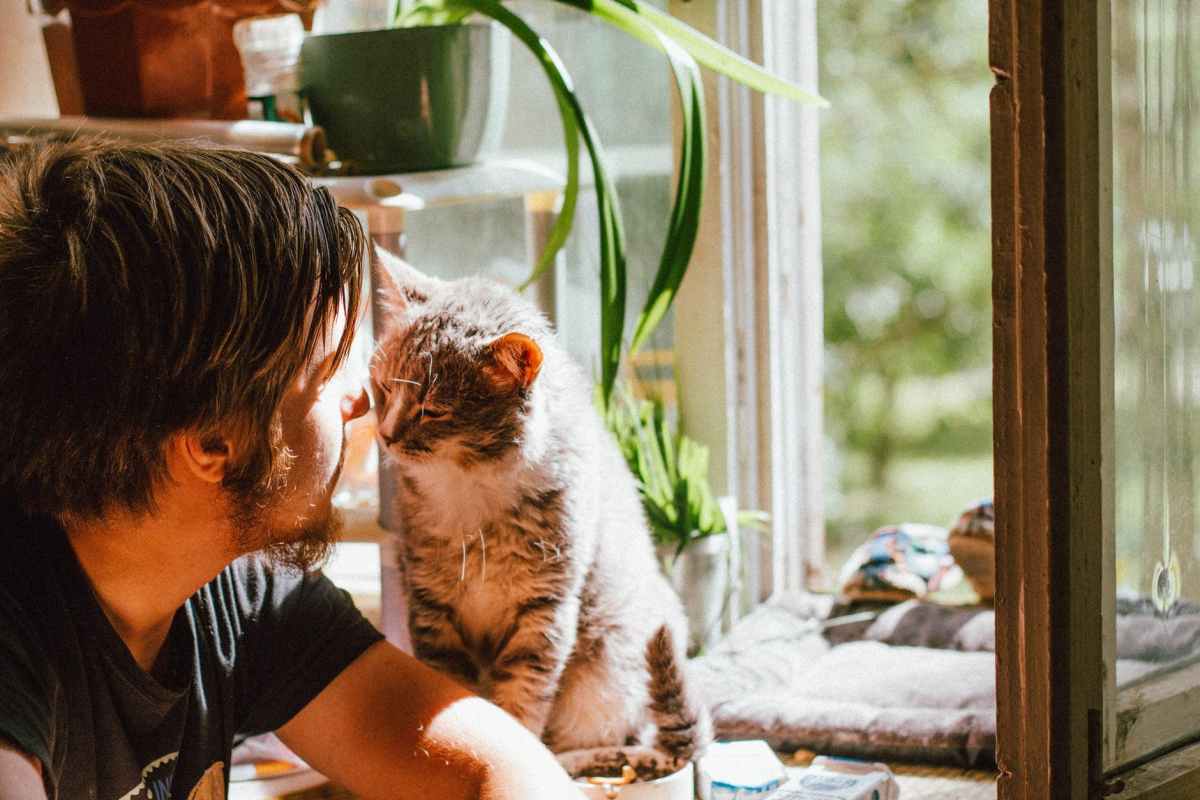
A trailer for ‘Cat Daddies‘ comes right out with it: Men who love cats are often stereotyped as oddballs.
“People see a cat dad and they think ‘Oh he must be weird and creepy,” says one guy, who is shown hilariously working out his biceps by lifting his cats in place of weights. “I feel like we’re getting to a point where it’s okay [to say] ‘Yeah, I have cats.'”
Another man recalled a conversation with his college buddies in which one of them floated the idea of adopting a few cats.
“The reaction was ‘No man, you can’t do that,'” he says with an amused look on his face.
Of course, PITB readers know it’s perfectly natural for men to love cats, especially cats as muscular, intimidating and tiger-like as Buddy.
But if you’ve ever wondered what the experience is like for guys who want to adopt kitties, ‘Cat Daddies’ takes a look at several men from different backgrounds and their beloved felines, from a homeless man in New York who won’t part with his tabby even it means he won’t get housing, to an Instagram star whose rise to fame has been propelled by his feline masters.
Californians can catch the documentary in person, and help fund a good cause, at an April 16 screening in Long Beach, CA, on behalf of the Little Lion Foundation. The California-based nonprofit specializes in caring for neonatal and young, abandoned kittens, as most shelters aren’t equipped to care for them and such kittens are often euthanized if they land in an animal control or kill shelter.
For the rest of us, check out the Cat Daddies site for a list of virtual screenings and festival events.
Credit: Tim Douglas/Pexels
A grieving woman explains why she’s cloning her late cat
Kris Stewart adopted Bear, a five-year-old ragdoll “with a big, bold, sassy look,” in March of 2021.
Stewart, the CEO of a senior care company in Canada, described Bear as “the smartest animal I’ve ever owned,” and said the resourceful cat could work out how to open locked doors and windows.
“What I didn’t realize was his need for adventure and exploring,” she wrote in a column for Newsweek.
After “cat-proofing” her backyard and taking Bear on walks via a harness, Stewart decided the ragdoll needed to be outside to be happy. Bear “was off-leash by May 2021,” she wrote.
“Then, one day in January 2022, I let him out about 4.30pm and within about 20 minutes I heard something, saw cars backing up down the street and ran outside. Bear had been hit. Obviously it was my fault. I’m his guardian and I made the wrong decision, and I have to live with that.”
Stewart acknowledges that cloning is a process that involves mistakes, although it’s not clear if she’s aware just how gruesome the process can be. Likening it to “human parents who want to go through IVF rather than adopt,” she said she’s hoping the clone will have the same temperament as her beloved Bear.
“I would much rather replicate Bear’s genetic material into another cat than adopt again because I would love to see the personality of Bear live on,” she wrote. “He was the most brilliant animal I’ve ever owned. Research tells us that a significant portion of personality is carried in genes so I’m willing to take the chance. I’ve said before that Mother Earth is not finished with Bear and Bear is not finished with Mother Earth. So, if I can bring back his genetic material in the form of another cat, I would like to do that. If their personalities are a little different, that’s OK, I’ll be happy regardless.”
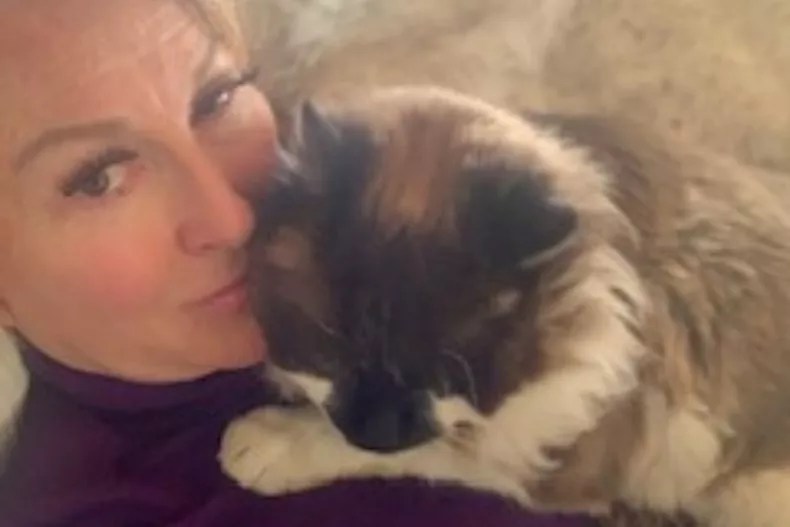
Stewart with Bear.
It’s clear Stewart is devastated by losing Bear, and we don’t want to sound callous by criticizing her decision. Grief leads people to do all sorts of things, and there’s no “correct” way to cope. We all handle it differently.
At the same time, it’s wishful thinking to believe a clone is somehow a continuation of the original, or that cloning can bridge the considerable gap between nature and nurture. That’s just not how it works. Sadly, Mother Earth is done with Bear — there’s no continuity of consciousness.
Even in science fiction stories where cloning technology is flawless and human cloning somehow exists despite considerable moral and religious objections, it’s clear that cloning is, well, cloning: Even if the clone is perfect in every way, even if the process manages to faithfully reproduce personality and memories can somehow be transferred, there is no “bridge” between the original and the copy. For the person who is cloned, life ends when their consciousness blinks out, and nothing can resurrect it.
We hope Stewart finds peace and loves her new cat, but we don’t believe cloning is right answer when grieving the loss of a pet.