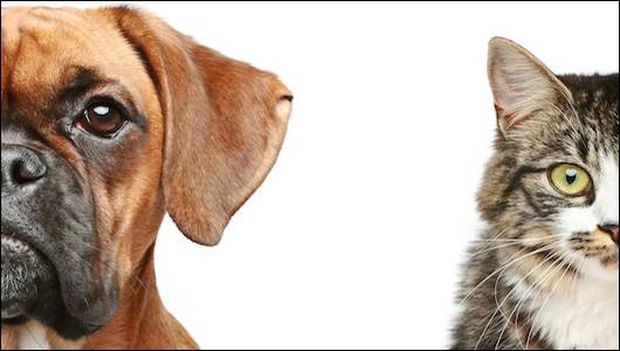
“Study finds dogs are more than twice as smart as cats,” the clickbait headline reads:
A study gives dog owners solid scientific evidence that dogs really are smarter than cats.
A study led by Vanderbilt University counted for the first time the number of neurons in the cerebral cortex of the brains of cats and dogs and found that dogs have more than twice as many neurons as cats.
The research found that dogs have about 530 million cortical neurons while cats have about 250 million. These neurons are the brain cells associated with thinking, planning and complex behavior, which are all considered hallmarks of intelligence.
That’s from a story published Aug. 30 on Local12.com, the website of a Cincinatti-area news station.
So what’s wrong with the story?
It’s dishonest: The study was conducted in 2017, but the Local12 story presents it as news in August of 2019.
It quotes the study’s lead author, giving the impression a reporter from Local12 spoke to her. That did not happen. The quotes were copied and pasted from the press release that originally announced the study two years ago.
It misinterprets the study’s results: Neither neuron count nor brain size — relative or absolute — are reliable indicators of intelligence.
This is what passes for news in 2019: Old, recycled content presented as new information, slapped together by a web producer who didn’t bother to read more than the study’s abstract.
It’s all about traffic and designing pieces of content ready-made for Facebook feeds.
But what about the central claim, that the number of neurons in an animal’s brain correlates to intelligence?
If that were true, we’d be living on a planet dominated not by humans, but by elephants: Earth’s largest terrestrial animal has some 260 billion neurons compared to an average of 100 billion for humans.
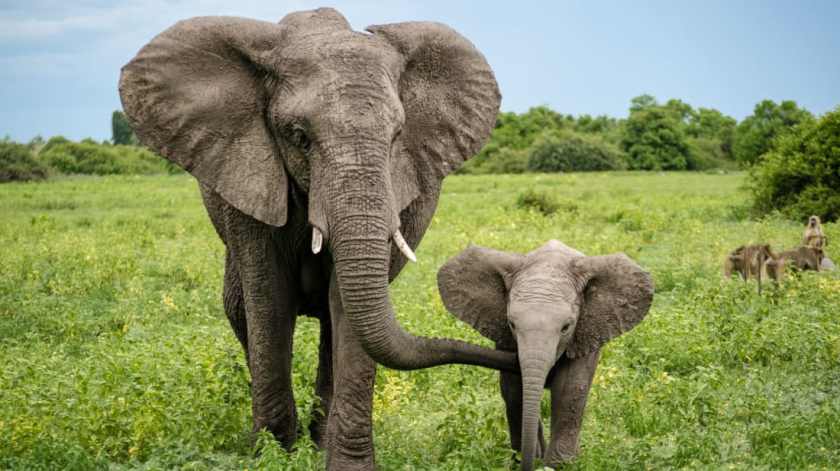
“Hear that, son? We have more neurons than humans!”
Research suggests the number of neurons in the cerebral cortex, as opposed to the entire brain, may be a better indicator of intelligence. Indeed, that’s what the study focuses on. The cerebral cortex is associated with higher cognitive functions. As you’d expect, humans have unusually high neuron counts in that region of the brain.
But by that measurement, humans aren’t at the top either.
If neuron density in the cerebral cortex was the primary indicator of intelligence, the long-finned pilot whale would reign supreme, and other types of whales and dolphins would rival humans.
Not only do pilot whales have twice as many cortical neurons as humans, their brains have much more surface area, which scientists once believed corresponded to intelligence.
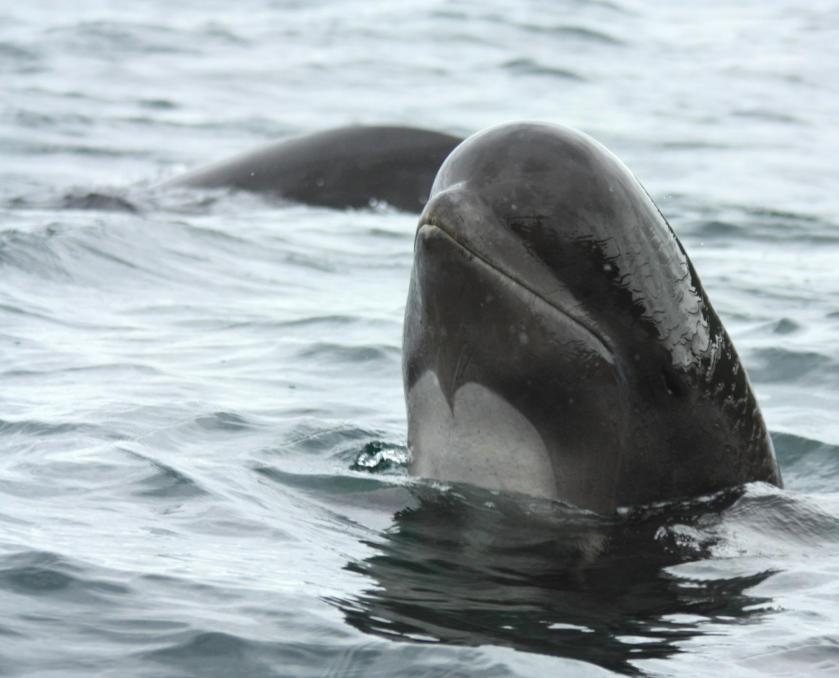
“Actually we are the Earth’s smartest creatures according to cortical neuron count. Suck it!”
So if we’re keeping score, intelligence is not determined by:
The number of neurons in the brain
The number of neurons in the cerebral cortex
Brain size
Brain size relative to body mass
Brain surface area
Brain “folds”
At one time or another, each of those things was thought of as the way to measure smarts. So if none of those things are true markers of intelligence, what is?
That’s the million-dollar question. We don’t have an answer, which is why scientists conduct this kind of research in the first place.
Contrary to what the article claims, cortical neuron count does not provide “solid scientific evidence that dogs really are smarter than cats.”
But that doesn’t make for a clickable, shareable headline, does it?
In truth, we can’t even define what “more intelligent” really means because each species sees the world differently, and has different priorities to enable it to survive and thrive.
When we measure intelligence, we measure it on a human scale, according to how we humans see the world. That’s hardly an impartial way of evaluating the intelligence of animals with much different needs and ways of seeing the world, and it doesn’t yield many useful insights.
Keeping that in mind is particularly important when it comes to studying cats, who have their own agendas and priorities. Dogs are eager to please and obedient. Cats only listen when it suits them.
That doesn’t mean one is smarter than the other, it simply means they’re different
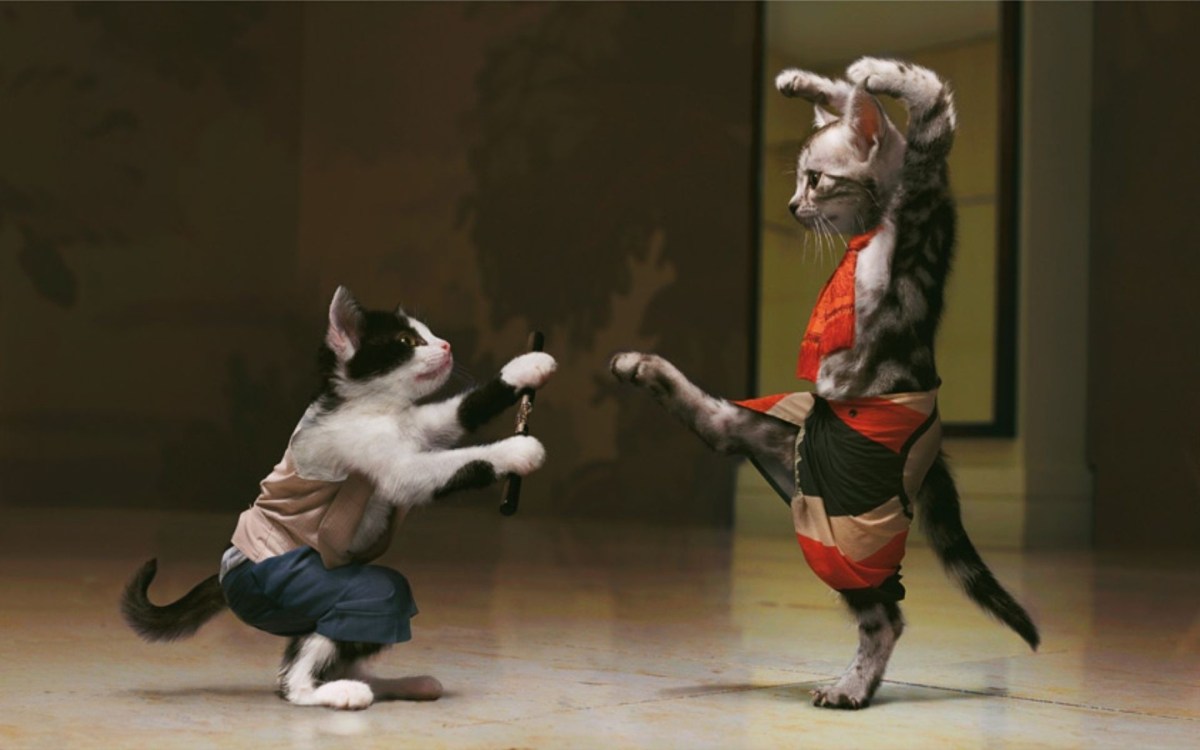
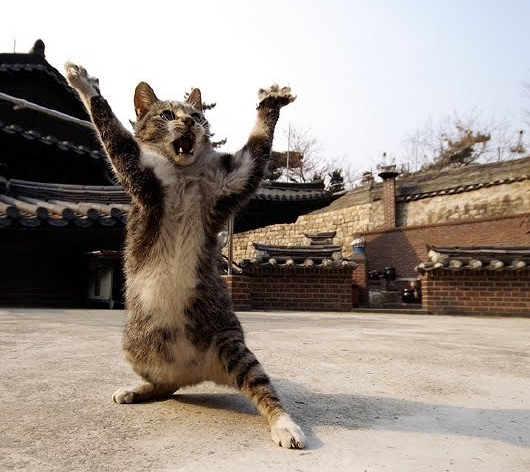
My style cannot be defeated! You will rue the day you failed to clean my litter box. Hah!
Welcome, young grasshopper.
For the next 10 years, these temple walls will be your home. Before you return to the realm of man and cat wearing the orange robes of a true sifu, you will learn the many styles of cat fu!
Dissatisfied With Wet Food Technique:
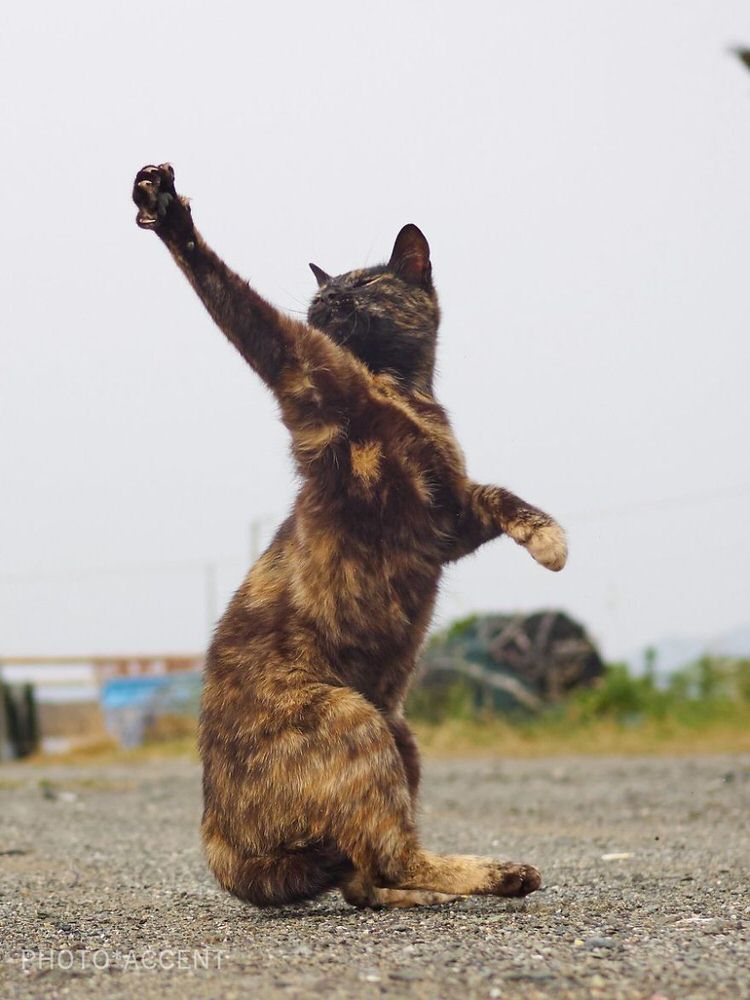
“You dare feed me tuna? Prepare to die!” Primarily deployed against humans, this style is effective in registering displeasure at meal time. It should be accompanied by a shrill, as-annoying-as-possible meow.
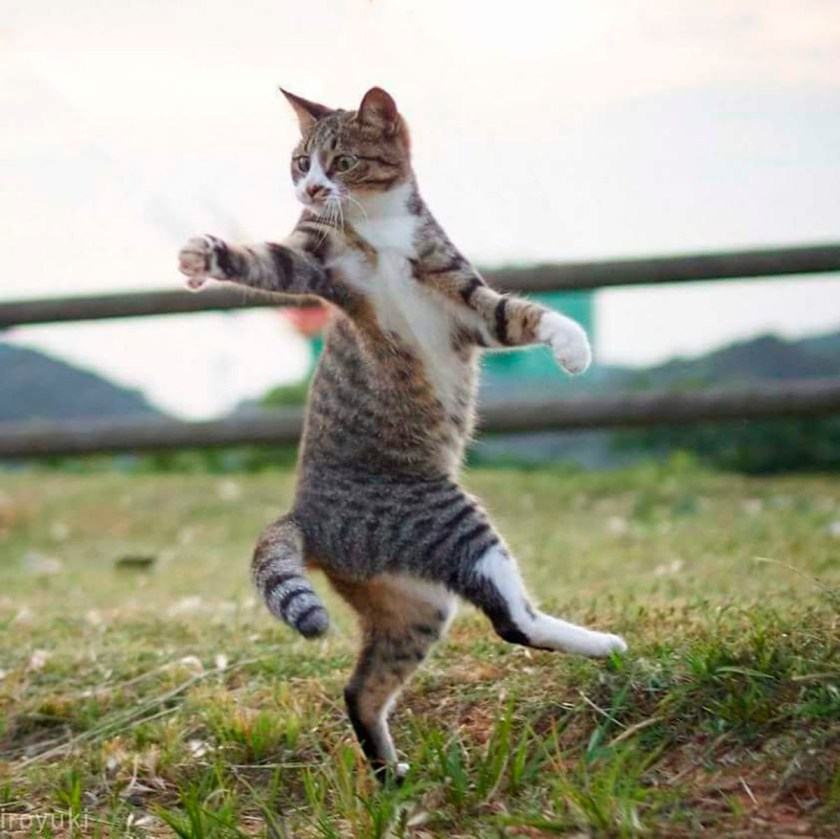
Invisible Skateboard Style:
“Tony Hawk is an amateur who cannot defeat my style!”
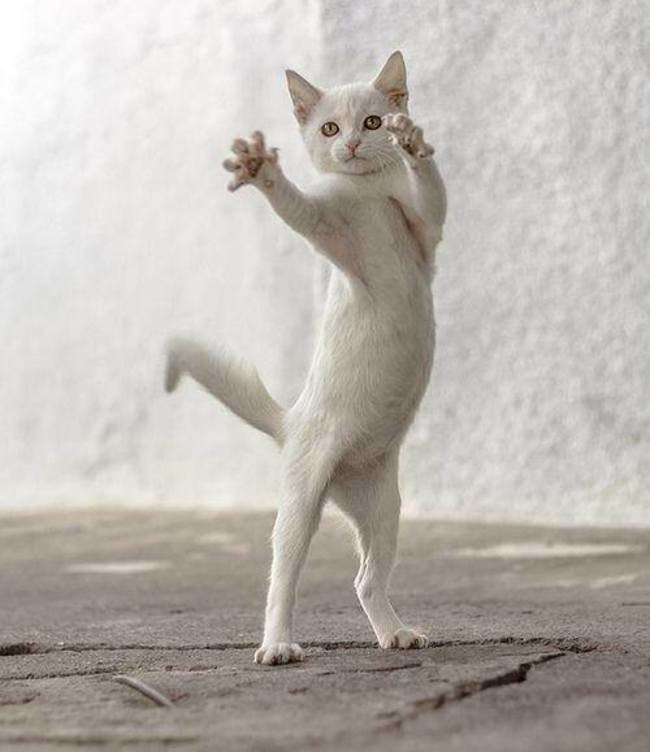
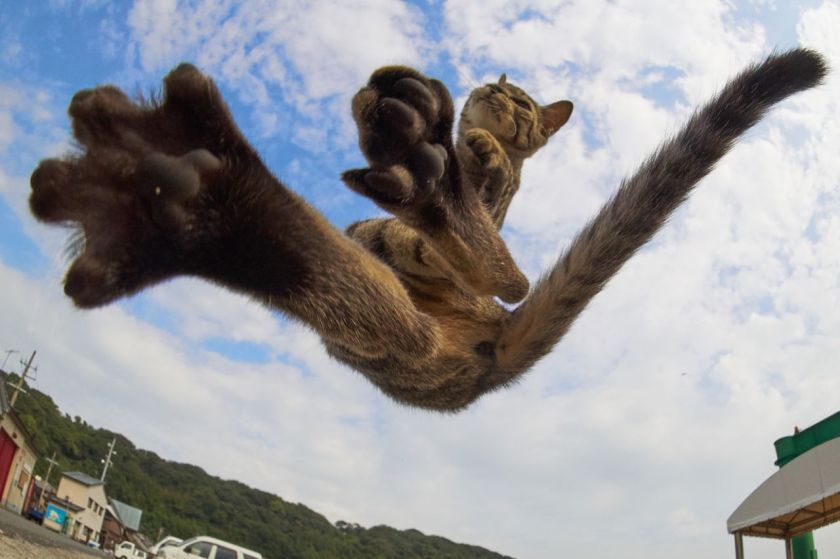
Stance of the Five Bladed Bitch-Slap:
“Step away from my treats!” A powerful stance to strike fear into the hearts of cats and humans alike. The extended claws signal you mean business.
Toxoplasma Gondii Technique
A true cat fu Master need not use his fists, for he is able to control and manipulate the minds of simple creatures like humans.
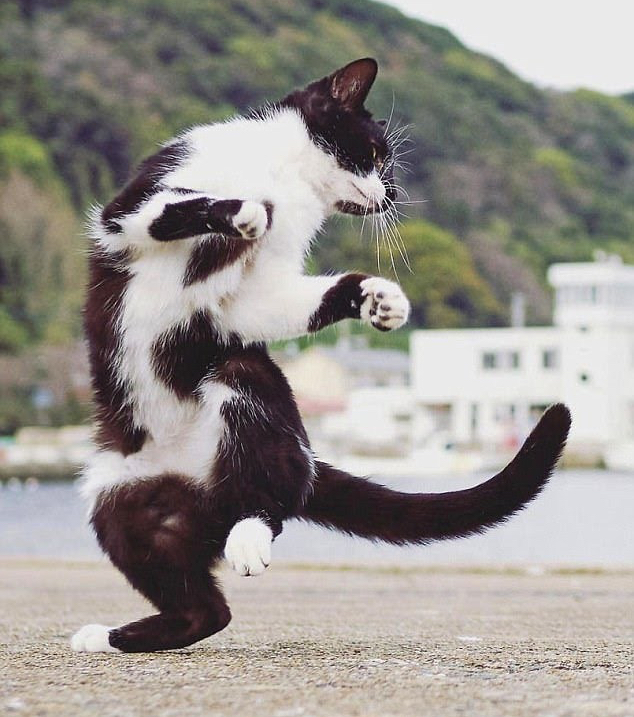
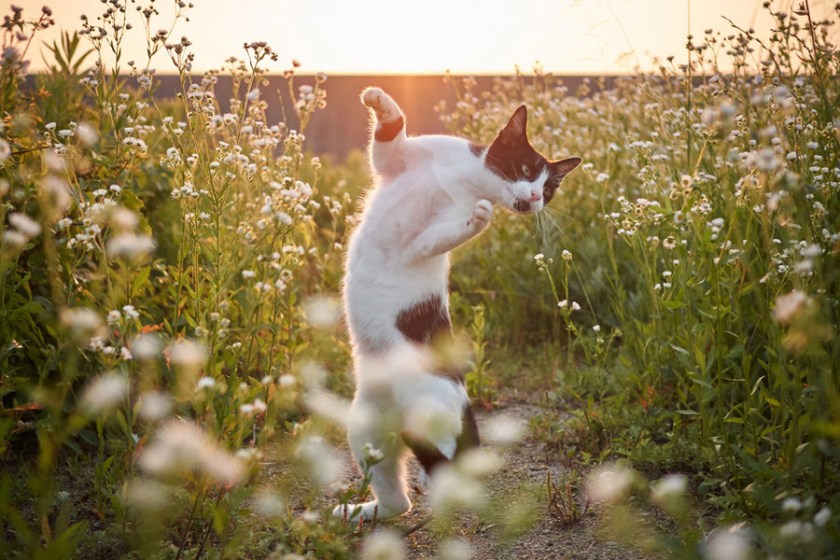
Whirling Tuxedo Style:
“You steal my Temptations? Prepare to die!”
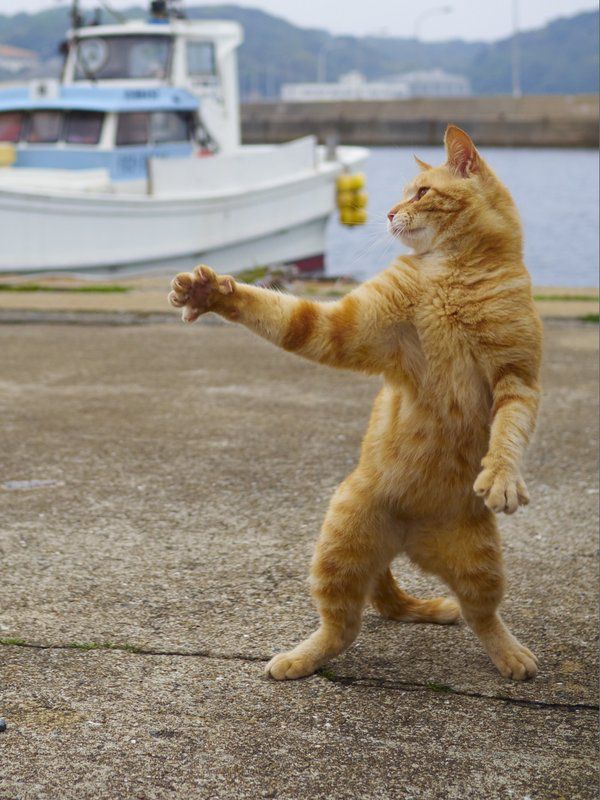
Can Opener Fist of Doom:
If this technique were not so difficult to master, humans would be rendered obsolete.
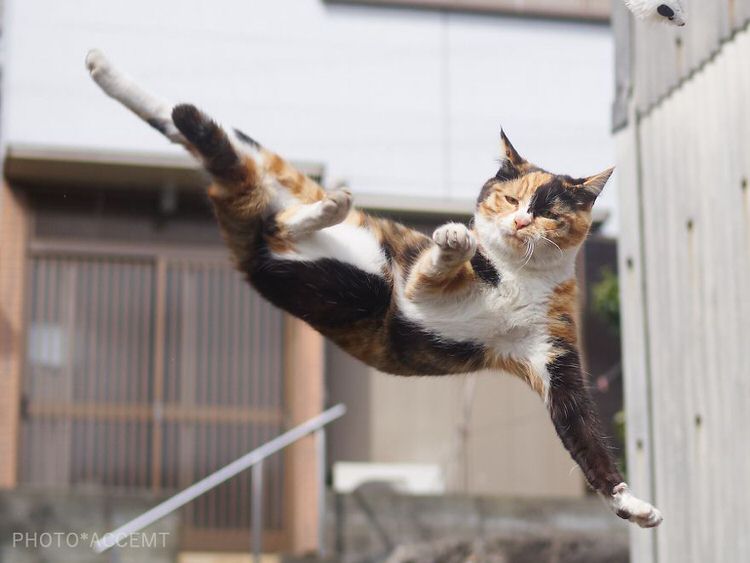
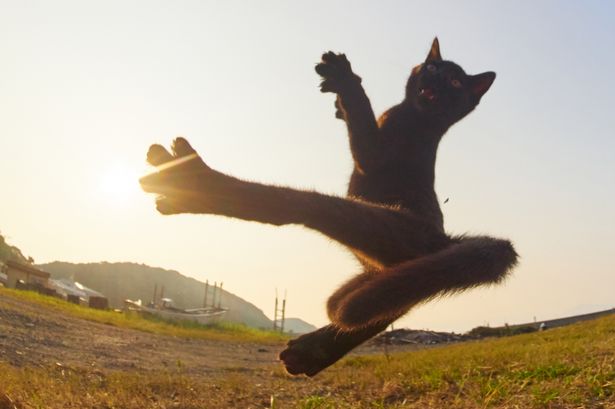
Flying Strike of Wake Me Up and Feed Me Breakfast:
“You dishonor your family by sleeping until 5:59 a.m. Get out of bed and feed me breakfast, or feel the full extent of my wrath!”
Soiling Tiger Style:
“You shall rue the day you chose not to clean the litter box.”
Stop Petting Me Before I Bite You Technique:
“I enjoyed the petting and now demand that you stop, human.”
Stance of the Broken Wand Toy:
“Better get to the pet store and buy me a new one, or else…”
Inebriated Catnip Boxing Style:
“Oh man, this is good stuff. Who’s got the munchies?”
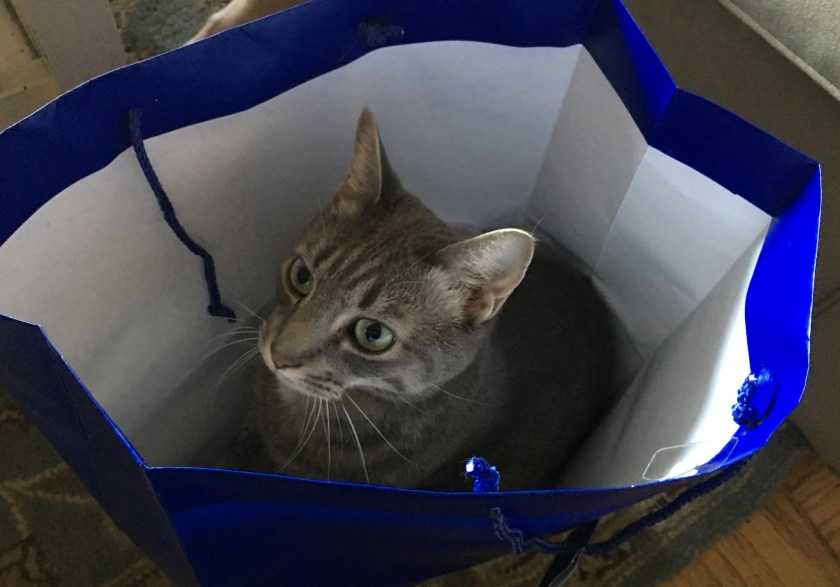
Crouching Tabby, Hidden Buddy Style:
“This is stealth, not cowardice. My enemies cannot see me because I am inside a bag!”
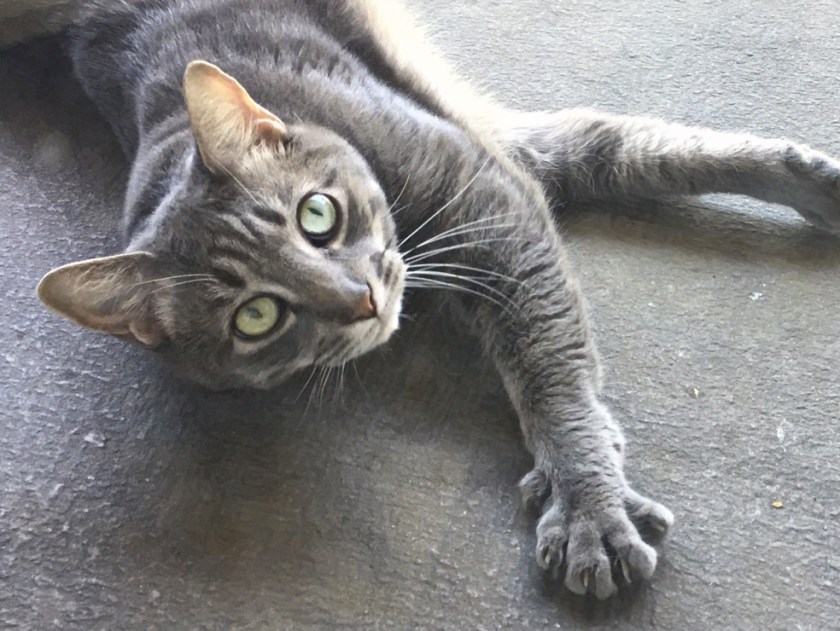
Lazy Claw Technique:
“We shall have our duel after I finish my nap!”
Photographs of kung fu cats taken by Hisakata Hiroyuki. Photos of lazy Buddy by me.
Lauded for its realism, Master Pawbine’s official portrait depicts the king in all his radiant glory, just like a photograph.
Regal in posture, handsome in countenance, luminous in presence. The Official Royal Portrait of Buddy depicts His Grace in his natural splendor, emitting radiant energy as he assumes a majestic pose.
Bend the knee and approach him humbly while bearing delicious treats, for that is how one curries favor with the king.
In my cat’s mind, biting is an acceptable form of communication.
I have eleven new scratches on my left arm.
They’ve all drawn blood, most notably a deep three-inch wound across my forearm that continues to bleed even after I washed it out and applied antibacterial cream.
That’s where my cat latched on in his determination to register his displeasure.
What could prompt such action? Was he terrified by something, reacting violently out of instinct? Did he lash out at me because I was abusive? Did I accidentally step on his tail?
Nope.
Buddy was angry because, while he has almost the entire run of the place, one room usually remains off-limits to him. A single room!
So tonight, after meowing and complaining, the little lunatic ran full speed into the living room and launched himself at me, latching onto my left arm and raking his claws against my skin. One second I’m reading, the next I’ve got nine or 10 pounds of angry cat doing an impression of a paper shredder on my arm.
I know it was a brat move because of his “I want it now!” whimper as he clawed me, and because he’s done the same thing many times. Without fail, it’s because he’s not getting something he wants.
“I’m just a sweet little kitty-cat. Look at me! I’m harmless! Look at my cute little face, do you really think I’m capable of what I’m accused of?!”
There are phases. Bud could be a good boy for two months, the image of a well-behaved cat, then one day I won’t give him any more treats because he’s already had too many, and he’ll complain with his “But I want it now!” yowl as he’s biting down on my feet.
Or maybe he wants to go sit on the balcony, but I don’t let him go out because I’m leaving soon and I can’t just leave him unsupervised on a balcony only 18 feet from the ground.
And sometimes it’s just because Bud sees I’m getting ready for bed, and he doesn’t want to go to sleep, so he launches himself at me with claws extended and teeth ready to chomp down.
Over the years I’ve had a few girlfriends tell me I’d be a great dad. Stupidly, I believed them. Now I’m not so sure. If my cat is a legendary brat, thanks in part to his disposition but mostly because I dote on him, what chance would my kids have?
Well, it’s half to dinner o’clock. I’d better get on that quick, or Mr. Scratchalot is going to give me matching tattoos on my other arm.
This is apparently the work of road safety experts who collaborated with animal psychologists, and not a Jackson Galaxy fever dream after half a pint of absinthe.
The animal psychologists are from Kyoto University and the traffic safety experts are from Yellow Hat, which is kind of like the Japanese version of AutoZone. The video’s makers say their feline “narrator” was chosen because other cats responded most to his voice during tests, and both the sound and visuals were designed to draw — and keep — feline attention.