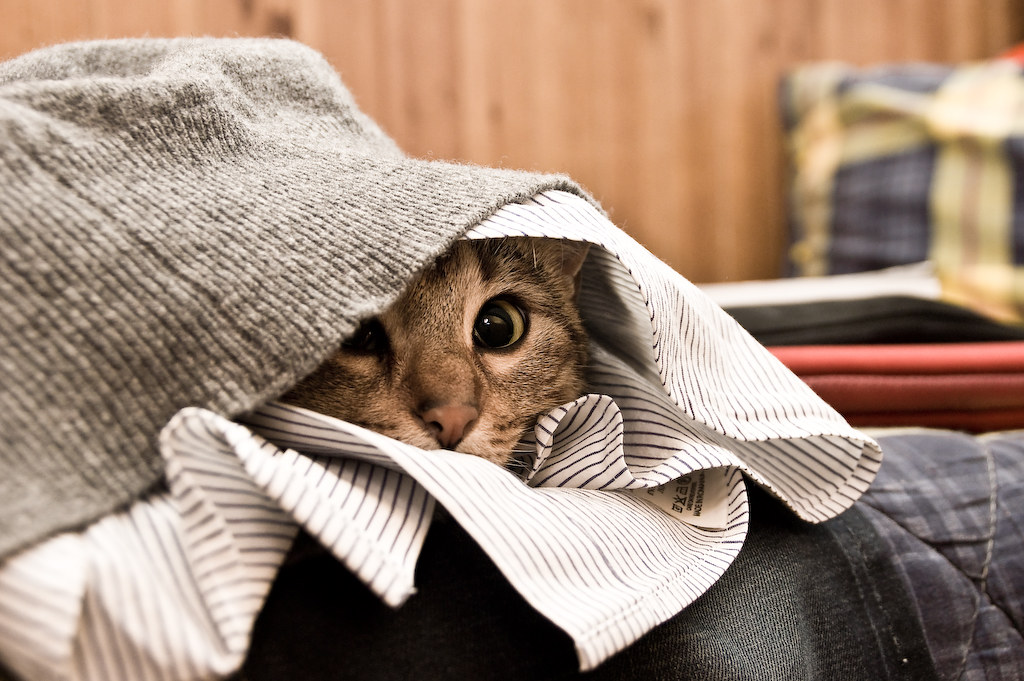
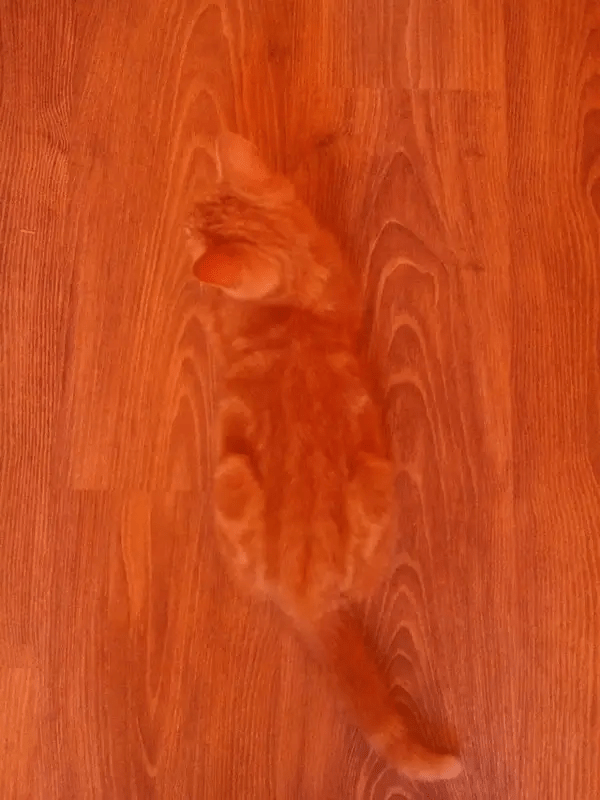
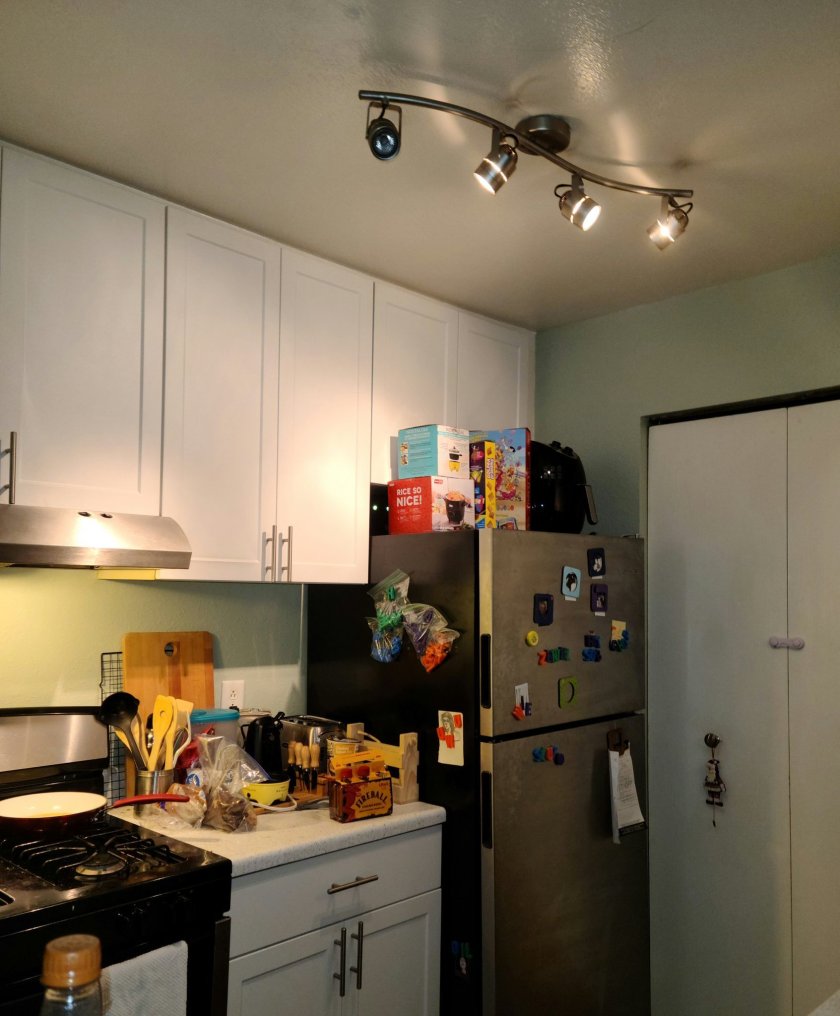
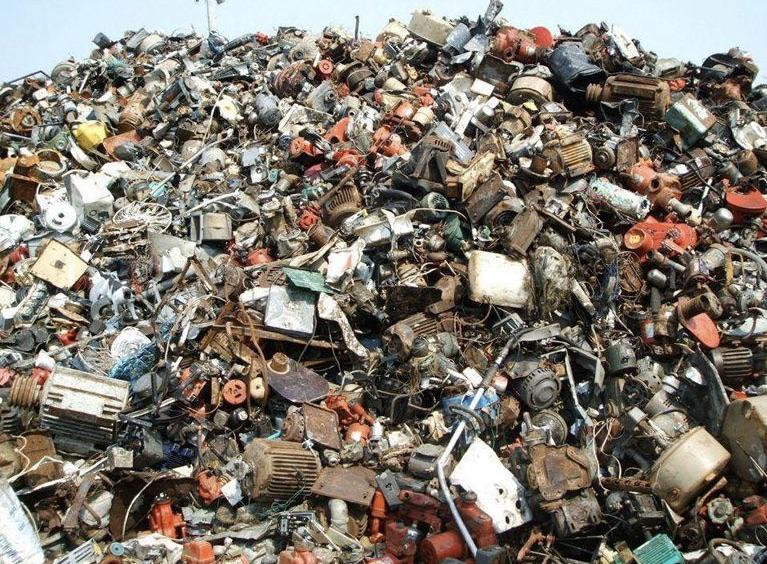
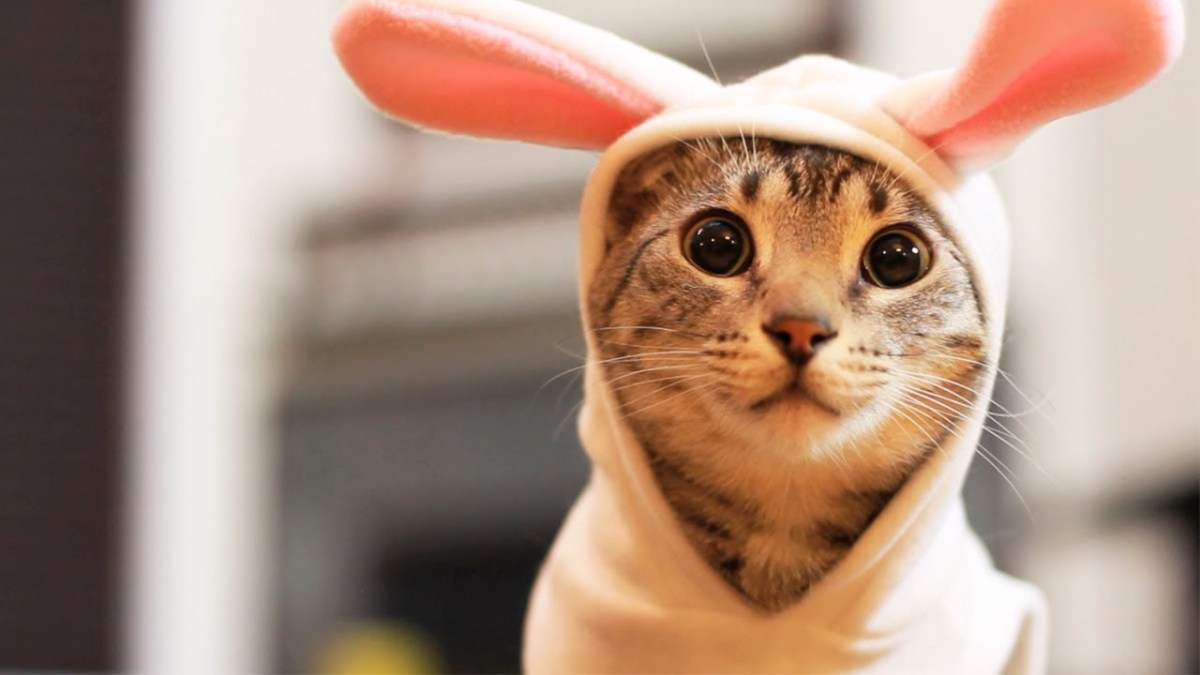
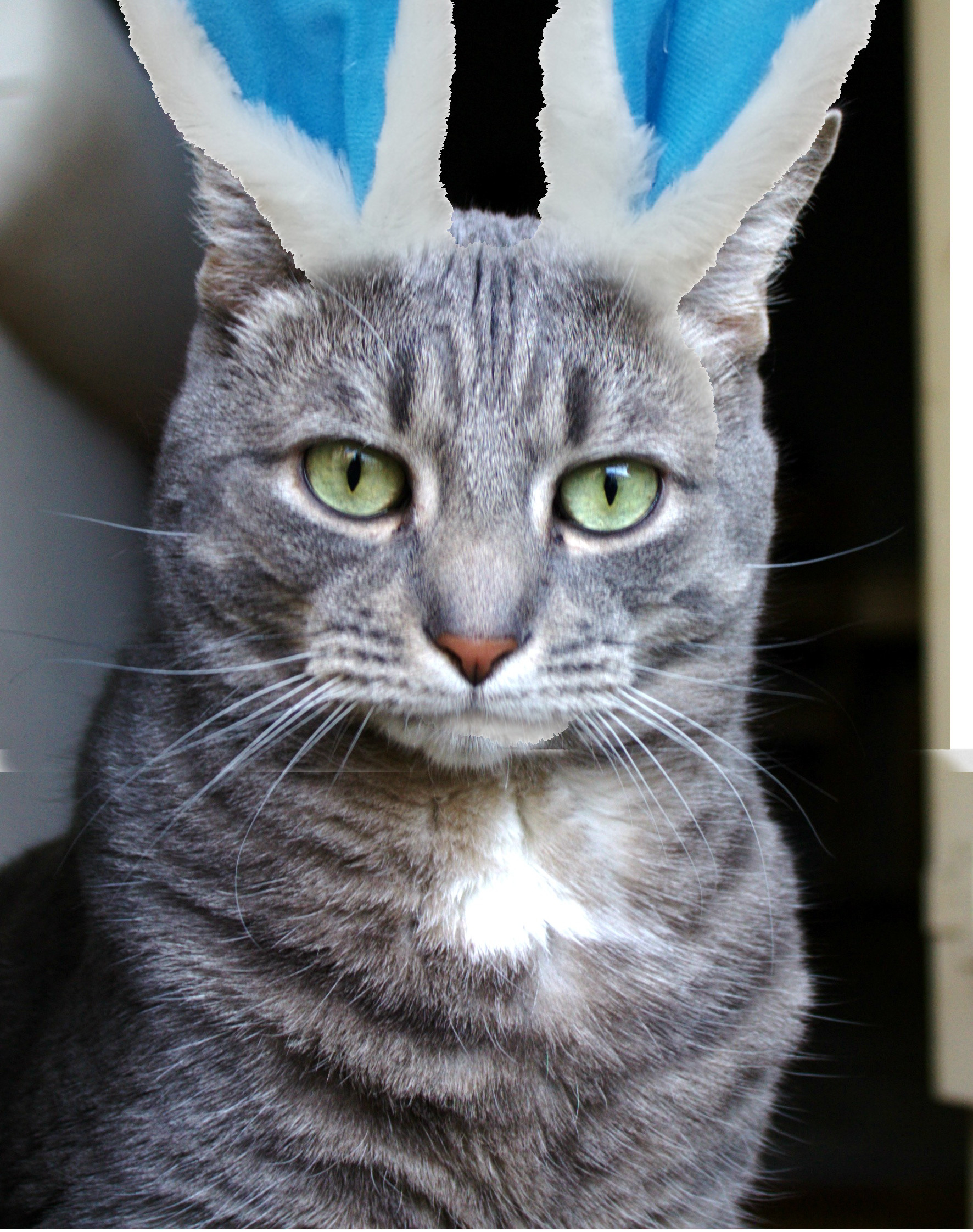
From easy to frustratingly difficult, these photos contain hidden felines. Can you find them?
Here, kitty kitty! Oh where could you be?
Not a challenge? Let’s try this one. Hint: Kitty’s shy:
This cat is well hidden, but she’s like a deer in headlights:
This cute cat is getting ready for an ambush:
Last but definitely not least, if you enjoy a challenge (or just feel like driving yourself crazy), I assure you there is a cat in this photo. Hint: Kitty’s in plain sight, not half-buried in the junk. Good luck!
Little Kitty joins two other highly-anticipated games that put players in the paws of feline protagonists.
It looks like 2022 is going to be a banner year for the fledgling “play as a cat” genre of video games.
There’s the long-awaited adventure game Stray, slated for early next year, in which the player is an orange tabby navigating an eerie future Hong Kong with heavy cyberpunk vibes. Then there’s Peace Island, an open world mystery game that gives players the choice to switch between nine different cats who are tasked with finding out what happened to their humans and all the other people who have suddenly vanished.
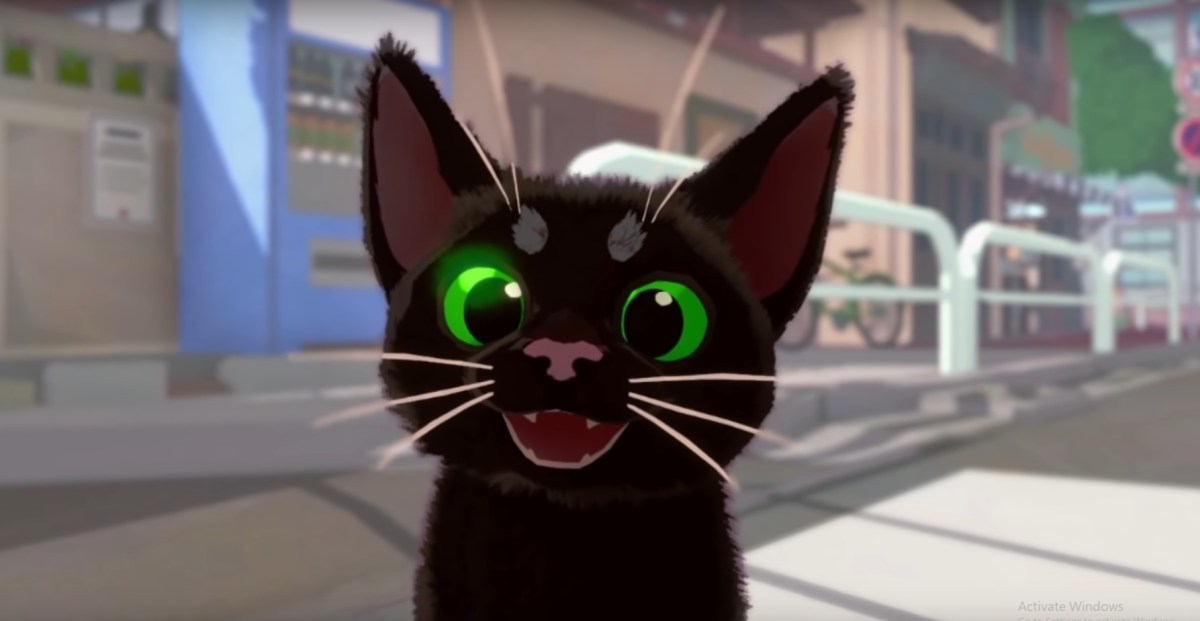
Now there’s a third feline-centric game in the mix: Little Kitty, Big City, which offers players the chance to adventure as a playful black cat with bright green eyes. The goal of Little Kitty, Big City is to help the title kitty find its way home, but as the trailer below repeatedly points out, cats tend to get side tracked:
One thing that stands out immediately is the art style. Stray is all dark urban environs drenched in neon, with neighborhoods inspired by Hong Kong’s former Kowloon Walled City. The title cat is determined, resourceful and adept at navigating dangerous situations, with a big part of the game’s focus not only on achieving goals, but achieving them the way a cat would.
Peace Island occupies a halfway point between Stray’s hi-fidelity noir realism and Little Kitty’s polygonal pastels. The titular island is picturesque and the game emphasizes beautiful sunsets, heavy undergrowth and local animal life. The environment itself is a character of sorts, as the players will have to mine their surroundings for clues about the missing people.
By contrast, Little Kitty, Big City offers us a heavily stylized Japanese metropolis with blue skies, bright colors and a whimsical narrative. The feline protagonist has a goal, but there are also so many boxes to explore, so many trash cans that might yield yums, and yes, plenty of laptops to sit on during grooming sessions. There aren’t mysteries to solve or enemies to watch out for, just a journey that rewards the player for doing what a cat does.
The game’s creators write:
“You’re a curious little kitty with a big personality, on an adventure to find your way back home. Explore the city, make new friends, wear delightful hats, and leave more than a little chaos in your wake. After all, isn’t that what cats do best?”
Above: Stray leans heavily into the cyberpunk aesthetic with Bladerunneresque visuals in a futuristic city.
Above: The cats of Peace Island investigate their eerily quiet home town as they piece together the mystery of the missing humans.
Stray was originally slated for late 2021, but has been pushed back to early 2022. Delays in the video game industry aren’t unusual, and as many publishers have learned the hard way, rushing to release a buggy, unfinished game is always a mistake.
Peace Island doesn’t have a release date yet, and as for Little Kitty, Big City, its Steam page simply says: “Planned release date: Cats don’t have deadlines.”
A man ended his relationship with his girlfriend after she tried to get rid of his cat.
Reddit’s “Am I The Asshole?” is described as a “catharsis for the frustrated moral philosopher in all of us, and a place to finally find out if you were wrong in an argument that’s been bothering you.” It’s also a goldmine for people who wish they could read an advice columnist’s slush pile.
On Tuesday, a user asked the community if he’s “the asshole” for kicking his girlfriend out of his home after she tried to get rid of the kitty by “pick[ing] him up and put[ting] him outside to wander off.” Here’s the full post:
According to the OP, his cat didn’t do anything to prompt his girlfriend from booting the little guy.
“She knows he can’t survive outside… She didn’t seem to have any regrets about her actions and no, she never lived with cats before,” the poster added in response to follow-up questions from the community. “She said she couldn’t stand cats and that she couldn’t live with one.”
A few users pointed out that kicking a house cat with no survival skills out of a home is not only dangerous, but kicking a black cat out on or near Halloween could have tragic consequences. As for the original poster, he says he’s placed Raven in the temporary care of a friend until his girlfriend moves out, as he’s worried she might try to hurt the cat — or throw him out again — out of spite.
Others said he was doing the right thing even if Raven wasn’t in danger.
“If she thinks it’s acceptable to do that with something as important as a pet, then she thinks she can do that with any aspect of your life she doesn’t like,” one user wrote. “The cat is important, but almost irrelevant in the scope of red flags she’s throwing out.”
For whatever reason, even though women are more likely to be cat caretakers than men — and men are statistically more likely to take their relationship frustration out on pets, especially cats — the last few viral stories about relationship conflicts over cats have implicated women. Obviously if the situation had been reversed, the boyfriend should have been thrown out, or the girlfriend should have left with her cat. Gender isn’t the issue here: The issue is jerks who take their frustrations out on innocent animals.
Happy Easter from the Easter Buddy! Bud and I wish our readers a happy, safe and relaxing Easter, socially distanced though it may be. Who knows? Maybe we’ll see a return to some semblance of normality later this year.
In the meantime, though, our little buddies have helped us get through these dark months, entertaining us and keeping us company through the initial wave of the pandemic, the lockdowns and the long winter.
Could you imagine the past year without your cats? We can’t. Make sure to thank your own little buddies for being there for you during this pandemic!
Four cats rescued from a sinking ship are recovering with the Thai navy officers who saved them.
The four lucky felines who were rescued from a sinking ship by Thai sailors on Wednesday were dehydrated and spooked by their ordeal but otherwise doing well, the Thai Royal Navy said.
Their brush with danger began when the Phamonsin Nava 10, a local fishing vessel, caught fire and capsized in the Andaman Sea, a section of waters off the west coast of Thailand and Myanmar. The ship was about eight miles from Koh Adang, the nearest island.
The Phamonsin Nava’s eight human crew members abandoned ship and took their chances in the water until a nearby fishing vessel was able to scoop them up. It’s still not entirely clear why the crew left the cats, who were forced to huddle together on a perilous perch as the ship sank.
The cats would have been doomed if not for the timely arrival of a ship from the Thai Royal Navy’s Air and Coastal Defense Command, which was dispatched to assess the abandoned ship for a potential oil spill. Wichit Pukdeelon, one of the sailors on the Thai navy vessel, spotted motion on the sinking ship and used his camera’s zoom function to locate the frightened feline quartet.
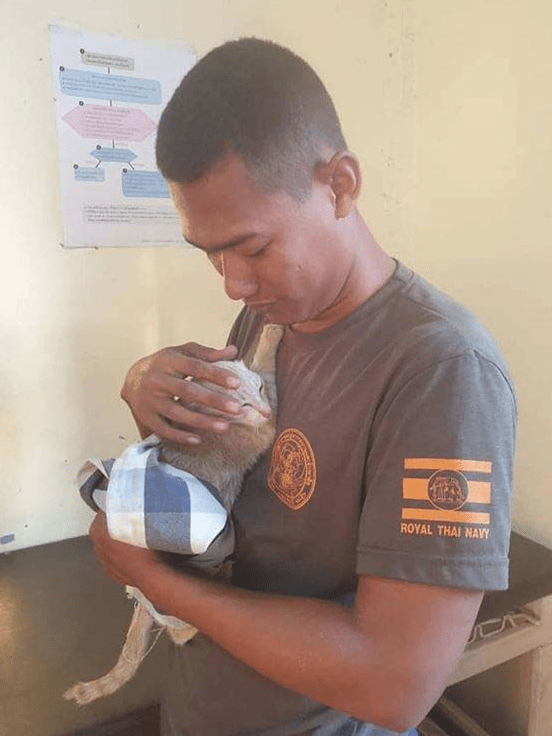
With nowhere else to retreat, the terrified cats were huddled together on a wooden beam. One of the sailors, 23-year-old Thatsaphon Saii, swam to the wreck and rescued each of the cats separately by placing them on his shoulders for the swim back to his ship.
“I immediately took off my shirt and put on a life jacket so I could jump into the sea. The flames were at the back of the boat but it was starting to sink, so I knew I had to be quick,” Sai told the Daily Mail. “I’m so relieved that we were able to save the kittens. They would have drowned or died of thirst if they went into the sea.”
Thatsaphon Saii, seated, carried the cats on his back to the safety of the Thai navy vessel. Credit: Wichit Pukdeelon/Thai Royal Navy
Saii, Pukdeelon and the rest of their team are caring for the cats at their base on Koh Lipe, an island that together with Koh Adang and several others forms part of a maritime national park. Their heroics have made them celebrities in their country, with thousands of appreciative fans from Thailand sending them congratulatory messages online.