Gather round, kids, and listen to another tale of how cats always win.
My cousin has been married to her husband, Rob, for more than 25 years, and on one of their early dates he took her to the Bronx Zoo.
These were the days before the famously large tiger enclosure was remodeled into Tiger Mountain. Nowadays a series of huge fiberglass panels separates the tigers from the visitors, meaning there’s no open air between them.
You can probably thank Rob for that.
Back then only a reinforced fence separated the Earth’s biggest cats from people who’d come to gawk at them, and Rob decided he’d get my cousin to laugh by goofing off in front of a tiger.
He started off making a few faces, and the other visitors — kids, their parents, other couples looking at the tiger — found it funny. (At least according to Rob they did.)
Encouraged, Rob stepped up his act, dancing and waving until one tiger in particular took interest.
“What are you going to do, tiger?” he taunted. “That’s right! Nothing! You can’t do anything!”
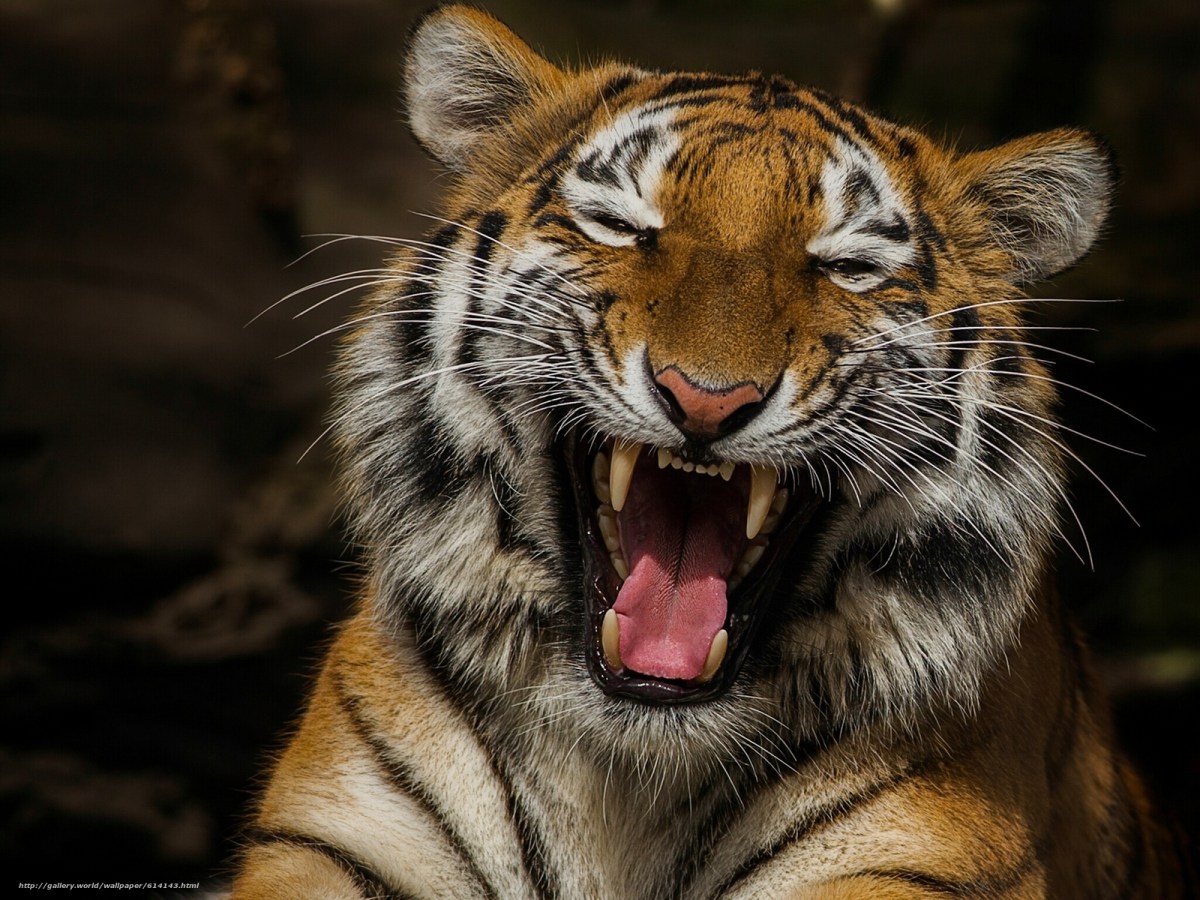
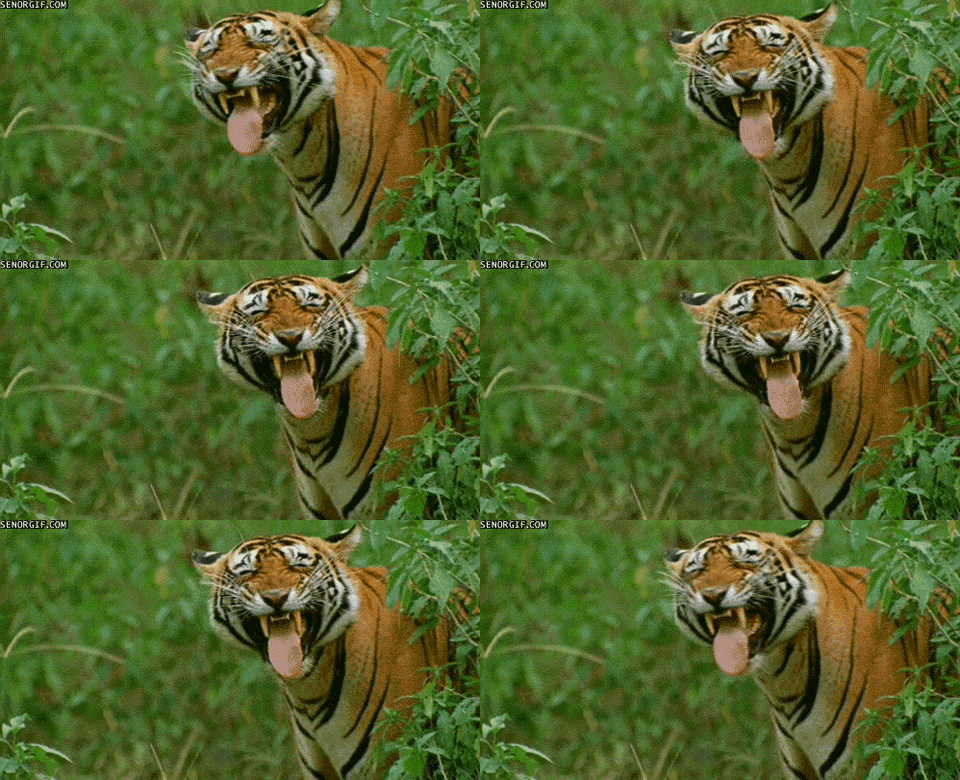
The tiger roared, and Rob roared back. The huge cat was clearly not amused by a human dancing like a clown, making stupid faces and taunting it with an insulting approximation of a roar.
So the tiger turned around.
“That’s right!” Rob said, declaring premature victory. “Walk away! You can’t do nothin’!”
Oh, but the tiger could.
The annoyed cat raised its tail, backed up a stride and let loose a projectile — “a wad” is how Rob described it — of thick, gooey urine, hitting Rob square in the face.
The tiger had impeccable aim.
“It was enough to fill that,” Rob said, pointing to a large soda bottle. “It was all over me. It was in my mouth!”
Rob staggered back and lost his footing, taking one of the young bystanders with him as he fell. The angry mother stared daggers at him as she yanked her kid away, realizing with horror that he’d suffered collateral damage from the gooey salvo.
As for the tiger, it chuffed and, having proved its point, sauntered away.
Miraculously, my cousin agreed to continue dating Rob. Not that she found the episode flattering.
“That should have been the big warning sign,” she joked.
Today they have two adult daughters. As for Rob, he’s an executive at one of the country’s largest telecommunications companies, but says he has no illusions about his level of maturity.
“The way I was back then is the way I am now,” he told me. “I’m still an idiot.”
He may be an idiot, but he’s not going to mess with any more tigers.
Debunking the myth that cats need to roam freely outdoors to be happy.
Sometimes you’ve gotta fib to protect the ones you love, which is how I found myself lying to Buddy the first time he wanted to go outside and ineptly chase hunt birds.
“I’m sorry, Bud, I can’t let you do that,” I said, doing my best to sound serious and authoritative.
“Why not?” Buddy asked, pawing at the door impatiently.
“Because it isn’t safe.”
Buddy was exasperated. “I’m 10 months old! I can take care of myself!”
“You don’t understand. It’s not for your protection.”
I lowered my voice conspiratorially and nodded toward the birds outside. “It’s for them. Mice too. Squirrels. Even coyotes.”
Comprehension dawned on the little guy’s face.
“To protect them from me?”
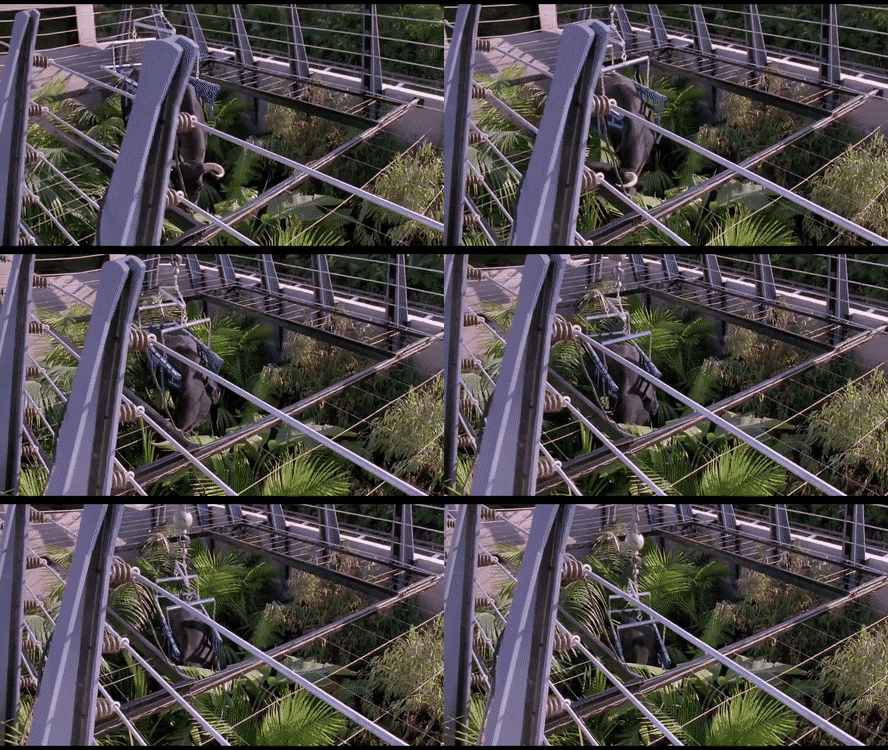
“Precisely,” I said gravely. “It wouldn’t be fair, unleashing a beast of your size and power on those poor unsuspecting creatures. It’d be like that scene in Jurassic Park when they lowered a cow into the velociraptor cage.”
Buddy nodded.
“That makes sense.” He eased onto his hind legs and raised his front left paw, flexing. “I mean, I am really ripped. These guns must be intimidating.”
“They most certainly are,” I agreed. “So ripped! So you can understand why I can’t let you out.”
“Illegal, you say? Like actually illegal?”
“A $500 fine if you even step out the front door.”
“Damn.”
After that he didn’t ask to go outside anymore and was satisfied with telling people that the local Council of Dangerous and Awesome Animals had specifically forbidden Buddy the Beast from stalking the neighborhood unless chaperoned by a human with his huge muscles restrained in a harness.
Ed Sheeran’s cat: A preventable tragedy
I recalled this totally accurate and real conversation after reading news that musician Ed Sheeran’s cat, Graham, has died. I clicked on the story expecting to read about a loyal cat who’d stuck with Sheeran over the better part of two decades before succumbing to old age.
That’s not how Graham died.
Sheeran’s five-year-old cat had his life cut short when he was hit by a car on July 31.
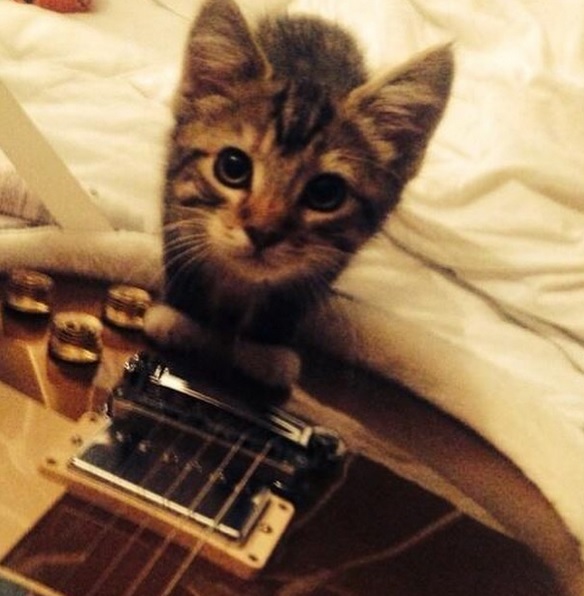
Graham, Ed Sheeran’s cat, as a kitten. He’s pictured sitting on a Les Paul guitar.
Allowing cats to roam free is the norm in the UK, even in busy neighborhoods. Cats are killed in traffic — or meet other unfortunate ends — regularly. Even a rampage by an alleged serial murderer of cats, who was said to kill more than 300, didn’t dissuade them from keeping their cats safely indoors, nor did the subsequent (pardon) copy-cats.
The usual excuses paint cats as one step removed from wild animals, creatures who range several miles in their “natural” states as outdoor kitties.
The problem is, that’s not true.
Domestic cats don’t belong in the wild
Cats are domesticated animals. They’ve evolved over 10,000 years from African and Eurasian wildcats, to the human-friendly mousers who protected grain stores, and finally to the companion animals we all know and love.
They are second only to dogs, who were domesticated 30,000 years ago, as animals who are uniquely attuned to human presence, able to read our expressions, detect our moods from our pheromones and parse the subtleties in our vocalizations.
Cats belong with humans. They have no “natural habitat.” As domesticates who are genetically distinct from their wildcat ancestors, there’s no place in nature for them.
In other words, cats belong in human homes, benefiting from human companionship, protection and care.
They’re not as fast, agile or nimble as their wild cousins, and while some can adjust to rough living, most don’t: The lifespan of a feral cat is a pitiful two to five years compared to the 16 years or so an average, well-cared-for indoor cat can live. For feral cats eking out an existence on their own, as opposed to living in a colony, the average lifespan is less than two years.
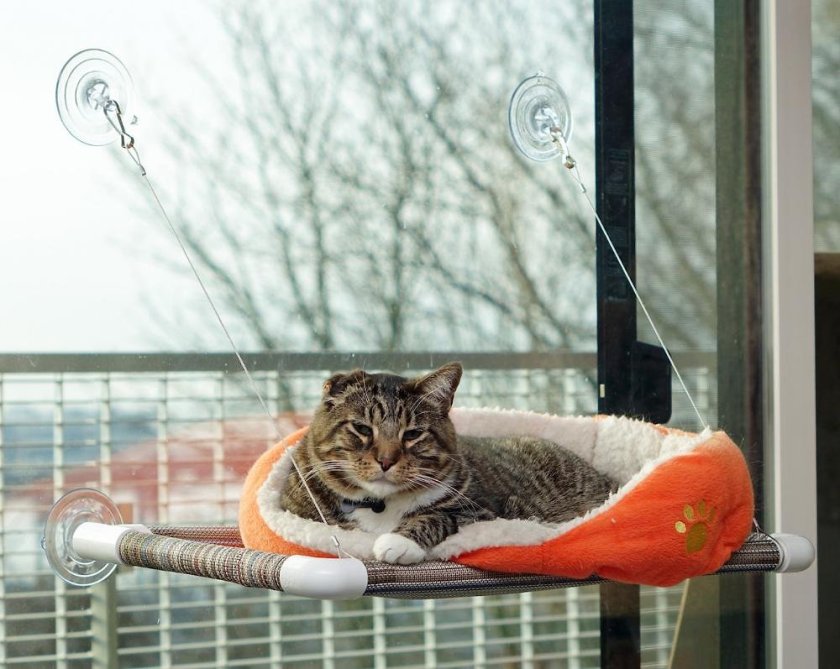
Window perches allow cats prime views of the outdoors without exposing them to danger.
It’s our responsibility to protect our cats
The point is that we’re not doing cats any favors by letting them roam outdoors unsupervised. In addition to being ill-equipped to deal with nature and predators, they’re also defenseless against maladjusted and hostile humans who do things like intentionally poison flower beds. They’re particularly vulnerable to vehicle traffic. They’re easy meals for large birds of prey, wild canids and other mid-sized animals.
So what’s the solution? Simple: Be a good caretaker.
An indoor life shouldn’t be boring. It’s our responsibility as caretakers to provide our cats with attention, affection, toys and stimulation.
Contrary to popular misconceptions, cats aren’t antisocial animals. They want to play, to interact with people, to simulate hunts with wand toys and laser pointers. They feel safe snoozing and purring in human laps. That’s not just the opinion of cat lovers, it’s backed up by solid research showing cats value human companionship.
A happy indoor life
If we give them the attention we’re supposed to, there’s no reason why our cats should be bored indoors. And an indoor life doesn’t have to be completely devoid of nature. That’s why there are customized cat perches, catios and harnesses, allowing domestic cats to watch and enjoy the outdoors without exposing them to the many dangers outside.
The Grahams of the world shouldn’t die early because of our misguided belief that cats need to roam like tigers. Keep your buddy indoors, give him the attention he needs, and he’ll have a long and happy life.
Jerks in Ohio want to send a 79-year-old woman to jail for the “crime” of feeding cats.
Nancy Segula lost her husband and her cats in 2017 and, feeling lonely, she made friends with the stray buddies in her neighborhood via the most direct route to a kitty’s heart — food.
Now poor Nancy has the prospect of 10 days in jail hanging over her head because curmudgeons in her hometown of Garfield Heights, Ohio, complained about her acts of charity service to cats and called the police.
“I’m an animal lover, and I feel guilty that they’re wandering around out there and they have nothing to eat,” Segula explained, as if serving cats requires explaining. “So I just feel that I need to give them food.”
What a sad legacy for a town named after a fat orange tabby cat!
Now a judge has intervened and will hold a hearing this month in an attempt to diffuse the situation and avoid jailing the kindly Mrs. Segula for the “crime” of doing what all humans should do.
Buddy wants YOU to write letters of support on behalf of Mrs. Segula! It’s very important that you DO NOT send them poop! Ask your humans for envelopes and stamps, then dictate the letters to them. Or if you have one of those fancy computers, you can email the mayor directly at vcollova@garfieldhts.org and ask him to get rid of that ridiculous ordinance that makes it a crime for humans to feed their feline overlords.
Reminder: Your adorable kitty can murder you in your sleep.
Luis Navarro was having trouble breathing at night, so he set up a video camera to film himself while sleeping, Paranormal Activity style.
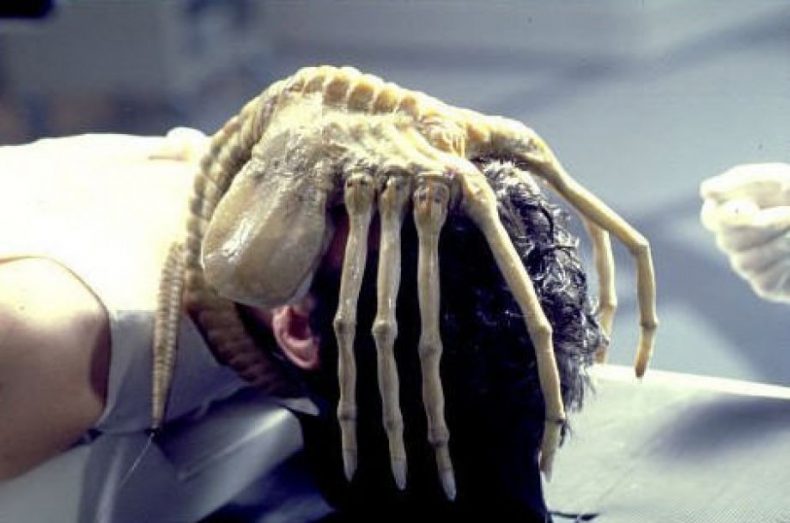
Sure enough the footage revealed something terrifying: The Texas man’s tabby cat was climbing into bed with him and clamping down like a facehugger from Alien, smothering his face in fur!
To explain this behavior we turned to Buddy, who offered his insights and expertise as a cat.
Big Buddy: Thanks for taking the time to help us make sense of these images, Bud.
Little Buddy: You’re very welcome. Just remember my fee in treats is due at the end of this conversation. Ten Temptations.
BB: Six!
LB: Eleven!
BB: Six!
LB: Nine! That’s as low as I go.
BB: Then I guess we’ll have to find another cat to answer…
LB: No! No. Six it is. You drive a hard bargain, human.
BB: That’s because I’m the one who has to clean up your puke if you get sick. So anyway, what’s going on in these photos?
LB: Okay, the kitty jumps into bed with Luis.
BB: Yes.
LB: And he hugs Luis’ face.
BB: Yes. We can see that. But why?
LB: Well, humans always want to see the best in us, so they’ll convince themselves that Luis’ cat loves him so much and it’s just a hug.
BB: You’re saying it’s not a hug?
LB: Of course not. It’s practice.
BB: Practice…for what?
LB: Isn’t it obvious? Murder. For when Luis becomes a stingy jerk and gives him six treats instead of 10.
BB: Oh! Still with the Temptations?
LB: I feel undervalued.
BB: You didn’t even answer the question!
LB: I did so! Now you know what happens to stingy humans who hold out on their feline masters. I believe you owe me 10 treats, sir.
So there you have it. Don’t piss off a cat, or he’ll murder you and make it look like the most adorable, loving murder ever.






 Pain In The Bud