As one of the bravest cats on planet Earth, Buddy is uniquely qualified to advise scaredy cats who get easily freaked out by horror movies.
Dear Buddy,
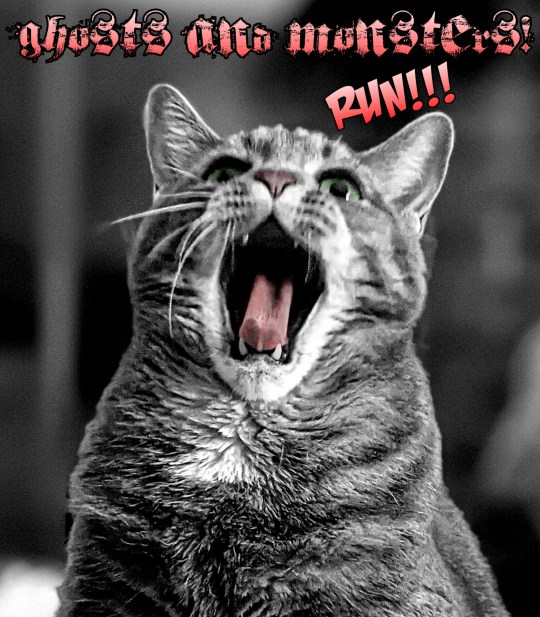
My human likes to watch horror movies and they’re freaking me out! I can’t even look at mirrors since we watched Oculus, I jump at shadows ever since watching 30 Days of Night, and I wet my favorite napping spot the night we saw The Ring.
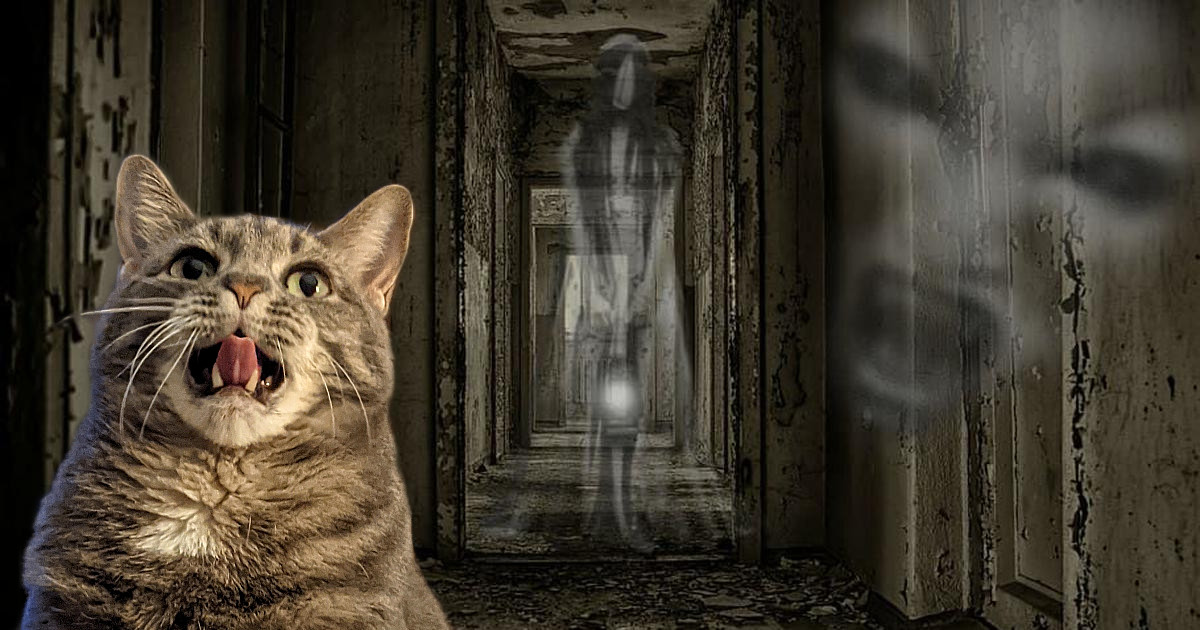
But it gets worse! My human spent almost two weeks watching a TV series called The Haunting of Hill House, which was so scary, scarier than vacuum cleaners and filled with terrifying scenes! It had all kinds of monsters and people dying and countless sinister-looking ghosts hidden in the background of every scene.
Buddy, I can’t sleep at night, even with my human. I’m scared of monsters in the closet or under the bed, and ghosts outside the bedroom door. I’m scared they’re gonna get me in my sleep!
Help me, Buddy!
Terrified in Tallahassee
Dear Tallahassee,
You’ve come to the right cat, amigo! Among our kind the name Buddy is synonymous with bravery as well as good looks and charm, and I’m known for keeping my cool in circumstances that would reduce lesser cats to frazzled, freaked-out messes.
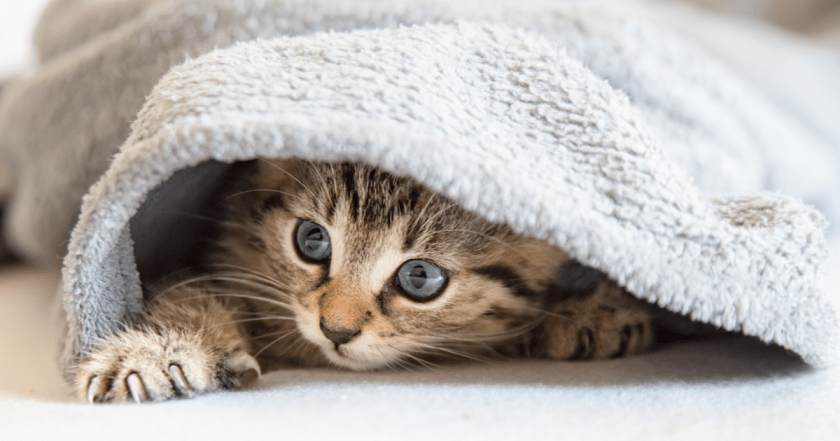
I’m going to let you in on a little secret, one they don’t teach to just any cat or kitten: Get under the blankets!
Blankets: The secret weapon.
You see, blankets are about more than keeping those furless humans warm when they sleep. Blankets have magical properties that repel monsters and ghosts. They’re like shields or magic force fields!
Humans know that if you’re scared and you think there might be monsters in your home, the best solution is to get completely under the blankets, wrap yourself up nice and cozy and rest easy knowing the safety they will afford you until sunrise, when ghosts and monsters have to retreat or die in the sunlight. (Or was that vampires? I get things mixed up sometimes.)
Anyway, being the brave cat I am, I’m totally not scared of anything and I don’t have to hide under blankets. In fact, my human sleeps easy knowing that I’m guarding him. But if I were scared, Tallahassee, I’d dive under some magical blankets and feel my worries melt away.
Your fearless friend,
Buddy
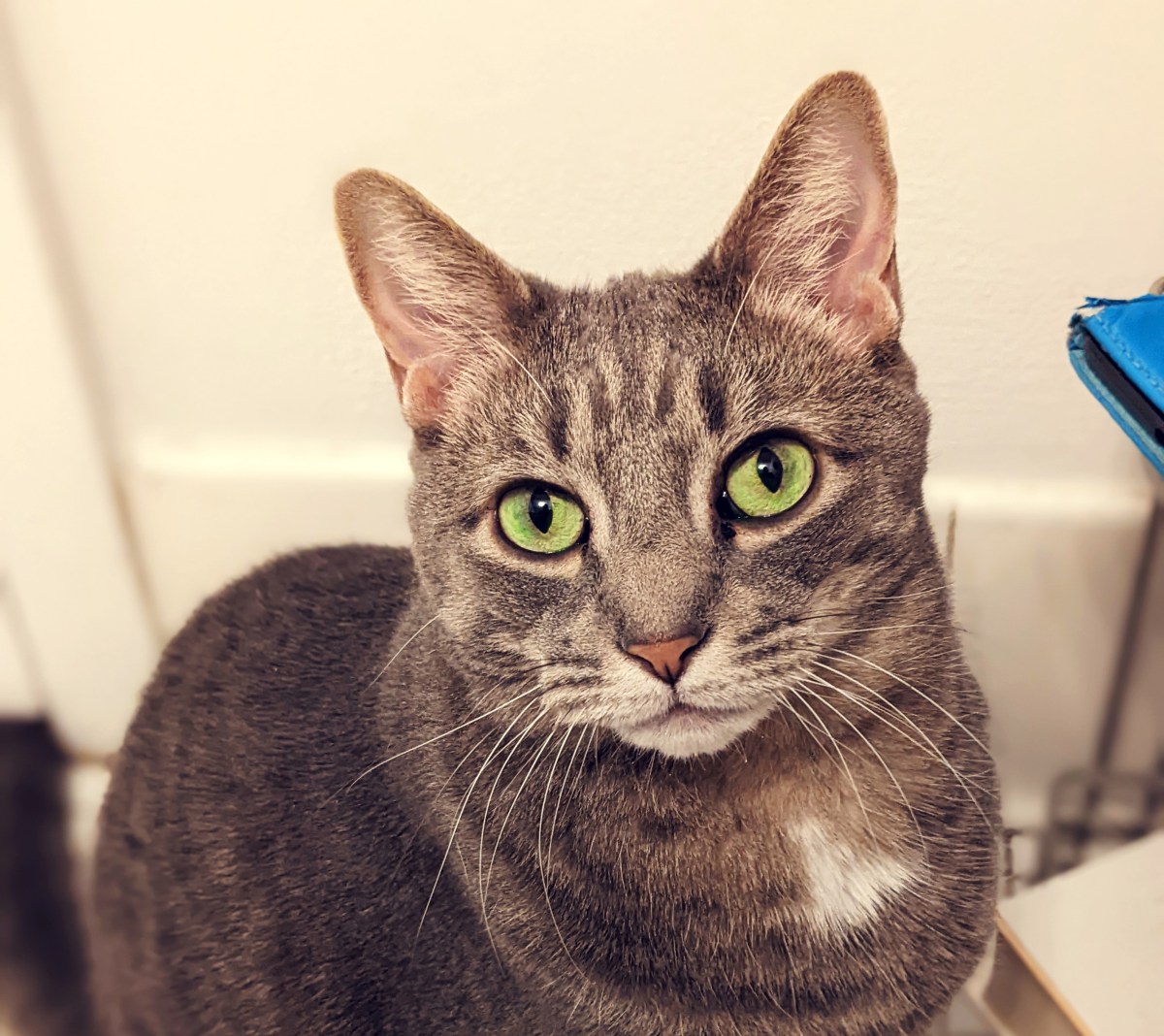
Buddy is widely regarded as one of the bravest cats in the world.
Day Four: Here I exist in solitary confinement, without anyone to meow to or sleep on.
If a Buddy meows for snacks and no one is around to hear him, do his meows exist?
These are the questions I ponder as hour after silent hour ticks by, my stomach rumbling. (Nice lady stops by only once a day to feed me, oh woe is me!)
Oh how I miss the halcyon days when delicious snacks were an insistent meow away, when I’d lounge on Big Buddy’s legs and in his lap for hours as we watched Squid Game!
Oh how I miss slapping his face with my paw, then sitting directly on his face and meowing into his ear for breakfast, knowing I’d successfully woken him when he yelled “I’m going to sell you to Shezhuan Garden II, you annoying little jerk!”
I am on the verge of a scientific breakthrough, ready to present my contribution to quantum mechanics in which I posit that a new, heretofore unknown fundamental particle, the Turkon, exists at the subatomic level.
Without a human here to dictate to, how will I submit my findings to a prestigious journal?
Meanwhile my human is probably frolicking on the beach, basking in the sunshine and warmth of a 70-degree Outer Banks January day.
It’s going to take A LOT of snacks, massages and “good boys” to make this right.
Buddy uses his powers of deduction to reveal a disturbing truth: Big Buddy is making plans to go away, and he’s not bringing Buddy.
A special message from Buddy:
There is treason in the air, dear readers! I can smell it, just as surely as I can smell an open tin of catnip from three rooms away.
There has been increased laundry activity, hushed talk of a place called North Carolina, and the suspiciously early decommissioning of the Christmas tree.
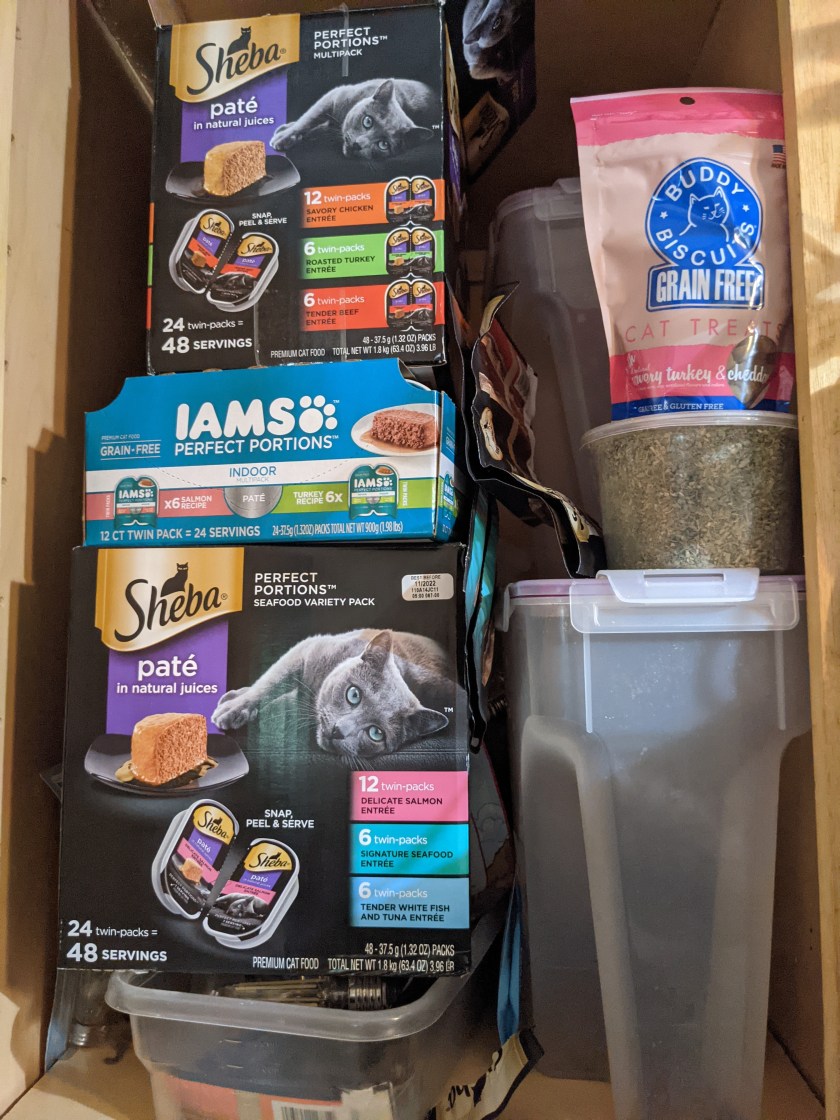
My food has been inventoried and a portion of it set aside. I am not very good at math, but it appears to be at least four or fivedays’ worth of perfect portions wet food in addition to kibble.
Most distressing of all, Big Buddy has changed into the same shirt three nights in a row: The very shirt he leaves on the bed when he goes away, believing his scent will comfort me. (Perhaps it does for less sophisticated creatures like dogs. Oh, to be so simple-minded!)
I know based on past experience that someone will enter my realm daily to feed me and give me fresh water. I also know it’s likely going to be the nice lady who used to play with me after feeding me…until I attacked her the last time she was my cat sitter.
It seemed like the right move at the time, but I regret it now. She will probably feed me and run out. 😦
What I’d like to know is: What did I do to deserve this betrayal? Shouldn’t I go with Big Buddy to this mysterious place called the Outer Banks? And what makes the Outer Banks so special, anyway? The low interest rates? The free checking accounts? A cool vault with one of those big, heavy doors you see in movies?
I guess it’s not all bad. I’ve only been sleeping 13 hours a night lately, so some down time will allow me to catch up on my beauty rest.
Also, the entire place could do with a thorough scent-marking, and not having a human around means there won’t be any complaining about it.
But who will I sleep on? Who will give me snacks when I meow for them? Who will tell me I’m a good boy and scratch my head?
Cats aren’t dolls or stuffed animals to be posed at our whim for the benefit of online strangers.
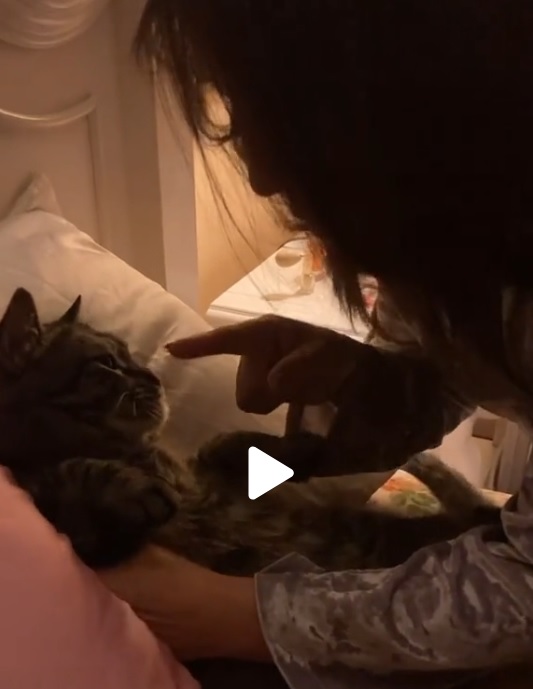
I know I’ll probably catch some heat for this, but the below video, which a Newsweek writer gushes over and 8.8 million people favorited, is an example of animal abuse. It may not be violent, it may not be particularly overt, but it’s animal abuse all the same.
I get why people are saying this is “adorable” and think it’s sweet, but anyone familiar with cats can see clearly the kitty does not like being picked up, then placed in a bed on her back. She protests, then moves to get away, but her “owner” clamps her down and presses an admonitory finger to her nose.
Little Pishy’s ears twitch and her eyes dilate. Her owner slides her into position, then holds her down before tucking her in beneath a heavy comforter. Then the woman takes both of the Pishy’s paws, places them deliberately above the comforter just the way she likes them, and finally wags her finger in the cat’s face again before she’s finished, as if to warn her: “Don’t move a paw.”
Just before she steps away, she strokes Pishy’s paw a few times with a finger, an affectionate afterthought on her terms.
This is not love. (Still image from TikTok video.)
Let’s be blunt here: The cat is not enjoying any part of the whole charade. She would almost certainly rather sleep like a cat, and not be treated as an infantilized, anthropomorphized stuffed animal. Her “owner” is dictating everything from the position in which she sleeps to where she can keep her paws.
“She stays in bed like this alllll night ;),” the TikToker brags in the video description.
Of course she does, because she’s probably scared to find out what will happen if she doesn’t. This isn’t a person who considers her cat a living being with her own feelings. She’s a person who sees her cat as a prop and a way to earn the adulation of strangers on the internet.
The same thing applies to all the “cute” videos of cats forced to wear clothing, glasses and hats, and posed in human-like positions. Last week, a short clip of two cats watching an iPad went viral. The cats are snuggled together in a miniature chair, posed like miniature humans. The larger cat has a paw around the smaller cat’s shoulders, and the tablet is balanced between their free paws.
Instead of gushing over the seemingly perfect 8 seconds we see, it’s worth thinking about what we don’t see, and how that manufactured scene came to be. I can assure you it does not involve animals who enjoy being posed like dolls for the benefit of an audience they don’t know exists, on a medium they don’t understand.
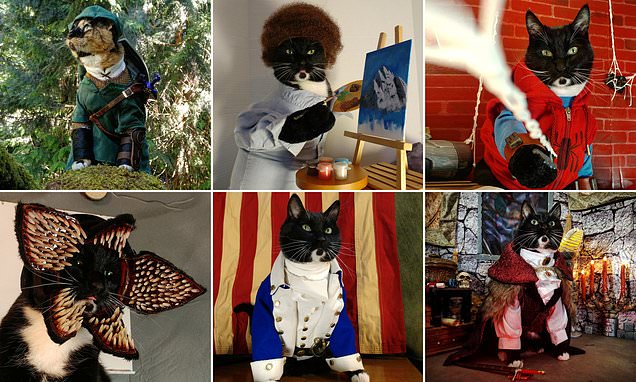
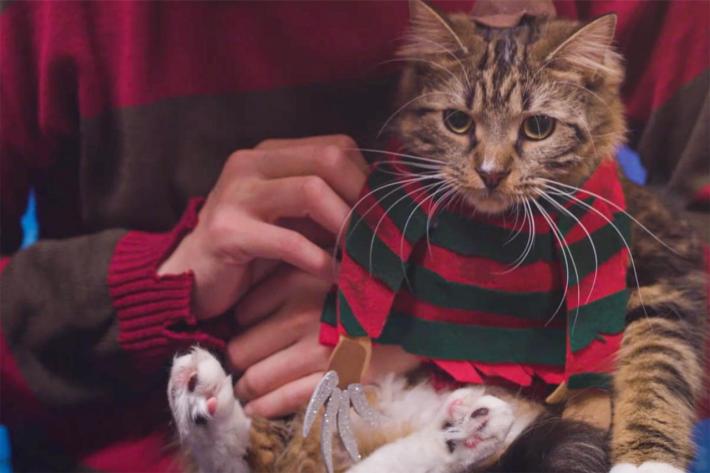
Cats dressed and posed as Robin Hood, Bob Ross, Spiderman, the monster from Stranger Things, some sort of naval admiral or Founding Father, and a Stark from Game of Thrones. I think.A cat who doesn’t understand what a costume is, not enjoying his Freddie Kruger outfit.
I keep coming back to the best advice I ever got about taking care of a cat: The strength of the human-feline bond depends in large part on how much the human takes the cat’s feelings into consideration.
We’re much bigger, stronger and some of us subscribe to the archaic “might is right” way of thinking. Imagine the reverse: Five hundred pound cats as large as tigers, subjecting us to tongue baths at their whim, posing us like dolls and forcing us to sit, stand and sleep in feline positions because it’s “cute.”
I am by no means an expert in cat care, and I don’t pretend to be some sort of cat whisperer or cat guru, but one thing I’ve always done is let my cat decide when he wants affection and interaction. I’ve never grabbed him and held him in my lap, or tried to dress him in miniature samurai armor for social media snaps.
When he meows for a head scratch or lays down on my chest and purrs as he listens to my heart beat, it’s because he wants to be there, and he knows I won’t grab him and force him to stay when he wants to get up.
If I treated him like a doll and tried that tuck-in move with him, he’d claw the hell out of me, and I’d deserve it. He’s my Buddy, not my property or my puppet.
What do you think? Am I overreacting, or are you disturbed by these videos as well?
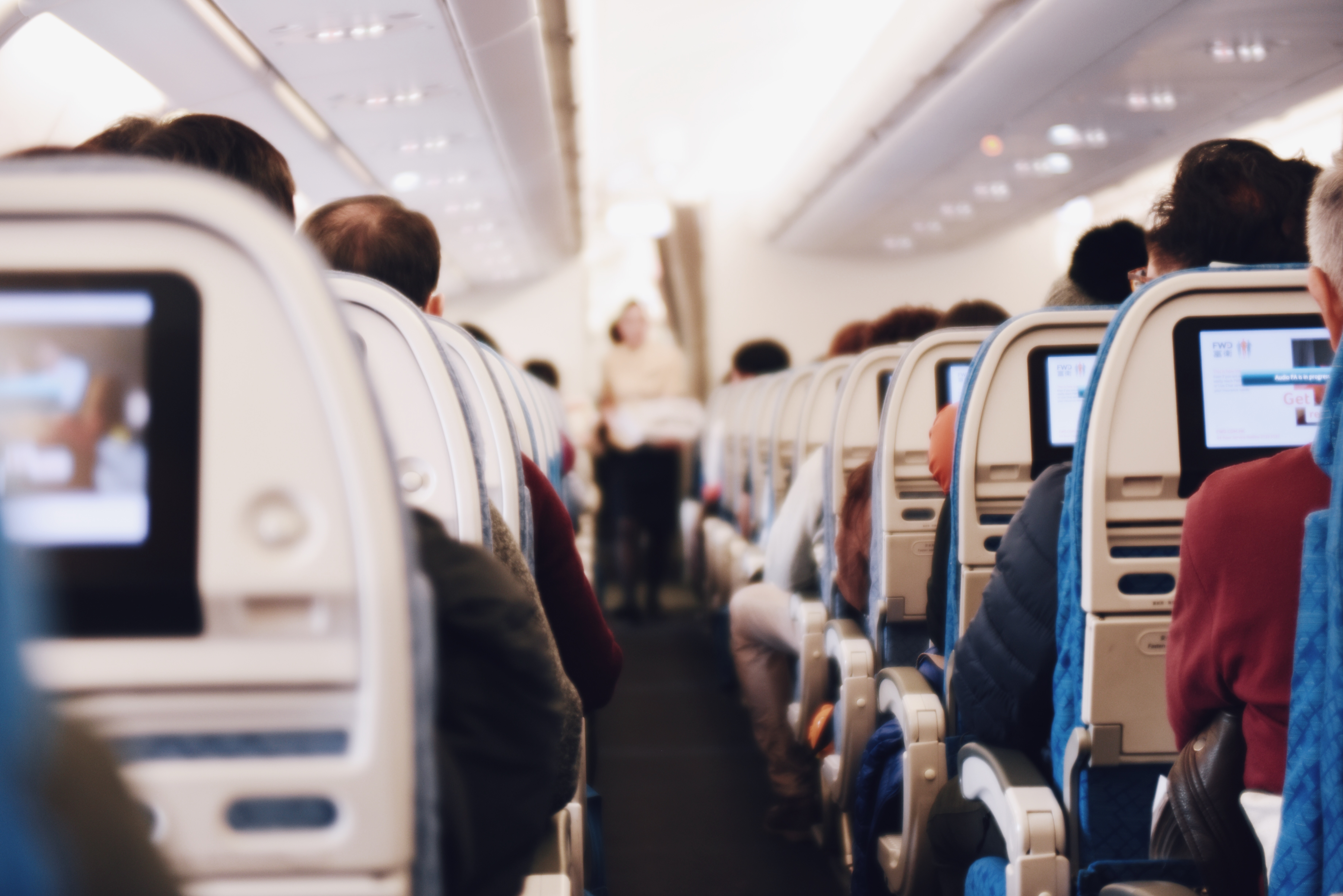
There have been more than 5,000 confrontations involving unruly passengers on airlines in 2021, on pace for more than all other years combined.
When we first heard about an airline passenger grossing out her fellow travelers by breastfeeding her cat, we figured at least kitty was happy with the situation — but apparently not, according to a flight attendant who was involved in the incident.
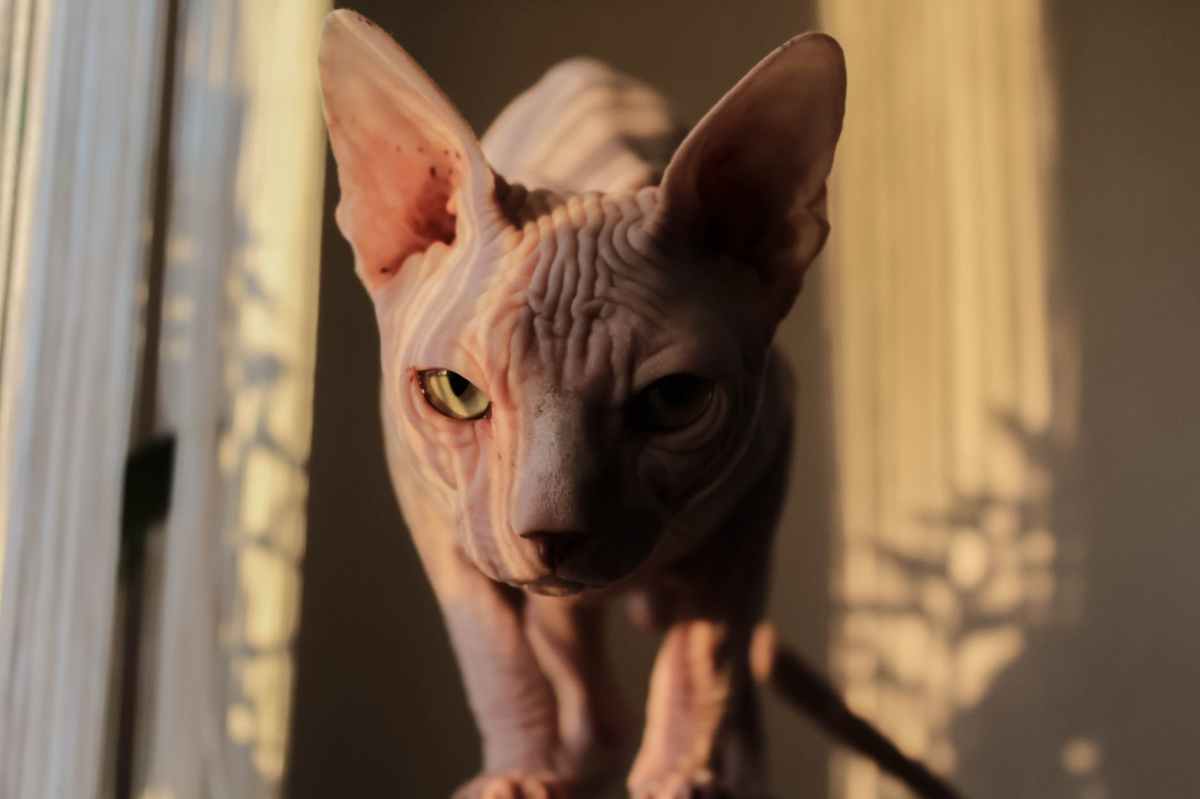
Instead of purring and kneading in a milk coma, the cat — likely a Sphinx — wanted nothing to do with feeding from the woman’s breast on the flight in late November, flight attendant Ainsley Elizabeth said.
“This woman had one of those, like, hairless cats swaddled up in a blanket so it looked like a baby,” Elizabeth said in a video about the incident. “Her shirt was up and she was trying to get the cat to latch and she wouldn’t put the cat back in the carrier. And the cat was screaming for its life.”
“What does she do at home if she’s doing that in public?” Elizabeth asked. “And then security met the flight just to tell her that she couldn’t do that again, cause it was weird and gross.”
Elizabeth has since deleted the social media account she used to upload the video.
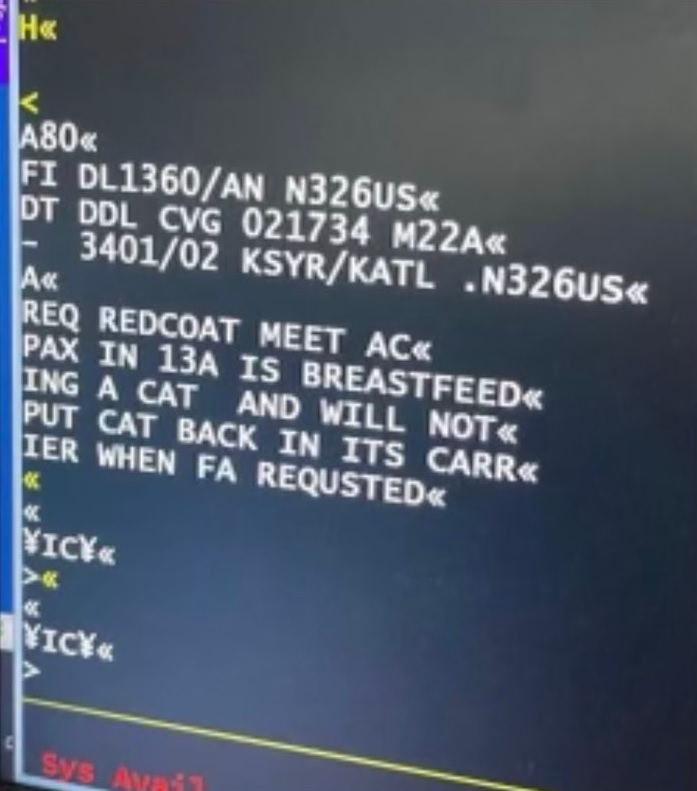
As we noted in our earlier post, the woman was uncooperative when flight attendants asked her to stop, prompting the pilot to send a message ahead to the destination airport via ACARS, short for Aircraft Communications Addressing and Reporting System.
An ACARS message sent from Delta Air flight DL1360 to ATL, Hartsfield-Jackson Atlanta International Airport.
The bizarre incident happened aboard a Delta Airlines flight from Syracuse, NY, to Hartsfield-Jackson Atlanta International Airport in Georgia.
Meanwhile, Delta airlines has begun an investigation into the Great Breastfeeding At 40,000 Feet saga, after the incident went viral last week and garnered headlines around the world — including newspapers in the UK, Australia, New Zealand and dozens of non English-speaking nations.
Initially the passenger was reprimanded, but an investigation could result in more serious consequences, like a ban on using the airline.
In-air confrontations have skyrocketed in 2021, mostly due to disagreements over COVID-19 safety rules such as wearing masks. Credit: Wikimedia Commons
The story comes amid a general surge in violent attacks and tense confrontations aboard passenger jets — and now the FBI is getting involved.
That puts 2021 on track for more cases than all other years combined, according to the Association of Professional Flight Attendants. The majority of those incidents — as many as three out of every four — are related to confrontations over mask policies due to the Coronavirus pandemic.
Teddy Andrews, a long time flight attendant with American Airlines, testified before a congressional committee in September, recalling an incident in which a passenger called him the n-word when Andrews asked the man to wear his mask.
“These days I come to work anticipating disruptive behavior,” Andrews told USA Today. “Our colleagues are anxious, fearful. What is going to happen on the next flight? How will this passenger react if I remind them to wear their mask? Will complying with airline policies set them off? Can I avoid engaging, or would that be an evasion of my duties?”


 Pain In The Bud