Archie the cat, with his love of exercise, is the anti-Buddy.
This is unbelievable.
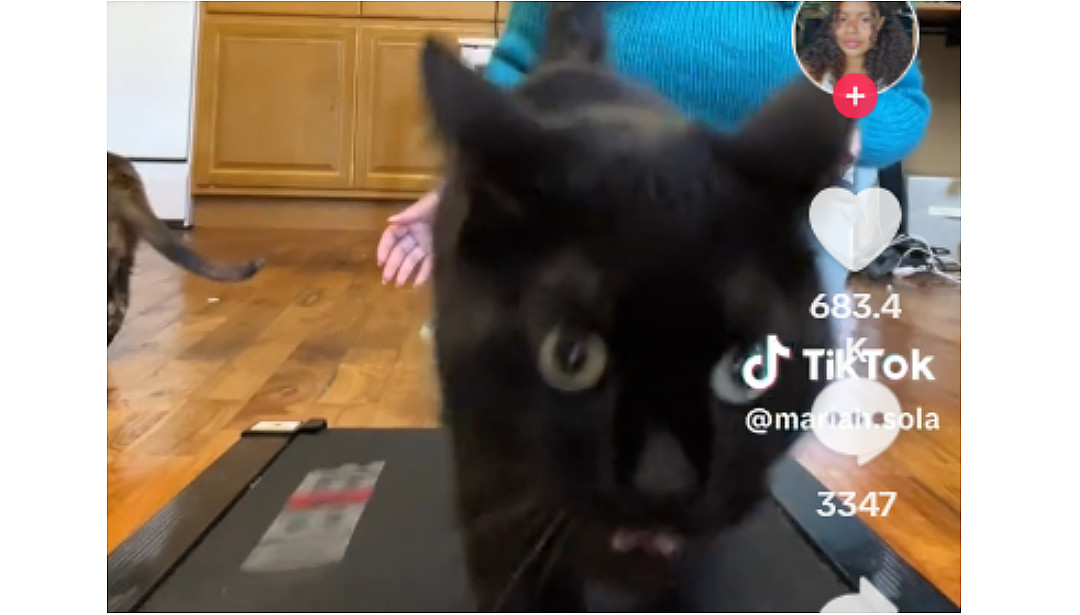
A three-year-old cat named Archie, who also hails from New York, loves running on his human’s treadmill. Mariah, his 27-year-old servant, keeps a close eye on the little guy while he gets his run in to make sure he doesn’t get hurt, but he seems entirely unperturbed and pumps his little legs, keeping a steady pace:
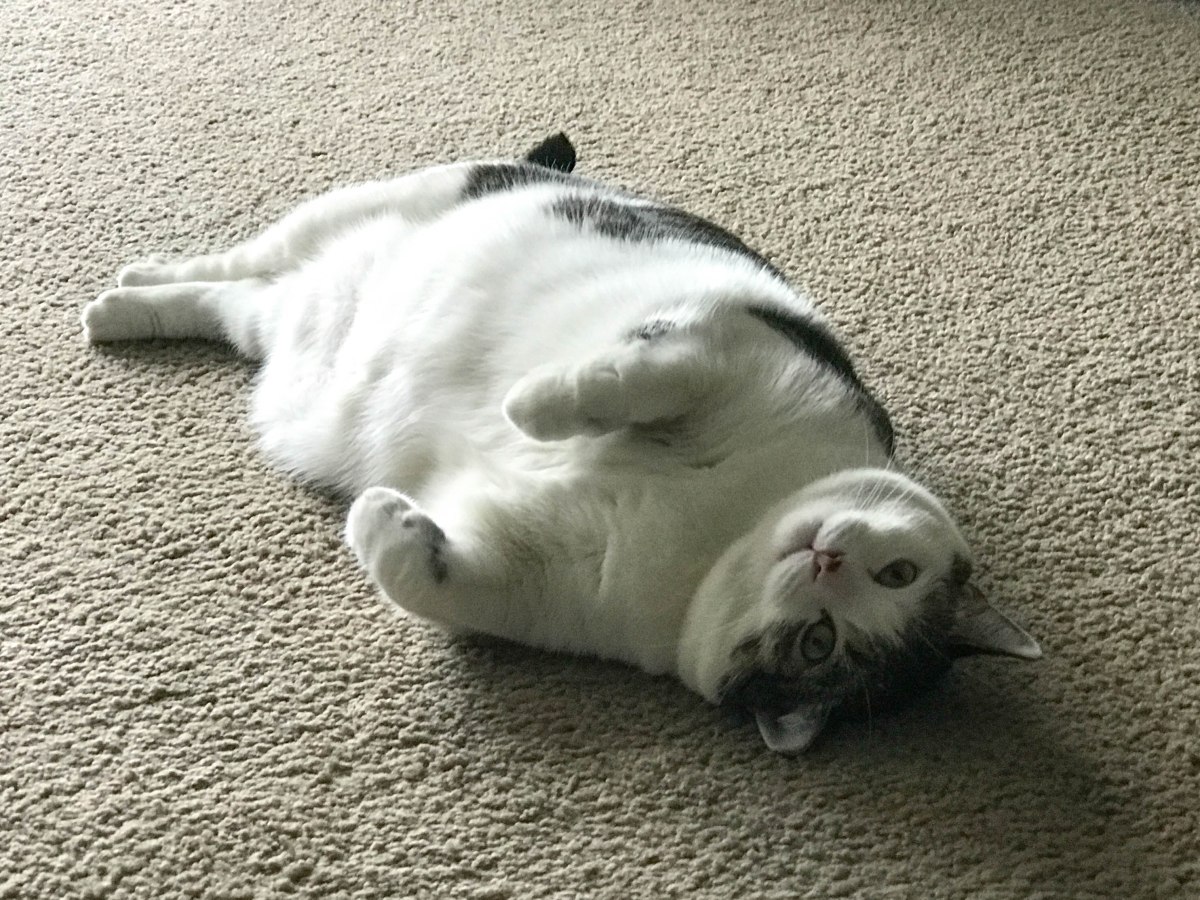
Honestly, I can barely comprehend this. Bud would be more likely to engineer a treadmill into an automated system to deliver snacks to him so he doesn’t have to lift a paw. He is, after all, remarkably dedicated to the craft of being as lazy as possible.
Cheers to Archie for showing not all cats are loafing blobs!
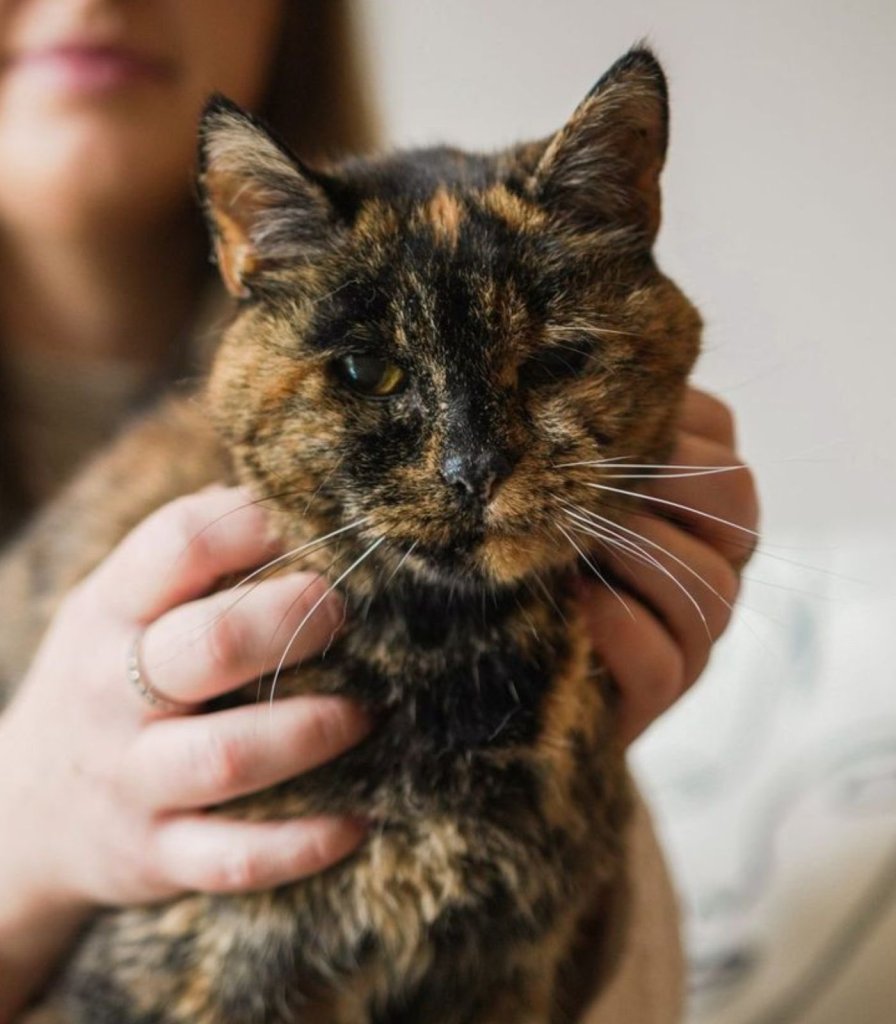
Despite her advanced age and loss of hearing, Flossie is still “affectionate and playful,” her human says.
When Flossie was born, Mariah Carey, Coolio and Pearl Jam ruled the airwaves alongside a band called Deep Blue Something with their hit, “Breakfast At Tiffany’s.”
Robert Deniro and Al Pacino were kings of the box office for their film, Heat, alongside Robin Williams’ Jumanji and Steve Martin’s Father of the Bride Part II. Bill Clinton was still serving his first term as president, and the internet was in its infancy as a network available to the wider public after years of use by the military and academics, with users connecting via cumbersome and painfully slow modems.
Your humble correspondent was just a kid, and Buddy wouldn’t be born for almost another 20 years.
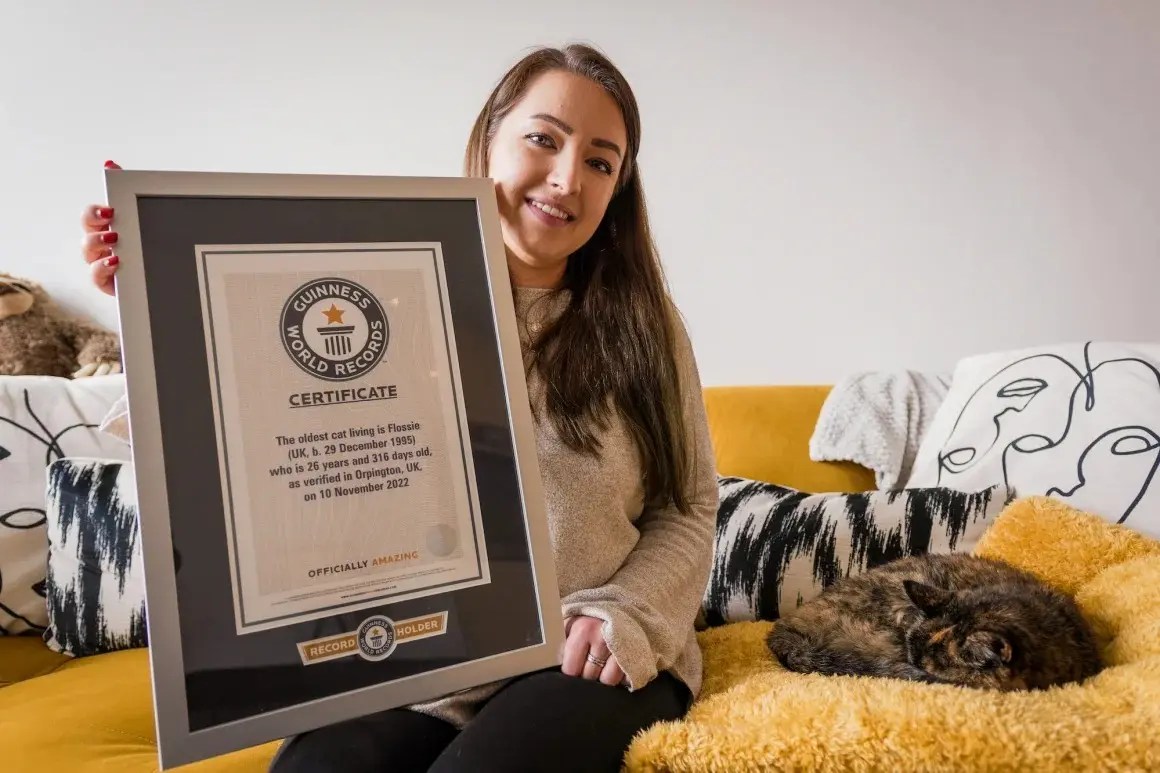
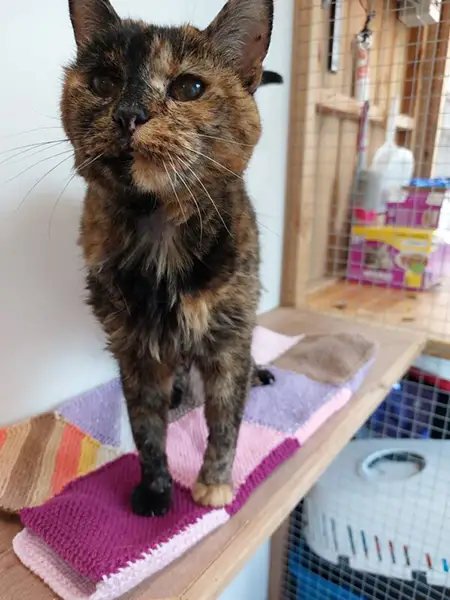
Yet Flossie’s still going and just celebrated her 30th birthday on Dec. 29. The tortoiseshell was officially named the world’s oldest cat in 2022 when she was 26 years old. Flossie, originally a stray living near a hospital, was adopted by her first human, a healthcare worker. When that woman passed away, her sister became Flossie’s caretaker. And in August of 2022, having outlived two of her humans, Flossie was taken in by the UK’s Cats Protection, who carefully screened applicants until settling on Victoria Green, who lived in Orpington, UK.
“I’ve always wanted to give older cats a comfortable life,” Green said when she was chosen as Flossie’s caretaker.
Flossie was deaf and had “limited eyesight,” veterinarians noted when they helped Guiness World Records verify the long-lived feline’s age. But despite that, Flossie remains “affectionate and playful,” Green said.
“I feel like I’m not sharing my home with the oldest cat. I feel like this is her home and I’m encroaching on her space,” Green told Guinness World Records at the time. “She’s a very nice roommate and we get on very well. I don’t feel like I’m living with a senior.”
The oldest cat on record was Creme Puff of Austin, Texas, who was born in August of 1967 and lived until 1995, when Flossie was born.
We wish the birthday girl a happy one and hope she’s got at least a few more birthdays in her.
In apocalyptic news for house cats everywhere, a pharmaceutical company is kicking off a trial of a GLP-1 drug for felines.
If cats could read newspapers, chances are they’d be gripped by a cold terror right about now, wondering if they’re among the unfortunates to have their yums curtailed by the same weight loss drugs their humans have been gobbling.
As the New York Times reports, a biopharma company headquartered in San Francisco, Okava Pharmaceuticals, is about to begin a trial to determine if GLP-1 drugs can help our chonksters slim down. More than 60 percent of American pets are packing extra pounds, the Times notes, while consequences like diabetes are shortening the lifespans and reducing quality of life for felines and canines.
“It is our belief that the condition of obesity, the condition of being overweight, is by far the number one most significant preventative health challenge in all of veterinary medicine,” Okava founder and CEO Michael Klotsman told the paper.
The upcoming study will include 50 cats. Most will receive a GPL-1 medication while a control group — about one third of the cats — will be given a placebo.
Since cats aren’t exactly known for being cooperative when it comes to taking oral medicine and weekly injections at a veterinary office are impractical, Okava has developed a system with a patch about the size of a microchip that will dispense the weight loss drugs over six months before a tiny cartridge needs to be replaced.
If all goes well with the trial, Okava will seek FDA approval and address other obstacles like convincing caretakers that their little pals can benefit from the feline version of Ozempic, Mounjaro and Wegovy.
That may be easier said than done considering our relationships with our furry friends and the role food plays in things like training, bonding and every day life
For lots of cat caretakers “their main way that they interact with and show their love to their pet often revolves around food,” Dr. Maryanne Murphy, a veterinary nutritionist at the University of Tennessee, told the Times.
How could the dynamic between cat and human change if the flow of yums is reduced to meals only? Will training — for everything from walking on a harness, to entering a carrier and fun tricks like high fives — still work if the reward is just a bit of encouragement or a scratch behind the ear?
An earlier weight loss drug developed for dogs, Slentrol, did not catch on because, as one veterinarian noted, “the main way [people] interacted with their pet was by feeding them, and seeing their excitement and happiness when they were eating the food.”
There’s also the not-so-small matter of cost. GLP-1 drugs are in high demand, and they’re expensive. One in eight Americans has taken Ozempic or one of its competitors. At times, the demand has threatened availability for diabetics, for whom the drugs were developed in the first place.
If the trials are successful and the GLP-1 drugs for pets gain FDA approval — which would require a series of much larger scale, more rigorous studies — the company hopes to offer them to consumers at a cost of about $100 per month per pet.
Even if this iteration of the drug fails, it’s unlikely to derail the larger effort. Vets have been prescribing tiny doses of the human version to cats with diabetes, and perhaps most telling of all, pet obesity continues to rise despite years of efforts by the veterinarian community to get people to play with their pets more and feed them less.
As Dr. Ernie Ward, a veterarian and founder of the Association for Pet Obesity Prevention, told the paper: “We haven’t moved the needle.”
And now we check in with our correspondent, Buddy the Cat. Buddy, what do you think about the possibility of GLP-1 for your species and the end of the proverbial gravy train?
Buddy? Bud? Are we having technical difficulties?
I’m sorry, ladies and gentlemen, we can’t find Buddy the Cat. We’ll resume this segment if and when we manage to locate him.
Little man’s got acne and won’t let me use a hot compress. Will a topical cream work?
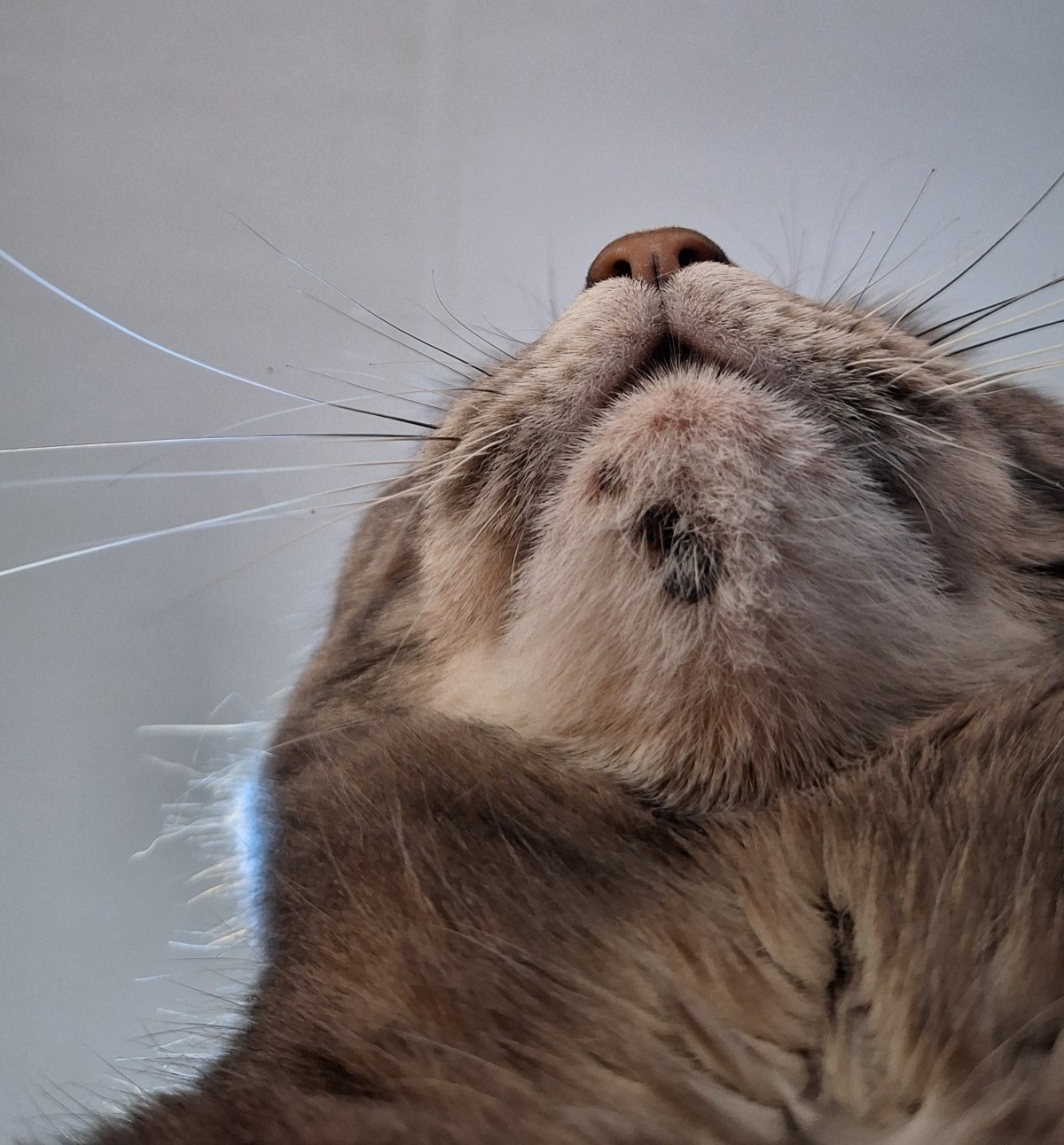
The gross picture you’re looking at is the underside of Bud’s chin.
I knew he’d gotten acne again, but was surprised to see it’s this bad.
So I turned to Google, read a bunch of stuff, and watched a video in which a veterinarian had her arm around calm cat, who allowed her to rub its chin with a warm compress and witch hazel.
These veterinarians with their calm cats! You never see them with a cat like Bud, and I know there’s no magic to their approach because I’ve warned vet techs about him before and have seen them still come away with scratches.
Buddy’s selfie, triggered by the little guy himself when I was trying to get a clear shot of his acne so I could assess how bad it is.
I don’t have any witch hazel, but figured a warm compress could help. I should have known better. He won’t let me do it, just like he won’t let me trim his claws, brush him for more than two seconds at a time, or do just about anything else for his benefit.
When it’s his idea, of course, I can rub his chin until his heart’s content, as well as the top of his head, his cheeks and around his ears. But at all other times? Terrible! Unacceptable!
He is such a pain in the ass. A Pain In The Bud, you might even say. I love him very much and he’s generally a good boy, but what a pain in the ass.
I already have stainless steel bowls for him, so unfortunately this may be my fault for either not cleaning them well enough or not running them through the dishwasher enough to kill off all potential bacteria with heat as well as soap. Normally I wash them by hand with soap between meals/water refilling, and once a week in the dishwasher, but it looks like I’m going to have to be a lot more thorough and really scrub the hell out of them.
In the meantime, can anyone recommend a good topical cream? Bud won’t let me apply anything with a warm cloth or even a soft tissue, but I think I may be able to distract him and apply a topical cream with a Q tip. Then hopefully he’ll realize I’m only trying to help and allow me to apply it.
Studies show most of us are pretty bad at interpreting our cats’ moods. A research team in Australia wants to change that.
Cats are constantly telling us how they feel, but many of us aren’t listening.
We’re not talking about chirping, trilling and meowing, although those are some of the ways our cats try to communicate with us.
While they might seem protective of their own thoughts and feelings, cats are actually transparent, and they can’t lie.* Their tails, ears, whiskers, facial expressions and body language all broadcast a cat’s mood.
The question is, are we picking up that broadcast?
In The Conversation, the University of Adelaide’s Julia Henning introduces us to a quiz she designed to answer that question, and invites us to take it.
The goal: to correctly assess each cat’s mood. What I liked most was that we’re asked to evaluate videos — clear, well-lit high resolution clips — instead of the low resolution stills that are often used for quizzes like this.
Sir Talks-a-lot
Henning has been studying the human-cat communication issue because when we misread cats, there’s a good chance we’re stressing them out. Henning and her team published the results of a study in September in which 368 participants from Australia were asked to evaluate a series of clips human-feline interaction.
It turns out they didn’t do so well at reading the signs that a cat is agitated, stressed or doesn’t want to play.
“For videos of cats who weren’t playing and were showing subtle negative cues (such as sudden tension in the body or avoiding touch), participants only recognised the negative cues about as well as chance (48.7%),” the authors of the study wrote.
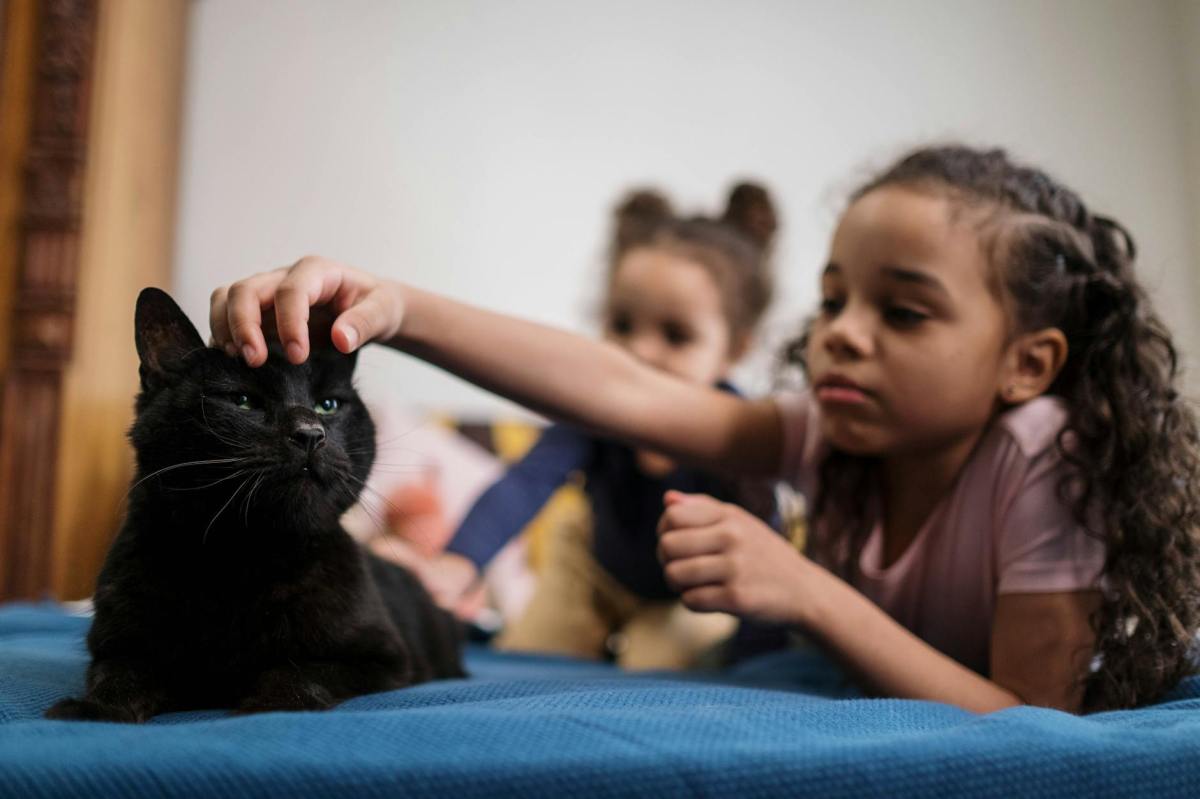
Even when study participants correctly read a cat’s ears, tail, whiskers and body language, some of them indicated they’d do things that would unknowingly make a cat more agitated and stressed. A classic example is trying to pet a cat’s belly and misinterpreting their derpy way of trying to block you as a playful gesture.
Did you know? Approximately 96% of Buddy’s communication is related to yums.
In the paper, which was published in Frontiers in Ethology, Henning and her colleagues lay out the case for making sure we — the people who take care of cats — are sensitive to what our little buddies are feeling.
It’s not just about strengthening the bond, although that’s an important part. It’s about reducing stress and miscommunication, and increasing quality of life.
Cats are incredibly sensitive to our actions and moods because we are the most important living beings in their lives. We feed and house them, and we’re their pals. If we’re constantly subjecting them to play they don’t like or overstimulating them, they get stressed, and stressed cats can become depressed, sick or resentful cats.
If we want to make sure our buddies live their best lives, we have to understand what they’re trying to tell us.
(*) Except when it comes to food. When food is involved, these innocent, cute little furry creatures become master manipulators and can convince anyone they’re starving.
Note: The first version of this story linked to the study page twice when the first link should have pointed to the quiz. It’s fixed now, and email subscribers can follow the link through this version of the story. Apologies for the error.







 Pain In The Bud