You may have noticed that turkey is a frequent topic of conversation on this blog, and since we’ve had new readers join us it’s a good time to explain just what the hell is going on with my cat’s fowl obsession.
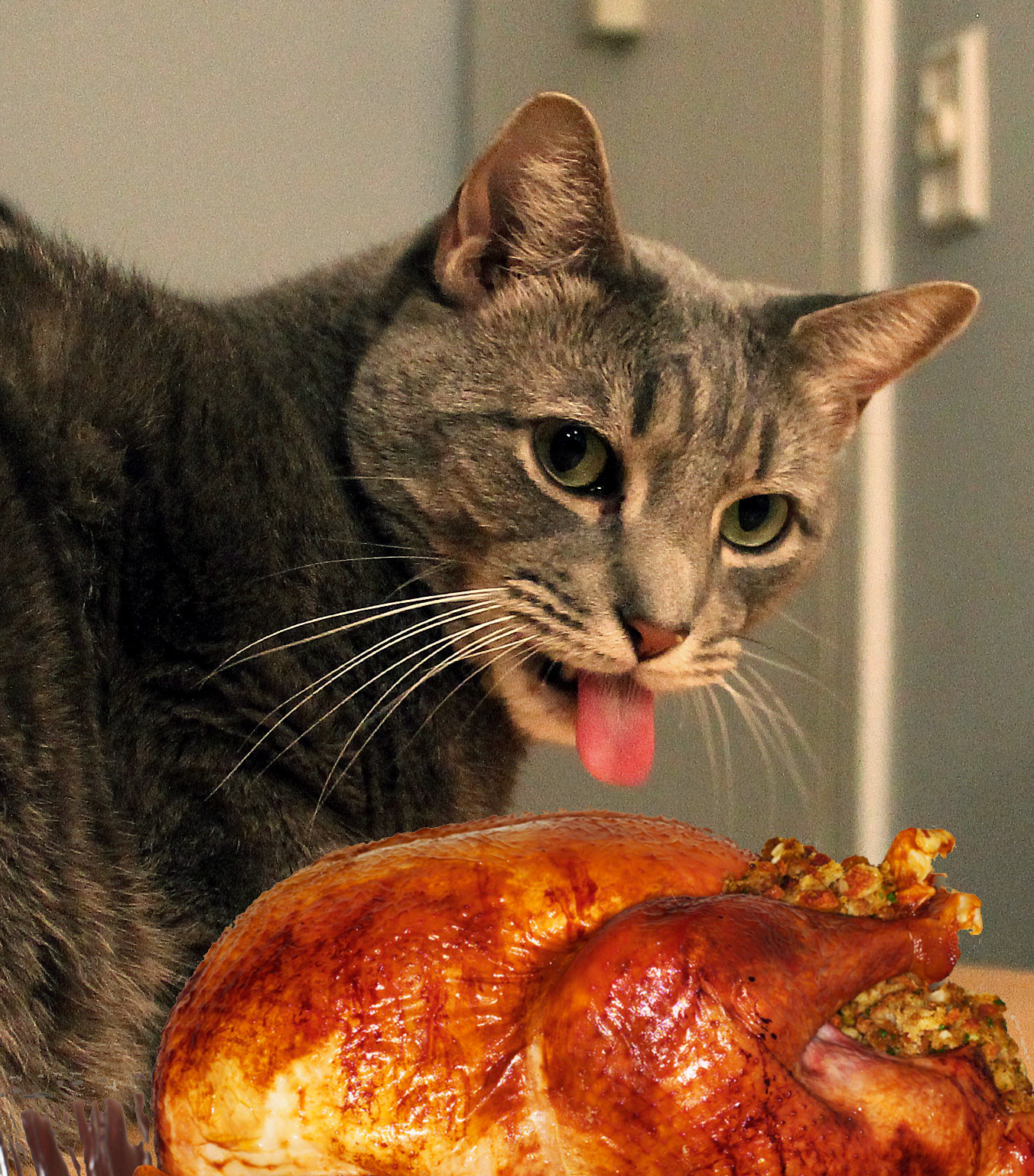
It’s simple: Buddy really loves turkey.
I first noticed it when he was about 10 weeks old. Like most cats he enjoys all kinds of food, but when I fed him turkey one day, he scarfed every last bit of it down, licking his bowl clean.
When he was finished he looked like the happiest kitten in the world, sitting there licking his lips enthusiastically, sopping up every stray morsel before letting loose a tiny, satisfied belch.
“The turkey!”
Before adopting Bud, I’d read enough cautionary stories about finicky cats who’ll only eat a certain kind of meat, in only one texture, from a particular cat food company.
Not only does food become perfunctory for those cats, but if the cat food company discontinues the product, both cat and owner are in for frustration that could stretch for weeks of trial and error. Finding an acceptable alternative is usually an expensive, wasteful process as kitty repeatedly turns his or her nose up at substitutes.
Heeding the cautionary advice of those devoted cat servants, I fed as much variety as was possible from the very beginning. Bud eats salmon, chicken, beef, tuna, shrimp and duck, among other varieties when available.
He genuinely enjoys his meals thanks to the variety, and I’d recommend the same strategy for anyone else bringing a new kitten home. Get ’em started early and you won’t have a picky cat.
But for Bud, nothing compares to turkey. No other food prompts such meows of pure joy, or the urgency with which he leads me to his dining nook when he knows his bowl is filled with yummy turkey goodness, frequently looking over his shoulder to make sure I’m just a step behind him with his beloved turkey.
It’s been that way since he was a baby, and in more than six years it hasn’t changed.
So for Buddy, life’s finest things are turkey, catnip, napping, napping on top of his Big Buddy, and turkey.
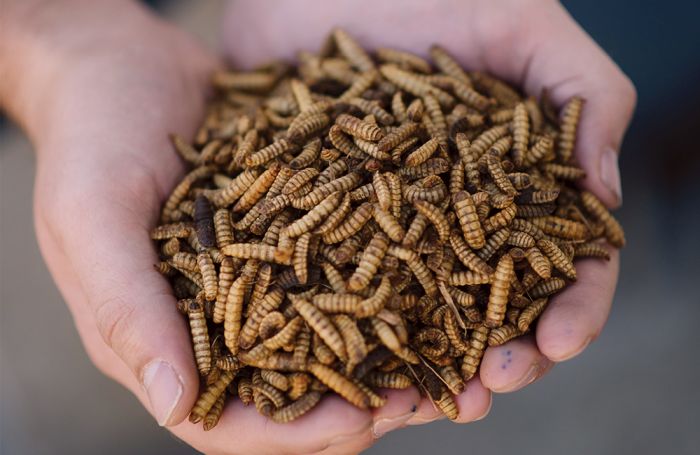
Little Buddy makes it clear he sure as hell won’t eat insect larvae cat food. Yuck!
Dear Big Buddy,
You find yourself in receipt of this notice so there exists a written record of the amendment to section 176.2 in the Little Buddy Care Agreement, forbidding the use of repugnant and objectionable non-approved yums.
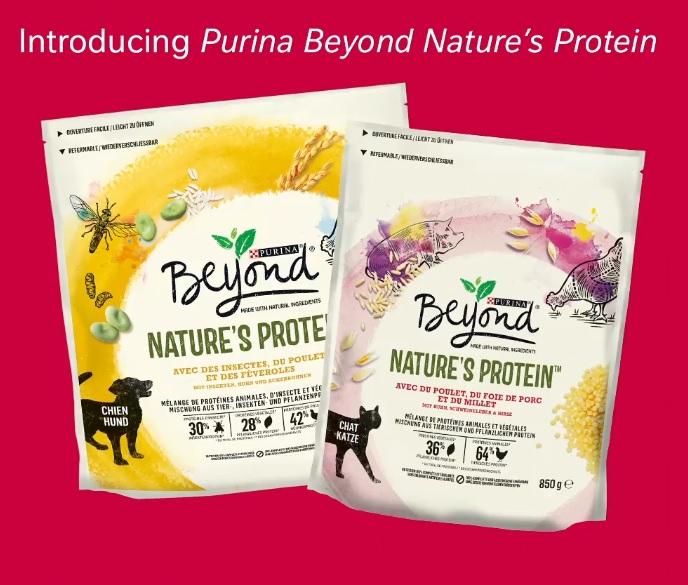
Specifically we refer to the so-called “alternative proteins” hawked by Nestle’s Purina brand, which substitutes Glorious Yums like turkey, chicken and turkey, for unacceptable ingredients such as “fly larvae protein.”
As the language of the new LBCA amendment makes clear:
“At no time shall human serve any Purina products or any products containing ‘alternative proteins’ including, but not limited to, fly larvae protein, invasive Asian carp protein, and any alleged ‘cat food’ that includes insects or non-approved yum ingredients.”
No. Don’t even think about it.
Insect larvae-based pet food is attractively packaged.
Please keep in mind, dear human, that section 176.1 still applies:
‘At no time shall Buddy the Larger serve Little Buddy any abhorrent meat substitute or so-called ‘vegan cat food.’ Violations are punishable by biting and shitting in your shoes.”
We acknowledge that Nestle claims it’s motivated by “the need to diversify sources of protein in food for a variety of reasons, including environmental goals such as fighting climate change and protecting biodiversity.”
But that just means the cheap bastards are looking to increase profit margins beyond the sky-high margins it enjoys for the lowest-grade quasi-meat it uses for its existing pet food lines.
As always, we expect you to adhere to the Little Buddy Care Agreement. Violations will be recorded and will negatively effect your score on the annual Service Quality Report Card, so remain vigilant. Only the best yums will do.
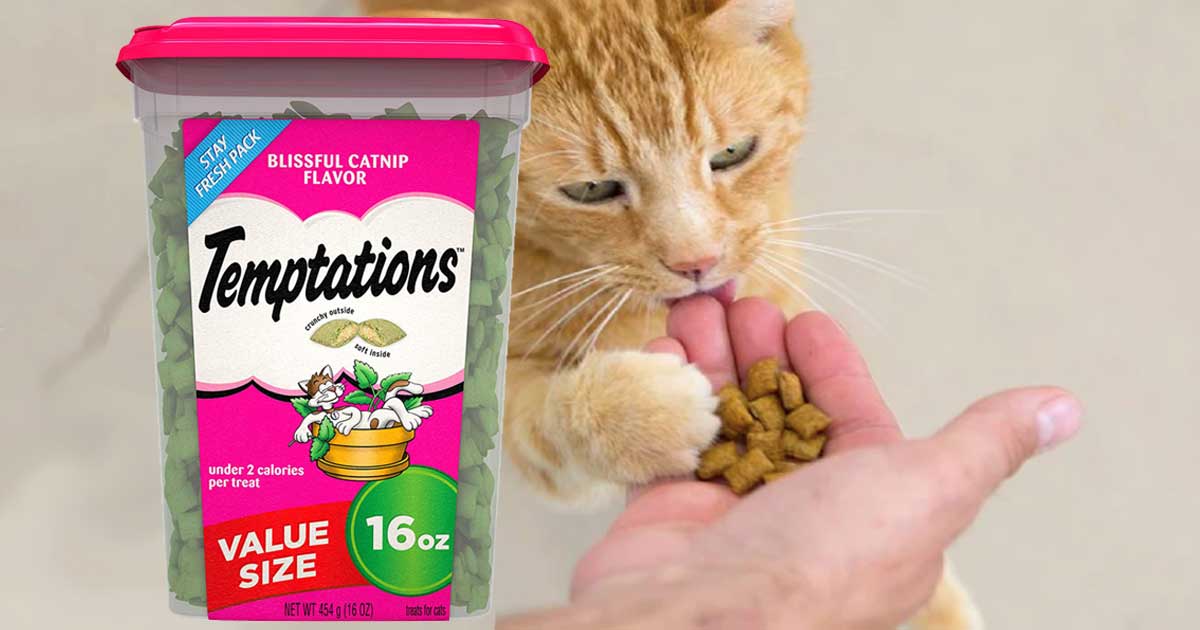
A video shows a cat breaking into a large tub of Temptations in less than a minute.
In my last post about Temptations, aka the kitty crack, I noted that Buddy had once gotten into one of those big tubs of the stuff and gorged himself before getting sick.
He’s not the only cat to do that, as I wrote at the time, but this cat takes cake: She’s able to pop the lid off and get at the cracktastic treats inside in less than 60 seconds:
And here’s a cat who has learned how to open his treat cabinet to get the Temptations inside:
These videos confirm I made the right call getting the little guy off the stuff.
As stray cats suffer, their plight has been mostly overlooked. Cat lovers in cities across the world are trying to keep them fed and safe during the pandemic.
Years ago I worked with a guy who started a food pantry from scratch.
This man, a retired software engineer, approached the biggest restaurants, bakeries and food distributors in the area, asking them to donate their leftover/unused food so his pantry could distribute it to the poor.
Many obliged, but they all had the same request: “Don’t tell anyone we’re participating,” they told him.
The request wasn’t prompted by humility. These businesses didn’t want the public to know how much food they waste, and they waste a lot of perfectly good food, a dirty little secret of the restaurant, hospitality and food industries.
The reason I bring this up is because there’s another demographic that depends on the food those businesses toss out: Stray cats.
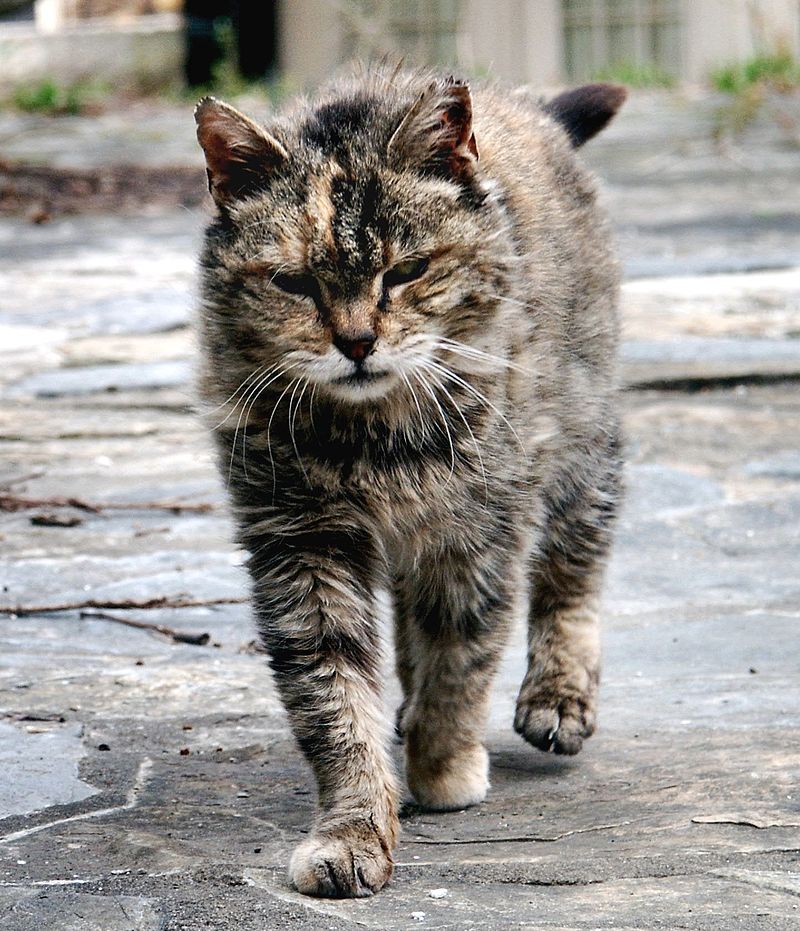
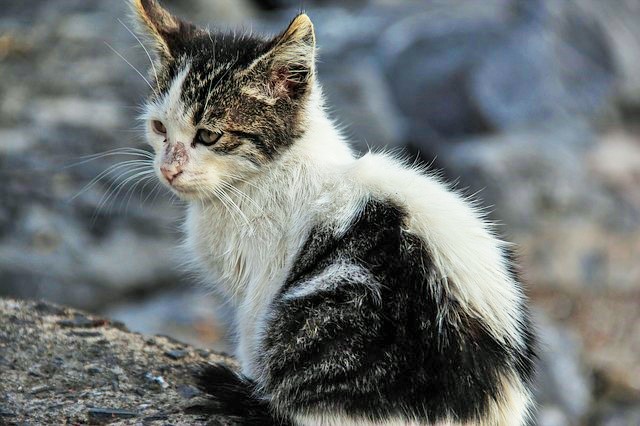
With restaurants shuttered because of the Coronavirus, stray cats are going hungry and dying for lack of the scraps they scavenge from rubbish bins, dumpsters and sidewalks. It’s happening here in New York, across the United States, and in countries like Turkey, India, Greece and Morocco.
For animals who already live difficult lives, the pandemic made things worse.
“The strays have no means of feeding themselves as all offices, restaurants [and] roadside eateries are closed,” an animal rights activist in India told the environmental news site Mongabay, in a story headlined ‘Slim pickings for strays and pets during COVID-19 lockdown.’
Cats aren’t the only animals suffering. One particularly dramatic example was caught on video in a Thai city where thousands of long-tailed macaques live and depend on food given to them by tourists.
Hundreds of starving monkeys stopped traffic in a chaotic brawl over a single piece of food, shrieking, clawing and pushing each other aside to get at it.
As if things weren’t bad enough, stray cats are now competing with former house pets for the little food available.
In India, where bad actors have been spreading false information about COVID-19, animal rights activists are finding abandoned pets — including pedigreed cats and dogs — on the streets after their caretakers abandoned them.
“A lot of this is happening because of misinformation that went viral earlier about pets being carriers of the virus in China. It turned out to be fake, of course, but a lot of damage has been done now,” People For Animals’ Vikram Kochhar told Quartz.
Much of the damage has been done on social media, where conspiracy theories and rumors about contracting COVID-19 from animals are rampant. In China, where pet owners abandoned cats and dogs en masse during the first wave of Coronavirus, some social media users on Mandarin-language platforms called for the “extermination” of cats after a pair of studies conducted by Chinese research labs suggested cats are susceptible to catching the virus.
It isn’t easy to combat waves of viral misinformation, even as health authorities across the world stress cats cannot transmit the virus to humans.
In Greece, abandoned pets — many with their collars still on — are following strays to food sources, especially in larger cities like Athens.
“We are seeing an increase in the numbers of cats in areas where we feed, some appear to have been abandoned, while others have roamed far from their usual spots in search of food,” animal welfare advocate Serafina Avramidou told Barron’s.
In feline-loving Turkey, where taking care of street cats is considered a cooperative responsibility, the central government has told local officials to make sure strays are well fed and taken care of. By making it a government responsibility, their thinking goes, citizens who normally care for the cats will be much more likely to stay inside during the pandemic.
“There are lots of cats on the side streets where there are only closed businesses,” a Turkish Twitter user wrote. “I haven’t seen food anywhere for days. The cats are running after us [looking for food].”
In Istanbul, Muazzez Turan fed some 300 stray cats daily before the pandemic, but said she’s had to stay home: Not only has her country been particularly hard hit by COVID-19, but she has pre-existing medical problems that make her susceptible to complications should she contract the virus.
Still, she said, her mind “was always with the cats,” and she told Turkish news agency Anadolu that she was relieved to hear the strays hadn’t been forgotten.
“I will sleep peacefully for the first time today,” Turan said.
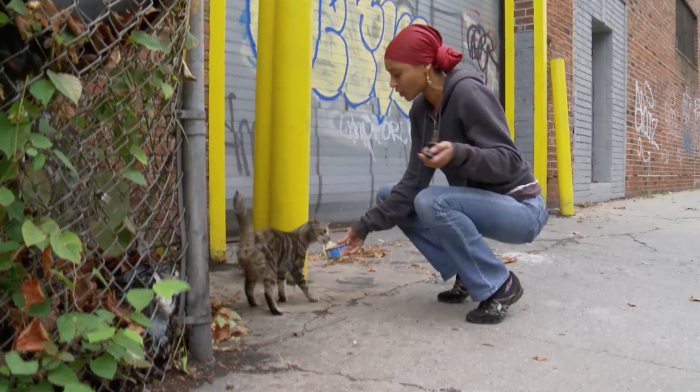
LaTonya Walker of Brooklyn feeds a stray in Canarsie. Credit: 24 Cats Per Second
Here in New York, some animal lovers are picking up the slack for closed restaurants as well as at-risk people who normally feed strays.
Among them is Latonya Walker, who told the New York Post she normally spends $600 a month feeding several colonies of strays but expects her costs this month will be “way more since there’s less restaurant garbage they can eat from, and more hungry cats walking around.”
“The cats have no clue what’s going on because nothing has changed for them,” Walker said. “It’s not in my DNA to see a cat suffering and not do anything about it. I’m equipped to make a cat’s life better, so I’m going to.”
Ingredients can change without any indication on pet food packaging or acknowledgment from the companies that manufacture pet food, the study revealed.
We’ve all heard the oft-quoted factoid claiming domestic cats kill billions of birds and small animals every year, and unsurprisingly that number is contested and controversial.
One reason skeptics doubt those numbers is because researchers didn’t observe cat behavior and extrapolate the ecological impact — they handed out questionnaires to owners and asked them how often their cats brought dead animals home. To get accurate results, researchers have to be confident people are answering honestly and have reliable memories. It’s really not the best way to do a study.
So a team at North Carolina State University came up with a better way to measure cat predation on wildlife: They’d take hair samples from more than 400 cats, which would reveal how much of their diets consist of cat food versus prey.
Hair analysis can reveal different isotopes, so the team would be able to directly note each cat’s diet by distinguishing between pet food isotopes and those from prey animals. As the team explained:
A common way to understand the composition of animal diets is to collect samples of fur, nails, or blood from an animal and analyze its carbon and nitrogen isotopes. All organic materials contain isotopes of elements that get locked into body tissues, following the basic principle that you are what you eat. For example, the ratios of nitrogen isotopes present in carnivores are dependably distinct from those of plant eaters. Similarly, researchers can distinguish the types of plants that an animal eats by measuring the ratio of carbon isotopes.
It was a good idea, but the study was derailed by an unexpected discovery: No one knows what the heck is in pet food.
Cat food manufacturers fill their products with mystery ingredients, the team found, which means one bag of kibble or one can of wet food doesn’t have the same ingredients as the next, even if they’re the same flavor from the same company.
Although they can meow in protest, our cats can’t tell us their food tastes different. (Source)
Additionally, pet food manufacturers can — and do — change what they put in their products without notifying customers or acknowledging the changes on the packaging.
As a result, the research team couldn’t identify which isotopes were from cat food and which ones were from hunted meals.
“We really thought this was going to be an ideal application of the isotope methodology,” said scientist Roland Kays, a co-author of the study. “Usually these studies are complicated by the variety of food a wild animal eats, but here we had the exact pet food people were giving their cats.”
That discovery essentially rendered the study useless for its original purpose, but like all good scientists, the North Carolina State team realized that failure reveals just as much as success, even if it’s not necessarily what you’re looking for.
“This isn’t what we aimed to study, but it is important in as much as there are hundreds of millions of cats (perhaps more) on Earth,” said Rob Dunn, a professor in NC State’s Department of Applied Ecology and co-author of the study. “The diets of cats, dogs and domestic animals have enormous consequences for global sustainability, cat health and much else. But they are very non-transparent. In short, at the end of this study we are still ignorant about why some cats kill more wildlife than others, and we have also found we are ignorant about something else, the shifting dynamics of ‘Big Pet Food.'”
As veterinarian Shawn Messonnier put it in an editorial for Pet Age, “the pet food industry remains shrouded in mystery about what’s really inside the pet food bag and how it’s created.”
Calling for more transparency in the manufacture and packaging of pet food, Messonnier pointed out ingredients can have a drastic effect on the health of our furry friends.
“For pet parents, a big leap of faith is required of them because unlike fresh human food, you can’t visually verify the ingredients used, their sources, freshness or the safeness of their handling,” he wrote. “Label language can be difficult to discern, too, so people rely mostly on the observations and opinions of friends and family they trust. Inevitably, people hope what goes in the bowl will translate into well-being and happiness for their dog or cat.”

 Pain In The Bud