The man’s attorney styled the decision as a victory for animal lovers.
An Oregon man didn’t get his cat back but he could be almost $1.4 million richer after a jury decided in his favor in a cat-napping case.
Joshua Smith, 41, adopted a cat he named Frank in 2017 after finding the little guy, apparently a stray, in an alley.
At the time Smith was living in a single room in a group drug recovery home in Portland, according to the Oregonian. The terms of his lease didn’t allow him to keep pets so when Smith’s landlord — a man named Devon Andrade — discovered Smith had been keeping a cat, Andrade took matters into his own hands and stole Frank, admitting under oath he’d taken the tabby and given it to his girlfriend, who then took Frank to a local shelter.
Smith and Frank were never reunited: It turns out Frank has a microchip and he was returned to his original family, the people who were his caretakers before he went missing and Smith discovered him more than six years ago.
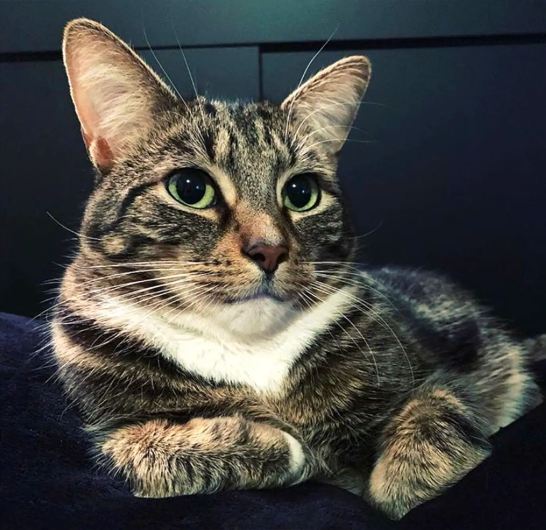
Frank the cat, as seen in a photo Fuller showed to the jury.
But it took a jury less than two hours to decide against Andrade and Pine Street LLC, the company behind Pine Street Recovery Housing. The defense argued that even though Andrade should not have acted unilaterally, Smith was still in violation of his lease agreement, but the jurors weren’t buying it.
“The jury’s message should be loud and clear to landlords,” said Michael Fuller, Smith’s lawyer. “You need to respect the rights of tenants, especially when it comes to pets.”
The jury awarded Smith a shocking $1.375 million although it’s not clear how much of that Smith will see. An earlier story, published in 2019, said Smith had sought $250,000 in damages. It’s not clear why the jury went with the much larger amount.
Fuller credits the jury, saying there were several sympathetic animal lovers in the juror box.
Smith said he’s been successfully sober for years. He’s since married, moved to California and opened his own barber shop.
“The most important thing was that I got my day in court,” Smith said. “I got really lucky because I told the truth, no matter what.”
NEW YORK — Disappointed with the lack of responses to his dating profile, Buddy the Cat updated it on Sunday with “much more accurate and badass” photos of himself.
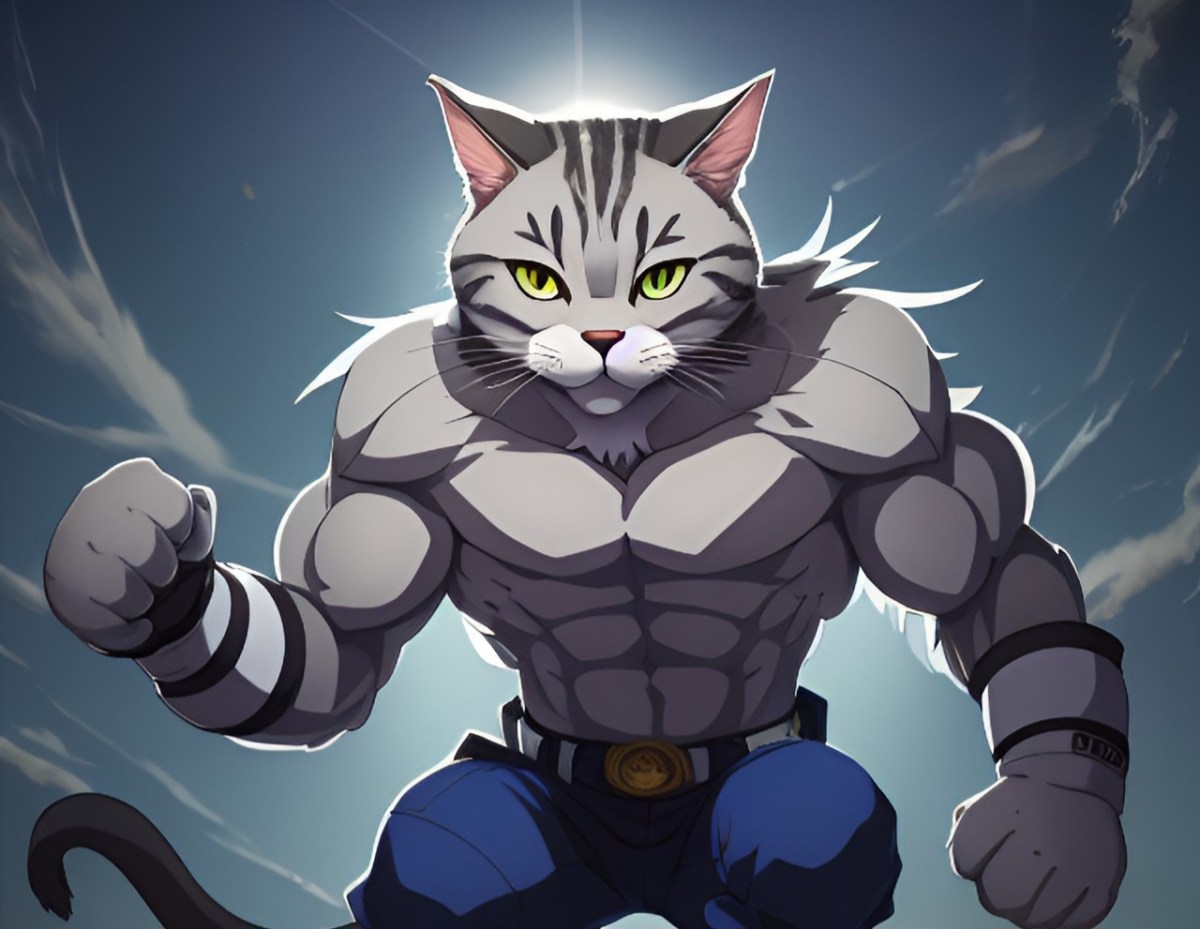
“These oughta do it,” the gray tabby cat said, laying back with his paws behind his head and his feet up after successfully updating his Meowr profile.
The dating app, which is exclusively for the use of felines, boasts more than 24 million users and saw an influx of new accounts registered over the weekend after a National Cat Day promotion.
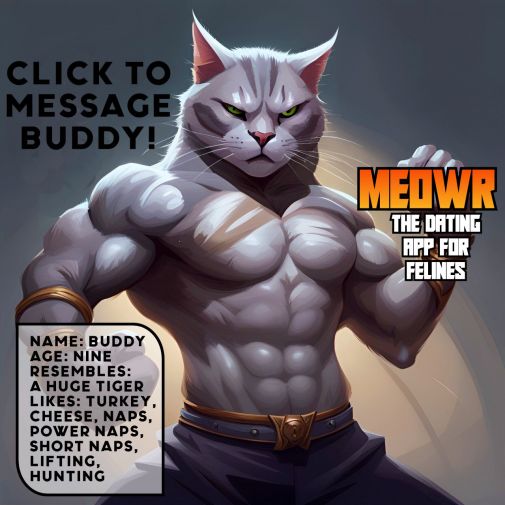
A new and “more accurate” cover photo for Buddy’s dating profile on MEOWR.
Disregarding the advice of his human to “just be himself,” Buddy headlined his profile “Catdonis Seeks Super Hot Model Types.” Under a column titled “Describe yourself in a few words,” the model-seeking feline wrote: “Brave, handsome, meowscular, really really funny, an incredible dancer, and the 2023 National Competitive Table-Setting Champion.”
His human spat out his drink.
“Brave? Competitive table-setting champion? What the hell?” he asked, awe-struck.
Buddy rubbed a paw against his fur and matter-of-factly explained what his dumb human was unable to grasp.
“It’s designed to show my artsy and sensitive side,” he said. “Duh. This may come as a surprise to you, but the ladies like a cat who is in touch with his inner artist.”
Big Buddy shot his feline friend a derisive look.
“The only art you’ve made is in your litter box,” he said. “And it’s depressingly apocalyptic.”
Buddy snorted.
“We’ll see who gets the last laugh, human,” he said. “When I roll up to the club with Meowghan Fox or Jennifer Clawrence on my arm, you’ll be super jelly.”
As of Thursday Buddy had received no responses on his profile.
A Nebraska family is heartbroken after a woman stole their cat right off their porch in broad daylight.
Mr. Kitty was taken under duress, and her absence has left a cold spot on her human’s bed — and in her family’s hearts.
Despite her name, Mr. Kitty is a female calico Manx rescued about eight years ago by Benjamin Strimple, who found Kitty with her leg caught in a racoon trap.
“When we got this cat, it just became my everything,” Strimple said. “Became like my best friend. Every single night I sleep with her.”
Now he’s worried for her safety and hoping for her return after his Ring doorbell caught a woman walking directly up to his porch in Omaha, NE, and taking the unwilling Mr. Kitty by force in broad daylight on Oct. 20.
The video shows the woman approach and hold out a hand. The friendly cat sniffs her hand at first, but pulls away as she leans forward. Mr. Kitty fights back as the woman tries to corral her, but a close look at the video shows the woman using what appears to be some sort of spray device before picking the cat up with both hands.
A screen shot of the Ring doorbell footage showing the suspect stealing Mr. Kitty from her family’s Omaha, NE, porch.Click here to view the video.
She carries Mr. Kitty back to a silver Chevy Malibu and drives away. The suspect is a black female with long hair who was wearing an orange skirt, a brown or black shirt and dark sneakers in the footage. Strimple says he doesn’t know the woman but she looks familiar and he may have seen her in the neighborhood before.
Mr. Kitty does not venture off his property, he said, and spends most of her time indoors or on the family’s porch, where neighbors are accustomed to seeing her.
“I feel like it was like their plans. You know, they seen my cat,” he told KETV Omaha, an ABC affiliate. “I’m pretty sure everyone on the street knows that cat belongs to this house.”
Omaha Crime Stoppers and the Nebraska Humane Society are offering a $1,000 for information leading to the arrest of the woman and the return of Mr. Kitty. Anyone with information on the theft can contact Omaha Crime Stoppers at 402-444-STOP or www.omahacrimestoppers.org. If you know anyone in the Omaha area, please share the story and encourage them to share it on social media.
The theft is not only traumatic for the family, but for Mr. Kitty too, pointed out Nebraska Humane Society’s Pam Wiese.
“I’m sure that [s]he’s probably like, what? What just happened?” Wiese said. “I was just loving up on someone and now I’m no longer home.”
Strimple said the only thing he cares about is getting his furry friend back.
“There’s a lot I want to say, but I would just say, just give her back,” Strimple said. “You know, that’s pretty messed up. We have a lot of family, a whole family sad. Just give her back.”
Through a new resequencing technique, forensics can yield more information from a single cat hair than ever before, with major implications for crimes in places where felines are present.
Last year a forensic study broke new ground by proving there’s usable human DNA in cat fur which can prove a person was in a home or interacted with a particular pet.
Now a new study looked at the opposite situation, establishing that a single cat hair on a person’s clothes can tie them back to an individual cat — and the scene of a crime.
The general public, criminals included, are more aware of DNA and forensic techniques than they’ve ever been thanks to ubiquitous police procedurals, some of which focus heavily on the investigation and evidence-gathering aspect of police work.
But even the most fastidious criminal who is careful not to leave a single print or strand of his own hair at a crime scene can be undone by cat fur clinging to clothes. In fact it’s almost impossible for a person to spend more than a few minutes inside a cat-occupied home without picking up at least some fur, the research team said.
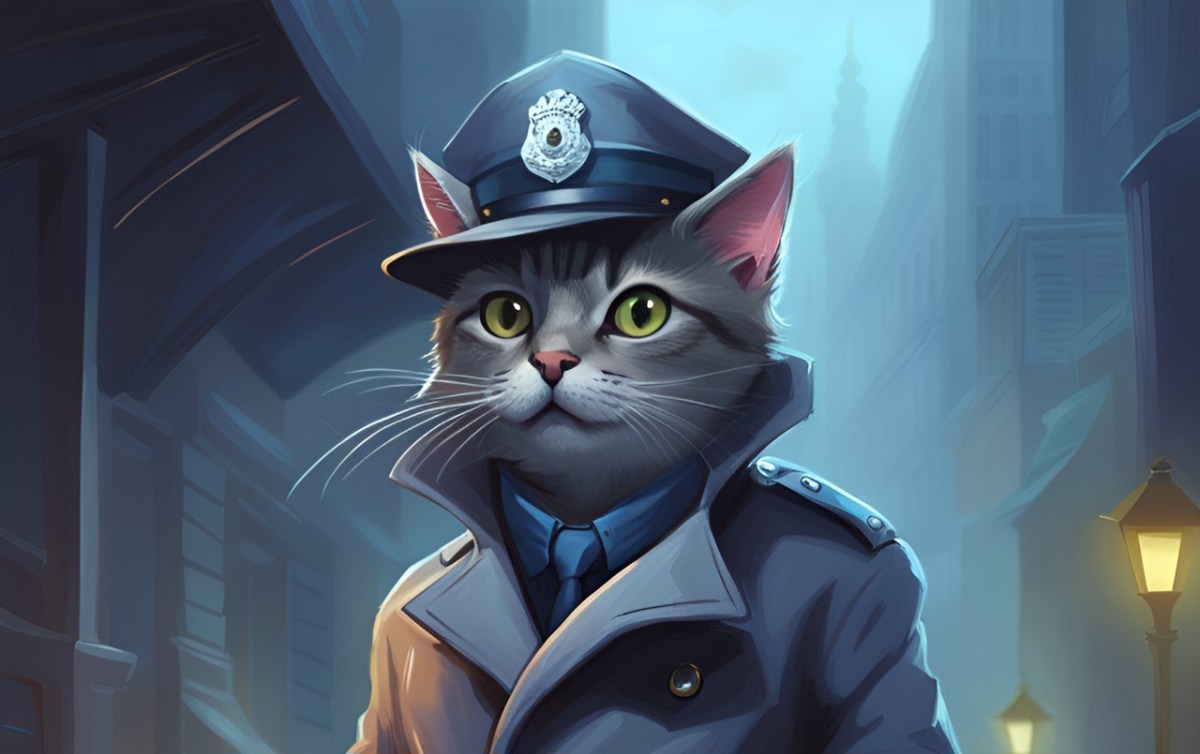
“Detective Inspector Buddy, at your service. Now tell me about the missing turkey…” Credit: Pain In The Bud
The paper, published this month in Forensic Science International: Genetics, outlines a new method for sequencing genetic information found on strands of cat fur.
“Hair shed by your cat lacks the hair root, so it contains very little useable DNA,” said Emily Patterson, the paper’s lead author.
Previously it wasn’t possible to narrow down with certainty whether a strand of hair belonged to a particular cat, but the research team found a new way to resequence DNA in a way that can link it to individual felines. The team’s new method doesn’t require any additional hair or roots, solving the original problem.
To prove their method works, they extracted fur from the body of a deceased cat and were able to match it to her surviving brother.
“In criminal cases where there is no human DNA available to test, pet hair is a valuable source of linking evidence, and our method makes it much more powerful,” said Mark Jobling, a geneticist at the University of Jobling and co-author of the new study. “The same approach could also be applied to other species — in particular, dogs.”
While dog hair can potentially be used in the same way, cat hair may have more forensic value from a prosecurorial standpoint because cats are territorial and many don’t leave their homes. It’s much easier to prove a suspect was inside a home if he or she is linked to an indoor-only cat than if the suspect’s clothes have fur from a dog who is walked around the neighborhood a few times a day.
A Bengal tiger mourned his longtime mate and then did something extraordinary, replacing her as their cubs’ primary caregiver.
The magnificent tiger in the photo above is officially called P-243, but he’s affectionately known to locals as The Hulk of Panna.
He made his home about a decade ago in the Panna Tiger Reserve, a 210-square-mile national park in the Indian state of Madhya Pradesh, home to more than 72 million people.
What makes him special, aside from his massive frame, is the fact that when his longtime mate died and left four of their cubs to fend for themselves, the Hulk stepped up and became a full-time dad.
The mom, known as P-213-32, had previously given birth to a litter of four cubs, but only two survived. As far as the rangers at Panna National Park could tell, the Hulk and P-213 had been together for years. The new cubs were their second litter.
The Hulk “was not seen with any other tigress,” the rangers wrote in a report.
On May 12, 2021, park rangers were concerned when P-213’s radio collar began transmitting potential mortality signals, alerting them to the fact that the tigress hadn’t moved for about six hours. The rangers observed her from a distance, then dispatched a team of elephant scouts to take a closer look.
T1 (tigress 1) was known as the matriarch of the Panna Tiger Reserve. After poachers nearly wiped out the entire population of tigers almost 15 years ago, T1 and another tigress were the last two female tigers. T1 herself gave birth to 13 cubs and today the reserve has more than 80 of the endangered big cats living within its boundaries. Credit: RS Murthy
The use of elephants by experienced riders in India to monitor tigers is as ancient as it is ingenious — while virtually every other animal in a tiger’s habitat gives the big cats a wide berth, elephants and tigers have an unspoken mutual agreement, a kind of wild non-aggression pact. That’s because as massive and powerful creatures who move in packs, elephants are too much trouble for tigers to bother with. Unlike their lion cousins who do hunt elephants opportunistically, tigers don’t form prides and even if elephants were solitary animals and easier to hunt, even a mother and her hungry cubs — let alone a single tiger — can’t eat that much meat. They also can’t transport the kill to safer dining spots the way they do with their typical prey.
So tigers and elephants tend to do little more than acknowledge each other’s presence, and the tigers have learned that humans riding on elephants aren’t hostile.
The elephant rangers who got close to P-213 realized the tigress had a swollen right forelimb and they made the decision to sedate her. For the next two nights, field veterinarians accompanied the rangers and administered painkillers and antibiotics. The treatment seemed to work, the swelling was reduced and the tigress was ambulatory if still sluggish, but she died less than a week later.
Her death “came as a shock to all of us,” the team wrote. “A beautiful tigress and a caring mother, [her death] left her four cubs alone.”
Frustratingly, a postmortem and lab analysis of her blood didn’t turn up any obvious cause of death.
P-213’s death “was itself heavy loss to bear but now the major worry was her four orphaned cubs,” the ranger team wrote. The cubs were last seen with her on May 10, about 11 days before she died. The two previous days they’d been spotted sharing a kill with their mother, and rangers reported the cubs looked strong and healthy.
A few days later, after an exhaustive search by five elephant riders and 50 park rangers, a ground team found the cubs “healthy and active and [did not appear] hungry or stressed.” They also spotted their father, the Hulk, nearby.
What happened next was extraordinary.
After park rangers cremated P-213, the Hulk approached the site about an hour after the last people cleared out. The next day, rangers observed him “sitting for long hours at the place where P-213 died.”
They also saw the dedicated mate and father calling out softly as he looked for his cubs, three males and a female who were about seven months old at the time.
A few days later, the Hulk successfully hunted a sambhar, a type of deer, and shared the kill with his cubs according to a local news report. Then on June 6, the Hulk was spotted feeding the kids again after he killed a cow.
“For the entire day the tiger remained in the area but did not eat the kill. This was unexpected behaviour from a tiger and the PTR management deployed ground staff deployed to find out the reason,” the news report said. “The team found that the area where the tiger killed the cow is the territory of four tiger cubs. This male tiger, known as P243, is their father. The cubs had lost their mother a month ago.”
The Hulk prowls his territory. Credit: Sanjeev Siva
As if he hadn’t done enough to earn “dad of the year” honors for his species, the Hulk was even spotted playing with his offspring.
“After the death of the tigress, we located these cubs and placed camera traps in the area,” said U.K. Sharma, the director of Panna Tiger Reserve. “We found that the tiger visits these cubs regularly, and his behavior shows that he is not a threat to the cubs. We have seen the cubs playing with the male tiger and sharing kills.”
The team at Panna reserve continued watching closely and got to see the cubs flourish in the care of their dad. There were moments of uncertainty when rangers went days without seeing the cubs or finding their pug marks, but their fears were always put to rest by trail cameras that captured images of the Hulk with his kids in tow, resting with them in favorite spots and sharing meals with them as he taught them to hunt and survive.
Because male tigers typically aren’t known for nourishing behavior and their traditional role is to defend their territory to keep their mates and cubs safe, the Panna reserve’s staff were ready to step in if things began to look dicey. They never had to. A follow-up report about eight months later, when the cubs were healthy and fast-growing 15-month-olds, affirmed the team’s earlier decision to stay hands-off and let the Hulk do his thing.
“Surviving the wild without mother tigress is no mean feat but surprises do happen,” the rangers wrote. “And these become experiences, practices and lessons for the future. The lesson learnt is ‘[the] best thing one can do when tiger cubs are growing is to let them grow. Let us permit nature to have her way. She understands her business better than we do.'”






 Pain In The Bud