Blog Posts

Cops Claim There’s Nothing They Can Do After Bloodthirsty Thugs Sicced Their Pitbulls On Beloved Shop Cat

“Harm or death to an animal caused by another animal is not a criminal matter,” even when footage shows dog owners urging their pets to attack, the NYPD claims.

The NYPD says its hands are tied after a group of people sent their pit bulls after a well-known shop cat in Manhattan and cheered as they dogs brutally ended the tabby’s life.

Freddy was the resident moggie at Michelle Flowers, a florist on Amsterdam Avenue in Washington Heights. The little guy was outside the shop at about 9 p.m. on July 4 when a man and two women set their dogs loose on him, then celebrated and cheered as they killed him.

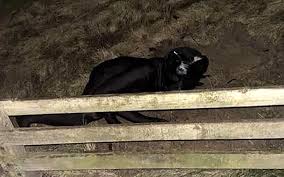
Credit: Cat Collective

The pit bull owners then “smoked, danced and ate food while taking photos and mimicking the grisly scene,” according to the New York Post. Surveillance cameras caught the attack and its aftermath, showing the three black-clad dog owners and others who witnessed the violence and did nothing.

A disgusted neighbor contacted the Cat Collective, a group of volunteers who feed and care for strays in the neighborhood, and they collected Freddy’s remains, then told the florist’s owner what happened.

“Someone deliberately set dogs on a defenseless cat while people watched and cheered,” Dan Rimada of Bodega Cats of New York told the Post.

Cat Collective is offering cash rewards to anyone who can identify the dog owners and the celebrating bystanders, but the police won’t do anything.

An NYPD spokesman told the paper that “harm or death to an animal caused by another animal is not a criminal matter,” citing a gap in the law.

A proposed bill, dubbed Penny’s law after a chihuahua that was mauled by pit bulls earlier this year in Manhattan, hasn’t made it out of committee in the New York State legislature, while New York’s city council is looking at a municipal law that would make it a crime to set dogs on other animals.

Credit: Cat Collective

It’s actually difficult to believe nothing can be done to get justice for Freddy, Penny and other animals aside from civil cases, which can only result in monetary damages.

Manhattan DA Alvin Bragg, who is controversial to say the least for creatively interpreting the law, seems like just the kind of district attorney who could find a way to prosecute the dog owners. The fact that the authorities are outright dismissing the possibility indicates Bragg doesn’t see this as a priority.

Working with the police to find ways to get justice is Bragg’s job, as well as the job of the attorneys working for him in the district attorney’s office. At the very least, they should be able to find something with which to charge the suspects, even if it really turns out there’s no way to hold them criminally accountable for Freddy’s death.

We hope Freddy’s killers are identified and held responsible, and we hope no more pets and strays have to be killed before lawmakers at the city and state level make it a priority to close an obvious gap in the law.
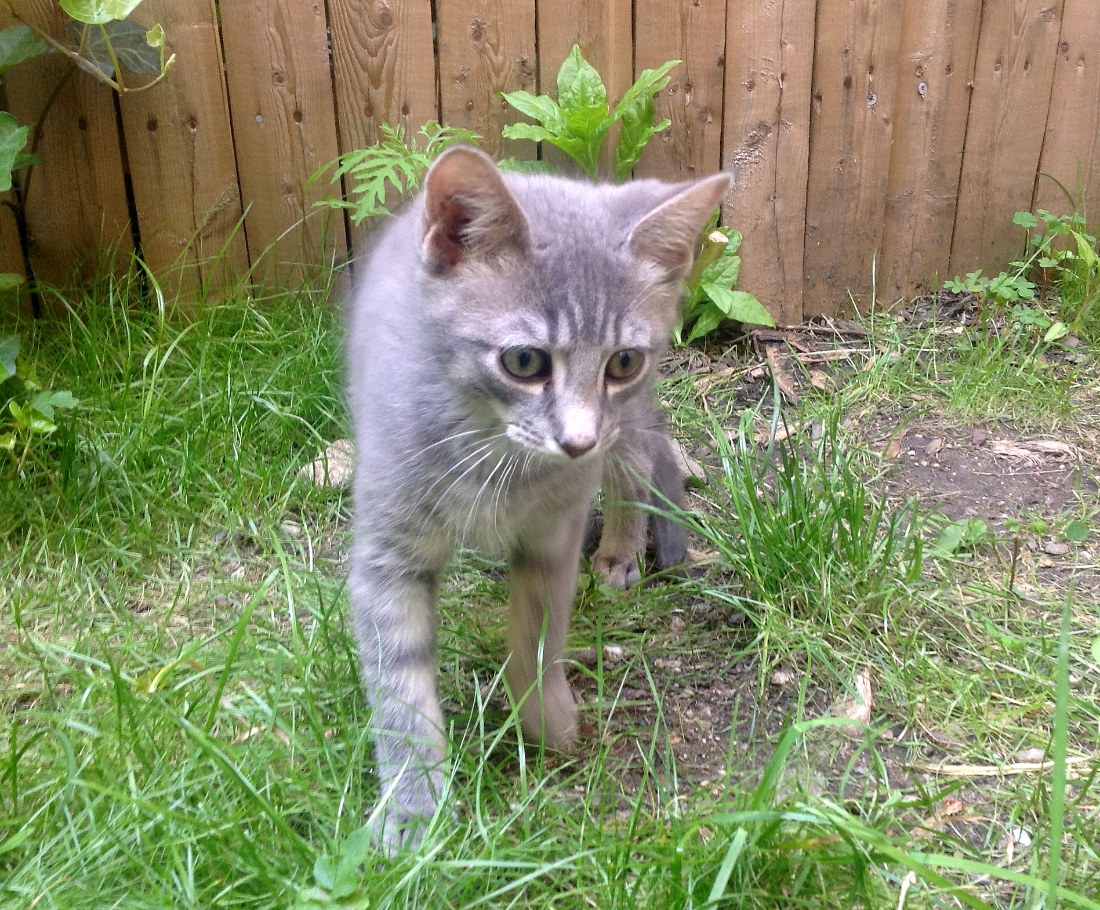
Lost Photos Of Kitten Bud!

From summer 2014 when Bud was about five months old.

Bud says: “Derp derp derp! I’m a bug-eyed kitten! Derp!”
Bud says: “Now THIS is a more regal image befitting my status as a handsome feline!”
Bud says: “Here I am in action! As you can see, I was ripped but not quite as meowscular as I am now.

Happy Independence Day 2025!

Happy ‘Merican Birthday from the Buddies!

The Buddies would like to wish everyone a happy Fourth of July!

We hope you have a great Independence Day, whether you’re spending it in the company of family and friends or quietly at home.

Buddy has bravely endured the fireworks show a block away from Casa de Buddy, shrugging it off like the fearless feline he is!

‘Man In A Panther Costume’ Terrorizing UK Beach Town

The costumed man has growled, hissed and meowed at passersby in the coastal area, reigniting old rumors of actual big cats prowling the area and freaking out people walking their dogs at night.

Ah, the things you can get away with in a country without guns.

A man in an all-black outfit has been prowling Wallasey beach in Wirral, a peninsula in northwest England, according to people who live in the area.

One witness said the man was “waving his hands in the air and making panther noises,” while others said they saw him approaching cars stopped at lights on roads near the coast.

“Anyone know who the freak in the cat mask and morph suit is at the coastal park near the harvester?” another local wrote online.

One thing was clear from witness accounts, photos and several short smartphone-shot videos: the costumed man wasn’t trying to imitate a friendly house cat.

“Was walking my dog tonight and heard a man making cat noises, shone a torch he was waving his arms at me before crawling up the hill. Never been so scared,” one witness posted to Facebook, per the BBC.

Sad as it may be, the first thing that came to mind when we read the witness accounts was that this doesn’t happen in the US, simply because odds are the costumed prankster would be shot.

“So I decided to bugger off home, had the rest of last night’s takeaway, had a laugh at the Sharons and Waynes on Blind Date, then went to see if any of the lads were up for a pint. Oi, I could really go for a Chinese! Anyone else wanna go for a Chinese?”

It’s possible whoever is behind the strange sightings is making light of decades-long rumors that mysterious and elusive big cats have been prowling the UK countryside.

Similar to persistent rumors of Bigfoot in the US, the phantom cats of the UK have their own believers who argue that there’s an extant population of leopards or pumas who are exceptionally adept at staying hidden from cameras but are occasionally spotted by farmers and motorists in the British countryside.

There’s a podcast dedicated to the topic, and proponents of the idea say it could explain a handful of cases in which livestock have gone missing.

The podcast, Big Cat Conversations, even dedicated a 2021 episode to “Wirral’s liminal leopards,” with its host interviewing several people who say they’ve encountered large melanistic felids on the peninsula over the decades.

Real big cats such as the leopard above tend to leave unmistakable evidence of their presence. Image credit: Wikimedia Commons

But as big cat experts have pointed out, it’s difficult to miss the signs when such apex predators really do claim an area as home. From unmistakable pug marks, to trees scratched and scent-marked with urine, to calls that can echo for miles in right conditions, big cats have many ways of making their presence known— and it’s often advantageous for them to do so, since they’re highly territorial animals.

One man who was out walking his dog told the BBC he thinks the whole thing is a prank.

“I don’t know his name, I think it’s just a wind up. He’s definitely not out to frighten people, he does it for fun,” he said. “He just likes being a giant cat. He doesn’t frighten our dog.”

Local police say they’re aware of the sightings. Merseyside Police and Crime Commissioner Emily Spurrell told local media that anyone who feels threatened by the suited figure should call law enforcement and report his whereabouts.

Declawing Banned: Rhode Island Becomes 5th State To End Cruel Procedure

Rhode Island’s law has some teeth: veterinarians who violate it will have their licenses suspended or revoked.

Five down, forty five to go.

With a new law going into effect in the fall, Rhode Island joins New York, Maryland, Virginia and Massachusetts in banning the declawing of cats.

Declawing may sound like a sort of kitty manicure, but the neutral name disguises a cruel form of elective mutilation that involves amputating a cat’s toes at the first knuckle.

It’s the equivalent of chopping off 1/3 of each finger, all to prevent potential damage to inanimate objects like furniture.

“Declawing is painful, unnecessary and inhumane. It’s no way to treat any pet,” said Rhode Island state Sen. Melissa Murray, one of the bill’s co-sponsors. “Fortunately, there has been growing awareness of the risks and cruelty of declawing. Our state must recognize that declawing is animal abuse and prohibit it altogether.”

Rhode Island’s new law is more prohibitive than some of the others: veterinarians who declaw cats once the law goes into effect on Sept. 1 will have their licenses suspended or revoked entirely.

Declawing doesn’t “just” cause short term pain from the procedure. It forces cats to change the way they walk and move in general, altering their gaits. As a result, declawing leads to early onset arthritis among a host of other medical problems.

Declawing also results in psychological and behavioral problems. Cats who are declawed often become depressed, and they’re more likely to avoid the litter box since standing on litter is painful for them.

Since the procedure also takes away their primary defensive mechanism, declawed cats are much more likely to bite, which along with litter box avoidance means they’re more likely to end up abandoned in shelters.

Bud’s got this one, which is sold as the Ultimate Scratcher, which is about 3 feet tall and sturdy, offering an optimal place for cats to literally scratch their itch.

Cats should never be declawed!

There are several viable options for keeping them from scratching furniture, including nail caps and redirecting them to scratchers. The latter are a bare necessity if you have a cat, as scratching is a natural feline behavior and our little friends will find something to scratch if we don’t provide them with appropriate scratching surfaces.

Since cats like to stretch while they scratch, I highly recommend getting a large tower scratcher with a secure base. Bud has one, he uses it constantly, and he does not touch the couch or the chair in the living room, nor does he touch any other furniture. It can be done, it just requires patience and consistent redirecting, with positive encouragement.

Negative reinforcement, such as yelling at your cat, will not achieve results. The only thing it will accomplish is damaging your relationship and trust with your cat.

Since New York became the first state to ban declawing in 2019, more states have considered similar legislation. Although routinely opposed by state Veterinary Medical Associations — special interest groups that represent a portion of veterinarians who see declawing as a reliable money-maker — lawmakers have allied with veterinarians in support of bans, as well as groups like the Humane Society, the SPCA, the Animal Legal Defense Fund and the Paw Project to overcome opposition and get bills passed.

Let’s hope the trend of declawing bans continues.