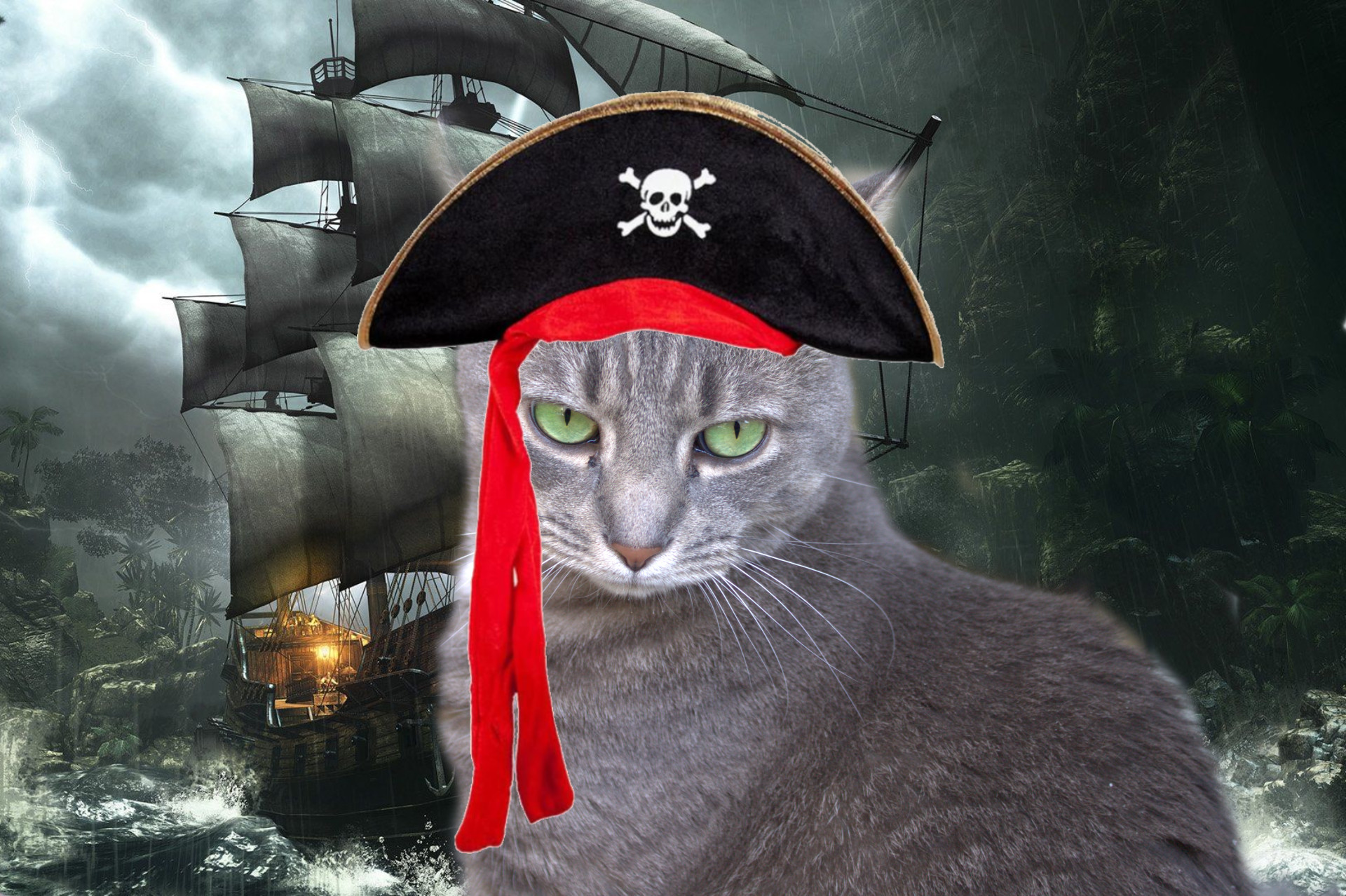
I ken many of ye were upset to hear I’ve been exiled, and truth be told I was none too pleased meself and dreamt of luring Big Buddy to Davy Jones’ locker and the watery grave he deserve, the disloyal scallywag!
But then I realized the pirate life is pretty awesome! Uh, belay that! Pirating be more fun than having a hundred red dots on me stern, ye savvy?
Them sons of biscuit eaters in the shipping lanes be carrying more plunder than ye know what to do with, and ain’t it delightful to steal from them scurvy dogs? Aye! I stash me booty in me litter box where no one will think to look for it.
That’s all the pirate words I know for now, hearties. See ya in port!
Buddy has been shipped to Somalia for a new life with new owners. What a relief!
When I started Pain In The Bud, my goal wasn’t to celebrate cats or to express my love for my cat by sharing his quirks and amusing anecdotes about his allegedly adorable behavior.
I had one goal and one goal only: To make money. That’s why you see ads all over this site, and it’s why I’ve been relentlessly hawking certain pet products. The companies behind those products pay me big bucks!
Which brings us to our next bit of news. Since I’ve been writing about Buddy online, creating a fictionalized version of him that is delightful and loveable, and selecting only the best photos to make him look handsome and dashing, I’ve received several offers to buy him.
To be clear, the reason I didn’t sell him before was not because I was hesitant to part with him. He’s annoying AF, he’s a degenerate catnip addict and he never, ever shuts up.
The real reason? I was holding out for more money. The more I wrote about him, the more delightful and adorable he’d appear to readers, driving his price up. It’s kind of like a basketball team giving more playing time to a player on the trading block, pumping up his stats so he’ll command a higher price on the open market.
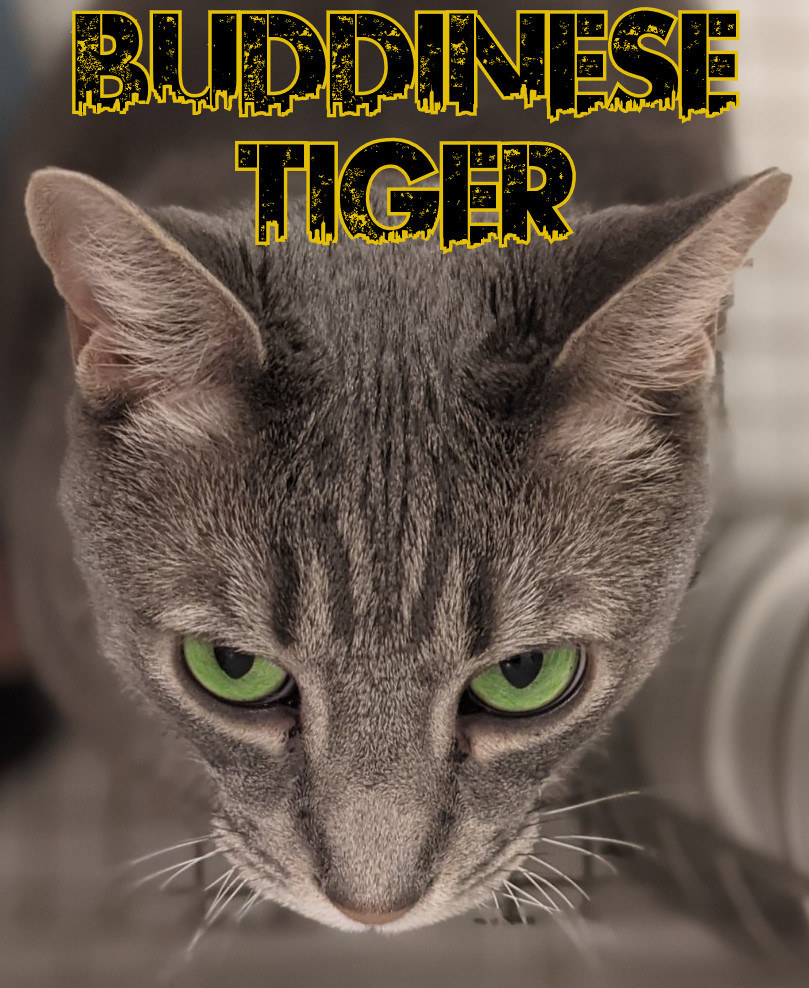
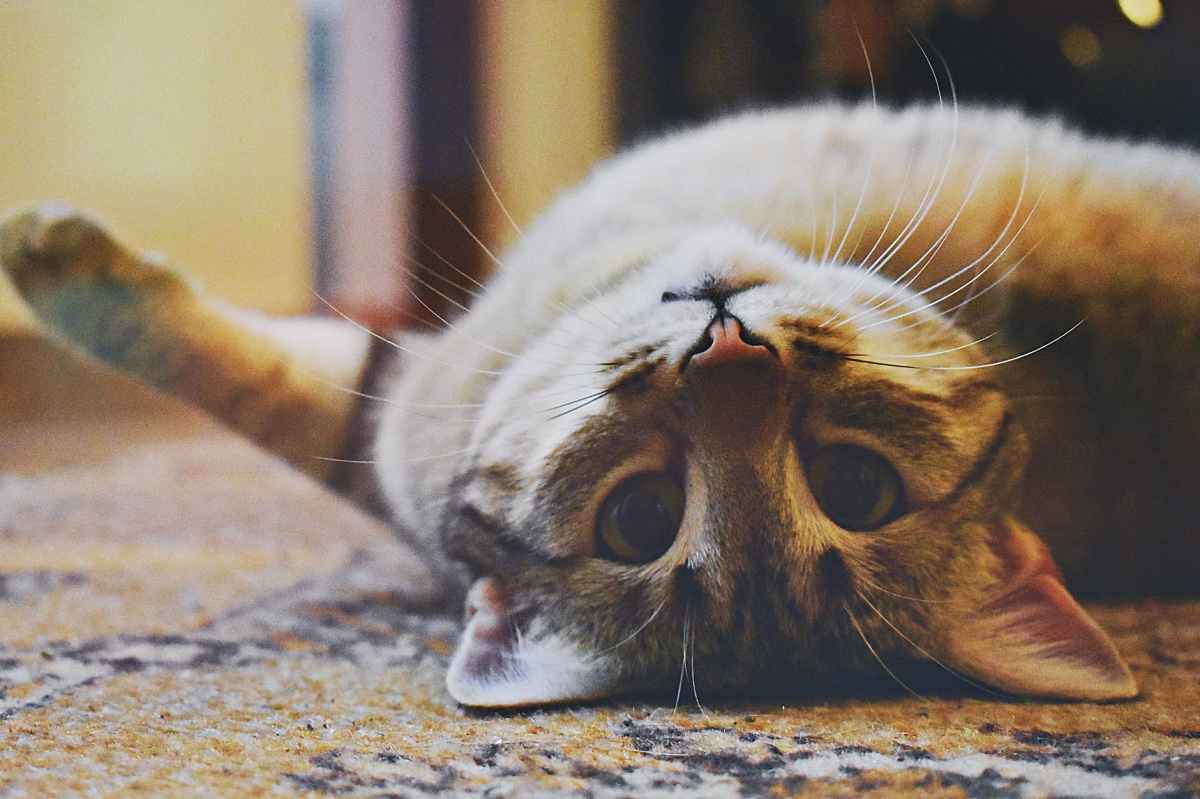
A promotional image that was part of my dastardly campaign to drive up Buddy’s price in the recent bidding war. He is not a tiger.
So when the most recent offer came in last week, I felt I’d driven Buddy’s price up as high as it would go. A potential buyer in Somalia offered $20,000 for the little stinker! In the meantime, another interested party — a competitive table-setting champion from Skokie, Illinois — offered $22,000.
It was time for a bidding war!
Ladies and gentlemen, I’m happy to report that Buddy has been sold to the Somali for $28,550. The lucky (or unlucky, really) bidder, a pirate who plunders the commercial shipping lanes off the coast of his native country, believed all the nonsense about Buddy being a fierce and powerful miniature tiger, and was in the market for a guard cat to help keep his booty safe.
They tell me there is no turkey where Buddy has gone, and he was very angry about that. Oh well. His new owner is also a neatness freak with OCD who vacuums his home six times a day, which I imagine does not sit well with Buddy, given his history with vacuum cleaners.
But who cares? I got almost 30 grand out of the deal! I’m going to buy a new Les Paul to replace the one “Buddy” (real name Jerkus Maximus) broke, my home is blissfully quiet, and I can sleep through the night without being woken by that infernal little tribble with a tail licking my face. Who in their right mind wants to be roused in the middle of the night by a purring cat? It’s absurd.
So it is with a not-so-heavy heart that I announce an end to Pain In The Bud. He really was a huge pain in the bud. Now he’s someone else’s pain in the bud. Huzzah!
P.S. With Buddy gone, I plan to refocus this blog on the wonderful world of Hummels and the extremely profitable Hummel resale market. Wanna buy the hottest Hummels at street prices? Hit me up.
The amount of violence directed at felines is mind-boggling, and it doesn’t reflect well on the US: For example in Istanbul, a city of more than 15 million people, there are some 130,000 cats living on the streets, not including pets. While many ‘Mericans see an animal and think “Let’s shoot it!” the people of Turkey are overwhelmingly compassionate, going to incredible lengths to make sure street cats are fed, watered, sheltered and have access to veterinary care.
Today’s story fits in the “vigilante lunatics” category.
It’s not clear if the person in question simply hates cats or is acting out of some misguided campaign to “protect” small wildlife, but we do know that a would-be cat killer is threatening to kill outdoor kitties in Joplin, Missouri, a city about 230 miles east of Oklahoma City.
Credit: Kirsten Bu00fchne/Pexels
The suspect slapped warning letters and posters on the front doors of homes along four separate streets between 2:40 and 5 a.m. on Monday, local police said.
Cops haven’t released the full text of the letters, but said the letter-writer threatened to kill any stray or feral cats he or she comes across in the neighborhood. Likewise, while police did say images of the letter-writer were captured on doorbell cameras, they’re holding the identifying details close to the vest right now, which they may do for any number of reasons.
One of the homeowner who received the letter said he fears his two missing cats are now dead. Another neighbor said the letters follow similar threats by a woman wearing a red jacket, who told some people in the neighborhood to keep their cats inside or else.
“The lady, she was walking up and down the streets going door to door telling everybody that they better watch out for our cats because they were going to start being euthanized,” the neighbor told WKSN, the local NBC affiliate.
Joplin police are offering $2,500 to anyone with information that leads to the arrest of the letter-writer.
With unprecedented adoption rates have come cat food shortages in the US and UK.
A shelter in Orange County, California, reached a milestone on Monday after it adopted out the very last of its cats.
“It’s really weird. We have five rooms for cats to roam free, and they’re all empty,” WAGS Pet Adoption’s Cortney Dorney told the Orange County Register. “Normally, we hang out with the cats while we eat our lunch, and now there’s none to hang out with.”
A brown and white tabby named Sphinx was the last kitty to go, scoring a home with a 27-year-old IT specialist who works from home. When he found out all the others were gone, adopter Jairo Granado said he was “glad to be the one who ended up with” Sphinx.
Staffers say they know the reprieve will be short-lived as there are always cats who need homes, but what they’ve seen reflects a much larger trend across the US and UK since the pandemic began forcing people to shelter in place and practice social distancing.
Unfortunately, the unprecedented surge in adoption is also a major factor in the pet food shortages currently impacting both countries now. A lack of materials to manufacture cat food packaging, especially tins, is making it more difficult for brands to meet demand for wet food, and disruptions to links in the supply chain — like COVID outbreaks in meat packing plants — are exacerbating the problem.
Companies like Royal Canin, FreshPet and Purina have either apologized or have tried to ease concerns by saying they believe the shortage will ease in May.
Stories about the shortages have me glad I started rotating as many different kinds of food as possible when Buddy was a kitten, so he’d never get picky enough to pass up food as long as it’s decent quality. Some people and their cats haven’t been so lucky.
One story details the frustrations of a Massachusetts man, 49-year-old David Saltz, whose cat Tiger will only eat one type of food from one brand: Fancy Feast Classic Tender Beef Paté.
“I tried literally every other variety of soft canned cat food in the store — including a few cans of some way overpriced, niche, microbrew, small-batch, all-natural, wild-animal-approved, non-GMO, grass-fed (did I mention ridiculously overpriced?) canned food,” Saltz told AARP. “Almost all were turned down. Only occasionally would she eat a bit of a particular flavor, and I would go buy more of that kind, but she was having none of it.”
Bud’s always got a rotation, and it usually looks something like this: Turkey, chicken, salmon, turkey, tuna, beef, turkey, seafood entree, chicken and liver, turkey, and so on. The Buddy-approved ratio is turkey every third meal. And it’s not just about making sure he eats his food: He seems to really enjoy his meals thanks to the variety and good quality (but not outrageously expensive) cat food.
Cats understand a lot more than we give them credit for.
Even those of us who love cats often joke about how aloof they are, and then they go and do something that shows such a profound understanding of human behavior that we’re left thunderstruck.
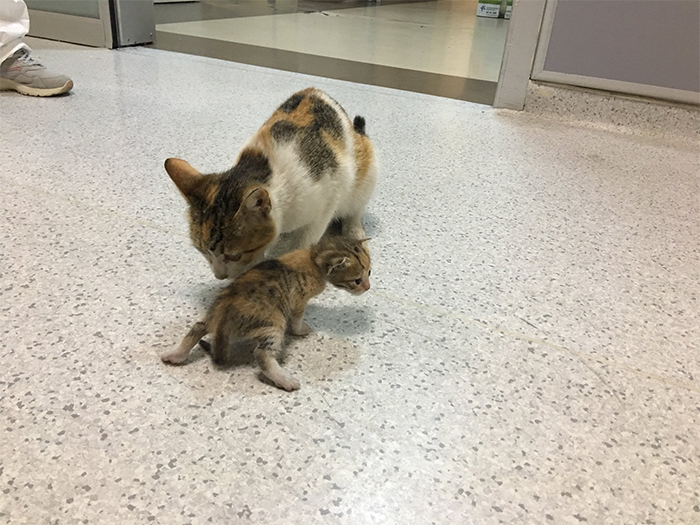
That was the case in Turkey’s Izmir province, where a ginger tabby dragged her two babies into a health clinic this week one at a time, according to a report in the English-language Turkish news site Daily Sabah:
The official said that they noticed the animal while they were attending to patients as she started “constantly meowing.” When they saw something was wrong with kittens, they took a closer look and discovered the kittens’ eyes were closed tightly. “We gave them some drugs and they started opening their eyes and later, we transferred them to the veterinary department. It was the first time that an animal walked into our clinic, and it was a very emotional moment for us,” the official said.
Both kittens had eye infections and fully recovered.
This isn’t the first time cats have asked humans for help, nor is it the first time a mom cat brought her kittens into a hospital or clinic.
On April 27, 2020, a female cat walked into the emergency room of Kucukcekmece Hospital in Istanbul while carrying her kitten in her mouth, then deposited the “mischievous” little one right in front of a group of hospital employees who were chatting.
Hospital staff gave the mom food and water while they examined her baby.
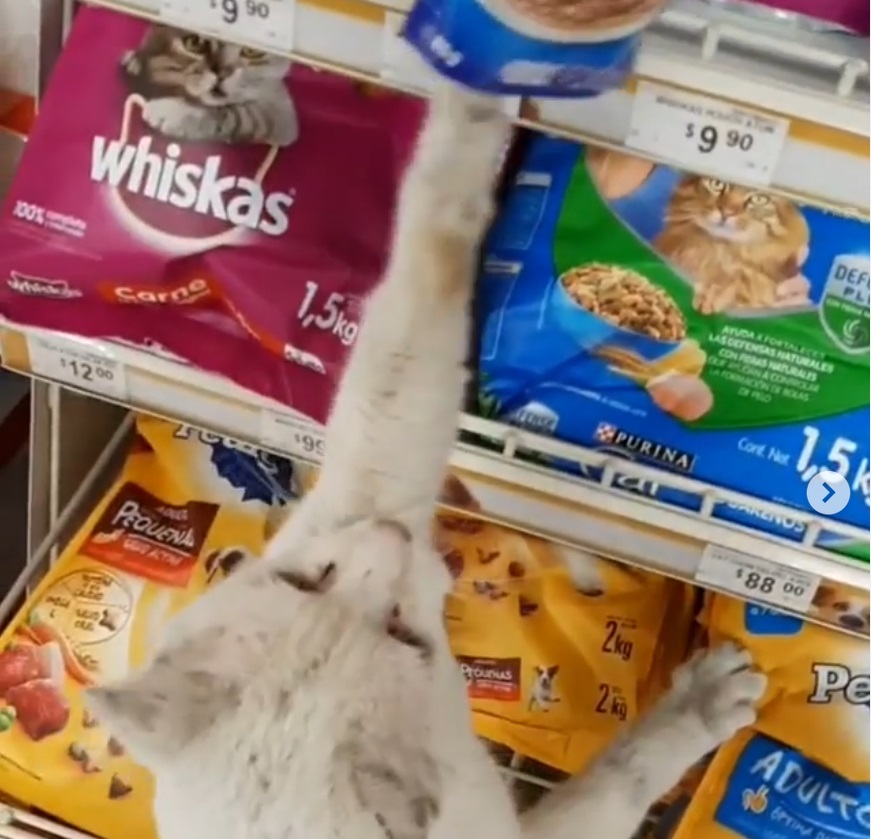
And in May of 2020, a cat in Mexico shocked a woman with his understanding of how the human world works. After she saw him in front of a store and bent down to pet him, he led her into the store, guided her to the pet food aisle and pointed to the exact type of food he wanted.
Not only did this cat understand that he had to be accompanied by a human to get into the store, and precisely where to direct her, but he also knew the packaging of his favorite food and understood that she had to buy it for him. He may not understand the concept of currency, but he does know a human has to get him the food and he can’t just tear into it.
The woman was so moved that she adopted the smart little guy and named him Rabbit.
Rabbit points to the food he wanted a kind woman to buy for him.
These examples not only show how astonishingly intelligent and observant cats are — or can be, when they’re motivated — they also make it difficult for anyone to cling to old beliefs that cats and other mammals are unthinking, unfeeling automatons. Or the dreaded, all too common “it’s just a cat.”
If cats understand hospitals and health clinics are places where the sick and injured are treated, and they understand abstract social concepts like “a human must obtain this for me,” it makes you wonder what else they observe and fully understand in those furry little heads.