As Registration Deadline Looms, Big Cat ‘Owners’ Face A Reckoning

The days of tiny backyard enclosures for big cats are over.

The passage of the Big Cat Public Safety Act has been a massive win, resulting in the end of the wild cat trade in the US and the cruel practice of taking cubs from their mothers for use in roadside zoo petting attractions.

But there’s another, often-overlooked component of the new law that’s about to result in big changes for captive tigers, jaguars, pumas and other wild cats.

While current “owners” of big cats were grandfathered in under the BCPSA, they have until June 18 to register with the federal government, and with registration comes requirements, inspections and minimum standards of living for the wild felids.

In other words, most of the people who “own” the estimated 20,000 privately held big cats are about to get a rude awakening. The days of tiny makeshift enclosures in backyards are over, as is the practice of keeping big cats in the home as if they’re domestic felines. (With apologies to Tippi Hedren, who once owned as many as 60 lions and tigers, and at 93 years old still has “13 or 14” big cats, according to her granddaughter, actress Dakota Johnson.)
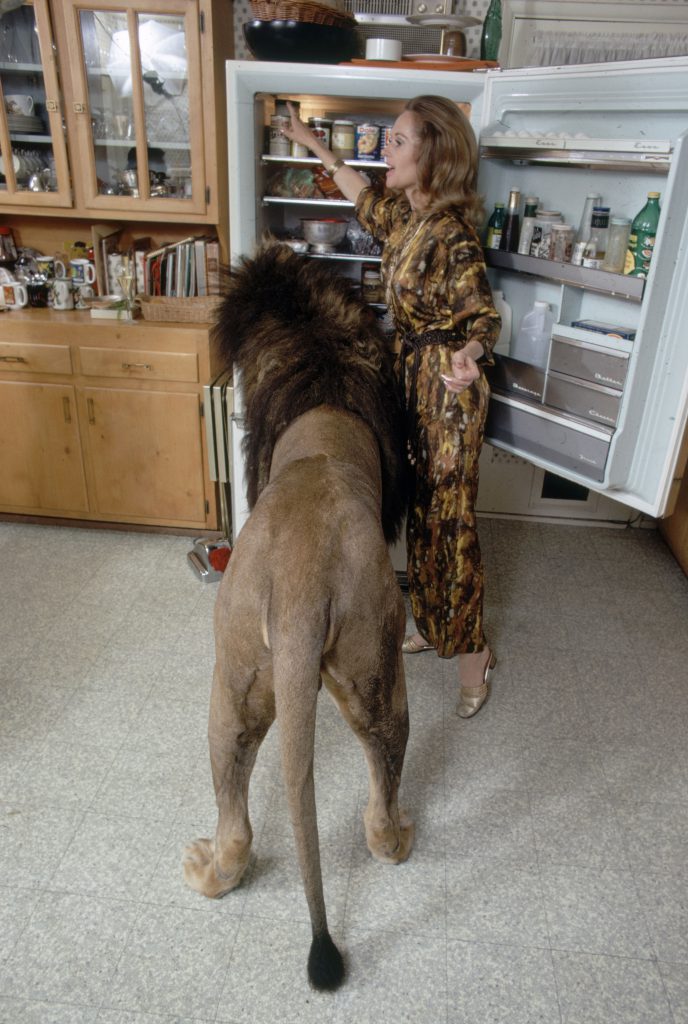
141028-neil-lion-12-688x1024
Tippi Hedren with one of her lions in a vintage LIFE magazine photo. Hedren kept the lion and other big cats as pets in her home.

If people who have possession of big cats don’t register with the U.S. Fish and Wildlife Service, they’ll have their animals taken away. Likewise for people who don’t provide adequate enclosures that not only provide enough space, but are built to contain the apex predators.

As a result, sanctuaries are bracing for an influx of tigers, lions, jaguars, leopards, cheetahs, snow leopards, clouded leopards and pumas, all of whom are protected under the Big Cat Public Safety Act.

Experts anticipate a significant number of big cat “owners” could try to part with their animals if they can’t or won’t provide adequate enclosures, and the government is already cracking down on people who are trying to sell their “pets.”

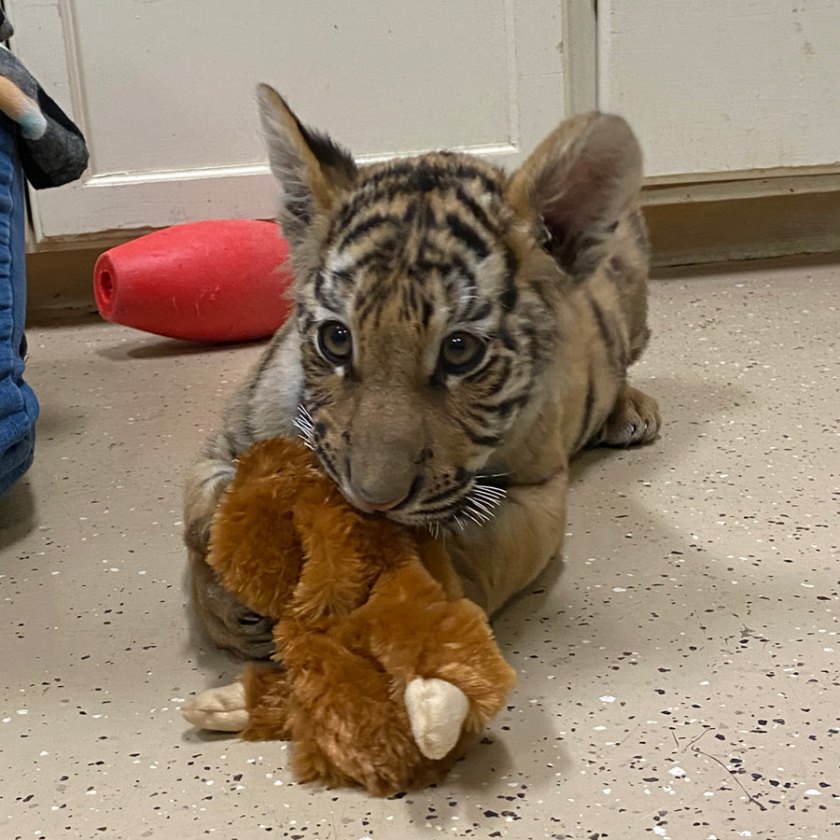
A tiger cub named Indy is one of the first to be taken out of private hands and placed in an accredited sanctuary. Indy was recently sold by her original “owner” and the man who purchased her for $25,000 tried to flip her, advertising the cub online.

Authorities moved in and found Indy in a dog kennel in a closet inside the man’s Arizona home. Police, who said they could hear Indy “moaning” from inside the closet, also seized an alligator and a dozen snapping turtles.

Tammy Thies, founder of the Wildcat Sanctuary in Sandstone, Minn. — Indy’s new home — said the cub is lucky she wasn’t confined to the small space for long.

“Many of the cubs we get are suffering from metabolic bone disease, malnutrition, sometimes they have such long confinement that they don’t have use of their back end, so Indy’s a lucky one,” Thies told WKQDS, the local Fox affiliate.
indytiger
Indy was found in a tiny cage in a man’s closet. Now she’s enjoying sunshine in an accredited sanctuary. Credit: Wild Cat Sanctuary

Indy arrived in May and has adjusted well to her new home in less than a month, according to the sanctuary. A page dedicated to tracking her progress has photographs of her meeting another tiger cub for the first time and playing in the grass.

As the deadline fast approaches, we hope Indy’s story is just one of many, and big cats who have suffered for years in tiny enclosures, under the “care” of people who aren’t qualified to keep them, find their way to accredited sanctuaries so they can live out the rest of their lives in sunshine, feeling grass and earth underneath their paws, with enrichment programs created by professionals who care about their well-being.

It’s about time.
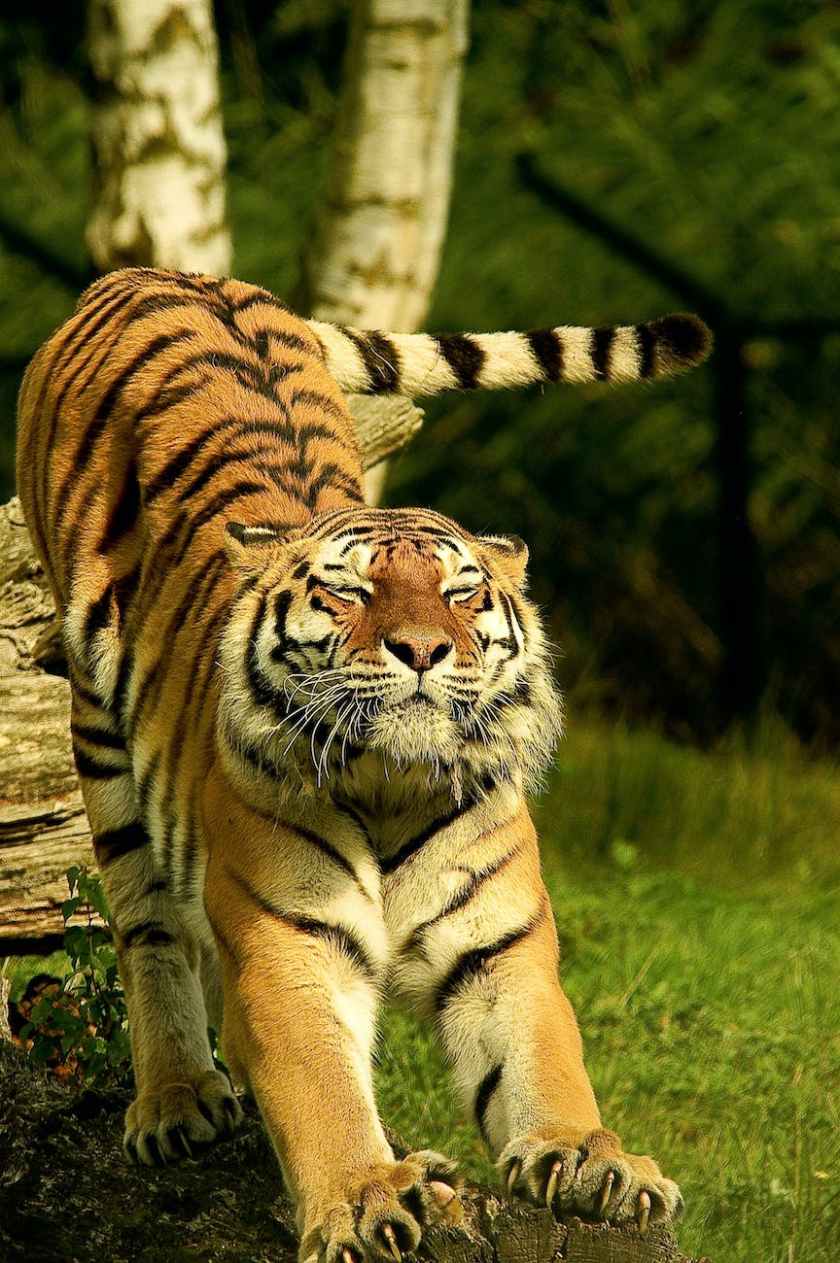
tiger in shallow photo
Credit: Richard Verbeek/Pexels.com

Can You Spot The Cat? Mountain Lion Edition!

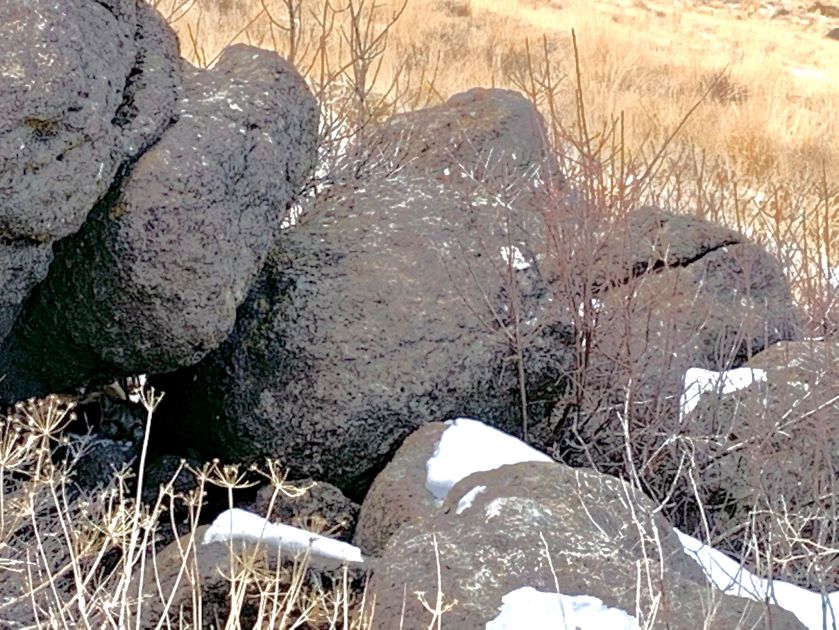
A photo shows why mountain lions are so elusive. Can you find the hidden puma?

This is the real deal, friends. Not a cheesy low-res photo or an intentionally obtuse shot with three pixels of a tail visible.

There’s a cat in this photo — a puma to be exact — and finding it is a good reminder of how awesome these elusive felids are, as well as how well they hide themselves from humans and fellow wildlife alike:

Hidden mountain lion in Nevada
Credit: John Tull, US Fish and Wildlife Service

The photo comes courtesy of the US Fish and Wildlife Services and eagle-eyed photographer John Tull, who spotted the well-hidden cat in rural Washoe County, Nevada.

Mountain lions are the second-largest cats in the Americas behind jaguars, and although they look like lionesses, they pose little danger to humans. About 15 people have died in conflicts with mountain lions over the past 100 years. Dogs, by contrast, kill between 30 and 50 people a year.

Mountain lions are also known as pumas, cougars, catamounts and panthers, among other names. The word “panther” is a nonspecific word for large cats and is often used in association with jaguars and leopards.

Known scientifically as puma concolor, these mysterious cats are more closely related to small cats (felis) than big cats (panthera), and have the distinction of being the largest cats who can meow.

Spectacular Tigress Image Wins Wildlife Photo Of The Year

An ethereal photo shows an Amur tigress scent-marking an ancient tree in Siberia.

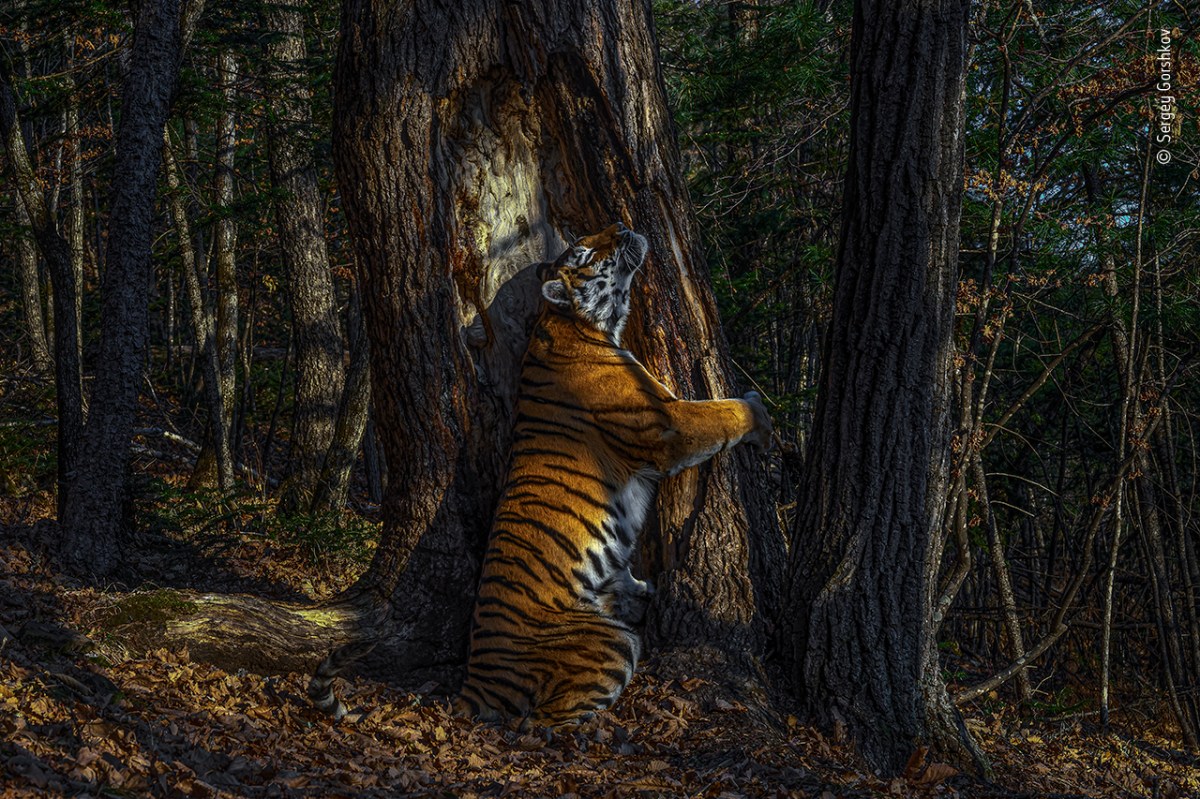
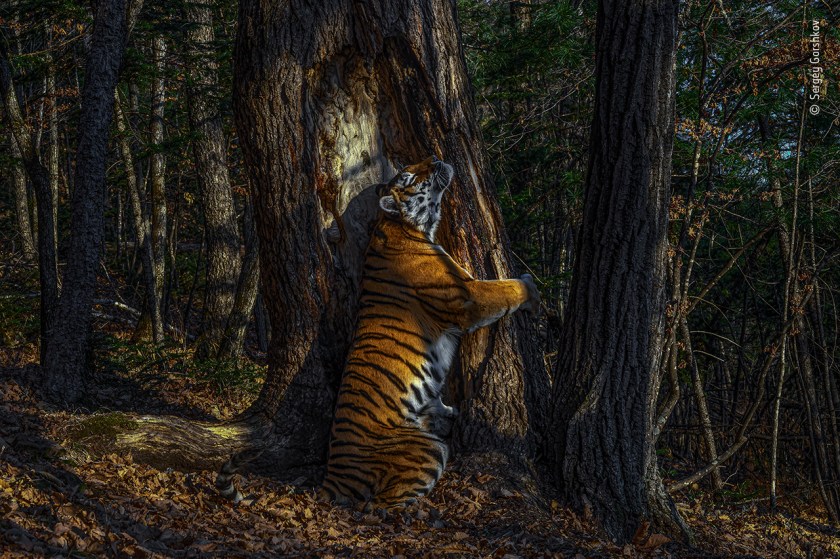
A photo of a tigress hugging a tree in Siberia has won the prestigious Wildlife Photo Of The Year from London’s Natural History Museum.

Photographer Sergey Gorshkov beat out almost 50,000 other entrants with his winning photograph, taken in Land of the Leopard National Park, a large reserve for tigers and leopards in Far East Siberia.

Gorshkov set up his camera facing a tree that already had claw marks, signaling that it’s been used as a territorial marker by at least one of more than 30 adult tigers in the park.

Sure enough, a tigress stopped to claw new marks on the tree and rub her scent on it, which is the same behavior we see with house cats when they rub on objects — and people — in the home. Cats have scent glands on their faces and paws which allow them to mark objects with pheromones. It’s a cat’s way of leaving a “sign” saying “This is mine.”

The photo has an ethereal quality, with the tigress and tree illuminated by shafts of sunlight poking through the canopy of the ancient forest.

Wild and free Siberian Tiger!

An announcement from the park’s staff describes the scene:

The photo titled “Hugs” shows the moment in which the rarest Amur tiger hugs a century-old fir to mark the target tree with its scent. Sergey Gorshkov, with the support of professional guides from Land of the Leopard, took a picture using a professional camera with a motion sensor.

“This is a scene like no other, a unique look at an intimate moment deep in a magical forest,” said Rose Kidman Cox, chairwoman of the contest’s jury.

The photo “inspires hope” for the endangered Amur tiger, Cox said. In addition to the 30-plus tigers, Land of the Leopard National Park is also home to at least 10 tiger cubs and almost 100 leopards.

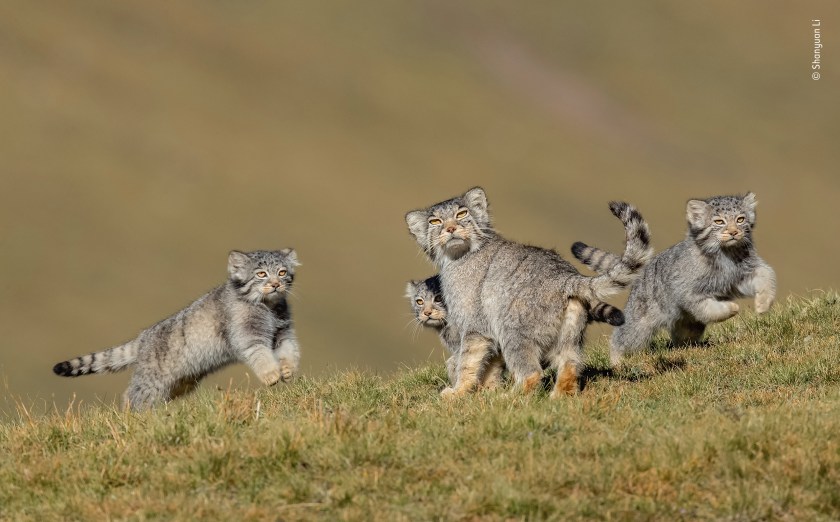
Gorshkov’s photo wasn’t the only feline winner this year. “When mother says run,” a photograph by China’s Shanyan Li, shows a trio of Pallas’ cubs with their mother “on the remote steppes of the Qinghai-Tibet Plateau in northwest China.” The photograph won in the mammalian behavior category.

4b3cafb5-321e-44ba-a7d0-468b2447f9f8


World’s Smallest Kittens Born At UK Sanctuary

Rusty spotted cats and black-footed cats are the two smallest species of felines in the world.

Just look at these little guys!

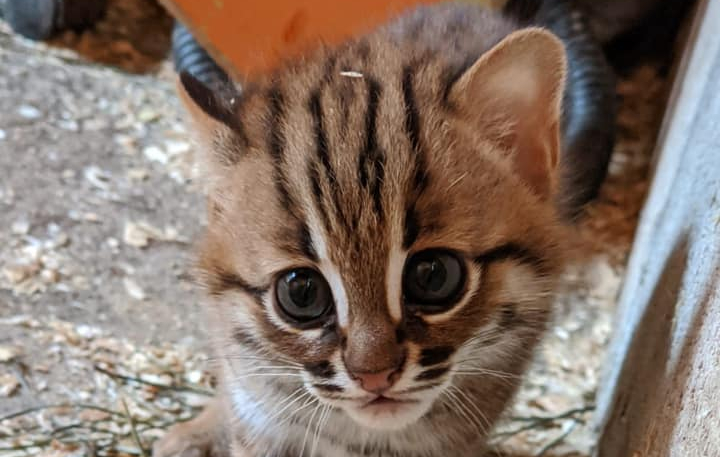
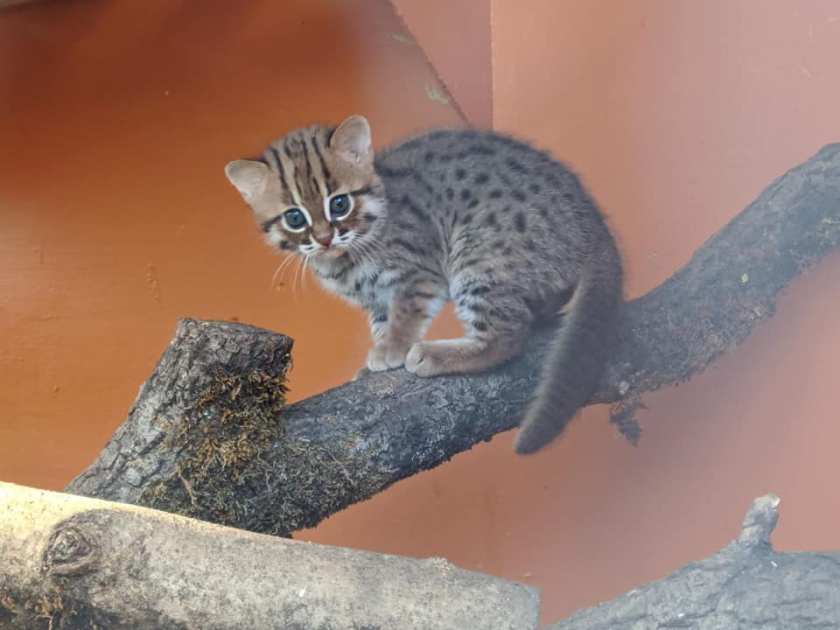
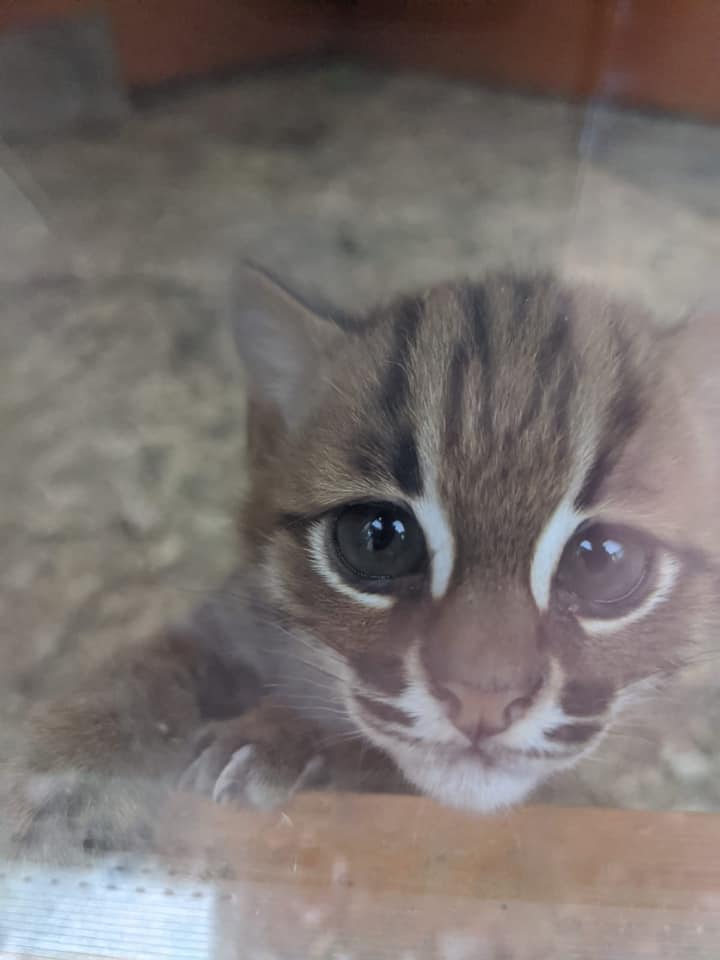
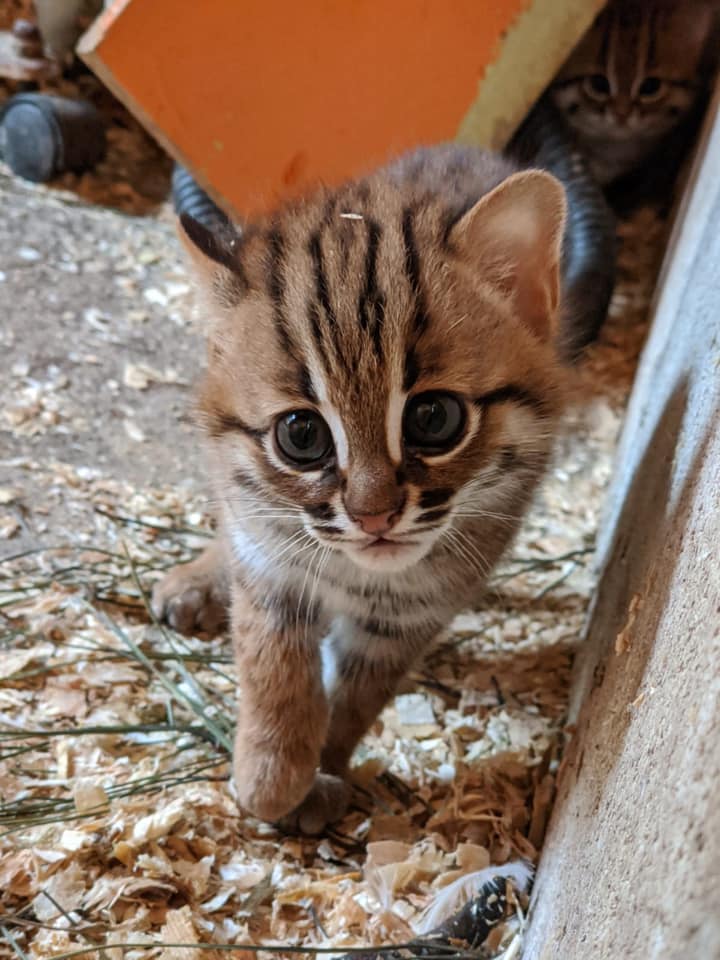
Two rusty spotted cat kittens were born just days ago at the Porfell Wildlife Park and Sanctuary in Cornwall, which announced the good news on Facebook.

“They have only recently been spotted out of their den and seem to be getting more curious each day. They both seem very healthy and have started to show a little bit of personality,” a spokesperson for the sanctuary told the Independent. “They’ve been giving our very small team a lot of joy during this all this uncertainty and put a smile on our faces each morning.”

rusty2
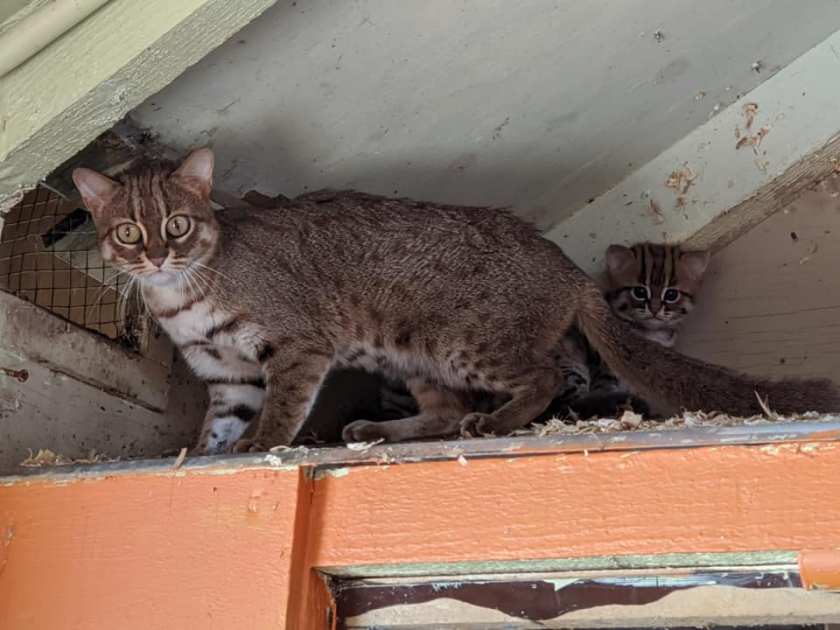
Mom cat keeps a close eye on her kittens. Credit: Porfell Wildlife Park and Sanctuary

Their mom (pictured above) has been so protective of her babies that staff at the sanctuary haven’t gotten close enough to determine the gender of the kittens.

Rusty spotted cats are among the smallest felids in the world: As adults they max out at between 2 and 3.5 pounds, with a body between 14 and 19 inches. That’s about a third the size of a typical domestic cat.

Along with black-footed cats, who are about the same size, they’re the tiniest of the entire feline family.

rusty1
One of the kittens ventures beyond the den to explore. Credit: Porfell Wildlife Park and Sanctuary

Rusty spotted cats range in parts of India and Sri Lanka, but like so many other wild animals, they’re threatened by habitat loss and fragmentation. They’re famously elusive, difficult to photograph or film in the wild, and the Porfell sanctuary says there are only about 50 of them in captivity around the world. The sanctuary is a participant in a breeding program to help conserve the species.

Like so many other sanctuaries and wildlife refuges, Porfell is hurting due to the SARS-CoV2 outbreak. You can support their efforts via GoFundMe.

rusty4

rusty3