Woman Fined $130 After Her Cat Meowed ‘Too Loudly’ On Train To Paris

The Europeans aren’t messing around when it comes to noise on public transportation, and a loud pet can cost you.

Note to self: Never take Buddy on a French train, unless I want to be out a few hundred bucks by the time I reach my destination.

That’s my takeaway after coming across this story about a woman who was fined €110 (about $130 in ‘Merican dollars) by the French National Railway Company after another passenger complained that her cat was causing “acute tensions” by vocalizing.

Naturally, the passenger and the railroad have two different versions of events. Camille, who was identified only by her first name, said she’d purchased a ticket (about $8) for her cat, Monet, and had the feline in a carrier for the trip from Vannes, Brittany, to Paris, per railroad rules.

Monet “meowed a bit at the start” at the beginning of the journey, Camille admitted, but wasn’t excessively loud.

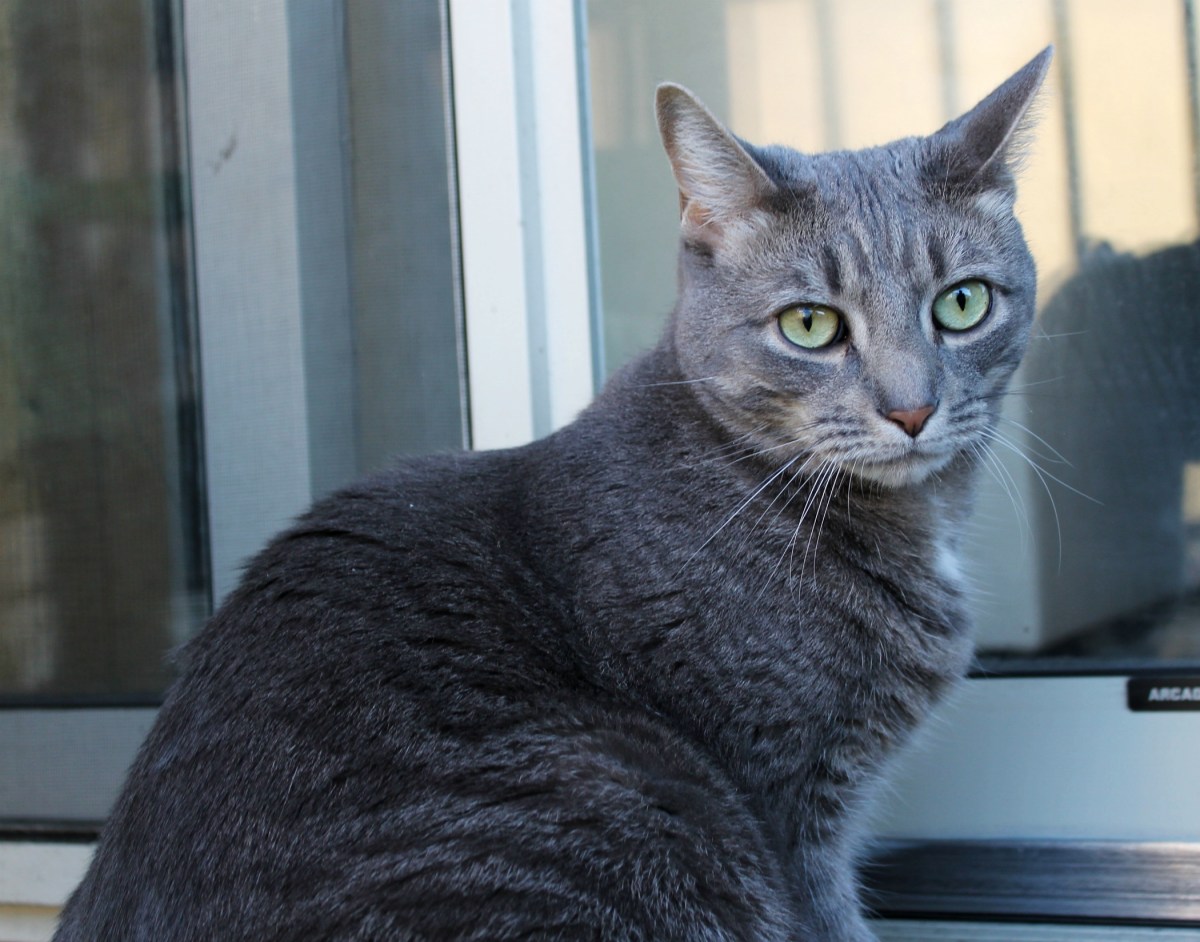
Buddy the Cat, a gray tabby cat, with a synthwave background.
“Loud? I’m merely expressing my displeasure with the level of service around here!”

Railroad operators said there were multiple complaints, not just one, and claimed a conductor asked Camille and her boyfriend, Pierre, to switch to a mostly-empty car as a compromise with other passengers.

A conductor ticketed Camille when she declined the “simple and common sense solution,” according to French broadcaster BFM.

I’ve joked in the past about sedating the Budster before flights so the other passengers won’t toss him out at 40,000 feet, but there’s truth at the heart of it: Buddy is a naturally chatty cat, he’s got strong opinions, and he doesn’t hesitate to share them with anyone.

Of course you don’t want your companion animal to create a scene or make other passengers uncomfortable. I still wince when ai think about the woman who forced fellow passengers to endure the smell, proximity and potential defecation of her “emotional support horse,” and when people began abusing the privilege of going places with emotional support animals (emotional support alligator, anyone?), it was only a matter of time before companies that operate common spaces — be they in a fuselage, a baseball stadium or a grocery store — tightened the rules to avoid conflict.

Still, unless the cat was wailing, or Camille really did refuse to switch seats, a $130 fine is excessive.

Just something to think about for those of us who have plans to travel with our cats.

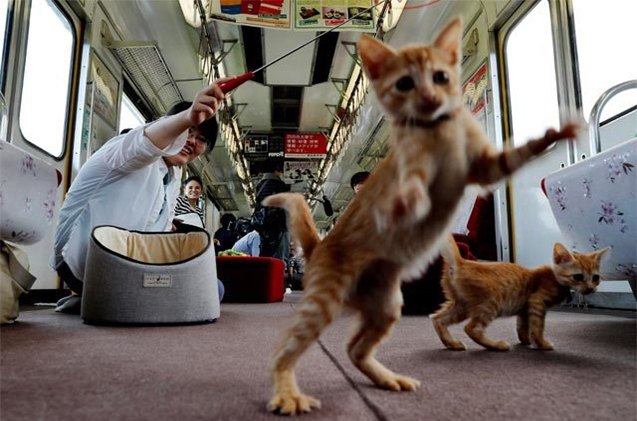
Header image of a cat cafe train car in Japan, credit: Wikimedia Commons
A Vet Says ‘It Matters What You Say To Your Cat.’ Ruh Roh!

I love my cat, except when he’s standing on my head and screeching into my ear at 80 decibels to make sure sleep is not an option.

Regular readers of this blog know I dote on my cat.

I don’t call him “Your Grace” without reason. He always eats first. He regularly uses me as his pillow. He knows how to manipulate me, he always gets what he wants, and I’ve been told many times how he’s got me “wrapped around his paw.”

He rules the roost, and has done so since the night he arrived as a baby and came striding out of his carrier like a furry little Ghenghis Khan, conquering everything in sight.

No one can doubt that I love the little guy.

But if you were a fly on the wall when I wake up, well, you might think differently. Bud is, to put it bluntly, absolutely relentless when he wants something, which puts us at odds when it comes to that most crucial commodity, sleep.

Some of the most vile things that have ever come out of my mouth have been prompted by the little guy’s snooze-disturbing antics. I’ve called him ALF (Annoying Little F—-er), I’ve threatened to sell him to the local Chinese restaurant, I’ve thrown pillows at him, and when my sleep-deprived brain can’t come up with something more creative, I half-mumble “Shut up, you furry little turdball!”

Buddy roaring
Buddy the Cat: Never at a loss for meows.

Those are the more tame ones! The worst thing, the bit that makes me feel bad, is that Bud just wants me to wake up so we can hang out and be buddies.

He doesn’t want food. He’s got a bowl of dry food set out for him before bed every night precisely so he doesn’t have to wake me up. Nope. He wants to knead my shoulder, purr up a storm and have me scratch his chin while I tell him what a good boy he is. And instead of that, I’m turtling up beneath the blanket, pillow over my head, telling him he’ll be served as General Tsao’s Buddy if he doesn’t shut his trap.

All this time I’ve told myself that it’s okay because he doesn’t understand what I’m saying, and he knows I wouldn’t harm a hair on his head.

But what if he does understand some of it?

That’s the subject of a new column by Karin Spicer. Writing in the Dayton Daily News, Spicer describes her morning ritual with her cat, Pip, and how she’s encouraged her naturally vocal cat to vocalize even more by talking to him.

Buddy from above
“No sleep for you, human! There are foreheads to rub, chins to scratch and ‘good boys’ to be said!”

Like Pip, Bud is a naturally talkative cat, and like Pip, his motor mouth tendencies have been cultivated by plenty of attention, affection and interaction.

“Cats want to bond with their owners,” says Catster’s Michelle Gunter, who is quoted in Spicer’s column about Pip. “If you take the time to communicate with them in soft, calming tones, that bond will strengthen faster. Your tone and the affection you offer during these periods can help show your cat that you love them and want to spend time with them.”

You mean to tell me all this time I’ve been undoing some of that bonding by hurling vile invective at my Buddy when he tries to annoy me out of sleep?

You mean to tell me he can infer by my tone of voice that I’m threatening to sell him to Somali pirates for $15 and a pack of gum?!?

Sheeeeit!

Disclaimer: No Buddies were harmed in the creation of this content, except perhaps for some bruised egos.

Bud talking
“Mrrrrrrroooowww! Meeeeerrrrrooowww!! Mrrrrrrrp! Yeeeeeeooo!!! MEOW!”

How Is It Possible That People Can’t Recognize Their Own Cats?

PLUS: Today’s the deadline for UK residents to get their cats microchipped under a new law that levies a hefty fine for people who don’t comply.

Another day, another story about a person who can’t tell if the cat they’ve brought inside is their own or a random lookalike.

In this case, a woman named Amber Porter says her indoor-only cat bolted outside, and after a few hours she was able to bring him back in — only to have doubts about whether he’s actually her cat. Meanwhile, an identical-looking black cat is hovering around Porter’s home, and she’s trying to lure it inside.

“I’m still a little worried about it,” Porter said. “I have fully convinced myself I have the wrong cat but I also think I do have the right one.”

This absolutely blows my mind. If someone asked me how long it would take to determine if a gray tabby is Buddy, I’d say approximately half a second. It’s not because of his “bib,” that unique white tuft of hair on his chest, or his pronounced muzzle, although both would offer confirmation.

It’s his behavior, his mannerisms and movement, the fact that if we were separated, he’d meow loudly the second we’re reunited and I’d hear that familiar half-trill, half-meow he does that seems to be Buddesian for “Hello, servant!”

In any case, I hope Amber Porter figures out which cat is hers, and the story looks like it’ll have a happy ending because she says she intends to keep both cats.

Today’s the deadline to get your cats microchipped in the UK

A reminder to our British readers: today, June 10, is the deadline to have your cat microchipped under a new law that makes chips mandatory.

If you’re caught with an unchipped cat, the fine is a hefty £500, or about $635 in ‘Merican greenbacks. That’s some serious chop, so get your little buddy chipped!

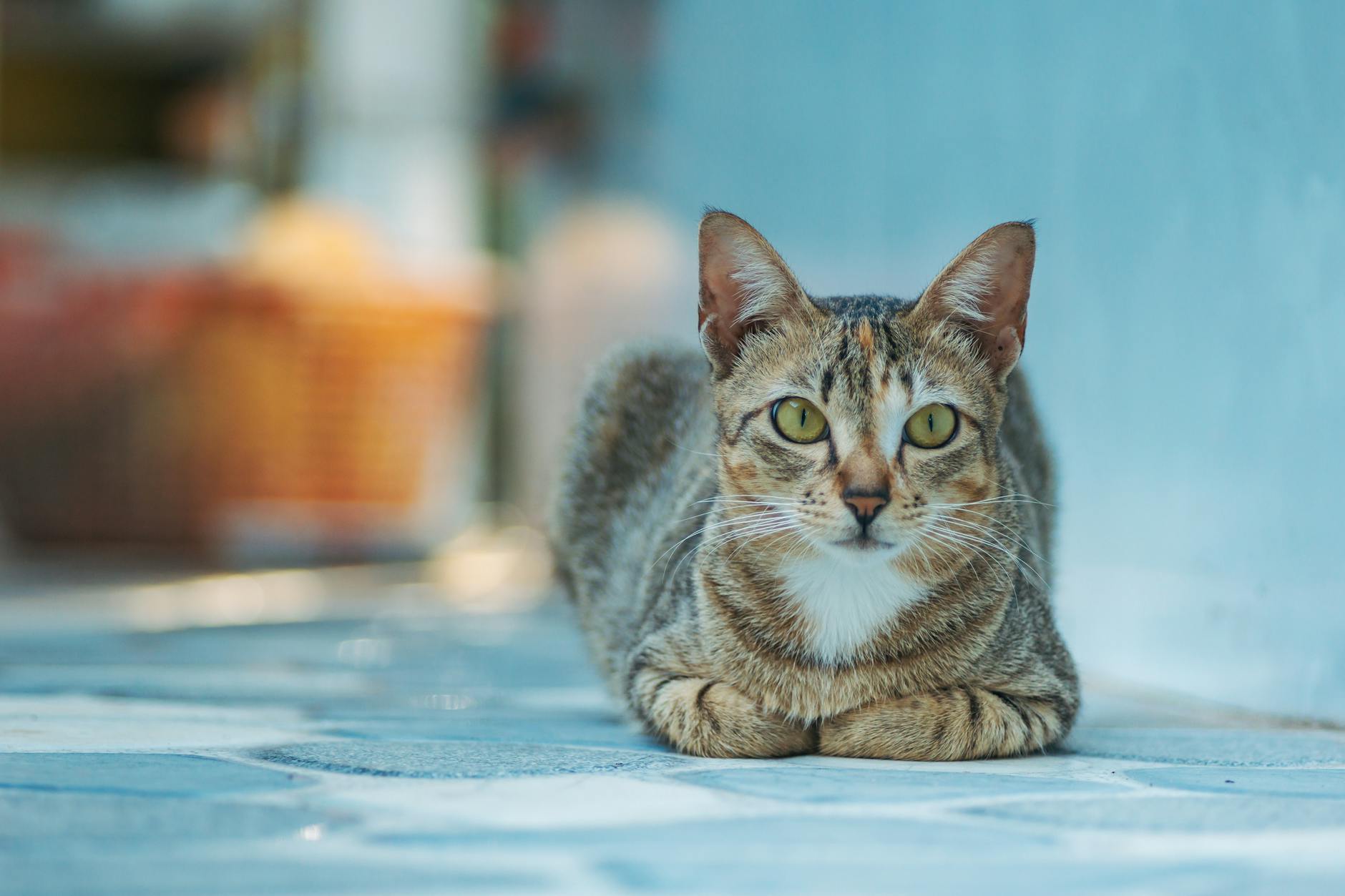
Tabby cat
“Chip me, human!” Credit: FOX/Pexels

Alice Potter, a cat welfare specialist with the RSPCA, told Sky News that microchips with up-to-date information are the biggest factor in reuniting cats with their humans when the former go missing.

“On average, 11% of all cats coming into the RSPCA’s care are still not microchipped. We’ve also rescued cats who have been microchipped but the details haven’t been kept up to date, which is arguably even more frustrating as it means cats spend a long time in our care whilst we fruitlessly try to contact the owner with out-of-date information,” Potter said.

“However, we’ve also seen countless stories of cats that have been reunited with their owners thanks to a tiny microchip – showing what this change of legislation will achieve for animal welfare.”