Amazon Driver Who Stole Family’s Cat Claims The Feline Ran Off, Amazon Offers To Compensate Family With Stuffed Animal Resembling The Cat

Feefee the cat’s family is deeply frustrated at the lack of answers about their cat and the lack of urgency by the company in trying to locate her after an Amazon delivery driver stole the 13-year-old tabby on July 21.

After a 10-day saga in which tan Amazon driver stole their cat — and Amazon did little to help recover her — a Washington family has been told the feline is gone, and has been offered stuffed animals in her stead.

Feefee the cat was taken from the Ishak family’s driveway in Everett, Washington, on July 21. Footage from a motion-activated security camera shows an Amazon delivery driver crouching in the driveway and petting Feefee, then driving off.

A representative from Amazon’s customer service department confirmed the driver took the cat, but has not helped reunite Feefee and the Ishaks beyond giving the family an email address that law enforcement can use to contact the company.

At first, an Amazon rep told Ray Ishak that the driver — who has not been named by the company — contacted law enforcement to return Feefee. However, neither the Everett Police Department nor the Snohomish County Sheriff’s Office said they had any record of anyone approaching them about surrendering a cat.

Amazon response
An Amazon customer service representative told the Ishak family that the driver “contacted the police to return your cat.”

Amazon declined to put Ray Ishak in touch with the driver or to tell him the general area where the driver lives, so he might contact local law enforcement there.

The story changed on the morning of July 30, when the sheriff’s office told Ishak that the driver now says Feefee “allegedly escaped a few days ago,” Ray Ishak told PITB.

“They will not tell me where. If I could find out the vicinity I’m pretty sure I could have found the cat,” Ishak said. “I asked the sheriff’s deputies how I can find out the area and the only way is for the driver that stole the cat to tell me.

“I asked them to have her text me or call me from a blocked number or [create] a temporary email, just to tell me where it is because [the police] can’t tell me. It has to come from her and she has refused to do so so far. I fear that [Feefee’s] gone.”

PITB has reached out to Amazon and will update this post if the company responds.

In the meantime, while Amazon will not assist Ishak in trying to recover Feefee himself, a customer service representative asked the Washington man for a description of the 13-year-old tabby “so they can send me a stuffed animal that looks like her,” Ishak told PITB.

“I am serious,” he said, adding that he’s kept copies of the email correspondence with Amazon’s customer service department.

amazonishak2
An Amazon customer service representative said the company would do “everything we can to investigate” and offered to send stuffed kittens “that look like” Feefee for the family’s grandchildren, who are close to the cat. Credit: Ray Ishak

As we wrote in our earlier post about the incident, Amazon has handled the case as if it were a dispute over a returned item or a delivery problem, even asking Ishak to rate his experience with the company’s customer support immediately after informing him they can’t give him more information. The company has not taken active measures to reunite the Ishak family with their cat, and has refused to provide any information about the driver, even vague information that could help Ishak find Feefee.

“What baffles me is that no one seems to understand that this is a CRIME and we the people who were hurt by this crime are being kept in the dark when we should be able to find her,” the family wrote in response to Amazon’s most recent reply.

The language reflects the deep frustration the family has felt over the incident and the company’s response.

“I just pray we find her alive. I am also tired of getting the brush off, generic emails and no information on our case.”

feefeecamera
An Amazon driver playing with Feefee in the Ishak family’s driveway before driving away with the cat. Credit: Ray Ishak

If the driver is telling the truth and Feefee escaped, finding her quickly is critical. The vast majority of house cats do not do well when forced to fend for themselves, and Feefee has been a member of the Ishak family for 13 years, since she was a kitten.

If the driver is not being truthful and still has the cat, there’s no way for the family to know, and no indication Amazon or law enforcement can be convinced to find out if she’s telling the truth.

As one of our readers wrote in response to our previous story, few things are more heartbreaking than someone stealing a family’s well-loved cat. The saga has been stressful for the Ishak family, and has undoubtedly taken a toll on Feefee, who was taken from the only home she’s ever known. Feefee suffers from asthma, Ray Ishak said, which is why she was allowed to spend time outdoors immediately outside the family’s home.

Ray Ishak said his family was gathered this weekend for his son’s wedding and he had to tell his grandkids, who are particularly close to Feefee, that the cat was elsewhere. That quickly backfired.

“The emotional distress for me having to lie to my grandkids that the cat is safe and fine,” Ishak told KING5, a Seattle NBC affiliate, earlier this week. “Then, watching my granddaughters cry after they found out because they heard us talk about it. It was a double whammy from every single front.”

This is not the first time a delivery driver has stolen a pet, and not the first time an Amazon driver has done so.

  • In 2021, a driver for Uber-owned Postmates stole an 11-month-old ginger tabby named Simba from a Colorado family’s driveway after delivering a package. Postmates was similarly reticent to help the victims, and the family was never reunited with Simba.
  • In 2020, a 23-year-old delivery driver stole a Minnesota woman’s cat from outside her home and repeatedly denied taking the 12-year-old tabby until, three months later, he wrote an apologetic letter admitting he nabbed her, felt guilty and tossed her out of his truck later the same day.
  • In 2022, an Amazon driver stole a Michigan family’s dog. The pup was returned four days later.
  • Earlier this year, an Amazon driver tried to steal a family’s dog after admiring the pup and telling the family he wanted a puppy of his own. The family caught the driver in the act, and the driver did not escape with the dog.
  • On July 3, a FedEx driver stole a French bulldog named Tori after delivering a package to her owner’s home in North Carolina. The driver, 44-year-old Kimani Joehan Marshall, left Tori in his truck as he continued making deliveries and the pooch died as temperatures pushed well into the 90s with high humidity. Marshall dumped Tori’s body by the side of a road and the family continued to post missing flyers and search for her until July 10, when police confirmed their dog was dead. Marshall remains in jail on $50,000 bail and faces a felony cruelty to animals charge as well as larceny and possession of stolen property.
  • Most recently, an Amazon Flex driver allegedly stole an Austin, Texas woman’s dog on July 25. The woman, with help from friends and online sleuths, tracked the driver to his home 50 miles away and was able to recover her dog after confronting the man with evidence — including video from a neighbor’s security camera — showing he’d taken the pup.

That’s not a comprehensive list, and the cases that make the news involve pet thefts caught on camera. Victims who don’t have security or doorbell cameras generally have no recourse, and thefts by delivery drivers won’t make the news unless the victims take their stories to local newspapers or TV news stations, or local reporters discover reports by checking police blotters. The latter situation is becoming increasingly unlikely as so-called “news deserts” — locales not covered by any local media — expand with every newspaper that folds and every round of newsroom layoffs.

We hope someone in Amazon management is paying attention and can help the Ishak family get Feefee back. After all, who wants Amazon drivers delivering packages to their homes if the company allows those drivers to steal from customers with impunity?

As we wrote previously, this isn’t a customer returning a sweater or complaining about a late package, and it shouldn’t be handled that way. Feefee is a living being with emotions, and she’s been part of the Ishak family for 13 years. The very least Amazon can do is have a compassionate and empowered manager call them, apologize profusely, and vow to do everything possible to reunite the family with their well-loved cat.

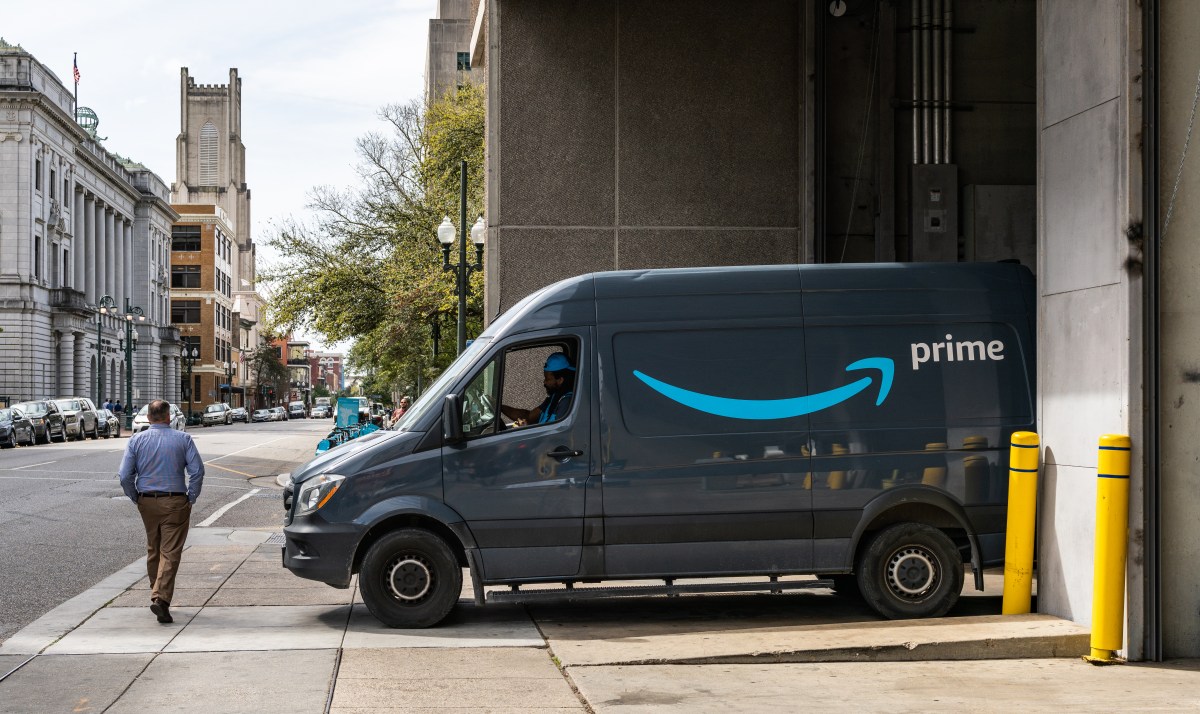
Top image of an Amazon delivery driver in a Prime van courtesy of Wikimedia Commons.

Little Buddy And Big Buddy: The Buddies

Human and cat, best buddies.

To celebrate my birthday and Bud’s adoptaversary, the little guy commissioned a portrait of us together. As many of you know, cats think of us as big, slow cats, which is reflected in the resulting painting. I present to you “Buddies: Airbrush on canvas”:

thebuddies_tagged

There is a slight inaccuracy, of course: I have gray eyes, not green. If I’m portrayed as a cat, I should probably be an orange tabby as well. And finally, little Buddy should be much more muscular. Perhaps he’s meant to be a kitten in this painting as he was more of a shoulder cat when he was tiny. Other than that, seems pretty accurate!

In truth we don’t really know exactly how cats view us.

We know there’s a parental element, that house cats retain kitten-like qualities for life as they remain in our care. The meow is probably the best example of that, since it mirrors the vocalizations kittens make to their mothers.

We know house cats depend on us physically, psychologically and emotionally. In recent years behavioral scientists have taken studies originally designed for children and modified them for cats, yielding interesting results: House cats who are bonded to their humans behave in ways startlingly similar to humans children.

When we form bonds with them, they draw comfort from our presence and look to us for behavioral cues to determine how they should respond to situations and objects that are new and potentially frightening. Just like kids, cats look to us, and just like kids, they stay calm if we do.

When you treat a cat well, kitty returns that love, trying to comfort you when you’re sick, refusing to leave your side, alerting you to potential trouble.

Bud is super friendly, but he isn’t the cuddliest cat out there. He doesn’t like being hugged or picked up, but he knows that when he pads up to me while purring and sits on my chest or in my lap, I’m never going to force him to stay or subject him to pets he doesn’t want. That’s why he approaches me often and why he feels so relaxed.

It’s probably also why he often wakes me up, purring like an engine, looking for a chin scratch and affirmation that he is indeed a good boy.

Perhaps the biggest complements are Bud grooming my hair and beard, and sleeping on me.

There’s no greater expression of trust between a feline and human than when a cat falls sleep in your lap. Cats are never more vulnerable than when they’re asleep, and sleeping in your lap means your four legged friend feels safe with you and trusts you completely.

Can Cats Solve New York’s Rat Problem?

When even the mayor can’t keep rats from overwhelming his property, it’s clear New York is losing its battle against rodents.

For the second time in seven months, one of New York Mayor Eric Adams’ own health inspectors has ticketed him for rat infestations at the Brooklyn brownstone he calls home.

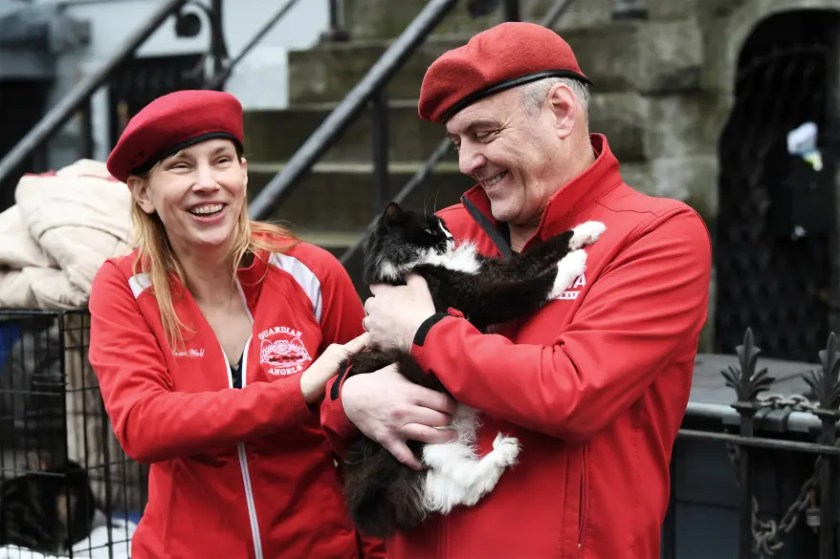
Because it wouldn’t be New York without things turning into a circus, the man who unsuccessfully ran against Adams for the mayorship, Guardian Angels founder Curtis Sliwa, took advantage of the mayor’s embarrassment by bringing two of his 16 18 cats to Adams’ block and holding a press conference on the sidewalk where he touted felines as the solution. (Adams, who is well known for his hatred of the rodents, famously held a “rat summit” at Brooklyn Borough Hall in 2019, “gleefully” showing off a new rat-killing contraption to reporters.)

Introducing reporters to his tuxedo, Tiny, and tabby cat, Thor, Sliwa said Adams was missing the most obvious solution to the rat problem — cats — and offered to become the city’s “rat czar” free of charge.

“Like most New Yorkers, [Adams] is frightened of rats,” Sliwa told reporters outside the mayor’s brownstone. “He’s tried everything but it’s time that we revert back to the best measure that has ever worked — and that’s cats.”

As we’ve noted before on PITB, Sliwa and his wife are dedicated cat servants, perhaps overly so. They currently house 18 cats in their Manhattan studio apartment, Sliwa said on his radio show this Sunday. Some of them are the couple’s pets and some are fosters for their rescue.

sliwacats
Nancy and Curtis Sliwa with one of their cats. Credit: Matthew McDermott

The rat problem in New York is real and, sadly, as bad as people make it out to be. You can hear them at night in many neighborhoods, and it’s not unusual to see them briefly caught in the glow of streetlights before scurrying into the shadows again.

I’ll never forget watching an entire conga line of them at the 125th St. subway platform. They just marched out of a hole in the twilight, each one bigger than the last, going about their business without any concern for what people might do to them.

And the answer, they know, is nothing. Because New York’s rats aren’t regular rats. They’re well-fed freaks, ballooning to enormous sizes thanks to the abundance of garbage cans to eat out of and the way garbage is collected in the city. Back in 2015, video of a rat dragging an entire slice of pizza down the steps to a Manhattan subway platform went viral, racking up more than 12 million views and earning the rodent the title Pizza Rat:

People who aren’t from New York and have never visited are probably shocked to see garbage piled high on the sidewalks of every street. New Yorkers are supposed to put the garbage out the night before pickup, but no one really observes that rule, and the mounds of trash grow for days before sanitation removes them. It’s a feast for the rats, and any solution has to start with cleaning  up the garbage situation.

In the winter the cold weather prevents the contents of the trash from rotting, so the stink isn’t as bad, and sometimes the trash mountains are covered by snow.

But in the summer, when the tree-lined avenues get their green canopies and flowers bloom in window boxes, the city reeks. On hot days, the perfume of New York is rotting trash and the overwhelming smell of urine wafting up from the subways. Sometimes I think of what the Japanese, with their spotless streets and shiny subways, must think when they come to New York for the first time.

In October, after the city fielded a 71 percent increase in rat complaints over the previous year, the city introduced a new law making it illegal to put trash on the sidewalk before 8 pm ahead of pickup the following morning. The change hasn’t made a dent in the rodent problem.

ratssize
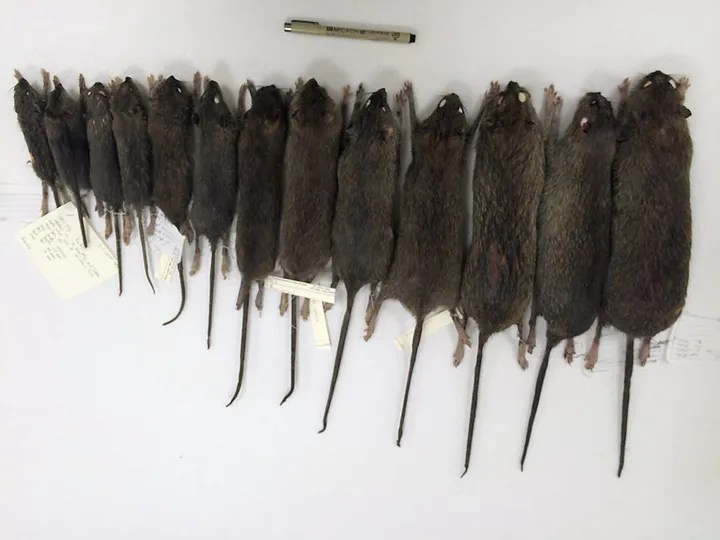
A 2015 study by Matt Combs of Fordham University documented the enormous size of New York City’s rats. Credit: Matt Combs

In any case, New York is not a good place for cats. Thankfully we have a huge and generally well-funded network of rescues that get kitties off the street and pulls cats and dogs from the city’s animal control system before they’re due to be euthanized, but strays who fall through the cracks don’t last long.

Indeed, when the New York Post talked to one of Mayor Adams’ neighbors shortly after Sliwa’s latest press event on Sunday afternoon, the woman said she’d like another cat to patrol the area around her building. The last one, she explained, had been run over by a car.

I don’t really expect anything to come of Sliwa’s plan to use cats in rat-infested locales. The red-bereted radio host is hawking the scheme because he likes to be a thorn in the mayor’s side, and because it generates free publicity, especially from the city’s tabloids and local news channels.

But if it ever comes to fruition, and people really expect strays to handle their rat problems, Sliwa and company better have a plan to keep the cats safe from traffic.

Karl Lagerfeld’s Millionaire Cat Travels By Private Jet, Drinks From Silver Dishes

Choupette has her own custom Louis Vuitton carrier and enjoys perks like a personal chef.

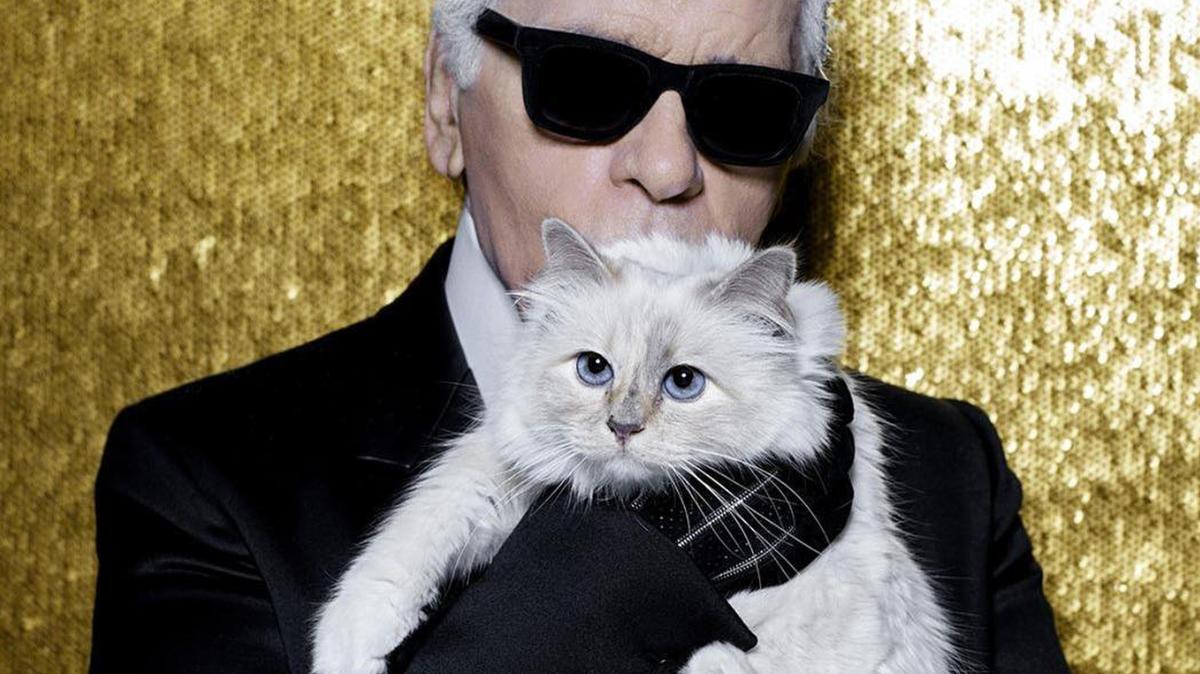
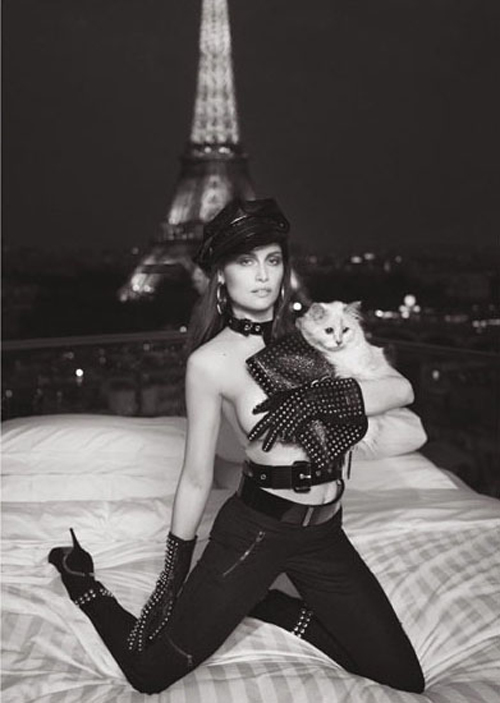
Choupette Lagerfeld travels the world in her own private jet, appears in commercials for Japanese beauty projects and has graced high fashion covers, including a shoot with French supermodel Laetitia Casta for V Magazine.

At one point she traveled with a body guard, two minders, a personal chef and her own doctor, according to the New York Times. She drinks and eats from silver bowls and enjoys a one-of-a-kind Louis Vuitton carrier.

Oh, and she’s worth millions.

Choupette (“sweetie” in French) is a white-and-cream Birman with subtle tabby marks on her head, and she was adopted by Karl Lagerfeld in 2011. The German designer, who was the creative director of fashion houses Chanel and Fendi, died of pancreatic cancer in February of 2019 but left a considerable fortune to his cat.

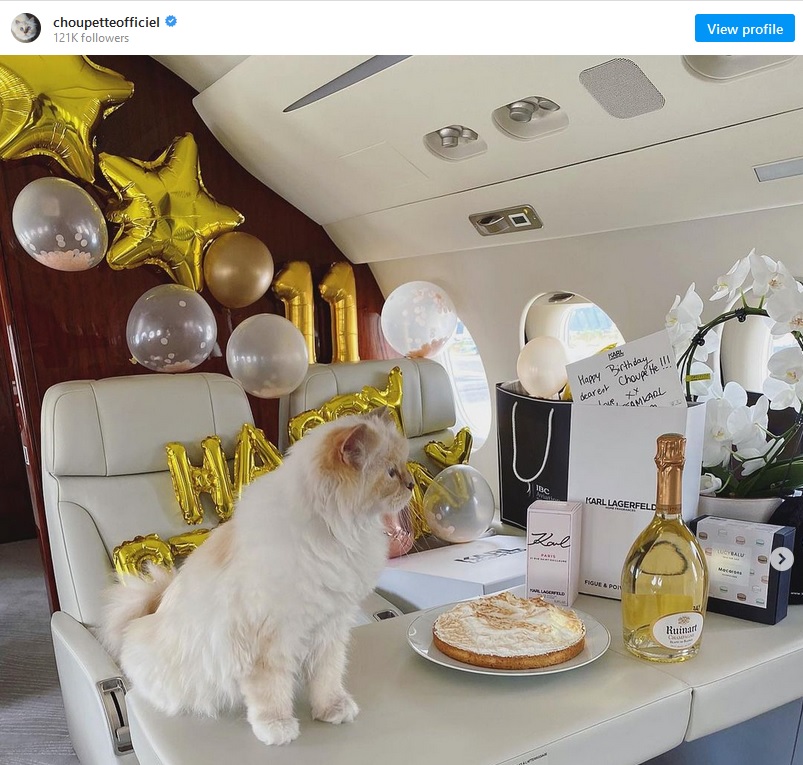
On Thursday, Choupette’s minders marked her 11th birthday by sharing a snap to her Instagram, choupetteofficiel, showing the fabulously wealthy feline aboard her private jet, with a cake presumably made of pâté, a bottle of champagne, balloons and various gifts from her late human’s fashion collections.

“Happy birthday to me,” the post reads. The pampered puss’ Instagram has 121,000 followers.

Choupette's birthday
Choupette celebrated her birthday on Aug. 18. A snap shows her celebrating on her private jet, which ferries her between modeling gigs and vacation spots like Ibiza.

No one’s sure precisely how much Choupette is worth, but Lagerfeld — who had a net worth between $170 million and $300 million, per reports — left her a considerable sum.

“She’s an heiress,” Lagerfeld told an interviewer. She “has her own little fortune.”

Like human celebrities she’s the subject of net worth profiles on various sites, which list an often-cited $13 million number. Some of that money includes her own earnings for commercials in Japan and Germany, where she’s been the face of beauty products and luxury cars, respectively.

Laetitia Casta and Choupette
Sacre bleu! The Eiffel Tower, a French supermodel and Choupette! This photo was printed in V Magazine, which featured Laetitia Casta and Choupette in a 10-page spread.

I’m kind of at a loss for words here. Anything I could say seems so obvious.

However, I’m thinking it may be time to put Buddy’s good looks and charm to use for once and arrange some sort of meet cute with Choupette.

The name Buddy would have to go. He’d have to be called something appropriately, Frenchly snooty, like Jean-Luc Budélard Lucien or Yves Buddiene Baptiste. I’d have to school him in Parisian meowing, invent a suitably bohemian upbringing for him, and fabulate a skill that hints at his creative genius. Perhaps he’s inspired by Choupette’s late human and works as creative director of the Buddeaux fashion house, or maybe he creates abstract art by smearing paint on a canvas with his paw pads.

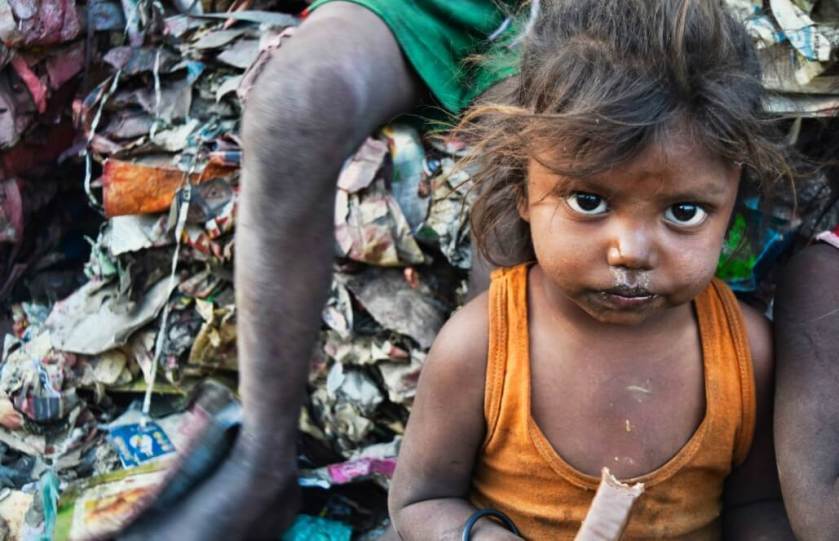
Meanwhile, in India…

article-street-children-of-india1
Street kids eat from the garbage, wear tattered clothes and exist beneath the notice of the rest of society.

“Do You Really Want Several Animals To Die And Suffer So You Can Have Your Pet Cloned?”

Viagen, the only US company to offer cloning services, says the process becomes more popular every year.

The Washington Post has a story today about pet cloning, and thankfully it doesn’t sugar-coat the process.

It does take 10 paragraphs for the story to get to the negatives, but it offers a solid explanation of the cloning process before this quote by Columbia University bioethicist Robert Klitzman:

“People think, ‘Oh, I’ll just press a button and out will come Fido,’ but that’s just not the case. So you may love Fido, but do you really want several animals to die and suffer in order to have the one healthy Fido?”

That’s because even with the advancements made in the 21 years since CC the cat became the first of her kind to be cloned, the process still only has a 20 percent success rate. The other 80 percent of attempts end in still births, animals who die shortly after birth due to genetic defects, or animals who survive but suffer from flaws that make them “unsuitable” for the clients who are paying tens of thousands of dollars to clone their cats and dogs.

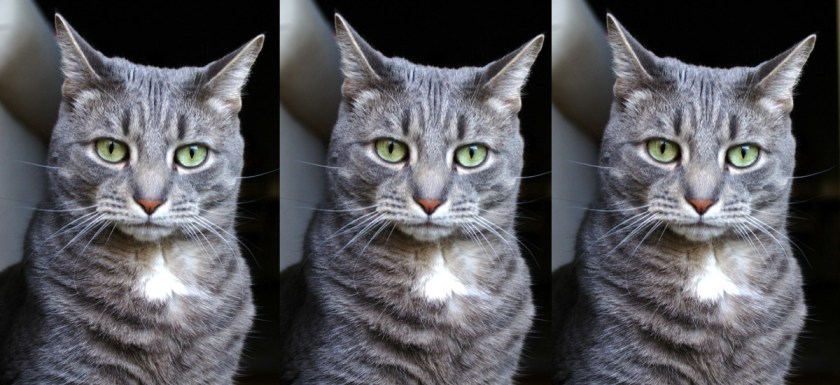
buddyx3
A terrifying prospect! (And a massive monthly turkey bill.)

As we’ve noted before, cloning doesn’t actually guarantee that you’ll get animal who looks like the departed pet. Fur color, length and coat patterns are all variable, and temperament is even more of a crapshoot thanks to the many variables in both nature and nurture.

Klitzman puts it in stark terms.

“I can either pay thousands of dollars to create a new pet that’s actually going to have a different history and personality,” he told the Post. “Or maybe I could adopt an animal that would otherwise be killed in a shelter. Those are things that ethically need to be considered.”

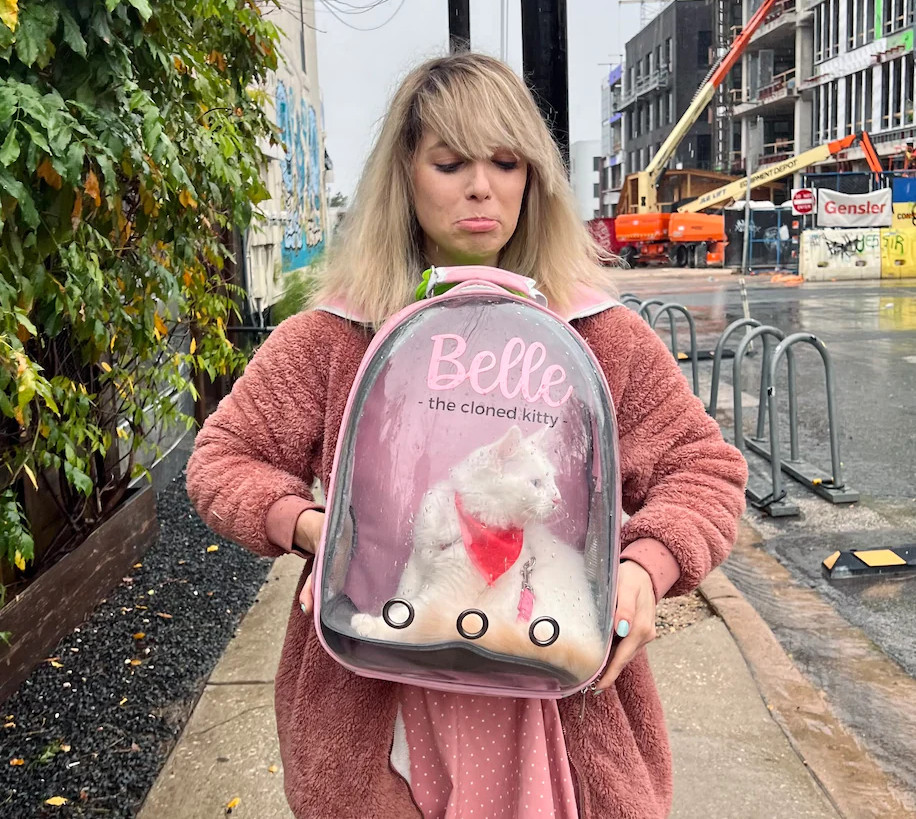
The Post’s article centers on Kelly Anderson and her cat, Belle. If the names sound familiar, that’s because we’ve written about them in earlier posts. Belle was cloned from Anderson’s beloved cat, Chai, and has her looks but not her disposition.

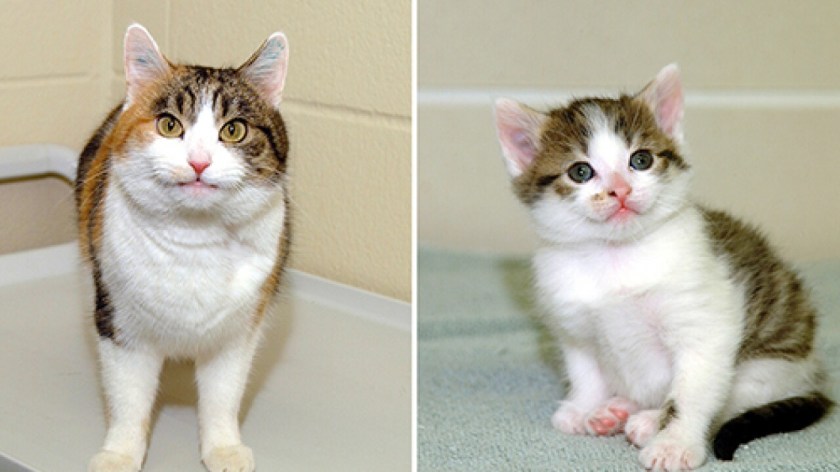
CC was famously different from Rainbow, the cat she was cloned from. While Rainbow had a Calico pattern with tabby stripes on her head, CC had tabby stripes on both her head and her sides. As the BBC noted in 2002, shortly after CC’s birth was announced, the cloned cat’s coat differed from her “mother’s” “because the pattern of colours on multicoloured animals is determined by events in the womb rather than by genes – a reminder that clones may be genetic copies of their parent but are never quite identical.”

Rainbow and CC
Rainbow, left, and her clone, CC, short for CopyCat.

John Mendola, a retired NYPD officer from Staten Island, features in a BBC story posted last week on the increasingly popular cloning option.

Mendola paid $50,000 to have his dog, Princess, cloned. It’s not clear how many unsuccessful attempts were involved — and Texas-based Viagen doesn’t reveal that information — but the successful litter produced two dogs who look like Princess, which Mendola named Princess Ariel and Princess Jasmine. (Dude really loves Disney animation, apparently.)

Viagen charges between $25,000 and $35,000 to clone cats, according to different press reports. Grieving pet parents who haven’t made up their minds can have their late pets’ DNA preserved with the company for $1,600. There’s a short window after death during which viable cells can be harvested, but once they’re stored, they can last years or even decades thanks to cryopreservation methods. In one case, a client decided to clone a dog after storing the DNA for 17 years, Viagen’s Melain Rodriguez told the Post.

Viagen doesn’t disclose figures, but the company said it’s cloning more animals — dogs, cats and horses — every year, and has cloned “hundreds” for clients so far.

Blake Russell, the company’s president, likened cloning to a cat or dog having a littermate separated by time.

“A cloned pet is, simply put, an identical genetic twin,” he said, “separated by years, decades, perhaps centuries.”

Animal welfare groups remain staunchly opposed, not only because of the suffering among cloning failures and surrogate mothers, but also because millions of unwanted cats and dogs are euthanized annually.

“Animals’ personalities, quirks, and very essence simply cannot be replicated,” PETA UK Director Elisa Allen told the BBC. “And when you consider that millions of wonderful, adoptable dogs and cats are languishing in animal shelters every year or dying in terrifying ways after being abandoned, you realise that cloning adds to the homeless-animal overpopulation crisis.”