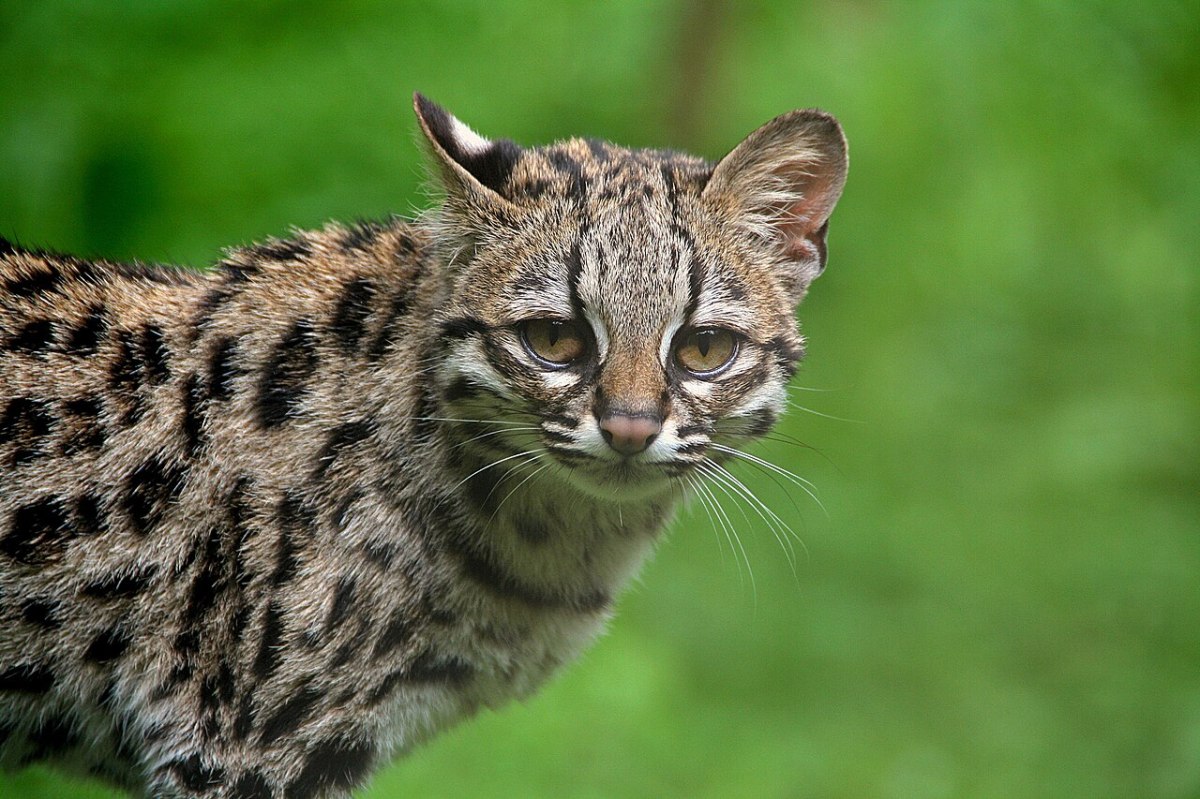
Strongly resembling ocelot cubs, margays have a unique biological adaptation to tree-climbing and a devious ability that gives them a massive advantage over their prey.
Taxonomic name:Leopardus wiedii Genus: Felis (small cats) Weight: Between 5 to 9 pounds with typical felid sexual dimorphism Lifespan: More than 20 years in captivity Gestation: About 80 days Litter size: Single kitten, rarely more than one Distribution: Central America, including Brazil, Paraguay, Peru, Chile, Ecuador, Venezuela, Guyana, Colombia, Panama and parts of Mexico IUCN Red List Status: Near threatened
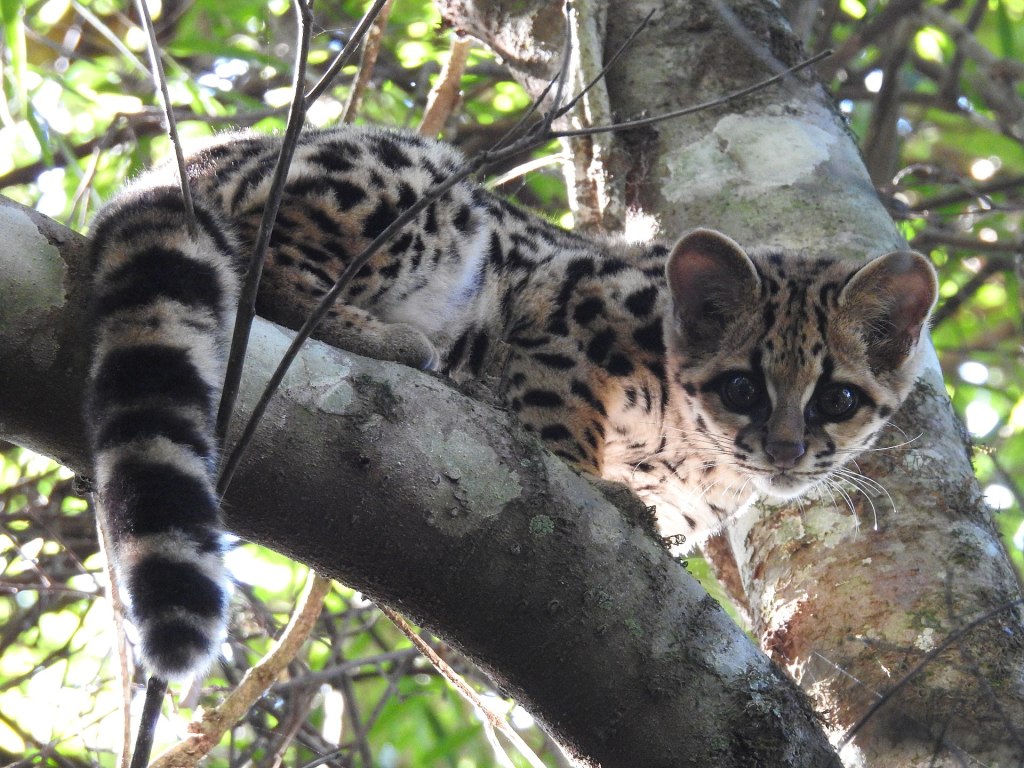
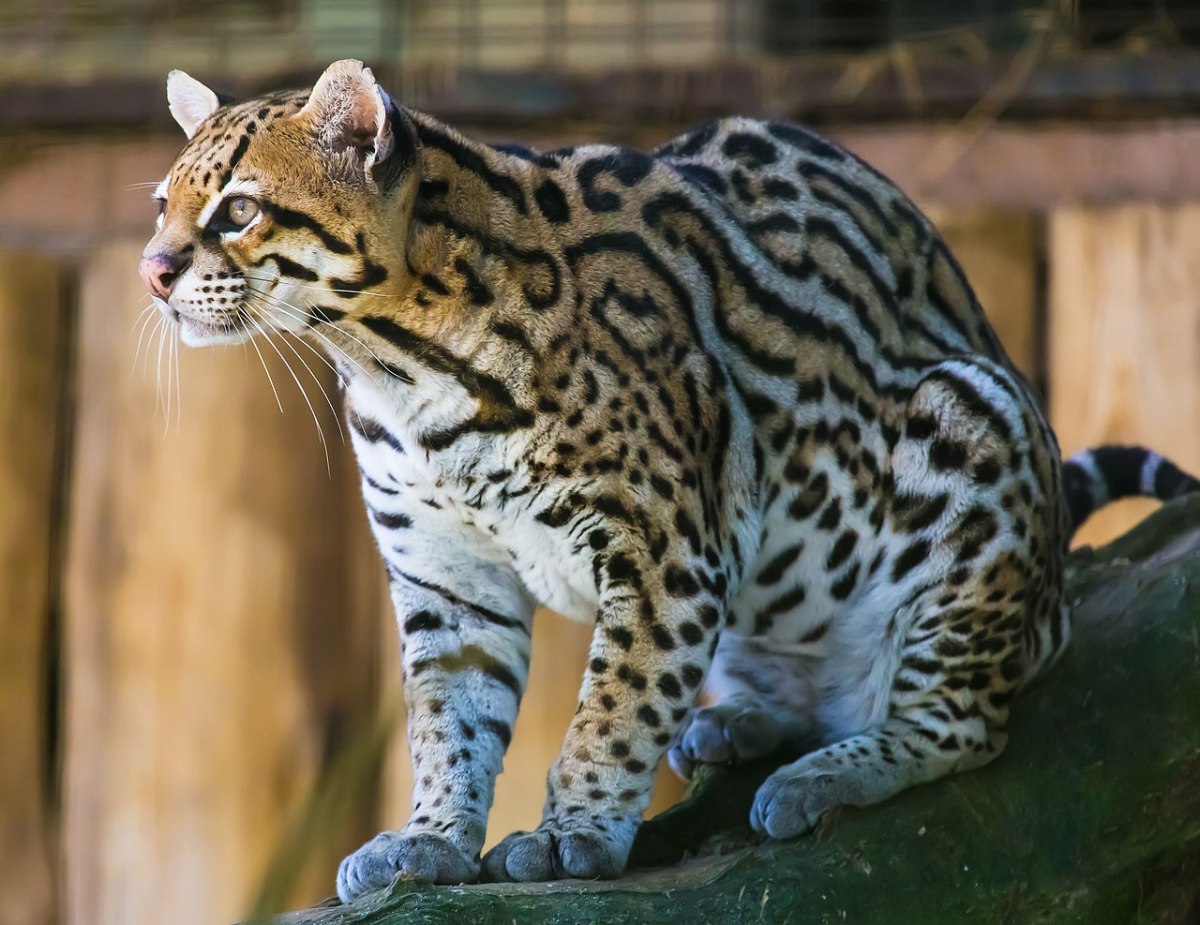
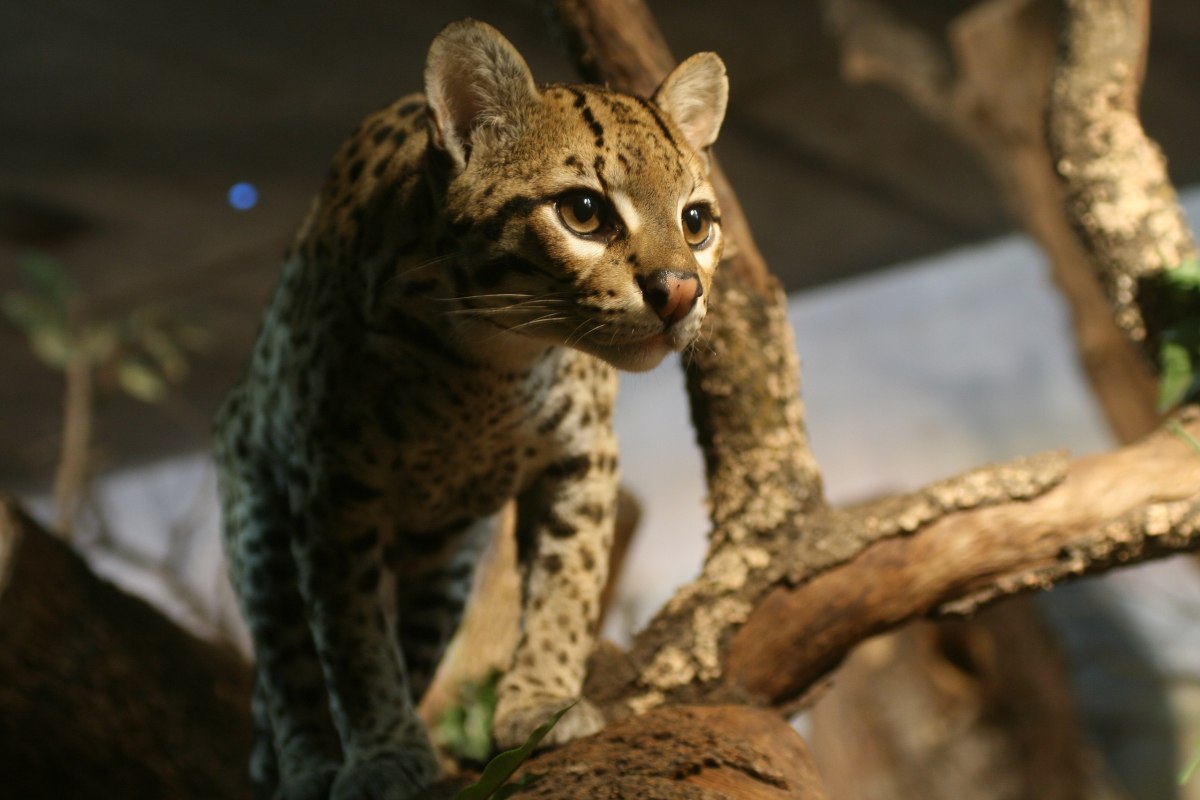
If you’re fortunate enough to catch a glimpse of a margay, you might think you’re looking at an ocelot cub.
The two species look remarkably similar, sharing beautiful rosette patterns in their fur, intense eyes and prominent facial stripes.
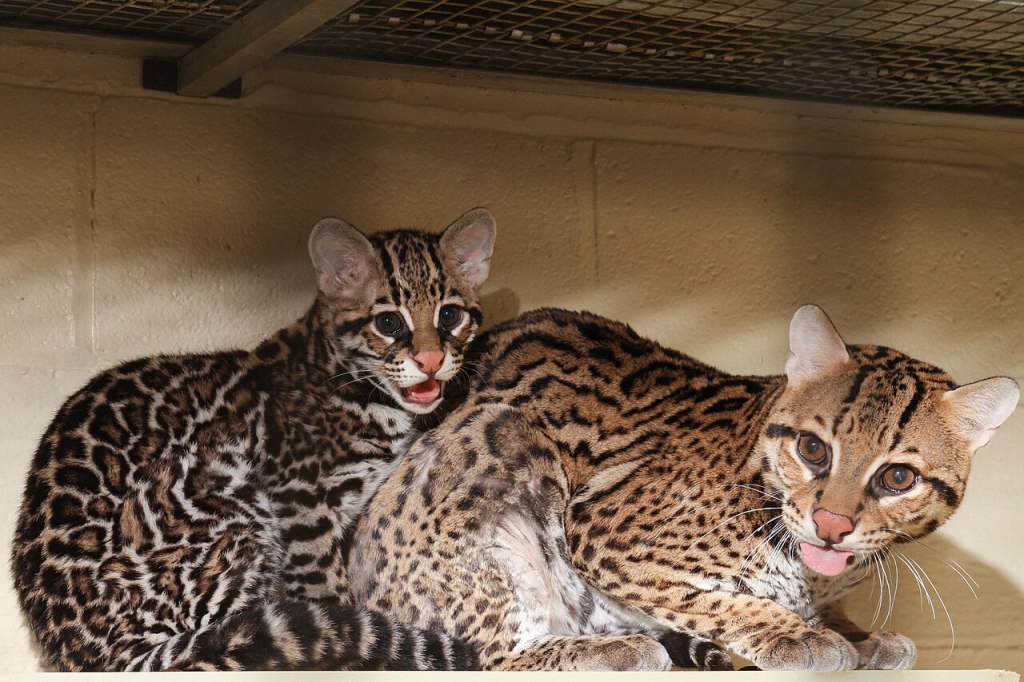
But ocelots are medium-size cats that can top out at 35 or 40 pounds, while margays are even smaller than domestic felines, weighing between five to nine pounds.
An ocelot cub with, left, with its mother. Margays are easily mistaken for ocelot kittens. Credit: Mark Dumont via Wikimedia Commons
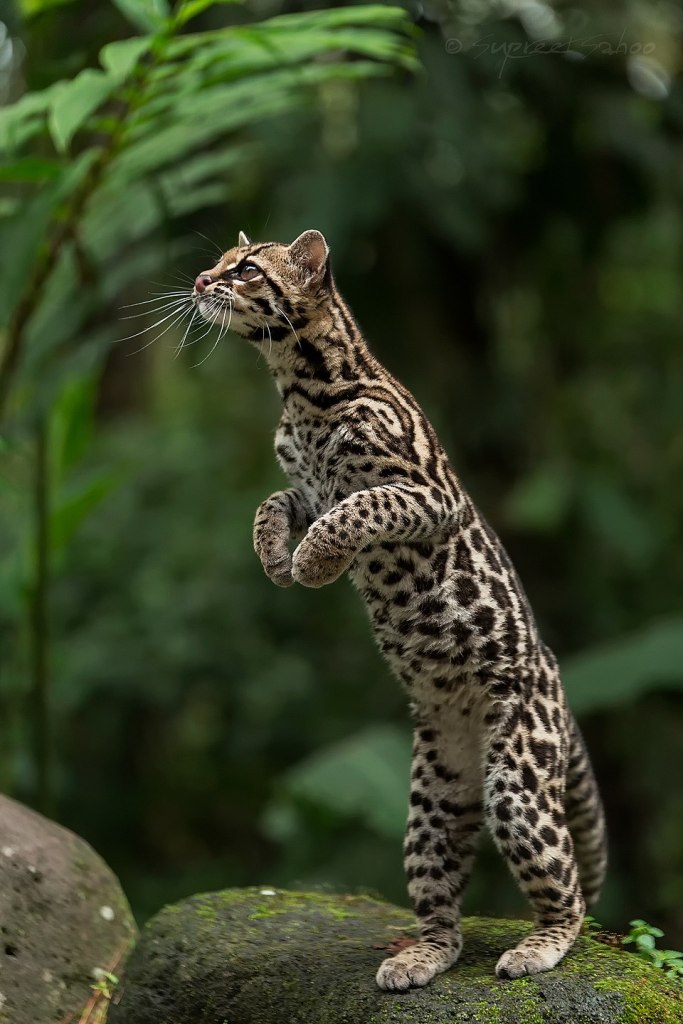
Living in jungles teeming with life, margays have a distinct advantage that allows them to escape land-based predators while making them a threat to monkeys and other critters living in the branches — they are outstanding climbers with unique biological adaptations that allow them to do things other cats cannot.
Credit: Supreet Sahoo via Wikimedia Commons
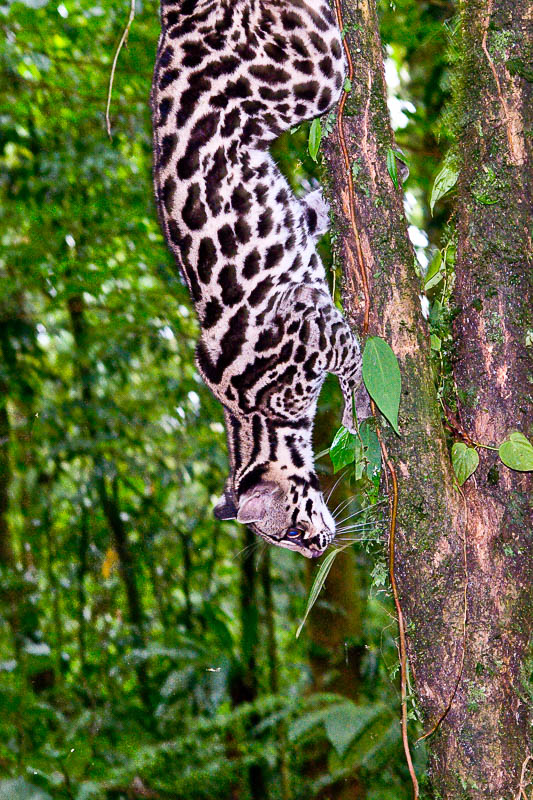
The most dramatic example is their ankle joints, which allow them to rotate 180 degrees as the little spotted cats anchor themselves to trunks and branches. As a result, margays don’t just climb with speed and ease, they are capable of swiftly evacuating trees by climbing down head-first like squirrels.
Other cat species lack that adaptation, which is one reason why we often hear about domestic cats who find themselves uncomfortably high up in trees or on utility poles, refusing to come down for days despite hunger and coaxing by humans trying to help.
A margay demonstrating its ability to climb head-first down a tree thanks to its unique ankle joints. Credit: James Kaiser
Margays are outstanding jumpers in addition to their unrivaled climbing ability, able to leap six to eight times their own height. It’s easy to see how these diminutive cats can intercept birds and monkeys far above the jungle floor in addition to hunting terrestrial mammals.
Indeed, using their large tails as a counterbalance, margays traverse branches with a swiftness and sure-footedness that rivals the gibbon.
The jungle’s tricksters
They’re also remarkably clever. Scientists have documented margays mimicking the vocalizations of monkeys, their favorite prey. In one documented example, a margay imitated the call of a baby tamarin, then ambushed the adult tamarins who approached to investigate the sound.
That’s a surprising adaptation for a cat species, and we should be thankful they’re tiny. The thought of tigers or leopards with that ability is terrifying.
Margays are solitary and due to their size, they’re both predator and prey. Because of that, these tiny cats spend the majority of their time well above ground level and are usually found deep in old growth jungles where they can blend into dense vegetation, hiding among leaves and branches, where their coat patterns help them blend in.
Like all wildcats, margays face increasing pressure from habitat loss, poaching and other threats, and they’re classified as near-threatened on the IUCN Red List.
Credit: Anderson Cristiano Hendgen via WikimediaCredit: Wikimedia Commons
Header image credit Clément Bardot via Wikimedia Commons
Copyright 2026 – Pain In The Bud – May not be reproduced without permission
With their otter-like features, their squeaky vocalizations and their mastery of multiple environments, jaguarundis are unique in the world of cats.
Jaguarundi
Taxonomic name:Herpailurus yagouaroundi Genus: Felis (small cats) Size: Males weigh up to 20 lbs, with typical sexual dimorphism for felid species Lifespan: Up to 20 years in captivity Gestation: 75 days Litter size: Between one and four kittens per litter Distribution: Almost the entirety of South America as well as the southern US IUCN Red List status: Least concern, but threatened by habitat loss
If you spot a jaguarundi in the wild, there’s a good chance you won’t know what you’re looking at.
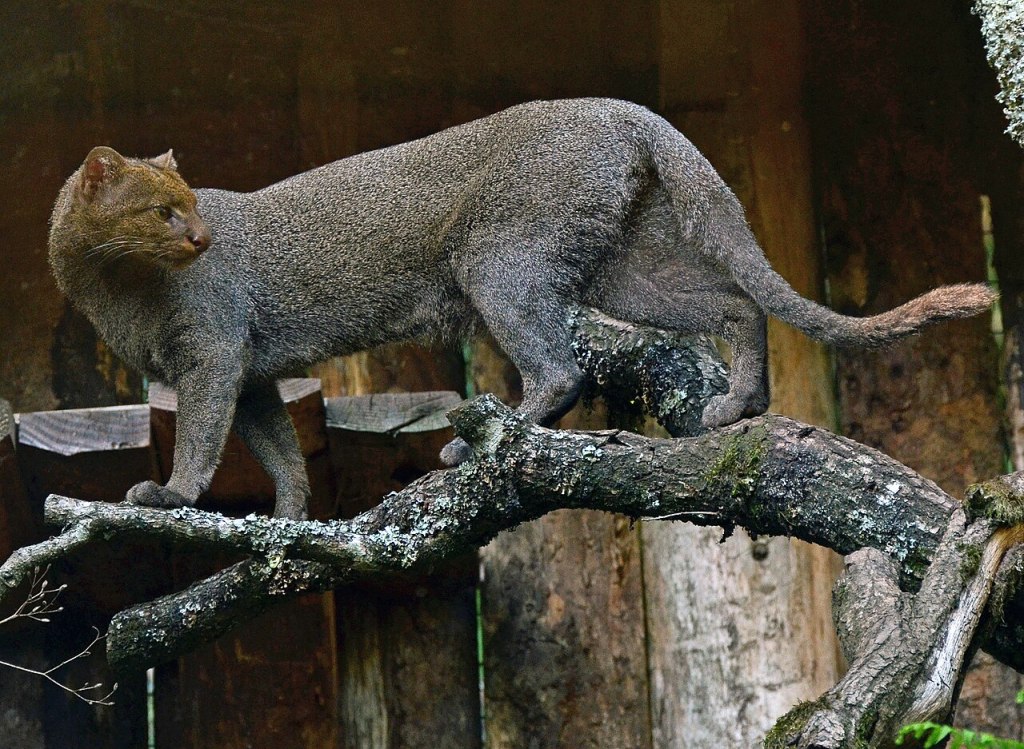
Their sleek, elongated bodies are almost weaselesque when seen from the side, an impression made stronger by the way their heads are shaped in profile. From some angles they can strongly resemble otters, an likeness strengthened by their short, dusky coats.
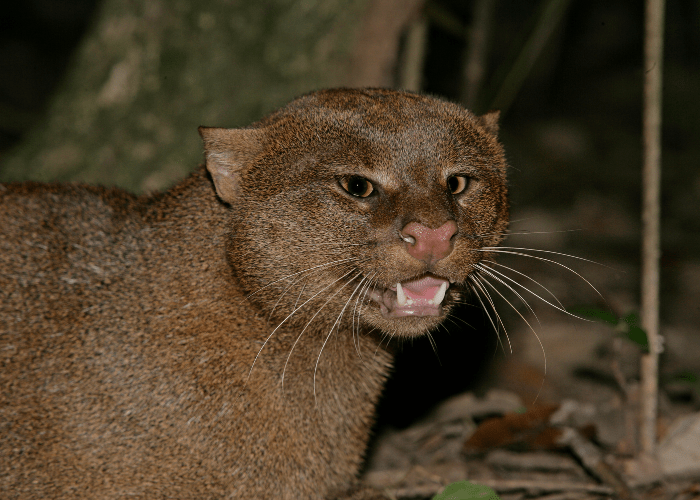
But seen head-on they’re definitely cats, and even though they’re small felines — about one and a half to two times the size of domestic kitties — their facial features can be reminiscent of big cats, especially their broader noses, rounded ears and the set of their eyes.
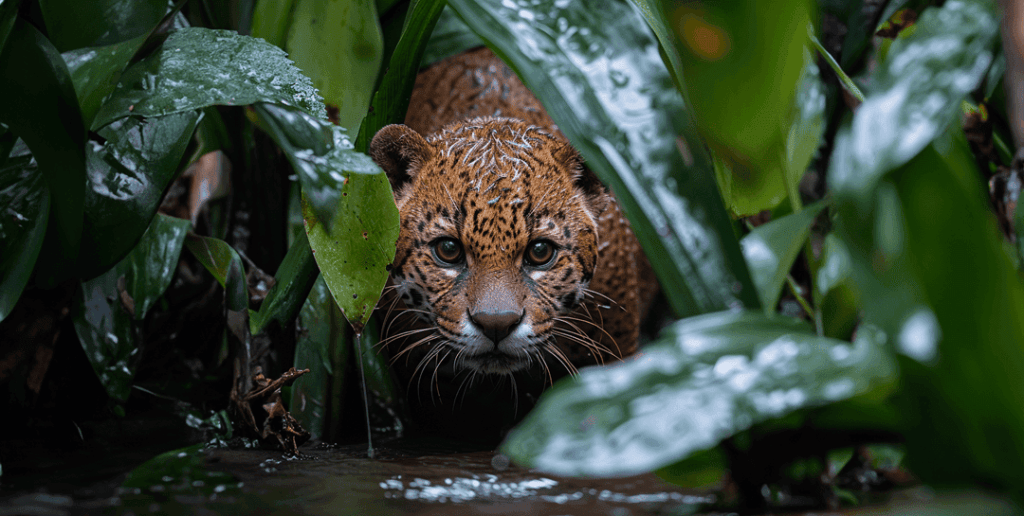
Seen from an angle like this, jaguarundis resemble jaguar cubs:
Indeed, jaguarundi means “dark jaguar” in Old Guarani, an extinct predecessor of the Tupi family of indigenous languages that were spoken in South America for thousands of years before the arrival of the conquistadors and the Spanish language. Modern variants of the language still exist in countries like Paraguay, which may account for the enduring names of several species of western hemisphere cats. (Jaguar itself is based on the indigenous Tupi word “yguara,” and pumas have dozens of surviving names with indigenous roots to go along with their many names in English.)
As New World cats, jaguarundis boast an impressive range that stretches from southern Argentina through Latin America and into the lower US states.
Like their larger cousins, the jaguars, jaguarundis are comfortable in the water and are strong swimmers. They’re also adept hunters on land, excellent climbers, and they’re impressively sure-footed while traversing branches high above ground level.
In short, the adaptable felines can just about do it all.
Note the otter-like appearance of the jaguarundi head in side profile.
In the wild, jaguarundis have been known to hunt prey as large as small deer and help themselves to seafood snacks when the mood strikes them, but analyses of their diets shows they have a strong preference for mammals, particularly a variety of wild rodents found in dense jungles and forests.
Jaguarundis don’t just look different compared to other cats — they sound different as well.
Conservationists call the jaguarundi’s vocalizations “whistles” and “chirps,” but to us they sound more like squeaks.
Take a listen for yourself:
It’s illegal under the Big Cat Public Safety Act to keep jaguarundis as pets, and the jaguarundi curl, a breed meant to mimic the appearance of the jaguarundi, is not related to the wild cat.
While they’re known to range in Texas and Arizona, sightings of jaguarundis are rare. From a distance their movement looks almost indistinguishable from those of house cats, and they’re famously elusive — by the time most people do a double take, the shy felines have disappeared into tall grass, brush or jungle.
Ocelots, one of the western hemisphere’s most adaptable cat species, are often mistaken for young jaguars.
In 1999 biologists from the Dallas Zoo were lending a hand on a project to monitor and protect America’s ocelots, who primarily range in southern Texas.
With limited resources, the team was trying to keep the wild cats in a protected area and get them to use paths where camera traps had been installed. One tried and true method was to use scents, but what could attract ocelots?
“Sort of on a lark, one of our research assistants produced a bottle of Obsession,” Dallas Zoo’s Cynthia Bennett said at the time.
The felines loved it. Members of the research team watched astounded as the scent magically transformed previously ignored objects into items of sudden fascination.
The cats happily rubbed their cheeks and bodies against anything sprayed with the stuff.
“It´s a little embarrassing to watch, actually,” Bennett said. “It does make you wonder what´s in the perfume.”
(It’s probably civetone, a synthetic version of a pheromone produced by civets used as a binder in the Calvin Klein scent.)
Credit: Victor Landaeta/Pexels
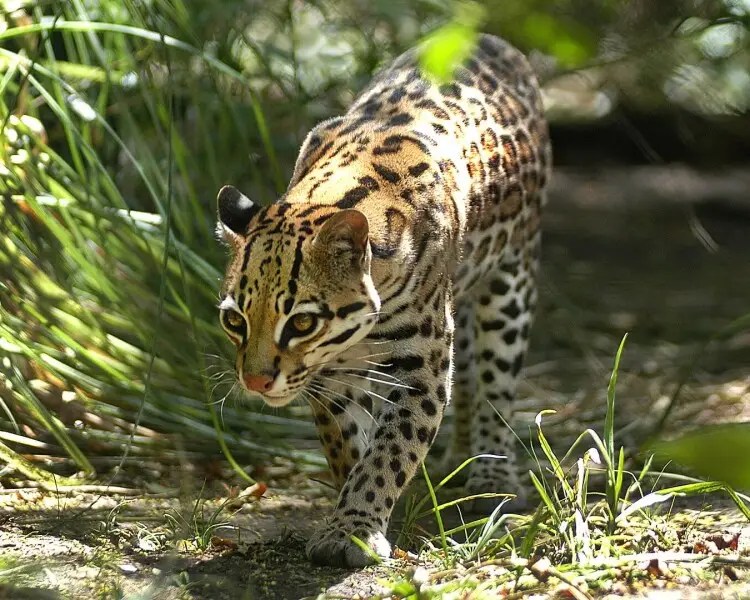
In addition to their predilection for cologne, ocelots are known for enjoying water, hunting by twilight, and napping in trees. The medium-size felids, who weigh up to 40 pounds in the wild, are also easily recognizable by their big eyes, the dark rings that surround them, and the way those markings become twin stripes that sweep over their foreheads.
Perhaps most striking are their large, wavy rosettes, which sometimes get them confused for young jaguars. In several indigenous South American languages, ocelots and jaguars share a name or have very similar names.
An ocelot kitten. After a gestation period of about three months, ocelot moms give birth to as many as three kittens. Credit: Wikimedia CommonsAn ocelot resting in a tree. Like other leopardus species, ocelots are proficient climbers. Credit: Wikipedia Commons
Ocelots have another quality that may lead people to confuse them with jaguars: they’re fond of water and they’re considered strong swimmers. That allows them to master their habitats, which often include rivers winding through rainforests and mangrove swamps.
The resourceful cats are adept predators on land and they can also pluck fish out of rivers.
An ocelot going for a dip. Credit: yellowlime_des/Reddit
Ocelots are categorized as a species of “least concern” by the IUCN (International Union for Conservation of Nature) but that doesn’t mean they’re thriving. Like pumas, the species is adaptable and can survive in varied surroundings. Still, ocelots contend with the same pressures other species experience, including habitat loss and fragmentation, hunting and poaching.
And while they can’t get enough of Calvin Klein’s Obsession for Men, maybe that’s a good thing.
According to zookeepers and wild cat experts, ocelots have a uniquely funky body odor which is amplified by their prodigious scent-marking. They want everyone to know where their territory is.
For zookeepers, the cats’ Obsession obsession could pull double duty as olfactory enrichment in their habitat — and a way to mitigate the stink.
Credit: Wikimedia Commons
Name: Ocelot (leopardus pardalis) Weight: Up to 40 pounds, with limited sexual dimorphism (males are slightly larger) Lifespan: Up to 20 years in captivity Activity: Crepscular, nocturnal Habitat: Claims territory in places where prey, water and dense ground cover are plentiful but the species is adaptable and survives in varied biomes
The woman has been dubbed a “serial killer” of animals after eight of her pets and one of her horses met early ends, and several others simply disappeared. She’s part of an unfortunate trend of influencers and quasi-celebrities popularizing exotic pets, with “ownership” of the animals frequently leading to tragedy.
So apparently Katie Price is some sort of proto-Kardashian, a pioneer of the “famous for being famous” genre of hybrid reality/online celebrity, to use the term loosely.
Wikipedia says she got her first taste of fame in the 90s posing topless for British tabloid newspapers before moving on to loftier pursuits, like appearing on Big Brother and holding court on important topics, like whether toes have bones.
The background really doesn’t matter, except to establish that Price is someone with a lot of money, minimal common sense and extraordinarily poor judgment who has gotten so many of her pets killed or injured, PETA and other animal rights groups in the UK have begged politicians to write new laws preventing serial pet-killers from purchasing more animals.
Sort of a “10 strikes and you’re out” rule, if you will.
Four of Price’s dogs have been hit by cars, including one killed by a pizza delivery driver on her property. Another got stuck in an electric armchair and was crushed after Price gave him cannabis oil, pleading ignorance on its effects.
Previously, one of her breed cats was euthanized under mysterious circumstances at five months old, her rare chameleon fell ill and died because he wasn’t kept in a properly heated enclosure, and her “guard dog” was apparently intentionally killed by someone, although the information on that death comes from Price so there’s no way of telling what the actual circumstances were.
A horse Price owned was killed on the same road where two of her dogs met their end, which would bring the tally to nine depending on whether you consider a horse a “pet.”
Price, pictured this year.
There have also been animals — kittens, puppies, animals gifted by boyfriends, fiances, and friends — who were featured on Price’s social media feeds as babies and never heard from again, according to the UK’s Mirror. Some of them were given away to assistants and acquaintances. The fates of the others are unknown.
Price currently owns at least four chihuahuas and five Sphynx cats. An incident with one of the Sphynxes has animal lovers and welfare groups renewing calls to prevent her from buying new pets. (Price, like so many social media influencers, exclusively purchases breed pets for thousands of dollars each.)
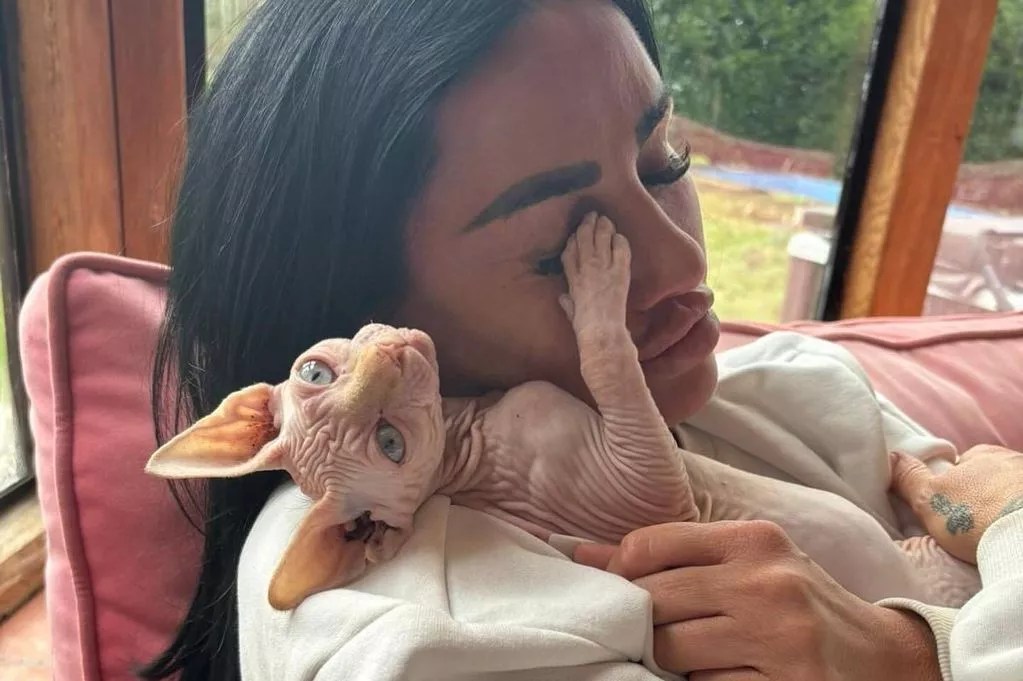
In a new video posted online, Price — who has been dubbed a “serial killer” of animals by PETA — makes duck lips at the camera and rubs one of her Sphynx cats, Kevin, explaining that the little guy suffered sunburns.
“Oh Kevin you have been in the sun today, you have got sun burnt despite us putting sun cream on you… look at his little face,” Price said in the video. A caption written by Price claims “Trying to keep the cats out of the sun is hard work.”
A screen shot from Price’s recent video in which she shows one of her cats who suffered sunburn during the ongoing heat wave.
The latest incident is drawing fresh attention to a petition that calls for the UK government to step in to stop Price from owning animals.
As of July 10, there were 37,728 verified signatures on the Change.org petition, which mentions a number of additional disturbing incidents involving Price’s pets. One accusation claims Price’s guard dog — it’s not clear if it was the dog who was killed, or a new guard dog — bit the tail off one of her cats.
“Anyone who warns Katie not to hurt the animals she takes in might as well be screaming into the wind, for all she seems to care,” PETA’s Elisa Allen said. “And here we go again: her cat is sunburnt – something she was likely warned about when acquiring a gimmick cat, bred to look odd and be hairless.”
For her part, Price claims the deaths and unfortunate incidents that have befallen animals in her care are simply the result of bad luck and circumstances outside her control. Her representatives have also accused animal welfare groups of using the influencer’s fame to raise money.
That has not changed the narrative as new incidents continue to pile up. In a 2023 live TikTok stream, Price allegedly slapped her then-puppy, Tank — who she’s since discarded — for sitting on a hoodie. “Get off! You’re sitting on my jumpers, my jumpers that I love,” Price said after the sound of a loud slap off camera, leaving viewers fuming.
Price is not alone in the world of influencers, quasi-celebrities, Real Housewife types and entertainers who apparently view animals as disposable amusements.
Hilaria Baldwin, Alec Baldwin’s wife, has earned the nickname “Cruella Seville” from her detractors for her alleged treatment of her breed cats and dogs. The nickname is a play on the character Cruella de Vil from 101 Dalmations and the Spanish city of Seville, where Baldwin claimed to have roots before claiming she was born in Mallorca.
Baldwin with two of her Bengal kittens. New kittens have appeared in her Instagram posts several times in recent years, apparently replacing older Bengals she’d purchased previously.
Baldwin, you may recall, was enthusiastically Spanish until she wasn’t. She was essentially exiled from celebrity-adjacent society in 2020 after Twitter users dug up videos of her fluctuating accent and performative “forgetting” of English words like cucumber, outlet and onion. Former classmates, acquaintances and friends came forward to say she was the Boston-born Hillary Hayward-Thomas and didn’t go by Hilaria — or speak with an accent — until around 2010, when she met Alec Baldwin.
But the actor’s wife never stopped posting to social media, and in addition to animal lovers calling foul on videos that show her allegedly mishandling her dogs, her online posts show a rotating cast of Bengal kittens. Critics have called for action against Baldwin for her alleged treatment of animals, as well as buying Bengals despite the fact that it’s against the law to keep them as pets in New York City. PETA, which previously worked with Alec and Hilaria Baldwin on a publicity campaign, also called on the couple to stop buying exotic pets.
In the music world, mainstream pop artists like Justin Bieber and Rihanna have both come under fire for purchasing baby monkeys — a capuchin in the case of Bieber, and a slow loris for Rihanna.
The Rihanna incident, in which she shared a photo of herself with a slow loris pet to social media, resulted in raids on illegal wildlife markets in Thailand, where Rihanna allegedly acquired the animal. There are nine subspecies of slow loris, ranging from vulnerable to critically endangered in conservation status, per the World Wildlife Fund.
Rihanna posing with a slow loris, a nocturnal, arboreal animal that is notably the world’s only venomous primate. The venom glands are removed from slow lorises sold on the illegal wildlife market. People continue to poach and sell them despite their declining numbers in the wild.
Bieber named his monkey Mally OG and famously ditched the then-infant in Germany in 2013, when officials there seized the primate from his private plane after it touched down in Munich, citing his lack of permits and purchase records for the animal. (They essentially accused Bieber of buying Mally on the illegal wildlife market.)
“Honestly, everyone told me not to bring the monkey. Everybody,” Bieber told GQ magazine in an interview several years later. “Everyone told me not to bring the monkey. I was like, ‘It’s gonna be fine, guys!’ It was the farthest thing from fine.”
Bieber with his pet capuchin monkey, Mally OG, who was just an infant when he was ripped from his mother’s arms so he could be sold to the pop singer.Bieber with another capuchin monkey as part of a skit in which he joked about German authorities seizing his first monkey pet.
The singer said he’d return for his pet after retrieving the paperwork from one of his US homes, but he never did, and Mally OG was placed in a sanctuary after a long rehabilitation period.
In a follow-up story five years later, Asta Noth of Serengeti Wildlife Park said Mally was still trying to imitate human speech, and didn’t know how to communicate with his own species. That’s a common problem with monkeys who are former pets, as they do not understand the complex social dynamics of troops and family units.
His developmental problems stem from the fact that “he was taken away from his mother and natural family way too early,” Noth said. “He did not learn to be a monkey.”







 Pain In The Bud