The spooked serval bolted through an open window and scurried up a tree during a traffic stop in Cincinnati.
We wish we could say this story is a viral marketing stunt for the recently-released movie Cocaine Bear, but authorities say they’re not joking.
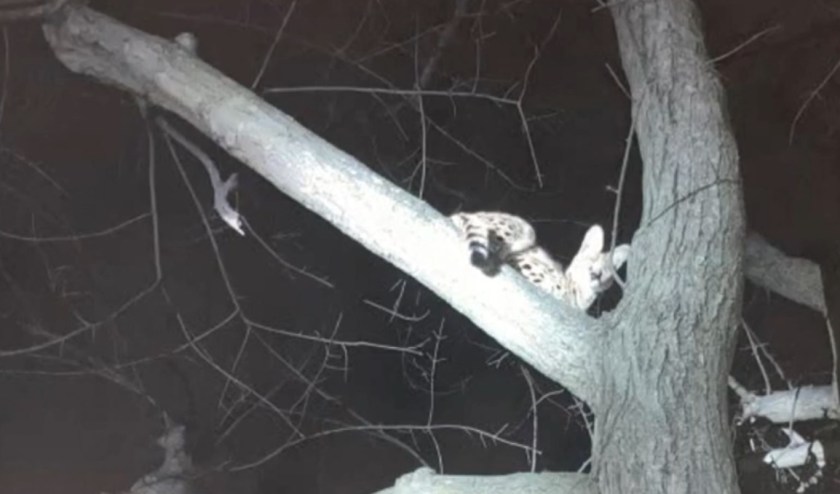
Cincinnati police pulled a car over in what they thought would be a routine traffic stop in late January. But when officers approached the vehicle a large cat inside got spooked, jumped through an open window and took refuge in a tree.
Cops called the city’s animal control staff, initially reporting a “leopard” on the loose.
“[They weren’t] sure what they were dealing with,” Cincinnati Animal Care’s Ray Anderson told WXIX. “Hindsight being 20/20, it probably would have involved a whole lot more people.”
Animal control officers who arrived on scene thought they were dealing with an F1 Savannah, a hybrid between a domestic cat and a serval, and were able to get the cat down from the tree, but not without some difficulty. The exotic wildcat suffered a broken leg in the process. (See video of the cat in the tree here.)
The serval took refuge in a tree. Credit: Cincinnati Animal Care
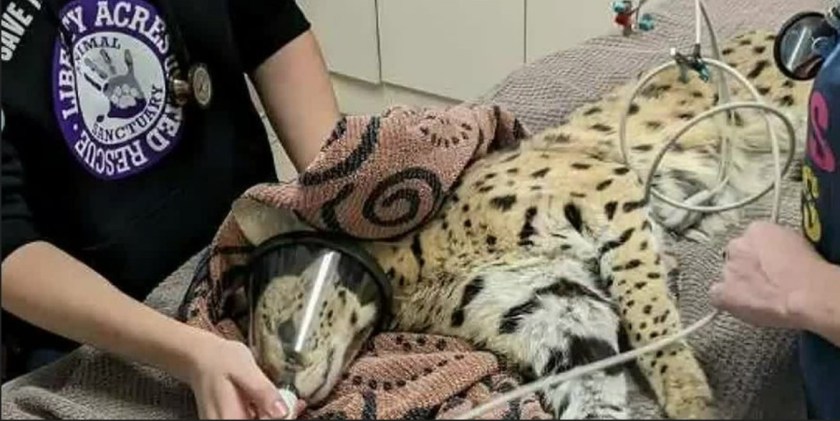
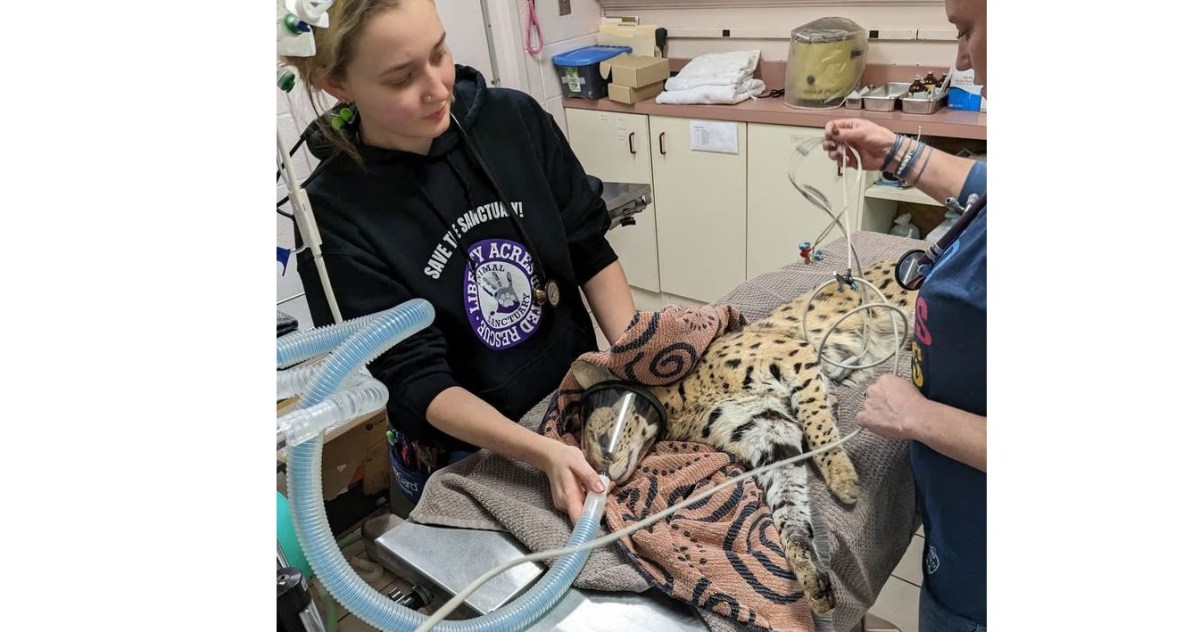
They brought the injured cat to the Cincinnati Zoo, where they were in store for several surprises: The felid was a serval, a medium-size African wildcat, and blood tests showed it had cocaine in its system. A subsequent DNA test confirmed the cat is a serval and not a Savannah hybrid.
The responding animal control officers were “pretty lucky because this cat could’ve shredded us” Chief Troy Taylor of the Hamilton County Dog Warden’s Office told Cincinnati’s WKRC.
The serval, whose name is Amorie, remains in the zoo’s care for now. Taylor said Amorie was given pain meds during treatment and is recovering. It’s not clear what will happen to him, and lots of questions about the incident remain unanswered. Local media reports say the driver was arrested during the traffic stop, but also said the driver is cooperating and has not been charged in relation to the cat or the narcotics.
It’s illegal to own wild cats in Ohio, and unless the serval found himself a bag of cocaine in the fleeting seconds between bolting from the car and scurrying up a tree, it seems the driver has some ‘splainin’ to do.
More than 6,000 people, a capacity crowd, said goodbye to the famed mountain lion P-22 at The Greek Theatre in LA.
When police went to a Yorktown, NY, home for a welfare check this week, the last thing they expected was to find an army of cats.
The responding officers breached the home when no one answered, finding an elderly couple deceased inside, along with some 150 hungry, neglected cats. Police don’t believe there was foul play in the death of the couple, but the number of cats and the condition of the home have “hindered” their investigation.
The Westchester County SPCA is taking on the monumental task of collecting the cats, giving each of them veterinary care and finding homes for them. Staff there are calling it the largest single rescue in their history, and they’d already filled their own facilities and local shelters to capacity by the time they’d rescued 100 of the famished felines, leaving them scrambling for room to place the others. Some have upper respiratory, eye and skin infections, the SPCA said, while most of the cats were malnourished and dehydrated.
Credit: SPCA of Westchester County
Credit: SPCA of Westchester
Despite living in conditions police described as “filth and squalor,” the cats are well-socialized and friendly, rescuers say. They believe the husband and wife may have been Abyssinian breeders at some point.
“It’s very unusual in a case like this, especially with that number of cats, for them to be as social and sweet as they are, usually they are scared when they come from a situation like this because they haven’t had a lot of human interaction,” the SPCA of Westchester’s Lisa Bonnano told the New York Post.
Yorktown is about 28 miles north of Casa Buddy, and we can vouch for the excellent work done by the Westchester County SPCA, whose veterinarians gave kitten Buddy his first shots and gave him the snip.
Veterinary costs alone are expected to exceed $40,000, so if you’d like to help, you can make a donation here.
Alleged Dallas Zoo thief nabbed
When 24-year-old Davion Irvin stopped an employee at the Dallas World Aquarium to ask about exotic animals there, the staffer recognized him as the same man pictured in a surveillance still from the Dallas Zoo.
Police released the image to the public after three separate enclosures at the zoo were breached, leading to the brief disappearance of a spotted leopard on Jan. 13 and the theft of two emperor tamarin monkeys about two weeks later. The langur monkey exhibit was also breached, but the animals were not removed.
After the aquarium’s staff tipped them off, cops caught up to Irvin a few miles away and have since linked him to all three break-ins. They charged him with two counts of burglary — for the monkeys and the leopard — and six counts of animal cruelty. They’re also looking into whether Irvin may have been involved with the “very suspicious” death of an endangered lappet-faced vulture on Jan. 21.
Cops, who initially suspected the thief was looking for exotic animals to breed or sell, have said Irvin hasn’t told them why he wanted the primates and the medium size cats. Their investigation is ongoing.
Thousands say goodbye to P-22
More than six thousand people crowded into The Greek Theatre in Los Angeles on Saturday to say goodbye to P-22, the Hollywood Lion, a puma who made the hills above the city his home for more than a decade.
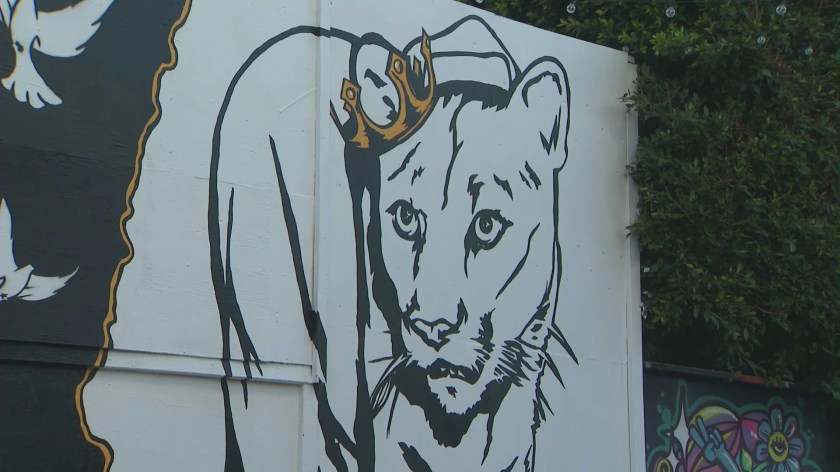
One of several new murals of beloved mountain lion P-22, who was euthanized in December after he was hit by a car and suffering from an infection.
People spoke about seeing his curious face pop up on their doorball cameras, spotting him disappearing into the trees in Griffith Park, and how his presence piqued the curiosity of many people who took the time to learn more about mountain lions.
But the unofficial theme of the event was how P-22 showed people humans and wildlife can co-exist, and how our species can do a lot more to make sure the animals we share the Earth with will survive in the future. One woman told LAist that before she learned about P-22, she “used to think they were scary” and aggressive like the big cats they’re often confused with.
Others said he inspired them to get directly involved with conservation efforts.
“We are wildlife. We are creatures of nature, just as all the animals and plants are,” archaeologist Desireé Martinez, a member of the indigenous Gabrielino-Tongva tribe, told KTLA. “What can we do to make sure that the creatures that we are sharing this nature with have the ability to survive and live on — just like us?”
P-22’s unforgettable visage, already familiar to Los Angelinos, is now ubiquitous in his former range, with several murals adorning the sides of buildings and other displays bearing his image.
“He inspired so much happiness. I mean, look at all the people that are here,” Babetta Gonzalez told LAist. “We have to remember that we are in their neighborhood and we need to respect their environment. We have integrated, but we could do a lot better.”
Mary Alston and Beverly Roberts will return to court for an appeal on February 23 after they were convicted in December of charges associated with managing a cat colony.
Two women who managed a cat colony in their Alabama hometown — and were rewarded with an infamously tone-deaf arrest and criminal conviction for their efforts — have raised $85,000 for their appeal.
This time, their fate won’t be decided by a small-time judge appointed by the same mayor who ordered police to arrest the women in the first place.
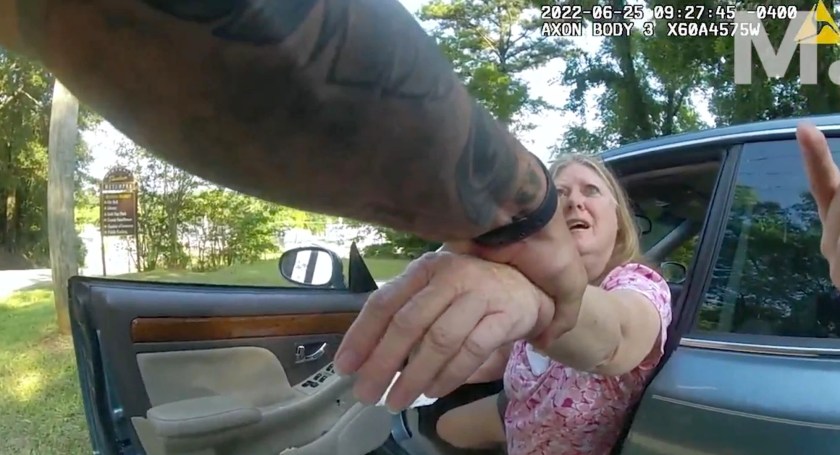
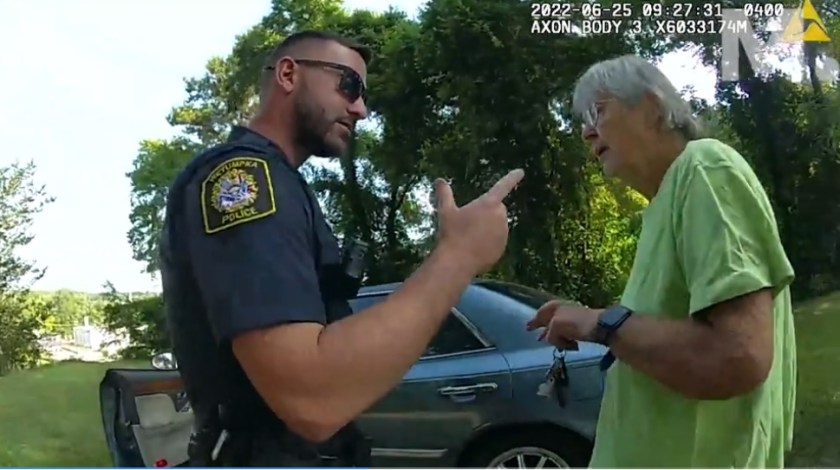
Mary Alston and Beverly Roberts of Wetumpka, Ala., were arrested on June 25 after three police cars pulled up and four officers surrounded them on public land, demanding they stop their efforts to trap feral cats and leave the area immediately.
Alston and Roberts, who were in disbelief that four officers had been dispatched and were treating them like hardened criminals, didn’t move fast enough for the cops, who berated them and placed them both in handcuffs before charging them with a pair of misdemeanors each.
Their attorneys fought for months to obtain a copy of the police body camera videos of the arrest, and when they finally obtained that copy, it became apparent why the Wetumpka Police Department fought to keep it out of their hands.
The footage shows officers warning the women the confrontation was “going to get ugly,” insulting them and joking that they were “a bunch of cops beatin’ up on some old ladies.” It showed the police escalated the situation and had little regard for two women who were doing their hometown a service by managing a stray cat colony and conducting TNR — trap, neuter, return — to prevent the cats from breeding and multiplying.
They were convicted in a December trial that was followed by local and national media.
Now Roberts, 85, and Alston, 61, have raised $85,195 for their appeal via GoFundMe, with more than 3,000 donors across the US contributing to the fund.
After filing an appeal on Dec. 19, the women have been notified that their first hearing is set for Feb. 23 in front of 19th Judicial Circuit Court Judge Amanda Baxley, said Mary King, Roberts’ daughter. Baxley was sworn in earlier this month and begins her tenure on Jan. 17 after she was elected to the post in November.
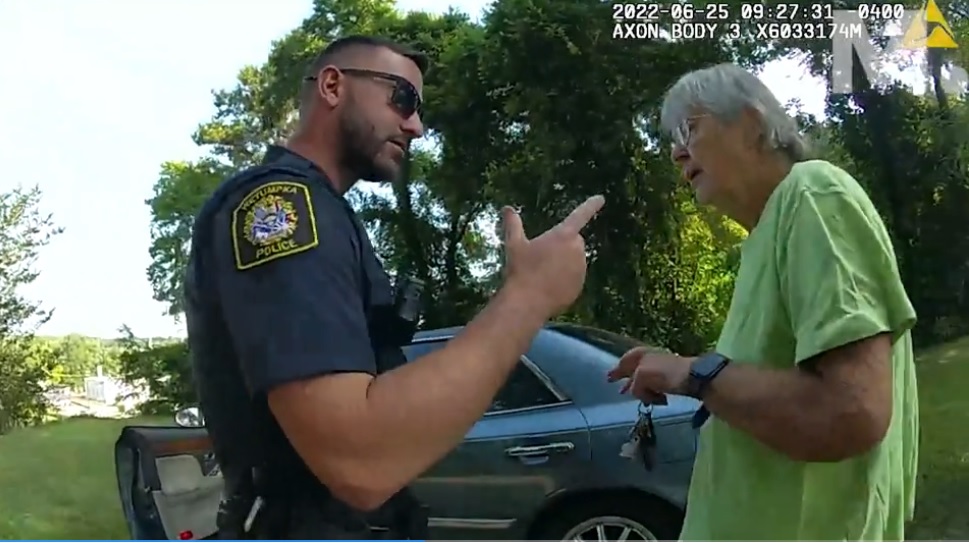
A Wetumpka police officer wags a finger at Roberts, who was 84 years old at the time, before handcuffing her hands behind her back and rifling through her personal possessions.
In a December trial, attorneys for Alston and Roberts revealed it was Wetumpka Mayor Jerry Willis who personally dispatched the officers by calling the assistant chief after spotting Alston’s car parked near a wooded area owned by the county. The lawyers also questioned Willis on his history of feuding with the pair on animal-related issues.
Although Willis testified that he did not tell police to arrest the women, Officer Jason Crumpton testified that he was indeed instructed to make the arrests before he arrived and determined what the women were doing.
Despite the fact that Wetumpka does not have laws against feeding or trapping cats, municipal Judge Jeff Courtney, who is directly employed by the town instead of being answerable to voters, found Alston and Roberts guilty of two misdemeanors each, sparking an outcry in local and national media. Courtney found Roberts guilty of trespassing and disorderly conduct, while he found Alston guilty of trespassing and interfering with governmental operations, an analogue for resisting arrest.
“I thought that they surely had more pressing issues to attend to,” Roberts told PITB in December. “I really thought the judge would dismiss it and tell the city to work it out.”
The arrest and conviction were widely panned by observers, including Alabama Political Reporter’s Josh Moon, who called the drama an “utterly absurd” spectacle that “reeks of small town politics.”
Roberts and Alston hope Baxley will give them a fair trial, which they believe they did not receive under Courtney in Wetumpka.
In the meantime, the colony cats in Wetumpka remain on their own. Willis, who has not responded to requests for comment by PITB, allegedly rejected offers by animal welfare groups in neighboring towns to care for the cats.
“We are very worried about them,” Roberts told PITB last month. “A few animal lovers have said they would help, but we are not sure this will happen. I’m not sure there is enough food available to hunt. The weather is getting colder, and they need protein.”
The 25-pound wildcat was found late on Friday afternoon. Now investigators are trying to determine who freed her and why.
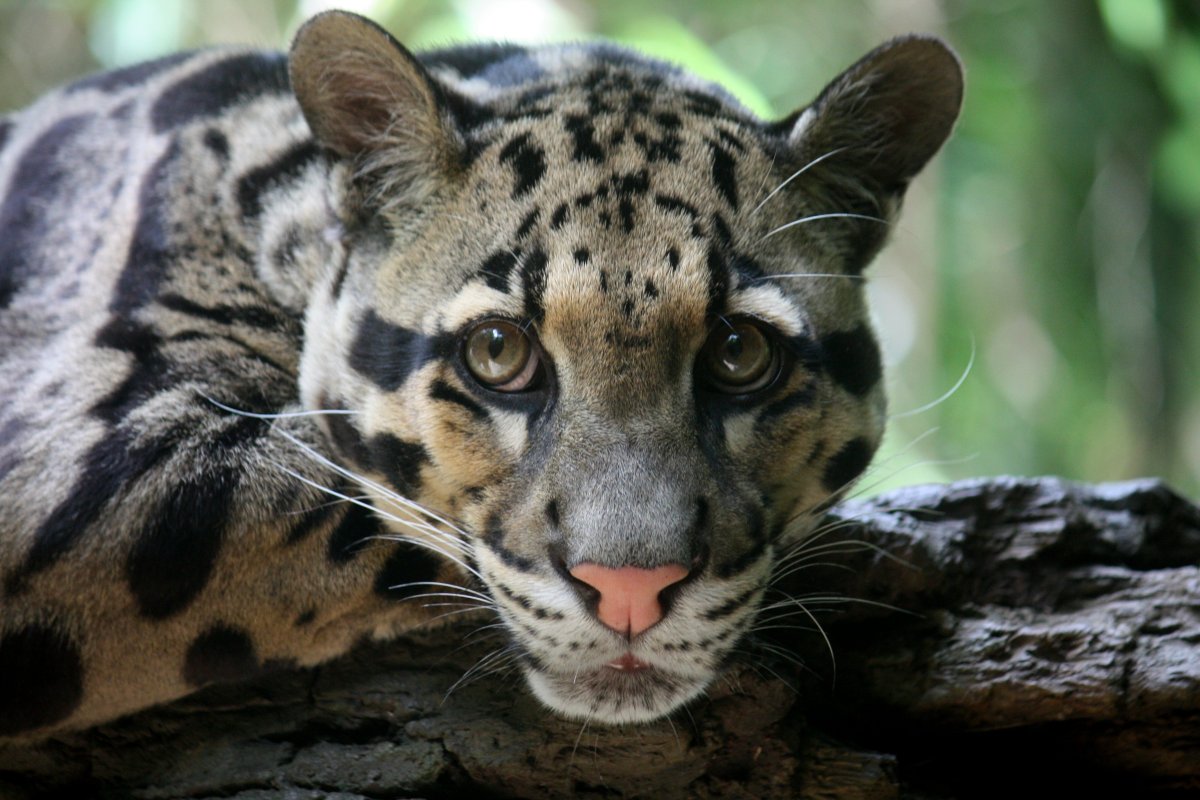
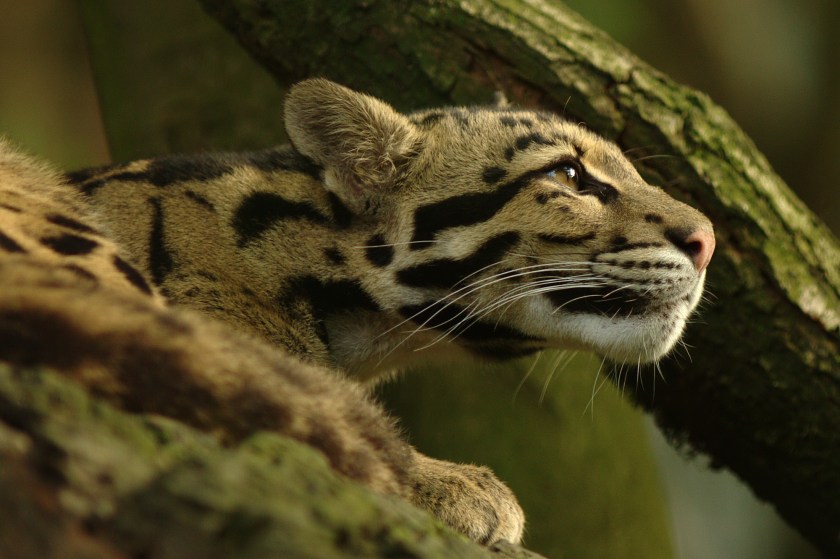
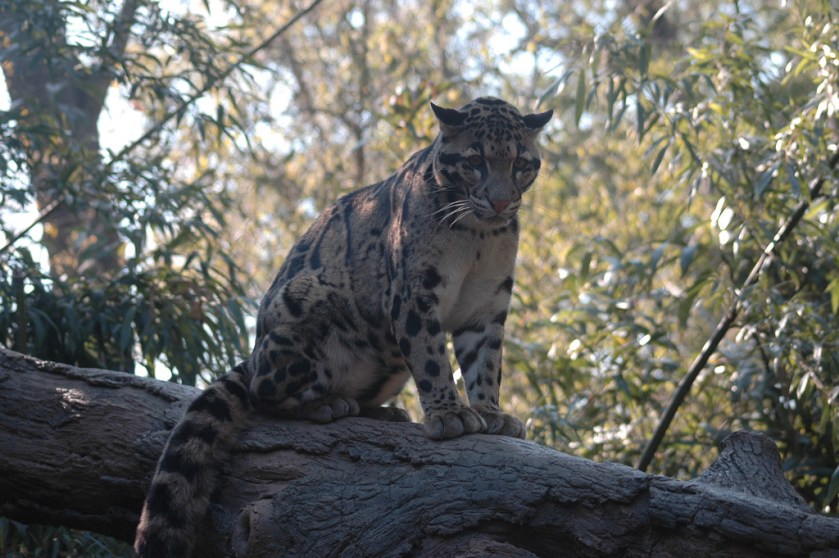
A clouded leopard who went missing from her enclosure was intentionally let loose according to police, who have opened a criminal investigation.
The medium-size wildcat, whose species is native to the foothills of the Himalayas, escaped from her enclosure some time between late Thursday night and Friday morning, prompting a zoo-wide shutdown and a massive coordinated search. During that time, zoo staff emphasized to local press — and in social media posts — that clouded leopards are not aggressive toward people and the escaped cat wasn’t a threat.
She was eventually found safe and unharmed on zoo grounds, hiding in a tree not far from her enclosure, at about 4:40 p.m. on Friday. She was secured within 35 minutes, zoo officials told the Fort Worth Star-Telegram.
But that’s not the end of the saga. Zoo staff say the leopard, a three-year-old named Nova, didn’t escape on her own — a person or persons breached the two-story exhibit by cutting through the mesh fence. Nova’s sister, Luna, lives in the same enclosure and did not leave the area.
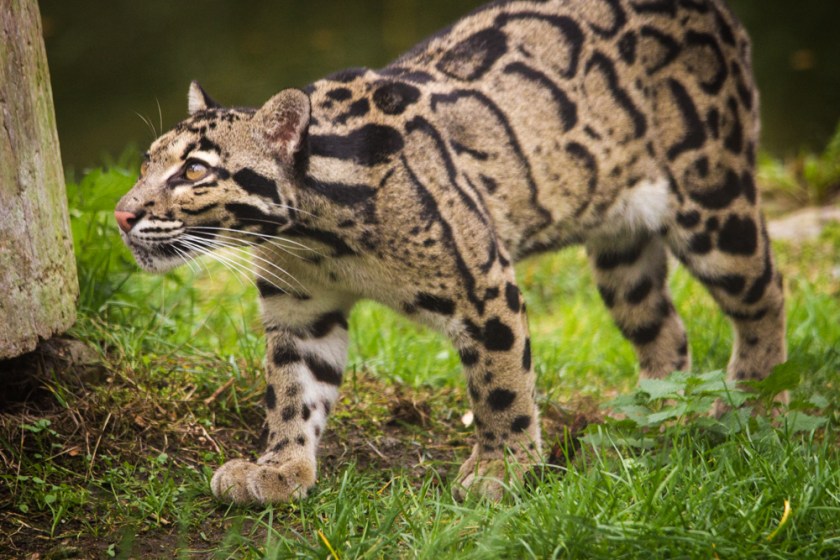
A clouded leopard. Credit: Wikimedia Commons
Now investigators are trying to determine if the people responsible for breaching the enclosure were committing an act of vandalism or intended to take the 25-pound wildcat.
“We found a suspicious opening in the habitat wall in front of the exhibit,” a Dallas Zoo official told reporters on Friday afternoon. “It was clear that this opening was not exhibit failure and it wasn’t keeper error.”
Police are reviewing surveillance footage and looking for clues in the 106-acre zoological park, which is located about three miles south of downtown Dallas and is home to more than 2,000 animals.
“It is their (Dallas Zoo officials’) belief and it is our belief that this was an intentional act, so we have started a criminal investigation,” Sgt. Warren Mitchell of the Dallas Police Department said.
Harrison Edell, vice president of animal care and conservation at the Dallas Zoo, warned against anyone attempting to steal zoo animals.
“This is a cat of conservation concern,” Edell said. “This is not a pet — she’s a critically important member of our family at Dallas Zoo.”
Clouded leopards diverged from a common ancestor shared with big cats, but typically don’t grow to more than 30 or 40 pounds. Credit: Wikimedia CommonsThere are fewer than 10,000 clouded leopards left in the wild. In captivity, the wildcats live for 11 years on average. Credit: Wikimedia Commons
P-22 suffered a skull fracture after he was hit by a car on Sunday evening. The beloved mountain lion was in a bad way when wildlife officials found him.
When the puma known as P-22 made headlines a month ago for snatching a pet Chihuahua off his leash on a post-sundown walk, a lot of people were concerned the mountain lion would be put down or hunted in retaliation.
The dog’s owner admitted he was distraught, but also pleaded with the public not to harm the puma, who after all was just being a cat. P-22 didn’t know pet dogs are off-limits, and he showed no aggression toward the other dog or the man walking the pooches. He was hunting after dark, like pumas do.
Sadly, P-22 is now dead, although there does not appear to be a connection to the Chihuahua incident.
Late on Monday morning, Sarah Picchi of Los Feliz opened her door to find fish and wildlife officers on her property. She knew why they were there, as she’d spotted the cougar in her backyard.
“Of course, I knew it was P-22 because I’ve been following the story,” she told the Associated Press.
P-22, who was described by the National Park Service as “a remarkably old cat in the wild” at 12 years old, was showing signs of distress. Veterinarians who have been tracking and protecting California cougars for 20 years tranquilized P-22 and gave him a veterinary examination after receiving reports that he may have been hit by a car on Sunday night.
P-22 when he was healthy, right, and just a few days ago when he was suffering from infections and a fractured skull, left.
Unfortunately it looks like he was indeed hit. The beloved mountain lion, who had famously crossed his state’s busiest highways in his younger days to find a range of his own, suffered a skull fracture, an unnamed skin condition and signs of kidney and liver disease.
Veterinarians said the only option, at his advanced age and in his condition, was to place him in a sanctuary where he could be constantly monitored and cared for, but that’s a dicey proposition for a proud animal who spent his entire life fending for himself, hunting and going where he pleased. P-22 would not have recovered, they said, and would have had poor quality of life even if he lived out his remaining days in captivity.
Ultimately they made the difficult decision to euthanize him this week.
Again, there’s no indication any of the misfortune to befall P-22 had anything to do with the Chihuahua incident, although the driver who hit him without reporting the injury made a selfish choice. It’s not clear if earlier treatment could have saved P-22, but it may have saved him significant suffering.
The famous cat, who called some of Los Angeles’ most well-known neighborhoods home, leaves behind a legacy that includes books and documentaries on his incredible life and journey from southern California to his eventual home in LA. Rest in peace, big guy.
Scroll down to the bottom of this post for more photos and a link to the National Park Service’s tribute to P-22.
Wetumpka will pay the price for petty politics
Reader Leah of Catwoods fame brought our attention to this excellent analysis of the situation in Wetumpka, a town in her home state of Alabama that is now best known for extremely aggressive police officers arresting two women for the “crime” of managing a cat colony.
The women, Beverly Roberts and Mary Alston, were found guilty of two misdemeanors each earlier this week in Wetumpka municipal court. (They also spoke to PITB on Friday, discussing their plans to appeal and their worries about the health and safety of the colony cats.)
The column, by Alabama Political Reporter’s Josh Moon, echoes our own thoughts on the scandal, pointing out the petty nature of the arrests and prosecution:
It’s so utterly absurd. And to be quite honest, it reeks of small town politics. It smells suspiciously like some thin-skinned city official got peeved because some ladies had the gall to question him, and he decided to flex a little muscle, show those little gals where the power lies.
And, lo and behold, in court on Tuesday, one major line of questioning revolved around whether Mayor Jerry Willis had told Wetumpka PD to arrest one of the cat ladies, because she had been continuously critical of the city’s animal control policies and practices. Willis, under oath, denied ordering her arrest. Testimony from a lieutenant from Wetumpka PD sure seemed to indicate that some sort of directive had come from the mayor’s office.
Regardless, bodycam footage of the cops’ interactions with Roberts and Alston show an impressive response – three cop cars and four officers – to a call about a lady possibly feeding cats. On a roadside. With no businesses nearby. Near a wooded area. With plenty of space off to the side so traffic wasn’t impeded. On public property.
As we did, Moon noted Alston and Roberts weren’t breaking any laws by being on public property, and there are no laws in Wetumpka prohibiting feeding stray cats.
And it’s not about feeding stray cats, as Willis claimed in his court testimony. Alston and Roberts were providing a service to Wetumpka, at their own expense, because they love animals. Trap, neuter, return is a proven process that limits and ultimately reduces stray cat populations, and does so in a humane way. Prohibiting the women from managing the cat colony will only make the problem worse as the felines mate and stray further afield looking for food, a fact that Willis and town officials don’t seem to appreciate.
Moon wrote:
A city with a decent government would have worked with Alston and Roberts. It would have given them awards for spending their days performing this public service for free. It would have explored ways to expand the very good thing they were doing.
He quoted attorney Terry Luck, who represented the women, saying “Wetumpka is a laughingstock” for arresting Alston and Roberts, blatantly lying about the reasons and the sequence of events leading up to the arrests, and doubling down on prosecuting them even as the story spread nationally and people understandably shook their heads in disbelief at the insanity of it all.
The small-town trial, Moon noted, was covered by reporters from across the state and from national media outlets. Body camera footage of the arrests fueled public outrage, as officers treated Alston and Roberts like hardened criminals and even laughed at the idea that they were “a bunch of cops beatin’ up on some old ladies.” That’s not what you want your town to be known for.
“The city will pay a hefty price for the bad PR,” Moon wrote. “And the whole time, doing the right thing was free.”
Tribute to P-22
We leave you now with some photos and images that can only hint at how much P-22, the lion of Hollywood, was beloved by the people of LA. He was the subject of at least four books, two documentary movies, various festivals and fundraisers for protecting his kind, and his face graces innumerable posters, t-shirts and pins. Here’s how the National Park Service described the big guy:
Likely born in the Santa Monica Mountains as the son of adult male P-1, he somehow found his way to his tiny, nine-square-mile home in Griffith Park, separated from the Santa Monicas by the 101 and 405, two of the busiest freeways in the world. Defying expectations, he persisted for more than 10 years in the smallest home range that has ever been recorded for an adult male mountain lion.
Although he made frequent appearances on the streets of the Hollywood Hills and even, more recently, of the Silver Lake neighborhood, he was also clearly a wild cat, doing so mostly late at night, and subsisting largely on natural prey such as deer and coyotes.
In the end, he found his way into many Angelenos’ hearts and home surveillance camera footage.