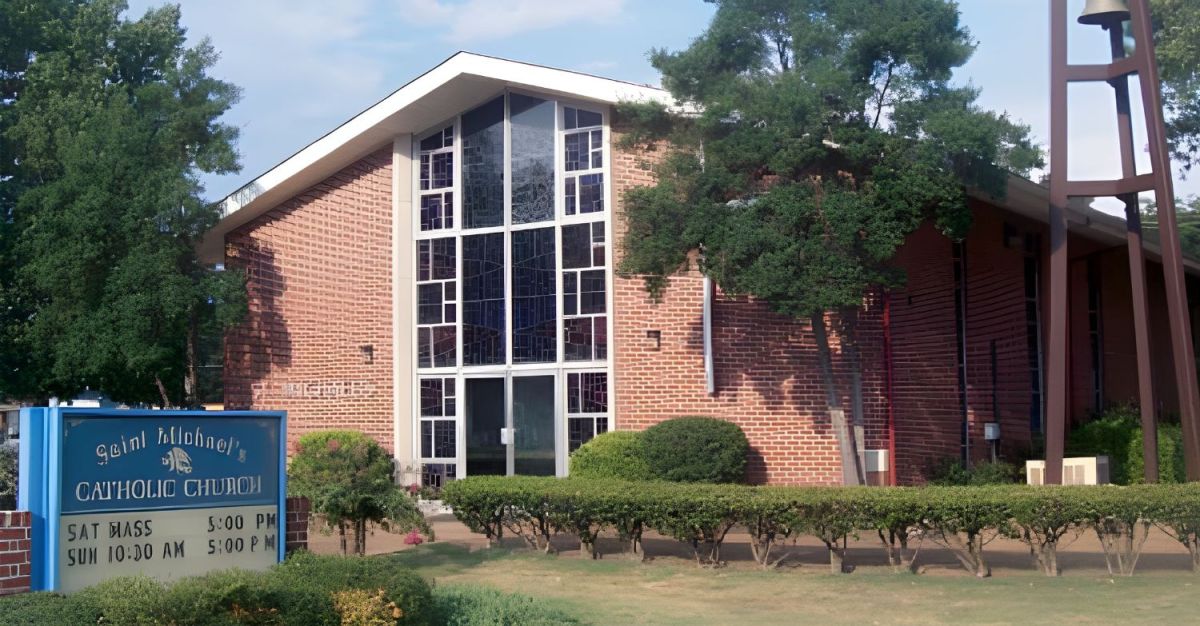
The bishop of Little Rock called the allegations “disturbing” and said Thessing would not serve his two home parishes while the criminal case plays out.
An Arkansas priest was suspended by his diocese this week, one day after police found dead cats during a search of his home.
Charles Thessing, a 63-year-old “senior priest” and pastor at St. Michael Church in West Memphis and Sacred Heart Church in nearby Crawfordsville, was charged with two felonies on Tuesday. Police, working from information provided by a tipster, found a pair of dead cats, a water tank where Thessing allegedly drowned the felines, and animal traps, according to the West Memphis Police Department.
The Rev. Charles Thessing. Credit: Diocese of Little Rock
The tipster initially contacted a shelter on Feb. 7 with the information, according to police.
“We were very fortunate that someone, a concerned citizen brought our attention to the situation and we addressed it immediately,” Kerry Facello, Director of West Memphis Animal Services, told local CBS affiliate WREG. “The West Memphis Police Department worked so fast in obtaining a search warrant and allowing us to investigate further and see exactly what was going on.”
In a letter to parishioners at St. Michael and Sacred Heart, Diocese of Little Rock Bishop Anthony Taylor confirmed the arrest, adding “the allegations are disturbing, and as your bishop I take them very seriously.”
“Having heard from numerous voices within the parish, the school, and the broader community; having consulted with others; and having given this matter much prayer and consideration, I have determined that Fr. Thessing cannot continue serving as an effective pastor for your parishes,” Taylor wrote.
Thessing also has supporters, Taylor noted, while asking for parishioners to pray for the priest.
Thessing’s mugshot. Credit: West Memphis Police Department
Thessing, who has not spoken publicly since his arrest, smiled in his mugshot, which was released by West Memphis police. Per the bishop, Thessing will not minister to his parishes or perform any of his regular duties while the case reaches a disposition. The bishop did not say what could happen if Thessing pleads to the charges or is found guilty.
Thessing has been a priest for 37 years, according to the diocese.
Police say their investigation is ongoing, and they’re asking anyone with more information about Thessing to contact them. Under Arkansas state law, aggravated cruelty to animals is defined as “knowingly torturing a dog, cat, or equine,” and is a felony.
If Thessing drowned the cats, as police allege, that would put him at odds with the church. Pope Francis has been particularly outspoken on animal welfare. He was born Jorge Mario Bergoglio, and chose Francis as his name for his papacy, after the Catholic patron saint of animals.
His 2015 encyclical, Laudato Si, was the church’s strongest and most unambiguous condemnation of human treatment of animals, including cruelty, factory farming, exploitation and pushing animals toward extinction with our behavior and our public policies.
In the encyclical, Pope Francis condemned “tyrannical anthropocentrism unconcerned for other creatures” and stated clearly that animal life has intrinsic value, rejecting the argument often used by literalists who claim that God, through Bible verses like Genesis 1:26, created animals and the Earth for our use, as if they’re merely tools or resources for the advancement of the human race.
“[N]owadays we must forcefully reject the notion that our being created in God’s image and given dominion over the earth justifies absolute domination over other creatures,” the pope wrote.
He also echoed psychological concerns about the mistreatment of animals as a strong indicator that a person will harm humans.
“We have only one heart,” Francis wrote, “and the same wretchedness which leads us to mistreat an animal will not be long in showing itself in our relationships with other people.”
The cat survived but her personality has radically changed from loving and affectionate to distant and wary, her human said.
A councilman in a rural UK village resigned from his post and is the subject of renewed police scrutiny after allegedly trying to blow up a neighbor’s cat twice in 2023.
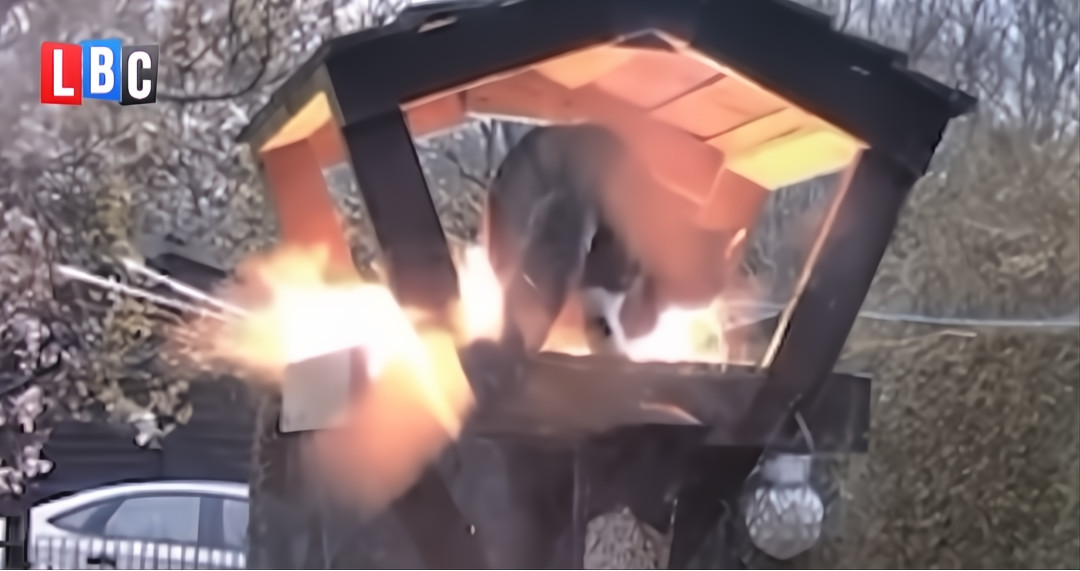
Councillor James Garnor was reportedly trying to stop the cat from climbing into a bird feeder, and decided the best way to do it was to rig the feeder with explosives and lure the curious feline in, according to a report on UK broadcaster LBC’s website.
Garnor was apparently so amused by his handiwork that he distributed video of the incidents to his friends. The footage shows a cat named Suki leaping onto the bird feeder on April 9, 2023, and nibbling on some of the bird feed before the explosive detonated. An injured Suki took off immediately and ran home.
She “came home one day missing her whiskers on her face – they looked like they’d been dissolved – so I put a post in my local community page on Facebook… just to warn people in case there was something she’d rolled in that had dissolved them,” said Suki’s human, a woman named Nikki.
Suki’s whiskers were singed off by the heat from the explosion. Image credit: Provided by owner to LBC News
“But somebody contacted me to tell me it wasn’t what I thought it was, that somebody had actually blown my cat up – and that it was my neighbour and local councillor. It made me feel physically sick.”
After she received the video, Nikki filed a complaint with local police, who elected not to arrest Garnor. However, after a second video surfaced with a clearer view of Garnor’s alleged actions, police responded to the public outcry and said they were reviewing the case again.
Per LBC, which broke the story:
“The incident is one of at least two occasions that cats in Whittlebury, Northamptonshire, were allegedly targeted by Councillor James Garnor in 2023 using remote-detonated explosives.”
It’s not clear if the new video shows a second attempt, or a different angle on the first. Garnor “was dealt with using anti-social behavior legislation,” a type of civil admonishment usually associated with things like noise complaints, littering and damaging public property, not trying to kill an animal.
Still images from a video showing Garnor allegedly setting off an explosion targeting Suki the cat. Credit: Photos provided by owner to LBC
Garnor resigned from his post on Feb. 7, and the council distanced itself from him, saying its members “understand the concerns raised by the community and want to assure everyone that we take all matters of animal welfare seriously.”
That hasn’t mollified people living in the small community, who are wondering why police didn’t press charges the first time they were presented with evidence of the attempt on Suki’s life.
“You can clearly see the videos have been slowed down [and] edited. It’s very set-up: the animal has been enticed on the bird table with food whilst said individual was sitting there with the detonator waiting for [the cat] to appear,” a neighbor told LBC. “He is a member of our parish council, so it makes you worry what decisions are being made there by the individual… he has offered no apology [and] shown no remorse.”
In the meantime, Suki has been permanently impacted by the incidents. The tabby was affectionate and friendly, Nikki said, wrapping her little body “like a scarf around your neck.”
“Now she very rarely comes near you, and if she does, she’s got her claws out – she hisses, she growls,” Nikki added. “She’s not the loving cat she used to be – and I don’t blame her… the change in her happened pretty much overnight.”
The petition says “an exceptional teacher” has been “unjustly accused.” The petition’s creator blamed “snowflakes” for sharing the video of the incident with police, who arrested the teacher on Aug. 25.
A new petition claims Texas high school teacher Emily Marie Benner has been “unfairly accused” of abusing a cat and demands Benner’s school district reinstate her as a teacher immediately, “no questions asked.”
The petition’s creator blames “soft, slow-minded” “snowflakes” for allegedly manufacturing outrage, claims Benner could sue police for arresting her, and demands authorities drop charges against her.
Benner was arrested on Aug. 25 after police and school administrators were provided with a video showing the 25-year-old teacher allegedly abusing a cat two days earlier. In the video, which was shot in a classroom at Westwood High School of Palestine, Texas, Benner tells her students to hold the screaming feline down as she staples shut an incision on the cat’s abdomen, according to police, who also said the cat was not given anesthesia.
Benner was teaching an animal science class but is not a veterinarian and isn’t licensed to practice veterinary surgery. It’s not clear how she obtained the cat, nor have authorities said who made the initial incision on the cat’s abdomen. Police said the feline is recovering in the care of a veterinarian.
According to the petition, Benner is “a dedicated agricultural teacher in Westwood” who “has been unjustly accused of animal cruelty.”
“Her charge not only questions her professional integrity but also jeopardizes her role as an influential educator in our community. As people who appreciate her significant contributions to education in Palestine, TX, USA, we understand how detrimental this baseless accusation is to our local education system. Considering she has been an exceptional teacher, we call for the immediate dismissal of these charges and the reinstatement of Emily Marie Benner in her role, no questions asked.”
A still image from Benner’s high school classroom on Aug. 23 shows students holding down the thrashing, screaming feline while Benner staples its abdomen.
While Westwood School District Superintendent Wade Stanford said the “procedure amounted to animal cruelty” and promised to take “immediate and decisive action to address this issue” in a letter to parents of Westwood High School students, he did not say Benner was suspended or comment on her current status.
Benner’s arrest and alleged suspension as an educator is a “grave actionable breach to a respected member of our community,” the petition claims, asking signatories to help “right this wrong.” It also claims Benner has not been afforded due process.
“It’s the Christian thing to do and the right thing to do!” one person who signed the petition commented.
The petition’s creator, Jim Hughes of Palestine, made a post in Benner’s defense on Facebook, arguing that people were “spreading hate” by criticizing Benner. The post sparked arguments among locals who said home surgical procedures on animals are common in rural communities, and others who disputed that assertion, insisting it’s cruel not to provide the professional care of a veterinarian.
“Do you think everyone has the money to take their pet to the vet?” Hughes wrote, blaming the criticism on “snowflakes” who live in a “soft, slow-minded world.”
Arguing that animal owners “would be broke” if they sought veterinary help “for every incident,” Hughes said home surgery is just the way it’s done: “Every farmer I know castrates with just a pocket knife and no pain medicine.”
After an Amazon delivery driver stole their cat from their driveway, a Washington state family went to great lengths to recover their beloved tabby — without the help of the online retail giant, which declined to put them in touch with the driver.
Feefee’s back home.
The tabby cat, who belongs to the Ishak family of Everett, Washington, has been reunited with her humans after an 11-day ordeal that started with her abduction by an Amazon Flex delivery driver on July 21 and ended with a long and determined search by her family that led to an apartment complex about six miles from their home.
“My wife and I drove around over the last three days concentrating on apartment buildings until [Thursday] when I spotted a car that matched [the driver’s],” Ray Ishak told PITB. “I have been in the car business for 26 years. I know what to look for. Perfect match, even missing the front wheel cover, just like in the [home security camera] video.
“We went to the leasing office and explained we were looking for our cat and reason to believe it might here. The office employees immediately commented that the police were there a few days ago asking about the cat. We knew then we were at the right place.”
Feefee gets a warm welcome from one of the family’s dogs. The 13-year-old tabby cat was stolen from her family’s driveway on July 21 by an Amazon delivery driver. Credit: Ray Ishak
Feefee’s back home. Credit: Ray Ishak
Feefee digs into a bowl of food after returning home. Credit: Ray Ishak
Ishak and his wife spent the next few hours searching the grounds around the apartment complex, which are covered in heavy brush. While they didn’t find Feefee, they spoke to several children playing nearby who confirmed they’d seen the missing tabby. They gave their phone number to the kids, asking them to call if they spotted Feefee again.
“Around 6 pm they called,” Ishak told PITB. “We took off and found her in very heavy brush and sticker bushes.”
The couple gave the kids rewards for their crucial help, then gently coaxed their frightened cat from out of the brush where she’d been hiding.
A video taken afterward shows a famished Feefee digging into a large bowl of food after her long ordeal. She’d clearly not been eating over the past week and since she’s been home she’s been doing little else besides sleeping and eating.
Ishak said his grandchildren, who are particularly close to Feefee, were “elated” when told she’d been found.
For the family, the reunion comes after lots of worry, stress, taking time off work to search for her — and frustration that neither Amazon nor the driver who stole Feefee helped them recover her.
“What is infuriating is the area where [Feefee was found] is right behind the building where that person’s car was parked. That cat has been out there for days with no food and multiple people have seen her on multiple days. [The Amazon driver] just let her out and could have very easily told us and we could have very easily found her days ago and all this would be put to rest.”
The driver stole Feefee from the family’s driveway after delivering a package on July 21. Footage from the Ishaks’ security cameras shows the female driver squatting down in their driveway to pet the 13-year-old cat. The motion-activated camera timed out momentarily, then was triggered a second time as the Amazon driver left with Feefee in her car.
When confronted with video evidence, Amazon admitted the driver had taken the cat and told Ishak the driver went to the police to return her. That wasn’t true: Ishak checked with the Everett police as well as the county sheriff’s office, and neither had been contacted by anyone trying to return a stolen cat.
Then the driver’s story changed. An Amazon rep told Ishak that the driver claimed Feefee had escaped and was missing.
When Amazon would not put Ishak in touch with the driver, he pleaded with them to at least point him in the right direction, suggesting the driver could make a burner email address or call from a blocked number — anything just to get a lead on where Feefee might be.
The woman refused to cooperate.
“She knew where the cat was for over a week and still refused,” Ishak fumed. “She purposely left that cat outside to basically die, while everyone online was calling us bad people for letting our cat be an indoor outdoor cat and that she is better off with that person.”
The online retail giant never gave Ishak an explanation for why one of its drivers would steal his cat, and said only that she no longer works for the company. In an email exchange with Amazon, Ishak pointed out that his family had been victimized in a crime committed by a company employee, yet Amazon was treating it like a customer service issue and protecting the driver.
In the meantime, the family was frustrated by online comments criticizing them for allowing their cat outdoors on their own property. Feefee was diagnosed with asthma years ago and benefits from fresh air, Ray Ishak said. The cat was in the family’s driveway, just a few feet from their home, when she was stolen.
“I took time off work and after a few days of pure determination looking for a needle in a sea of haystacks we found her,” Ray Ishak told PITB. “I guess we’re not so bad after all.”
Videos and photos in this post courtesy of Ray Ishak.
Feefee the cat’s family is deeply frustrated at the lack of answers about their cat and the lack of urgency by the company in trying to locate her after an Amazon delivery driver stole the 13-year-old tabby on July 21.
After a 10-day saga in which tan Amazon driver stole their cat — and Amazon did little to help recover her — a Washington family has been told the feline is gone, and has been offered stuffed animals in her stead.
Feefee the cat was taken from the Ishak family’s driveway in Everett, Washington, on July 21. Footage from a motion-activated security camera shows an Amazon delivery driver crouching in the driveway and petting Feefee, then driving off.
A representative from Amazon’s customer service department confirmed the driver took the cat, but has not helped reunite Feefee and the Ishaks beyond giving the family an email address that law enforcement can use to contact the company.
At first, an Amazon rep told Ray Ishak that the driver — who has not been named by the company — contacted law enforcement to return Feefee. However, neither the Everett Police Department nor the Snohomish County Sheriff’s Office said they had any record of anyone approaching them about surrendering a cat.
An Amazon customer service representative told the Ishak family that the driver “contacted the police to return your cat.”
Amazon declined to put Ray Ishak in touch with the driver or to tell him the general area where the driver lives, so he might contact local law enforcement there.
The story changed on the morning of July 30, when the sheriff’s office told Ishak that the driver now says Feefee “allegedly escaped a few days ago,” Ray Ishak told PITB.
“They will not tell me where. If I could find out the vicinity I’m pretty sure I could have found the cat,” Ishak said. “I asked the sheriff’s deputies how I can find out the area and the only way is for the driver that stole the cat to tell me.
“I asked them to have her text me or call me from a blocked number or [create] a temporary email, just to tell me where it is because [the police] can’t tell me. It has to come from her and she has refused to do so so far. I fear that [Feefee’s] gone.”
PITB has reached out to Amazon and will update this post if the company responds.
In the meantime, while Amazon will not assist Ishak in trying to recover Feefee himself, a customer service representative asked the Washington man for a description of the 13-year-old tabby “so they can send me a stuffed animal that looks like her,” Ishak told PITB.
“I am serious,” he said, adding that he’s kept copies of the email correspondence with Amazon’s customer service department.
An Amazon customer service representative said the company would do “everything we can to investigate” and offered to send stuffed kittens “that look like” Feefee for the family’s grandchildren, who are close to the cat. Credit: Ray Ishak
As we wrote in our earlier post about the incident, Amazon has handled the case as if it were a dispute over a returned item or a delivery problem, even asking Ishak to rate his experience with the company’s customer support immediately after informing him they can’t give him more information. The company has not taken active measures to reunite the Ishak family with their cat, and has refused to provide any information about the driver, even vague information that could help Ishak find Feefee.
“What baffles me is that no one seems to understand that this is a CRIME and we the people who were hurt by this crime are being kept in the dark when we should be able to find her,” the family wrote in response to Amazon’s most recent reply.
The language reflects the deep frustration the family has felt over the incident and the company’s response.
“I just pray we find her alive. I am also tired of getting the brush off, generic emails and no information on our case.”
An Amazon driver playing with Feefee in the Ishak family’s driveway before driving away with the cat. Credit: Ray Ishak
If the driver is telling the truth and Feefee escaped, finding her quickly is critical. The vast majority of house cats do not do well when forced to fend for themselves, and Feefee has been a member of the Ishak family for 13 years, since she was a kitten.
If the driver is not being truthful and still has the cat, there’s no way for the family to know, and no indication Amazon or law enforcement can be convinced to find out if she’s telling the truth.
As one of our readers wrote in response to our previous story, few things are more heartbreaking than someone stealing a family’s well-loved cat. The saga has been stressful for the Ishak family, and has undoubtedly taken a toll on Feefee, who was taken from the only home she’s ever known. Feefee suffers from asthma, Ray Ishak said, which is why she was allowed to spend time outdoors immediately outside the family’s home.
Ray Ishak said his family was gathered this weekend for his son’s wedding and he had to tell his grandkids, who are particularly close to Feefee, that the cat was elsewhere. That quickly backfired.
“The emotional distress for me having to lie to my grandkids that the cat is safe and fine,” Ishak told KING5, a Seattle NBC affiliate, earlier this week. “Then, watching my granddaughters cry after they found out because they heard us talk about it. It was a double whammy from every single front.”
This is not the first time a delivery driver has stolen a pet, and not the first time an Amazon driver has done so.
In 2021, a driver for Uber-owned Postmates stole an 11-month-old ginger tabby named Simba from a Colorado family’s driveway after delivering a package. Postmates was similarly reticent to help the victims, and the family was never reunited with Simba.
In 2020, a 23-year-old delivery driver stole a Minnesota woman’s cat from outside her home and repeatedly denied taking the 12-year-old tabby until, three months later, he wrote an apologetic letter admitting he nabbed her, felt guilty and tossed her out of his truck later the same day.
In 2022, an Amazon driver stole a Michigan family’s dog. The pup was returned four days later.
Earlier this year, an Amazon driver tried to steal a family’s dog after admiring the pup and telling the family he wanted a puppy of his own. The family caught the driver in the act, and the driver did not escape with the dog.
On July 3, a FedEx driver stole a French bulldog named Tori after delivering a package to her owner’s home in North Carolina. The driver, 44-year-old Kimani Joehan Marshall, left Tori in his truck as he continued making deliveries and the pooch died as temperatures pushed well into the 90s with high humidity. Marshall dumped Tori’s body by the side of a road and the family continued to post missing flyers and search for her until July 10, when police confirmed their dog was dead. Marshall remains in jail on $50,000 bail and faces a felony cruelty to animals charge as well as larceny and possession of stolen property.
Most recently, an Amazon Flex driver allegedly stole an Austin, Texas woman’s dog on July 25. The woman, with help from friends and online sleuths, tracked the driver to his home 50 miles away and was able to recover her dog after confronting the man with evidence — including video from a neighbor’s security camera — showing he’d taken the pup.
That’s not a comprehensive list, and the cases that make the news involve pet thefts caught on camera. Victims who don’t have security or doorbell cameras generally have no recourse, and thefts by delivery drivers won’t make the news unless the victims take their stories to local newspapers or TV news stations, or local reporters discover reports by checking police blotters. The latter situation is becoming increasingly unlikely as so-called “news deserts” — locales not covered by any local media — expand with every newspaper that folds and every round of newsroom layoffs.
We hope someone in Amazon management is paying attention and can help the Ishak family get Feefee back. After all, who wants Amazon drivers delivering packages to their homes if the company allows those drivers to steal from customers with impunity?
As we wrote previously, this isn’t a customer returning a sweater or complaining about a late package, and it shouldn’t be handled that way. Feefee is a living being with emotions, and she’s been part of the Ishak family for 13 years. The very least Amazon can do is have a compassionate and empowered manager call them, apologize profusely, and vow to do everything possible to reunite the family with their well-loved cat.
Top image of an Amazon delivery driver in a Prime van courtesy of Wikimedia Commons.