Cats were built by mother nature to stalk by starlight.
From the African savannas to the Andean mountains, the jungles of the Amazon to the Hollywood hills, and everywhere in suburban America, cats of all types and sizes prowl the night. With eyes that are up to eight times more sensitive in the dark, incredibly sensitive hearing, and whiskers that can pick up the slightest change in air density, felids were built by mother nature to stalk by starlight.
Some cat species are crepuscular, some are nocturnal, but as ambush predators, they’re all at their best when hunting under the cover of darkness.
Image credits, top to bottom: Per Karlson/PVKFoto, Reddit r/natureisf***inglit, Cockscomb Basin Wildlife Preserve, Wikimedia Commons, Steve Winter/National Geographic, National Park Service, Colorado Parks and Wildlife
The new puma will have big paw prints to fill if it decides to make its famous predecessor’s range its own. People in Los Angeles are thrilled to have another mountain lion prowling the Hollywood Hills.
When the mountain lion known as P-22 died in late 2022, people in Los Angeles were so distraught they painted murals of him on building facades, buried him after a indigenous tribal funeral and even held a festival in his honor.
The famous feline had already been the subject of books, documentaries and an iconic photograph by National Geographic’s Steve Winter. The image showed P-22 in mid-stride, perfectly centered in a small pool of light beneath the Hollywood sign in the hills of Los Angeles at night. It was a natural symbol of wildlife adapting and surviving.
The love for P-22 wasn’t only based on the incredible fact that a mountain lion had established his “range” in Griffith Park, an oasis of wilderness surrounded by urban landscapes. The puma had to cross Interstate 405 and Route 101, heavy-traffic highways that are famously lethal to his species, to get there. For the next decade he skillfully avoided cars and trucks as he went about his business, popping up on trail cameras or in the backyards of Los Angelinos.
Now there’s a potential successor to the vacant throne.
The new puma isn’t collared and wildlife experts don’t know where it came from, but like P-22 it had to cross several dangerous highways to reach the city.
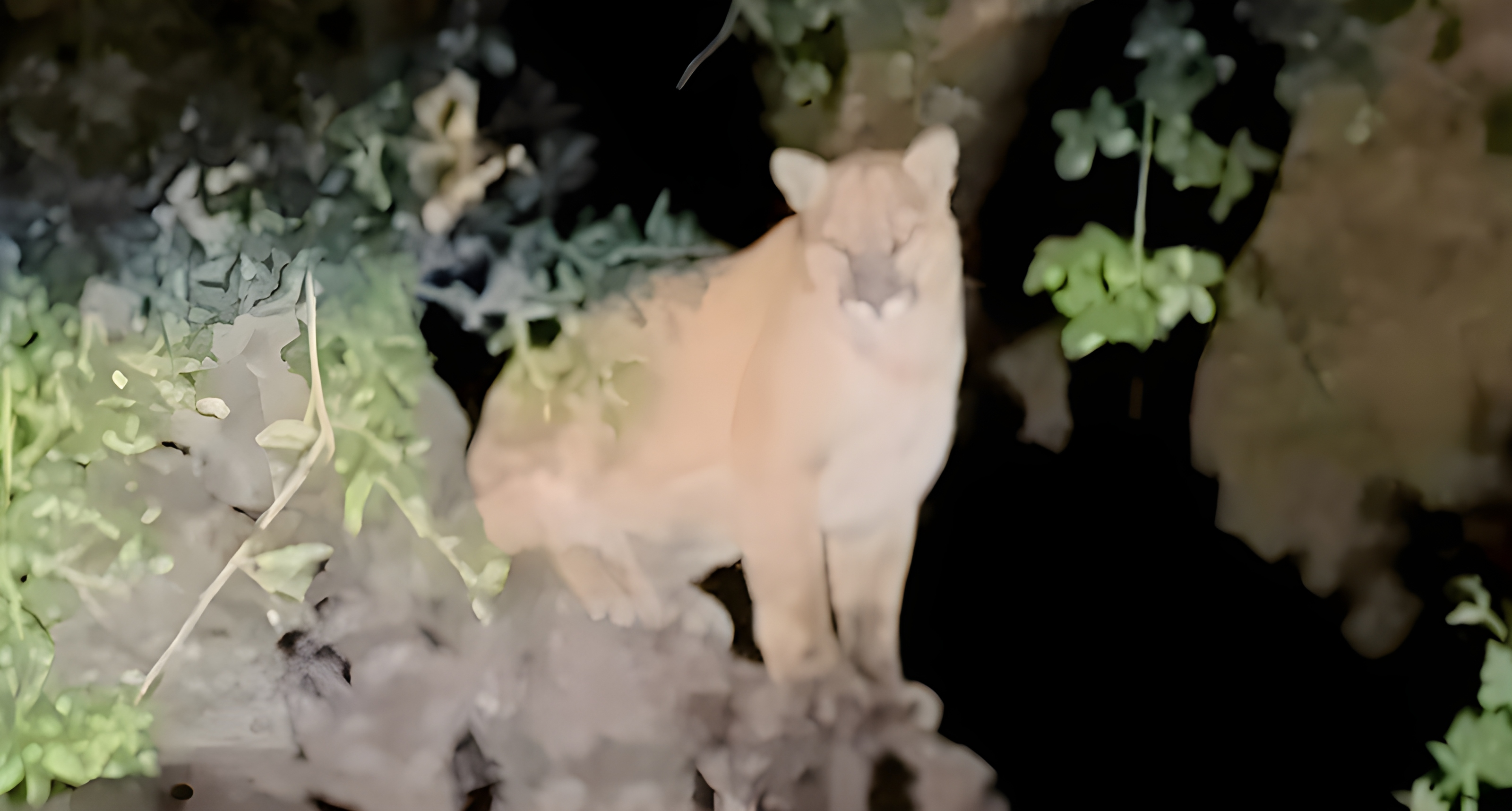
It’s not clear yet if the mountain lion is male or female. Jeff Sikitch, a biologist with the National Parks Service who is part of an ongoing, decades-long study of pumas, told the Los Angeles Times that he thinks the cat is likely a young male, but there’s not much to go on so far except for witness sightings and a low-resolution video taken by a man who lives in an apartment building near the edge of Griffith Park.
“Will this cat be as skilled as P-22 was at avoiding cars for a decade?” the National Wildlife Federation’s Beth Pratt told the BBC. “We don’t know what’s going to happen here.”
The only images of the newcomer so far are grainy video stills, but Griffith Park itself has trail cameras that are used to monitor wildlife. Credit: Vladimir Polumiskov
For now, wildlife officials are waiting and watching to see if the potential puma successor puts down roots in P-22’s old hunting grounds or tries to make the dangerous trek out of the city.
If the new puma decides to stay, it will enjoy plentiful deer and a benefit most members of its species do not have — a local population that understands mountain lion attacks are extraordinarily rare, and will support them by giving them a wide berth.
On the other hand, despite the 4,000 acres of Griffith Park and the residential neighborhoods below, the cat’s inherited range would be much smaller than what’s typical for the species. Like humans cramming belongings into apartments, pumas sacrifice space when they live in or around cities.
Suzanne Pye, a local who admired P-22 from afar, said she welcomes the newcomer and isn’t worried about attacks on people. The presence of a mountain lion after almost 18 months without one prowling the hills, she said, will add “a frisson of excitement to the morning hikes.”
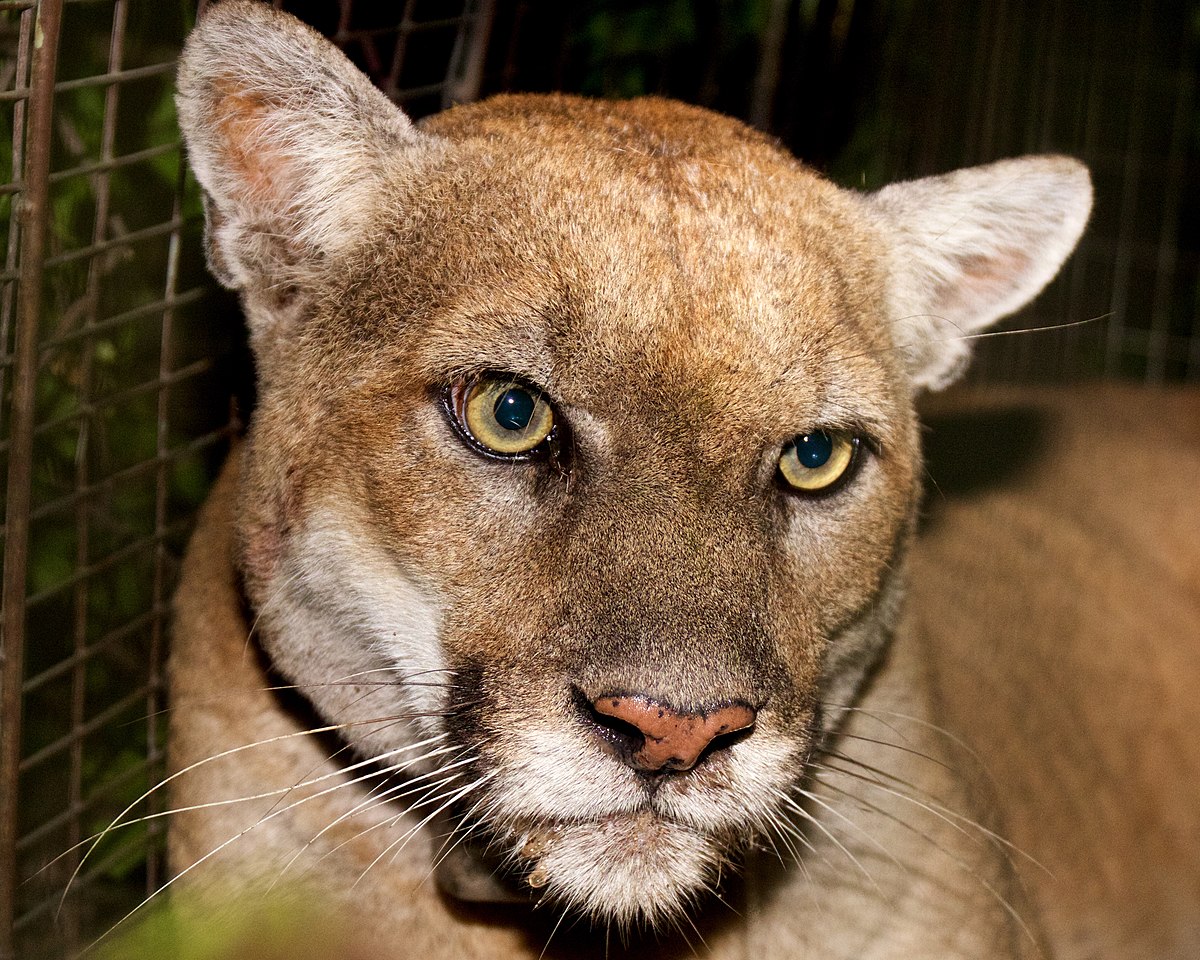
A close-up of P-22 in 2019, when he was briefly captured for a health check-up. Credit: Wikimedia Commons
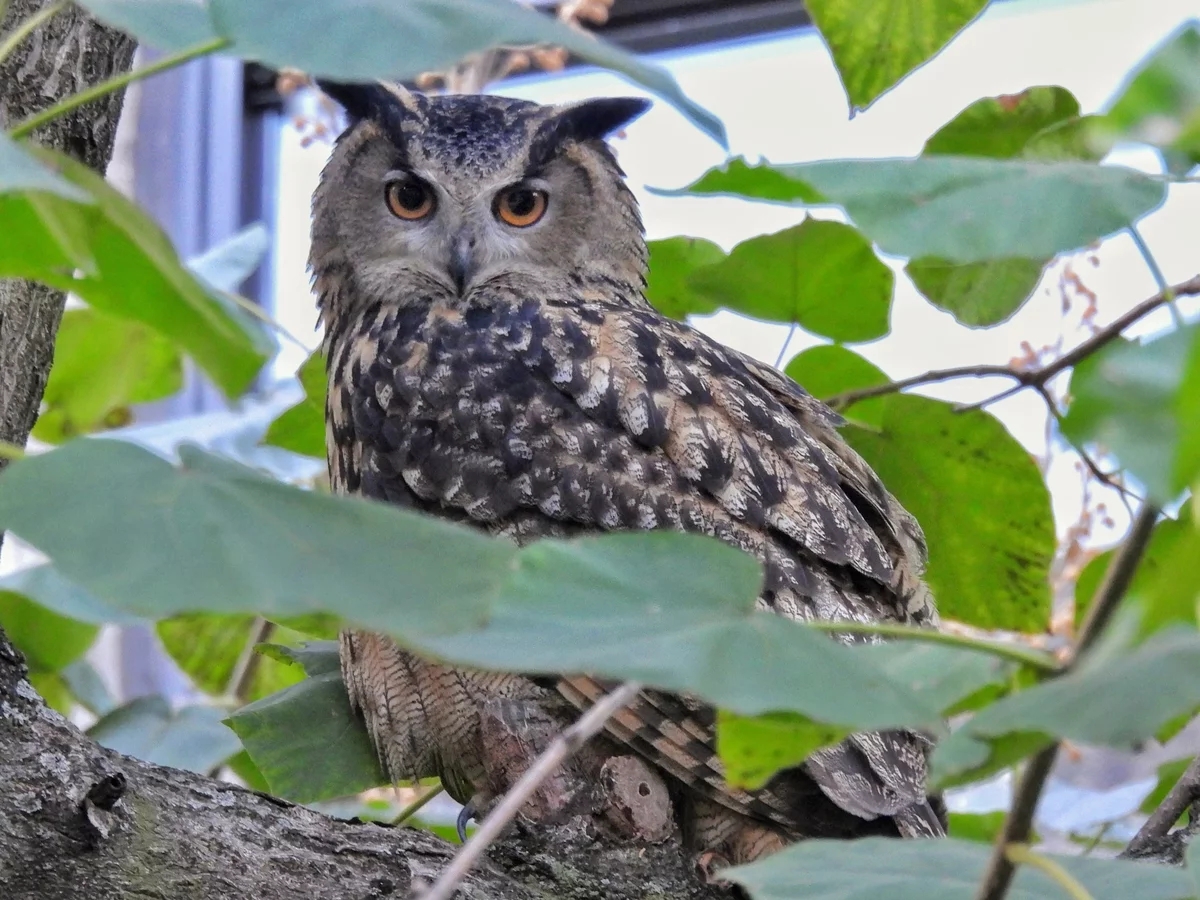
Flaco the Eurasian Eagle Owl has become a New York celebrity since he escaped his enclosure at the Central Park Zoo early in 2023.
He’s been spotted flying through the concrete canyons of midtown, perched on fire escapes on the upper east side and ridding New York of its vermin — but he’s not your friendly neighborhood Spiderman.
He’s Flaco the Eurasian eagle-owl and New Yorkers have been rooting for him ever since he escaped from a small enclosure in Central Park Zoo and decided the entire park and its environs would be his domain.
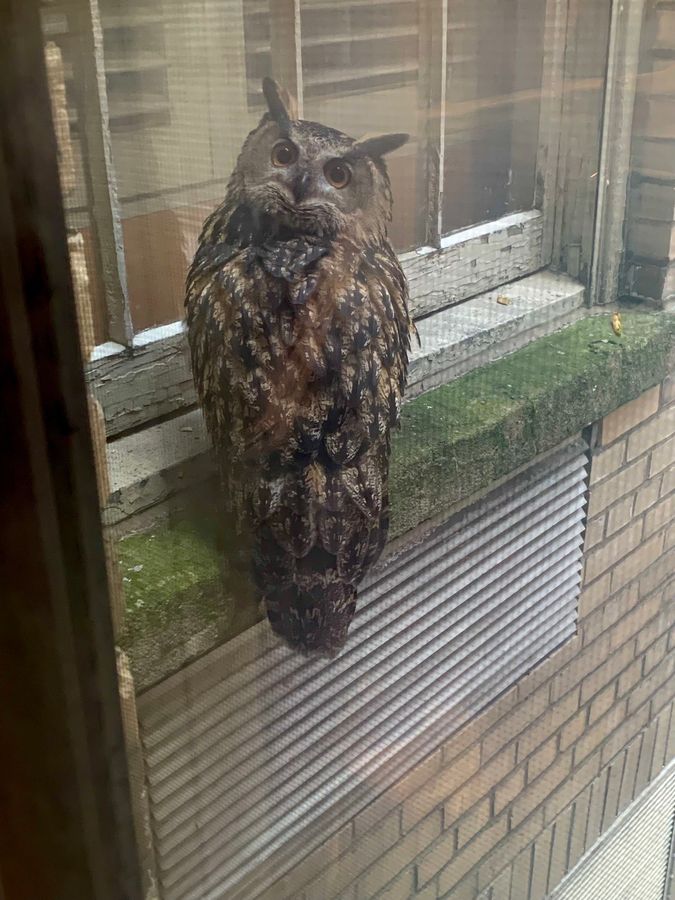
Since then, Flaco has evaded capture, put aside concerns that he’d be able to survive in the big city and shocked the hell out of New Yorkers who have seen the curious little guy’s face pressed against the glass of their apartment windows, watching them intently.
“I audibly gasped,” 24-year-old Matt Sweeney told the Wall Street Journal after he realized something or someone was watching him through the window of his upper west side apartment.
“It absolutely scared the you-know-what out of me,” 31-year-old actress Reilly Richardson told the paper after she woke up one morning to find the peeping predator watching her from outside. “It’s New York City. It’s the last thing you expect to see.”
Flaco escaped Central Park Zoo in February after his enclosure, where he lived for 12 years, had been “vandalized,” according to zoo staff. It turns out someone sliced an opening in the mesh, giving Flaco an out which he quickly took advantage of.
For the next few months zookeepers chased him around Central Park, trying to lure him back with food and the recorded sounds of other owls, but Flaco wasn’t having it. In the meantime he became a celebrity, New York’s version of the famous mountain lion P-22, with crowds of birders and curious onlookers assembling to watch and photograph him.
Credit: New Yorker Robin Herbst-Paparne, who spotted Flaco outside her apartment. Via WSJ
Social media accounts tracking the raptor’s movements sprung up online, and all the attention became too much. Even though zookeepers gave up on returning him to his enclosure, Flaco apparently decided he was done being watched and became the watcher.
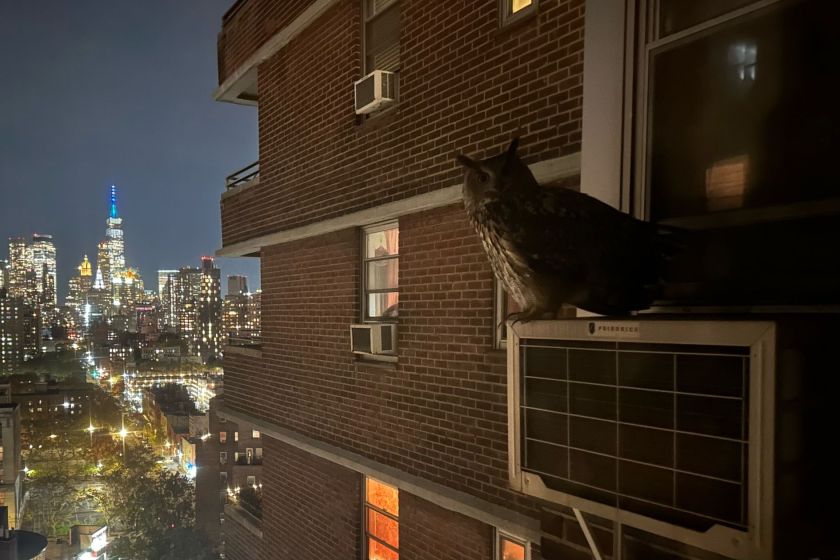
Since then he’s popped up all over Manhattan, delighting New Yorkers and giving others a scare as they noticed the two-foot owl tracking them from a fire escape or a window perch. In early November he left the comfy confines of Central Park — possibly spurred by the crowds and commotion of the annual NYC Marathon — and began exploring the city proper, popping up in random places each day.
Initially people were worried Flaco, who had spent his entire life in captivity, wouldn’t be able to feed himself. The owl quickly put those concerns to rest as he proved adept at feasting on New York’s abundant rodents, earning himself the nickname “New York’s Rat Czar” at a time when Mayor Eric Adams has declared war on the vermin.
Experts are divided on why Flaco is spending so much time watching people. As the only known Eurasian eagle owl living “wild” in North America, the little guy may be looking for a mate. They say he won’t find one of his species, but he could find an unpaired female of another species if he’s lucky.
Others say Flaco, who was raised by humans and isn’t afraid of our species, may believe a human could be his mate. That’s another way his predicament mirrors that of P-22, who settled in Los Angeles’ Griffith Park and became a local celebrity, but was cut off from potential mates by busy highways and miles of human-inhabited land.
Nan Knighton, whose apartment faces Central Park, snapped this shot of Flaco outside her apartment.
Regardless, people in New York are enchanted by the unusual resident and delighted to see him. Nan Knighton, who took the above photo (via WSJ) told the paper she had an intense encounter with Flaco. After realizing a pair of intense eyes were tracking her inside her home, she made friends with the curious owl:
He stuck around for three hours.
“I talked to him,” says Knighton, recalling telling Flaco he’s beautiful and gorgeous, and that she couldn’t believe she was speaking to an owl. When she walked into another room, Flaco’s head swiveled to follow her.
Flaco stayed quiet until Knighton got within 6 inches of his face. “He just let out this little tiny hiss,” she says. “It was kind of like, ‘OK, I like you, but I don’t want to be beak to beak.’”
She turned her back to the owl to write something down. When she looked back, Flaco was gone.
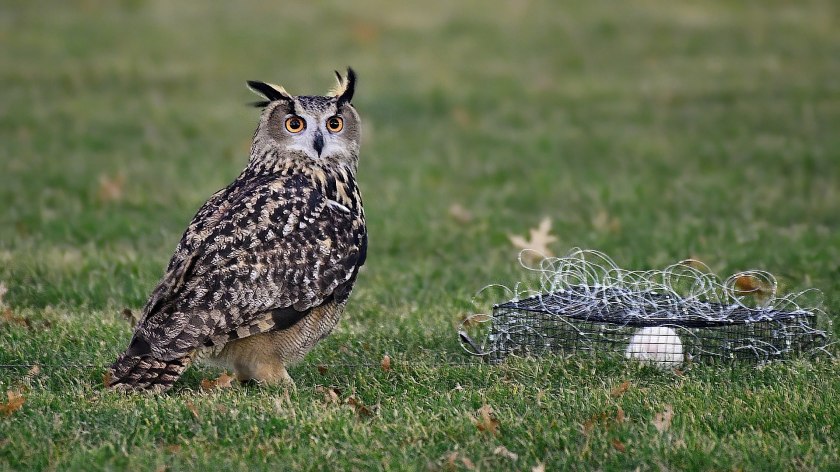
Flaco proved too smart for zookeepers who tried to entice him with traps like the one above. Credit: Wikimedia Commons
Nicholas was orphaned and severely injured as a cub as he and his mother tried to cross a busy highway. He’s settling into his new home, where he will have his own habitat, den and even his own pond.
Nicholas the mountain lion has a beautiful home waiting for him with his own pond, a rock den, a grassy area where he can run around and several other little hideaways where he can enjoy some privacy and naps.
But first the three-year-old puma will have to clear quarantine and become more comfortable with his new surroundings and new caretakers.
“He’s doing really well but he’s still very scared, he’s a very timid cat, so we’re just taking it really slow, day by day and the keepers are taking some quiet time with him,” said Bobbi Brink, the founder of San Diego County-based Lions, Tigers and Bears, Nicholas’ new home.
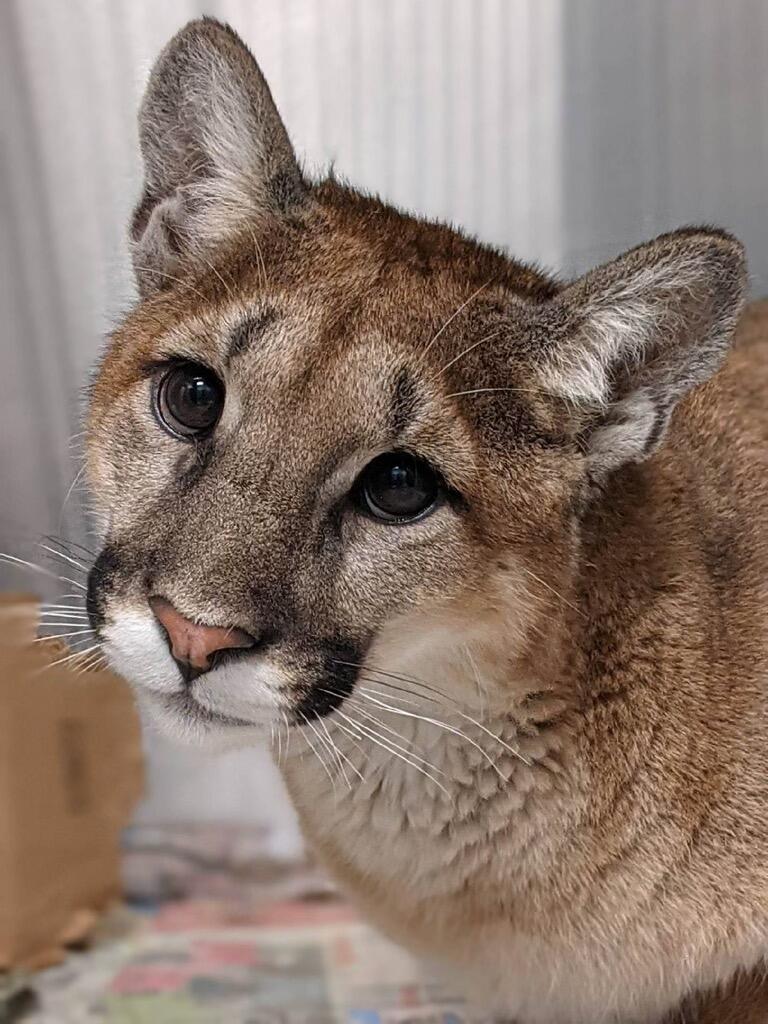
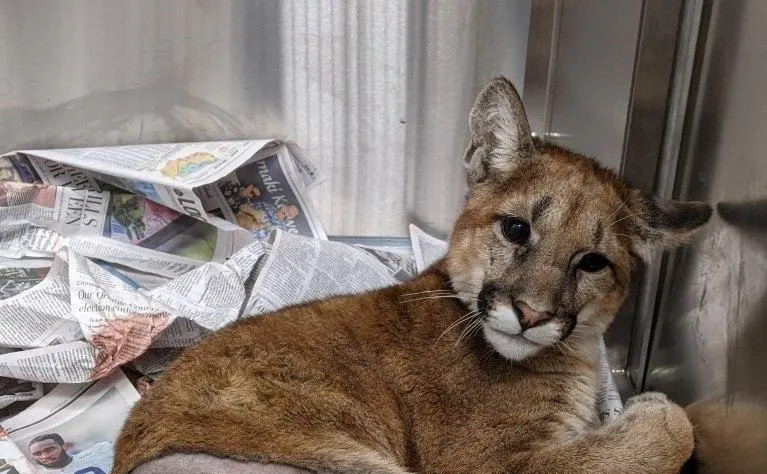
Nicholas stretches his legs in quarantine as he awaits the move to his own habitat. Credit: Lions, Tigers and Bears
The golden-coated feline with an expressive face has had a tough journey to the 93-acre sanctuary that will be his permanent home.
In 2020 when he was just a cub, Nicholas was following his mother across a busy highway when both were struck by a car. Nicholas was badly injured and his mom was killed in the collision, an unfortunately common fate for members of their species as their longtime habitats are increasingly fragmented by new developments and highways.
Because they require about two years with their mothers to learn how to survive on their own, it’s almost impossible to release orphaned pumas back into the wild. Unlike, say, the orphaned orangutans of Borneo and Sumatra, who can usually be taught to successfully fend for themselves because humans can show them how to physically manipulate their surroundings, there’s no way to teach orphaned pumas how to select prey, stalk, pounce and deliver kill bites.
A sanctuary in northern California provided a home for Nicholas for about three years, but recently went bankrupt, so the staff at Lions, Tigers and Bears secured him, prepared a habitat for him and took on the Herculean task of transporting him to San Diego County.
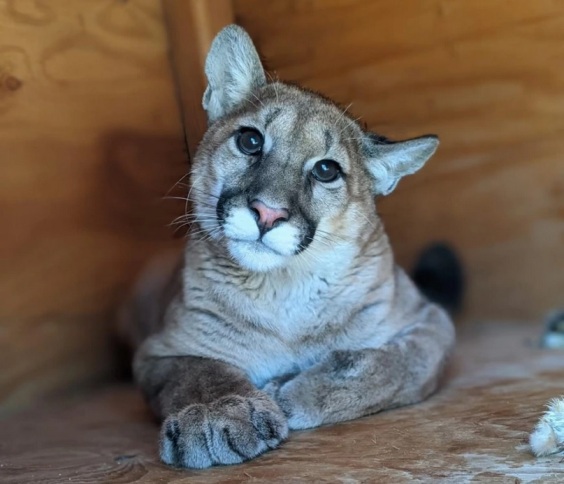
Nicholas’ case is even more complicated because he has lasting neurological damage from the car crash that killed his mother, including a pronounced head tilt that worsens when he’s scared.
Brink told PITB it’s normal for cats like mountain lions to be spooked by the commotion and uncertainty of a move, as well as leaving everything they know behind. Nicholas is simply obeying his wild instincts, which urge him to be guarded. But he’s got a loving team of caretakers who will work with him, as well as veterinary specialists who are well versed in caring for animals with neurological damage.
“Sometimes it can take (animals like Nicholas) a month, sometimes it can take three months to build up that trust,” Brink said. “His biggest need is he’s very afraid, so we’re gonna have to work around his fear so we don’t scare him more.”
Despite their impressive size, pumas are more closely related to domestic cats than the big cats of the panthera genus. Like their house cat cousins, pumas enjoy tearing up paper and playing with toys. Credit: Lions, Tigers and Bears
While Nicholas will have his own habitat and can keep to himself as much as he likes, recent observations of his secretive species have shown that pumas have “secret social lives,” and Nicholas will have the opportunity to meet and interact with other mountain lions if he’s comfortable with it.
Pumas — which are known by the scientific name puma concolor and are also called mountain lions, cougars, panthers, catamounts, screamers, painters, gato monte and many other names — are among the most adaptable felids in the world and range from the southernmost edge of South America to just over the Canadian border. They’re able to thrive in mountains, tropical regions, deserts, forests, human-adjacent rural areas and even in urban population centers, as the famed “Hollywood Mountain Lion” P-22 did for more than a decade in Los Angeles.
Their ability to adapt has served them well in a changing world, but they’re not immune to the pressures of human expansion.
In California their habitats have been carved up by the state’s busy and deadly highways, leaving the cats in genetically isolated pockets. Pumas who strike out in search of their own ranges are extremely vulnerable to vehicle traffic. P-22 famously crossed several of the world’s busiest highways to reach his eventual home in LA’s Griffith Park, but others like Nicholas and his mom aren’t so lucky.
Solutions like the $90 million Wallis Annenberg Wildlife Crossing, currently under construction in Los Angeles County, can connect fragmented ranges and give pumas, coyotes, foxes, deer, rabbits and other animals safe passage. But experts point out that they are just one component in a long-term solution that must include more careful zoning, fences to funnel animals toward safe crossings, and options like tunnels that run under highways, since not all animals will use overpasses.
As planners and wildlife experts figure out new ways to ensure the survival of wildlife in an increasingly crowded, human-dominated world, sanctuaries like Lions, Tigers and Bears play a crucial role by caring for the innocent animals who are injured, displaced and rescued from bad circumstances.
To learn more about Lions, Tigers and Bears or support their ongoing efforts to provide safe, stimulating and comfortable homes for wild animals, visit the non-profit’s site. To receive updates on Nicholas and the other animals at the sanctuary, follow Lions, Tigers and Bears on Instagram and Facebook. Readers who live in the California area can book guided educational tours or visit during one of the sanctuary’s special events. Thanks to Bobbi Brink and Olivia Stafford for allowing PITB to tell Nicholas’ story. All images and videos of Nicholas courtesy of Lions, Tigers and Bears.
Nicholas requires regular veterinary care after his mother was killed and he almost lost his life when a driver struck them on a California highway.
Nicholas was just a cub and was following his mother across a busy toll road in Orange County, Calif., in 2020 when a driver hit them, killing his mother and leaving him with life-long disabilities.
Along with the trauma of watching his mother die, the little puma endured months of surgeries to repair his body. Since then, young Nicholas had been living in a sanctuary in northern California, but was about to find himself homeless when the sanctuary’s operators went bankrupt.
With just hours to go before that facility was closed, a sanctuary called Lions, Tigers & Bears of San Diego County swooped in and agreed to take the special-needs puma, who requires regular veterinary care.
“Nicholas has a head tilt and neurological issues, both conditions require ongoing veterinary care,” Lions Tigers & Bears founder Bobbi Brink told KTLA. “We’ve had a few animals with these issues, so our veterinary team is well-versed in providing the specialized care required for Nicholas, and we’re relieved to give him a permanent home with a den, a healthy diet, medical care and enrichment and toys.”
The handsome young puma is currently in quarantine, Brink said, and will be moved into his permanent habitat after 30 days.
Although California is part of their native range and home to a relatively stable population of mountain lions, the species is seriously threatened by habitat destruction, habitat fracturing and vehicle traffic. Some 70 pumas are killed each year on California’s highways, and experts say the survivors are stranded on isolated “islands” of habitat, separated from potential mates by deadly highways. Indeed, scientists who track native wildlife in California have noted signs of inbreeding among pumas, as the animals are cut off from other populations of their species.
Nicholas in quarantine. Credit: Lions Tigers & Bears sanctuary
The life of the much-celebrated, recently deceased mountain lion P-22 illustrates the problems faced by the unique cats.
P-22 became famous when he migrated from southern California to Los Angeles, crossing the state’s busiest and most dangerous highways to get there. He settled in LA’s Griffith Park, which straddles the hills with the famous Hollywood sign and the outdoor Greek Theatre.
Although he became a local icon, frequently making cameos on the doorbell camera systems of people living nearby and making his rounds through the park and surrounding neighborhoods, P-22’s range was only nine square miles — the smallest range ever recorded for an adult male mountain lion — and he did not have opportunities to mate and produce cubs, as his kingdom was cut off from areas where he might encounter female pumas.
One solution to the problem is to build land bridges connecting areas where mountain lions and other wildlife make their homes. In April of 2022, officials broke ground on the Wallis Annenberg Wildlife Crossing, which when complete will connect Agoura Hills to the nearby Santa Monica Mountains.
But such projects are wildly expensive and take years to complete. The Wallis Annenberg Wildlife Crossing has a $90 million price tag and won’t be finished until 2025. On the bright side, about two thirds of the cost has been covered by private donations, proving Californians and other wildlife lovers are invested in the survival of mountain lions, coyotes, deer and other fauna expected to make use of the bridge.
It’s also an encouraging sign indicating efforts to educate the public about local wildlife have been successful. Along with the other problems they face, pumas — also known as catamounts, cougars and dozens of other names — are often confused with African lions.
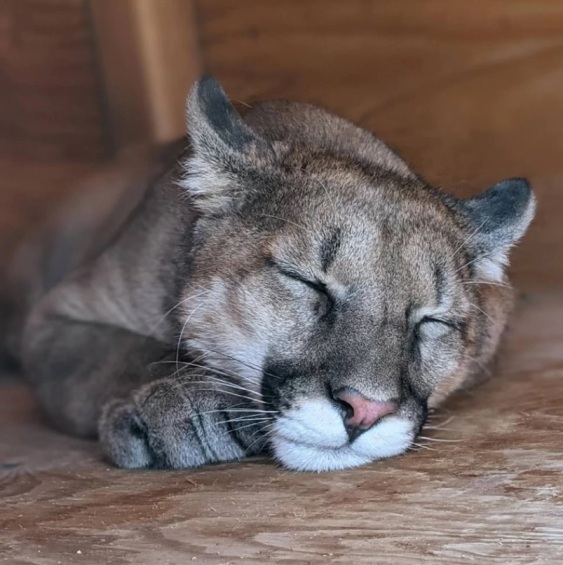
Nicholas enjoys a nap. Credit: Lions Tigers & Bears sanctuary
Because they’re large cats, they’re called lions and they resemble their African counterparts, many people assume mountain lions are dangerous. But not only are mountain lions (puma concolor) an entirely different species than African lions (panthera leo), they are not in the same category of felid.
Pumas are actually felines, meaning they’re more closely related to domestic cats, and like smaller cats they can purr but cannot roar. True big cats, like tigers, lions, jaguars and leopards, are members of the genus panthera and are capable of roaring, but not purring or meowing.
Perhaps most importantly, pumas are not aggressive toward humans. There are only 27 recorded deaths from encounters with mountain lions over the past century compared to more than 50,000 deaths from dogs, for example, and in almost every one of those cases the pumas were either cornered or their cubs were threatened.
Nicholas is not only a reminder that animal life is valuable, his circumstances also remind us that we’re going to have to find creative ways to ensure the survival of many species as humanity expands. The global population is expected to level off at about 11 billion and then slowly contract as third-world countries undergo the same lifestyle changes common to nations that have already made the transition to first world. But until then, it will take a massive and coordinated effort to ensure we don’t end up on a very lonely planet and likely endanger our own survival with the cascade failures that arise from extirpating entire species.

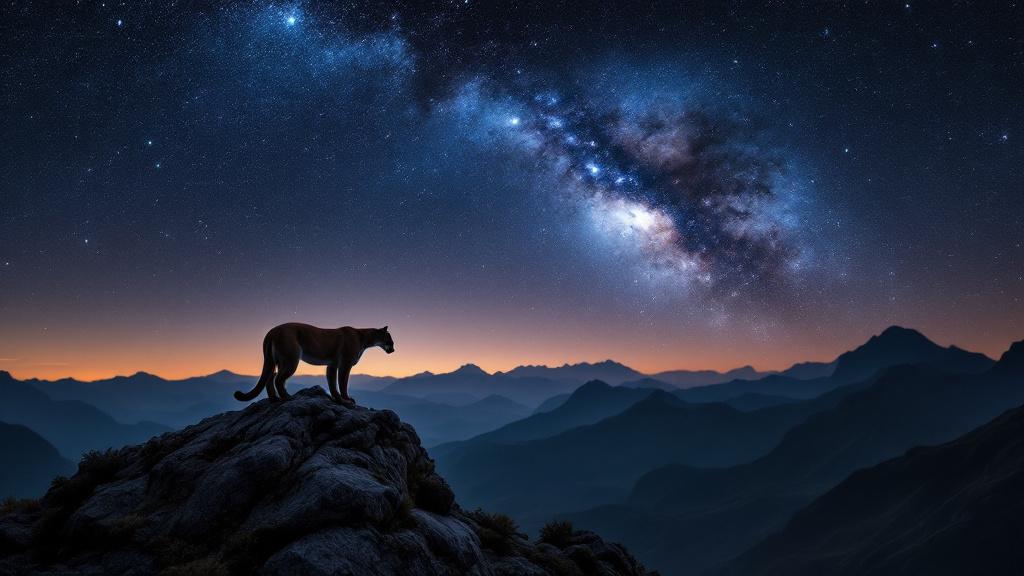


 Image credits, top to bottom: Per Karlson/PVKFoto, Reddit r/natureisf***inglit, Cockscomb Basin Wildlife Preserve, Wikimedia Commons, Steve Winter/National Geographic, National Park Service, Colorado Parks and Wildlife


 Pain In The Bud