A look at the strange and wonderful world of rare books where, of course, you’ll also find cats.
I’ve always liked the idea of antiquarian bookshops.
I am almost completely ignorant on the subject, mostly because chasing after extremely rare print volumes is the domain of people with a lot of expendable income. The most valuable books in my possession are an original 1939 first edition print of Will Durant’s The Life of Greece, and two novels signed by their authors. Their value is sentimental, not monetary.
But I like the general romanticized image of the antiquarian bookseller: an older man or woman in tweed ensconced in a cozy shop in Manhattan, with every shelf filled with dusty volumes and every surface covered by globes, astrolabes and other curiosities. There’s one of those tight winding staircases with wrought iron railings leading to a loft for access to the highest shelves, the music is from a vinyl collection of light jazz, and it’s always raining outside.
A doted-on shop cat dozes on a red leather armchair, tail twitching from some nightmare in which it’s slightly less adorable than it thinks it is.
Collectors in damp trenchcoats drop in, asking after 17th-century occult tomes, grimoires, and Voynich-esque manuscripts with engravings of impossible creatures, trees with visual organs and arcane rituals. Bibliophiles ask after leatherbound collections of classics like Don Quixote, and the occasionally curious passerby peeks in, surprised that such shops still exist in the age of the internet.
It turns out that’s not too far from the truth, especially the bits about the internet and, of course, the cats.
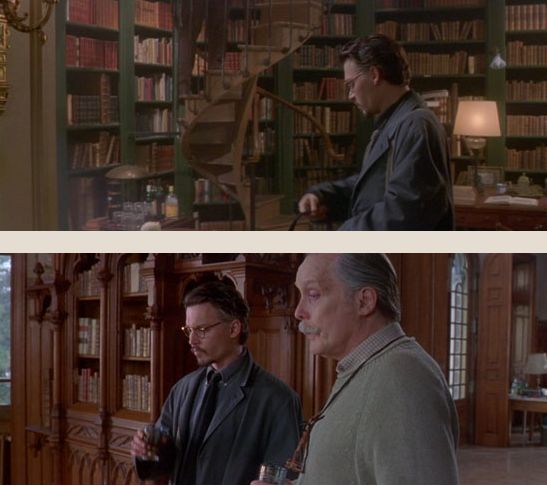
Johnny Depp is constantly smoking and drinking red wine while handling priceless old books in 1999’s The Ninth Gate. Notice the winding staircase in the rare book shop in the top screenshot.
The Booksellers is a documentary that screened in festivals in late 2019 before heading straight to video when the pandemic brought the world to a screeching halt.
It’s an inside look at the annual New York Book Fair and the small world of antiquarian and rare booksellers in New York, a shrinking constellation of people mostly descended from, or formerly apprenticed to, the booksellers of old before Barnes and Noble and Jeff Bezos laid waste to that sector of retail.
Before network TV, cable TV, dial-up internet, broadband, Kindles, iPads and smartphones turned us into a media-gorging — yet paradoxically less literate — society, New York was home to more than 500 bookshops, including generalists and specialists who catered to people with particular and peculiar interests. Now it’s home to fewer than 80, according to the documentary.
When the booksellers were asked about the way the internet has impacted their trade, their weary sighs reminded me of my older colleagues from my brief time experiencing the end of the “good old days” of newspapering, before the internet destroyed or compromised every publishing income stream and delivered us to this moment. This dystopian time when entire swaths of the country have become news deserts, Elon Musk in all his wisdom asserts that Twitter accounts run by anonymous trolls in Belarus are just as reliable — even more trustworthy, in fact — than those liars in legacy media, and corporate raiders are stripping the last handful of newspapers down to assets they can auction off.
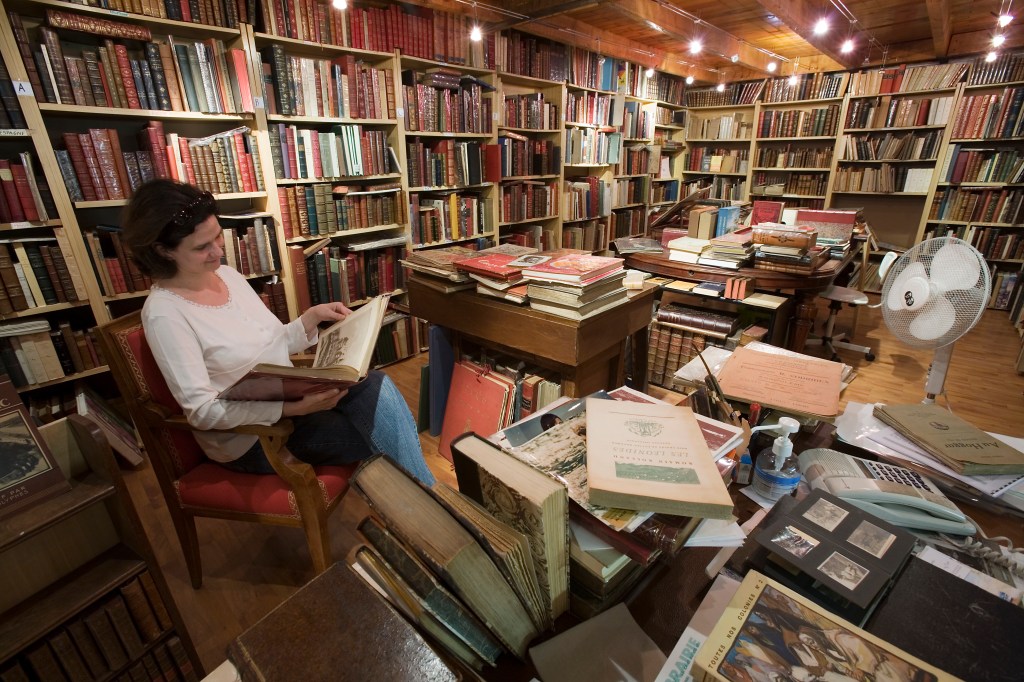
A rare book shop in Paris. Credit: Wikimedia Commons
Not all of it’s bad. One rare book dealer laments the fact that “the thrill of the hunt” is gone, meaning it no longer takes years to track down some obscure volume because you can hop online and find it in a few clicks. I get that, but nostalgia for that sort of thing is the ultimate in looking back through rose-colored glasses. Plenty of us could wax nostalgic about the days when we’d hear a song on the radio and have to hum the damn thing to record store clerks, but we’re forgetting about the considerable frustration involved. Given the choice between “fun” ignorance and access to information, I’ll always choose the latter.
As for the cats, it’s not a surprise when many of the book dealers interviewed for the film identify themselves as cat lovers or idly scratch their feline friends while showing off their vast personal collections. Antiquarian bookshops tend to be warm, quiet, gently-lit spaces, perfect napping spots for cats who guard old books from rodents.
If you’re interested in watching The Booksellers, you can find it on Amazon Prime video, or better yet, just click below:
There are also categories for top Hollywood-inspired names (Bill Murray, Jack Sparrow), nostalgia-influenced names (Moog, Sega), and nature/space themed names, like Orion and Supernova.
Luna and Milo are the top female and male cat names in 2025, according to an analysis by Rover.
There are several different lists each year sourced from databases like pet insurance registrations or data from microchipping companies, but Rover’s list is based on its own records, which include millions of registrations on the pet services site.
There’s quite a bit of overlap, as expected, and familiar names top this year’s list, including Lilly, Lucy, Nala, Pepper, Willow, Cleo and Daisy for female cats. For male cats, Leo, Oliver, Charlie, Loki, Max, Simba, Jack and Smokey are among the most popular.
Notably absent was the name Buddy.
“What do you mean Buddy is not on the list?” Buddy the Cat said when told about the new data from Rover. “I shall find out who is responsible for these vile heresies and punish them with my righteous fury as the Emperor of Catkind! Muahahaha.”
Click here to view the overall top names list for cats and here for an index of the top trending names broken down into categories like pop culture, sports, nature and nostalgic names. The latter includes names like Bitcoin, Jpeg, Moog (after the monophonic synthesizers invented by Robert Moog), Amiga (after the 80s computer system), Sega and C-3PO.
New to kids and nostalgic to adults, Playland means summer for New Yorkers. PITB visits the National Historic Landmark.
“You know,” I said to my niece, rapping my knuckles against a wooden support beam of Playland’s Dragon Coaster, “they built this thing 100 years ago.”
Her eyes widened. At 10 years old and already wise beyond her years, she smelled a joke at her expense by her constantly wise-cracking uncle. (I once told her and her sister that my cat had a vast collection of Pokémon cards, and that he almost certainly had the ultra-rare cards they coveted. At the time, their young minds didn’t question it and wanted to propose trades with Buddy, but now it comes up every time I tell them something absurd.)
“No it wasn’t!” my niece said as we stood in line to ride the venerable and historic wooden coaster.
My brother chimed in.
“It says it right there,” he said, pointing to a sign above the queue. “This roller coaster was built in 1929, the year the park opened.”
Playland’s ferris wheel and the manicured midway that runs the length of the park, with a giant fountain on one end and a stage for outdoor performances on the other. Credit: PITB
The Dragon Coaster is indeed almost a 100 years old, and to a 10-year-old a century is an incomprehensible amount of time. Mentioning the ride’s age almost backfired on us and we had to assure the kids the ride was safe.
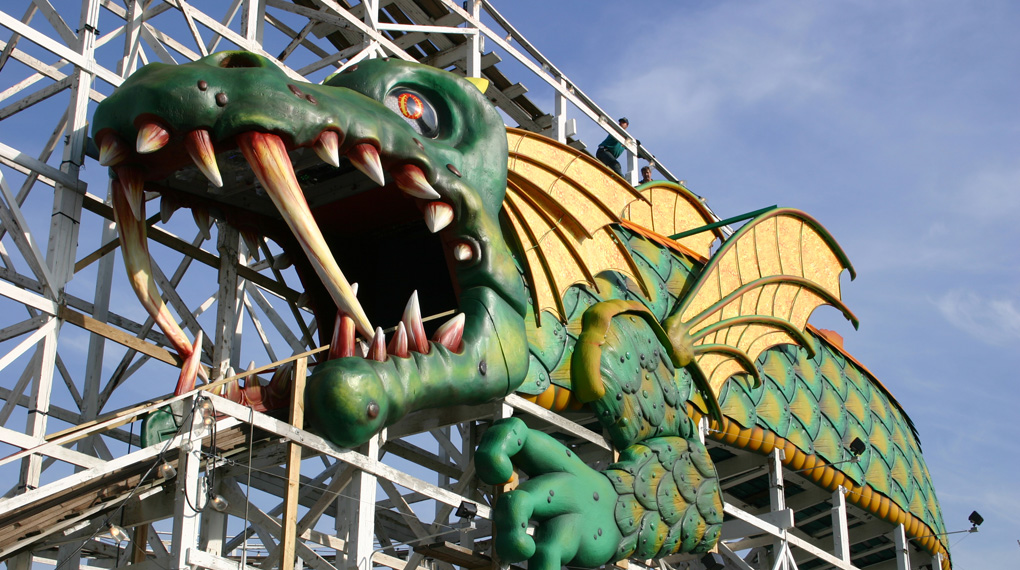
Truth be told, the Dragon Coaster doesn’t look safe. It’s all aging wooden beams, rusting rivets and peeling paint, and the coaster rattles as it allows gravity to do the bulk of the work, with an initial 80-foot drop propelling the cars over 3,400 feet of shuddering track. But it passes inspection every year and it’s a relic of a time when things were built to different standards.
The iconic coaster’s history also extends to pop culture: Tom Hanks rode the Dragon Coaster in the 1988 film, Big, as did Mariah Carey in the video for her 1995 hit Fantasy. In 1987, it was featured prominently in the psychological thriller Fatal Attraction with Glenn Close and Michael Douglas.
A young Tom Hanks on Playland’s boardwalk in Big (1988). The “Zoltar” machine that grants Hanks’ wish in the movie is still in the park and has been moved to the midway.
Mariah Carey riding the Dragon Coaster in the 1995 video for her hit, Fantasy. Carey returned to Playland last summer with her family over the July 4 weekend.
The Dragon Coaster’s front entrance in September of 2024. Credit: PITB
My brother and I rode the Dragon Coaster when we were kids, as did my mom and her friends in their youth. If you grew up in Westchester County, the Bronx or Manhattan, chances are that Playland was a big part of your summers.
I have vague memories of the park from early childhood, fond memories of screaming on rides like the Mind Scrambler in my teenage years, fresher memories of taking my little charges there when I was a summer camp counselor, and new memories formed annually as I bring my brother’s kids.
Taking the kids to the amusement park was one of the things I most looked forward to when I became an uncle, and they’re at the age now where they really love it. Visiting the park brought on waves of nostalgia (“Good Vibrations” by Marky Marky and the Funky Bunch blasted from the PA when we first arrived), the happiness of seeing the kids’ eyes light up with joy, and the realization that even though I get dizzy and my stomach doesn’t appreciate rapid changes in gravity and direction anymore, some rides are still a hell of a lot of fun as an adult.
The medium-size version of three carousels at Playland in Rye, NY, September 2024. Credit: PITB.
We returned this year to find new rides, refurbished shops and lots of construction. Playland is in the middle of yet another refresh, this time to the tune of $150 million, leaving some rides and areas of the park dark to visitors.
Playland was built on 280 acres of prime waterfront real estate on the Long Island Sound and it’s very much a product of its time. Although it has seen its share of retrofits and refurbishment over almost century of existence, there’s no hiding the fact that it was constructed in the 1920s.
The structures — which include an entrance plaza, an ice casino and arcade, a pool, a beachfront boardwalk and a central tower — were built in an Art Deco style, with a consistent limestone, orange and emerald green color scheme.
As a kid my favorite ride was the Mind Scrambler, a blackout ride variation on the classic Scrambler housed within a dome. I remember waiting on line with my friends, hoping we’d get a good song for the ride, which was adorned with lots of neon and blacklights for maximum funkiness and disorientation.
Alas, messing around on a ride like that doesn’t bring good results. In a sequence of events that’s still difficult to believe, a seven-year-old girl was killed when she was thrown from the Mind Scrambler in 2004.
The exterior Mind Scrambler shortly before the darkride was dismantled following a series of deaths.
Three summers later, park management promoted a 21-year-old Playland employee who was working the night the girl was killed, making her the ride’s manager. She died that summer on the same ride. An investigation found she was kneeling backwards in her seat when she was thrown from the Scrambler just 20 seconds in.
The woman’s death prompted the park’s management to shut the ride down, a decision that was later made permanent despite the fact that “user error” was to blame.
Riders on the Dragon Coaster during the Great Depression. Credit: Rye Historical Society
A poster from the 1930s showing a bird’s eye view of Playland in Rye, NY. Note the beaches and the boardwalk below the park and the adjacent suburban neighborhood. Very little about the park’s layout or the neighborhood has changed over the years. Credit: Rye Historical Society
A close second favorite was the Music Express, a straightforward moderate speed ride that was also known for pumping out loud pop hits. I have fond memories of riding the Music Express to everything from the Spin Doctors’ Two Princes and Technotronics’ Move This, to Blues Traveler’s Run Around and Snow’s ludicrous summer hit, Informer.
The Music Express was out of commission last summer, but this time it was back in action.
“We’ve gotta ride this!” I told my nieces. Just when I was thinking it was getting a little intense, it slowed down. That wasn’t so bad, I thought. Then it spun up again, faster than before, this time spinning backwards. I felt like I’d downed a six pack of beer in a half hour when I stumbled off the damn thing.
The Music Express at Rye Playland.
I wisely limited myself to less strenuous rides for the rest of the night, including the bumper cars, Ferris wheel and the Zombie Castle. At seven years old, my younger niece isn’t big enough yet to ride some of the attractions by herself, and that’s when the Funcle steps in. Thankfully she’d had her fill of stomach-churners too.
Above: A classic swing ride at rest, left, and mid-sequence as it twirls riders through the air. Credit: PITB
Playland became a National Historic Landmark in 1987, and is unique among amusement parks in the US — and possibly the world — in that it’s government-owned. That’s because the people who live in the area, a wealthy waterfront enclave, were worried about growing crowds, traffic and “unsavory” people. In the 1920s at the urging of the community, Westchester County purchased the land, folded several smaller waterfront operations into a single park, and began drafting plans for a larger destination in the Art Deco style popular at the time.
While Art Deco is typically associated with structures like the Empire State Building and the Chrysler Building in Manhattan, as well as the Chicago Board of Trade skyscraper, the jazz-age aesthetic is another feature that makes Playland so unique.
The Zombie Castle was built in the 1930s with a different theme, then was refurbished in the late 1960s, perhaps in response to the success of George Romero’s Night of the Living Dead, which was released in 1968. This image shows the Zombie Castle on September 22, 2024. Credit: PITB
Remarkably, many of the attractions are as old as the park itself, including the aforementioned Dragon Coaster, The Whip, and the original carousel. Several of the older rides were designed and manufactured by engineer W.F. Mengels, the “Wizard of Coney Island” who was famous for designing many of that iconic park’s rides.
Taking the kids to Legoland in New York earlier this summer felt like a soulless experience, like paying to sit through a four-hour commercial for eponymous toys. Every ride was tied to a Lego intellectual property, every note of the piped-in music a corporate composition, every ride forcing you to exit via attached gift shops where $300 play sets beckoned to the children.
Even the “waterpark” had a corporate regimen to it: you’re required to book “appointments” ahead of time and get precisely 20 minutes to cool off under sprinklers on a Lego pirate-themed water playground, complete with Lego palm trees and Lego ships while the next group queues in the afternoon sun and watches, willing time to go faster.
Playland may not be as polished, but the experience feels more honest, and there’s no doubt the kids had more fun here. If I were a betting man, I’d wager Playland will still be there when they have kids of their own, while Legoland will be consigned to the dustbin of themed parks that don’t give you a reason to come back.
Coney Island’s version of The Whip designed by W.F. Mengels. Undated but likely in the 1910s.
A sign with original architectural drawings of The Whip from 1928, explaining “free-pivoting joints, combined with centrigual force, generates twists and turns which change with every rotation.”
Kiddyland is a section of the park for the little ones. It has a miniature roller coaster, a tiny carousel, and at least a half dozen other rides for young kids.
A view from the Ferris wheel at Rye Playland (PITB)
The Whip is one of the park’s original rides, built in 1928.
Bella and Luna retain their spots as the most popular names for female cats, while male cats are commonly named Leo, Milo, Simba and Oliver.
The top cat and dog names for 2023 have been released, and Rover lists the usual suspects for the New York area.
The top female names for felines include Luna, Pepper, Lily, Coco and Bella, while the boys were Leo, Oliver, Milo, Jack and Henry.
There is no Buddy to be found even amongst the dogs, whose list included Charlie, Max, Teddy and Oliver, while females included Lucy and Rosie in addition to the ever-popular Bella and Luna.
I have a niece named Lucy and a nephew named Milo, neither of whom are old enough yet to understand their names are more popular with four-legged little ones than humans.
Nationally, Luna and Bella occupy the two top spots for female cats, followed by classics like Nala, Kitty and Cleo, while the most popular male cats in the US are Oliver and Leo, with names like Simba, Ollie and Jasper rounding out the top 10.
Again, not a Buddy to be found among the most popular male cat names.
This is obviously because the name Buddy is so special it is only conferred upon the most meowgnificent, meowscular and meowsterful felines. (Is he still looking over my shoulder?)
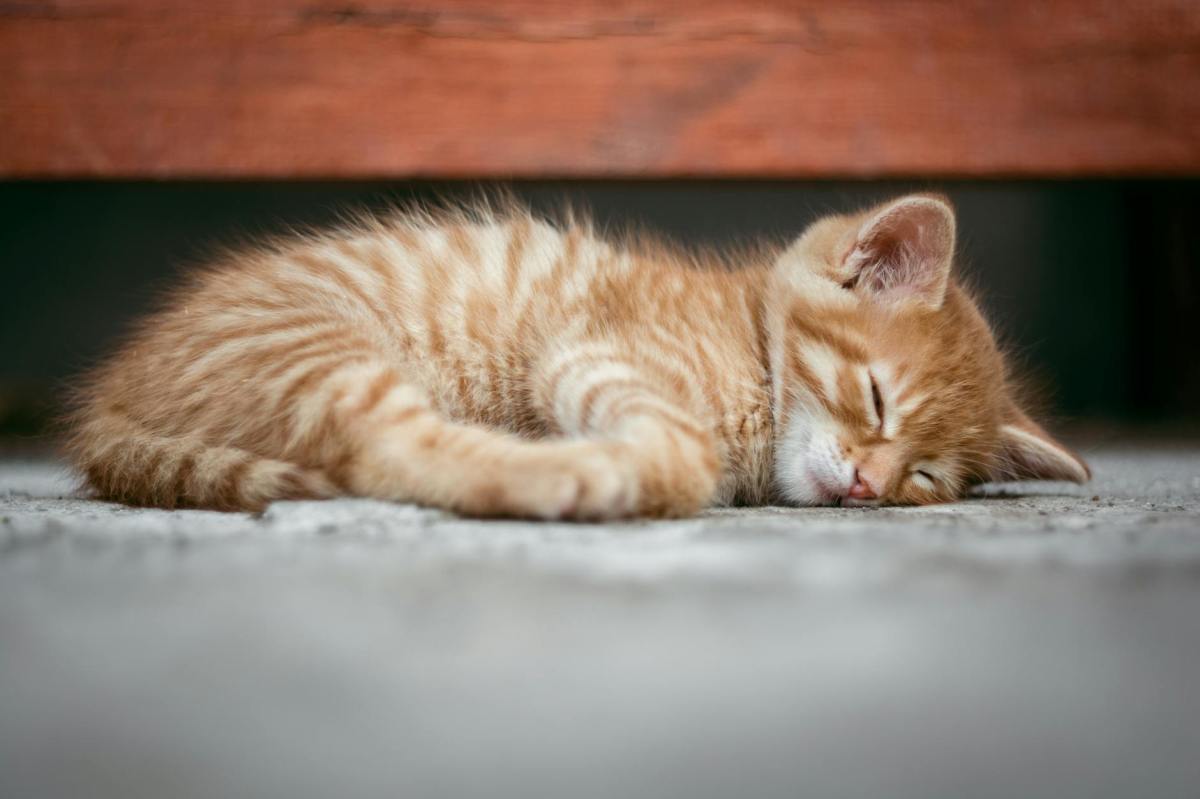
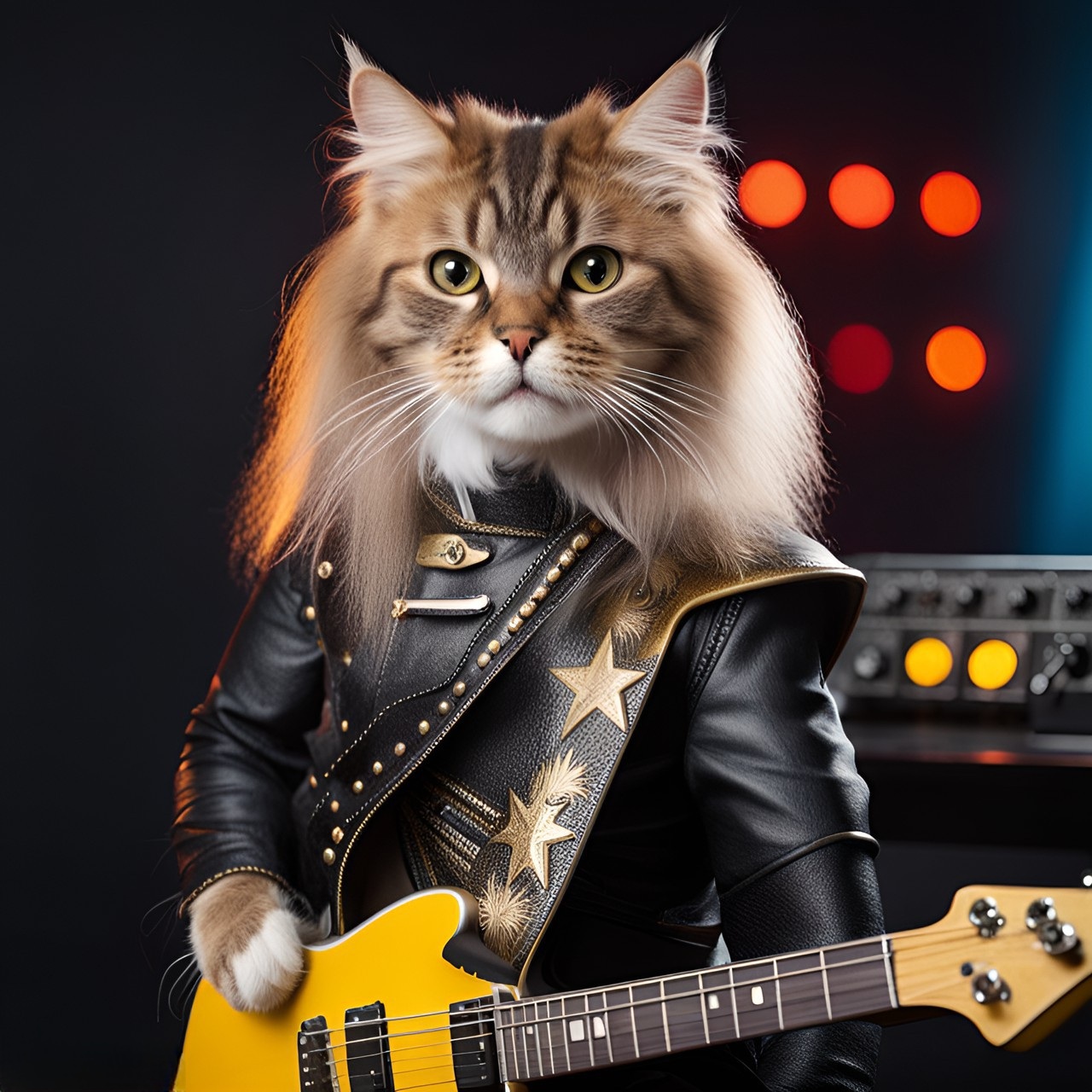
Who’s ready to rock? After a nice nap, of course!
Interestingly, nostalgic names from the 80s and 90s are trending, with people naming their female dogs and cats Alanis (Morisette), Ginger Spice, Avril (Levigne), Richard Gere and Leonardo DogCaprio among other monikers.
I don’t know if I could see myself naming a cat after a 90s band, musician or actor. I think, in these situations, it’s always best to imagine what happens if your furry friend gets lost and you have to walk around the neighborhood calling them by name.
“Come ‘ere, Weezer!”
“Where are you, little RZA? Who makes dope beats? You make dope beats, yes you do!”
“Time for din-din, Ol’ Dirty Bastard!”
“Where’s my widdle Rage Against the Machine? Aren’t you just a precious Red Hot Chili Pepper!”
If you feel like a jerk calling a name out, it’s probably best to go with something else. Which is one reason why Bud isn’t Brutus the Bone Cruncher or Supreme Warlord Felinius Decimus Maximus.
Rover compiles its annual lists of most popular names from its user database, which includes millions of pets registered by their proud humans…and not enough Buddies.




 Pain In The Bud