Geniuses Pull Wild Bear Cubs Off Tree To Take Selfies, Orphaning One

A group of people in North Carolina plucked two bear cubs off of a tree, dancing and laughing as they took selfies with the traumatized baby animals.

The World Wildlife Federation’s last Living Planet Report warned in 2022 that 69 percent of all wildlife has disappeared since 1970. A terrifying report from conservationists this year brought news that the natural world has fallen silent, with billions of animals erased from existence.

Why?

Because humans reproduce and rampage across the planet, no longer subject to survival of the fittest, with absolutely no regard for the species we share our world with.

That was proven again this week when a group of five people spotted bear cubs clinging to a tree not far from an apartment complex in Fairview, North Carolina, and decided the best course of action was to tear the terrified cubs off the branches so they could take selfies with them.

“So she can say, ‘Here, take my picture, post it all over. I’m holding a black bear,'” a horrified witness, 21-year-old Rachel Staudt, said as she filmed the group on Tuesday. “That’s insane. That’s 100% what she’s doing. She’s taking pictures of him.”
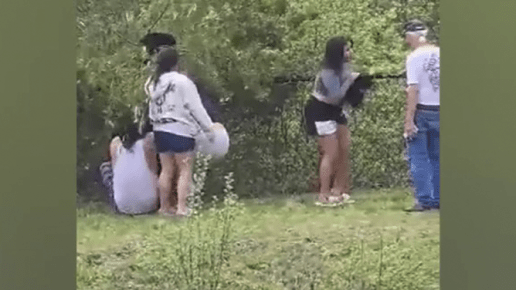
People taking selfies with bear cubs
A still from Staudt’s video shows members of the group holding the bear cubs.

The woman called the authorities, who responded with a biologist from the North Carolina Wildlife Resources Commission, but not before the damage was done.

“Did she just drop it?” the woman filming the group said as one of the group members did a “celebratory dance move,” dropped one of the cubs, then chased it to get it back and take more photos.

The group told police and the biologist that both bears had “escaped,” but the biologist found one of the traumatized cubs near a retention pond on the property.

“The cub appeared to be lethargic and frightened. It looked to be favoring one of its front paws and was wet and shivering,” Game Mammals and Surveys Supervisor Colleen Olfenbuttel told CBS News. “The cub’s condition is likely a result of the unnecessary and irresponsible actions of the people involved.”

That cub has now been orphaned, as authorities said it’s not in any condition to be returned to the wild and will have to be raised and rehabilitated for the next four to six years. The other cub couldn’t be found. Hopefully it escaped.
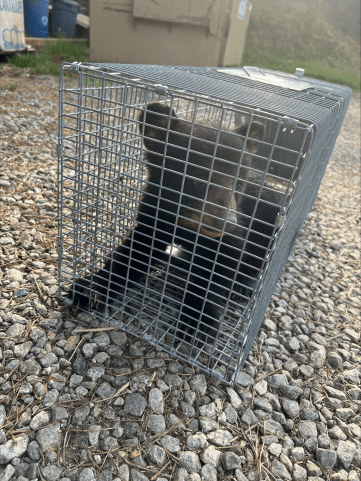
Bear cub
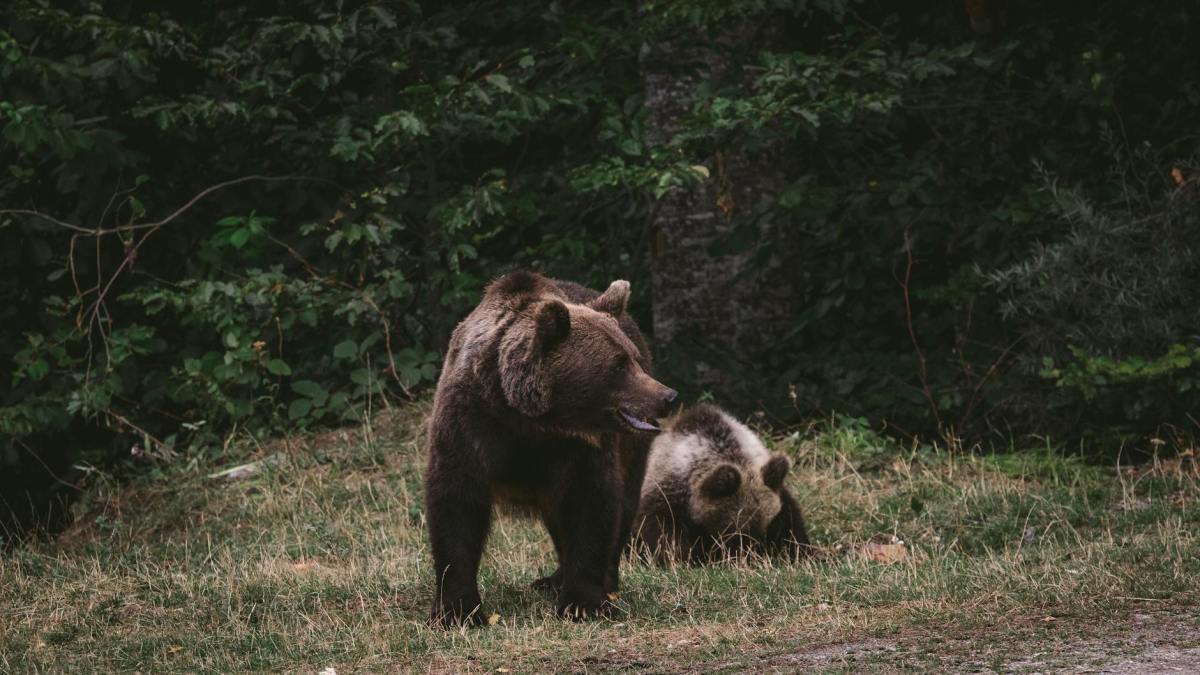
The orphaned and traumatized bear cub that was recovered Tuesday after a group of people plucked the cub and its sibling out of a tree to take selfies with them.

Authorities noted it’s not uncommon for mother bears to leave their cubs briefly to go foraging, much like mother cats do with kittens and cubs when they need to hunt to feed themselves.

Common sense and a basic respect for wildlife is usually enough to keep people from snatching the animals, but much like people who pay money to take selfish with tigers who have been sedated to their eyeballs, any concern for the welfare of animals — if it existed in the first place — is quickly shelved as people can’t resist the opportunity to grab a selfie in the age of narcissism-fueled social media.

Authorities say they’re conducting an investigation, although it’s not clear what needs to be investigated. The people involved documented their behavior with selfies, and Staudt’s video clearly shows them handling the confused and scared baby animals.

The kind of ignorance demonstrated by the group doesn’t remedy itself. Authorities should make an example of them by prosecuting them to the fullest extent of the law while redoubling efforts to educate people about keeping their distance from wild animals. And if that’s not enough motivation, or if people can’t be bothered to respect wildlife, they should consider that this would be a very different story if the cubs’ mother had been nearby.

Top image courtesy of Pexels
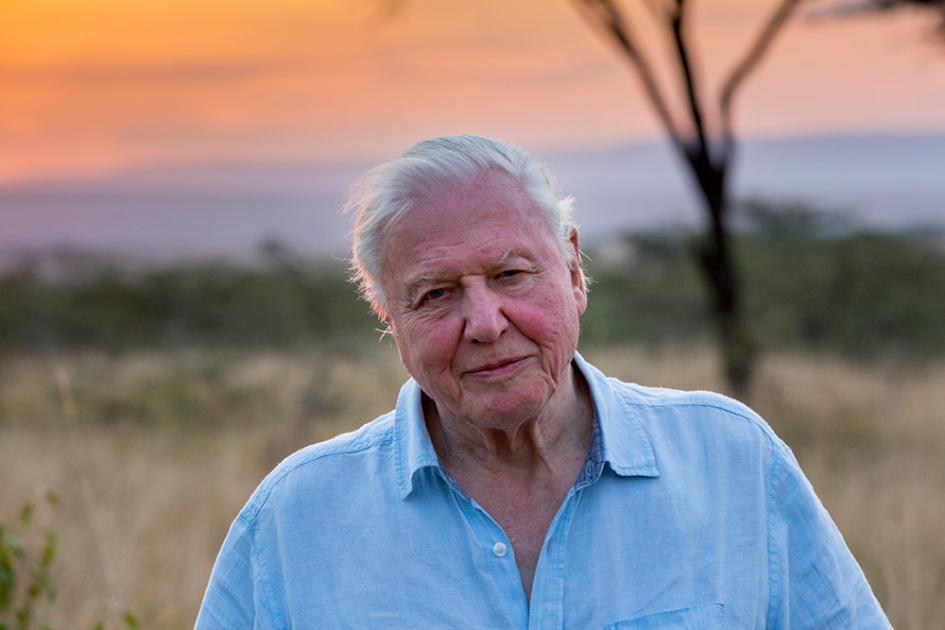
Sir David Cattenborough’s Newest Documentary Reveals The Elusive Silver-Furred Buddy

The naturalist is excited to unveil his most striking documentary yet.

NEW YORK — All those hours trudging through the dense undergrowth of New York living rooms, hoping for a glance of an elusive feline, have finally paid off.

Speaking to reporters about his newest nature special, Sir David Cattenborough said he and his crew spent more than 200 hours in the natural habitat of the silver-furred Buddy.

Also known as the Buddinese tiger, the silver-furred Buddy is “native to the living rooms of New York” and, with his meowscular physique, “is the apex predator of his environment.”

“What a fascinating animal!” Cattenborough exclaimed.

The famous naturalist, conservationist and documentary narrator accompanied a camera crew into the thick jungles amid couches, pillows and carpets, where they observed the silver-furred Buddy at a safe distance as the fierce feline went about sleeping, eating and lounging.

Cattenborough and Buddy
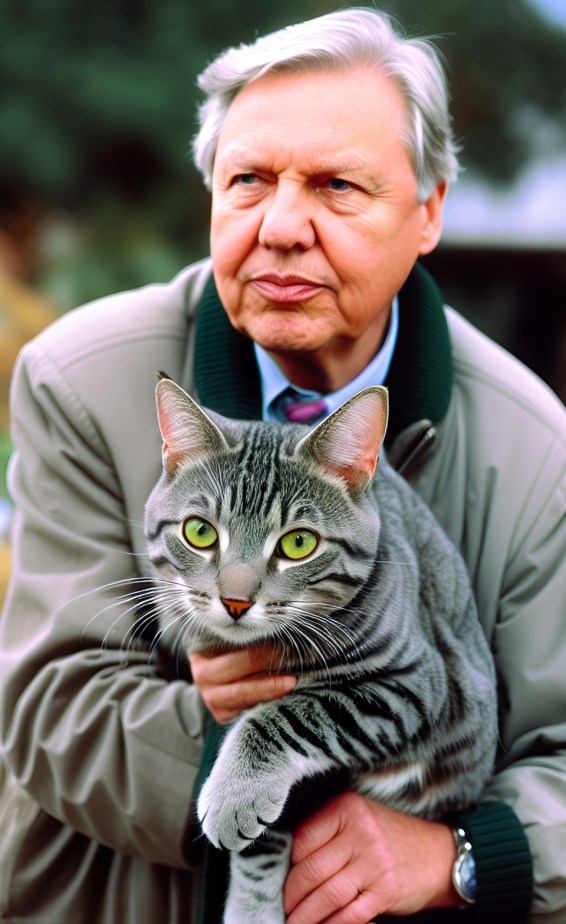
Sir David Cattenborough with Buddy the Cat.

Speaking excitedly in his familiar whimsical cadence, Cattenborough described the documentary crew’s luck in catching the Buddy on a hunt, when he ruthlessly brought down a red laser dot.

“People ask me, ‘Sir David, what makes the Buddy any different from other tigers and lions? Isn’t it basically the same animal?’ While they’re all famously fierce felids who strike fear into the hearts of other creatures, there are differences as well,” Cattenborough explained. “Thanks to the hard work of our dedicated crew, we’re able to bring our audience along as we take the closest look yet at this most elusive and fascinating beast.”

The new documentary, “Buddy: The Perfect Predator,” will be available to stream exclusively on Pain In The Bud, and was made possible by a grant from the Buddinese Foundation for Greater Buddesian Understanding, with additional financial support from the Coalition for Meowscular and Ripped Cats. Look for it this week on PITB!

Cattenborough and Bud
Sir David Cattenborough was able to earn the trust of a silver-furred Buddy.

Cat TV Is Legit

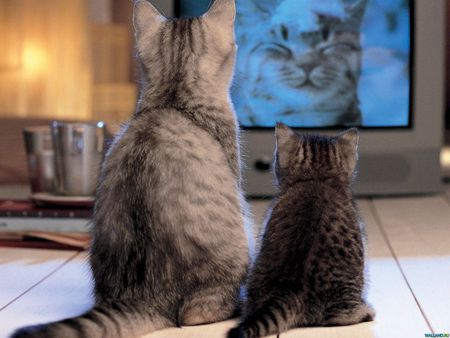
Birds, fish and rodents are the stars of cat TV.

This is not music for cats.

I tried that a few years ago after reading a story about composer David Teie, who’d designed tracks especially for felines, incorporating tones and rhythms that supposedly have a calming influence on cats.

Here I was thinking it would be something nice for my cat, so I queued up one of the tracks — and Buddy lost his shit!

Bud’s reaction didn’t leave any room for ambiguity: Ears flattened to his head, whiskers pulled back, crouched in a defensive position and hissing at the TV. It was a full-fledged freak-out.

As anyone who’s read this blog knows, Buddy’s a weirdo even among cats, so I don’t doubt Mr. Teie’s music does calm some kitties. Just not this one.

After that experience you can understand how I was hesitant to give “cat TV” a go. Turns out I was worried over nothing.

Buddy usually ignores the TV, but when the video started and the first bird flittered on screen, pecking at some seeds scattered on a tree stump, little man got really interested.

After a few seconds he settled in like a kid watching Saturday morning cartoons, mesmerized as he stared up at the screen.

There were a few times when he looked back at me over his shoulder, seeking a bit of social reassurance as if to say “Can I watch the birdies, Big Bud?” Then he started chirping!

Cat TV isn’t all about the visuals. Sound plays a key element and Paul Dinning, the Youtuber who produces the videos, captures an omnidirectional array of flutters, birdsong and the background hum of nature.

Buddy bounced on the balls of his feet once or twice as if he was ready to pounce on the screen, but he never did. He didn’t look for birds behind the TV either, which is apparently a common reaction. Maybe he understands what he’s seeing isn’t real, but he’s entertained nonetheless.

So it’s with Buddy’s ringing endorsement I can report cat TV is legitimate kitty entertainment. If you ever need to buy yourself an hour or two to get something done without a furry personal assistant getting in the way, cat TV can provide a nice distraction.