Cats were built by mother nature to stalk by starlight.
From the African savannas to the Andean mountains, the jungles of the Amazon to the Hollywood hills, and everywhere in suburban America, cats of all types and sizes prowl the night. With eyes that are up to eight times more sensitive in the dark, incredibly sensitive hearing, and whiskers that can pick up the slightest change in air density, felids were built by mother nature to stalk by starlight.
Some cat species are crepuscular, some are nocturnal, but as ambush predators, they’re all at their best when hunting under the cover of darkness.
Image credits, top to bottom: Per Karlson/PVKFoto, Reddit r/natureisf***inglit, Cockscomb Basin Wildlife Preserve, Wikimedia Commons, Steve Winter/National Geographic, National Park Service, Colorado Parks and Wildlife
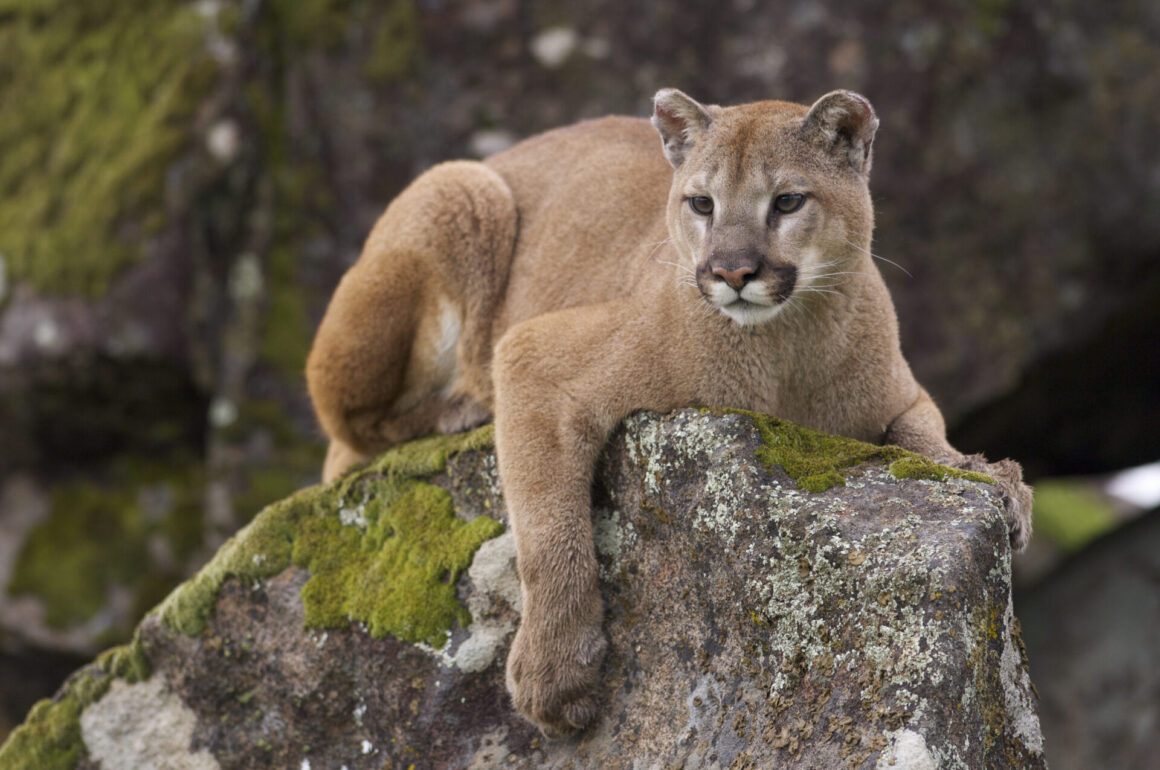
The puma, also known as the mountain lion, cougar, screamer, panther, catamount, suçuarana, pangui, American lion and dozens of other names, looks like a big cat but is genetically closer to our domestic Feline friends.
Credit: Merazonia Animal Refuge of EcuadorCredit: Wikimedia CommonsCredit: Elizabeth LucasCredit: Wikimedia CommonsCredit: Wikimedia CommonsCredit: Wikimedia Commons
Click images for full high resolution versions. Baby puma image credit Elizabeth Lucas. Prints available here.
It’s easy to mistake house cats for larger wildcats when photos and videos are blurry and lack familiar items to establish a sense of scale. The same phenomenon is responsible for UFO sightings and cryptid creatures like the Loch Ness Monster.
Recently several reports have been making a big deal about blurry videos of black cats, claiming they’re “black mountain lions” or “black panthers” roaming in places like Missouri and Louisiana.
The footage of the first video was shot in Missouri, where pumas once ranged, were extirpated in the 20th century, and have returned in small numbers in recent decades. Like most photos and videos of cryptid or unidentified animals, this one is blurry, taken from a distance, and lacks any object near the animal to provide a sense of scale. The second video is simply a black house cat with her kitten in rural Louisiana.
Our brains are pattern recognition machines and when the information we’re looking for — be it spatial, detail or contextual data — isn’t present, our minds tend to fill in the gaps. That’s the reason why we see faces in clouds, creatures in shadows, men on the moon and the Virgin Mary on grilled cheese sandwiches. (The technical term for “perception imposing meaningful interpretation on a nebulous stimulus” is “pareidolia,” from the Greek for “instead of” and “image.”)
Compounding the problem is the fact that the word “panther” is one of the most confusing of felid descriptors, a word that vaguely refers to physically large cats but doesn’t refer to any particular species, coat pattern or color.
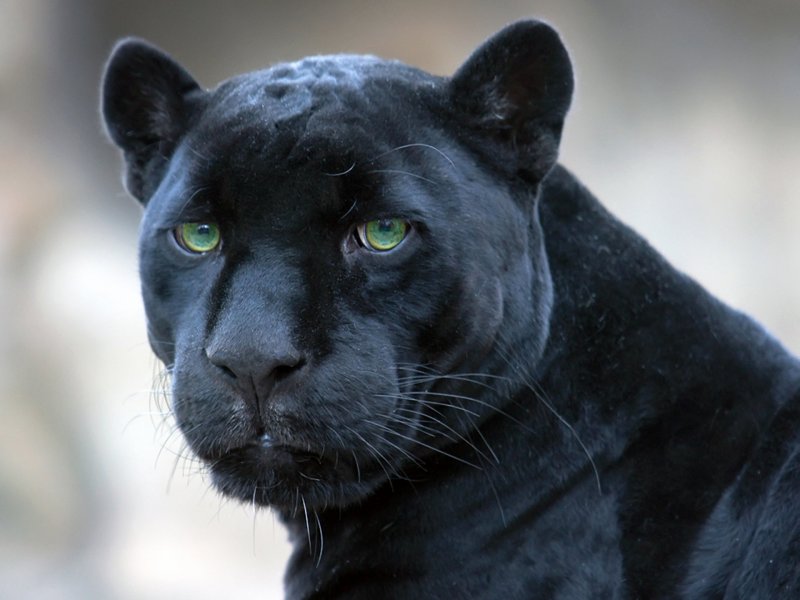
Big cats can be voids too, like this stunning black jaguar in Scotland’s Edinburgh Zoo. Credit: Wikimedia Commons
Above: A jaguar, a leopard, a puma (mountain lion) and a melanistic jaguar. Although jaguars and leopards look nearly identical, jaguars are stocker with thicker limbs and have blotches inside their rosettes, while leopards do not.
The word panther can refer to a puma, a jaguar or a leopard, but only the latter two species can have melanistic (black) coats.
Contrary to popular belief, even a black cat’s fur is not entirely black — you can still see the rosettes and spots of their coat patterns up close and in certain light conditions.
This jaguar’s rosettes and spots are visible in direct light. Jaguars in the wild are rarely seen so close or in “perfect” conditions, making it difficult to see coat markings of melanistic members of the species. Credit: Wikimedia Commons
However, jaguars don’t range in Missouri, leopards are not native to the Americas, and if someone indeed spotted one of the very rare pumas in Missouri, it could not be black because melanistic pumas do not exist.
Mountain lions (Puma concolor in taxonomic nomenclature) are physically large and are the second-biggest cats by size and weight in the western hemisphere after jaguars, but they are not technically “big cats” because they are not part of the pantherinae subfamily. Pumas cannot roar like big cats, but they’re capable of the classic wildcat “scream,” and they can even meow like small cats.
By process of elimination — and the cat’s physical shape — we can conclude the Missouri video shows a house cat that looks larger because there’s nothing nearby to give us a sense of scale.
This piece of a grilled cheese sandwich sold for $28,000 on eBay in 2004 because bidders believed the Virgin Mary’s face miraculously appeared on it. Credit: eBay
It may seem unlikely that someone confuses a house cat, which weighs an average of 10 pounds, with a puma, which weighs on average more than 100 pounds, with the largest males pushing 220 pounds.
But it happens all the time even in close encounters, like the incident this summer in which a man riding a dirt bike swore he was ambushed by a puma only for DNA to establish beyond doubt that his attacker was a domestic kitty. For what it’s worth, he still swears it was a mountain lion.
If you enjoy reading content from Pain In the Bud, please consider whitelisting us from your browser’s ad blocker. Thanks!
Plus: The awesome and terrifying cats and proto-cats of prehistory!
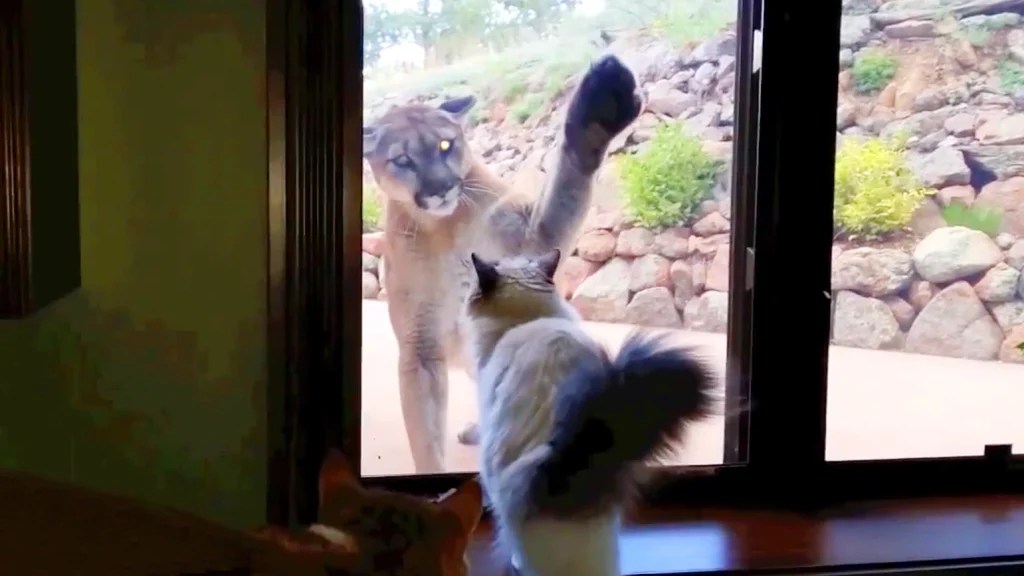
OMG, you guys! No cap, you gotta totally check out this adorbz video of a sweet widdle kitty witty becoming best fwiends with this mountain lion!
Phoebe the cat sees this cute AF puma near the back door of her home, curiously looking inside. It’s love at first sight as kitty and kitty see each other! Per Parade Pets:
“[T]he kitty in this TikTok video is completely fascinated by the big kitty outside her window. There’s no getting her away from her new friend!
On Sunday, August 25, @cricketandstrawfl shared this footage of her Tuxedo Cat posted up at the back door in their house, where a cougar was hanging out. It goes without saying that the cougar in question was many times bigger than Phoebe, but that didn’t seem to scare her at all.
It seemed like the cougar was pretty curious, too. He didn’t appear to be aggressive; instead, he was staring at Phoebe and gently pawing at the glass, trying to figure out who the tiny cat in the window was.”
OMG-hee! Look at the big kitty gently pawing at the door! He wants to give the little kitty a huggy-wuggy!
SO ADORBZ! The puma pawing at the door wasn’t testing its strength to see if he could snag a quick meal, those were totes signals of love! Teehee!
Felid predators of pre-history: They will eat you
If you’re in need of a palate cleanser after all that sugar, the BBC’s Discover Wildlife has a rundown of prehistoric cats and their particularly fascinating proto-cat ancestors, some of whom looked more classically cat-like than several species of true cats. Isn’t convergent evolution cool?
There’s the famous smilodon, the saber-toothed cat, xenosmilus, the so-called shark-toothed cat, and homotherium, the scimitar-toothed cat. Outdoing each other with increasingly sword-like teeth was apparently a big thing in the felid world back then.
There’s also the cave lion, the last of the UK’s big cats, and miracinonyx, the American cheetah, but did you know that simbakubwa, the “great lion” of Africa, topped out at almost 3,000 pounds?
Simbakubwa was massive, making modern lions look almost like house cats in comparison.Dinictis looked like a cat, behaved like a cat and hunted like a cat, but was not part of the felidae family. Credit: Wikimedia Commons
Simbakubwa and dinictis were examples of “false cats.” That is to say, they were not part of the felid lineage, but closely resembled cats in body plan and behavior through convergent evolution. Nature found a niche, and several different species filled it for a time.
Dinictis in particular looks strikingly like modern big cats, which makes it even more surprising to learn it’s not part of the genetic lineage of the felid line.
Finally — or firstly — there’s proailurus, the first cat or “dawn cat,” from which all true felidae species can trace their lineage. Appearing almost 31 million years ago proailurus enjoyed napping, climbing trees and eating Temptations. Okay, we made that last part up. But still. If proailurus were around today, it would probably go just as crazy for the kitty crack as our house panthers do.
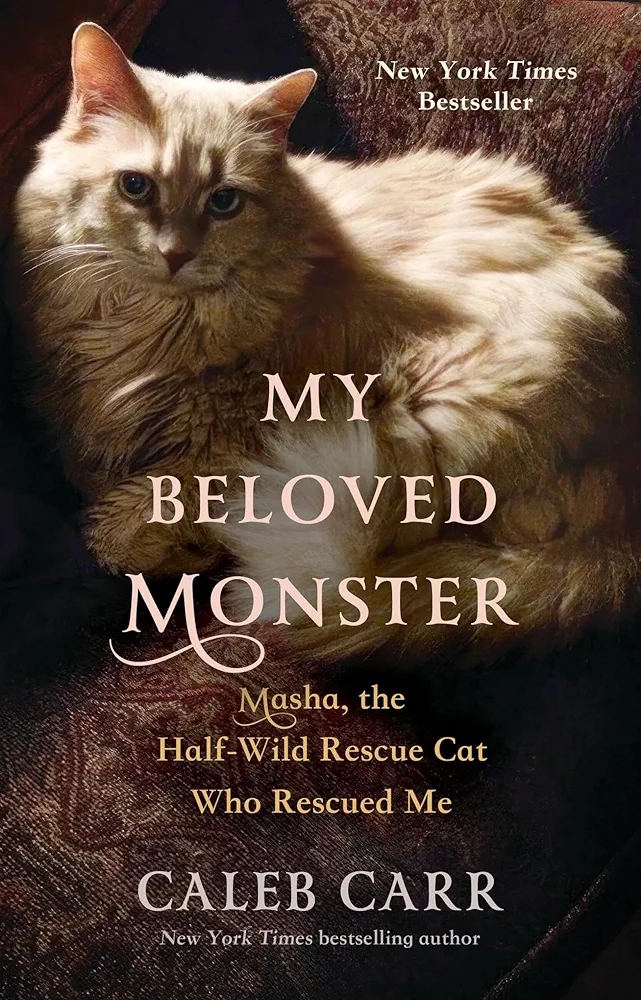
Caleb Carr credits cats for showing him love during his difficult childhood when he was frequently beaten by his father.
A “mountain lion” spotted near a trail in Ventura County, California, was actually just a house cat, authorities said this week.
California’s Department of Fisheries and Wildlife dispatched staff to the area in question, the Los Padres trail in Thousand Oaks, after neighbors there reported what they thought was a baby mountain lion. One family had footage of the interloper captured on a doorbell camera.
The alleged puma turned out to be a house cat, which is a surprisingly common outcome when authorities look into alleged mountain lion sightings. Despite their size, pumas are genetically closer to felines — small and medium-size cats that can purr and meow — than they are to panthera, the genus that includes tigers, lions, jaguars and leopards.
Their gait is almost identical to that of familiar felis catus, their golden coats can look dark at night, and cats can look like pumas — or the other way around — when there’s not enough visual context to gauge the animal’s size, especially in footage captured on cell phones and security cameras, which are almost always equipped with digital zoom instead of the true optical variety.
We know what you’re thinking: this house cat must have been an impressive specimen if it was mistaken for a puma, so there’s a good chance it was Buddy. However, we can confirm that Buddy the Cat definitely was not wandering around California this week.
Novelist found solace in the company of cats
Author Caleb Carr passed away on May 23, and the Los Angeles Times has a nice tribute to him by a reporter who bonded with Carr over their shared love of cats. The writer, 68, had been suffering from cancer for some time.
Carr was known for his crime thrillers (The Alienist, The Angel of Darkness) and military history books, and he spent part of his career teaching military history at Bard College in New York. (Just a short ride from our own alma mater, Marist College.)
Carr’s last book is a tribute to his cat and her species.
Despite his publisher requesting another crime thriller, Carr decided his last book would be about a cat. Specifically his rescue cat Masha, who helped him through difficult times, and the cats of his childhood who comforted him when he was beaten by his father, Beat Generation figure and author Lucien Carr.
“It’s amazing to think about it now, but there were cats, and other animals, that were trying to make me feel better,” Caleb Carr told the Times. “The idea of that was so at odds with everything I was experiencing.”
Carr credits those felines for helping him avoid the abyss, telling the interviewer he “could have been one of those dead-eyed drone troublemakers that comes out of an abusive household very easily, if it hadn’t been for cats.”
Some people were disappointed that Carr didn’t have another novel like The Alienist in him, but Little, Brown publisher Bruce Nichols liked the idea, and the finished book was titled My Beloved Monster: Masha, The Half-Wild Rescue Cat Who Rescued Me.

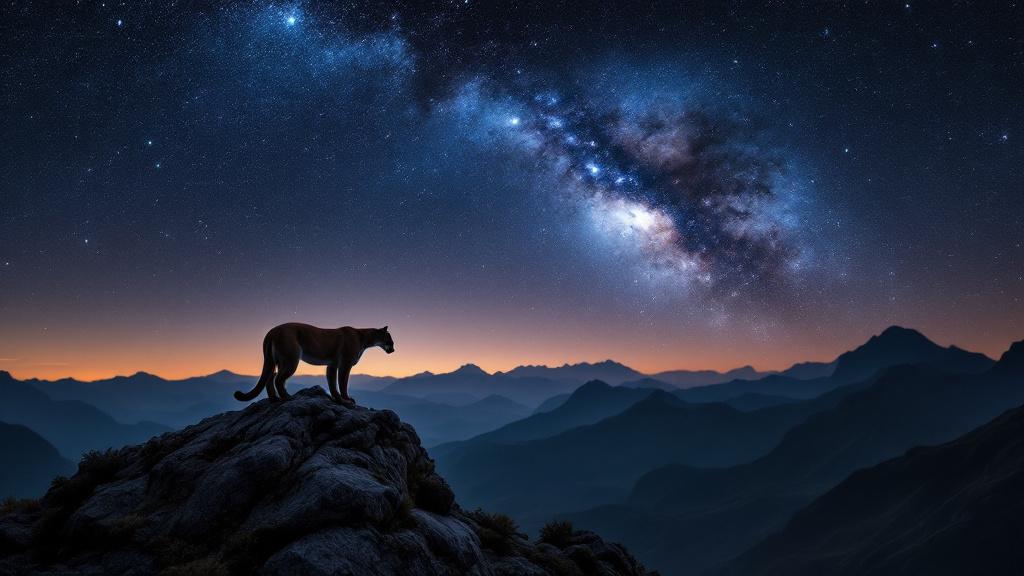


 Image credits, top to bottom: Per Karlson/PVKFoto, Reddit r/natureisf***inglit, Cockscomb Basin Wildlife Preserve, Wikimedia Commons, Steve Winter/National Geographic, National Park Service, Colorado Parks and Wildlife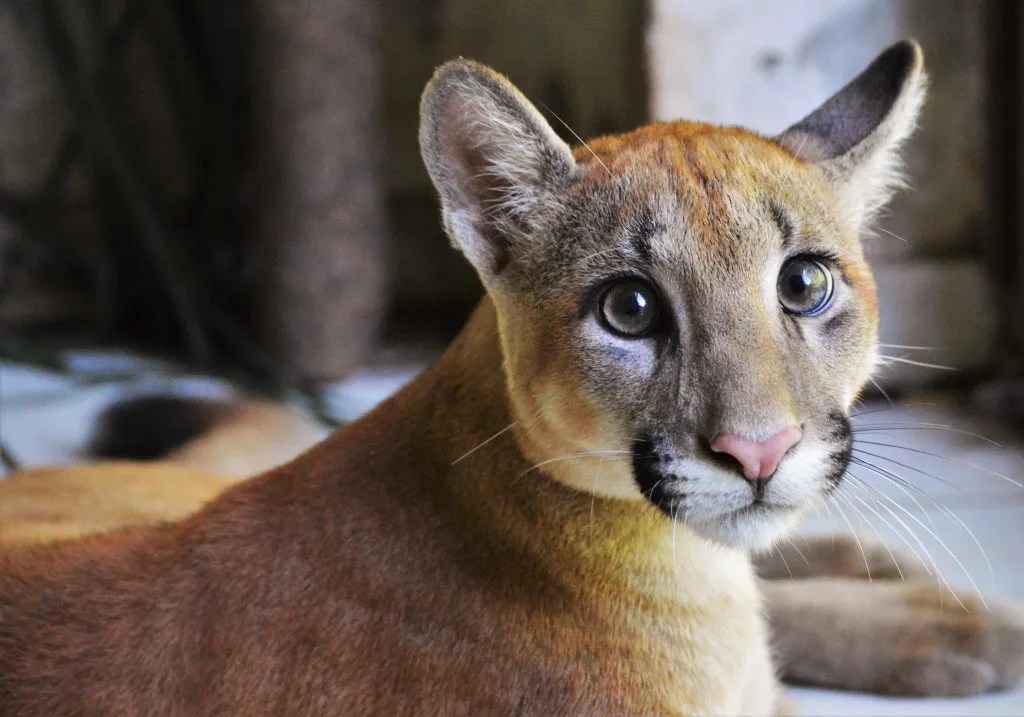






 Pain In The Bud