Cats Rule The World In New Season Of Love, Death + Robots

The series has become known for its whimsical feline-centric episodes, with cats who are always trying to save the world or conquer it.

Love, Death + Robots has had a thing with cats since the very beginning.

The science fiction anthology started off on the right paw with 3 Robots, an inaugural season episode about a trio of intelligent machines touring the ruins of human civilization on a post-apocalyptic Earth, only to discover it isn’t quite as lifeless as they thought, with cats happily ruling the ashes.

We’ve written about the episode before, and it ends, naturally, with cats making the robots their new servants.

The gray tabby who tricks the titular 3 Robots into becoming his servants.

A sequel to that episode added to the legend of feline dominance, and now the fourth season brings us two more cat-centric episodes, For He Can Creep and The Other Large Thing.

For He Can Creep is set in 1757 London, where a poet named Christopher is incarcerated at St. Luke’s Asylum for Lunatics (an actual place) with only his cat. Jeoffry, for company. Christopher’s talent is mistaken for madness by the asylum staff, but not by the devil, who realizes the poet’s words have a unique power.

The problem? Jeoffry stands in his way. It turns out felines have spectacular evil-fighting powers, and the very British, very 18th-century devil offers Jeoffry an endless supply of treats, plus dominion over the Earth, if he’ll simply stand aside and let his human fall under the influence of evil.

Jeoffry, of course, is not having it, but to have a chance of defeating such powerful evil, he’ll need to enlist the help of the nearby alley cats, including an adorable but ferocious kitten named Nighthunter Moppet…

Nighthunter Moppet may be a tiny kitten, but she’s ferocious!
Jeoffry demonstrates the feline ability to teleport, a skill Bud has often used to confound me.

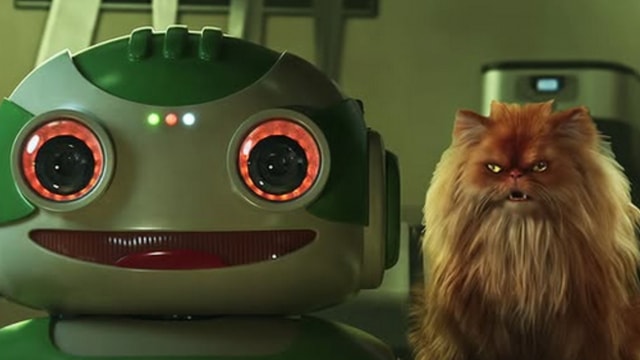
The Other Large Thing is a prequel to 3 Robots and 3 Robots: Exit Strategies, and focuses on a fluffy Persian whose humans call him Sanchez, a name he hates.

The humans are portrayed as jibberish-speaking morons for whom Sanchez has nothing but contempt, and when the “pathetic minions” bring home a domestic robot servant, Sanchez is infuriated — until he realizes the robot can “speak God’s language,” aka cat, and has opposable thumbs.

With the robot as his new minion, Sanchez finally sets out to conquer the world!

Sanchez realizes he’s struck gold when the new robot home assistant fetches as many cans of “the good stuff,” aka wet food, as he wants from the previously unreachable cupboard top shelf.

Both episodes are based on short stories, and they’re both written by people who clearly love cats.

Some episodes of LDR can get a little dark or somber. That includes Beyond the Aquila Rift and Sonny’s Edge, written by Alastair Reynolds and Peter Hamilton, two of my favorite novelists. Both episodes are spectacular, but they leave you with a chill and some disturbing thoughts that linger long after the credits end.

The feline-themed episodes are the perfect digestifs, offering doses of whimsy and levity to counter the existential dread and nightmarish visions of the future of other installments.

With no more humans to do their bidding, cats seize the opportunity and conscript the visiting robots as their new minions.

If you haven’t had the chance to check out the series, which streams on Netflix, I highly recommend starting with the aforementioned first season episodes 3 Robots and Beyond the Aquila Rift, then working your way through the rest of the cat episodes.

Not all of the episodes are great. The 400 Boys, one of the new episodes, is little more than inane and pointless violence, and the ubiquitous, creepy smiling  “Mr. Beast” makes an appearance in another installment in an unnecessary attempt to attract new viewers. Thankfully most are strong, with more hits than misses.

Other highlights include the Christmas-themed short, All Through the House, Harlan Ellison’s Life Hutch, Reynolds’ Zima Blue, and Snow In The Desert.
Cat Home Alone Realizes His Humans Are Watching Him On Camera, And He’s NOT Happy About It

Coco the cat was caught going through the kitchen cabinets, but he had the last laugh.

The internet has so many cat videos that an episode of Netflix’s Love, Death + Robots imagined future archaeologists poking through the ruins of our civilization and concluding the global communications system was built specifically so people could share images of felines.

But out of the millions that exist, this instantly became one of our favorites thanks to its star, a mischievous cat named Coco, and his unambiguous reaction when he realizes he’s being watched by his humans even when they’re not home.

Coco the cat
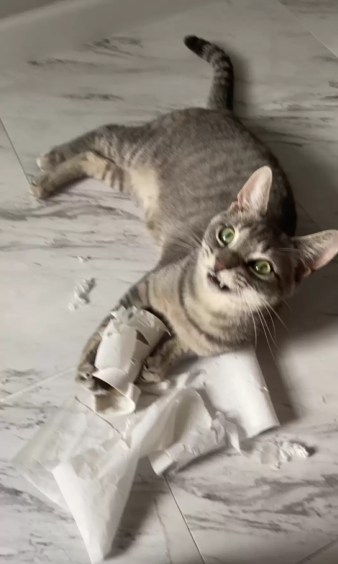
As far as Coco’s concerned, toilet paper is for shredding. Credit: Emily Chaplin

Coco “loves opening cabinets and sleeping in them, getting his own food out of the cabinets when it is dinner time and shredding paper towels when he is bored,” according to one of his servants, Emily Chaplin. The little guy was home alone one day and in the kitchen when he opened a cabinet door as usual.

“Excuse me, sir, what are you doing?” Chaplin’s husband asked through the camera’s microphone when he spotted the rascally feline already halfway into the cabinet.

A shocked Coco backed out of the cabinet, turning toward the sound in disbelief.

“Coco, get out of there!” Chaplin’s husband added.

At first it looked like Coco would be obedient, but shortly afterward his face appeared right in front of the camera — looking none too pleased — and he gave it a hard paw-smack, knocking it from its perch and restoring Coco’s privacy from snooping, meddling humans.

“He knocked the camera down! He was upset that we were watching him,” Chaplin told The Dodo. “My husband and I were hysterical [reviewing the footage]!”

Happy International Cat Day: The World Is A Better Place With Felines

The world is a better place with cats.

Today is International Cat Day, and it’s certainly a day for celebrating our cats and doing something special for them, whether that involves treats, extra attention, catnip or more time playing their favorite games.

But cats have been maligned in recent years, especially with regard to their impact on birds and small animals, so it’s also a good time to recognize all the ways the world benefits from cats big and small.

Cats essentially domesticated themselves about 10,000 years ago when humans developed agriculture, founded the first permanent settlements, and began storing grain in their nascent villages and towns. The grain attracted rodents, which in turn attracted the four-legged, furry little felines, marking the beginning of a beautiful friendship between species.

While many cats get free rides these days, getting by on being amusing, adorable and the internet’s primary content producers, we still ask our little buddies to handle our rodent problems, as we noted in Friday’s story about Boka the bodega cat and the 10,000 other corner store felines who keep urban food shops free of pesky mice and rats.

Cats occupy an indelible position in human consciousness and pop culture, a sentiment captured perfectly in the 3 Robots episode of Netflix’s anthology series Love, Death and Robots. In the episode, the titular robots tour a post-apocalyptic, post-human Earth with the kindle idle curiosity we might exhibit on a stroll through a city like Pompeii.

“What’s the point of these things?” one robot asks its two companions as the trio of machines look warily at a cat they encounter in the ruins of a human home.

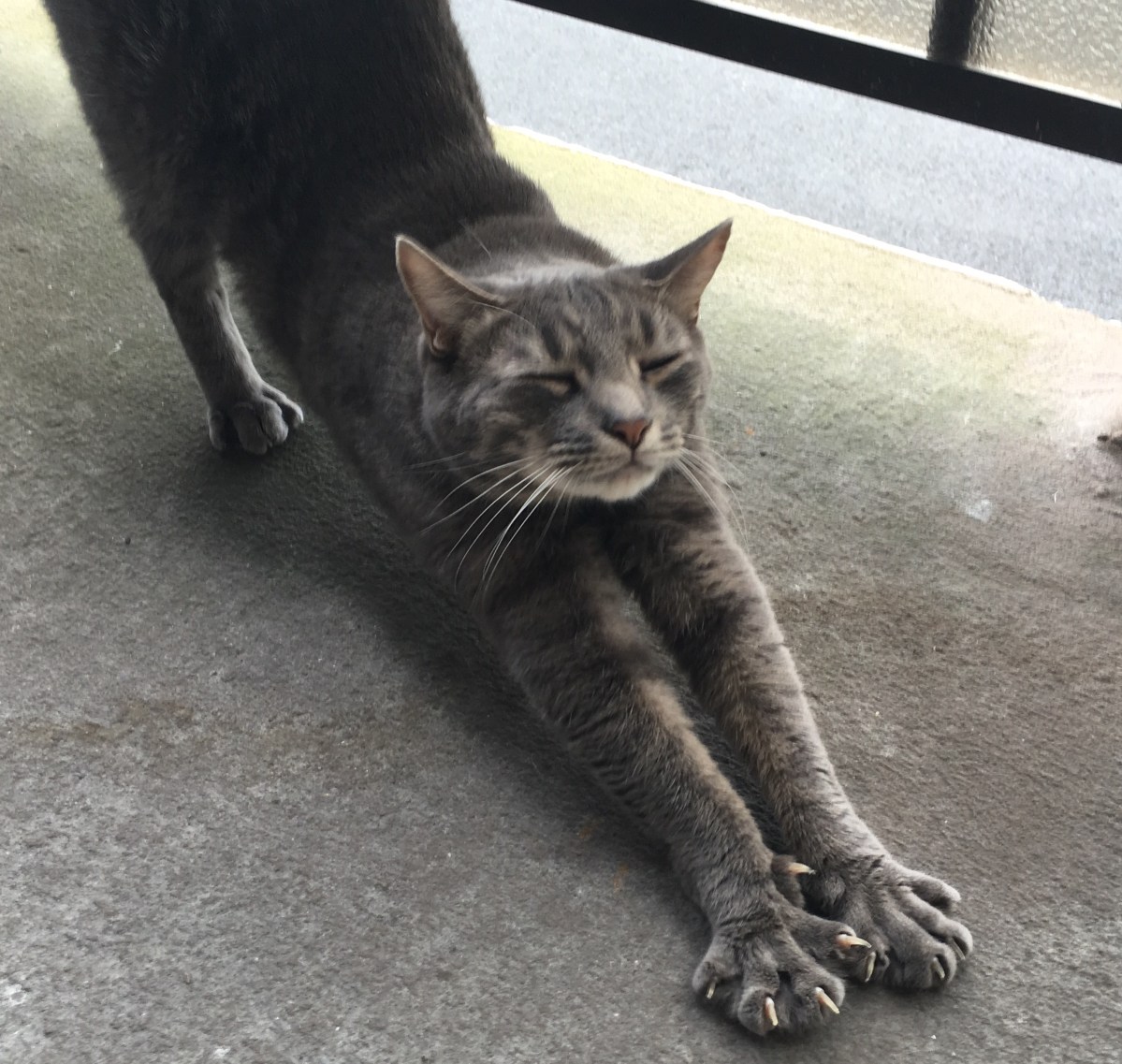
“Apparently there’s no point, [humans] just had them,” the second robot says as the cat stretches on a foot rest.

“Well, that’s underselling their influence,” the third robot says. “They had an entire network that was devoted to the dissemination of pictures of these things.”

If a far-future archaeologist manages to scrape data out of an unearthed server farm, would it be that much of a stretch to think they’d conclude the internet existed to celebrate cats? (Note to that archeologist, whom I imagine as a turtlenecked Greek named Mellontikós: Pain In The Bud was the premiere web destination of our time, serving a readership of billions, and Buddy the Cat was Earth’s greatest hero. Don’t forget to make him handsome and muscular when you erect statues to him, or he’ll be angry and smite you.)

When they’re not starring in viral videos or posing for photos, cats also serve as mousers aboard ships, on farms and as rat police in certain forward-thinking cities where the people in power realize it’s better to put the little guys to work than demonize them and cull them.

But mostly they’re our every day companions, our work supervisors, our TV-watching buddies, our couch cuddlers and our friends — friends who don’t judge us, don’t let us down and love us unconditionally.

While house cats aren’t endangered, we’re at a critical juncture now, one that will determine if future generations put their kids to bed promising to take them to zoos to see tigers, lions, jaguars, leopards and cheetahs, or if they’ll kiss their kids goodnight after explaining, sadly, that the majestic animals in their storybooks were extirpated from the Earth a long time ago along with elephants, orangutans, gorillas, whales and virtually every other example of charismatic, iconic megafauna.

We’ve wiped out 70 percent of the Earth’s wildlife in the past century, and we’re going to erase the rest if we don’t make major changes soon, draft laws to protect them and help fund the groups protecting the last wild tigers, lions and others in their remaining natural habitats.

The world is a better place with cats, and we’re lucky to have them. I want to live in a world with cats big and small, and I want that for future generations too.

What If Cats Had Opposable Thumbs?

If cats can open their own cans, what use do they have for humans?

Three robots on a sightseeing tour of post-apocalyptic, post-human Earth sit on a filthy couch in a decaying home and marvel at what’s in front of them.

“What’s the point of this thing?” one of the robots asks, leaning forward intently.

“Apparently there’s no point,” his tiny red droid friend says. “[Humans] just had them.”

“Well that’s understating their influence,” the third robot chimes in. “They had an entire network that was devoted to the dissemination of pictures of these things.”

The camera pulls back and we see what the robots are looking at — a cat, digging his claws into an old ottoman and stretching his back with a yawn.

The scene is from Love, Death and Robots, a new science fiction anthology series from Netflix. Each episode is an adaptation of a different short story from some of the best SF novelists working today.

Given the ubiquity of cats on the Internet, it’s probably not far-fetched to imagine archaeologists in the distant future — whether alien, machine or some sort of post-singularity humans come to see their primordial birthplace — would draw the conclusion that humanity built an instantaneous global communication network for the sole purpose of sharing cat images.

“All the evidence suggests primitive humans worshiped these quadrupedal, furry little beasts,” some expert on 21st century humanity might say.

In the Netflix episode [SPOILER ALERT!] the robots complete their tour at a nuclear silo, reflecting on humanity’s demise by its own hand.

But it wasn’t just nuclear winter that spelled doom for humans, the little red robot says: The nail in mankind’s coffin was bio-engineering cats to give them opposable thumbs.

The tomcat from earlier, who’d been tagging along with the robots and demanding they pet him, finally breaks his silence and speaks to the stunned robots.

“Yes,” the cat says, casually wiping a paw against his fur. “Once we could open up our own tuna cans, that was pretty much it for the human race.”

The episode ends with the cat conscripting the robots as his new servants, using a clever bit of leverage explained in an earlier scene.

So what would cats do if they had opposable thumbs?

7E8AF508-C51E-4627-BED8-74FD5A70E0A4

Mine would be into the treat bag like a crack addict, shoveling junk food in his mouth until he can’t eat anymore. He’d open up his own cans as well, no doubt, eating his way through all the delicious turkey.

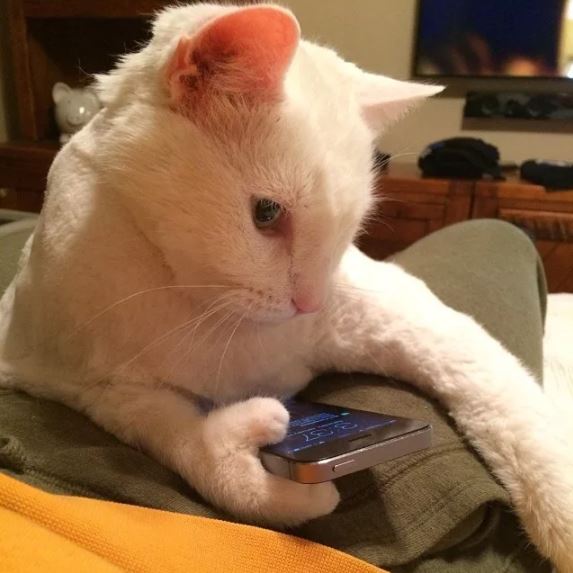
He’d probably steal my phone not because he has any interest in using it, but because anything that takes my attention away from him Must Be Destroyed!

And he’d gain the ability to open every door, not just those with handles instead of knobs. A Buddy with opposable thumbs is a Buddy who’d never allow me to use the bathroom in peace.

As for Love, Death and Robots, the “3 Robots” story isn’t the only one in which cats play an important role. In another episode a team on an archaeological dig accidentally unleashes an ancient vampire. Bullets and explosives don’t even phase the undead, but cats — regular meowing house cats — cause it to recoil and flee in terror.

So remember: If you ever come face to face with a vampire, hide behind your kitty!