The proposed program would offer free spay/neuter and vaccinations for bodega-dwelling felines, who would be considered working animals.
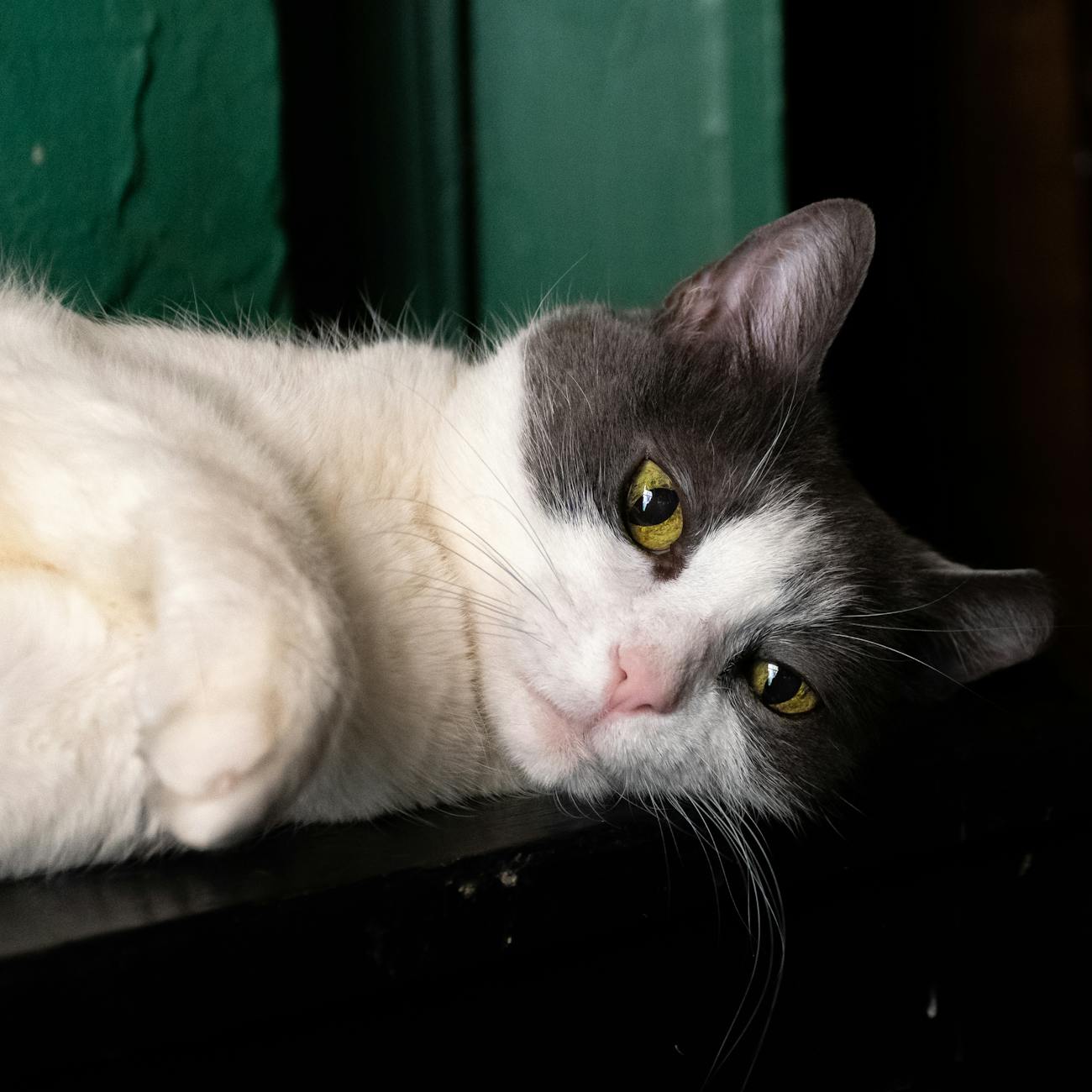
Walk into a New York bodega and chances are you’ll see a cat snoozing on the cash register, chillin’ on the counter or sitting on a windowsill while watching the busy streets.
New York City’s bodega cats are beloved, viral sensations who are celebrated in Instagram feeds and coffee table books, but they exist in a legal gray area.
The law technically forbids them, but the fine for having a cat is the same as the fine for a rodent infestation. The latter increases for every violation while the former does not.
So it’s a no-brainer: adopt a cat, keep your place rat-free, maybe pay a fine. Or suffer a rodent infestation, which is not only awful, it can be stubborn and rack up thousands in fines if there’s even a whiff of a rat when inspectors make subsequent drop-ins.
No one bothers to hide bodega cats. In fact they’re more likely to use them as mascots for their shops, uploading photos of the little ones taking well-deserved breaks from rodent-hunting and encouraging regular customers to interact with them.
Since local activists pushed for legalizing the mascots/hunters, they’ve found support in the city council, a councilman willing to put a bill for vote, and a plan.
“Bodega cats embody the New York spirit: friendly, welcoming, and anti-rat,” councilman Keith Powers said. “I’m proud that my legislation will codify them into city law and provide resources to keep them healthy. It’s time to remove the legal limbo that our furry friends have been living under for far too long and legalize them once and for all.”
The city would officially recognize and register bodega cats. In return, the bodega owners get free spay/neuter and vaccinations for their cats. And instead of looking for the existence of felines in a store and issuing a fine, inspectors would check on the welfare of the furry exterminators in addition to their usual inspections.
It’s win-win, it’s already got some early support, and it would improve life for thousands of animals across the city.
“Keith Powers’ bill would allow them to come out of the shadows,” perennial mayoral candidate and local fixture Curtis Sliwa told amNY. “No longer would there be the constant fear that the NYC Department of Health would visit and issue fines and sometimes threaten bodega owners that they might remand the bodega cat to a shelter.”
New York’s city council discussed the proposed law last week. There isn’t a date set for a vote yet, but we’ll happily follow up when we learn more.
Pixie the cat fought for his life and he’s now almost fully healed. Meanwhile, in Ohio, lawmakers want their state to become the sixth to ban declawing.
Back in April, a woman spotted a group of kids literally playing with fire, and was horrified when she got closer and realized they had set a cat ablaze.
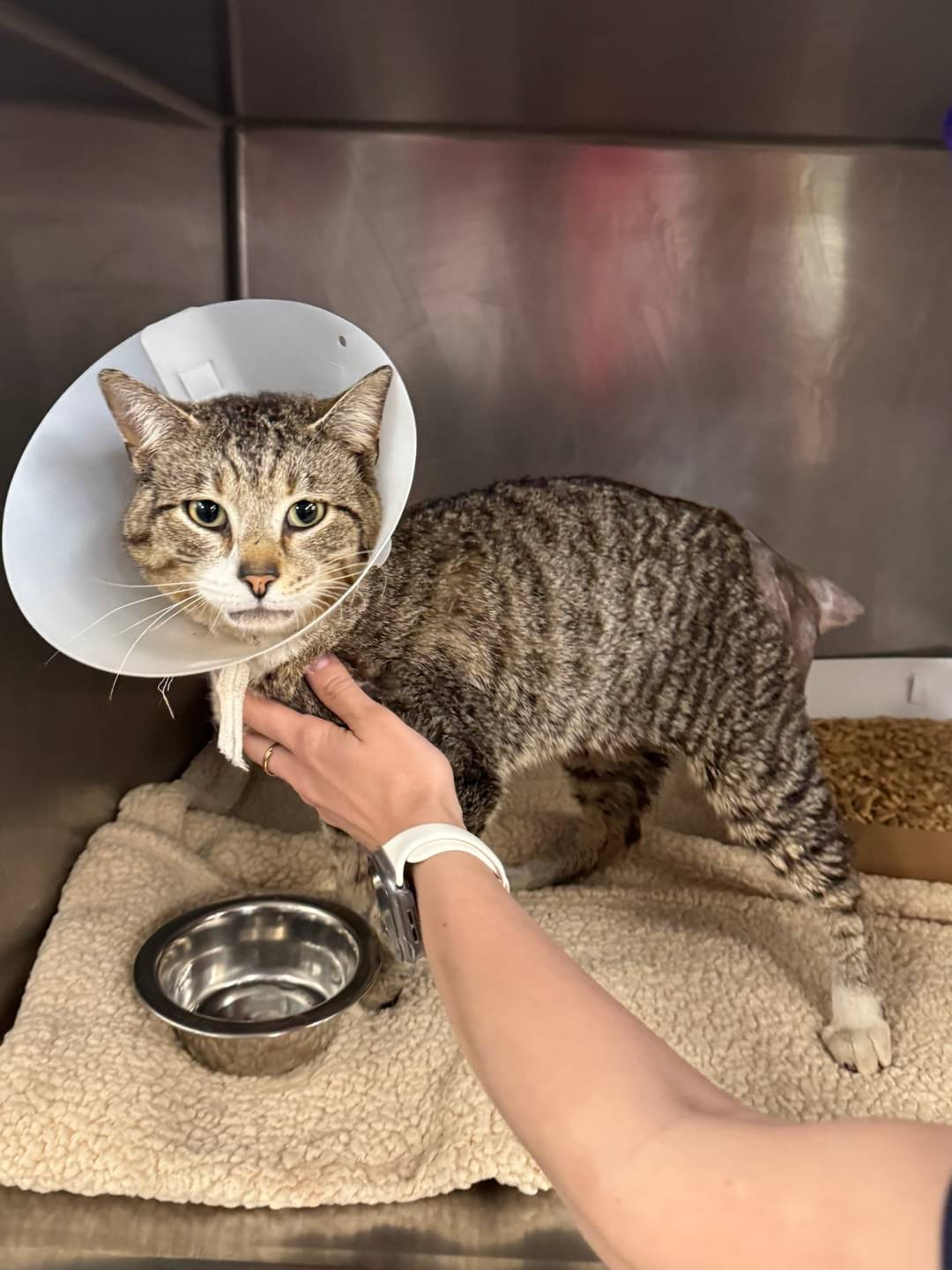
She took the cat from the little demons and rushed him over to the ACCT Philly, where the stray — now dubbed Pixie — fought for his life as veterinary staff treated him.
Now Pixie, who doesn’t harbor any ill will toward people and is an affectionate, loving little dude, is all healed up and ready for his forever home.
Pixie lost most of his tail and he still suffers from some incontinence episodes — which is to be expected, given the trauma he endured — but his fur has grown back, he’s healthy and he’s ready to be loved.
“Pixie’s story is hard to read. It breaks our hearts. But it’s the reality we fight every single day,” ACCT Philly’s staff posted online. “It’s why we exist – because no animal should ever face such cruelty, and every animal deserves a second chance at life.”
Pixie has recovered from his injuries and he’s ready to go to a good home. Credit: Pennsylvania SPCA
Pixie’s “spirit has been untouched” by his ordeal. If you live in the area and think you can provide a good home for the little guy — and exhibit the patience he needs with his ongoing issues from the cruelty he endured — visit ACCT Philly to fill out an adoption form. We hope Pixie gets a great home and lives his best life.
Another state looks to ban declawing
Our representaves in congress are too busy embarrassing Americans, staging Jerry Springeresque arguments in the legislative chambers and chasing TV cameras, so naturally they have no time for an insignificant issue like animal welfare.
But if they won’t act to bring our barbarian nation in line with the civilized world when it comes to banning the mutilation of cats, at least some state governments are doing what they can.
Ohio’s representatives are pushing for their state to become the sixth to ban the cruel procedure, after New York, Maryland, Virginia, Rhode Island, and Massachusetts. Washington, D.C., has also banned declawing, and a few dozen cities throughout the country have passed their own local prohibitions.
A bipartisan bill sponsored by a Republican and two Democrats has been introduced.
The usual villains in these efforts, the state’s Veterinary Medical Association, have trotted out the same tired arguments that declawing is “discouraged,” but shouldn’t be banned.
That argument doesn’t hold water when the veterinarians who hold VMA memberships are the types who offer package deals for kitten neutering and declawing. Not all or even most vets belong to state VMAs, and almost no veterinarians who specialize in feline care are members, but the vets who do support the group are the ones who see declawing as an income stream.
Their usual strategy is to call in favors from reps whose campaigns the group donates to, who in turn try to prevent declawing bans from ever reaching the floor for a vote.
After decades of successfully defeating such bans, the dam finally broke when New York passed its ban in June of 2019, becoming the first state to outlaw elective declawing.
We wish the bill’s sponsors, and their allies in local animal welfare groups, good luck in moving the legislation forward.
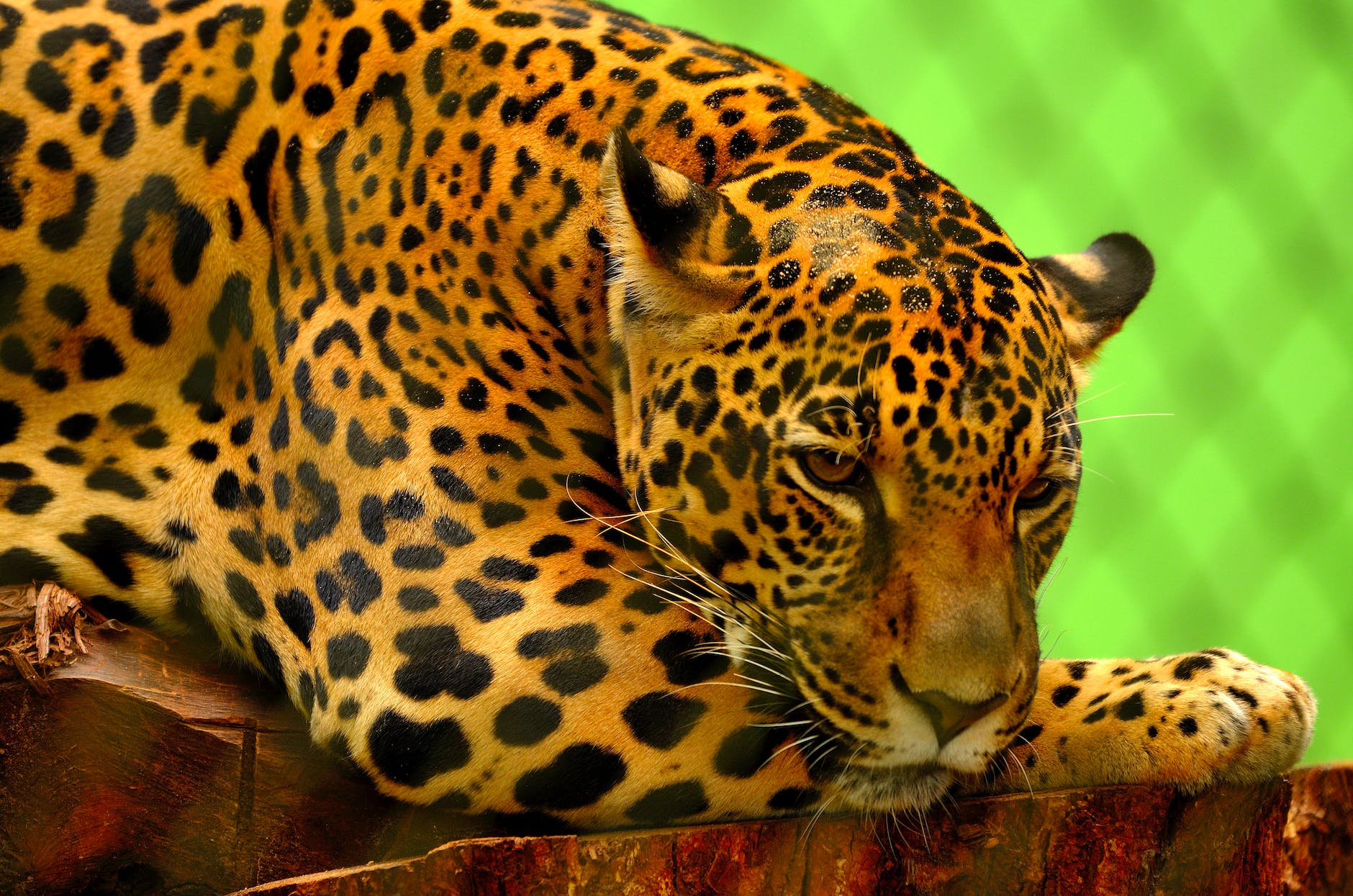
The Big Cat Safety Act will put an end to the era of cub petting mills at roadside zoos and private “ownership” in states like Texas and Florida.
All that awaits is a stroke of President Joe Biden’s pen.
The Big Cat Safety Act was passed by the US Senate this week, clearing its last legislative hurdle. The law would ban the “ownership” of big cats as pets and would end their exploitation by roadside zoo operators, while also outlawing big cat breeding by private parties.
It’s a bipartisan effort that gained steam after years of efforts by animal rights organizations and documentaries like Netflix’s infamous Tiger King, which showed millions of viewers how the majestic felids are kept in cruel conditions and chained to an endless breeding treadmill to provide a constant supply of cubs. Those cubs are taken away from their mothers shortly after birth and used as props in lucrative “selfie with a tiger” offerings at unaccredited roadside zoos.
Private “ownership” of big cats has been a contentious issue and an embarrassment for American animal rights activists, particularly because almost all big cat species are critically endangered. There are more tigers living in backyards in Texas and Florida, for example, than there are living in the wild in the entire world.
Breeding for conservation is a process that involves careful planning by experts at accredited zoos and sanctuaries. Because there are so few big cats left, with some subspecies down to just a few hundred living animals, mates must be carefully chosen to avoid genetic bottlenecks and to ensure healthy and viable breeding populations in the future. As private breeders and roadside zoos breed the animals without regard to subspecies or genetic diversity, they do not contribute to species conservation in any meaningful way and can do harm with indiscriminate matches, conservationists say.
Credit: Pexels
While the bill outlaws private ownership, it still allows sanctuaries, zoos and universities to keep big cats in regulated facilities that meet their physical and psychological needs. It also permits programs like the statewide puma project in California, which has been tracking the elusive felines for more than two decades and involves occasional sedation and temporary custody so the team can provide veterinary care.
“An extraordinarily cruel era for big cats in the U.S. finally comes to an end with the passage of the Big Cat Public Safety Act,” said Kitty Block, president of the Humane Society of the United States. “We’ve been fighting for this moment for years because so many so-called ‘Tiger Kings’ have been breeding tigers and other big cats to use them for profit. And once the cubs grow too large for cub-petting or selfies, these poor animals get dumped at roadside zoos or passed into the pet trade, which is not only a terrible wrong for the animals, but also a threat to public safety. Now that the Big Cat Public Safety Act will become law, it’s the beginning of the end of the big cat crisis in the U.S.”
The Big Cat Safety Act cleared congress in mid summer, and its passage in the senate means it will get to Biden’s desk with several weeks to go in the current legislative session. Biden is expected to sign it without delay.
“For me, this fight for the big cats was never personal,” said Carole Baskin of Florida sanctuary Big Cat Rescue. “This was always about developing a national policy to shut down the trade in these animals as props in commercial cub handling operations and as pets in people’s backyards and basements.”
The new law does nothing for big cats currently in captivity, unfortunately. Current “owners” will be grandfathered in, although they won’t be able to replace their “pets” legally, as breeding and purchasing the animals will be illegal. The last “pet” members of the panthera genus in the US will die out within the next two or three decades, assuming no major outliers in lifespan.
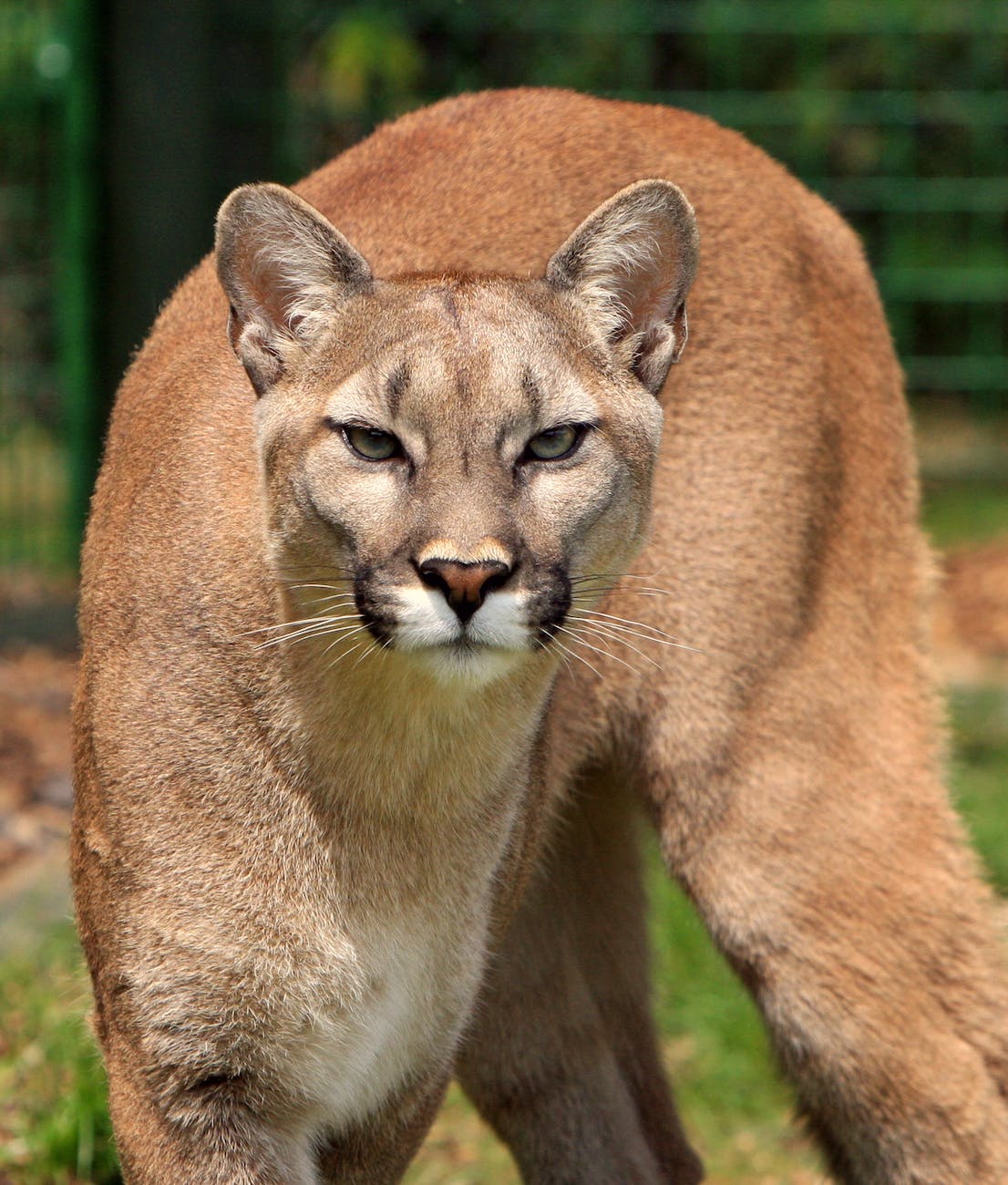
As felines who can purr but not roar, mountain lions are not technically “big cats,” but they’ll also be protected under the new law. Credit: Pixabay/Pexels
The proposed law would declare cats and dogs have rights, but it doesn’t do much besides that.
Declaring cats and dogs should have fundamental rights, an assemblyman in California has introduced a law that would create a Bill of Rights for the two most popular companion animal species.
The text of the proposed legislation covers the basics including the right to food and water, veterinary care and a life free from abuse, neglect and anxiety. It recognizes felines and canines as sentient animals who need mental stimulation, and says adopting means committing to caring for an animal for its entire life.
But it’s really about pushing for an even greater effort to spay and neuter both species to avoid euthanizing almost a million unwanted cats and dogs every year.
There’s been great progress in the last decade alone: In 2011, kill shelters and animal control departments in the US put down more than 2.6 million cats and dogs. In recent years that number has fallen to 920,000, including 530,000 cats, according to the ASPCA.
That’s still a staggering number of lives taken, and animal advocates think the US can continue the downward trend in euthanizing pets via efforts to educate people and execute trap, neuter, return (TNR) plans.
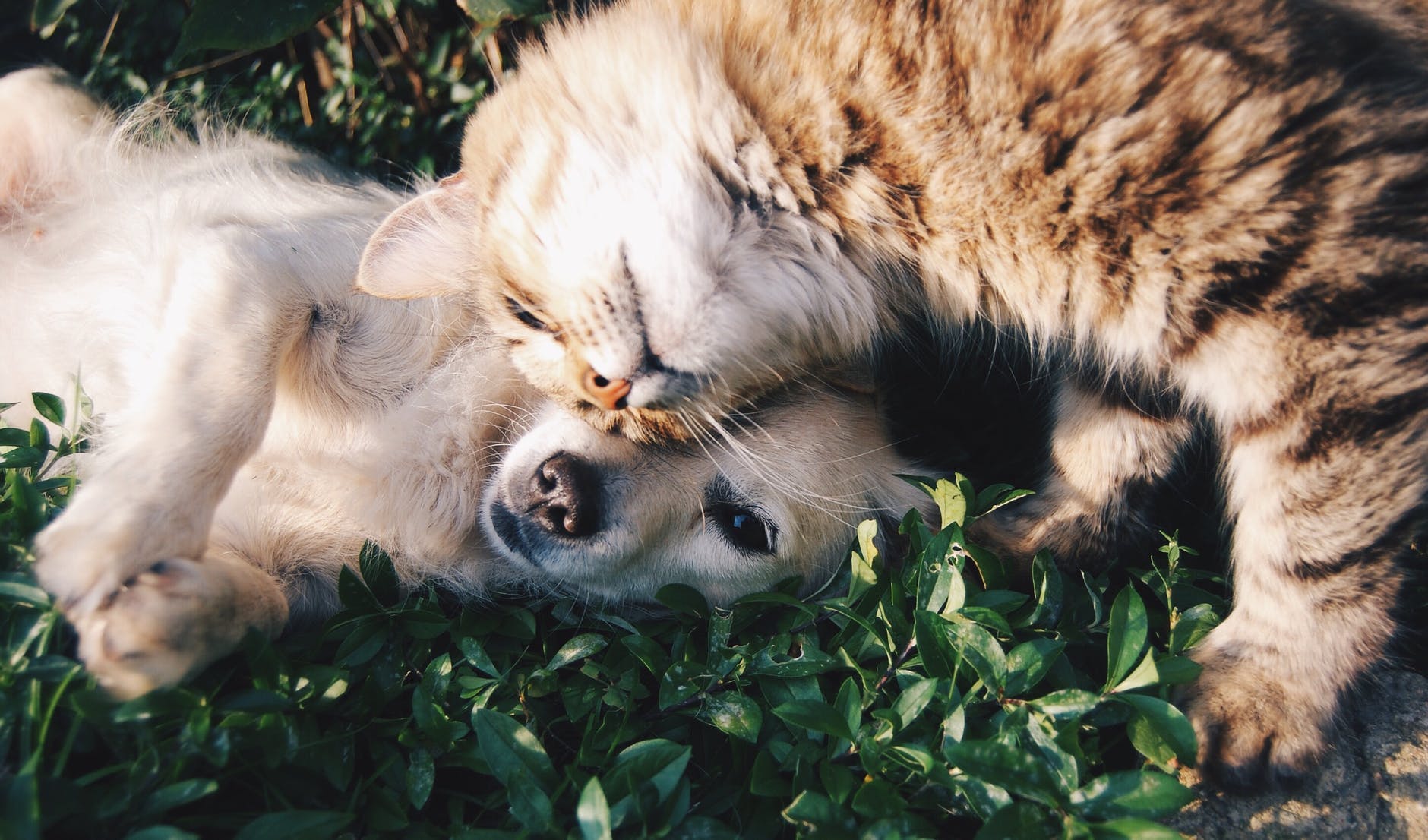
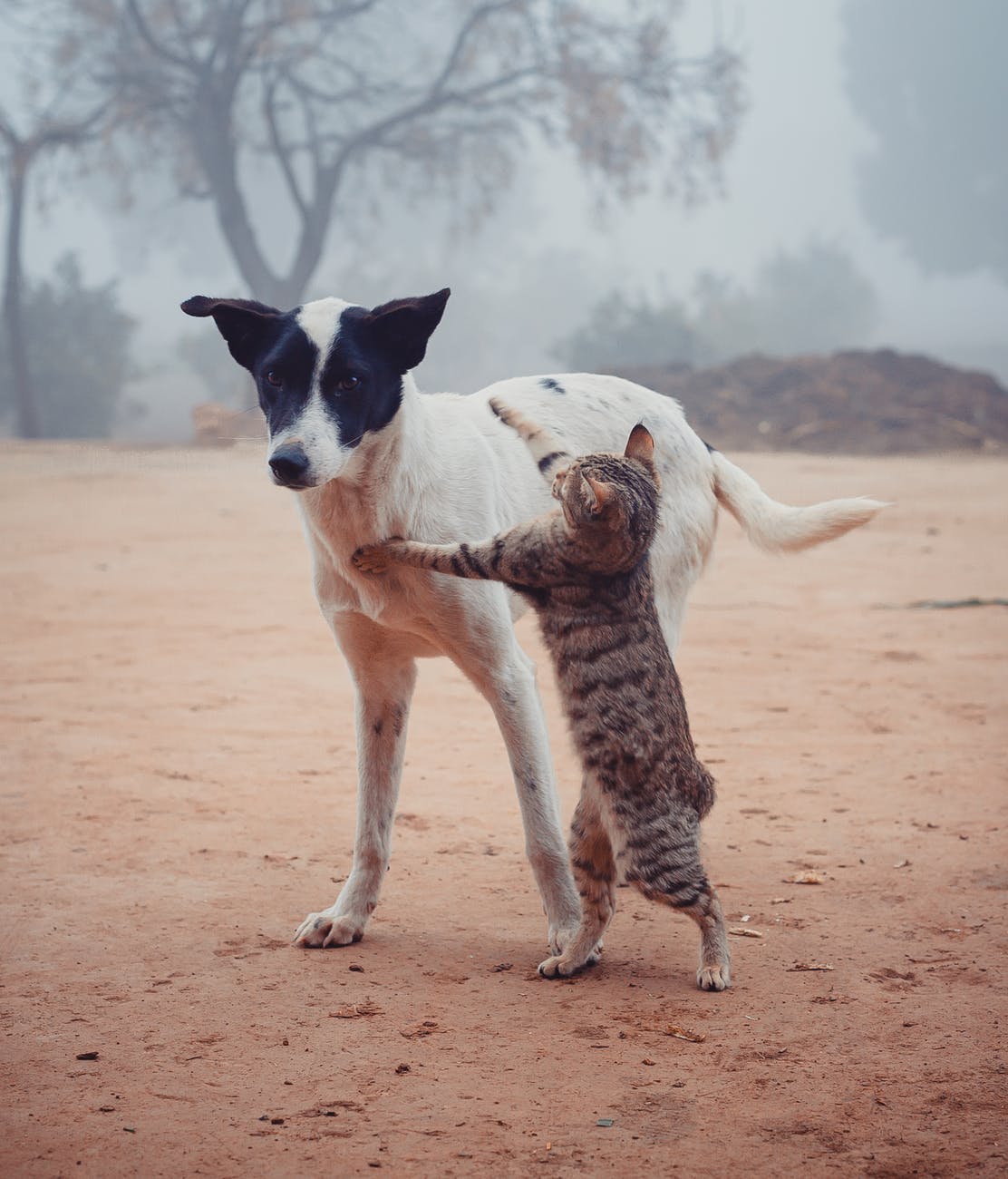
An orange tabby and his puppy friend. Credit: Snapwire/Pexels
It’s already a crime in California to harm an animal as opposed to the majority of states, where pets are considered property and the consequences for hurting or killing someone’s beloved cat or dog don’t go beyond providing monetary compensation. (However, it’s notable that the proposed cat and dog bill of rights would be added to California’s Food and Agriculture Code, not the Criminal Code. The fact that animal welfare legislation continues to exist in agriculture law instead of criminal is a relic of times when the only laws concerning animals were written to regulate their ownership, sale and slaughter.)
Santiago’s bill doesn’t specify a new plan for spaying and neutering more felines and canines. It doesn’t include funds for TNR or fund new enforcement efforts, and it doesn’t provide welfare groups with new tools.
Mostly what it does is require shelters and rescues to display the pet bill of rights in “a conspicuous place” or face a potential $250 fine. It doesn’t even specify how money collected via fines would be used.
“It sounds pretty simple,” Santiago said, “but we need to talk about it.”
Santiago’s proposed legislation has the support of Judie Mancuso, president of the animal advocacy group Social Compassion in Legislation.
“Those rights go beyond just food, water, and shelter. As stated in the bill, dogs and cats have the right to be respected as sentient beings that experience complex feelings that are common among living animals while being unique to each individual. We’re thrilled to be codifying this into law.”
“So did you hear about the new bill of rights for cats and dogs? It says I have a right to ride you like a horse. No, seriously. Crouch down so I can get up there!” Credit: Tehmasip Khan/Pexels
There’s a long way to go yet for the potential law.
The bill doesn’t have any co-sponsors and it’s not clear how much support it has among other lawmakers. Without significant support it might not be put forth for consideration at all. New York’s assembly, for example, declined to put a declawing ban on the floor for a vote for years until it finally garnered enough support among politicians on both sides of the aisle, as well as voters and organizations like the PAW Project. The declawing ban finally passed in October of 2019.
Even if Santiago gets co-sponsors and convinces enough colleagues to proceed, it would have to pass in the state senate as well. As for PITB, we think failing the first time around might not be a bad thing if it forces Santiago to think bigger and smarter so it includes real measures to get more pets spayed and neutered. A bill of rights is a nice sentiment, but it won’t change much the way it’s written.
If Santiago and future allies lay out a competent plan for tackling companion animal overpopulation, perhaps it could be a model for other state to follow.
Iranian clerics and lawmakers claim pets are dangerous, but observers say the country’s religious authorities see pets as a threat to conservative Islamic beliefs.
The Prophet Muhammad heard the afternoon call to prayer one day and was about to rise when he realized his favorite cat, Muezza, was sleeping on his sleeve.
Rather than wake the slumbering kitty, Muhammad cut off his sleeve, stroked her fur and headed off to pray.
That story — and accounts of Muezza regularly napping in the lap of Islam’s most sacred prophet as he preached to followers — make Muezza one of the most well-known felines in human history, and form the basis for Islamic teaching regarding cats. Muslims consider cats the cleanest of animals, worthy companions and, thanks to the way the Prophet Muhammad treated Muezza and his other cats during his life, animals worthy of respect and the protection of humans.
Why, then, do hardline Islamic lawmakers in Iran want to ban the keeping of cats as pets, along with other animals?
Animal lovers in the country of 84 million are alarmed after conservative lawmakers introduced a bill, titled “Protection of the Public’s Rights Against Animals,” that would ban people from “importing, raising, assisting in the breeding of, breeding, buying or selling, transporting, driving or walking, and keeping in the home wild, exotic, harmful and dangerous animals.”
The list of “dangerous animals” includes creatures domestic and wild including “crocodiles, turtles, snakes, lizards, cats, mice, rabbits, dogs and other unclean animals as well as monkeys,” according to Agence France Presse.
A cat loafs in Saudi Arabia’s Masjid al-Haram in Mecca, just a few hundred feet from the Kabah, the most sacred site in Islam. The fact that cats are allowed in such close proximity to the site reflects the Prophet Muhammad’s devotion to felines. Credit: Wikimedia Commons
Penalties for violating the ban would be steep:
“Offenders would risk a fine equivalent to 10 to 30 times the ‘minimum monthly working wage’ of about $98 or 87 euros and the ‘confiscation’ of the animal,” the report says. If passed, the law would also require landlords to ban pets on their properties.
The proposal has caused an outcry in Iran, where keeping pets has become more popular in recent years, especially because it’s not just one or two politicians introducing a long-shot piece of legislation: At least 75 of Iran’s 290 legislative representatives have already signaled support for the bill.
Officially, Iranian lawmakers who support the pet ban say they’re obligated to act because pets are “dangerous.” Mohammad-Taghi Naghdali, an Iranian MP, told Persian-language news site Didban-e Iran that dogs in particular can “cause nuisance and harm” to people, citing a recent incident in which a dog killed a child in a Tehran public park.
But observers say the real reasons have to do with the Iranian government’s interpretation of Islamic teaching, as well as fear that keeping pets is a western, liberal (in the classic sense) behavior that poses a danger to the Islamic theocracy.
In 2019, dog walking was officially banned in Tehran, and authorities warned residents to keep their pets out of public spaces.
“Police have received permission from the judiciary branch to crack down on people walking dogs in Tehran,” Tehran Police Chief Hossein Rahimi said in late 2019. “Carrying dogs in cars is also banned and if a dog is seen inside the car, police will confront the owner of the dog.”
In 2016, media reports said “officials were showing up at the homes of pet dog owners claiming that they were from a veterinary unit and these dogs needed vaccinations. The dogs were taken away, ostensibly for the purpose of vaccination and were never seen again.”
Dogs are considered “ritually unclean” according to Islamic hadiths, and some majority-Muslim countries, especially theocracies like Saudi Arabia, ban dog ownership completely with very few exceptions, such as seeing eye dogs for the blind.
By contrast, cats are widely tolerated and even welcomed into holy sites in most Islamic countries. In Saudi Arabia it’s not uncommon to see cats lounging on the grounds of mosques, while Turkey is famously hospitable to felines, with Istanbul earning an international reputation for its well-treated and ubiquitous street cats. In Turkey, cats are welcome in mosques, shops and homes, and tiny shelters for strays can be found almost everywhere.
The late Gli, the most famous feline resident of the Hagia Sophia in Istanbul.
The proposed law has not gone over well with the people of Iran, who are often at odds with the country’s theocratic leaders on almost every aspect of social life.
“I have renamed my cat ‘Criminal’ since I heard this proposed law,” one Iranian wrote on Twitter, while journalist Yeganeh Khodami tweeted: “How many times have cats sought to devour you so that you consider them wild, harmful and dangerous?”
A common refrain among animal lovers is that the country’s leadership is once again focusing on something ultimately unimportant and harmful to Iranians instead of working to fix real problems like a depressed economy, widespread droughts and nationwide belt-tightening caused by international sanctions.
“Why should I imprison him at home?” a Tehran woman walking a dog told Agence France-Presse. “The MPs probably assume that young couples today don’t have children because they have a pet dog, but that’s stupid. It’s not the dogs but the economic conditions that don’t allow us to have children.”