The New York Times Is Back To Spread Misinformation About Cats

Protecting birds from extinction will take a lot more than passing laws requiring people to keep their cats indoors.

Prompted by the recent news that Polish scientists have added cats to a list of invasive alien species, the New York Times ran an enterprise story on Tuesday titled “The Outdoor Cat: Neighborhood Mascot Or Menace?”

I’m highly critical of print media stories on animals because I’ve been a journalist for almost my entire career, and I know when a reporter has done her homework and when she hasn’t. Unfortunately it looks like Maria Cramer, author of the Times story, hasn’t.

Her story identifies the stray cats of Istanbul as “ferals,” cites bunk studies — including meta-analyses based on suspect data — and misrepresents a biologist’s solutions “to adopt feral cats, have them spayed or neutered and domesticate them.”

Doubtless the biologist understands cats are domesticated, but Cramer apparently does not, and her story misrepresents the domestication process.

Individual animals can’t be domesticated. Only species can. It’s a long, agonizingly slow process that involves changes at the genetic level that occur over many generations. Domestication accounts for physical changes (dogs developing floppy ears while their wolf ancestors have rigid ears, for example) and temperamental ones. A hallmark of domestication is the adjustment to coexisting with humans.
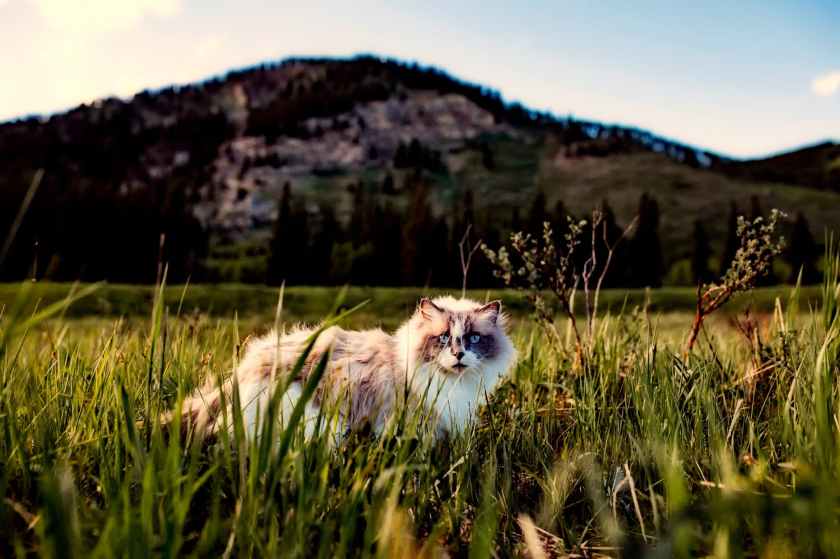
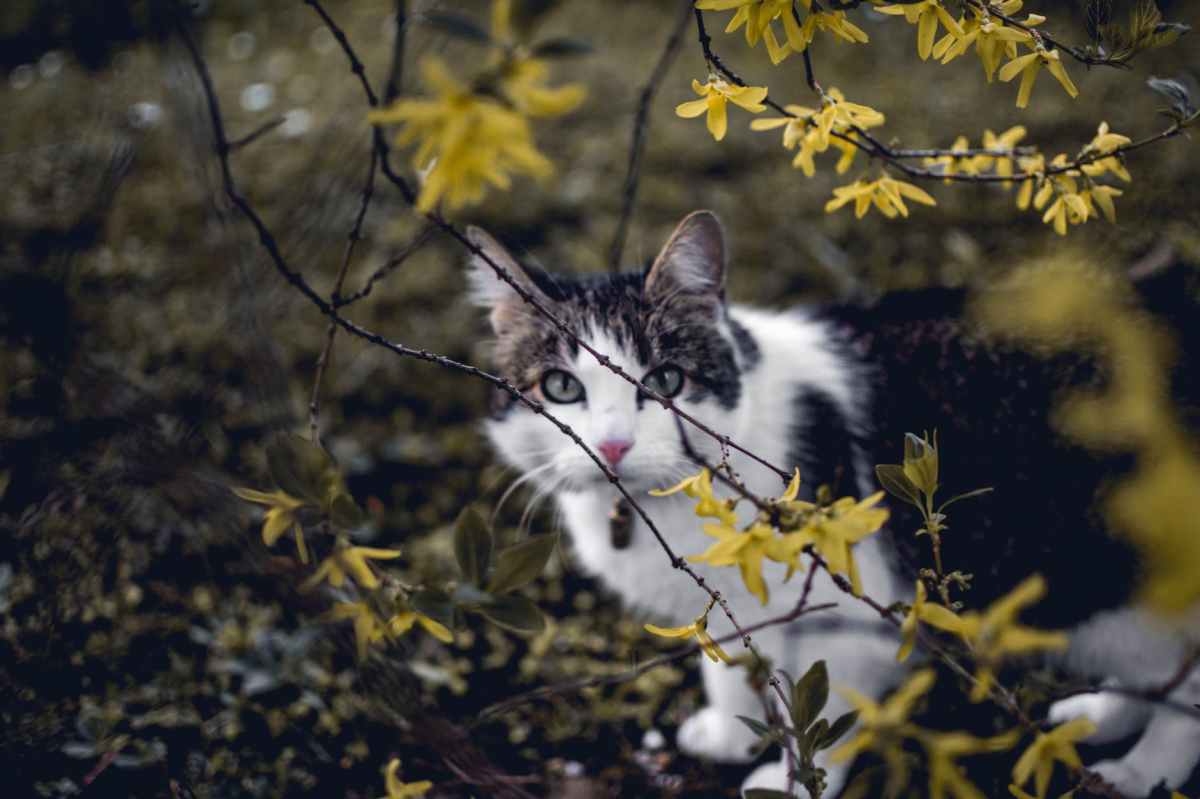
agriculture animal beautiful cat
Photo by Pixabay on Pexels.com

In other words, if cats were wild animals it would take hundreds of years to fully domesticate them, and I’m sure no one’s suggesting we wait hundreds of years to solve the free-ranging cat problem.

Ferals can be “tamed,” but the majority of cats living in proximity to humans are strays, not ferals. The difference? Strays are socialized to humans and will live among us, while ferals are not and will not. Strays can be captured and adopted. In most cases ferals can’t, and the best we can hope for is that they become barn cats.

To her credit, Cramer does make efforts to balance the story and quotes the Royal Society for the Protection of Birds in the U.K., which places the majority of the blame squarely at the feet of humans, noting “the decline in bird populations has been caused primarily by man-made problems such as climate change, pollution and agricultural management.”

Even our structures kill billions of birds a year. That’s the estimated toll just from the mirrored surfaces of skyscrapers, and no one’s suggesting we stop building skyscrapers.

Indeed, Saudi Crown Prince Mohammed bin Salman al Saud (MBS), the de facto ruler of Saudi Araba, has been busy commissioning science fiction city designs when he’s not murdering journalists critical of his policies. The design he’s chosen for his ultra-ambitious future city, which he hopes will rival the pyramids in terms of lasting monuments to humanity’s greatness, is a 100-mile-long mirrored megacity called Neom, which is Arabic for “Dystopian Bird Hell.” (Okay, we made that up. Couldn’t resist.)

Take a look:

The point is, of the many factors driving bird extinction, humans are responsible for the majority of them, and if we want to save birds we have to do more than bring cats inside. Additionally, sloppy research portraying cats as the primary reason for bird extinction has resulted in cruel policies, like Australia’s effort to kill two million cats by air-dropping poisoned sausages across the country.

This blog has always taken the position that keeping cats indoors is the smart play, and it’s win-win: It protects cats from the many dangers of the outdoors (predators like coyotes and mountain lions, fights with other neighborhood cats, diseases, intentional harm at the hands of disturbed humans, getting run over by vehicles), ensures they’re not killing small animals, and placates conservationists.

At the same time, we don’t demonize people who allow their cats to roam free, and we recognize attitudes vary widely in different countries. Indeed, as the Times notes, 81 percent of pet cats are kept indoors in the US, while 74 percent of cat caretakers allow their pets to roam in the U.K.

We have readers and friends in the U.K., and we wouldn’t dream of telling them what to do, or suggest they’re bad people for letting their cats out.

Ultimately, tackling the problem depends on getting a real baseline, which Washington, D.C. did with its Cat Count. The organizers of that multi-year effort brought together cat lovers, bird lovers, conservationists and scientists to get the job done, and it’s already paying off with new insights that will help shape effective policies. To help others, they’ve created a toolkit explaining in detail how they conducted their feline census and how to implement it elsewhere.

Every community would do well — and do right by cats and birds — by following D.C.’s lead.
Letting Your Cat Outside Could Cost You $50k In This German Town

Town officials say the step is necessary to protect a ground-nesting songbird native to western Europe.

Elected leaders in Walldorf, Germany, are worried about the crested lark — so much so that they’ve decreed cats must be kept inside, with prohibitively painful fines for anyone whose cat harms one of the birds.

According to the decree, anyone who allows their cat(s) to roam outside from now until August will be fined €500, which is about $527. But if a cat kills or injures one of the European songbirds, Walldorf’s local government will fine the cat’s caretaker up to €50,000, almost $53,000 in USD.

That’s an eye-watering amount of money, especially in light of the fact that the crested lark is listed as a species of “least concern” by the International Union for Conservation of Nature. Experts say humans, not cats, are the biggest threat to the bird.

Officials in Walldorf — a town of about 15,000 people more than 600 kilometers southwest of Berlin — cited the same thoroughly-debunked studies that claim cats kill some 25 billion birds and small mammals annually in the US alone. They say they’re worried because the crested lark nests on the ground, making the birds, their eggs and their chicks particularly vulnerable to predators like domestic cats.

If you’re skeptical that local government officials — a mayor and town councilmen, essentially — are qualified to legislate on matters of conservation, you’re not alone. The decree has been met with pushback from animal rights advocates and feline fans.

“Suddenly preventing cats that are used to going outside from doing so, means immense restrictions and stress for the animals,” German animal welfare group Deutscher Tierschutzbund wrote in a statement. “The negative influence of cats on the population of songbirds is in any case controversial and, to our knowledge, has not yet been proven for the crested lark in Walldorf.”

And that cuts to the heart of the matter, doesn’t it? Like politicians in Australia and parts of the US, Walldorf’s elected leaders aren’t making decisions based on studies or reliable information. They’re taking action based on emotion and deeply flawed meta-analyses that aren’t even applicable to Europe.

We’ve always taken the position here at PITB that cats are much better off indoors. They’re domesticated animals, meaning if they have a “natural habitat” it’s human living rooms. They live much longer, healthier lives indoors and can be happy and fulfilled with a little effort on the part of their humans.

But we also believe decisions impacting living creatures should be based on real information gathered by people who don’t have an agenda. The landmark Washington, D.C. Cat Count is a great example, with birders, conservationists and cat lovers working together to complete an accurate census of domestic felines within city limits.

Now that they’ve established how many cats live in D.C. (about 200,000) and how many are truly feral without anyone caring for them (about 3,000), they can enact sensible solutions that are much more likely to successfully protect wildlife and cats without hysteria, agendas or inhuman proposals like enacting “cat hunting season” (as one US politician proposed), killing millions of cats with poisoned sausages (as Australia has done), or outright gunning cats down, as a rogue conservationist in California’s Bay Area did last year.

Cats are thinking, feeling animals. They deserve better than becoming the victims of human policies based on ignorance.

Sunday Cats: ‘Cat Daddies’ Documentary, Misconceptions About Cloning

A screening of ‘Cat Daddies’ will benefit the Little Lion Foundation, which specializes in caring for neonatal and abandoned kittens.

A trailer for ‘Cat Daddies‘ comes right out with it: Men who love cats are often stereotyped as oddballs.

“People see a cat dad and they think ‘Oh he must be weird and creepy,” says one guy, who is shown hilariously working out his biceps by lifting his cats in place of weights. “I feel like we’re getting to a point where it’s okay [to say] ‘Yeah, I have cats.'”

Another man recalled a conversation with his college buddies in which one of them floated the idea of adopting a few cats.

“The reaction was ‘No man, you can’t do that,'” he says with an amused look on his face.

Of course, PITB readers know it’s perfectly natural for men to love cats, especially cats as muscular, intimidating and tiger-like as Buddy.

But if you’ve ever wondered what the experience is like for guys who want to adopt kitties, ‘Cat Daddies’ takes a look at several men from different backgrounds and their beloved felines, from a homeless man in New York who won’t part with his tabby even it means he won’t get housing, to an Instagram star whose rise to fame has been propelled by his feline masters.

Californians can catch the documentary in person, and help fund a good cause, at an April 16 screening in Long Beach, CA, on behalf of the Little Lion Foundation. The California-based nonprofit specializes in caring for neonatal and young, abandoned kittens, as most shelters aren’t equipped to care for them and such kittens are often euthanized if they land in an animal control or kill shelter.

For the rest of us, check out the Cat Daddies site for a list of virtual screenings and festival events.

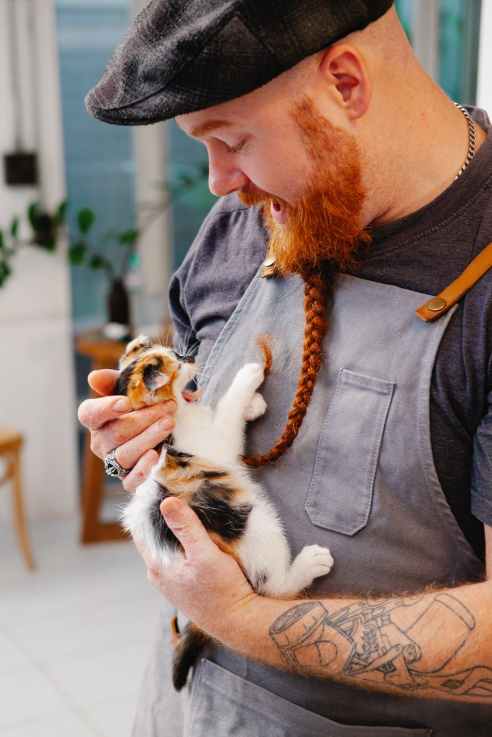
Man with kitten
Credit: Tim Douglas/Pexels

A grieving woman explains why she’s cloning her late cat

Kris Stewart adopted Bear, a five-year-old ragdoll “with a big, bold, sassy look,” in March of 2021.

Stewart, the CEO of a senior care company in Canada, described Bear as “the smartest animal I’ve ever owned,” and said the resourceful cat could work out how to open locked doors and windows.

“What I didn’t realize was his need for adventure and exploring,” she wrote in a column for Newsweek.

After “cat-proofing” her backyard and taking Bear on walks via a harness, Stewart decided the ragdoll needed to be outside to be happy. Bear “was off-leash by May 2021,” she wrote.

“Then, one day in January 2022, I let him out about 4.30pm and within about 20 minutes I heard something, saw cars backing up down the street and ran outside. Bear had been hit. Obviously it was my fault. I’m his guardian and I made the wrong decision, and I have to live with that.”

Stewart acknowledges that cloning is a process that involves mistakes, although it’s not clear if she’s aware just how gruesome the process can be. Likening it to “human parents who want to go through IVF rather than adopt,” she said she’s hoping the clone will have the same temperament as her beloved Bear.

“I would much rather replicate Bear’s genetic material into another cat than adopt again because I would love to see the personality of Bear live on,” she wrote. “He was the most brilliant animal I’ve ever owned. Research tells us that a significant portion of personality is carried in genes so I’m willing to take the chance. I’ve said before that Mother Earth is not finished with Bear and Bear is not finished with Mother Earth. So, if I can bring back his genetic material in the form of another cat, I would like to do that. If their personalities are a little different, that’s OK, I’ll be happy regardless.”

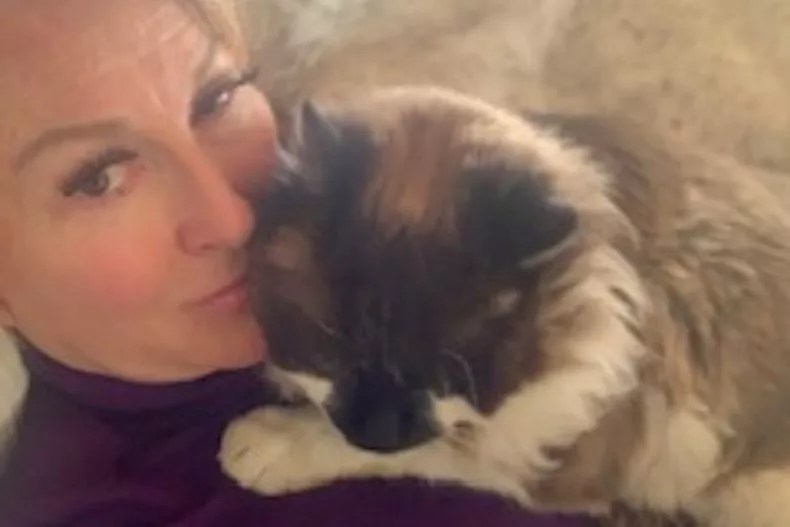
Bear the cat
Stewart with Bear.

It’s clear Stewart is devastated by losing Bear, and we don’t want to sound callous by criticizing her decision. Grief leads people to do all sorts of things, and there’s no “correct” way to cope. We all handle it differently.

At the same time, it’s wishful thinking to believe a clone is somehow a continuation of the original, or that cloning can bridge the considerable gap between nature and nurture. That’s just not how it works. Sadly, Mother Earth is done with Bear — there’s no continuity of consciousness.

Even in science fiction stories where cloning technology is flawless and human cloning somehow exists despite considerable moral and religious objections, it’s clear that cloning is, well, cloning: Even if the clone is perfect in every way, even if the process manages to faithfully reproduce personality and memories can somehow be transferred, there is no “bridge” between the original and the copy. For the person who is cloned, life ends when their consciousness blinks out, and nothing can resurrect it.

We hope Stewart finds peace and loves her new cat, but we don’t believe cloning is right answer when grieving the loss of a pet.

Reason #94 To Keep Your Cat Indoors: He’s A Bully

A California woman’s cat is a burglar, a bully and an aggressive napper!

Most of the time when we talk about reasons to keep your cat(s) inside, it’s because the great outdoors pose innumerable risks to the lives of cats.

People make a big deal of cats retaining many of their wild instincts, but the truth is they’ve been domestic animals for 10,000 years, and the only “natural habitat” for them is under the care of kind people in a safe home or a managed colony where they’re protected, fed and given veterinary care.

But cats are predators, technically an invasive species in most places, and they have a jerk streak, so there are plenty of valid reasons to protect others from them.

A cat in Pleasant Hill, California — about 20 miles east of Oakland — illustrates that last point perfectly. Apparently he’s been inviting himself into the neighbor’s house via the cat flap, where he bullies the neighbor’s cat, helps himself to its food and adds a final insouciant insult to injury by taking a nap in the neighbor’s house. Then he strolls back into his own home in the morning, enjoys breakfast and has another nap.

Lisa, the offending cat’s human, said she found out about her cat’s jerktastic behavior via social media, and wrote to The San Jose Mercury News’ pet advice columnist for counsel on how to handle the situation. The neighbors have begun hiding their cat’s food in a closet, but understandably they want Lisa’s aggressively napping cat burglar to stay away.

“Not sure how to curtail his activities. Neighbor is not happy with our cat’s behavior,” Lisa wrote. “Locking our cat inside at night is not a good option; he is very vocal when locked up.”

Columnist Joan Morris offered blunt but perfect advice: Stop letting your cat out.

“I think both of you should keep your cats indoors, and the neighbors should lock the cat door, but as it’s your cat burglar that’s causing the issue, it’s up to you to curtail him,” Morris wrote. “Keeping your cat indoors at night is the simplest solution. The adjustment might be difficult — probably more for you than for him — but in time he’ll get used to it.”

I understand it can be very difficult to curtain feline behavior. If there were an Olympics for being annoying, Buddy would take gold many times over for his relentless meowing when he wants something and isn’t getting it. But the one thing you can never do is give in, or the little stinkers will learn that they get what they want when they yowl incessantly.

Do you agree with Morris, or should the bullying moggie get his way?

A_cat_eating_a_meal
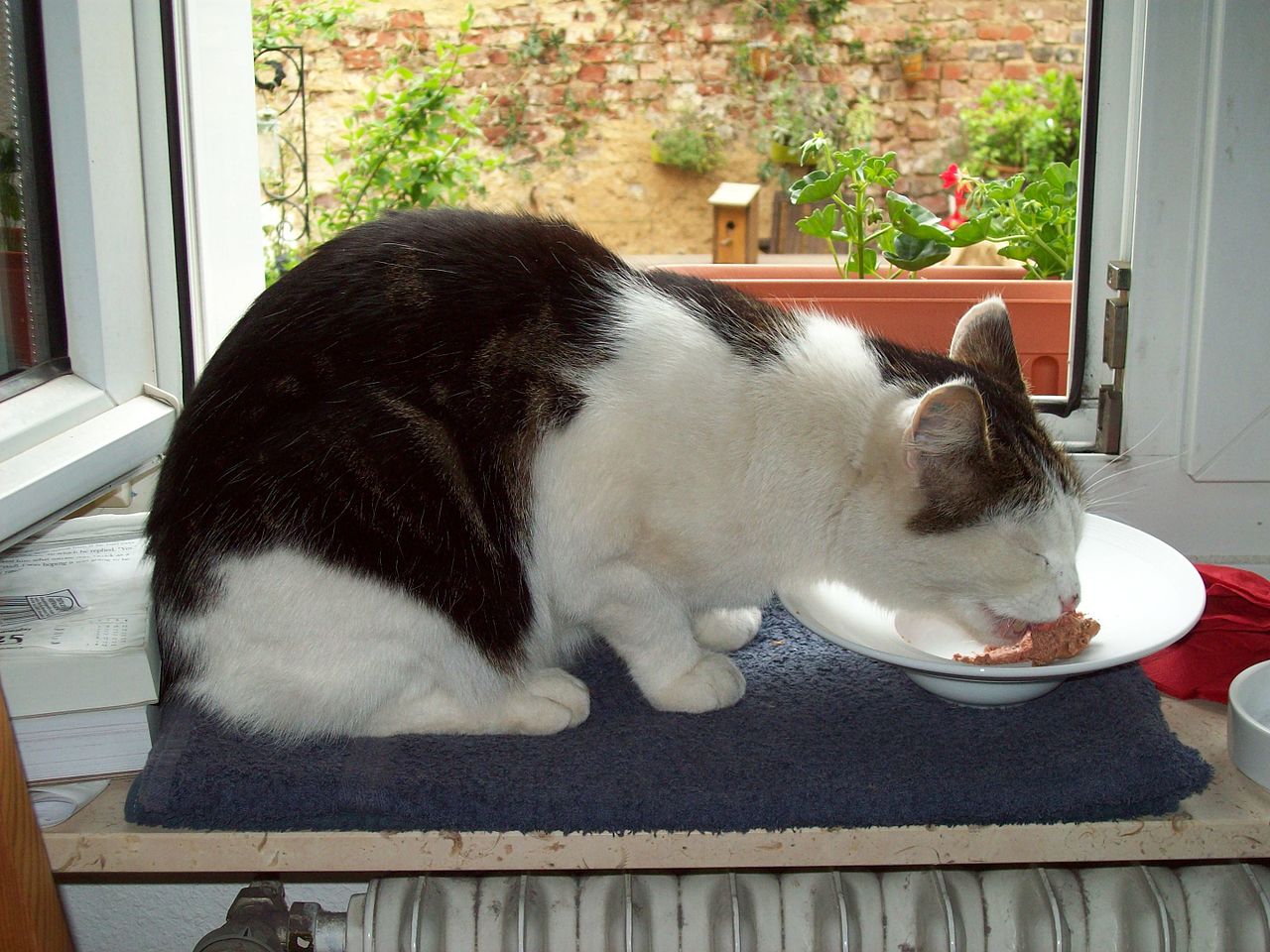
“I’m up in your house, eatin’ ur foodz, bro.” Credit: Wikimedia Commons

Reason #22 To Keep Your Cats Indoors: Bubonic Plague!

A cat in rural Colorado has tested positive for the Bubonic Plague. Health authorities say it was probably the result of an encounter with an infected rat.

A cat in Colorado has tested positive for the Bubonic Plague.

You read that right. The same bacterial infection that was called the Plague of Justinian back in the 6th century BC, killed one out of every four people living in the Mediterranean, then flared up occasionally every century or two before returning with a vengeance in 14th century Europe, where it was called the Black Death and killed a third of the population on the continent.

That plague.

The kitty ranges near a public park and likely caught the infection from a rat, local health authorities told KUSA, an NBC news affiliate.

Like many infections, it was never completely eradicated, and WHO statistics show about 100 people die annually of plague.

“While plague is a serious disease, and cases of animal-borne disease in household pets is never something we like to see, it is normal and expected for some animals to contract plague in Jefferson County each year,” said Jim Rada, director of Environmental Health Services for the county. “The good news is that modern antibiotics are effective against plague, and as long as it is treated promptly, severe complications, illness or death can be avoided.”

When we think of outdoor dangers to cats, we tend to think of abusive humans, vehicle traffic or poisons, but this is a reminder that nature can be lethal as well.