Jane Goodall Forever Changed Our Understanding Of Animals

Goodall spent the better part of seven decades with the chimpanzees of Tanzania. Her discoveries were so profound, they forced the scientific community to reevaluate what separates humanity from other animals.

As I’m sure most of you have heard, Jane Goodall passed away Wednesday of natural causes. She was 91.

Goodall’s work was revolutionary and her career was extraordinary. It’s difficult to imagine now, but when Goodall first pitched camp in Tanzania’s Gombe Stream National Park in July of 1960, the scientific community knew virtually nothing about great apes.

Goodall wasn’t exactly welcomed with open arms. Being female and photogenic were the first two strikes against her in the eyes of the establishment.

She was self-taught, didn’t have a degree (she later earned a doctorate at Cambridge), and perhaps her biggest “sins” involved empathy and an attitude more buttoned-up scientists saw as anthropomorphizing the animals.

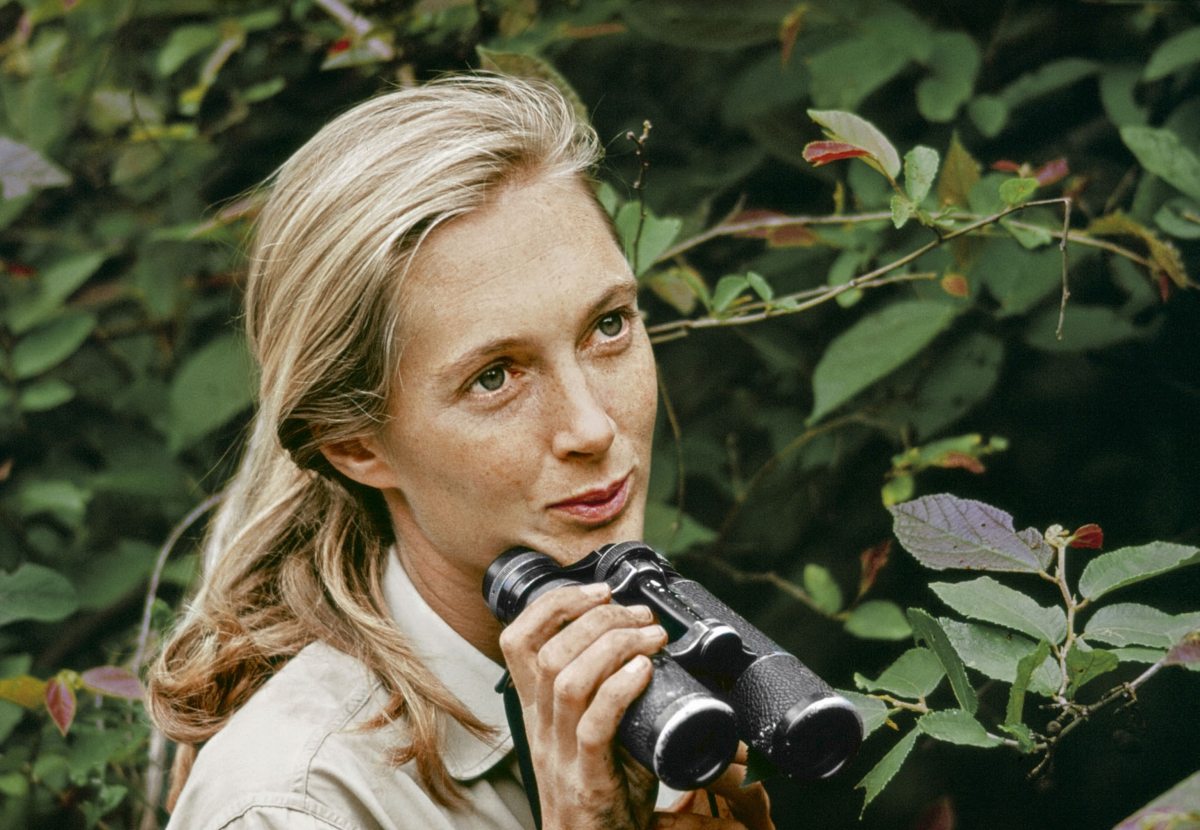
Goodall with a Gombe chimpanzee. Credit: Wikimedia Commons

Goodall gave the chimps names (a no-no at the time among scientists), carefully observed and recorded their family trees, worked out the obtuse — to human eyes– social hierarchy of primate troops, and witnessed behavior that no one had ever seen before.

She saw friendship, love and loyalty among the chimpanzees, witnessed a bitter war between the Gombe troop and a splinter group, followed families over generations, and saw one chimp die of a broken heart after his mother passed away. (I recommend Goodall’s 1990 book, Through A Window: Thirty Years With The Chimpanzees of Gombe, and the 2002 follow-up, My Life With Chimpanzees, for anyone who wants to read more.)

Her first major contribution, in October of 1960, not only fundamentally challenged our assumptions about animals, it forced us to change the way we regard our own species.

Goodall, observing the chimpanzees from a distance despite the rain that day, watched as a male she named David Graybeard repeatedly dipped blades of grass into the Earth. Curious, Goodall approached the site after Graybeard left, grabbed a few blades of grass and imitated what she’d seen the chimp doing.

She was astonished when she pulled the grass out and the strands were covered in termites. David Graybeard had been eating. He was using a tool to eat!

Goodall at Gombe in the early 1970s. The primatologist secured unprecedented access to the chimpanzees by gaining their trust. Credit: Wikimedia Commons

The discovery was huge because scientists believed tool use was, at the time, limited to mankind. We build and use tools, animals don’t, the thinking went.

When Goodall reported her findings to her mentor, anthropologist Louis Leakey, his prompt response indicated the gravity of her discovery: “Now we must redefine ‘tool,’ redefine ‘man,’ or accept chimpanzees as humans.”

Goodall never stopped working with the chimpanzees of Gombe, and today her formerly humble camp has become a permanent compound where researchers — all inspired by Goodall’s story — continue to study our genetic relatives.

But in her later years, Goodall became known for her activism just as much as her work as a scientist. She traveled constantly, engaging audiences on the subjects of animal conservation, respect for nature and understanding our place in the natural order. It’s a job that has become more necessary than ever as relentless human expansion, habitat fragmentation and human behavior push thousands of species toward extinction.

Credit: The Jane Goodall Institute

We lost Frans de Waal, the famous primatologist, in 2024. Now we’ve lost Goodall, and Sir David Attenborough is less than six months shy of his 100th birthday. We’re going to need people to pick up where they left off, and the job is much more difficult than it looks, requiring expertise, charisma and the ability to connect with audiences who know little about the subject matter.

But that’s a problem for another time. For now, let’s remember Jane and appreciate all she’s done over the span of an incredible life and career.
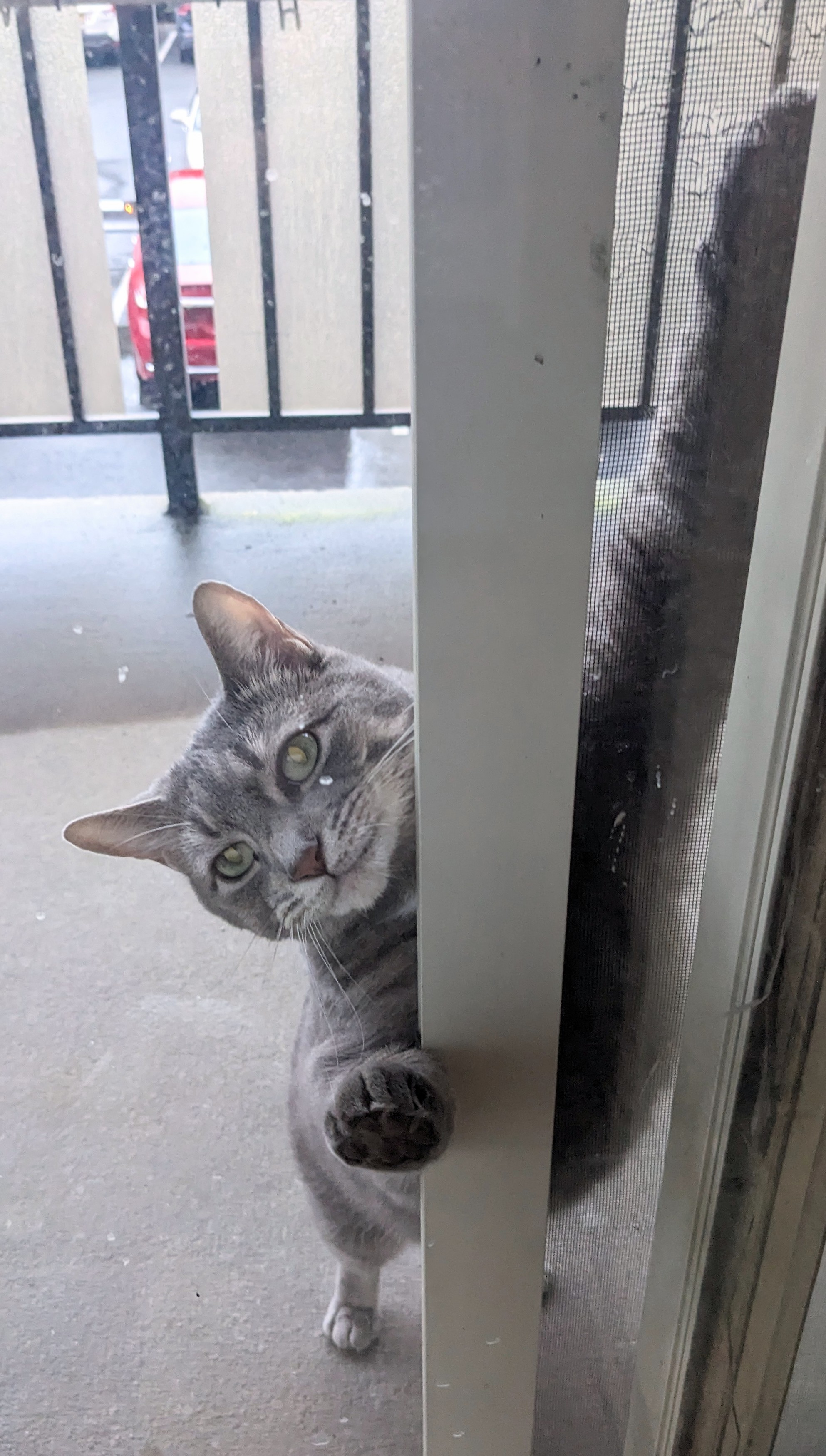
‘Who, Me? I Wasn’t Clawing At The Screen Again, I Swear!’

Buddy is a good boy! Buddy doesn’t scratch the screen!

“Hahaha! You humans are so funny with your overactive imaginations!

PXL_20230520_230803473~2

Your ears and eyes deceive you, human! I was not trying to scratch the screen door again.

I told you, those tears in the screen are from a chalupacabra! I said ‘Look here, chalupacabra, this is Buddy Territory. You’re not welcome here! Get!’

But you know those chalupacabras, they never listen. Stubborn animals!

Chalupacabra
Pictured: A vicious Chalupacabra that scratches the screen door and blames poor Buddy. Credit: PITB

My claws are NOT stuck in the screen, okay? I’m just resting my paw. I can get free any time I want, it’s just that I don’t want to right now.”

Forty-six minutes later:

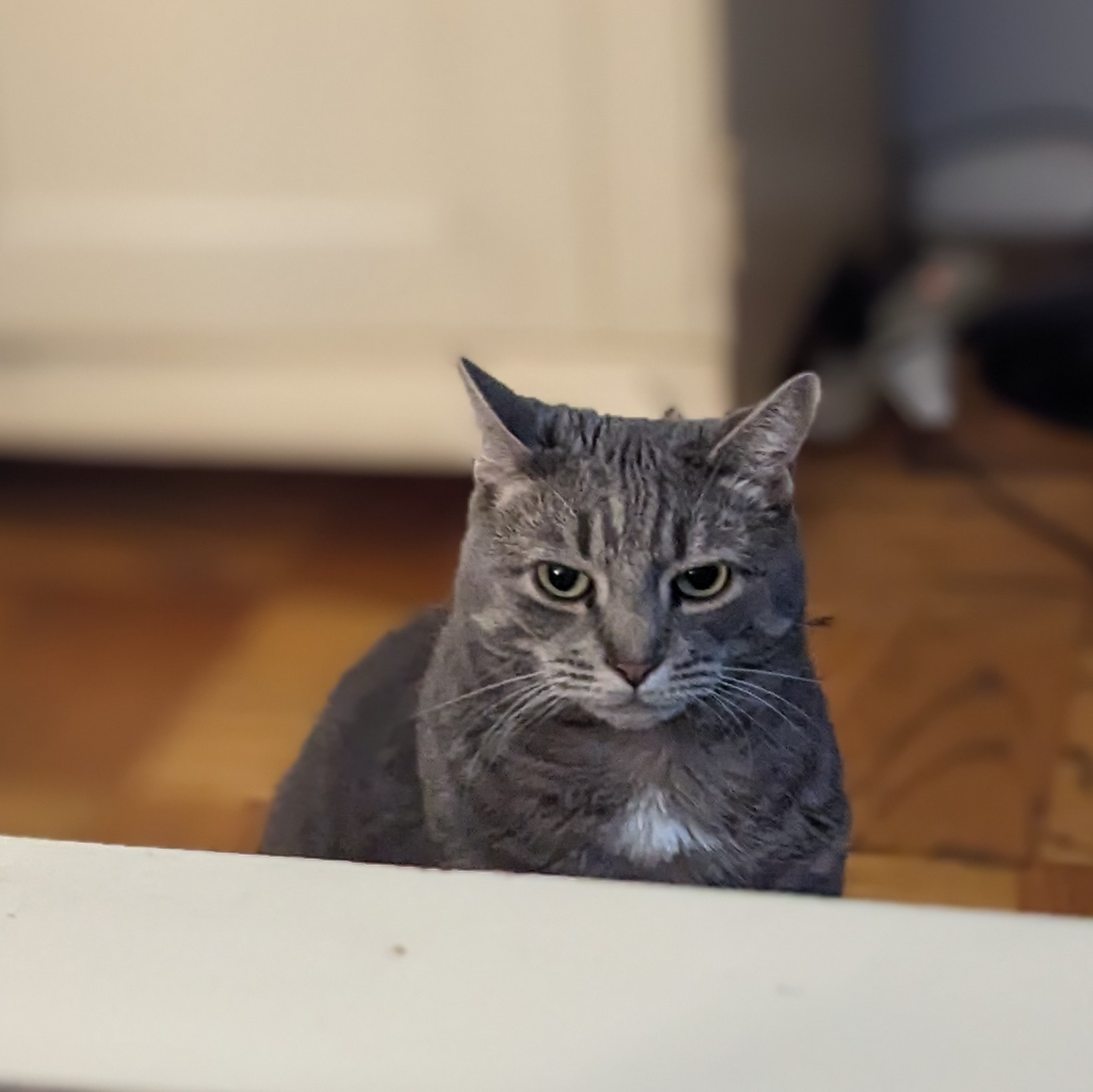
PXL_20230521_003757806.PORTRAIT~2

“I’m right here, you know. I see you eating that ice cream sandwich. I see how it is. ‘Snacks for me, but not for thee.’ Well I have news for you, human! I’m going to sit here and stare at you all mean-like until you procure a Buddy snack.

You feel guilty? Good! You’re meant to.”

New Human Surprisingly Easy To Manipulate, Rescue Cat Says

After arriving in his Forever Kingdom, a newly-adopted cat began the hard work of training his new human.

NEW YORK — It took only six seconds for Jenna, Mikey’s new human, to open the bathroom door when guilted with mournful meows on Wednesday, the newly-homed cat reported.

The 28-year-old human woman entered the bathroom without her recently-adopted feline at approximately 6:22 pm on Wednesday.

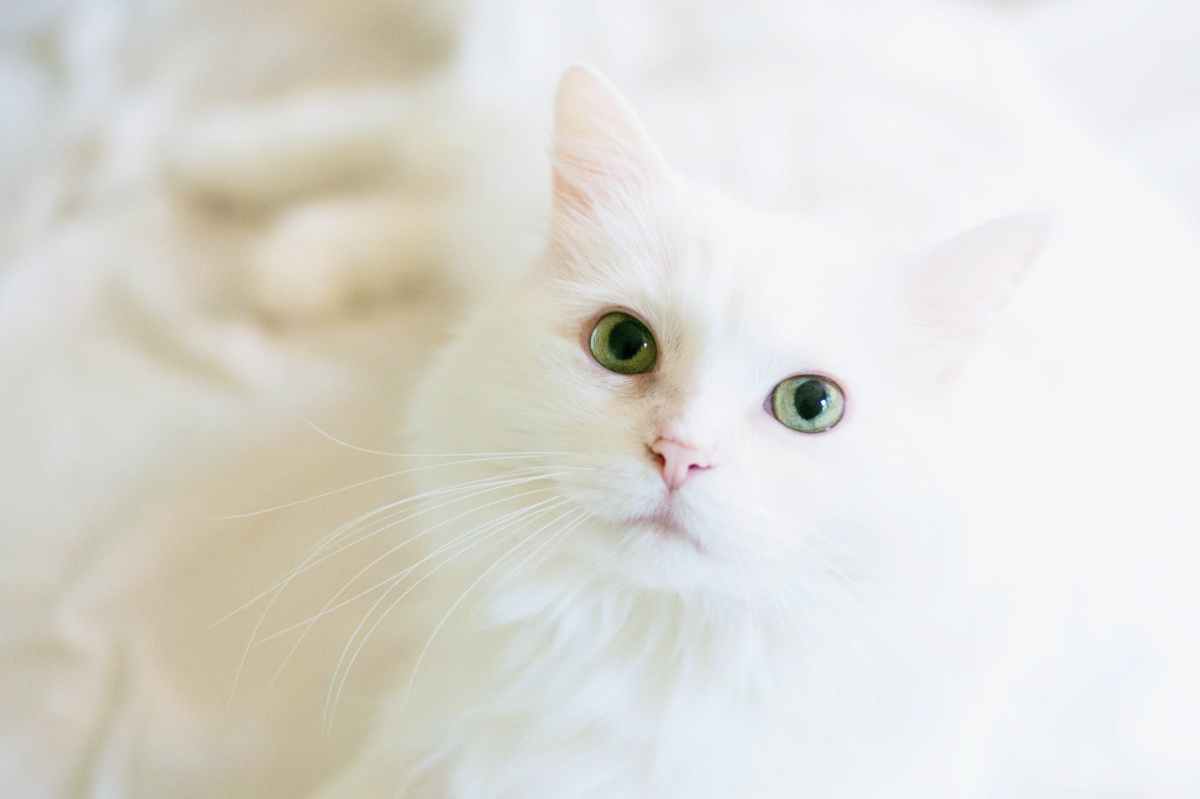
“I said to myself, ‘Mikey, we gotta nip this in the bud right away. We can’t have her thinking she can use the bathroom without us, can we?'” the white moggie said.

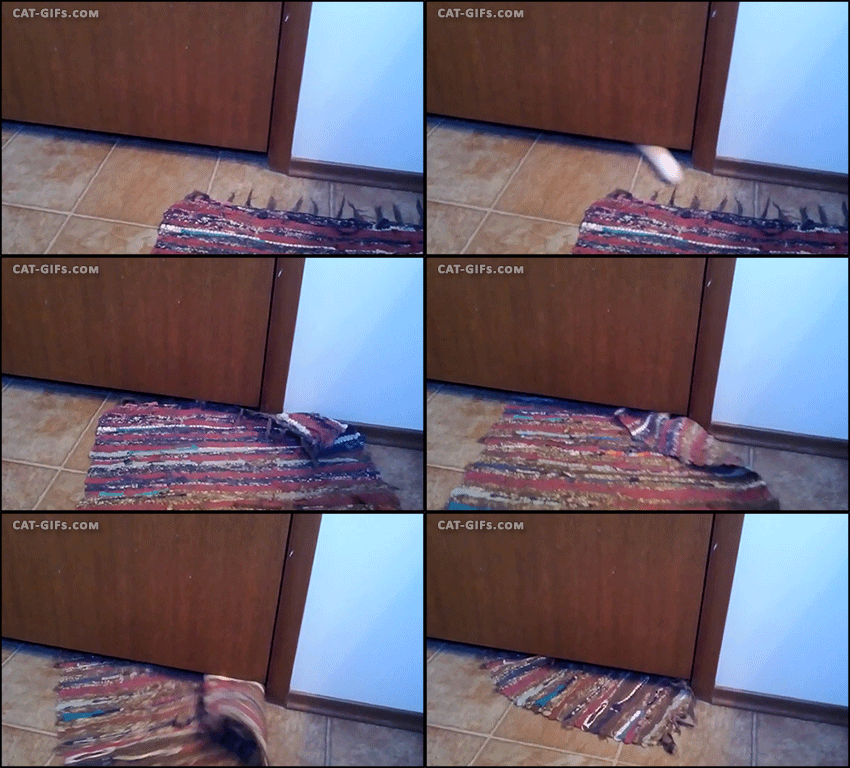
Mikey launched into a routine that involved scratching the frame, reaching under the door and meowing frantically — “the classics,” he said.

Six seconds later the bathroom door opened, revealing a concerned Jenna.

“Oh my poor baby, are you okay?” she asked, extending a hand as Mikey padded into the bathroom. “I was worried! It sounded like someone was strangling you!”

Mikey said he milked his new human’s sympathy for all he could get.

“I flopped onto my back, gave out a little ‘Muurrrp!’ and looked at her with my big, sad eyes,” he told reporters. “A few minutes later she was in the kitchen, showering me with snacks. Easy peasy!”

catpaw
Paws under the door: A classic feline manipulative strategy that almost always yields results, especially if you can grab something!

Mikey, who spent almost three months in a local shelter as younger cats were adopted during kitten season, said he’s proceeding cautiously in his new home and plans to use his keen feline powers of observation to develop a meticulous catalogue of which buttons to push at specific times “to yield maximum snackage and massages.”

“I haven’t used my solicitation purr yet,” he said. “So far my human’s been pliable and gives me what I want, when I want it. The other night she spent four hours laying in a very uncomfortable-looking position to avoid disturbing me while I napped on her shoulder. I want to see how far I can take it before bringing out the big guns.”

Patience has paid off, Mikey said.

“Her boyfriend came over the other night,” he said. “I could have hissed, peed in his shoes, chased him off. After all, there can only be one man of the house. But he brought a gift for me, one of those track towers with the ball you swat around, you know? I have to admit, I was impressed that he knew enough to pay tribute to me. That guy’s alright.”