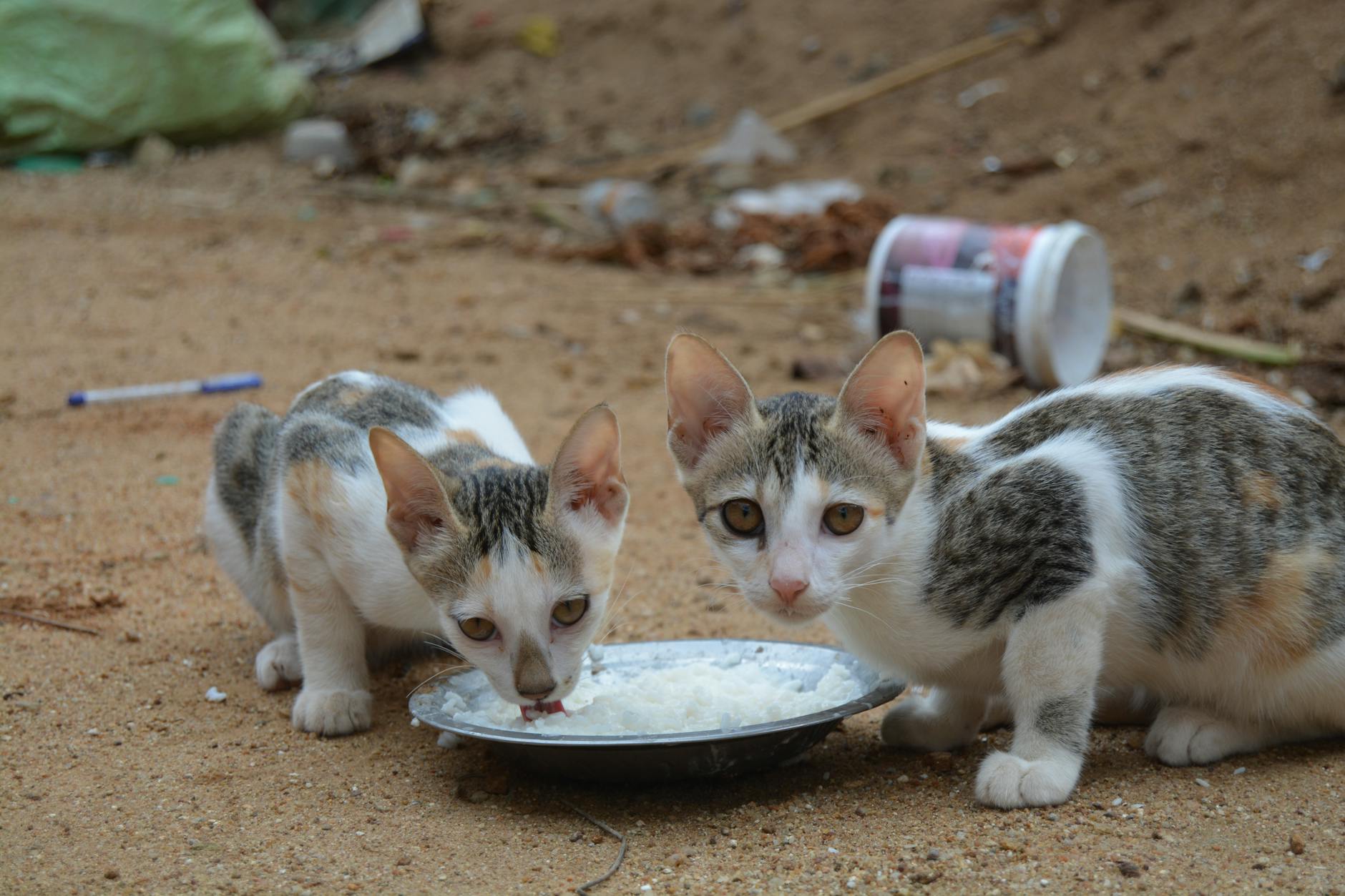
Athens Gets Its First Cat Cafe

The proprietors say they wanted to create a space that “calms and relaxes” guests and gives Athens’ street cats a chance to find forever homes.

Natalie and Dimitris went all in on their dreams for a cat cafe.

After experiencing similar places overseas and falling in love with the concept, they quit their jobs in tech and hospitality, found a nice spot in the Athenian neighborhood of Thissio — known for its prime views of the acropolis and Parthenon — and established the first cafe in Athens’ 3,000-year history.

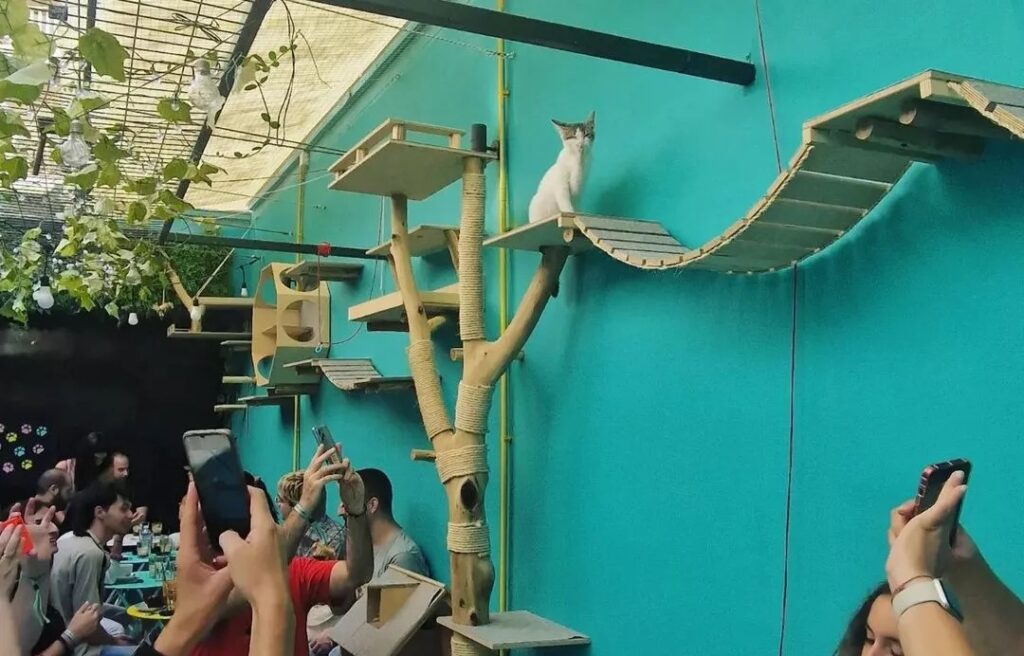
0-6-1024x656
Guests film their favorite cats as the little ones play on a network of walkways and cat trees. Credit: Greek City Times

When I visited a cat cafe in Tokyo, slots were segmented into 30 minutes at 2,000 yen (about 13 bucks) per and coffee was from a vending machine. (To be fair, Japan’s vending machines are excellent and many of them brew fresh coffee internally.) Cat cafes in New York tend to operate in a similar manner, although without the vending machines and with strict separation between food prep areas and the sections where the cats roam, lounge and poop.

But Natalie and Dimitris wanted a cafe that reflected the pace of Greek life, so appointment is by reservation, there aren’t any limits on how long people can hang out, and half the cafe’s space is a fenced-in yard where people can enjoy the cats and the Mediterranean weather.

People can even serenade the kitties, who are all former strays by sitting down and playing a piano inside the cafe.

But ultimately, the couple told the Greek City Times, they opened the cafe — called simply Cat Cafe — because they love cats. Unlike their Turkish neighbors across the Aegean, Greeks aren’t known for caring for street cats despite many of them eking out a living in Athens and other cities.

In Greece, Natalie and Dimitris said, cats are “very misunderstood animals.”

“From the beginning, our goal was to bring people who don’t have cats into contact with cats,” they told Greek City Times. “To interact with them and get to know them. And decide to adopt one.”

Note: The original interview was in Greek and translated to English for the Greek City Times, so there’s some funky phrasing. Readers who are fluent in Greek can read the original here. Top image credit: Pexels

Australia ‘Declares War’ On Cats, Plans To Eradicate Ferals And Strays

Australia announced the plan after a new report called cats the greatest driver of extinction in the country.

While their neighbors in New Zealand called for “woah on feeral kets” earlier this year, Australia is planning its own nationwide effort to wipe out free-roaming cats in an attempt to prevent the extinction of local wildlife.

The “war” announcement, made on Wednesday by Australia’s Environment Minister, Tanya Plibersek, comes on the heels of a report that calls “invasive animals” like cats the primary force behind species extinction in most of the world, including Australia. The report was released by a group of academics from 143 countries who make up the Intergovernmental Platform on Biodiversity and Ecosystem Services (IPBES), which advises the UN and sovereign states on wildlife policy.

Plibersek singled out felines in a press conference announcing the plan.

“They played a role in Australia’s two latest extinctions … they are one of the main reasons Australia is the mammal extinction capital of the world,” she said.

In addition to targeting felines on the mainland, Plibersek said Australia’s government would attempt to completely purge Christmas and French islands of their cat populations.

I have not had the opportunity to read an advance of the report, which was just released, and it will require careful reading as well as additional research before I’d feel comfortable commenting on the claims. That said, the numbers bandied about in press accounts (which claim cats kill more than 2.6 billion animals a year in Australia) are similar to the claims we’ve heard before, so unless there’s original research here and not a rehash of the same meta-analyses frequently cited in stories about cats and their impact on biodiversity, it doesn’t change the simple fact that it’s bad policy to act without reliable data.

I’m talking about an actual effort to count the feral and stray cat population in defined areas, as the Washington, D.C. Cat Count did using trail cameras, monitors and other methods. Obviously that can’t be applied to an entire country, but it can be done in different locations and provide a baseline to work with. Without that effort, the estimates of feline impact are nothing more than guesswork by professors sitting behind desks often entire continents away from the locales in question, plugging invented numbers into formulas intended to extrapolate totals for birds, mammals, lizards and insects killed by felis catus.

While similar studies estimated the number of cats in the US at between 25 and 125 million, Australia’s federal government says there are between 1.4 and 5.6 million cats in the country. If that’s true, it means each free-roaming cat in Australia kills between 500 and 1,850+ animals a year. It’s also difficult to accept estimates of predatory impact when the corresponding estimates of total cat population are so vague.

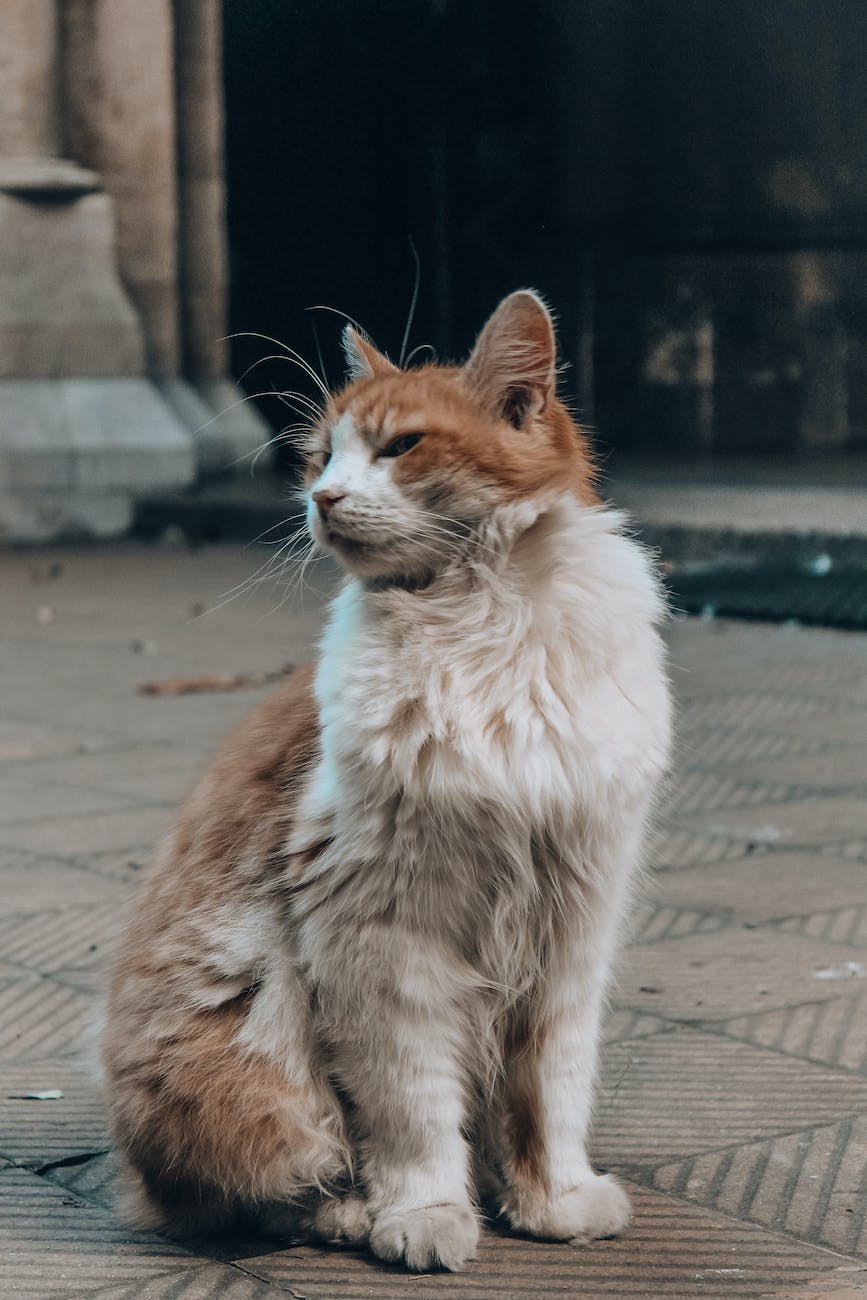
a fluffy cat on a sidewalk
A “feeral ket.” Credit: Ferhan Akgu00fcn/Pexels

Still, as I’ve written in earlier posts, government intervention was inevitable without proactive measures. Australia’s cat lovers and caretakers would do well to voluntarily keep their pets inside, and to double their efforts to catch, spay/neuter and find homes for as many strays as they can.

If you live in Australia, you have until December to provide feedback to the federal government, and it’s probably a good idea to check with your local animal welfare groups, which are undoubtedly composing their own responses to the plan.

Cat Hunt Canceled, Kiwi Journalist Says Cats ‘Need To Be Shot,’ ‘Run Over’ And ‘Wiped Off The Face Of Aotearoa’

Cats are blamed, to the exclusion of almost all other factors, for the decline in native bird populations in New Zealand.

A New Zealand group canceled a cat-hunting competition for kids after receiving massive backlash for the plan, but one Kiwi journalist told a national audience he thinks the cat hunt is a great idea and doesn’t go far enough.

“When it comes to feeral kets, I’m on the soide of the kea, the kākāpō and the kiwi ivery sangle doy of the week and my missige to [the organizers] is ‘Git the competition back on, git the keds back out thea,'” said the vowel-desecrating morning show host Patrick Gower. “If thea gonna hunt and thea’s feeral kets in the way, then we hif to woipe them out. Feeral kets need to be shot, they need to be run ovah, they need to be trepped, they need to be woiped off the foice of Aotearoa and I imploah the school to git it back on, and look, I’ll put up some rewoade as well foah any kets these kids git down theah as well.”

English translation: “I think the cat-killing contest is a wonderful idea, cats need to be shot, run over and exterminated from New Zealand, and I hate cats so much that I’ll put up some of my own money as prizes for the children who bag the most kills.”

You’ve got to wonder what cats have done to Patrick Gower for him to hate them so much, and fortunately dear readers, PITB has the answer!

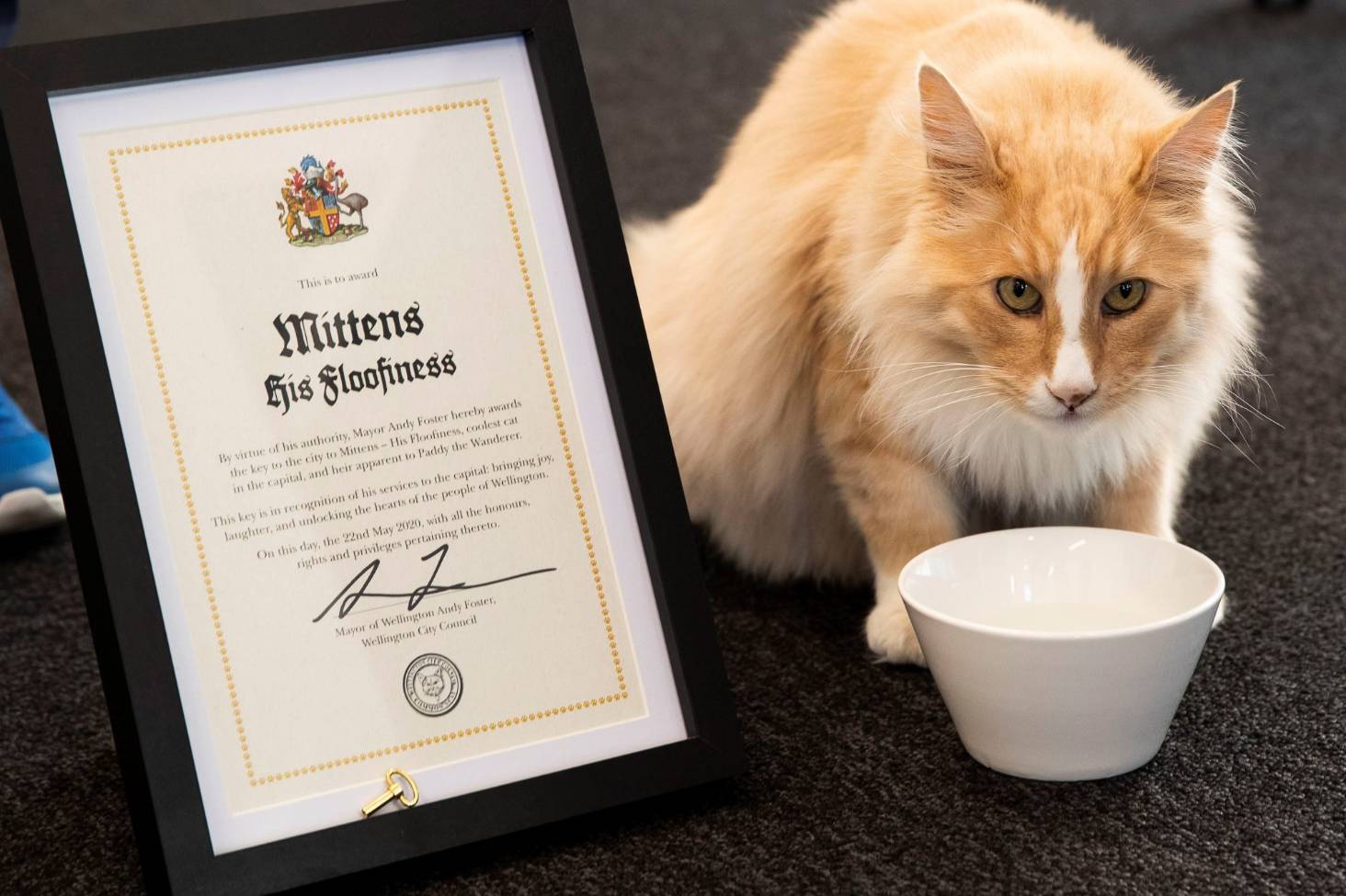
Gower lost the New Zealander of the Year competition of 2020 to a cute orange tabby named Mittens.

Think about that: All those years of doing Pulitzer-worthy breakfast show kitchen demonstrations, of slaving away at the anchor desk bringing viewers important news about reality TV stars and parroting former Prime Minister Jacinda Ardern’s declaration that New Zealand’s government is “the single source of truth” on COVID, and Gower loses the honor to a damn cat. Mittens even has the key to the City of Wellington, and Gower does not.

So sad.

Mittens the Cat
Mittens receiving honors that have eluded morning show host Patrick Gower. Credit: Wellington City Council

It’s unfortunate when a man in influential position, small country or not, enthusiastically encourages children to practice being future serial killers by slaughtering innocent animals because he thinks — despite the complete absence of evidence — that arbitrarily gunning down and running over sentient animals will save birds.

Really, you’d think before calling for the extirpation of an entire species of animal that these people would have something, even a single bogus research study, claiming that bird populations would recover if only people started killing cats on sight.

But no such proof exists, and the burden of proof rests with Gower, fellow Kiwi cat-hater Gareth Morgan and others who harbor an irrational and ill-advised hatred of tiny animals who are simply behaving the way nature designed them to behave.

What we do know is that managing cat populations can be done, but it’s difficult, time-consuming work that requires dedication and patience.

Cities like Washington, D.C., with its exhaustive cat count, and communities across the US have provided the blueprint with TNR efforts and a mass push for all pet owners to spay and neuter their cats. The results have been remarkable, and shelters save more than a million felines a year compared to just a decade ago. There’s still work to be done to bring the number of euthanizations down to zero.

Patrick Gower
Gower

It’s also worth noting that the organizers of the North Canterbury Hunting Competition and supporters like Gower are coming from a place of ignorance. In their original, now-deleted announcement, the organizers offered a “guide” to telling the difference between feral and pet cats, unaware that they are the same species. The only difference is that pet cats are fortunate enough to have homes, and strays and ferals do not.

The group said it was offering its “guide” as a way to prevent children from killing pet cats, but how exactly would they do that when a pet is indistinguishable from a colony stray or a feral? Would they find a microchip on the corpse of a cat they killed and say “Oops, guess that one doesn’t count!”?

Does a cat somehow feel less if it doesn’t have a home? Is its life worth less if it doesn’t have a collar and eat from a bowl?

It’s barbaric and so poorly thought-out, it really boggles the mind that the idea of a cat-killing competition for kids was voiced, let alone approved, planned and promoted by supposed adults.

As for the contest itself, we’re very glad it’s been called off, even if the organizers want to play victim and say their feelings have been hurt by the response to their murderous event.

That, however, doesn’t solve the problem. The fact that the organizers thought this was a good idea in the first place, and the increasingly pitched rhetoric from the likes of Gower and Morgan, are normalizing the idea of slaughtering innocent animals who have their own minds, thoughts and feelings, and who have been shaped by 10,000 years of history to live with and depend on humans.

Instead of calling for blood and whipping people into a frenzy, influential New Zealanders should read about cats and animal cognition in general, so they’re aware that felines experience the full range of primary and secondary emotions and are very much capable of suffering the same way we do when we’re injured, stressed and our lives are in danger.

That, unlike claims that cats are primarily responsible for the decline in bird populations, is hard scientific fact. We can peer into the brains of felines, watch their neurons fire, see different brain regions light up as they think specific thoughts and respond to specific smells and sights.

Maybe if people who hate cats understand what they are, they’ll feel some empathy for a beautiful species, animals who have been companions and literal life savers to humans since before deepest antiquity, animals whose lives have intrinsic value regardless of what they mean to us. At the very least, we owe them that.

‘We Never Broke Any Laws’: In Disbelief Over Their Conviction, Alabama Cat Ladies Vow To Appeal

After a judge barred them from caring for a cat colony, Mary Alston and Beverly Roberts say they’re worried about the strays, who have been left to fend for themselves as winter sets in.

They’d been treated like hardened criminals and insulted by the same police officers who were supposed to protect them, but Beverly Roberts and Mary Alston didn’t think they’d be convicted.

Not for taking care of cats.

“I felt it was very unlikely that we would be found guilty,” Alston told PITB, “with all of the evidence that we had on our side with the body camera footage, and we never broke any laws.”

Roberts and Alston were arrested on June 25, when a trio of police cars pulled up and officers from the Wetumpka, Alabama, police department confronted them. Police body camera footage shows the women, who had been caring for a colony of stray cats, were surprised by the tone and impatience of the officers.

What they didn’t know was that Wetumpka Mayor Jerry Willis was the one who’d in effect dispatched the officers to the small wooded lot owned by Elmore County, grounds that are open to the public. They didn’t know that the officers — who warned the confrontation was “going to get ugly,” told the women they’re “too old to be acting this way” and later joked that they were “a bunch of cops beatin’ up on some old ladies” — were told by the assistant chief of police to arrest them after Willis spotted Alston’s parked car and called the assistant chief directly.

On Tuesday, despite the fact that Willis’ role was revealed during a trial, and despite the fact that Wetumpka has no laws against managing cat colonies or conducting “trap, neuter, return” activities, Alston and Roberts were convicted of a pair of misdemeanors each. Lacking laws to charge them directly, the authorities instead accused the women of trespassing on public land and being uncooperative with the officers.

“That’s what I kept going back to – that feeding and trapping cats is not illegal,” Roberts told PITB. “I was not in the location I was [accused of trespassing], and I was sitting in my car talking to my friend. I was not feeding cats.”

During the trial, Willis and the police argued that they’d already told Alston and Roberts to stop interacting with the cats, and said the pair chose to ignore earlier warnings to stay away from the stray colony. They reiterated their view that the colony is a nuisance.

Roberts said she’s had her disagreements with Willis in the past about the way the town handles animal-related issues, but says Wetumpka’s animal control officer gave her and Alston his blessing to manage the cat colony at their own expense. The animal control officer confirmed that during the Tuesday trial. Public-private partnerships to care for stray cats are common in towns and cities across the US, with many elected leaders welcoming the opportunity to work with local rescues and volunteers.

Roberts and Alston say they plan to appeal their conviction, hoping a county judge will see the charges as “politically motivated” accusations. They pointed out that Wetumpka municipal Judge Jeff Courtney is employed directly by the town, not elected to the post by voters, and they believe they’re more likely to get a fair shake when the people deciding their fate aren’t serving at the pleasure of the people making the accusations.

In the meantime, the cat colony remains in Wetumpka, and the cats haven’t been cared for since late June.

“We are very worried about them,” Roberts told PITB. “A few animal lovers have said they would help, but we are not sure this will happen. I’m not sure there is enough food available to hunt. The weather is getting colder, and they need protein.”

Since the terms of the sentencing include two years’ probation, Alston and Roberts are prohibited from caring for the strays. Alston noted the irony of local authorities claiming TNR was exacerbating a “nuisance” while, in the absence of care and neutering, the free felines “are left to go hungry and continue to multiply and branch out searching for food.”

Roberts says she still finds it hard to believe Wetumpka officials refused to compromise or find a way to establish cooperative care for a community problem.

“I thought that they surely had more pressing issues to attend to,” she said. “I really thought the judge would dismiss it and tell the city to work it out.”

Top image credit Wikimedia Commons


One Unverified Claim Of An Aggressive Stray Prompted A New Jersey Town’s Plan To Trap And Kill Cats

Local authorities have backed off the plan, but the story raises important questions about how local governments deal with stray cat populations.

The recent saga of a New Jersey town’s ill-advised plan to “destroy” feral cats highlights almost everything wrong with local government.

First, a notice went out from the northern New Jersey town of Matawan, informing residents that feral cats had become a “nuisance” and their presence posed a danger to “the welfare and safety of both the community and the cats.” The town, in cooperation with the police and SPCA, the notice said, would begin trapping stray, feral and free-roaming felines in November, and any cat not claimed after seven days would be “destroyed.”

The backlash was loud and immediate, and it took the Monmouth County SPCA by surprise.

After receiving angry complaints, the local SPCA posted a notice on Facebook blasting the “outlandish and outrageous campaign.” The SPCA’s leaders said they hadn’t been consulted and hadn’t approved of the policy, blaming the Matawan Animal Welfare Committee, a three-person group comprised of the town’s business administrator, Scott Carew, town councilwoman Melanie Wang and an animal control officer.

“We are completely outraged and disheartened that our organization has been attached to this archaic campaign to euthanize feral cats, when there are so many other successful, humane alternatives,” the Monmouth County SPCA wrote in its statement.

Carew backpedaled in the fallout, claiming the notice was a well-intentioned way of informing people who live in Matawan to keep their cats inside and stop feeding strays and ferals.

“By no means was the goal of the trapping efforts to destroy trapped cats,” Carew told NJ.com. “That said, since there was the chance that cats would be trapped and brought to the shelter, we wanted to alert cat owners whose cats are allowed to roam outside.”

But Carew also said he and the other were “obligated to address the complaint,” and said the town would have to enact “a resumption of trapping efforts” if it received more complaints about the cats. According to a statement by the Matawan police department, in a meeting between local leaders and people concerned about cats in one neighborhood, it was a single complaint about a possibly aggressive feral cat that prompted the plan.

That’s it. That’s all it took, in the eyes of local government officials, to justify a policy of trapping and killing sentient, human-habituated innocent animals, a group that includes free-roaming pets, former pets, strays and true ferals. A single, unverified complaint of a potentially “aggressive” cat, with no further detail about what the word aggressive means in that context, no information about what the cat supposedly did, or even confirmation that the cat was a feral and not a stray or a wandering pet.

When the dust cleared from all the finger-pointing, Carew said his committee should have informed the SPCA of its plans, and police brushed off responsibility by saying they “assumed” the notice was drafted with the cooperation and intent of the SPCA and other local animal welfare groups.

Cat trap
A cat caught during a trap, neuter, return program, which reduces feral/stray populations in the long term without the cruelty of culling. Credit: Pixabay

Local government leadership and incompetence has become a big problem. With the death of newspapers, particularly regional dailies that employed trained journalists, there are entire swaths of the country no longer served by local government watchdogs who have the time, skills and resources to monitor local officials and inform the public.

We’re fortunate that NJ Advanced Media, an online portal for content from more than a dozen New Jersey local newspapers, has found a way to exist as a viable business serving millions of readers throughout its home state. Without it, it’s doubtful the story would have surfaced anywhere.

Lots of people think local government is small potatoes, but the truth is that local officials are responsible for enormous budgets and wield considerable power. The decisions they make very likely have more impact on our lives than decisions made in the halls of congress, even if it’s the latter that gets people’s blood boiling.

In this case we have a meeting conducted in secret, without public notice, that would have determined the fate of an unknown number of animals. We have anonymous, nebulous complaints and allegations about “nuisances.” What constitutes a nuisance? How many cats are involved? Are the cats part of managed colonies and cared for by people who trap and neuter them? None of those questions were answered.

Additionally, instead of taking intermediary steps or using widely available resources — the “other successful, humane alternatives” the SPCA referenced, from the willing cooperation of local shelters to the free toolkit created by the authors of the incredible D.C. Cat Count — the local officials came up with their own ill-advised plan to trap and kill cats.

Outrage by animal lovers and the SPCA were enough to make sure a plan like this was quickly discarded this time around, but you have to wonder how many other places this kind of thing might be happening without so much as a blurb about it.