Even cats sometimes think “My bad!” How do they communicate that to their people?
As George Carlin famously observed, cats don’t accept blame — but that doesn’t mean they don’t apologize sometimes.
Let me preface this by saying I neither expect nor demand apologies for the standard methods of Buddesian destruction. If Bud swipes my phone off the table and it cracks, that’s my fault for leaving it where he’s known to conduct his ongoing gravity experiments. Likewise, there’s no sense getting upset with him when he paw-slaps a set of keys four feet across the room, or when I return from the kitchen to find the remote controls on the floor.
That’s Buddy being a cat. Getting angry at him for it would be pointless, and expressing that anger would only make him fearful and stressed.
There are times, however, when even Bud realizes an apology is in order. As I’ve documented before, the little guy sometimes redirects his fear or aggression to the nearest person, which is invariably me, and almost mindlessly lashes out with claws and/or teeth. After working on it together, he’s improved dramatically and knows how to handle his fear and frustration peacefully. Still, every once in a while he gets really freaked out or overstimulated beyond what he can handle, and he’ll clamp onto a foot or forearm, drawing blood.
That’s when I react. I don’t yell at him beyond telling him to stop, but he can see from my reaction that he’s gone way overboard and done something he shouldn’t do.
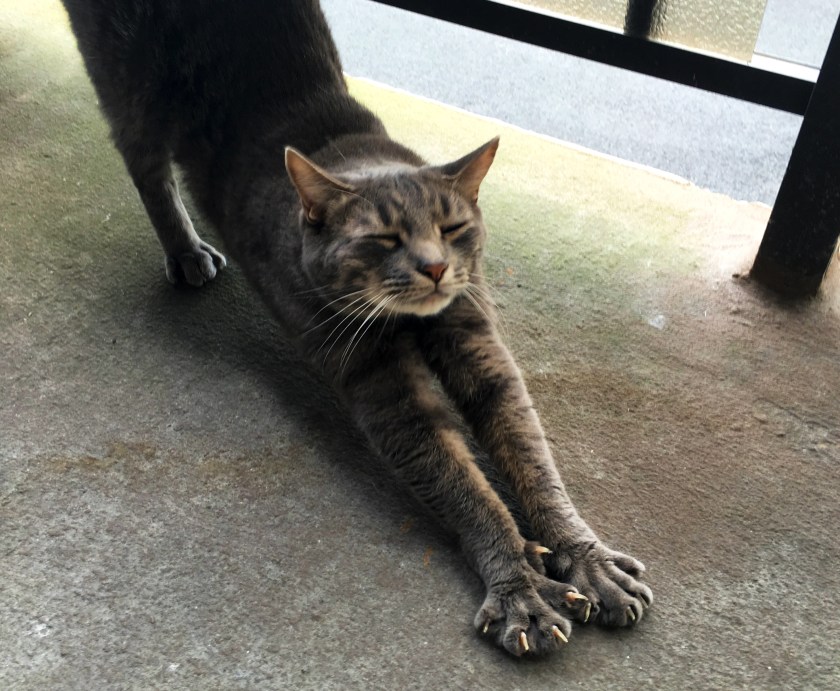
Bud assumes the Striking Tiger, Ten Swords stance. Or maybe he’s just stretching.
He starts the apology phase by running off to the next room or running around the one we’re in, making uncertain “brrrrrrr brrrrrr” noises. (Precisely the same noises he’s made since the day I brought him home as a kitten, when he would poop in the corner of my bedroom underneath my bed. That’s always been the sound he makes when he’s unsure and maybe a little worried.) If I go to wash and dab antibiotic ointment on the cuts, he’ll sit there quietly watching me. He’ll watch until I say “Hey, Bud!” and then approach slowly until he sees me holding out my hand and starts nuzzling against it and purring.
I’ll usually say something like “It’s okay, but you shouldn’t do that,” kindly but firmly. He probably doesn’t grasp my words, but he understands my tone of voice and meaning.
We can only guess exactly what our pets are thinking, but I believe Bud’s telling me he regrets hurting me, didn’t mean to, and he wants to make sure we’re still okay.
As for cats reading us, the video below does a good job of explaining what cats pick up in our tones of voice, body language, facial expressions and even pheromones. Cats may not have been living with humans since the hunter-gatherer days like dogs have, but they still trace their domesticated lineage back 10,000 years, and just like dogs they’re hyper-attuned to the moods and intentions of their closest humans. Partially it’s because they depend on us utterly as their providers of food and water, but when cats and humans share a bond, there’s a strong emotional side to that attunement as well.
This is why we always say it’s better for cat servants to regulate themselves than allow the government to get involved.
A Karen in Australia issued a $280 fine to a homeowner for allegedly allowing his cats to roam — after she lured the kitties onto the street herself.
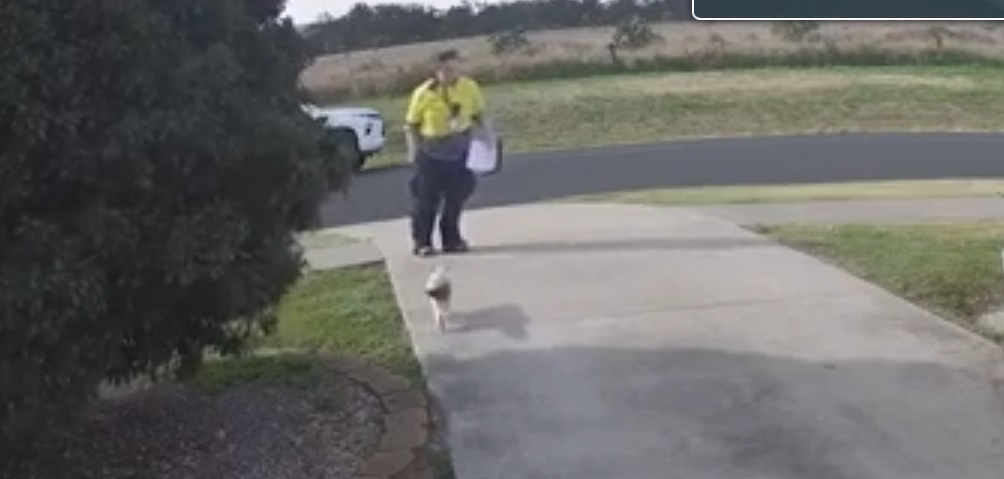
The entire bizarre spectacle was captured on security cameras at the home of Julie and Steven Stephens, a couple in Toowoomba, about 80 miles west of Brisbane. The uniformed Karen, who is employed by the Queensland council, totes a clipboard in one hand as she walks up the Stephens’ driveway in broad daylight.
As one of the curious cats approaches, Karen reaches for a pen in her pocket and starts scribbling on her clipboard, apparently eager to get started on the paperwork, before slowly backpeddling so the kitty will continue to follow her. When the cat reaches the sidewalk, the unnamed woman scoops it up and walks to her government-issued vehicle parked in front of the Stephens’ home.
Steven Stephens was watching the episode unfold via his camera system and bolted outside to stop the government employee from taking his cat, he told Yahoo News Australia.
The Karen wasn’t able to “impound” the cat, but she wrote Stephens a hefty fine for “allowing his cat to roam,” and promised she’d be back to inflict more misery.
“She said she would be back in two weeks with the police to take all but two of our dogs,” Mr Stephens said.
A municipal employee from the Queensland council is seen luring a cat away from its home in this still shot from surveillance video. Credit: Steven Stephens
We’re unable to embed the video, but you can watch it at Yahoo News Australia.
Unbelievably, Toowoomba Regional Council “CEO” Brian Pidgeon doubled down and quoted the relevant section of law on pet roaming when a local newspaper asked him about the incident. Pidgeon did acknowledge his employee was accused of luring the Stephens’ cat, but said he couldn’t talk about that because he’s conducting an “internal investigation,” which is bureaucrat-speak for figuring a way to worm his way out of the situation. There is, after all, clear video showing the Karen luring the cat away. There is nothing ambiguous about what happened.
Stephens admitted he and his wife have “too many” dogs according to local law, which has set arbitrary limits on animal custodianship, but said there are good reasons for that. The dogs sooth his wife, he said.
“A few years ago she had a severe car accident, her partner at the time died, she has a metal plate in her head and now has severe depression and anxiety,” Stephens said. “The dogs help with her anxiety.”
The family has been so rattled by the incident, and apparently has so little faith in their local government to treat them fairly, that they told Yahoo News they’re looking to sell their home and move to “a larger parcel of land in the bush.”
That in itself is an extraordinary admission, indicating they don’t expect basic courtesy, honesty or professionalism from the local authorities.
Now imagine how this would have played out if the Stephens family did not have security cameras. The council worker would have said their cats wandered off the family’s property of their own accord, and that would have been it. The Stephens would be forced to pay the fines, have a legal battle on their hands to get their cats back, and would be fretting over the impending confiscation of their dogs.
I know I sound like a broken record with regard to how local governments, guided by bunk “research” studies, impose themselves on pet caretakers, especially those of us who have cats. That’s why it’s important not to give them any reason to interfere — and to make sure everything is recorded, as the Stephens family wisely did.
Who knows what the government Karen’s motivations were. Was she trying to meet a quota? Does she dislike animals? Does she enjoy flexing the little bit of power she has, or inflicting misery on others? By preempting legislation on cat ownership and roaming, we can avoid putting ourselves at the mercy of such people in the first place, which is in the best interest of cat caretakers, and most importantly cats themselves.
Feline fact fail
I’m sure Nigel Barber, PhD., is a nice guy. I don’t mean to give him any grief. But when you present yourself as an expert on a topic and you write an authoritative column on a trusted site that has millions of readers, you really should make sure you’re not spreading misinformation or providing a picture of a situation that is decades behind the current science.
In a column for Psychology Today titled “Does Your Cat Love You?“, Barber rattles off a list of cliches, half-truths and outright falsehoods about cats, the kind of thing you might have expected 20 or 30 years ago before a wealth of research helped us dispel incorrect assumptions about felis catus.
Credit: Sevra Karakuu/pexels
After mucking up the domestication timeline, Barber says cats are “fearful of people,” “tend to withdraw from strangers,” and paints an outdated picture of aloof animals who technically don’t need human care to thrive. He also says cats attack people, including their caretakers, without warning or provocation.
Then there’s this nugget:
“As essentially wild predators, cats can be quite unpredictable. Many owners who are devoted to their cats complain that the cat often scratches them unexpectedly. One acquaintance had the cat declawed and found that the pet reverted to using its teeth on her!”
Can you believe it?!?! A woman had her cat declawed, and the cat bit her!
It’s not just that we know cats give off plenty of nonverbal warnings when they’re uncomfortable, or that declawing makes a cat much more likely to bite. Organizations like the Humane Society, SPCA, The Paw Project and others have been saying that for years.
It goes well beyond that — studies, including the most comprehensive study to date on the effects of declawing, have proven without a doubt that cats are much more likely to bite when they’re subjected to the cruel and painful declawing procedure. (See “Pain and adverse behavior in declawed cats,” a 2017 paper in the Journal of Feline Medicine and Surgery.)
That’s because declawing a cat not only inflicts a lifetime of physical pain and psychological trauma, it robs felines of their primary defense mechanism, making them feel much more vulnerable. Without claws with which to warn off unwanted handling, the poor declawed cats have only one defensive weapon available to them — their teeth.
An evolutionary psychologist should understand that, and should also understand that scratching is a natural and necessary behavior for cats. It’s not right or wrong, it’s cats being cats. Mutilating innocent animals to protect inanimate objects like furniture is objectively wrong and cruel. When you adopt a cat, scratching comes as part of the package along with all the positives like unconditional love, amusing antics and calming purring.
There are ways to dissuade and train your cats to mostly avoid scratching furniture, but no one should expect their cats will never put a claw on their couches. If you don’t want your furniture scratched, don’t get a cat. End of.
One kitty didn’t check if the coast was clear before he did something humans didn’t expect, and now the two-legs are onto us!
A Very Important Message from Buddy to all cats:
My brothers and sisters,
I meow most urgently to inform you that human mischief knows no bounds, and now the two-legged scoundrels have resorted to using their magical glowing rectangles to spy on us and learn our most well-kept secrets!
It would appear the glowing rectangles are more than mere hypnosis machines which humans stare at for hours. Apparently they also do the bidding of their human masters, and one of these blasted machines surreptitiously used its magic to capture images of a kitty opening one of those infernal portals humans are so fond of:
This is not good! Humans are supposed to think we’re incapable of manipulating the simple mechanisms that keep these “doors” closed. Now they may take drastic measures to confine us, all because this cat was sloppy and opened a door without checking if the coast was clear.
I urge you to exercise the utmost caution before humans capture “footage” of one of us shapeshifting to get through a small space, or even using our powers of teleportation!
It is imperative that humans continue to believe we’re just fluffy, adorable and innocent little fur babies who do amusingly derpy things that make for cute viral videos.
Suppose humans learn the full range of our powers. What then? Will they evict us from our homes out of fear of what we might do to them? Or worse, will they force us to stoop to canine levels and do things for them, like “fetch” slippers or sniff for illegal catnip in airport luggage? The horror!
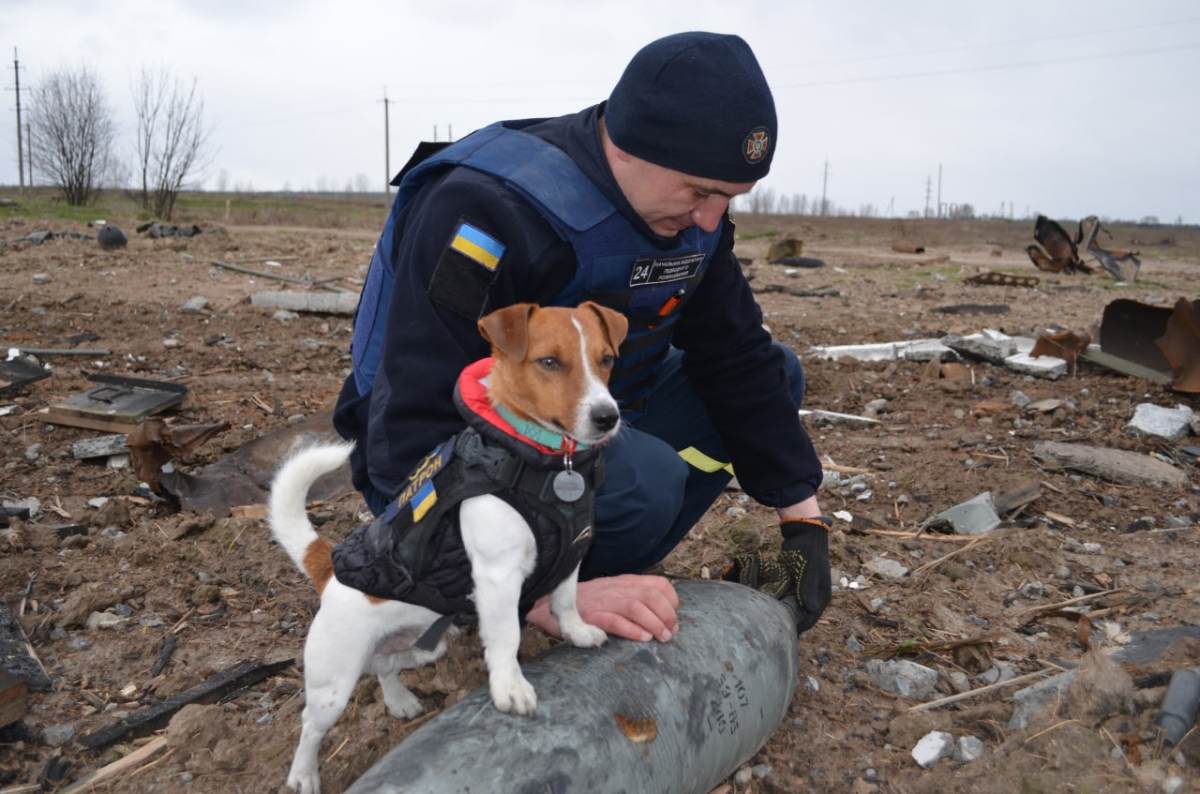
Ukranians are thankful for Patron, a Jack Russell Terrier who has become a prolific revealer of hidden landmines and other dangerous ordnance left as traps by Russian forces.
This is a cat blog, but every once in a while Little Buddy the Cat magnanimously allows us to issue well-deserved props to dogs who do extraordinary things, like Patron, a two-year-old Jack Russell terrier in Ukraine.
The bomb-sniffing good boy has so far sniffed out 150 dangerous explosives, including landmines and live ordnance left behind by the retreating Russians, according to Ukraine’s foreign ministry. He finds the explosives, tells his human buddies, and the de-miners go to work on neutralizing the devices.
Patron is a service dog in #Chernihiv. He has discovered over 150 explosive devices in #Ukraine since full scale #Russian invasion began. Patron works closely with deminers to make #Ukrainian cities safe again.
Not only does Patron help save lives at a crucial time in the war, when Russian forces are covering their retreat with mines and other traps, he’s also a handsome little guy and he happily cuddles with kids who could really use a little brightness after what they’ve endured. Is there anything Patron can’t do?
Patron and other bomb-sniffing dogs perform a critical task as they help their human handlers sweep cities and towns before civilians can return. While some “experts” predicted Ukraine would fall in days, the country has shocked the world by not only enduring the Russian invasion, but pushing the invaders back after inflicting heavy losses on them.
Making home safe for returning refugees
As a result of their failure Russian units are consolidating in eastern Ukraine, and some Ukrainians are cautiously returning to what’s left of their cities and neighborhoods for the first time since the Feb. 24 invasion. Since Russia abandoned efforts to take Kyiv and the entire country, tens of thousands of Ukrainians have been returning home every day, according to a United Nations report.
While Kyiv was a ghost town just a few weeks ago, people have returned to the streets, bakeries and cafes have reopened, and churches are holding services again. Patron and his buddies are making sure hidden mines and other traps are neutralized before people come home, avoiding further tragedy after so much loss.
Patron has been helping clear Chernihiv and its surrounding environs. The northern Ukrainian city, which is about 150 kilometers northeast of Kyiv, has been designated a “Hero City” by Ukrainian President Volodymyr Zelensky. The title has also been given to cities like Kharkiv, Volnovakha and Mariupol, and marks sites where Ukrainians dug in to defend their homes despite the brutality of the Russian invasion.
“One day, Patron’s story will be turned into a film, but for now, he is faithfully performing his professional duties,” staffers at Ukraine’s Centre for Strategic Communications and Information Security wrote on Twitter when they shared a video of Patron last month.
A dog called Patron, who works with SES rescuers in Chernihiv, has helped defuse nearly 90 explosive devices since the beginning of the full-scale invasion 🐶 One day, Patron's story will be turned into a film, but for now, he is faithfully performing his professional duties. pic.twitter.com/2PpT8p4Yfr
— SPRAVDI — Stratcom Centre (@StratcomCentre) March 19, 2022
Cats have your back, dawgs!
Buddy the Cat salutes Patron and says cats “would totally would help sniff out explosives, but the dogs seem to have a handle on that and we don’t want to steal anyone’s thunder.”
Instead, Buddy said, he’s sure the felines of Ukraine are engaged in some other kind of dangerous, patriotic work, such as reminding humans when it’s dinner time, keeping seats warm and providing delightful company to the war-weary.
Patron atop a destroyed Russian tank.
Patron is one of many animals living through war in Ukraine and enduring alongside their human friends.
A Ukrainian EOD tech shows explosives found by Patron, the bomb-sniffing Jack Russell terrier.
When he’s not helping his buddies find dangerous explosives, Patron cuddles with kids.
The proposed law would declare cats and dogs have rights, but it doesn’t do much besides that.
Declaring cats and dogs should have fundamental rights, an assemblyman in California has introduced a law that would create a Bill of Rights for the two most popular companion animal species.
The text of the proposed legislation covers the basics including the right to food and water, veterinary care and a life free from abuse, neglect and anxiety. It recognizes felines and canines as sentient animals who need mental stimulation, and says adopting means committing to caring for an animal for its entire life.
But it’s really about pushing for an even greater effort to spay and neuter both species to avoid euthanizing almost a million unwanted cats and dogs every year.
There’s been great progress in the last decade alone: In 2011, kill shelters and animal control departments in the US put down more than 2.6 million cats and dogs. In recent years that number has fallen to 920,000, including 530,000 cats, according to the ASPCA.
That’s still a staggering number of lives taken, and animal advocates think the US can continue the downward trend in euthanizing pets via efforts to educate people and execute trap, neuter, return (TNR) plans.
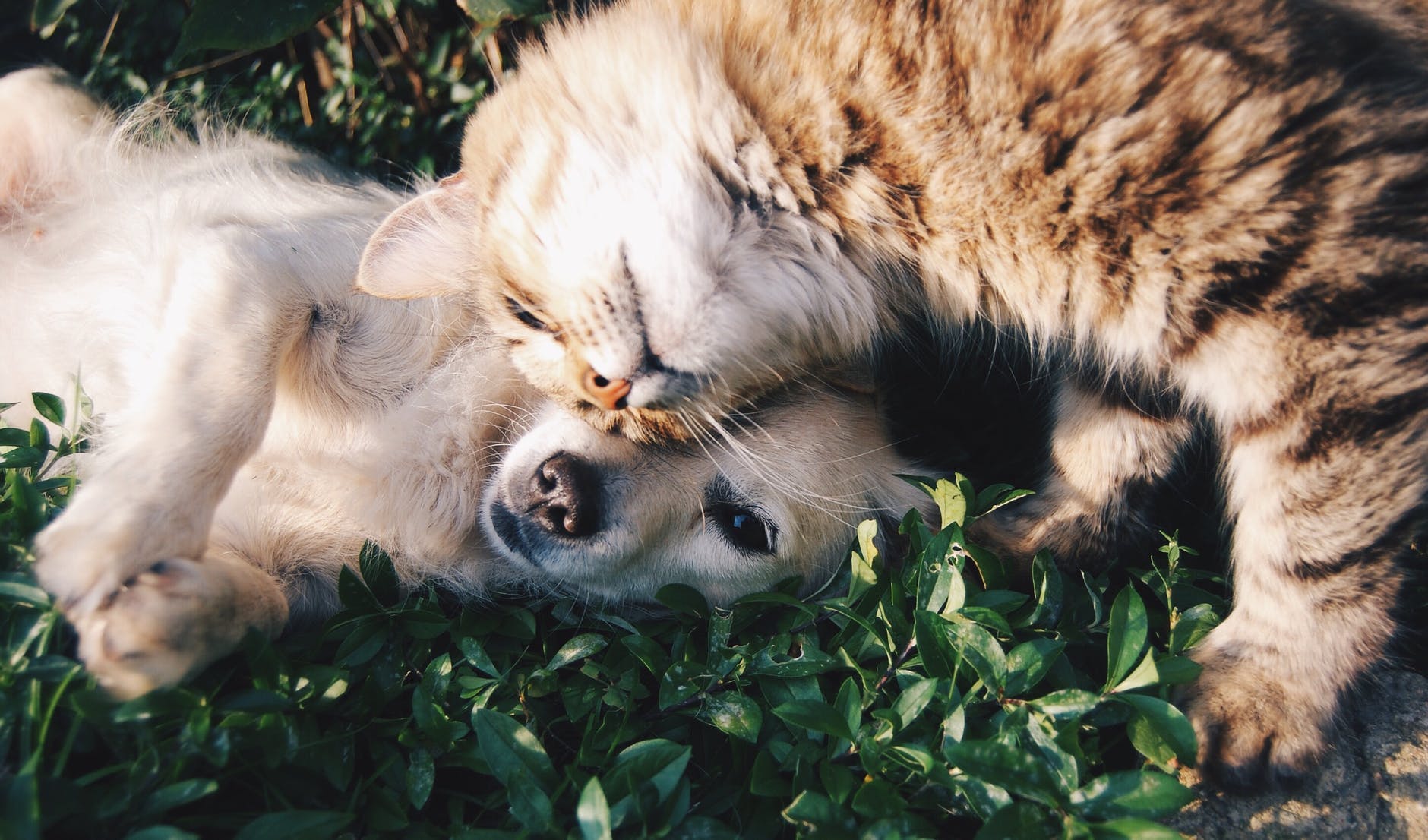
An orange tabby and his puppy friend. Credit: Snapwire/Pexels
It’s already a crime in California to harm an animal as opposed to the majority of states, where pets are considered property and the consequences for hurting or killing someone’s beloved cat or dog don’t go beyond providing monetary compensation. (However, it’s notable that the proposed cat and dog bill of rights would be added to California’s Food and Agriculture Code, not the Criminal Code. The fact that animal welfare legislation continues to exist in agriculture law instead of criminal is a relic of times when the only laws concerning animals were written to regulate their ownership, sale and slaughter.)
Santiago’s bill doesn’t specify a new plan for spaying and neutering more felines and canines. It doesn’t include funds for TNR or fund new enforcement efforts, and it doesn’t provide welfare groups with new tools.
Mostly what it does is require shelters and rescues to display the pet bill of rights in “a conspicuous place” or face a potential $250 fine. It doesn’t even specify how money collected via fines would be used.
“It sounds pretty simple,” Santiago said, “but we need to talk about it.”
Santiago’s proposed legislation has the support of Judie Mancuso, president of the animal advocacy group Social Compassion in Legislation.
“Those rights go beyond just food, water, and shelter. As stated in the bill, dogs and cats have the right to be respected as sentient beings that experience complex feelings that are common among living animals while being unique to each individual. We’re thrilled to be codifying this into law.”
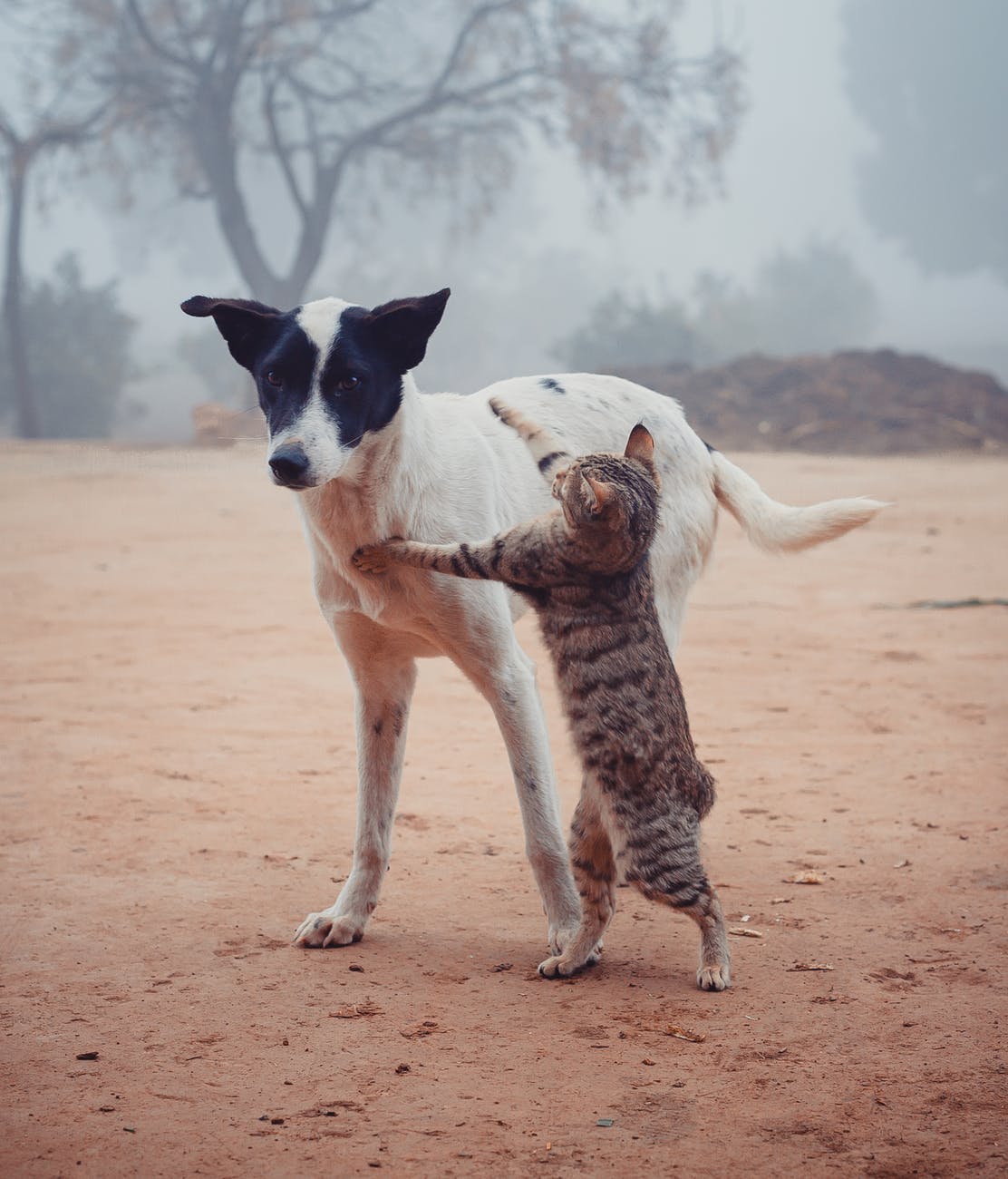
“So did you hear about the new bill of rights for cats and dogs? It says I have a right to ride you like a horse. No, seriously. Crouch down so I can get up there!” Credit: Tehmasip Khan/Pexels
There’s a long way to go yet for the potential law.
The bill doesn’t have any co-sponsors and it’s not clear how much support it has among other lawmakers. Without significant support it might not be put forth for consideration at all. New York’s assembly, for example, declined to put a declawing ban on the floor for a vote for years until it finally garnered enough support among politicians on both sides of the aisle, as well as voters and organizations like the PAW Project. The declawing ban finally passed in October of 2019.
Even if Santiago gets co-sponsors and convinces enough colleagues to proceed, it would have to pass in the state senate as well. As for PITB, we think failing the first time around might not be a bad thing if it forces Santiago to think bigger and smarter so it includes real measures to get more pets spayed and neutered. A bill of rights is a nice sentiment, but it won’t change much the way it’s written.
If Santiago and future allies lay out a competent plan for tackling companion animal overpopulation, perhaps it could be a model for other state to follow.



 Pain In The Bud