Another Serial Cat Killer, This Time Fresh From Prison, Goes Right Back To Killing Strays. Clearly, Existing Laws Are Not Enough

When serial cat killers serve sentences of less than a year due to plea deals and early release for good behavior, how much deterrent value do our laws have? Not much, it seems.

Note, 5/3/2025: We’ve heard from two readers who say the MyNorthWest report contains inaccuracies. We’ve reached out to the police and will follow up with police and courts on Monday to verify the facts and correct potential misinformation. Apologies for the confusion.

Every couple of months, at least in the last year or two, I’ve slowed down on posting, and almost always for the same reason: my cat-related news alerts are  seemingly endless streams of depressing stories about people shooting, strangling or dismembering cats.

It never ends, and sometimes it’s so overwhelming that I’m put off from writing for days. At the same time, I am not a believer in the idea that all animal blogs should be saccharine feel-good fests about fluffy kittens and TikTok videos of cats doing silly things.

There’s always a place for celebrating cats, but if they’re in danger, and if the stories point to wider trends that cat lovers should know about, then I think it’s our responsibility to remain educated. Not only so we can guard against threats to our little friends, but also so we can add our voices to the chorus calling for tougher laws and greater accountability.

That’s ultimately what this is about: accountability.

Stories about two cat serial killers in about a week have made it clear that even the strengthened animal protection law — the Preventing Animal Cruelty, or PACT Act — passed in 2019, during the first Trump administration, raising animal cruelty and murder to the level of a felony, are still not enough. They’re not a deterrent, especially when the convicted abusers and killers end up serving a year or less because prisons are overcrowded and the wider law enforcement community still doesn’t take animal-related crime as seriously as other violence.

Antoine Leander Runner Jr. is a serial murderer of cats. The Seattle man was recently released from prison after serving just a year for a felony animal cruelty conviction.

The 43-year-old’s modus operandi was setting up crude, homemade snares and traps to capture and harm felines. He was also known in cat rescue circles, where he posed as a cat lover and took advantage of programs to get free supplies, including “cat food, kennels, collars, leashes, and treats to lure cats and kill them,” according to MyNorthWest, a Seattle news site.

When locals discovered new homemade traps in Runner Jr.’s old haunts and trail cameras picked up images of the man himself stalking wooded areas, neighbors called police and area shelters. The evidence showed Runner Jr. was allegedly visiting cat colonies at night and had picked up right where he left off. One colony cat’s body was discovered on March 31, “disemboweled and publicly displayed.”

“Animal Control confirmed the injuries to the cats were human-caused,” MyNorthWest reported, adding that it appears Runner Jr. was visiting colonies “every night” to hunt cats.

Above images by u/picardhasyourback, posted to the SeattleWA subreddit. Click on the images to see full-size versions.

Runner Jr. was picked up by Seattle police this weekend after a neighbor spotted him in a wooded area and phoned authorities. The convicted cat killer, who had a new bench warrant out for his arrest, was charged with a misdemeanor, but more charges are likely as police investigate his latest alleged attacks on Seattle-area cats.

The Seattle man was originally arrested for killing cats in 2023, but was released early. The Seattle area was also terrorized by a serial cat killer who stalked the area in 2018, mutilating cats so badly that I won’t repeat the details on this blog out of respect for readers.

It should be made clear that Runner Jr. was not connected to the 2018 killings, but police should reconsider those cases as well because if it turns out Runner Jr. is guilty of these latest cat murders, it will be abundantly clear that he is a high recidivist offender who cannot be trusted to leave the animals alone. He should serve a long, unabridged prison sentence and be subject to constant monitoring when he’s released.

Antoine Leander Runner Jr. was arrested this weekend by Seattle police. Credit: Sarah Seiler/Facebook Georgetown Community Discussion Group

What’s the solution here? Increasingly tough criminal penalties for animal abuse and murder? Expensive monitoring equipment to watch over every cat colony? Education and training for law enforcement so violence toward animals is taken as seriously as it should be?

I hate to keep pointing out that people who harm animals are likely to “graduate” to harming humans, as many studies have shown, because it implies that we should only be concerned about animal abuse for its tendency to turn into human abuse. It obscures the fact that animal life is intrinsically valuable, and that cats — and dogs, many bird species, mammals and marine life — are sentient, with their own thoughts and emotions. But if that’s what it takes for people to take this sort of thing seriously, then it’s worth repeating the point.

A Cruel, Emotionally Manipulative New Scam Targets Cat Owners

“I had to leave work because I was a wreck, fully believing my cat was on the verge of life and death. It’s cruel that people do this,” one victim said.

Two weeks after his beloved cat vanished, Justin Hills received a phone call that simultaneously gave him hope and filled him with dread.

The man on the line spoke with practiced professionalism and told him that his cat, Little Wayne Shorter, had been found badly injured after he was hit by a car.

Little Wayne urgently needed surgery, said the man who identified himself as a staffer with Seattle Animal Shelter. Veterinarians were ready to begin surgery if Hills gave them the go-ahead and sent $2,800 via Venmo.

“The back of my head is screaming, ‘This is a scam. This is a scam.’ But at the same time, because it’s such an emotional pull, I’m thinking, even if there’s only a 10% chance that this is real, you know, I want to go ahead with it,” Hills told Seattle’s WKIRO.

Little Wayne Shorter

“The guy was rehearsed, was smooth. He sounded like, you know, an experienced person,” Hills said. “They had done some research on me before they called. You know, they knew my name. They knew my cat’s name, you know, the address and all this.”

When Hills called his bank, they warned him it was a scam. Hills said he’s glad he didn’t send the money but also devastated his cat is still missing — and that he was given false hope by someone trying to manipulate him in his desperation to be reunited with Little Wayne.

He’s not alone. In a post to Facebook group for missing pets in King County this week, Seattleite Harris Alex described a call from a person who claimed to work for Seattle Animal Shelter.

“They said someone found my cat, Binx, and that he had been hit by a car. They told me if I didn’t pay for surgery, he would die or be paralyzed within the next hour,” Alex wrote.

A caller said Binx, above, was seriously injured and needed urgent — and expensive — veterinary care.

Alex grew suspicious when the caller asked for a payment via Venmo, Paypal or Chime.

“I called the shelter to confirm they do not have him,” Alex wrote. “I had to leave work because I was a wreck, fully believing my cat was on the verge of life and death. It’s cruel that people do this. Be careful out there.”

Staff at Seattle Animal Shelter, which is run by the city, are aware of the scam and have gotten several calls from people asking if the shelter has their cats after being in contact with the impersonators.

“We would never ask somebody over the phone to make a payment,” said Don Baxter, manager of field services at the hospital. “We’re going to get that pet to a veterinarian and get it care and treatment, and then we’ll work out how to get the pet back to the owner after that.”

The lost/injured pet scam isn’t limited to Seattle, and the perpetrators will often switch to targets in another city if too many people become aware of their efforts, only to pop back up again later. The scam’s combination of social engineering and emotional urgency encourages victims to act quickly without giving the situation too much thought.

Experts advise people to keep their cool despite their hopes or fears, and demand proof that the person has the animal:

“This is one of the more difficult scams to deal with emotionally. If someone really has your pet, they should be able to at the very least send photos. Most people should be able to do a video call.

In general, scammers will pressure you to send money in advance. They will often make lots of excuses for not being able to provide proof they have your pet or meet in person.”

This general category of scam isn’t new, but social media has enabled scammers to believably pose as shelter staff using information pulled from the victim’s own lost pet posts and profiles, the FBI notes. The bureau also warns of several variations on the scheme.

Binx

The people running the con find their victims by scanning local missing pet groups on sites like Facebook and Reddit. They gather names and descriptive details, spin a narrative that shocks their intended victims, and create a sense of urgency by saying the cat will die if there’s any delay in performing surgery.

That’s what happened to Susan Burgess, who’d posted about her 15-year-old tabby cat, Linus, going missing. The caller said Linus was hurt and he needed to confirm her name, but Burgess realized he would have known it if he’d scanned Linus’ microchip.

She gave the scammer a piece of her mind before hanging up on him.

“On the off chance that you do have my cat, I hope that you are able to show some compassion and do the right thing,” she told the caller. “But I’m pretty sure that you don’t, and what you’re doing is very cruel.”


PSA: Speaking of scammy behavior, I can’t control the ads that are shown on PITB, but if you’re seeing ads for an amazing-looking, ultra-realistic toy rabbit presented as a great Easter gift, don’t fall for it. Here’s a video revealing what you’ll actually get from the deceptive seller:

UK Pol Resigns After He Was Filmed Trying To Kill Cat With Explosives

The cat survived but her personality has radically changed from loving and affectionate to distant and wary, her human said.

A councilman in a rural UK village resigned from his post and is the subject of renewed police scrutiny after allegedly trying to blow up a neighbor’s cat twice in 2023.

Councillor James Garnor was reportedly trying to stop the cat from climbing into a bird feeder, and decided the best way to do it was to rig the feeder with explosives and lure the curious feline in, according to a report on UK broadcaster LBC’s website.

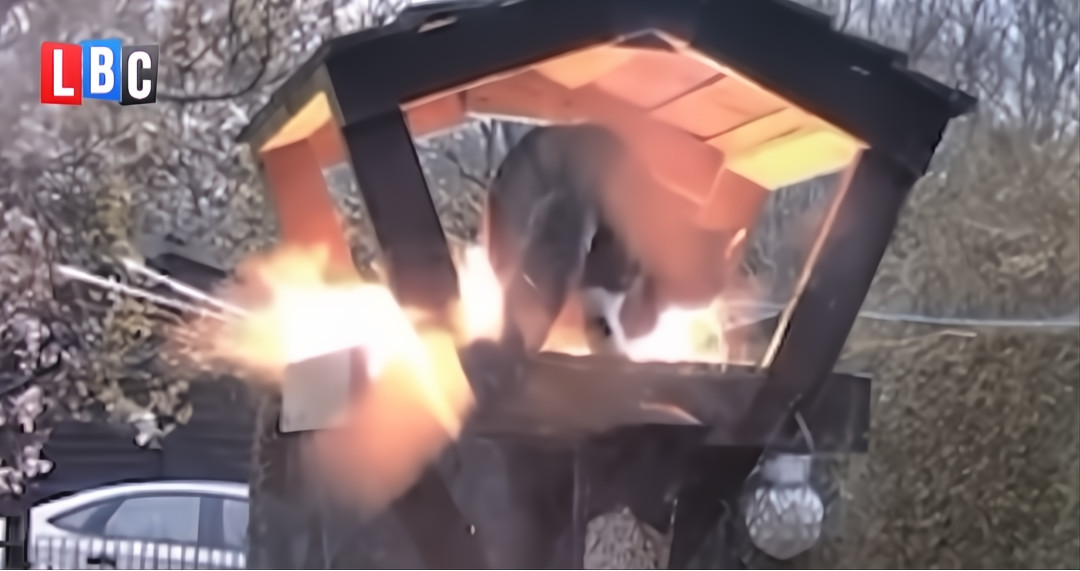
Garnor was apparently so amused by his handiwork that he distributed video of the incidents to his friends. The footage shows a cat named Suki leaping onto the bird feeder on April 9, 2023, and nibbling on some of the bird feed before the explosive detonated. An injured Suki took off immediately and ran home.

She “came home one day missing her whiskers on her face – they looked like they’d been dissolved – so I put a post in my local community page on Facebook… just to warn people in case there was something she’d rolled in that had dissolved them,” said Suki’s human, a woman named Nikki.

Suki’s whiskers were singed off by the heat from the explosion. Image credit: Provided by owner to LBC News

“But somebody contacted me to tell me it wasn’t what I thought it was, that somebody had actually blown my cat up – and that it was my neighbour and local councillor. It made me feel physically sick.”

After she received the video, Nikki filed a complaint with local police, who elected not to arrest Garnor. However, after a second video surfaced with a clearer view of Garnor’s alleged actions, police responded to the public outcry and said they were reviewing the case again.

Per LBC, which broke the story:

“The incident is one of at least two occasions that cats in Whittlebury, Northamptonshire, were allegedly targeted by Councillor James Garnor in 2023 using remote-detonated explosives.”

It’s not clear if the new video shows a second attempt, or a different angle on the first. Garnor “was dealt with using anti-social behavior legislation,” a type of civil admonishment usually associated with things like noise complaints, littering and damaging public property, not trying to kill an animal.

Still images from a video showing Garnor allegedly setting off an explosion targeting Suki the cat. Credit: Photos provided by owner to LBC

Garnor resigned from his post on Feb. 7, and the council distanced itself from him, saying its members “understand the concerns raised by the community and want to assure everyone that we take all matters of animal welfare seriously.”

That hasn’t mollified people living in the small community, who are wondering why police didn’t press charges the first time they were presented with evidence of the attempt on Suki’s life. 

“You can clearly see the videos have been slowed down [and] edited. It’s very set-up: the animal has been enticed on the bird table with food whilst said individual was sitting there with the detonator waiting for [the cat] to appear,” a neighbor told LBC. “He is a member of our parish council, so it makes you worry what decisions are being made there by the individual… he has offered no apology [and] shown no remorse.”

In the meantime, Suki has been permanently impacted by the incidents. The tabby was affectionate and friendly, Nikki said, wrapping her little body “like a scarf around your neck.”

“Now she very rarely comes near you, and if she does, she’s got her claws out – she hisses, she growls,” Nikki added. “She’s not the loving cat she used to be – and I don’t blame her… the change in her happened pretty much overnight.”

South Carolina Man Enlisted His Wife, Mother And 2 Others To Poison Colony Cats, Police Say

The felines were found deceased near open tins of tuna, and laboratory tests confirmed they’d been poisoned.

In early October, a woman who helps manage a colony of stray cats in South Carolina’s Lowcountry stopped by to feed them and was distraught by what she saw.

Six cats lay dead not far from several open tins of tuna. After the woman called for help and a larger group searched the area, they found the bodies of seven more cats and three opossums, the Berkeley County Sheriff’s Office said.

The cats were spayed/neutered and managed by volunteers from Lowcountry Trap, Neuter and Release Network, meaning their population was controlled and they were routinely monitored and given veterinary care.

Tests showed the cats were poisoned, according to the Professional Veterinary Pathology Services in Columbia and the Michigan State University Veterinary Diagnostic Laboratory.

While police were looking into the poisoning, they got a tip that a local man had been complaining about the cats and claiming they were a nuisance.

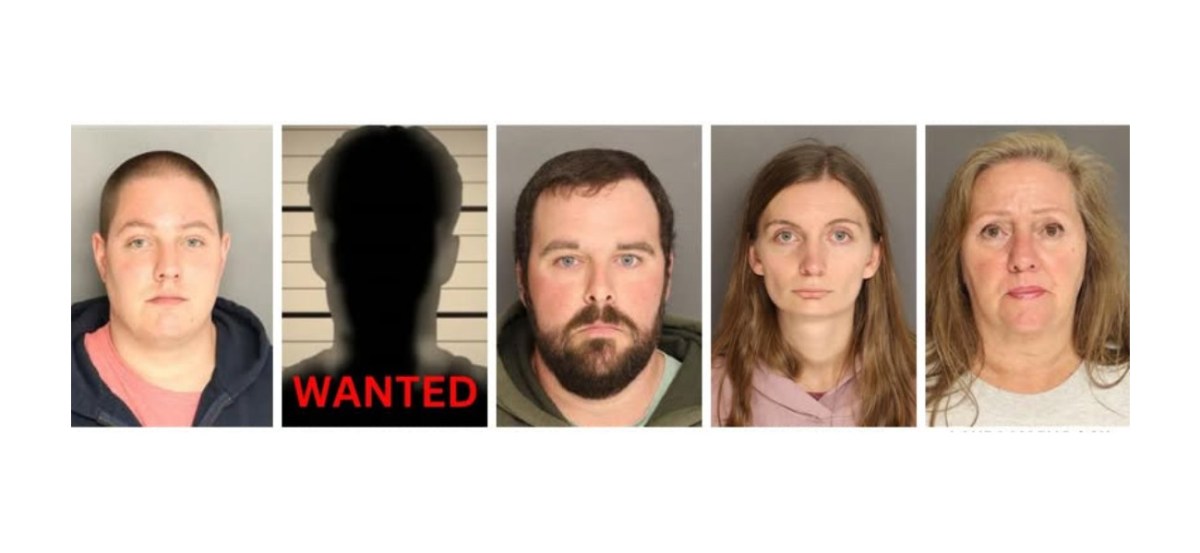
On Thursday, police charged 28-year-old Andrew Dock and 45-year-old Charles Waylon Ulmer with 13 counts of felony ill-treatment to animals with torture and one count of conspiracy. Dock’s wife, Sara Rose Dock, 23, and his mother, Laura Mary Dock, 61, were charged with conspiracy along with Michael Jeffrey Kemmerlin, 30. All five suspects live in or near Summerville, a town about 25 miles northwest of Charleston.

Each felony count is punishable by as many as five years in prison and a $5,000 fine, per South Carolina penal code.

Mugshots
Credit: Berkeley County Sheriff’s Office

Dock was the ringleader of the group, according to police, and enlisted the others to help him poison the cats.

“Anyone that is capable of putting out poison and creating that level of pain and suffering is a concern to me as a human in our community,” Carol Linville, founder of a local nonprofit called Pet Helpers, told Lowcountry news station WCSC. ”That is a dangerous person. If they can do it to a cat, they can do it to a dog or do anything else that they deem they don’t want around.”

Locals involved with colony management and animal rescue praised the Berkeley County Sheriff’s Office for seeing the investigation through and arresting the suspects.

“The fact that the law enforcement took this seriously and really wanted to see justice and really do their due diligence to make sure that justice is really coming for these cats. I am, I’m very grateful,” said Kayte Williams, one of the women who cared for the colony. “Hopefully nothing like this happens again because the public will know if this happens, you will be prosecuted, you will be charged and you are not going to get away with it.”

Andrew Dock Sarah Rose Dock
Andrew and Sara Rose Dock. Credit: Facebook

On his social media accounts, Dock describes himself as a former welding instructor at Horry-Georgetown Technical College originally from Newark, New Jersey.

All five suspects were released after posting bond, according to the Berkeley County Sheriff’s Office. It wasn’t immediately clear if they had retained lawyers, or if they were given return dates for preliminary hearings.

Ohio Woman Gets Prison For Cat-Eating Case That Revolted Nation

Allexis Ferrell pleaded guilty to felony animal abuse, but she still hasn’t explained her actions.

A judge struggled to find words for his anger while handing down a sentence to an Ohio woman who ate a cat in front of her home this summer.

On the night of Aug. 16, 27-year-old Allexis Ferrell grabbed a stray cat and began eating it while it was still alive. Footage from freaked-out neighbors shows Ferrell on all fours in a driveway as she devoured the poor animal.

When horrified police officers arrived and asked Ferrell why she ate a cat, the woman — whose mouth was covered in blood — had no answer.

She still hasn’t explained her actions.

“This is repulsive to me. I mean, that anyone would do this to an animal. And an animal’s like a child. I don’t know if you understand that or not,” said Stark County Judge Frank Forchione. “I can’t express the disappointment, shock, disgust that this crime has brought to me.”

The judge says he considers Ferrell a threat to the community.

Alexis Ferrell
Shocked neighbors called the police when Ferrell attacked the cat.

On Monday, Forchione sentenced Ferrell to a year in prison, which she’ll serve in addition to 18 months’ prison time for two earlier cases involving theft and child endangerment. The one-year sentence is the maximum for felony animal cruelty in Ohio.

The incident made national headlines not only because it was vile, but also because the details weren’t made public until September — after then-candidate Donald Trump claimed immigrants in Springfield, Ohio, were eating pets.

Unscrupulous social media influencers and clickbait “news” sites added to the confusion by initially tagging Ferrell as one of the pet-eating immigrants, despite Canton’s location some 170 miles northeast of Springfield. Ferrell is an American citizen and was born here.

Oddly, although follow-up stories reported Ferrell’s attorneys petitioned the judge for drug and alcohol abuse treatment for their client, there was no mention of Ferrell being under the influence of drugs or alcohol the night she killed the cat.

Here on PITB we’ve flagged stories that illustrate the disturbing normalization of violence toward cats and other animals, but this incident defies categorization. Hopefully Ferrell is given the help she needs and is prevented from ever owning or interacting with animals in the future.