The Story Of Orangey, Audrey Hepburn’s Cat In Breakfast At Tiffany’s, Plus: Why Do People Steal Cats?

Orangey the Cat enjoyed a suspiciously prolific career as Hollywood’s top feline actor for almost two decades. What’s the story behind the iconic moggie?

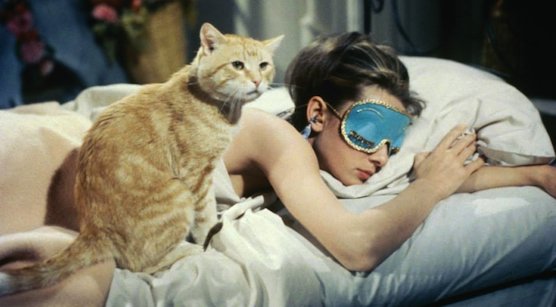
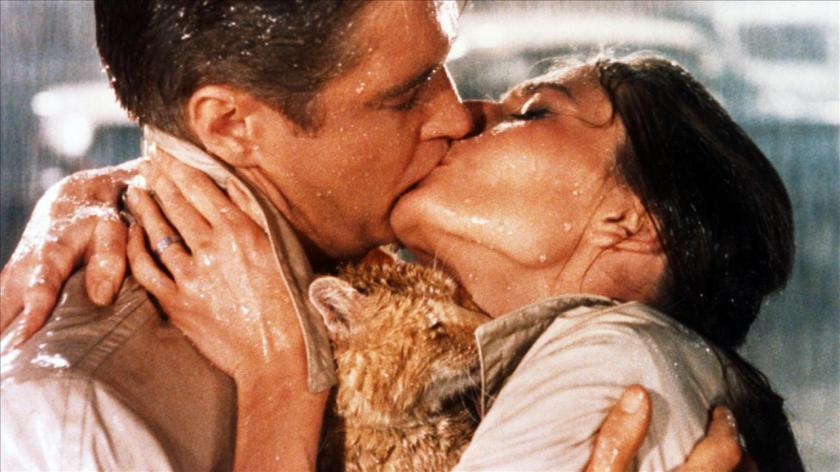
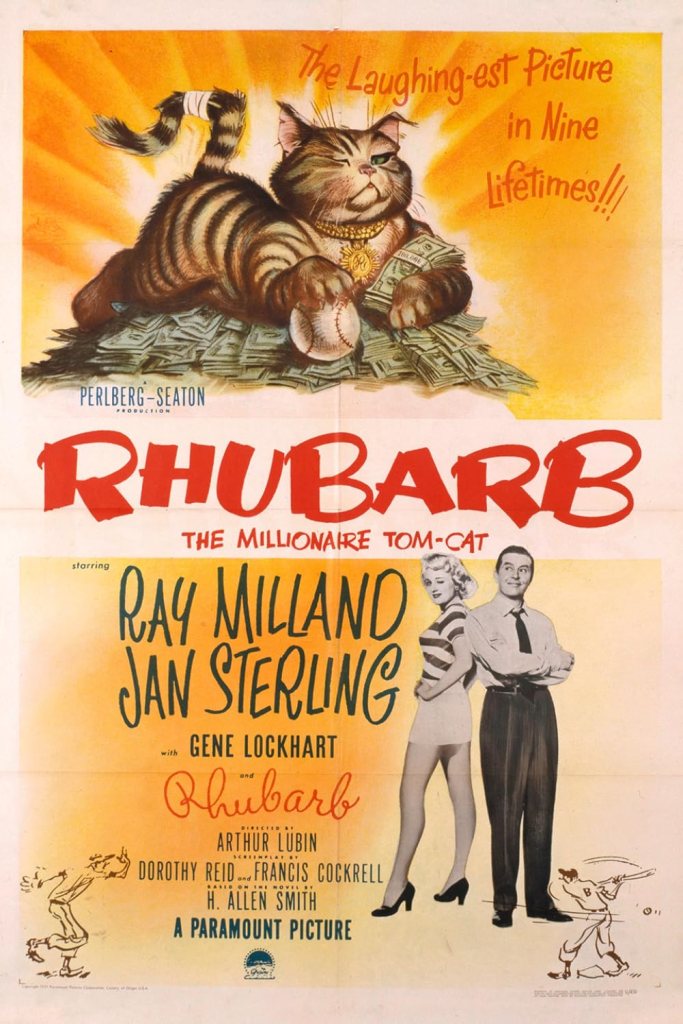
Orangey, the cat who famously belonged to Audrey Hepburn’s character in Breakfast at Tiffany’s, had an impressive and improbable film career beginning with 1951’s Rhubarb and ending with roles in TV series like Green Acres and The Flying Nun almost two decades later.

A new story in The Guardian charts Orangey’s film career and attempts to reconcile conflicting information about the famed feline. At least two cats played Orangey in Breakfast at Tiffany’s, while potentially dozens were used for Rhubarb, a comedy about a cat who inherits his wealthy late owner’s fortune and assets, including a baseball team.

“Watching the cat performances both within the movies and across the different titles certainly lends credence to the idea that Orangey was more a cat type, provided by trainer Frank Inn, than a specific animal,” The Guardian’s Jesse Hassenger writes.

Orangey had a prolific career in film and TV, one that would have been very difficult for a single cat to manage due to the number of appearances and the unlikely length of his tenure as Hollywood’s top cat.

In fact, color mattered less than resemblance because most of Orangey’s appearances were in black and white, so it’s possible Orangey wasn’t always Orange. (Later performances were filmed in color and some films were subsequently colorized.)

Using more than one cat for a role is pretty standard in Hollywood films that feature felines. Keanu, the 2016 Key and Peele comedy about an eponymous kitten who is stolen by drug dealers, cycled through several kittens as the pace of production was simply too slow compared to the rapid growth of real life kittens. In 2024’s A Quiet Place: Day One, two very similar-looking cats, Nico and Schnitzel, shared the role of Frodo, the cancer-stricken protagonist’s emotional support animal.


Why do people steal cats?

In early 2023, more than 50 cats in and around Kent, England, were abducted and returned with patches of fur shaved off.

At first people suspected the perpetrators were engaged in some bizarre form of animal cruelty — and some later copycats, for lack of a better word, across the UK may have been motivated to cause distress — but authorities later said they believe the catnappers were checking to see if the felines were spayed or neutered.

If they weren’t, those cats were kept for breeding, while the others were dropped off where they were found.

A cat shaved during spay/neuter surgery. Credit: jp_the_man/reddit

That rash of disappearances and other cases of car abductions factored into a staggering report from the Royal Kennel Club’s lost pets database: of the 25,000 pets reported missing in the UK between January 2023 and June 2024, more than 20,000 were cats.

Those cases and others are highlighted in a report from The Telegraph published on Thursday detailing the increase in reports of stolen felines. While the actual number of police reports are unknown due to discrepancies in the way such cases are classified by police, data from the Kennel Club and microchip companies, as well as anecdotes, indicate a concerning spike in cat theft even as the UK has mandated microchips for every pet cat.

Some, like the recent case involving an Amazon delivery driver, are crimes of opportunity. They’re spur-of-the-moment decisions by people who encounter cats they might want for themselves or people close to them.

Others, like the mass pet thefts in Kent, could have ties to larger organized crime operations.

And some are attempts to make a quick quid by petty thieves who count on the emotional bond between plpeople and their animals to demand ransom for the four legged family members, like one couple who abducted a woman’s cat and ransomed her for the equivalent of a few hundred dollars.

That woman, who was identified only by the pseudonym Helen in the story, said she was torn between getting her cat back and encouraging the people who took him.

“I was worried the same thing would just keep happening,” she told the newspaper. “It’s not something you want to encourage – paying to get your cat back – in case they do it again.”

A Week After An Amazon Driver Stole A Woman’s Cat, Neither The Company Nor Police Have Any Answers

Amazon says it has identified the driver who stole a California woman’s cat and is working with local police, but they still haven’t recovered the beloved pet.

You’d think it would be relatively trivial to reunite a woman with her cat after an Amazon delivery driver stole the kitty on Dec. 11.

After all, the victim’s own Amazon Ring camera system captured video of the driver walking away with Piper the cat after dropping off a package. Amazon knows precisely who the driver is, where he lives and how to contact him, because he’s a contractor for the company.

And it’s difficult to imagine how it would stretch the resources of the Lakewood (California) Sheriff’s Department to send a deputy out to arrest the guy and retrieve the cat.

The driver picks Piper up by the scruff of her neck, which could cause serious injury in an adult cat.

This wasn’t a high stakes heist by pros with a plan to disappear.

It was a local delivery driver who made an impulsive decision to steal a cat from a customer.

Do the police really think the man is hiding out in a local motel with the shades down and the cat tied to a chair, cutting out letters from a magazine for a ransome note?

Getting Piper back matters very much to Diane Huff Medina and her children, who miss the chatty Siamese mix.

It doesn’t matter at all to the police or to Amazon, which finally issued a statement calling the theft a “horrible act” and saying it was cooperating with police.

“The Amazon Flex delivery partner in question is no longer eligible to deliver to our customers,” an Amazon spokesman said.

That doesn’t help Diane Huff-Medina get Piper back, nor does it help her reassure her children that the feline, who has been with the family for six years, will be returned unharmed.

“Every day they ask, ‘Is she back yet?’ It’s hard to tell them,”Huff-Medina told local media this week.

In our last post, we noted that in cases where people were reunited with their pets, they did not wait for Amazon or the police to act. Neither has the same sense of urgency as an animal’s own family, and unfortunately police are often reluctant to devote time or manpower to these cases because pets are considered property. When the most severe potential charge is petty larceny — which takes into account a cat or dog’s monetary value, but not its emotional value — stolen pets are considered minor crimes.

Huff-Medina has done well to shame Amazon and local police by going to the media and getting Piper’s story out there. We hope she gets good news soon.

Header image via Wikimedia Commons

Once Again, Amazon Has No Answers After A Delivery Driver Steals A Pet

Amazon has not been helpful when its drivers have stolen pets from customers, treating the incidents as customer service issues.

A woman in California is in a panic after her cat went missing and her home security cameras showed an Amazon driver carrying the kitty away.

Diane Huff-Medina’s footage shows a driver bending down to pet her cat, Piper, during a delivery this weekend. After delivering the package, the Ring camera footage shows, the driver grabbed Piper on the way out, put her in his vehicle and drove off.

“I thought he was just petting her for a second, but yeah … I had to rewatch it a couple of times because it is hard to see, it’s dark, and he doesn’t carry her very nicely,” Huff-Medina told LA’s KABC. “I see her little tail and I was like, ‘Oh my God.’ I couldn’t believe what I was seeing.”

Piper the cat. Credit: Diane Huff-Medina

Unfortunately incidents like this seem to happen regularly, and Amazon continues to fall woefully short when it comes to handling them and helping reunited their customers with their pets.

In an incident from last year when one of the company’s drivers stole Feefee, a cat belonging to the Ishak family of Everett, Washington, Amazon’s customer service representatives told the family the company could not force the woman to return the cat, and refused to give the woman’s address or even her general neighborhood to the family so they could search for Feefee.

In a similar incident from August, an Amazon driver stole Murphy, a cat belonging to Kathy Souza from Massachusetts. While Souza thankfully was reunited with Murphy, Amazon was not helpful, she said.

“I spoke with someone at Amazon who asked, ‘Is the cat worth more or less than $200?’” Souza wrote incredulously on Facebook while Murphy was still missing.

Credit: Diane Huff-Medina

This time, an Amazon rep told Huff-Medina they’d identified the driver, but couldn’t get in touch with him.

It’s amazing that after all these incidents, Amazon still treats the theft of cats and dogs by their delivery drivers as a customer service issue, and seems to have no standard protocol for working with law enforcement to get the animals returned.

Indeed, there’s one common thread to all the stories that end happily — in those cases the victims did everything they could to find their pets and did not wait for Amazon or local police to take the thefts seriously.

In the Ishak family’s case, they spent several days posting flyers, talking to local media and driving around in a widening circle to look for the car they’d seen on their doorbell camera. That’s ultimately how they found Feefee: instead of surrendering the scared feline as she told Amazon she would, the driver simply dumped Feefee outside her own building. The Ishaks found Feefee scared and hungry, hiding in the bushes outside the driver’s apartment complex, but otherwise unharmed.

In Souza’s case, her relentless efforts to make noise and draw attention to the driver and Amazon ultimately prompted the driver to return Murphy.

So we’re hoping Huff-Medina takes a similar route, because unfortunately these cases are not a priority for the corporate behemoth, nor for local police, as most state laws consider pets property, and stealing a pet is considered a small time crime. Let’s hope there’s good news soon.

An Amazon Driver Took A Family’s Cat, And Amazon Has Not Been Helpful

Amazon’s response not only leaves a lot to be desired, it’s also an example of precisely what not to do when an issue goes beyond a simple customer service complaint. The company missed an opportunity to respond with compassion and earn a family’s gratitude.

An Amazon delivery driver took a Washington family’s cat and drove away with her on July 21.

Since then, Amazon has admitted its driver has the cat, but has offered little more than carefully-worded customer service responses mixed with boilerplate language about valuing the family’s business and feedback.

Ray and Karin Ishak have video of the driver petting and playing with 13-year-old Feefee in the family’s driveway during the delivery. The motion-activated camera timed out, according to a report by Seattle ABC affiliate KING5-TV, but when the camera began recording again, triggered by the driver pulling away, Feefee was gone.

“The driver [was] driving away and there’s not a cat in sight. It’s pretty obvious the cat disappeared in those seconds,” Ray Ishak told the station, adding he filed a report with the Snohomish County Sheriff’s Office.

feefeecamera
An Amazon driver playing with Feefee in the Ishak family’s driveway before driving away with the cat. Credit: Ray Ishak

Amazon has chosen to deal with the incident via email, as if it’s a dispute over a returned item rather than a living being who is valued as a family member by her people.

A company customer service representative told the Ishaks that the driver said she contacted the police to return Feefee, but the family called the sheriff’s office and the police in Everett, Washington, where they live, and both agencies told them they hadn’t heard from the driver or from Amazon.

The Ishaks asked Amazon if the company could at least tell them the town or city where the driver lives, figuring the driver may have contacted police there instead of the departments that have jurisdiction over their hometown. Amazon declined to provide that information.

When the Ishaks followed up with Amazon again, a customer service representative said she’d be happy to help — if the police approach Amazon. She provided an email address for law enforcement use only, said Amazon will cooperate if the police contact them, and ended the reply with a request to “vote about your experience today.”

This is an awful response by Amazon, and the company deserves any bad PR it gets as a result. The very first thing the company should have done was escalate the ticket to a manager empowered to take care of the case directly, and that manager should have picked up the phone, called the family and promised to get their cat back immediately.

If the company doesn’t have anyone in its customer care hierarchy who understands why it’s important to make that kind of judgment call, then it’s done a poor job of hiring and training its employees.

Alternately, Amazon’s known for keeping its employees on an extremely short leash — the company is notorious for watching its employees via cameras, has been fined tens of millions of dollars for “excessive surveillance” of its own workers, has forced employees to “justify” things like bathroom breaks, and operates on founder Jeff Bezos’ belief that employees are “inherently lazy” — so if the email-only response was due to strict company policy, that’s another negative that can be chalked up to a toxic corporate culture.

Treating this like a routine complaint only exacerbated the Ishak family’s stress and uncertainty regarding the fate of their beloved cat. Putting the onus on the family and the police to sort out of the problem makes things worse, and you’d think any halfway competent customer service rep would skip the “rate your service” pitch, at least until after the problem is solved and Feefee is back with her family.

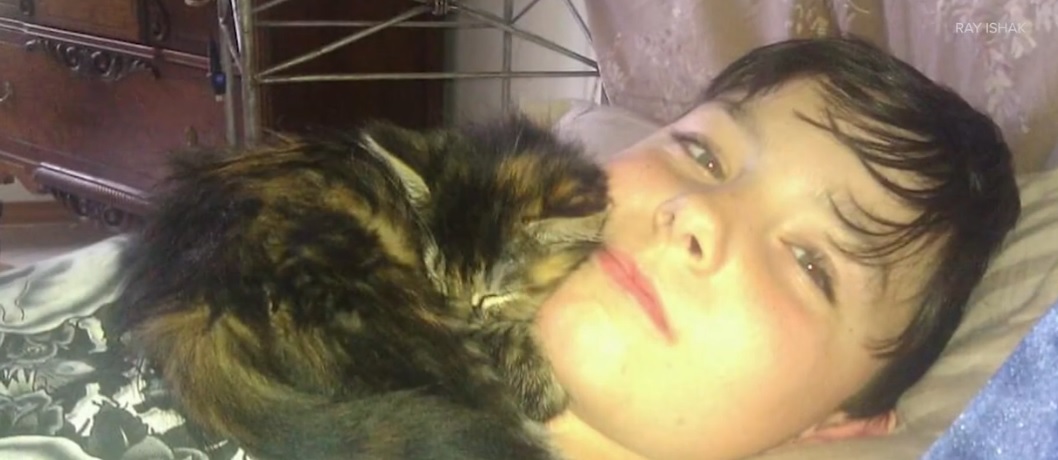
Feefee with granddaughter
Ray Ishak said Feefee’s disappearance has been especially hard on his grandchildren, who love the gentle feline. Credit: Ray Ishak

It doesn’t matter how massive and successful the company is, there has to be a better way to handle issues like this without requiring even the police to approach Amazon like customers dialing a service line, or supplicants petitioning a king to turn his gaze toward a situation that normally falls beneath his notice. There’s also no recognition of the impact on Feefee, who is almost certainly confused and stressed at being separated from the only home and family she’s known for her entire life.

Lastly, Amazon missed an opportunity to respond with compassion and earn the gratitude of a family whose members are obviously very concerned about their cat. A PR win like that is worth a thousand commercials, and can earn enormous good will with customers. Instead, people will hear about how the company treats a problem like this as if a customer is returning a shirt that’s too small.

As for the Ishak family, they say they’re giving the driver the benefit of the doubt. Maybe she thought Feefee was a stray. But, as Ray Isha told KING5, it’s been made abundantly clear that Feefee is a beloved member of the family, and she needs to be returned.

“Maybe you did this out of the kindness of your heart,” Ray Ishak said. “I appreciate it, but bring me my cat back.”

Top image of Feefee as a kitten with one of Ray Ishak’s grandchildren courtesy of Ray Ishak, via KING5.

2 Men Break Into House, Demand Cat At Gunpoint, Cops Say

The would-be robbers knew the cat was worth money and specifically targeted the victims, according to police.

Two armed men broke into a Connecticut home on Sunday afternoon and demanded the victims turn over their “high dollar value cat,” according to the East Haven Police Department.

The would-be robbers initially tried to force their way into the East Haven house through a rear sliding glass door, but when the victims tried to prevent them from getting in, one of the men simply kicked through the glass, cops said.

That’s when the intruders brandished a handgun and demanded not cash, not jewelry or other valuables, but the cat!

The kitty in question must have been spooked by all the commotion because the frustrated robbers left empty-handed after a few minutes of fruitless searching. They hopped into a blue BMW and sped off, the victims told police.

Cops didn’t offer any description or breed information about the feline, describing it simply as a “high dollar value cat.”

It’s not uncommon for prized breed cats to command $5,000 from prospective buyers, and some breeds like the “exotic” Savannah cat can sell for as much as $20,000.

bengal cat on white background
Bengal cats like the one above are favorite targets of thieves. Credit: jerry u6770/Pexels

While it’s unusual for someone to break into a home and demand a cat at gunpoint, in the middle of the day no less, cat theft is actually a thing.

Thieves most frequently go after Bengals, Savannahs, Maine Coons, Ragdolls and other breeds that can make them a quick buck by selling them to unsuspecting buyers. Surprisingly domestic shorthairs are on several lists of most commonly stolen cats, but a vet tech tells Reader’s Digest that moggies make the list simply because there are so many of them.

Part of the problem is that the penalties for stealing cats aren’t prohibitive. Most states either treat cats and dogs as property that can simply be replaced, or classify theft of pets in archaic agriculture and markets laws, which were designed to deal with disputes over livestock and farm animals, not pets.

Advocates in some countries, like the UK, are pushing legislation that would make stealing a pet a criminal offense with much harsher penalties.

In Sunday’s attempted robbery, police found the BMW abandoned in Hamden, a town about 10 miles north of East Hampton. They’re still looking into the unsuccessful caper, telling local media that the attempt was planned, not a crime of opportunity or a random event.

Still, if you have a “high dollar value cat,” it’s worth taking some precautions. Here at Casa de Buddy we’ve installed a feline version of a panic room: a panic box! Reinforced with heavy shipping tape, the thick corrugated cardboard is sure to keep bad guys out while also remaining roomy, yet paradoxically snug.

buddybox2
“Yes, this will do nicely, human.”