Scientists Finally Figure Out Why Some Cats Are Orange, PLUS: Are Street Cats Really ‘Taking Over?’

More Americans say they can’t afford to keep their cats because of inflation, leading to an increase in surrendered and dumped cats in some places.

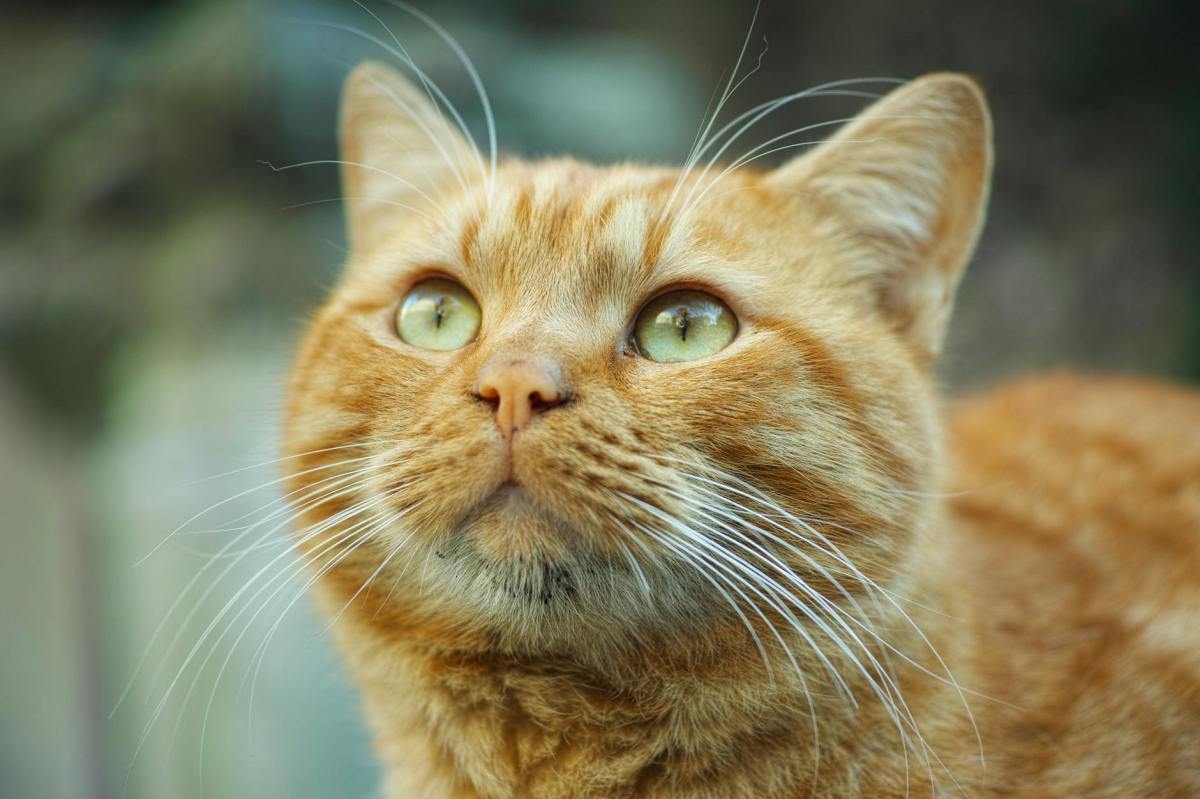
More than 110 years ago, American geneticist Clarence Cook Little developed a theory explaining why some cats have orange coloring and some don’t.

Now Little has been proven correct thanks to the work of separate teams in Japan and the US, which discovered the mechanism that leads to orange coloring, including fully ginger felines as well as calicos and tortoiseshells.

The explanation may be a bit too heavy on genetics for some readers, but essentially the researchers found the specific gene that leads to the growth or orange fur. They’ve known about the gene for a long time, but didn’t realize the totality of its function. Its official name is ARHGAP36, but for the sake of simplicity, scientists are calling it “the orange gene.”

“The orange gene has a known role in hair follicle development, but scientists didn’t previously know it is also involved in pigment production,” a team of geneticists and biotechnologists wrote in The Conversation, a science publication. “This means that a new pathway for pigment production has been discovered, opening the way for exciting and important research into a basic biological process.”

calico cat relaxing on wooden bench outdoors
In partially orange cats like calicos and tortoiseshells, the blotches of color are the result of imperfect gene copies and a secondary pigment-related gene switching “on and off.” Credit: Mehmet Guzel/Pexels

Ginger cats are usually male, but the pigmant can also appear in female cats due to an error in gene copying which deletes one segment of the orange pigment-producing genetic code.

That’s why calicos and tortoiseshells have orange blotches or mixed orange fur. “[T]he orange gene is persistently switched on in orange areas but is mostly switched off in non-orange areas of a cat’s coat,” the authors wrote.

Are there more strays in 2024?

Time magazine has a story examining the problem of stray cats in America’s urban and suburban population centers, why it’s happening, and what can be done about it.

First, might as well get this out of the way: We don’t know if there are “more” cats. The claim that there are more relies on anecdotes, and there’s no hard data to back that up. You have to be highly motivated to invest the time and money into a proper census like the D.C. Cat Count, and it’s an understatement to say most towns and cities are either not willing to do that, or don’t have the resources.

What we do know is there may be more cats in certain areas, with individual shelters in some places reporting record numbers of surrenders and cats scooped up by animal control.

close up of a stray cat on the metal railing
Rescuers say people who can’t afford food, supplies and veterinary care are surrendering or dumping their cats in larger numbers than in years past. Credit: Dou011fu Tunce/Pexels

The story quotes rescuers who say they’ve seen more surrendered pets, as well as data from Shelter Animals Count, which tallies self-reported information from shelters and rescues. The latter says 32 percent of cats taken in were owner surrenders in 2024, compared to 30.5 percent in 2019.

“It’s a combination of people surrendering their pets and people not adopting because they’re not sure they can take on the financial commitment,” Animal Care Centers of NYC’s Katy Hansen told Time.

Rescuers say that’s reflected in their experiences trapping the felines, who are friendly and acclimated to humans.

The people surrendering their pets cite inflation, not only impacting the cost of essentials like food and litter, but also more expensive veterinary care.

The story additionally includes this eye-popping detail:

“At Veterinary Care Group, a private equity-owned practice in Brooklyn, the cost of spaying or neutering a cat has soared to $850 per animal. By contrast, at the nonprofit veterinary clinic Zweigart recently founded in Brooklyn, the cost of spaying or neutering a cat is $225 and a mid-sized dog is $300.”

The lesson here: Steer well clear of veterinary clinics that aren’t vet-owned or are obtuse about their ownership. Private equity groups don’t buy clinics out of love for animals.

a close up shot of a tabby cat
The cost of spay/neuter procedures ranges dramatically at different veterinary practices. Credit: Tima Miroshnichenko/Pexels

As for solutions to local spikes in stray populations, the story doesn’t offer any. It mentions TNR (trap, neuter, return) but only in the context of a lawsuit against the San Diego Humane Society for its neuter/vaccination program.

That said, there probably isn’t a one-size-fits-all technique. What works for a small town won’t necessarily work in a city, and there are dozens of factors that could influence the prevalence of stray cats and colonies. Still, city councils and town boards don’t need to reinvent the wheel. Chances are if they look, they’ll find a municipality similar to their own where locals have successfully stabilized feline populations.

As for the Buddies, I’d live in my car before giving Bud up. He wouldn’t be thrilled about that situation, and we’d have to head south because the winters here are brutal, but as long as Bud has his servant, he’s good.

A previous version of this post incorrectly described cat chromosomes. The story has been updated to remove the error.

Rescued Cat Gorged On Cookies Till He Was ‘Too Fat To Walk,’ Now He’s On A Diet

The abandoned cat found his way to the basement of a hospital in Russia, where staff members provided him with inappropriate food — and way too much of it.

Animal rescuers in Russia have their work cut out for them after taking in a mega-chonky cat weighing 38 pounds.

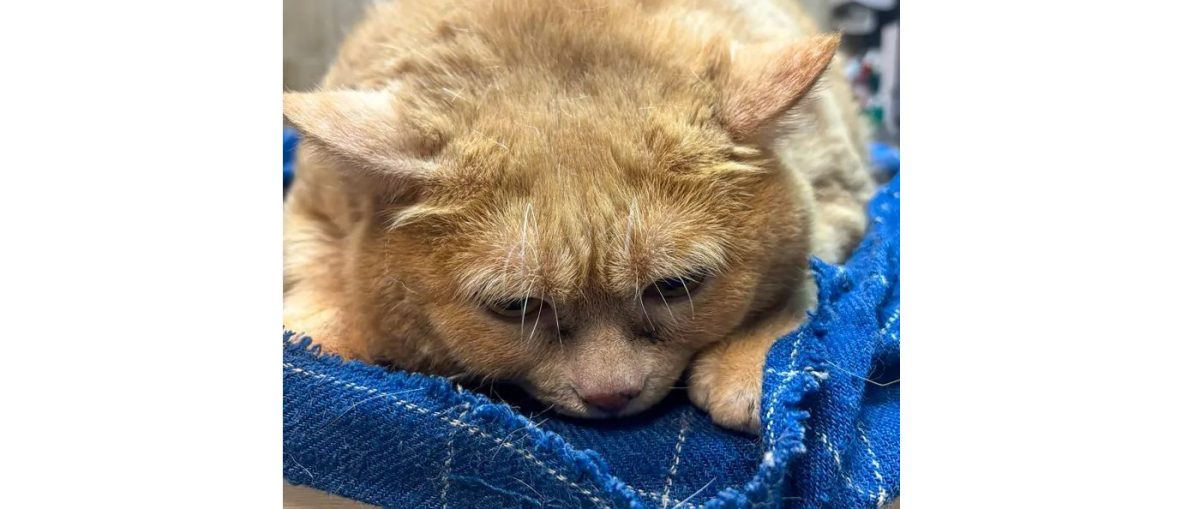
The orange tabby, named Crumbs by his rescuers because he leaves none in his wake, is so overweight he can’t walk and has been placed on a strict diet to meet his first goal of becoming ambulatory.

After that, his rescuers said, the real work begins as they try to get Crumbs down to about 10 pounds, which they believe is a healthy weight for a cat of his original size.

Crumbs the Cat
Crumbs with one of his rescuers who is helping the morbidly obese feline shed pounds.

Staff at Matroskin Shelter in Perm told Russian media that Crumbs was abandoned by his owners and was living in the basement of a hospital in the city.

It wasn’t clear if Crumbs was already obese when he was surrendered, but hospital staff were not providing him with the kind of protein-rich meat cats need to stay healthy. Instead, they plied him with cookies and calorie-dense soups, apparently putting no limits on his food consumption.

“Kroshik’s story is an extremely rare case when someone loved a cat so much that they fed him to such a state,” shelter volunteers said.

Crumbs is in for a shock as he adjusts to his new diet, but the more difficult challenge may be the treadmill sessions that await once he’s able to move under his own power.

Screenshot_2020-11-15 barsik-cat-2020-1-1 jpg (WEBP Image, 915 × 610 pixels)
Barsik suffered the indignity of being labeled “The Fattest Cat In New York” and even made the front cover of the New York Post, but the former chonkster and his new human had the last laugh:

The problem of overweight cats has received more attention in recent years, with veterinarians warning people not to intentionally overfeed their cats. Unfortunately, some people have taken to fattening up their felines for the sake of social media success, looking to copy others whose extraordinarily “chonky” cats have earned equally massive online followings.

In Poland, Gacek the cat was removed from his street-side tiny house and taken indoors because visitors to the city of Szczecin would not stop feeding the overweight celebrity chonkster, despite signs pleading with them to stop. (It also didn’t help that people tried to steal Gacek after he became internationally famous.)

Gacek

Above: After Gacek went viral for being the top-rated attraction in his home city of Szczecin, Poland, a steady stream of admirers made the pilgrimage to see him in person, offering tribute in the form of snacks.

Here at Casa de Buddy, I had to put His Grace on a diet because he was pushing about 12 1/2 to 13 pounds, up from his natural weight of about 10 or 11 pounds. That might not seem like much, but Bud isn’t a very large cat despite his belief that he’s a hulking tiger. Two pounds is as much as 20 percent of his ideal body weight.

As you might imagine, the little guy was not happy about his significantly reduced snack allotment and made sure to communicate that to me loudly and often.

chubbybuddy
“I am NOT chubby, I am meowscular!”

There have also been success stories. Barsik, once dubbed “The Fattest Cat In New York” after tipping the scales at an astonishing 41 pounds, made a second round of headlines after he shed a significant portion of his weight. Nowadays he’s looking happy and healthy as he’s able to run and jump like a cat should.

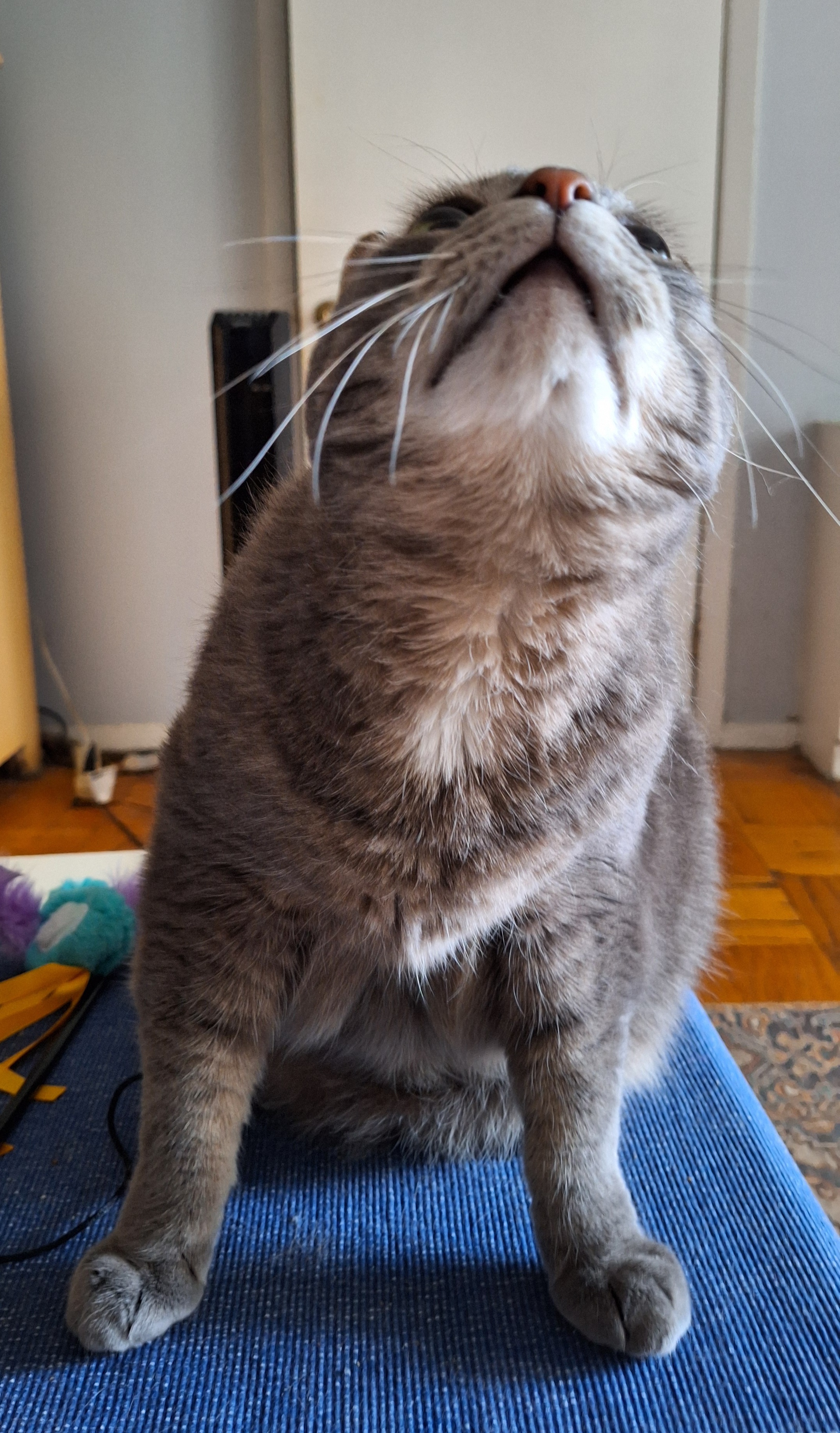
Is That A Cat Or A Seal?

Buddy does his best seal impression! Nearby, our local SPCA deals with a horrific hoarding case.

I snapped the photo below when Buddy heard the upstairs neighbors making noise. Little dude looks like a seal! (The animal, not the singer. Bud’s singing voice is terrible!) All he needs are some flippers:

20240215_195136

The acne spot I wrote about earlier is healed, but as you can see there’s still a tiny spot on his chin where his fur hasn’t completely grown back yet. Thankfully it’s no longer causing him any discomfort, and he’s back to asking for chin scratches while purring happily.

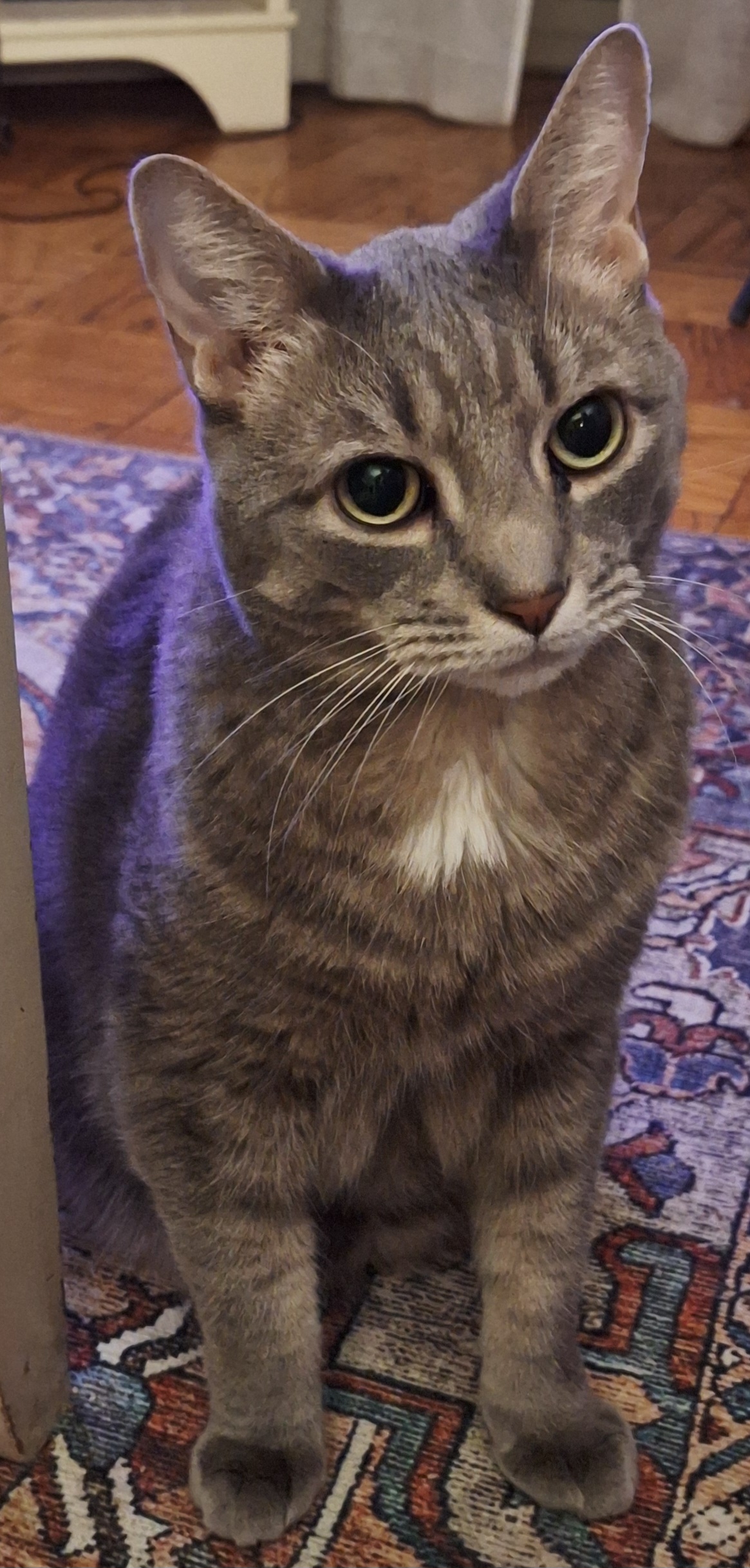
Of course he won’t be happy if I share an unflattering photo without a flattering one, so here he is looking cute:

20240215_194542

Note the huge meowscles and ripped physique!

In some sad news, there’s an ongoing hoarding case in White Plains, NY, just a few miles from Casa de Buddy.

Police responded to an apartment building in the city after neighbors began complaining of “horrific” smells coming from the unit and discovered an older woman living with at least 40 cats in appalling conditions.

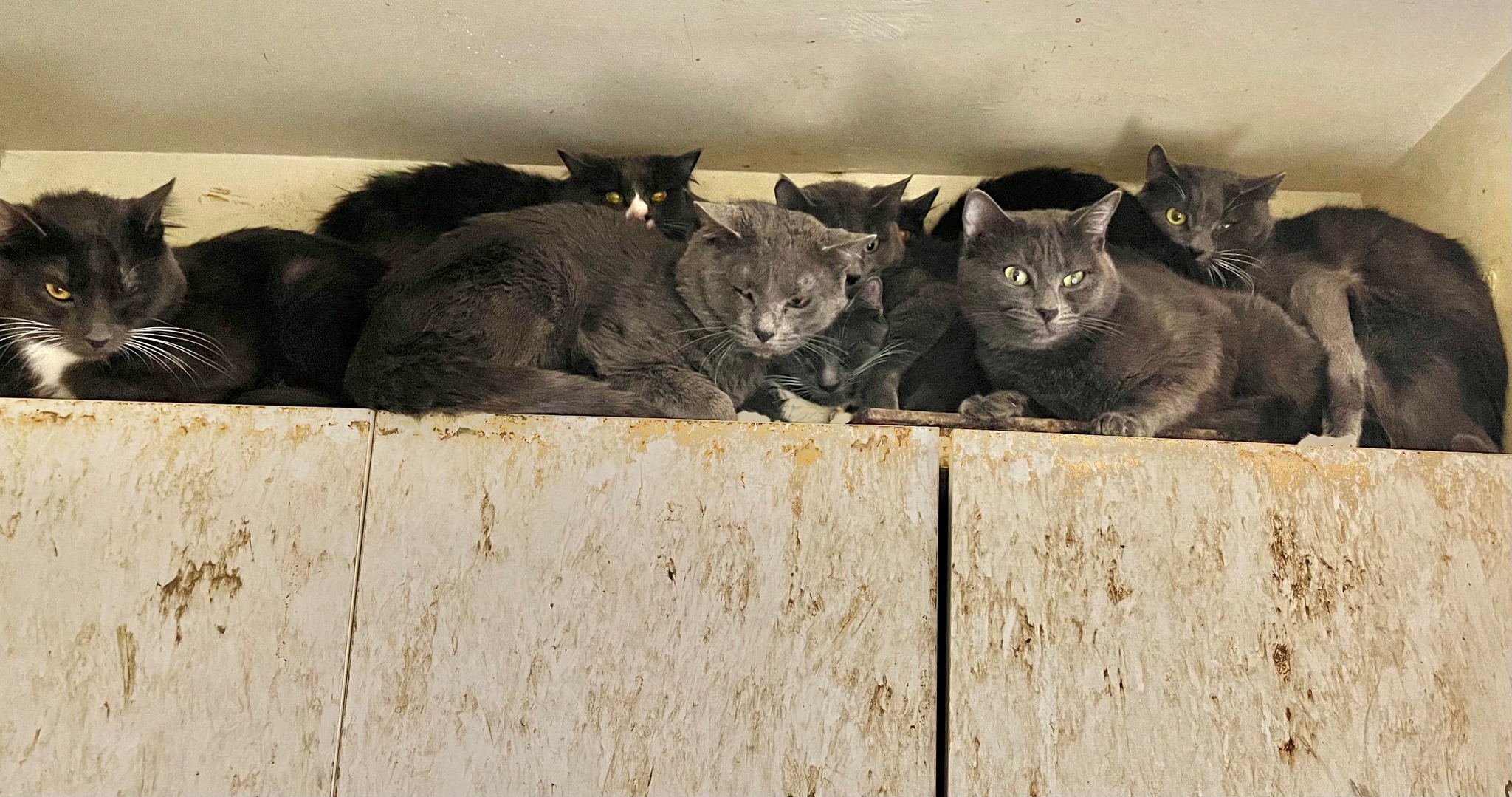
The cats, who are all suffering from ailments including respiratory and eye infections, were everywhere — including inside furniture and atop the kitchen cabinets where a few of them were able to get away from the feces-packed floor.

White Plains cat hoarding case
Cats crowd the limited space above the kitchen cabinets to escape the feces-encrusted floor of the apartment. Credit: Westchester SPCA

https://m.facebook.com/story.php?story_fbid=pfbid0vXAgeiLEQt4s65hG8zq3gEbn7oX1TKRB5r4K5dd1jTXkYU5K6q1m1uG9MhuVjxgml&id=100064390971511

Staff from the SPCA of Westchester County have had to wear hazmat suits to operate inside the apartment. They’re in the process of removing the cats and have set up food and water stations for those they haven’t trapped yet while they try to clean some of the fecal matter and garbage, but they say the number of cats could rise as they find more hiding in the apartment. One cat was pregnant and gave birth to a single kitten on the feces-caked floor. The kitten was quickly removed and is under the close care of veterinary staff but is sickly and “clinging to life,” the SPCA said.

Incredibly, authorities have not charged the human occupant of the apartment. They say she meant well at first but the situation quickly spiraled out of control, as it often does when people who aren’t equipped to care for multiple cats take it upon themselves to “rescue” strays. No one sets out to become a hoarder. It usually happens when initial good intentions become unmoored from reality, but I do wonder how people who find these situations slipping from their control aren’t horrified by the suffering of the animals. Mental illness has to play a part.

Regardless, the situation is dire for the cats and the SPCA anticipates many thousands of dollars in veterinary costs on top of supplies and man hours involved in trapping the cats, getting them veterinary care, cleaning them up and working with them to help them overcome the trauma of their experience so they can become ready for adoption.

The SPCA of Westchester County was Buddy’s first veterinary office where he got his first shots and the snip as a kitten. They were very kind and gentle with the little guy, and at the time I’d just been laid off from my job so it really helped to have a place that provided quality veterinary care for significantly less than private vets. They do good work, and we wish them luck as they deal with a difficult task.

Woman Loved Stray She Met On Vacation So Much, She Spent $1k To Transport And Adopt Her

A UK woman said she couldn’t bear the thought of leaving the cat behind on the Greek islands.

Jessica Addis met the friendly stray on the Greek island of Kos.

The UK woman vacationed on the Aegean island for sandy beaches, crystal blue water and the stunning ruins of classical Greek temples, but she fell in love a little white cat with ginger tabby markings.

Addis named the little one Zia after a sleepy Greek village on the slopes of Mount Dikaios, and began feeding the stray every day during her time on Kos this past September. Zia, who lived under a palm tree and depended on the kindness of tourists, liked her new human friend so much that she followed Addis back to her suite and began greeting her every morning.

addiszia1
Addis with Zia on the Greek island of Kos in September. Credit:

Leaving Zia at the end of her vacation wasn’t easy for Addis.

“I gave her the last of the cat biscuits and food and a last fuss, before I left,” she told Newsweek. “It broke my heart to leave her not knowing what would happen to her.”

When she asked hotel staff if anyone would care for the friendly moggie, she got a noncommittal answer. Greece lacks the extensive shelter infrastructure and trap, neuter, return (TNR) efforts of other western nations, and the result can be seen in the streets and the edges or human habitation, where a large population of strays eke out an existence by eating from garbage cans and hunting what they can.

“The hotel was closing for the season at the end of October, so I knew she then wouldn’t have the tourists to feed her,” Addis told Newsweek.

She said she was “heartbroken” thinking about Zia on her own without anyone to care for her or feed her during the off season.

“I knew straight away I needed to get her back to the U.K. I told my partner as we were on the bus to the airport that I was going to get Zia home. As soon as I got home, I started sorting everything to get her back to me.”

She enlisted the help of a Greek rescue group whose members wrangled Zia into a carrier, got her vaccinated, microchipped and onto a UK-bound plane with the appropriate paperwork. In all, it cost Addis $1,020, money well spent.

addiszia
Addis with Zia after the latter was brought to the UK with the help of a Greek animal rescue group.

She welcomed Zia to her forever home over the holidays, but says the Greek kitty still hasn’t quite grasped that she’ll be fed and cared for.

“She is happy, content and has a belly full of food,” Addis wrote on a social media post that contained a slideshow of her with Zia on vacation in Greece, then later in her home in the UK. “Zia loves treats, playing with her bird feather catcher and having endless naps snuggled up with her blanket. Although she still thinks she’s stray, as she always wants food! She now has a loving home for the rest of her life.”

Top image credit: Angela O’Brien/X

That’s Not How You Speak Meowinese!

A popular X account posts “cute” cat videos that aren’t always so cute, another consequence of people misunderstanding cats and their behavior.

This dude thinks he’s speaking to a cat in her native tongue, but what he’s doing is the equivalent of running up to a bunch of Klingons and shouting “I shall impale you on the edge of my bat’leth!” while mistaking it for a friendly greeting.

It looks like someone hired this guy to rescue the kitty, who like so many of her kind are prone to do, climbed up too high and then decided she didn’t like her odds on the way down. I don’t think his intention was to scare the hell out of her, but that’s exactly what he’s done:

That’s not “Hi, kitty, I’m here to rescue you! Be calm, we’ll get you down in no time!”

It’s “I’m here, I speak your language, and I have bad intentions!”

If you listen with headphones or turn the volume up, you can hear the poor cat crying in distress, the kind of cry that felines make when they’re seriously freaked out and worried for their safety. No wonder kitty backed up. Her fur is raised and her posture aligns with her vocalizations and the rest of her body language.

Like most things posted to Twitter X, this is utterly lacking in context and we don’t know what happened next. I wouldn’t be surprised if the rescue attempt went horribly wrong. I hope not, but man, that’s not how you rescue a cat.

The video was posted by the account “place where cat shouldn’t be,” or @catshouldnt, and a common theme in the images and videos on that feed is cats in distress. They’re mistaken for “cute” situations by viewers, the majority of whom aren’t familiar with feline behavior.

Like, for instance, this photo. The tuxedo kitten is undeniably cute and he doesn’t look distressed…yet. But getting out is going to be a lot more difficult than getting in, and when people are willing to do just about anything for clicks, attention and the associated dopamine hit, cats often end up with the short end of the stick.

Cat in a vending machine
Bud would be jealous of this cat. Thankfully he’s too, uh, meowscular to fit. Yeah, that’s it. Too meowscular. Nothing to do with a few extra pounds…