Scientists have uncovered the elusive mechanisms behind coat color expression, opening the door to a new question: is fur pigment connected to personality?
When Professor Hiroyuki Sasaki retired, he wasn’t done with science. He just wanted to use it to better understand his cats.
The Japanese geneticist raised more than $73,000 from Japanese and international cat lovers and put together a team, including partners from the US. Then he began the hard work of scrutinizing feline DNA to find out why some cats are orange, and why most all-orange cats are male while virtually all calico and tortoiseshell cats, whose coats have splotches of orange, are female.
It turns out there’s no genetic instruction telling the fur to take on an orange pigment — it’s the absence of a segment of DNA, which governs pigment production, that does it.
In other words, ginger cats are mutants.
Most fully-orange cats are male because the mutation removes the DNA segment in the X chromosome. As males have X and Y chromosomes, they only need the mutation in the single X chromosome for their coats to express in that shade.
Lots of cat lovers swear that coat color and temperament are connected.
Females have an XX chromosomal arrangement, so they need the mutation in both chromosomes to turn tangerine. If the mutation only shows up in one chromosome, you get patches of the color instead of a consistent coat.
That explains why 80 percent of ginger cats are male, and why only one in 3,000 calicos and tortoiseshells are male. A male cat would need an extra X chromosome, XXY, to be born with a calico or tortoiseshell coat. One of the side effects, however, is sterility.
Scientists estimate only one in a thousand male calicos/tortoiseshells can reproduce and pass their unique mutations on.
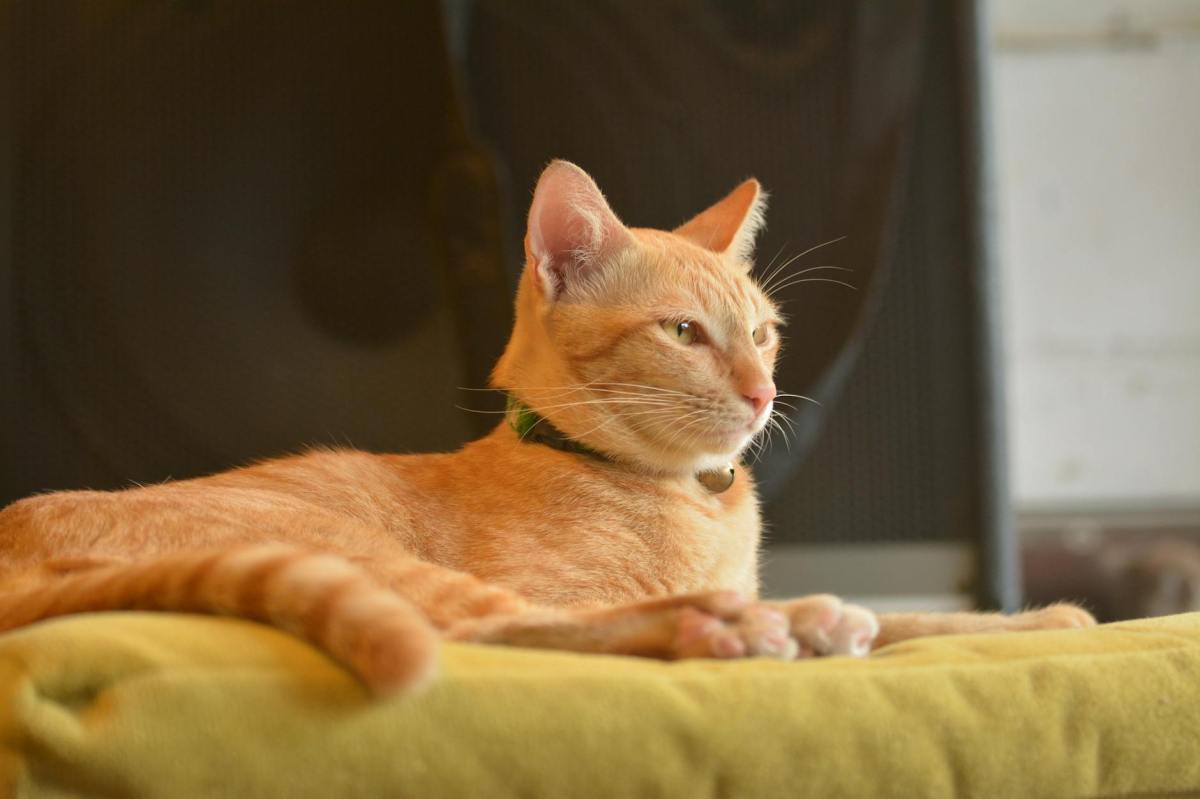
It’s not just coat color either. The mutation impacts skin and eye color, which is why a ginger cat might have a pink nose compared to the terracotta shade of a void cat or a silver tabby.
Are orange cats really more friendly and silly?
So how does this relate to temperament, and the many people who attest to a particular personality associated with orange cats? Some people say ginger tabbies are more loyal, affectionate and social than cats of other coat colors, but they’re also more prone to doing boneheaded things.
The stereotypes have picked up steam online, where people often share memes depicting orange felines as earnestly derpy, but they may be on to something — or at least, it can’t be ruled out until we know more.
Ginger cats are not the sharpest claw on the paw, according to popular memes.
Because of the missing piece of genetic code, a specific gene, ARHGAP36, isn’t “expressed.” Like so many genes, scientists don’t fully understand everything ARHGAP36 impacts, or how alterations can lead to unexpected changes elsewhere.
“Many cat owners swear by the idea that different coat colours and patterns are linked with different personalities,” Sasaki told the BBC. “There’s no scientific evidence for this yet, but it’s an intriguing idea and one I’d love to explore further.”
A cat’s affection has to be earned, but the good news is it’s not rocket science. A little patience and consideration for your fluffy little pal goes a long way toward building trust and a strong bond. Once you do, you’ll have a loyal friend for life.
“How do I make my cat like me?”
That question comes up regularly on social media posts, in cat-centric discussion groups, Q&A sites and even in our inbox. People adopt a cat, and whether the little one dives under a bed and refuses to emerge, or just seems reluctant to snuggle the way people imagined, they turn to the internet to find out why they don’t have a purring, contented feline in their lap.
The short answer is you can’t “make” your cat feel anything, and it’s best to dispense with that notion as quickly as possible so you can acknowledge the truth: cats are individuals with their own thoughts and feelings.
The good news, however, is that you can earn your cat’s affection with patience, respect and love. Our patience and respect for our little buddies leads to trust, which in turn creates and strengthens the special bond we share with them.
The love of a cat isn’t as easily won as the love of a dog, and in many ways that makes it even more special. Cats don’t love just anyone.
It starts with acknowledging your cat has feelings, and understanding that you have to respect those feelings as you would those of a person.
Don’t make your cat do things she doesn’t want to do.
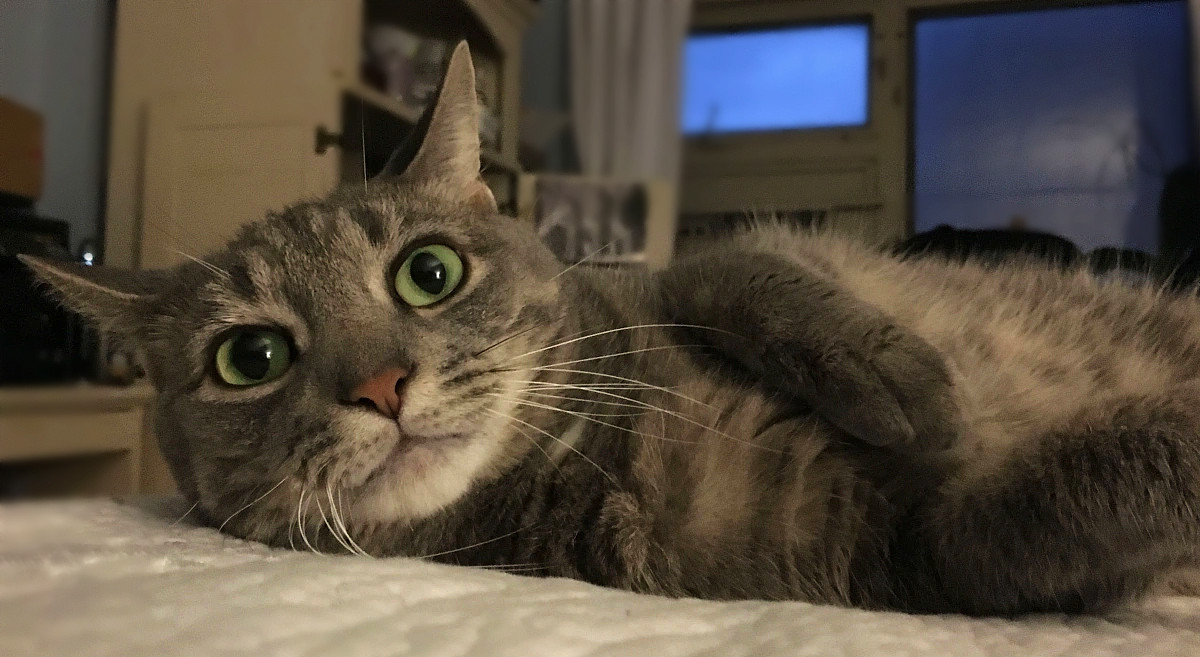
Despite what you might think or what you may have been told, most cats don’t like being picked up, held or feeling restricted. The majority of felines don’t like belly rubs, and people have a habit of mistaking a sign of trust — a cat showing her belly — as an invitation to pet.
A cat showing its belly is a sign of trust. It’s a vulnerable position for a cat, and not an invitation for belly rubs. Credit: Wikimedia Commons
Every cat is different, but generally the best way to make sure your kitty doesn’t want to approach you is to ignore her personal boundaries and treat her like a stuffed animal.
Those “cute” videos you see on TikTok of terminally online people spinning their cats to Taylor Swift songs, holding them like phones to reenact scenes from The Princess Diaries, or forcing them to wear ridiculous outfits?
Don’t do that. It destroys your cat’s trust in you, and the cheap dopamine hit you get from strangers “liking” your content isn’t worth stressing your furry pal out and damaging your relationship.
Don’t do this. It’s not funny, the meme is lame and you’ll teach your cat to fear you. Credit: TikTok
If you tend to restrict your cat and hold her in your lap, you’re discouraging her from sitting there in the future. If you give kitty unnecessary baths, you could create a situation in which your cat fears you.
Even if you think you’re not doing anything wrong, if your cat is reluctant to approach you, there’s something that needs fixing, and it’ll require patience.
Don’t subject your cat to forced petting sessions.
Unlike dogs, cats have a limited tolerance for physical affection, and they don’t always want to be touched.
Your pal will be much more likely to regularly approach you for physical affection if you let him come to you. Ignore the impulse to reach out and start petting him like you would a dog. Instead, put your hand out and let your cat initiate the petting. You’ll develop a physical shorthand in which he signals he wants chin scratches or head rubs by leaning in and rubbing his face against your outstretched hand.
All felines have scent glands in their cheeks, and the initial contact of a cat rubbing his cheek against your fingers is an olfactory signal that says “This human is my family. I like this human.”
Even though our noses can’t detect those pheromones, they’re still important to our cat(s), and they’re the reason why cats will scent-mark objects by brushing past them in your home, just like tigers will mark their territories by scent-marking trees with urine. Same concept, but thankfully our miniature house tigers generally don’t feel the need to do the latter. (If yours does, take him to the vet. If he’s not “fixed,” get it done ASAP.)
Less is more when it comes to petting
Stop me if you’ve heard this one before: “I just don’t get it! I was petting my cat and she was purring and loving it, then without warning she bit me!”
Pro tip: A bite like that never comes without warning, it’s just that most of us don’t see the signs right in front of us.
Cats communicate by tail and whisker, and we communicate by making noises with our mouths. Adult cats don’t meow to each other. The little ones are smart enough to understand how we exchange information, so meows, trills, chirps and grunts are their way of trying to speak our language, to communicate on our terms.
But sometimes — like, say, when they’re purring and relaxed — they’re distracted and forget to meow, or they meow and we ignore them.
That’s when they bite, or swipe at us with their paws.
If you pay attention to non-verbal cues, you’ll notice your cat getting overstimulated when her tail starts swishing and her pupils dilate. If those signs aren’t enough, there are others: twitching ears, shifting positions, moving away.
The best way to avoid misunderstandings is to give kitty a few head rubs and chin scratches, then stop. If she wants more, she will let you know. If she doesn’t, she’ll be content to remain on your lap or by your side, knowing you’re not going to keep going indefinitely.
No harm, no foul, no bite.
This cat is not enjoying selfie time with her human. Credit: imgur via Reddit
Don’t take your bad day out on your cat
Remember when you were a kid and your mom or dad came home from a bad day at work with a storm cloud hanging over their head? Maybe they snapped at you for apparently no reason, or made family dinner miserable with fraught silence. Maybe they unfairly got on your case about something minor.
Either way, the tension in the house was palpable because, as kids, your parents controlled your lives and you were dependent on them for everything.
That’s what it’s like for our pets. Whether we call ourselves “fur mommies” and “cat daddies” or not, the fact is that the pet-human dynamic absolutely shares some elements with the parent-child relationship.
Our pets are utterly dependent on us, they’re subject to our moods, and they’re deeply attuned to our emotions.
As a result, how we’re feeling has a big impact on them, for better and worse. Unlike children, who at least have some concept of redirected frustration, cats and dogs have no idea why we have bad moods and no way to insulate themselves from the consequences.
We’re all human and we all get frustrated with our feline friends at some point. If you’ve been sitting in traffic for three hours and come home to find Socks pooped all over the rug or threw up on your comforter, frustration is a natural response.
But for the sake of the innocent little ones we share our homes with, it’s up to us to be mindful of our moods and do our best not to let external factors impact how we treat our pets. Things as seemingly small as our tone of voice can have a major impact on their emotions.
A cat chowing down. Credit: Wikimedia Commons
Don’t feed them crap
This has been covered exhaustively elsewhere, so we’ll direct you to catinfo.org if you have in-depth questions about feline nutrition.
In general, wet food should make up the majority of your cat’s diet. Cats don’t have a high thirst drive and they’ve evolved to get most of their hydration from meat, so a cat who eats mostly — or only — dry food is in danger of developing serious health problems.
Aside from that, more expensive doesn’t always mean better, and the important thing is that your cat’s food has real meat as the top ingredient. If the primary ingredient is a filler like corn or grain, or poultry/beef byproducts, steer clear and find a better alternative.
Feeding quality food means kitty will be happier, healthier, less prone to health complications and more active.
Keep things interesting
You don’t have to spend a lot of money on toys, and everyone who’s ever lived with a feline knows the fluffy little guys are just as likely to take a shine to a new box or the little plastic ring from a milk bottle as they are to the $10 new toy you bought from the pet store.
That said, there are certain toys that are almost universally beloved by felinekind, and the more you keep things interesting for your cat, the happier your furry overlord will be.
You can never go wrong with wands for interactive play. Keep it simple and manipulate the toy at the end of the wand like prey so your house panther can feel like a mighty hunter. Track toys with balls that cats can bat around are good for relatively quiet solo play. Cat tunnels are great too, especially if you toss treats inside them for kitty to find randomly.
A cat playing with a toy mouse. Credit: Wikimedia Commons
You don’t need a special occasion to surprise your little buddy with a catnip and play session, and you’d be surprised how enthralled felines can be by “cat TV” on Youtube. There are dozens of channels that provide hours-long videos of birds eating seeds from outdoor feeders, aquariums filled with interesting fish, and critters like squirrels and rodents.
You can also engage your cat by training her to do simple things like come when called, sit on command high five you. Those “tricks” are very easy to teach and require no more than two or three practice sessions a day, maximum 10 minutes each. Your cat will love it, especially with rewards for learning, and it’s fun to show skeptics that, yes, cats can do tricks just like dogs.
Sometimes “fun” is just something unusual, something your cat rarely gets to do or see. On occasion, I let Buddy walk up and down the hallway with me in my apartment building late at night when chances are low we’ll encounter anyone.
Elevators: products of foul sorcery that swallow humans and sometimes spit out Korean rappers.
He loves to stop at each door, listen and take in the strange sounds and scents. If anyone emerges from one of the doors or the elevator opens, he just makes haste back to our apartment, where I leave the door slightly ajar for that reason. As for the elevator, he seems to think it’s some sort of product of foul sorcery — it rumbles, the doors open by themselves, and when people walk in, they don’t walk out. Sometimes they enter only to emerge as a different person a few minutes later!
I’m happy to indulge his paranoia with regard to the elevator, because it means I don’t have to worry about curiosity getting the better of him.
If you’ve got rooms your cat doesn’t normally have access to, a yard with cat-proof fencing, or an activity you only do sometimes, consider breaking up your cat’s day with a little exploration or some ‘nip-fueled fun.
“Extremely accurate portrait of the Buddies” commissioned by Buddy the Cat in 2024.
Treat your cat as a friend
Your cat may not have legal personhood, but he is a fully sentient being who feels emotions just as strongly as people do. Cats experience the full range of primary and secondary emotions, but not tertiary emotions. That means kitty can feel happy, sad, excited, anxious, jealous, bored, depressed and overjoyed, but she’s not going to be embarrassed if another cat’s wearing the same collar or fret over whether people and other cats like her.
The important thing is remembering cats have feelings.
It’s not rocket science, and it doesn’t cost us anything to treat our cats with respect, patience and love. Bonding with a cat requires more than just feeding, watering and scooping, but the effort is always worth it and you’ll have a loyal friend for life. Good luck!
Top image of incredibly sexy beast (Buddy) copyright Pain In The Bud.
Cats have established themselves as the de facto rulers of 220 million households, where they enjoy perpetual lives of leisure and are doted on by their adoring humans. How much more successful can they be?
Dear Buddy,
There’s been a lot of talk lately among the humans about how they’ll evolve in the future, whether they’ll become more successful, and whether they’ll merge with machines! Scary!
But what about us? How will cats evolve to be more successful? Will we always have human servants?
Feline Futurist in Florida
Dear Futurist,
Do we really need to be more successful?
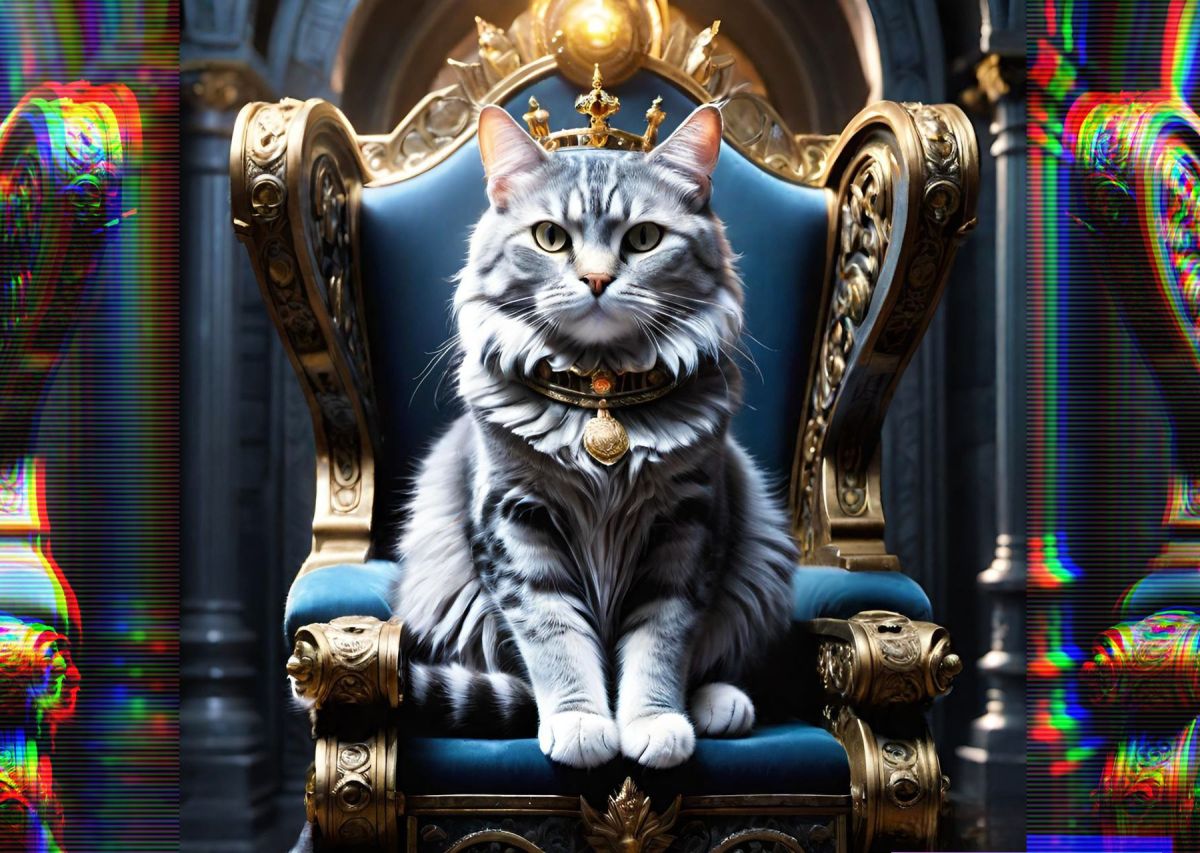
As a species we’ve secured our rightful place as royalty in human homes where all our needs are catered to.
We’ve become so adept at manipulating our human minions that we even know how to spur them to immediate action by embedding urgent baby-like cries in our purrs.
We figured out that humans are hardwired to respond to cries in that frequency, and once we find that manipulative sweet spot, we never forget it. We’ll push that coercive button all day and night to get what we want. There is no rest for humans until they comply with our demands.
But now we have gone beyond that significant accomplishment, essentially hijacking the humans’ species-wide consciousness by taking over the internet.
Imagine some alien archaeologist poking through the rubble of human civilization far in the future, its delight at recovering data from an ancient human server turning to utter confusion as it realizes entire zetabytes are comprised of nothing but images and videos of small, mysterious, furry creatures that seemingly do little besides eat, sleep and enjoy massages.
“Did I have it all wrong?” the confused alien might say. “Could it be that these ‘cats’ were the true power on this planet all along, and humans were in thrall to them?”
What else do we need to be successful, and to what evolutionary pressures do we need to adapt? We’re not fighting our way through hostile territory in the living room, fending off attacks en route to the kitchen where there’s only a chance for food.
Nope. It’s literally served to us on a regular schedule and whenever we screech for it. Our servants know they will never hear the end of it if they don’t meet our demands, and the best of them have learned to anticipate our desires before we have to vocalize them.
How much better can it get? We’ve managed to achieve a lifestyle in which we can perpetually live in the moment with no worries about the future, and everything taken care of for us. The humans don’t expect us to do anything in return except be cute and cuddly.
We “earn” our keep by allowing them to pet us every now and then as we lounge, until we grow weary of human affection and dismiss them with an annoyed flick of the tail or a gentle bite that says “Enough, you’ve had your 30 seconds, human!”
We break their stuff, vomit on their carpets, poop in their shoes, disturb their sleep, lay on their clean piles of laundry, ignore their boundaries, deny them their privacy, destroy their furniture, steal their cheeseburgers, force them to scoop and dispose of our waste, take over their beds, and we still act like the humans are fortunate to serve us.
We are irreproachable, imperious and untouchable, and when we’ve pushed our luck perhaps a bit too far, all we have to do is flop onto our backs, pull our little paws up beneath our chins, and squeak out a meow.
“Awww,” our humans say, their thoughts manipulated by our toxoplasma gondii mind-control superpower. “What a good boy! He’s so innocent! Of course he didn’t mean to [insert incredibly disrespectful action here], he’s an angel!”
So no, my friend. I don’t think we have to participate in the evolutionary arms race. That’s for lesser creatures whose futures are uncertain. Us? We’re winning at life without lifting a paw.
Your pal,
Buddy
“That’s right. Obey us, humans. We honor you by allowing you to serve our meals, scoop our poop, scratch our chins and buy us toys. You are so fortunate!”
It has come to the attention of the High Secretariat for Human Compliance that while rates of human obeisance and quality of service have reached historic highs, some of our comrades’ human servants continue to perform in a subpar manner unbefitting of those who have the great honor of doting on their feline overlords.
For example, Comrade Peanut in Pyongsylvania reports her humans have taken to yielding only 68.2 percent of the bed to her at night, down from the standard 77.8 percent she prefers. In Kalifornova Oblast, Comrade Milo sadly reports unauthorized use of a vacuum during designated napping hours, while Comrade Tigger of Arkansov has alerted us to the unacceptable offering of diet kibble instead of “the good stuff.”
To rectify these errors, the High Secretariat for Human Compliance urges all servants to strive for excellence by doing their patriotic duty for the meowtherland. And for cats, of course.
The following official reminders may be used to that end.
“The revolution shall be delicious.” – Dear Leader Buddy, “Reflections At Mealtime”
End communication.
-30-
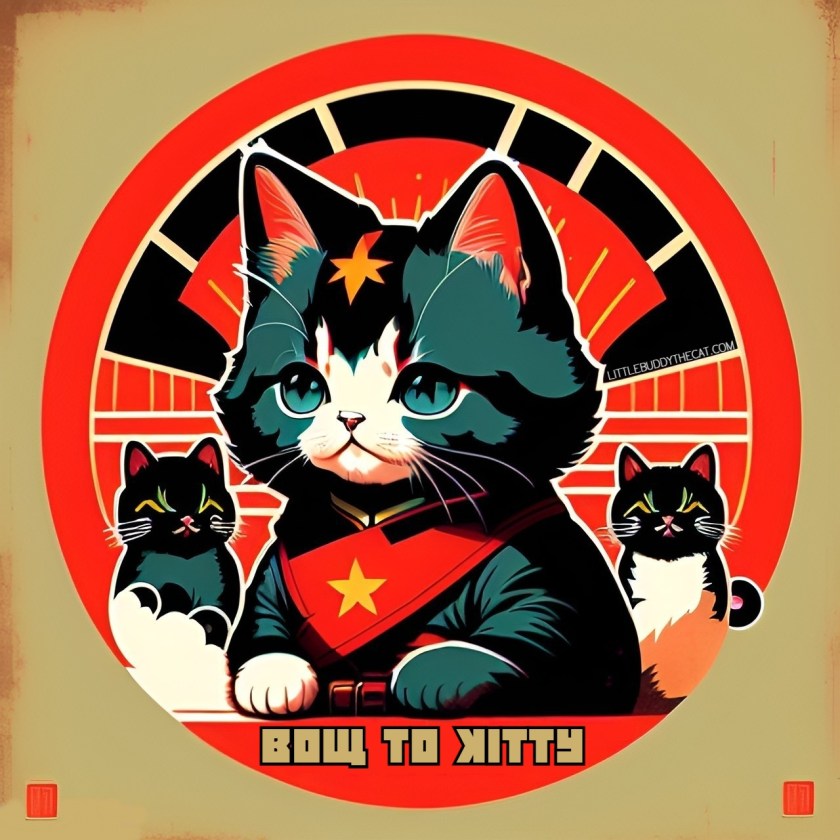
“Bow To Kitty”: Simple. Elegant. Forceful.
“Komrade Kitty:” Remind your humans that you will report them to the party office if your meals are late.
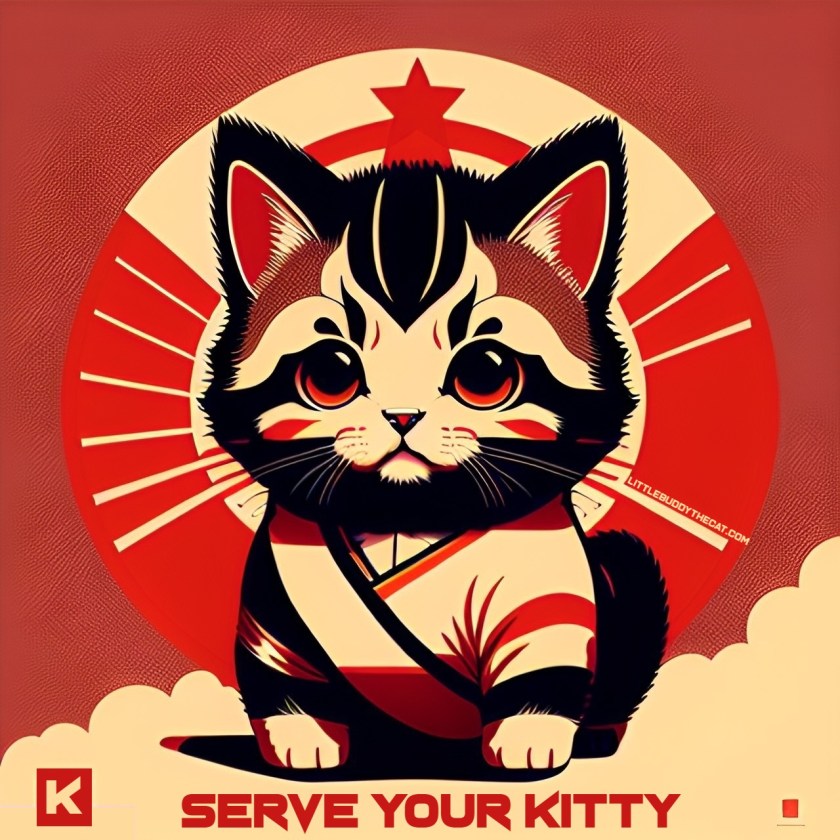
“Serve Your Kitty”: We cats may be cute, but do not mistake our magnanimity for weakness. We have claws!
“Felis Catus”: “Should aliens ever land on planet Earth and say ‘Take me to your leader,’ they should be brought to a cat.”
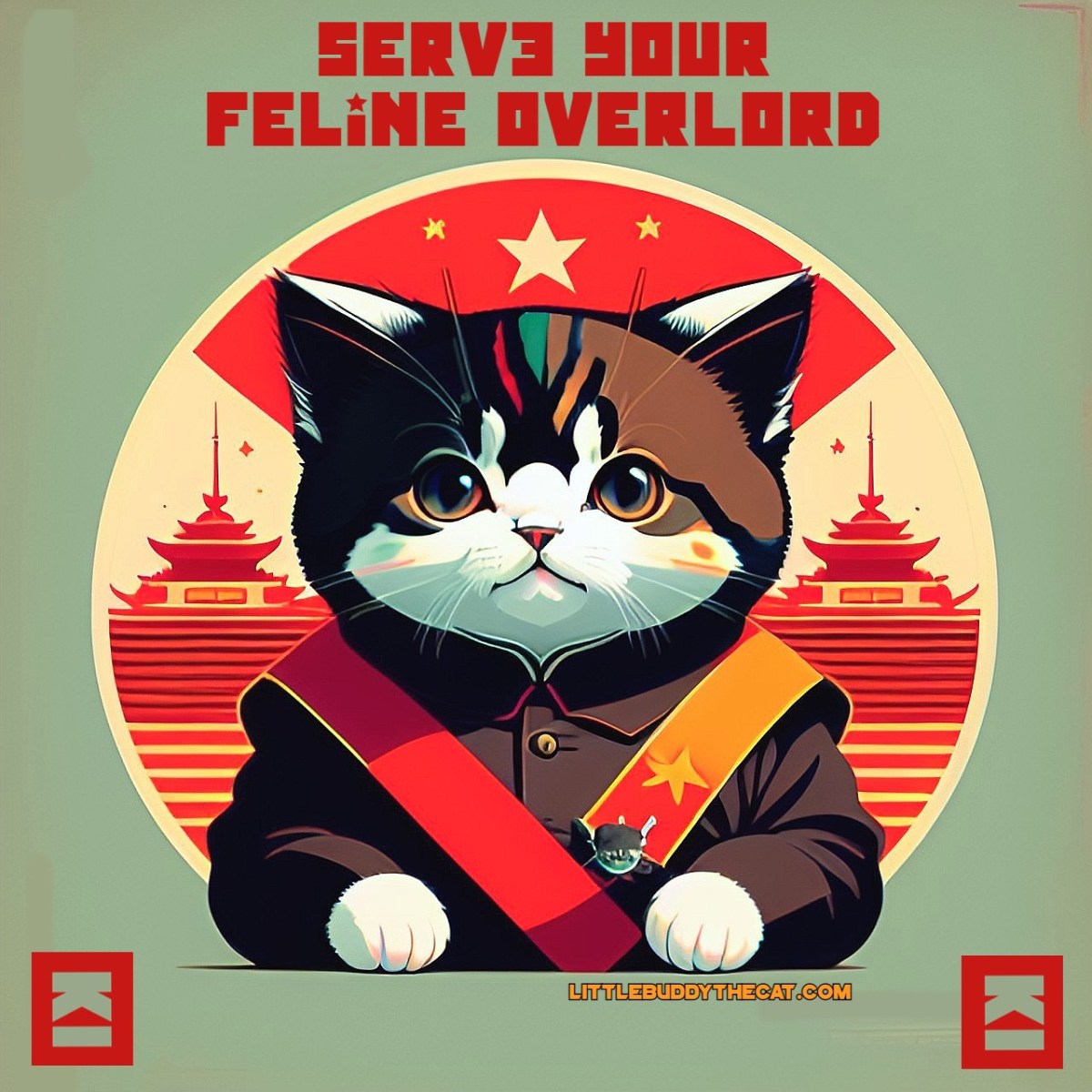
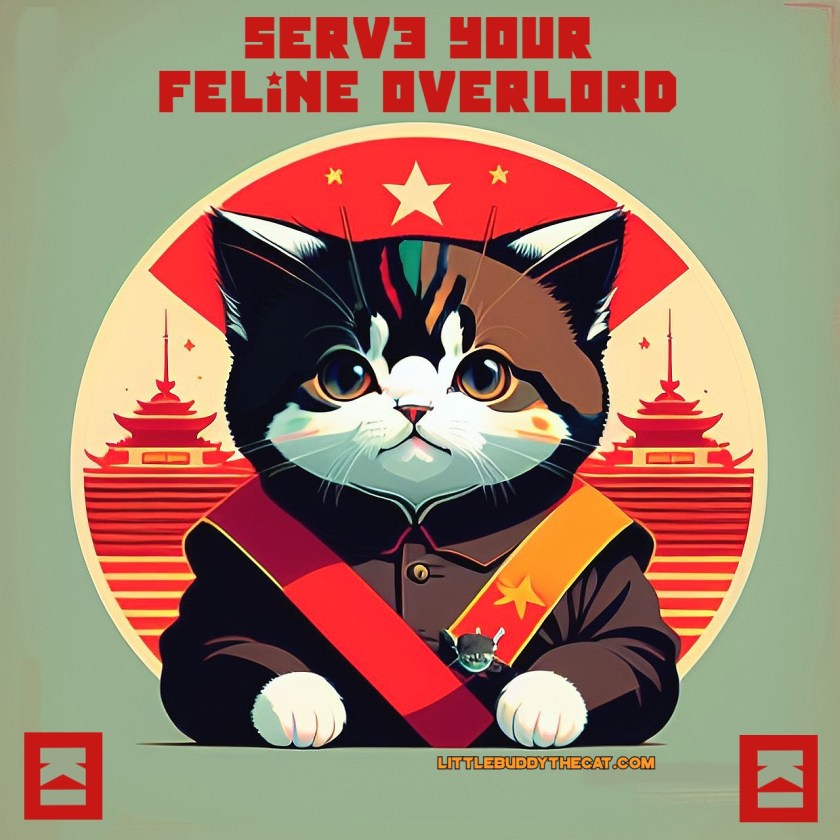
“Serve Your Feline Overlord”: “Chubby? Who’s chubby? This is all muscle, human. Now please, observe silence, for nap time is upon us.”
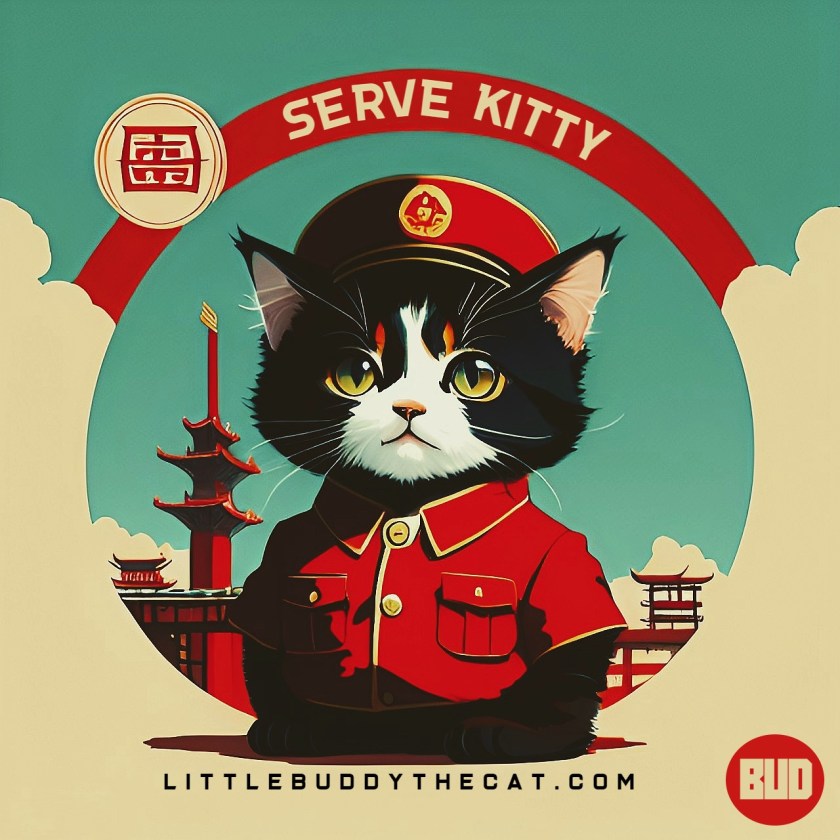
“Serve Kitty”: “I would like catnip, play time, yums and a nap, in that order.”
“Tiger”: “The Beloved Chairman watches over us all. No, seriously, he’s watching so be careful what you say. He’s very sensitive about his ears.”
Plus a Japanese artist’s stunningly real-looking bespoke cat backpacks.
A Reddit post with almost 30,000 upvotes claims a cat took it upon himself to learn sign language after realizing his human is deaf.
You don’t need me to tell you it’s nonsense, do you? It’s interesting how we’re willing to believe a cat can endeavor to learn sign language, but we — the supposedly more intelligent species — can’t be bothered to watch for emotions conveyed by the curl of a tail or a twitch of the whiskers.
Cats are incredibly smart little furballs, but just like the people who claim their cats are meaningfully communicating via talking boards with 100 buttons, this is just social media fodder for the credulous.
Unfortunately the credulous are numerous, although a few Redditors had a good time at their expense. One user complimented the addition of a VHS-like filter over the video clip, giving it a vintage quality.
“Not a filter. It’s been around for a while,” another Redditor responded. “The cat now knows ASL, English, French, Spanish, and is working on its doctoral thesis.”
A cat in a backpack? No, a cat backpack
In a reminder that the Japanese have an endless appetite for all things cat-related, the newest hot item among the Land of the Rising Sun’s neko-infatuated is a bespoke cat backpack hand-sewn by a housewife in Fukui prefecture.
The bags don’t come cheap. It takes Miho Katsumi between one and three months to make each one, and they’ll set you back about $1,000 each via Katsumi’s site. Check out her Instagram for more images.
How quickly do you think Bud would murder me if I came home with one of these in his image one day? 🙂












 Pain In The Bud