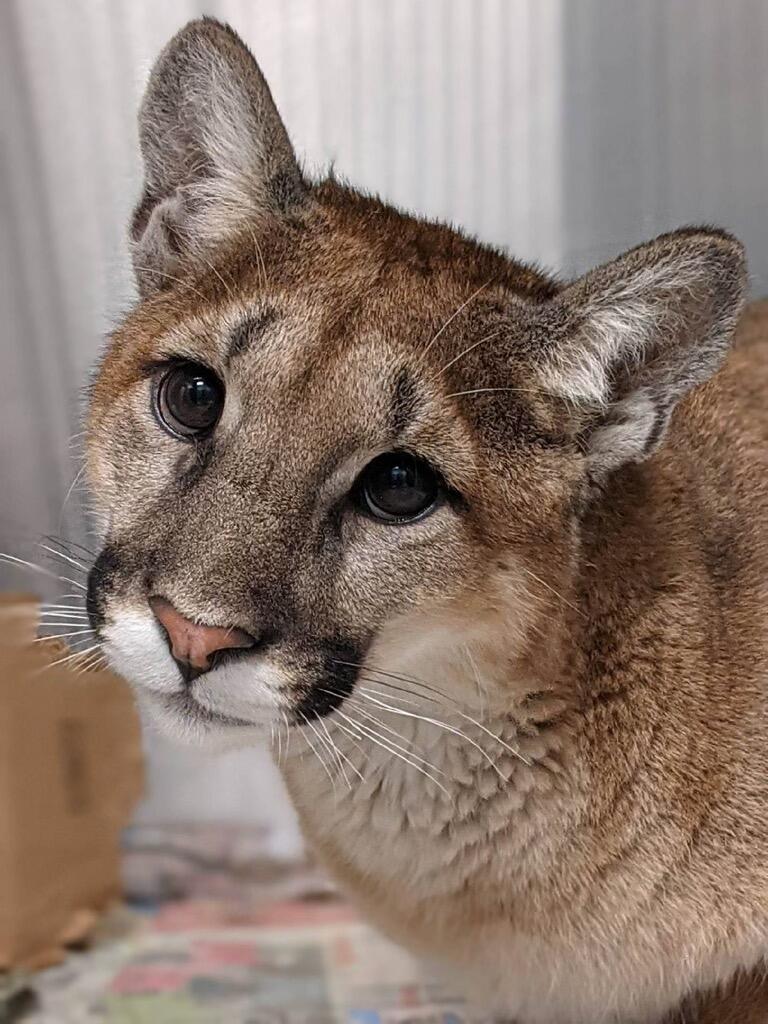
Disabled Young Mountain Lion Gets A New Home

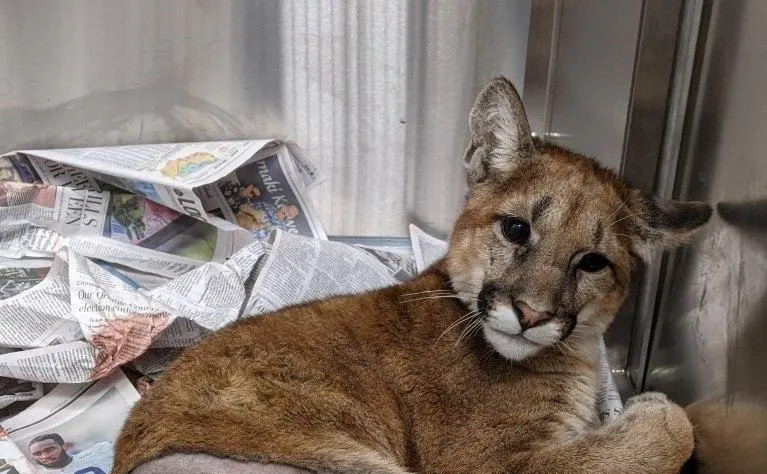
Nicholas requires regular veterinary care after his mother was killed and he almost lost his life when a driver struck them on a California highway.

Nicholas was just a cub and was following his mother across a busy toll road in Orange County, Calif., in 2020 when a driver hit them, killing his mother and leaving him with life-long disabilities.

Along with the trauma of watching his mother die, the little puma endured months of surgeries to repair his body. Since then, young Nicholas had been living in a sanctuary in northern California, but was about to find himself homeless when the sanctuary’s operators went bankrupt.

With just hours to go before that facility was closed, a sanctuary called Lions, Tigers & Bears of San Diego County swooped in and agreed to take the special-needs puma, who requires regular veterinary care.

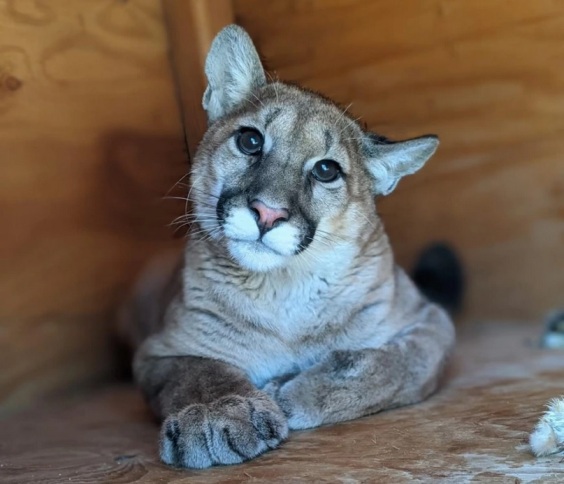
“Nicholas has a head tilt and neurological issues, both conditions require ongoing veterinary care,” Lions Tigers & Bears founder Bobbi Brink told KTLA. “We’ve had a few animals with these issues, so our veterinary team is well-versed in providing the specialized care required for Nicholas, and we’re relieved to give him a permanent home with a den, a healthy diet, medical care and enrichment and toys.”

The handsome young puma is currently in quarantine, Brink said, and will be moved into his permanent habitat after 30 days.

Although California is part of their native range and home to a relatively stable population of mountain lions, the species is seriously threatened by habitat destruction, habitat fracturing and vehicle traffic. Some 70 pumas are killed each year on California’s highways, and experts say the survivors are stranded on isolated “islands” of habitat, separated from potential mates by deadly highways. Indeed, scientists who track native wildlife in California have noted signs of inbreeding among pumas, as the animals are cut off from other populations of their species.

nicholasmountainlion
Nicholas in quarantine. Credit: Lions Tigers & Bears sanctuary

The life of the much-celebrated, recently deceased mountain lion P-22 illustrates the problems faced by the unique cats.

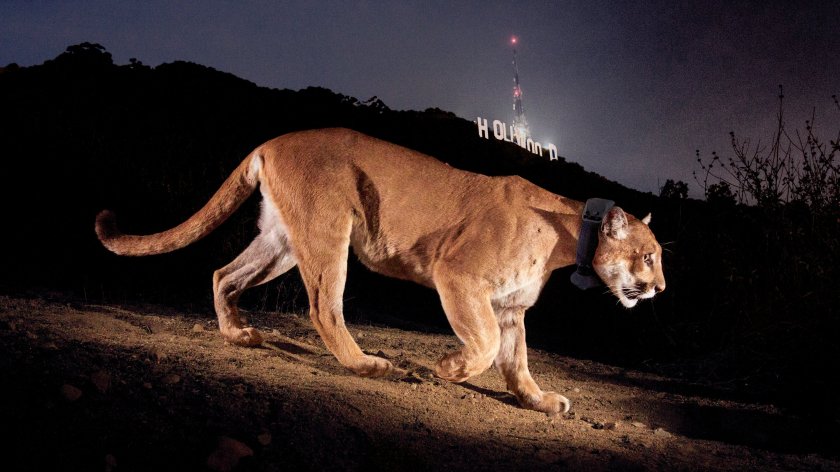
P-22 became famous when he migrated from southern California to Los Angeles, crossing the state’s busiest and most dangerous highways to get there. He settled in LA’s Griffith Park, which straddles the hills with the famous Hollywood sign and the outdoor Greek Theatre.

Although he became a local icon, frequently making cameos on the doorbell camera systems of people living nearby and making his rounds through the park and surrounding neighborhoods, P-22’s range was only nine square miles — the smallest range ever recorded for an adult male mountain lion — and he did not have opportunities to mate and produce cubs, as his kingdom was cut off from areas where he might encounter female pumas.

One solution to the problem is to build land bridges connecting areas where mountain lions and other wildlife make their homes. In April of 2022, officials broke ground on the Wallis Annenberg Wildlife Crossing, which when complete will connect Agoura Hills to the nearby Santa Monica Mountains.

But such projects are wildly expensive and take years to complete. The Wallis Annenberg Wildlife Crossing has a $90 million price tag and won’t be finished until 2025. On the bright side, about two thirds of the cost has been covered by private donations, proving Californians and other wildlife lovers are invested in the survival of mountain lions, coyotes, deer and other fauna expected to make use of the bridge.

It’s also an encouraging sign indicating efforts to educate the public about local wildlife have been successful. Along with the other problems they face, pumas — also known as catamounts, cougars and dozens of other names — are often confused with African lions.

nicholasmountainlion1
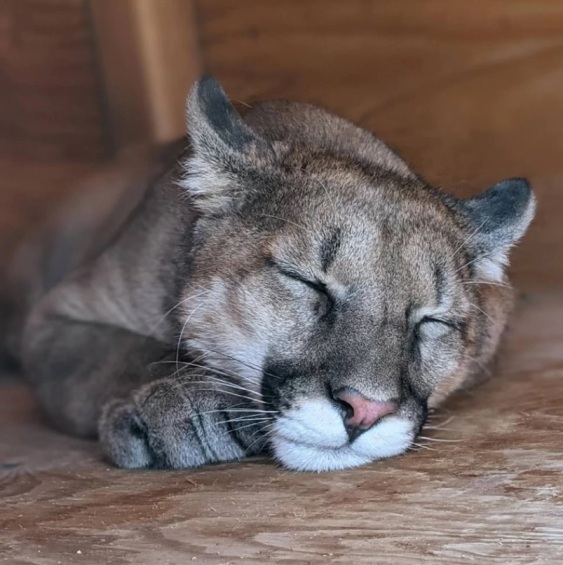
Nicholas enjoys a nap. Credit: Lions Tigers & Bears sanctuary

Because they’re large cats, they’re called lions and they resemble their African counterparts, many people assume mountain lions are dangerous. But not only are mountain lions (puma concolor) an entirely different species than African lions (panthera leo), they are not in the same category of felid.

Pumas are actually felines, meaning they’re more closely related to domestic cats, and like smaller cats they can purr but cannot roar. True big cats, like tigers, lions, jaguars and leopards, are members of the genus panthera and are capable of roaring, but not purring or meowing.

Perhaps most importantly, pumas are not aggressive toward humans. There are only 27 recorded deaths from encounters with mountain lions over the past century compared to more than 50,000 deaths from dogs, for example, and in almost every one of those cases the pumas were either cornered or their cubs were threatened.

Nicholas is not only a reminder that animal life is valuable, his circumstances also remind us that we’re going to have to find creative ways to ensure the survival of many species as humanity expands. The global population is expected to level off at about 11 billion and then slowly contract as third-world countries undergo the same lifestyle changes common to nations that have already made the transition to first world. But until then, it will take a massive and coordinated effort to ensure we don’t end up on a very lonely planet and likely endanger our own survival with the cascade failures that arise from extirpating entire species.

Follow Buddy the Cat on Facebook!

Cat Gets Help For Man Who Fell Off Waterfall, UK Government Once Considered Cat Cull During Pandemic

Things could have gone south for cats during the early days of the COVID-19 virus.

Someone bring this cat inside, give him a magnificent meal and make him king of the house.

After a man fell 30 feet down a “seasonal waterfall” into a creek drainage in Pleasant Valley, Calif., about 50 miles east of Sacramento, an insistently meowing outdoor cat led the man’s wife and neighbor “right to where the man fell,” per CBS News.

The incident happened a few minutes after 9 p.m. on Feb. 21, according to the El Dorado County Fire Protection District, whose EMTs rescued the man. Authorities haven’t provided updates on his status, but as he was airlifted to a hospital, his injuries were likely serious.

The heroic feline is described as the family’s “outdoor cat.” He should be amply rewarded with a real home.

Cat saves man who fell down waterfall
A photo from the scene showing the airlift helicopter in the background. Credit: El Dorado Fire Protection District

Oh hell no!

A former UK health minister said the government mulled a plan to “exterminate all pet cats” early in the Coronavirus pandemic when the virus was new and poorly understood, the Guardian reported.

“What we shouldn’t forget is how little we understood about this disease. There was a moment we were very unclear about whether domestic pets could transmit the disease,” James Bethel told the UK’s Channel 4 news. “In fact, there was an idea at one moment that we might have to ask the public to exterminate all the cats in Britain. Can you imagine what would have happened if we had wanted to do that?”

Yeah, I can imagine a few million incredulous and angry people drawing their blinds, hiding their cats and figuring out ways to buy cat food and litter on the black market to avoid tipping off the authorities in the heavily CCTV-wired nation. If authorities tried to push the issue, things would have gotten ugly.

Here in the US we’d have another run on guns and Bud would run screaming underneath my bed, probably while demanding I slide his turkey and water bowl to him so he could lay low from “the feds.” Hey, he runs a catnip cartel. He’s used to it!

All jokes aside, I think we’ve forgotten that Chinese authorities were beating pets dead in the street and going house-to-house to put them down when the virus raged through the population there for the first time in late 2019. Animal welfare groups said thousands of pets were abandoned by their caretakers and either left to starve in empty homes or left to fend for themselves.

When the virus spread, ripping through countries like Italy, France, Belgium, Russia and taking hold in New York before spreading to the rest of the US, virologists still weren’t entirely certain whether cats — who are susceptible to an unrelated form of Coronavirus — could pass the infection to people. It’s not far-fetched to imagine that if the UK or other countries decided felines must be culled, US authorities may have followed.

The idea of a government demanding we kill our cats is disturbing on its own, never mind the prospect of it happening during a time when our pets were the few things helping us keep our sanity while we all huddled in isolation.

Thankfully reason prevailed and research ultimately proved that the chances of cats or dogs spreading COVID to humans is almost nonexistent.

P-22, ‘A Celebration of Life’ To Live Stream On Feb. 4

Thousands are set to gather at The Greek Theatre in Los Angeles’ Griffith Park to celebrate the extraordinary life of perhaps the most famous mountain lion in history.

You don’t often hear about public memorials for cats, let alone thousands of people participating in them, but the fact that tickets were gone for P-22’s “Celebration of Life” within three hours speaks to the special place the mountain lion had in the hearts of Californians.

The famous puma, who was euthanized in December after he was suffering from an infection and was hit by a car, called Los Angeles’ Griffith Park home, and that’s where the celebration will be held at noon Pacific (3 pm Eastern) on Feb. 4. It’ll be held at The Greek, the outdoor amphitheater more commonly associated with rock stars, although one could argue P-22 was a rock star in his own right.

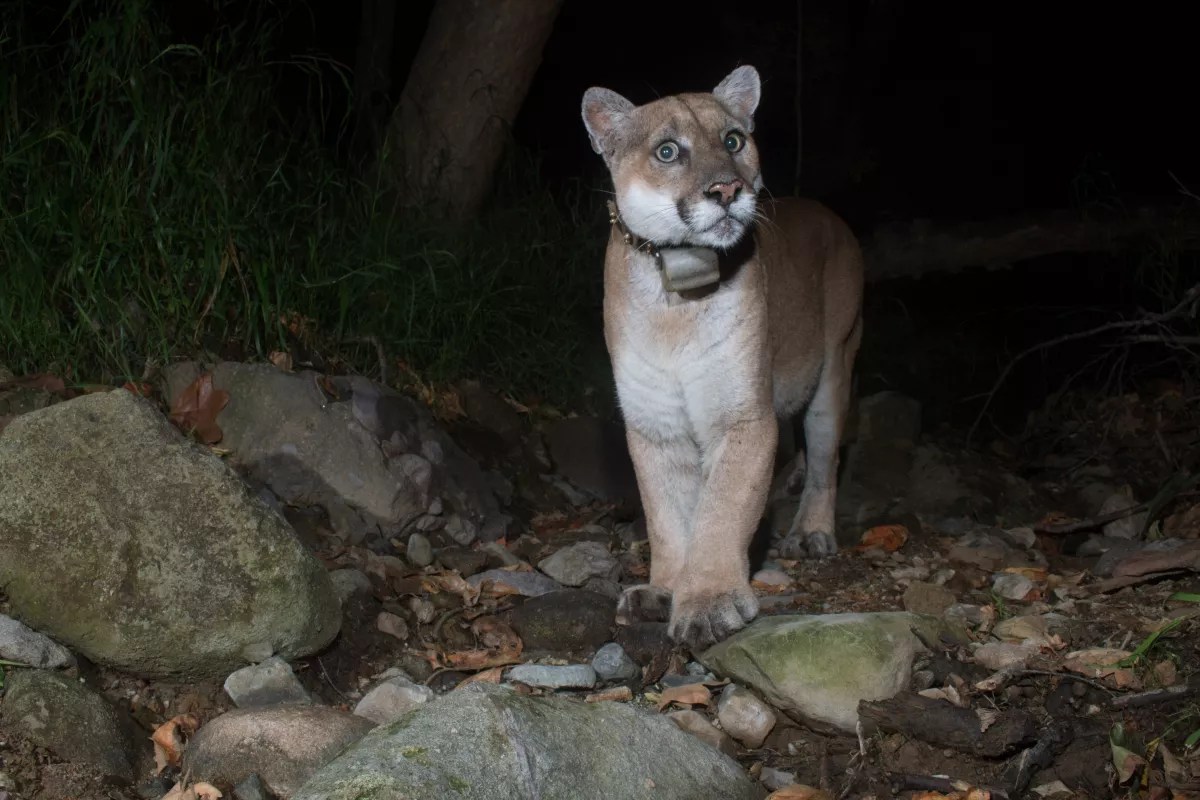
P-22 was the subject of books, movies and music festivals during his 12-year life, and his face adorned t-shirts, murals and street signs asking people to be careful while driving around the Griffith Park area, where the big guy ranged. He was the most famous mountain lion in an ongoing study of his species, and was easily identified by the radio collar around his neck.

P-22’s “origin story” was equally fascinating. Born in southern California in 2010 or 2011, the fearless puma migrated north, crossing several of the busiest and most dangerous highways in the world before he settled in Los Angeles. His nine-mile home range was the smallest ever recorded for a member of his species.

Bookmark this link or this alternate to livestream the event, which is set to include music, performances and remembrances from Los Angelinos and celebrities who loved the “Hollywood Lion.”

Separately, there’s an effort to honor the late puma with postage stamps featuring his famously derpy visage.

Top image credit Miguel Ordeñana/Natural History Museum. Bottom image credit Steve Winter.

p22hollywood2
Steve Winter’s iconic photo of P-22 prowling in front of the Hollywood sign.

Sunday Cats: RIP P-22, Beloved Cali Puma, Plus: Cat Lady Hot Takes

P-22 suffered a skull fracture after he was hit by a car on Sunday evening. The beloved mountain lion was in a bad way when wildlife officials found him.

When the puma known as P-22 made headlines a month ago for snatching a pet Chihuahua off his leash on a post-sundown walk, a lot of people were concerned the mountain lion would be put down or hunted in retaliation.

The dog’s owner admitted he was distraught, but also pleaded with the public not to harm the puma, who after all was just being a cat. P-22 didn’t know pet dogs are off-limits, and he showed no aggression toward the other dog or the man walking the pooches. He was hunting after dark, like pumas do.

Sadly, P-22 is now dead, although there does not appear to be a connection to the Chihuahua incident.

Late on Monday morning, Sarah Picchi of Los Feliz opened her door to find fish and wildlife officers on her property. She knew why they were there, as she’d spotted the cougar in her backyard.

“Of course, I knew it was P-22 because I’ve been following the story,” she told the Associated Press.

P-22, who was described by the National Park Service as “a remarkably old cat in the wild” at 12 years old, was showing signs of distress. Veterinarians who have been tracking and protecting California cougars for 20 years tranquilized P-22 and gave him a veterinary examination after receiving reports that he may have been hit by a car on Sunday night.

p22beforeafter
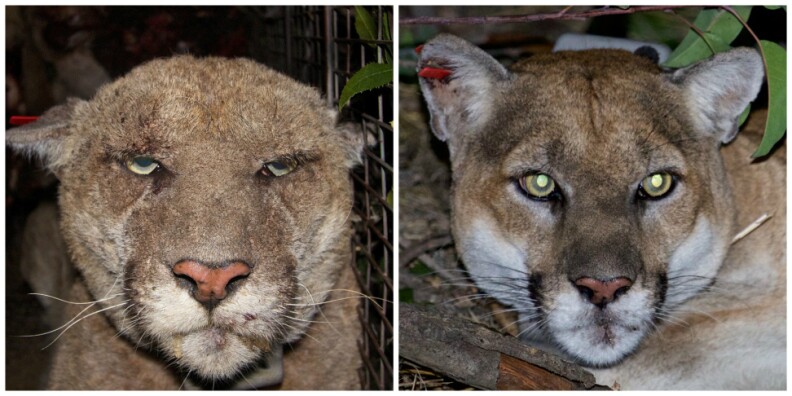
P-22 when he was healthy, right, and just a few days ago when he was suffering from infections and a fractured skull, left.

Unfortunately it looks like he was indeed hit. The beloved mountain lion, who had famously crossed his state’s busiest highways in his younger days to find a range of his own, suffered a skull fracture, an unnamed skin condition and signs of kidney and liver disease.

Veterinarians said the only option, at his advanced age and in his condition, was to place him in a sanctuary where he could be constantly monitored and cared for, but that’s a dicey proposition for a proud animal who spent his entire life fending for himself, hunting and going where he pleased. P-22 would not have recovered, they said, and would have had poor quality of life even if he lived out his remaining days in captivity.

Ultimately they made the difficult decision to euthanize him this week.

Again, there’s no indication any of the misfortune to befall P-22 had anything to do with the Chihuahua incident, although the driver who hit him without reporting the injury made a selfish choice. It’s not clear if earlier treatment could have saved P-22, but it may have saved him significant suffering.

The famous cat, who called some of Los Angeles’ most well-known neighborhoods home, leaves behind a legacy that includes books and documentaries on his incredible life and journey from southern California to his eventual home in LA. Rest in peace, big guy.

Scroll down to the bottom of this post for more photos and a link to the National Park Service’s tribute to P-22.

Wetumpka will pay the price for petty politics

Reader Leah of Catwoods fame brought our attention to this excellent analysis of the situation in Wetumpka, a town in her home state of Alabama that is now best known for extremely aggressive police officers arresting two women for the “crime” of managing a cat colony.

The women, Beverly Roberts and Mary Alston, were found guilty of two misdemeanors each earlier this week in Wetumpka municipal court. (They also spoke to PITB on Friday, discussing their plans to appeal and their worries about the health and safety of the colony cats.)

The column, by Alabama Political Reporter’s Josh Moon, echoes our own thoughts on the scandal, pointing out the petty nature of the arrests and prosecution:

It’s so utterly absurd. And to be quite honest, it reeks of small town politics. It smells suspiciously like some thin-skinned city official got peeved because some ladies had the gall to question him, and he decided to flex a little muscle, show those little gals where the power lies. 

And, lo and behold, in court on Tuesday, one major line of questioning revolved around whether Mayor Jerry Willis had told Wetumpka PD to arrest one of the cat ladies, because she had been continuously critical of the city’s animal control policies and practices. Willis, under oath, denied ordering her arrest. Testimony from a lieutenant from Wetumpka PD sure seemed to indicate that some sort of directive had come from the mayor’s office. 

Regardless, bodycam footage of the cops’ interactions with Roberts and Alston show an impressive response – three cop cars and four officers – to a call about a lady possibly feeding cats. On a roadside. With no businesses nearby. Near a wooded area. With plenty of space off to the side so traffic wasn’t impeded. On public property. 

As we did, Moon noted Alston and Roberts weren’t breaking any laws by being on public property, and there are no laws in Wetumpka prohibiting feeding stray cats.

And it’s not about feeding stray cats, as Willis claimed in his court testimony. Alston and Roberts were providing a service to Wetumpka, at their own expense, because they love animals. Trap, neuter, return is a proven process that limits and ultimately reduces stray cat populations, and does so in a humane way. Prohibiting the women from managing the cat colony will only make the problem worse as the felines mate and stray further afield looking for food, a fact that Willis and town officials don’t seem to appreciate.

Moon wrote:

A city with a decent government would have worked with Alston and Roberts. It would have given them awards for spending their days performing this public service for free. It would have explored ways to expand the very good thing they were doing. 

He quoted attorney Terry Luck, who represented the women, saying “Wetumpka is a laughingstock” for arresting Alston and Roberts, blatantly lying about the reasons and the sequence of events leading up to the arrests, and doubling down on prosecuting them even as the story spread nationally and people understandably shook their heads in disbelief at the insanity of it all.

The small-town trial, Moon noted, was covered by reporters from across the state and from national media outlets. Body camera footage of the arrests fueled public outrage, as officers treated Alston and Roberts like hardened criminals and even laughed at the idea that they were “a bunch of cops beatin’ up on some old ladies.” That’s not what you want your town to be known for.

“The city will pay a hefty price for the bad PR,” Moon wrote. “And the whole time, doing the right thing was free.”

Tribute to P-22

We leave you now with some photos and images that can only hint at how much P-22, the lion of Hollywood, was beloved by the people of LA. He was the subject of at least four books, two documentary movies, various festivals and fundraisers for protecting his kind, and his face graces innumerable posters, t-shirts and pins. Here’s how the National Park Service described the big guy:

Likely born in the Santa Monica Mountains as the son of adult male P-1, he somehow found his way to his tiny, nine-square-mile home in Griffith Park, separated from the Santa Monicas by the 101 and 405, two of the busiest freeways in the world. Defying expectations, he persisted for more than 10 years in the smallest home range that has ever been recorded for an adult male mountain lion.

Although he made frequent appearances on the streets of the Hollywood Hills and even, more recently, of the Silver Lake neighborhood, he was also clearly a wild cat, doing so mostly late at night, and subsisting largely on natural prey such as deer and coyotes.

In the end, he found his way into many Angelenos’ hearts and home surveillance camera footage.


‘Ghost Cat’: Famous Hollywood Puma Snatches Leashed Chihuahua On A Walk

Though the behavior is extremely rare, mountain lions have been known to attack small dogs at night.

P-22, as he’s known to the scientists who study him, is the star of two documentary movies, four books and innumerable photos captured by trail cameras, surveillance stills and the few people lucky enough to catch a glimpse of him.

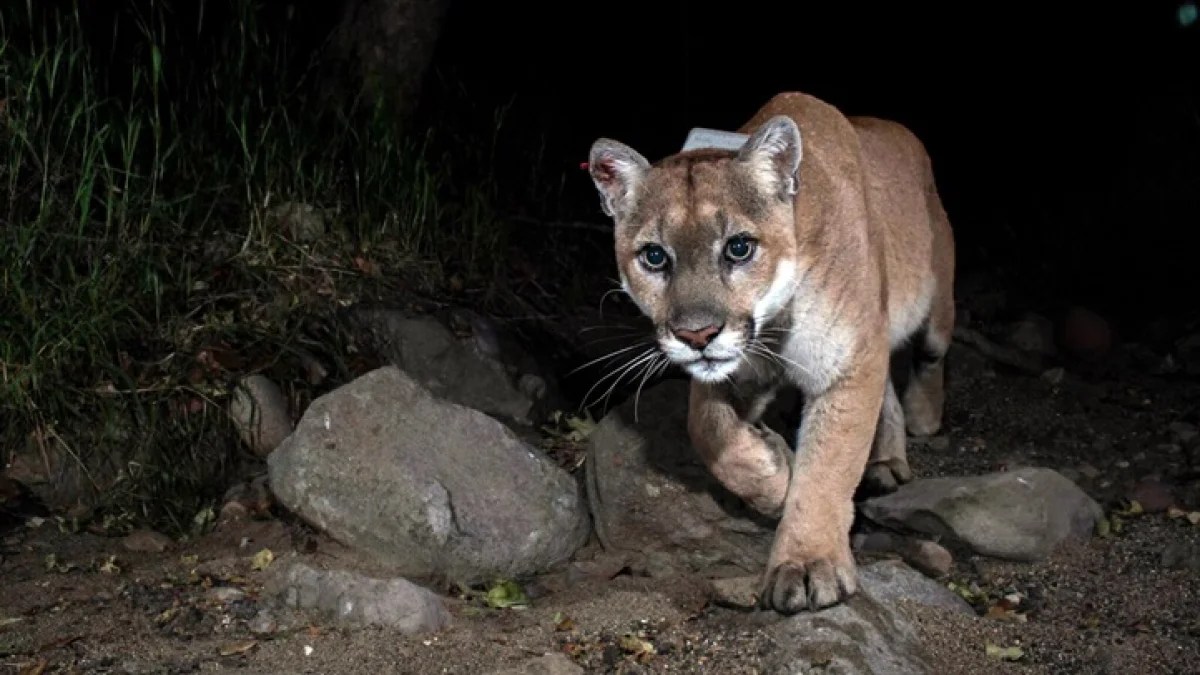
The 12-year-old mountain lion is instantly recognizable by his radio collar and his derpy, wide-eyed look.

But he’s also a predator, as the National Park Service reminded the public on Monday when it confirmed P-22 was indeed the puma who stalked a dog walker accompanying two pooches on Nov. 9. P-22 struck in full darkness about 90 minutes after sundown, snatched one of the unfortunate pet dogs and was bolting away before the walker even had time to react.

The incident was captured by a security camera in the Hollywood Hills neighborhood of Los Angeles, and grainy video shows P-22 leaping out of a bush and pouncing on a chihuahua named Piper. After consulting GPS data from the radio collar and reviewing the surveillance footage, the National Park Service confirmed it was the famous wild cat.

“They are stealth predators,” the National Wildlife Federation’s Beth Pratt told the LA Times. “They’re called ‘ghost cats’ for a reason. This is how they get their prey. It’s not like the vision of lions in Africa that chase down their prey on the plains.”

P-22_2019
A close-up of P-22 in 2019, when he was briefly captured for a health check-up. Credit: Wikimedia Commons

While noting people are “more likely to be struck by lightning than attacked by a mountain lion,” Pratt warned that small pets can resemble the large feline’s natural prey. While P-22 usually hunts deer and foxes near Griffith Park in Hollywood Hills, pumas are also known to take down smaller prey and are opportunistic predators like their house cat and big cat cousins. (Despite their size, pumas — known as mountain lions, cougars and catamounts among many other names — are not considered true “big cats.”)

“It’s sad that P-22 killed a beloved pet,” Pratt told the Times. “But he doesn’t know that. He was just being a mountain lion.”

Daniel Jiminez, Piper’s owner, told Los Angeles’ KTLA that he and his wife are “devastated at the loss of our little dog.”

He said he thought his dog walker was joking when, while out celebrating his daughter’s birthday, he received a text from the walker saying Piper had been taken by a mountain lion. The Jiminez family adopted Piper in 2014.

Jiminez says he wants people to know what happened so they’re vigilant when walking their dogs in the area.

“I don’t want anything bad to happen to P-22,” said Jimenez. “I just want people to be safe out there so that nothing like this happens again.”

Top image credit NPS.gov