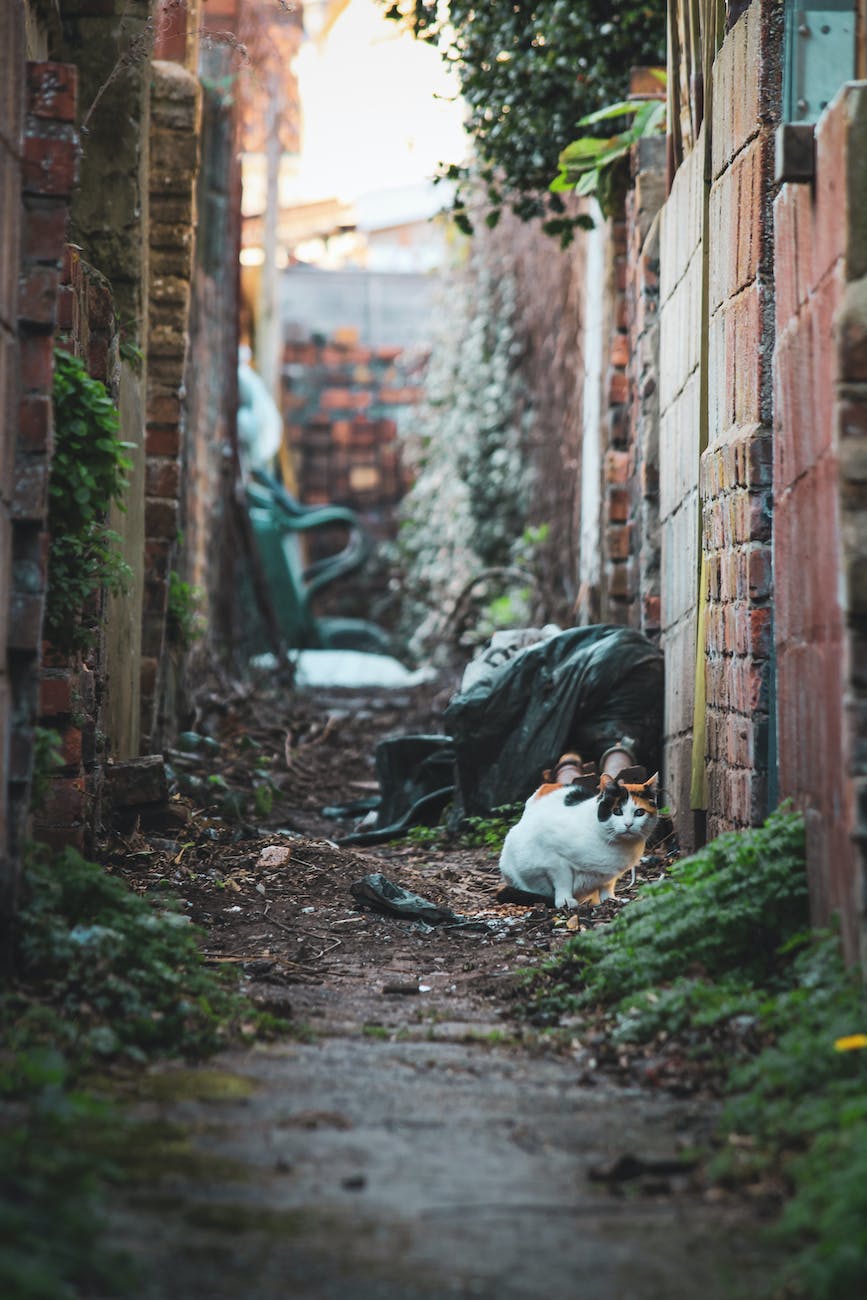
Shrill Editorial Calls Cats ‘Domestic Terrorists’ And ‘Skulking, Disobedient Destroyers’ Who Should Be ‘Locked Down’

The more bunk studies claim cats are driving wildlife to extinction, the more people in media and government call for extreme measures to contain them.

Seventy nine cats.

That’s how many felines stood in for the entirely of the UK in a 2022 study, which is the genesis for the claim that cats kill 270 million birds and small animals in that country.

Using GPS collars, owner questionnaires and samples of prey brought home by those 79 outdoor cats, a research team from the University of Reading applied data from a mix of studies dating as far back as 23 years ago, extrapolated and massaged numbers using things like “kernel density estimates” and “generalized mixed models,” and came up with that 270 million figure, which is cited routinely and credulously by UK media.

Actually, their estimate was between 140 and 270 million. An earlier study put the number at 92 million, and a 2016 study estimated UK cats kill 55 million birds and small animals. That’s a range of 215 million!

The Reading team even quotes the infamous US meta-analysis that claims domestic cats kill as many as 4 billion birds and 22.3 billion mammals a year here. That paper, as skeptics in the science community have noted, has virtually no relationship with reality, involves no original research, and relies on data from unrelated studies and surveys in which cat owners were asked to rate their pets’ hunting prowess on a point scale while imagining what the little ones get up to when they’re outside.

All of this is to say that aside from the thorough, labor-intensive and expensive D.C. Cat Count, which brought together cat lovers, birders and scientists to work cooperatively, the 2022 UK study and its counterparts in the US and Australia are exercises in pushing an agenda masquerading as honest academic research.

That’s how we get editorials like The Spectator’s “We need a cat lockdown now” by Zoe Strimpel. Though the tone isn’t tongue in cheek, I can’t imagine Strimpel dislikes cats nearly as much as she claims, and the post was probably written with wry anticipation for the click-generating fury of cat lovers indignantly sharing it on Facebook and X.

Still, it quotes the Reading study without skepticism and portrays cats as furry little wretches who abuse their human caretakers with their claws and their disdain while gleefully eating their way through endangered birds.

A cat stares down a mouse. Credit: Wikimedia Commons

Cats are predators, that much we can agree on, and outdoor cats are much more likely to negatively impact local wildlife, for obvious reasons.

Likewise, I can understand the concern with cat culture in the UK, where allowing pet cats to roam outside is the norm.

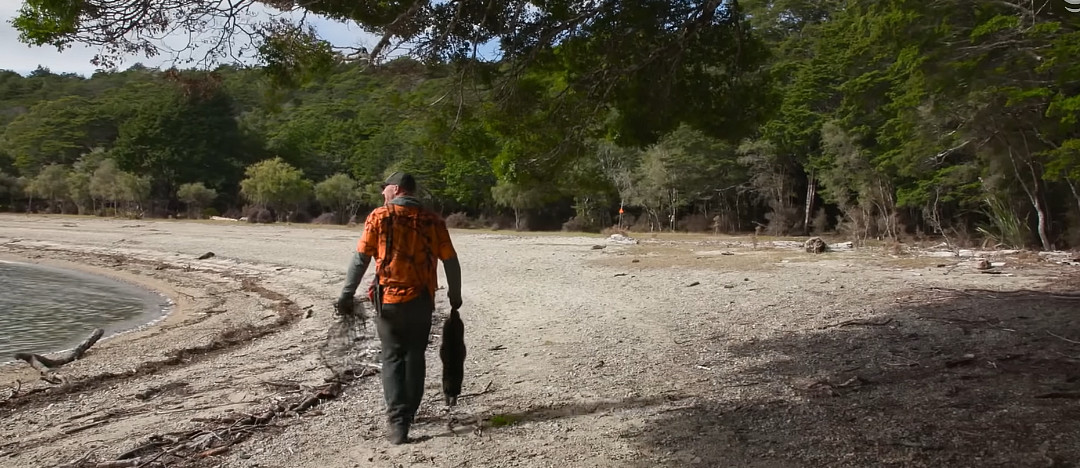
But every time the media cites the above-mentioned studies, more people are given an inaccurate impression of feline ecological impact, and more lawmakers at the local and national level consider “solutions” ranging from prohibiting people from keeping pet cats, as a government commission in Scotland recently proposed, or exterminating them outright, as some Australian states and municipalities in New Zealand have tried to do.

It’s worth pointing out that there is no data, not even a single study, showing that air-dropping poisoned sausages or arbitrarily shooting cats actually has any positive impact on birds and small mammals. All it does is terrorize sentient, intelligent domestic animals who have real emotions and experience real fear and pain.

The primary drivers of declining bird and small mammal populations — including habitat loss, environmental destruction, wind turbines and glass buildings — have nothing to do with cats. We have killed off 73 percent of the planet’s wildlife since 1970 and every species of iconic megafauna — from orangutans and gorillas to tigers and pangolins — is headed toward extinction. Are domestic cats responsible for that too, or can we be adults and fess up to our role as the main antagonist here?

An orange tabby and a mouse. Credit: Wikimedia Commons

Strimpel actually goes even further, claiming cats don’t have real affection for their caretakers and are more like psychopaths, faking love because it gets them what they want, primarily food and shelter.

Dogs have true affection for their humans but cats do not, she additionally claims, while adding that cat people are undateable because they share qualities with the “loutish and numerous creatures” they care for.

There was a time when I would have been ambivalent about Strimpel’s attitude toward cats, if not her cavalier treatment of basic facts. But then a drool-happy, friendly tuxedo cat showed me I could interact with his species without my allergies going haywire, and a tiny gray tabby kitten became my animal cognition teacher while blindsiding me with love.

Now every time I hear about some psychopath abusing cats, or terribly misguided politicians advocating a plan to kill millions of domestic felines, I think about my Bud. I think about how he cries for his Big Buddy when he’s hurt or stuck, how he meows and trills with excitement when he experiences something new, and how he began shaking, then threw up from overwhelming relief and happiness the first time I returned from a vacation after adopting him.

Buddy the Cat chillin’ on the balcony in the summer. Credit: PITB

He’s got a vibrant mind in his little head, with strong opinions and emotions. So does every cat on the street, in a shelter cage, and in the cross hairs of a birder or biologist playing God by “culling” or “harvesting” cats to protect another species.

Real science, not activism packaged as science, has proven that many times over in recent years. If people want to do harm to cats because they think birds and other animals will benefit, the burden of proof is on them to show not only that their methods work, but that the results could somehow justify the fear and misery they would inflict on innocent animals to achieve their goals.

Cats are obligate carnivores who don’t have a choice. We do.

It’ll Take More Than Sketchy Surveys To Prove Vegan Cat Food Is OK

“People aren’t ready for us to turn carnivore cats vegan but I’m going to do it,” the CEO of a vegan cat food brand has vowed.

In September of last year, a research paper about feline health was published to the open-access journal PLOS-One, going mostly unnoticed.

The paper’s authors claim their research proves cats fed a “nutritionally complete” vegan diet are not only just as healthy as their meat-eating counterparts, they’re actually less likely to need veterinary visits, less dependent on medication, and more likely to be given a clean bill of health by their veterinarians.

When a company called Wild Earth announced the launch of a new line of vegan cat food this month, the company pointed directly to that paper as proof that “cats fed nutritionally sound vegan diets are healthier overall than those fed meat-based diets,” as the paper’s lead author put it.

Wild Earth CEO Ryan Bethencourt, who does not have a professional background in veterinary medicine or feline nutrition, summed up his goal in a tweet: “People aren’t ready for us to turn carnivore cats vegan but I’m going to do it.”

bethencourt
Bethencourt calls the effort to put pets on vegan diets “vegan biohacking.” Credit: Wild Earth

He painted the new offering as a bold counter to skeptics who say vegan cat food is unhealthy.

“We expect aggressive resistance from the meat industry on the launch of this industry-pioneering vegan cat food, but we know there are A LOT of cat parents looking for healthier plant-based and more sustainable options and we want to be the leader in providing them with that choice,” Bethencourt wrote in a statement.

What he didn’t mention was the fact that the loudest voices opposing “vegan cat food” are animal welfare organizations like the SPCA and Humane Society, as well as veterinarians and nutritionists, the same people who see the consequences of cats who are deprived of meat. Over the years they have reiterated that felines are obligate carnivores who have evolved to get their nutrients from meat, with digestive systems that cannot process most plants, meaning they can’t break them down and derive nutrients from them. That’s why we don’t see servals or leopards foraging for fruit in the wild.

In addition, the announcement did not mention that the 2023 research was funded by ProVeg International, a non-profit dedicated to reducing global meat consumption, weaning people and animals off of meat and onto plant-based food.

That didn’t stop other credulous reports, like one from GreenQueen claiming Wild Earth’s vegan cat food is “built on research proving that felines can be healthy on a vegan diet.”

And that’s exactly the point — the “study” was conceived and published so that advocates of vegan cat food can point to it and say “science says” cats can survive on plants.

Bad data makes for bad science

Extraordinary claims require extraordinary evidence, but the 2023 study did not examine veterinary records or log the results of vet visits over years. Instead, the data was self-reported by participants.

A total of 1,418 people responded to the survey, and only 127 of them said they feed their cats exclusively vegan diets. The claims that their cats get sick less often and do better in veterinary check-ups are based on their subjective assessments and recollections. The paper’s authors don’t know which vegan brands the 127 respondents were giving to their cats, nor do they have information on whether the food was wet or dry, how often the cats were fed, and how much they ate.

wildearthfood
A cat eating Wild Earth’s Unicorn Pate, which is made entirely from plant products. Credit: Wild Earth

One of the metrics cited by the authors is “guardian opinion of more severe illness,” which means arbitrary feedback from people who aren’t experts in veterinary medicine or nutrition.

If including respondent opinions as “data” doesn’t bother you, consider how many people buy products like Airborne, concluding that it works because they didn’t get sick once on a cross-country flight. Airborne, you may recall, was “invented” by a teacher who claimed she figured out how to cure the common cold, something no physician has done in centuries of trying.

Like vegan cat food proponents, Airborne had its own “study” that claimed its efficacy. The company eventually paid out more than $23 million in a class action settlement for its false claims. That’s not to say vegan cat food makers are precisely like Airborne, but pointing to poorly conducted research is a tactic that works because most people won’t go to the effort of finding the study and reading it.

Current global meat consumption is unsustainable, but…

I’m a vegetarian and I’ve seen enough evidence to convince me that the current rate of meat consumption, especially in the first world, is untenable as the global population rises toward its expected 11 billion-plus peak. Those forecasts and the horrors of factory farming are motivation enough to hope human civilization consumes less meat in the future.

But I’m also a guy who loves his cat, and I think if you’re going tell me that my little pal, designed by nature to be an obligate carnivore with a digestive system and body plan that hasn’t significantly changed for ages, can stop eating meat entirely with no deleterious effects — despite the experts saying otherwise — then you really need to show me something better than a self-reported survey paid for by a vegan advocacy group.

Cat with a salad
This cat is not happy. Credit: r/cats(reddit)

Especially when veterinarians who have no financial interest in the pet food industry relate horror stories of their four-legged patients slowly going blind and cats with no other ailments suffering catastrophic consequences, with their organs shutting down because they’re not getting the vital nutrients and proteins they need to survive.

It’s a horrific way to die, and it happens because misguided people think human morals should apply to cats. Notice in the press releases and marketing materials from vegan cat food manufacturers, there’s no mention of what’s in the best interest of cats — it’s all about people making “bold” choices, “disrupting” industries and leading the Earth to a shiny future without meat or suffering.

The truth is, felines cannot synthesize the proteins that are absolutely necessary for their survival, and their digestive systems aren’t evolved for breaking down nutrients from plants. Those are well-established facts, and ignoring them will not change reality. So anyone who claims “vegan cat food” is healthy faces a much bigger task than asking people to take a self-reported survey. A survey paid for by a nonprofit that lobbies for veganism isn’t proof, it’s wishful thinking masquerading as science.

Even if the authors of the paper had the complete veterinary records of the same cats, it would only be one tentative first step toward challenging everything we know about cat nutrition. Questions aren’t settled after one study, especially with such a small data set. Studies must be repeatable, and the difference between correlation and causation isn’t settled with a single well-designed, unimpeachable study, much less a self-reported survey.

When the stakes are the lives, happiness and health of innocent animals, we should be absolutely sure we’re doing right by them.

Bogus Science And Unverifiable Claims Drive Cat Hatred In New Zealand

Cat hatred is driven in large part by bunk science authored by researchers who approach their work with predetermined conclusions.

After news of a now-canceled children’s cat hunting contest made international headlines this week, the usual suspects came out of the woodwork with wild, unsupported claims that cats — not humans, not human industrial processes, not human-driven habitat loss, wind farms or agricultural pesticides — are singlehandedly responsible for wiping out New Zealand’s native birds and the extinction of an arbitrary number of avian species.

One of the people leading the charge is Helen Blackie, a “biosecurity expert” who told the BBC that cats are responsible for the extinction of six native bird species in New Zealand.

Blackie doesn’t say where she got that information, but noted cat-hating Kiwi Gareth Morgan’s site claims that cats have killed nine native bird species, and attributes the information to a study, “A global review of the impacts of invasive cats on island endangered vertebrates.”

The “study” was published by academics in Spain and California without boots on the ground in New Zealand and is not actually a study at all. It’s a meta-analysis of prior studies, none of which count the number of feral, stray and pet cats in New Zealand, nor do they offer anything resembling a measure of how many birds are actually killed by cats.

Notably, the study does not say cats are responsible for the extinction of nine bird species.

close up shot of a stray cat
Credit: Mehmet Turgut Kirkgoz/Pexels

Much like their US bird-conservationist counterparts, the authors of the study cannot say how many cats actually live in New Zealand and have no observational data about feline predatory habits.

They rely on the same methods the US studies do, which is to say they collect data from unrelated research — including a paper measuring the impact of all predators on wildlife in the aftermath of wild fires in urban environments, a report on the way pet cat personalities impact how their owners view them, and a study on cat behavior in Culver City, California — stir the data into a pot of numbers, and massage the numbers until they get the desired results.

In this case, the “desired results” are any suitably impressive-sounding figure for the total number of native birds killed by cats in New Zealand. The authors aren’t conducting a scientific investigation to find out how those native birds died, they’ve already decided that cats are the reason and they’re misrepresenting data from unrelated studies to support that conclusion. That is not science.

Of course their conclusion has no basis in reality. How is it possible that a bunch of researchers on entirely different continents are able to come up with accurate figures on cat predation in New Zealand without any actual data about cats in New Zealand, without a population count of cats in New Zealand, and without a single observational study to draw information from?

How does a study of coyote and cat interactions in Culver City, California have any bearing on cats killing birds in New Zealand, an island country 6,700 miles away with habitats that bear little or no resemblance to California? Coyotes don’t even exist in New Zealand!

How does a self-reported questionnaire about the personalities of pet cats by American cat owners tell researchers anything about the behavior of feral cats in rural New Zealand?

How does a study about the Persian squirrel on Greek island ecosystems tell a research team anything about the impact of cats on flightless birds in a completely different environment, in a different part of the world, with different types of trees and cover, different native fauna and weather systems?

How does a study of alpine ecosystems inform estimates of cat predation in the temperate and subtropical ecosystems of Aotearoa?

view of a stray cat on a city street
Credit: Boys in Bristol Photography/Pexels

This is not science

This sort of buffet-style, cherry-picking nonsense wouldn’t pass muster in an undergraduate class in the hard sciences, yet somehow it’s not only published in peer-reviewed conservation journals, it’s reported breathlessly and credulously by reporters at outlets like NPR, the BBC and the Guardian, who don’t even bother to read beyond the abstract.

The claims are further undermined by their inexplicable assertion that feral cats and domestic cats are not the same thing, when in fact they are the same species: felis catus. Advocates of cat hunting in New Zealand fret that it’s impossible to tell if cats are feral or pets, not understanding that they are indistinguishable because they are the same. The only difference is that house cats have homes and ferals do not.

No one is claiming that cats don’t have an impact on the environment. It would be foolish to think they don’t.

But if anyone — especially journalists with influential platforms and researchers cloaked in authority thanks to the veneer of real science — wants to make the case that cats are the primary force leading to declining numbers of native bird populations, then the burden of proof is on them, and it’s a high one.

We’re talking about life here, the lives of fully sentient animals with their own rich internal thoughts and feelings. You don’t just casually call for their extirpation or send children off with rifles to arbitrarily shoot them like little serial killers in training.

If you want to make the case, do the work. Get the grants. Hire the personnel. Do it right. The Washington, D.C. Cat Count even has a free toolkit for other communities to conduct their own feline census, so they can make informed decisions. But if you’re unwilling or unable to do the work, then stop spreading misinformation, because it has tragic consequences for real-world animals, and their blood is on your hands.

Top image credit Aleksandr Nadyojin/Pexels