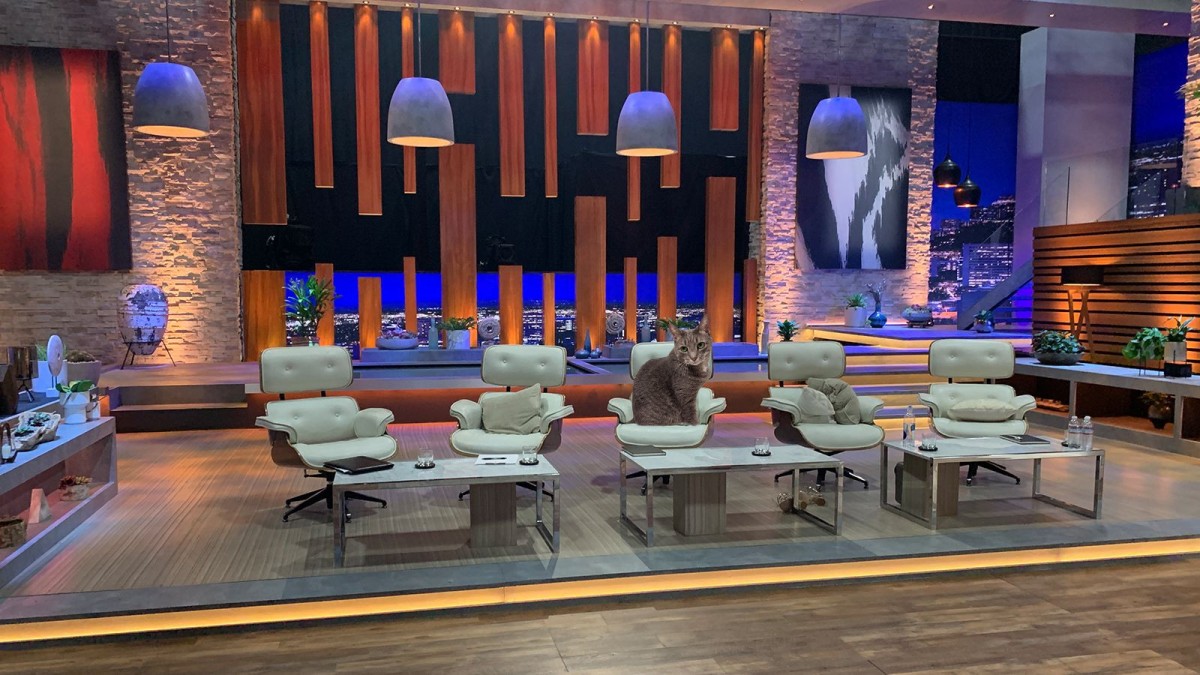
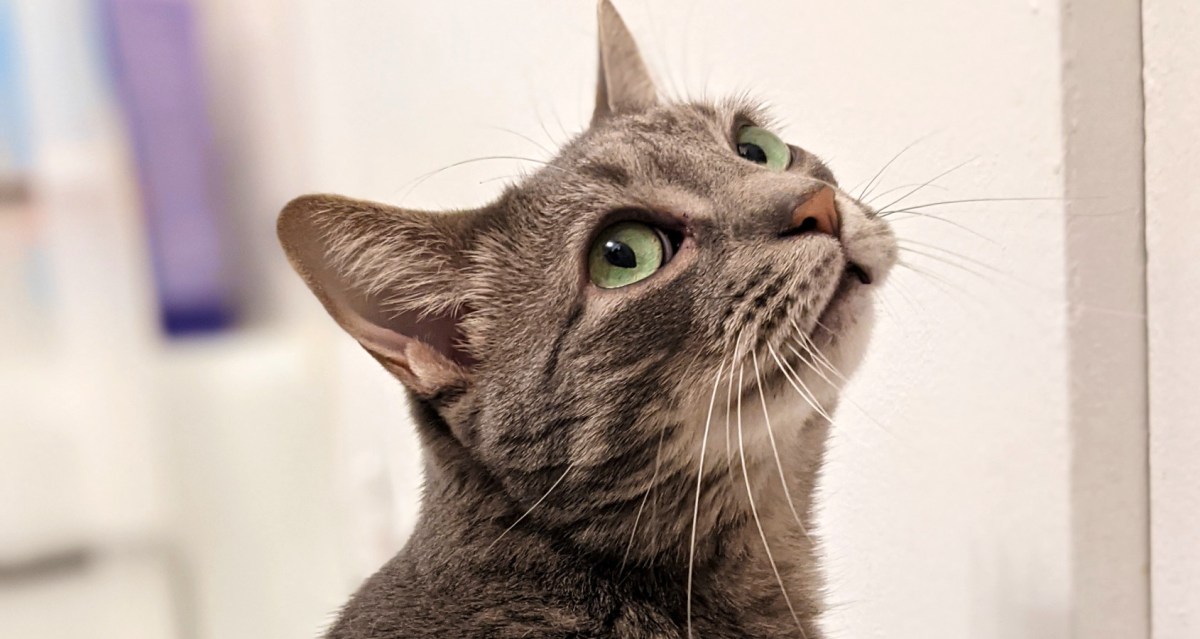
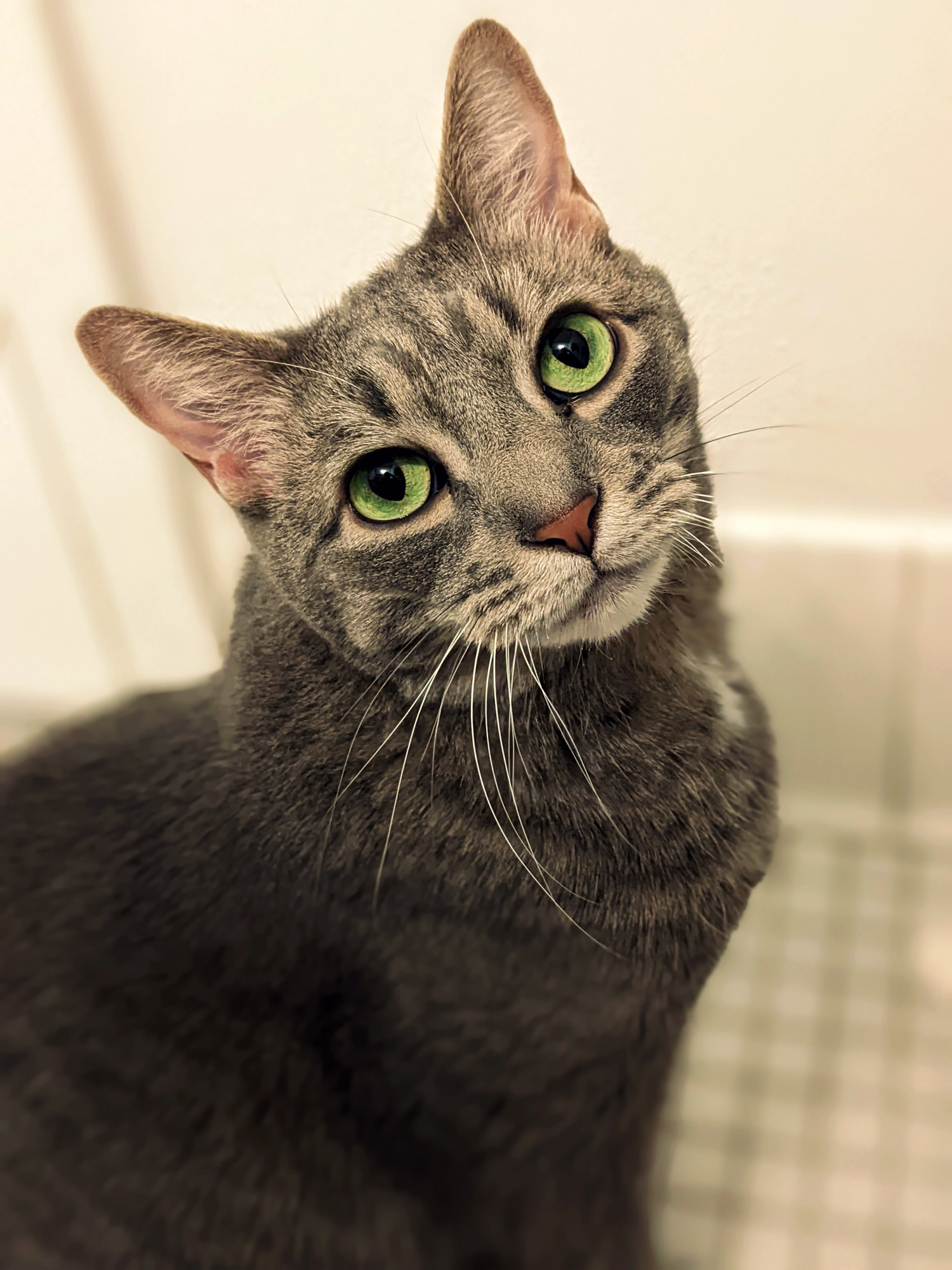
The founders of a startup want Buddy to be the celebrity spokescat for their new product!
Dear Buddy,
We’re a group of entrepawneurs making all natural, delicious cat treats. Unlike humans, we know what cats want, which is why our treats aren’t made from chicken, salmon or beef — they’re all-natural, 100 percent mouse!
We’ve been talking about hiring a celebrity spokescat for our company, Of Mice and Meows, and we’d like to offer you the job!
What do you say, pal? You’ll be generously compensated in catnip and snacks!
Startup In San Diego
Dear San Diego,
It says here your product is only available in 14 stores and your total revenue for the last fiscal year was $476.23.
I just don’t see the logic in your valuation. Your idea is sound, but you’re entering a crowded market, and most of all the potential reward is not worth the risk that I’ll be taking on, especially if it eats into my 16 hour sleep cycles.
In addition to the scalability question, mouse is cool, but lack of turkey is not. And for those reasons, I’m out.
Buddy’s journey ends on a high note, with the former stray getting a forever home, people who love and care for him, and a feline pal to play with.
Buddy the Philadelphia cat is home for good.
The former stray captured the hearts of people around the world when he survived a brutal attack on the front porch of a Philadelphia home, with two dogs mauling him at the urging of their teenage owners. The attack, which was captured on video, prompted worldwide outrage from animal lovers and resulted in an outpouring of help, with well-wishers flooding the Pennsylvania SPCA with more than $100,000 in donations.
Dr. Katie Venanzi was the veterinarian who performed emergency surgery on Buddy in the immediate aftermath of the attack, when his survival was doubtful.
That was back in March. Since then, Buddy’s glorious will to live carried him through those perilous first few hours and days, and he eventually healed up enough to go to a foster home.
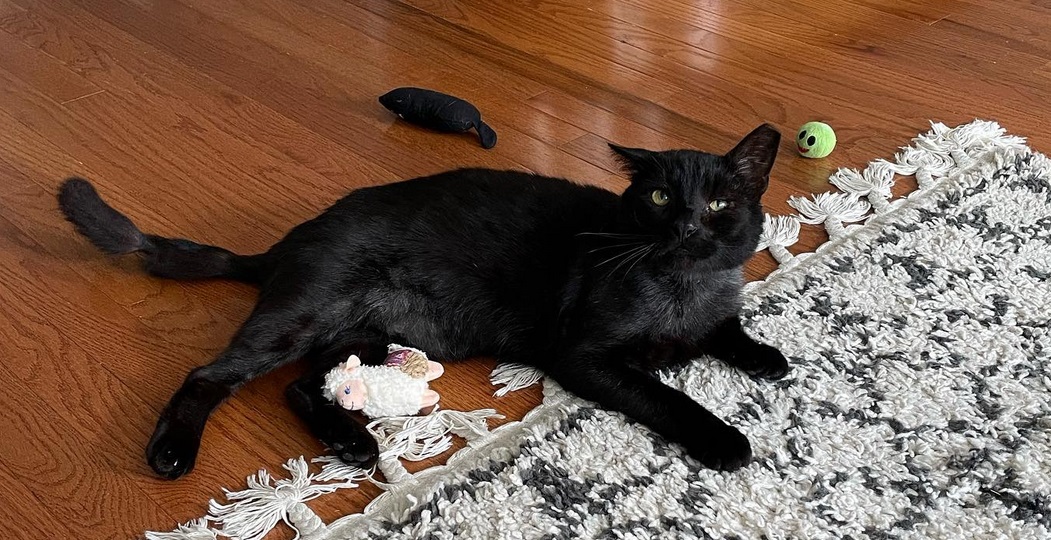
Buddy’s adjusted to the indoors, where he enjoys a perk he didn’t have during his life outside: Toys. Lots and lots of toys. Credit: Pennsylvania SPCA
Venanzi felt an emotional attachment to the little guy and offered to foster him with the hope of providing his forever home. It wasn’t clear if that would be possible: Buddy’s original family failed at making him an indoor cat because he was too accustomed to the freedom of being a stray, so they fed him and took care of him as best they could.
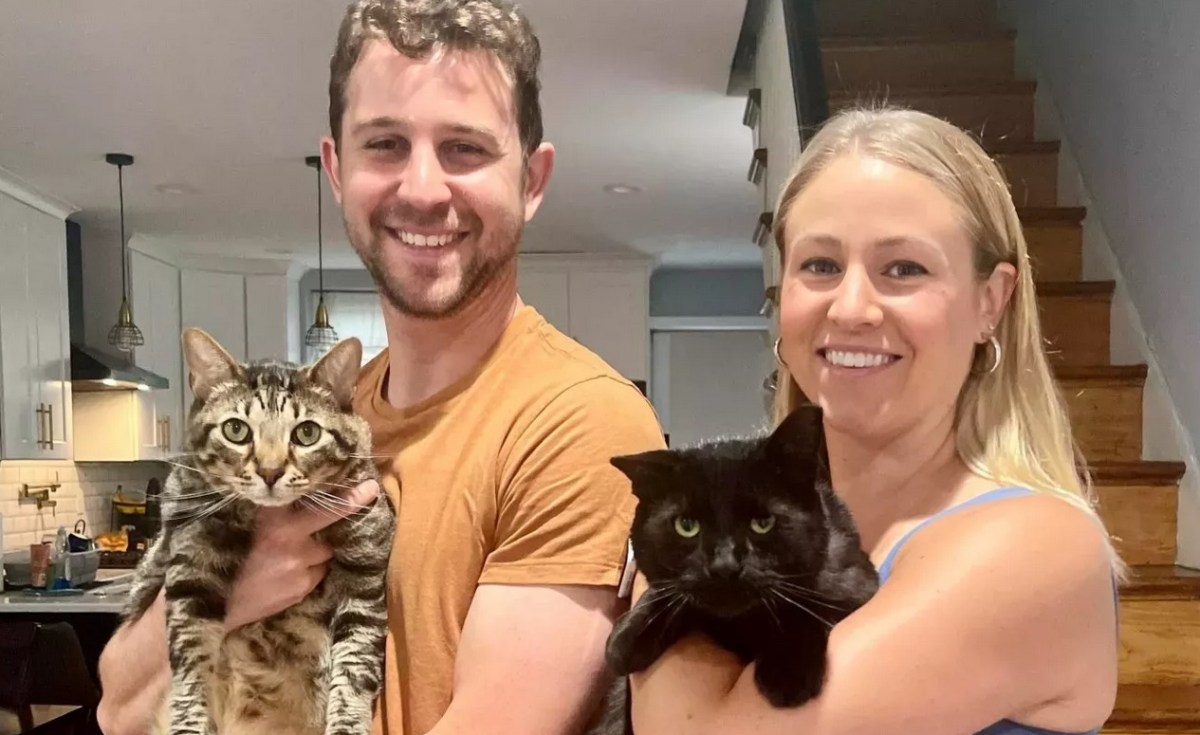
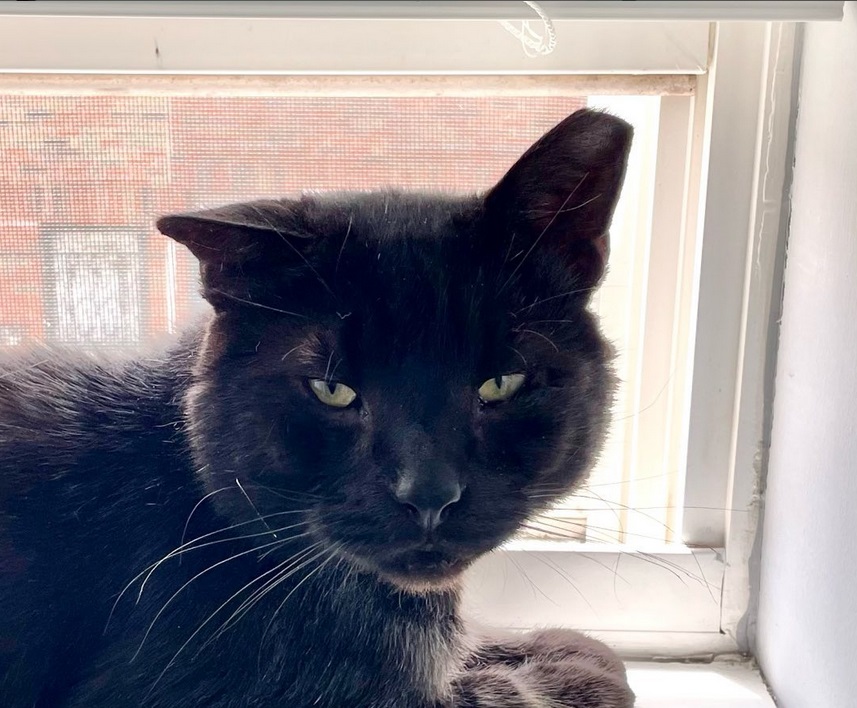
His brush with death seems to have tamed Buddy, who has adjusted to indoor life with Venanzi, her husband and their other cat, Teddy. Buddy enjoys “basking in the sun on a windowsill or watching the world go by from the front screen door,” the Pennsylvania SPCA’s Gillian Kocher said, and his new family “fell more and more in love” with him as the days and weeks went by.
“He has all the toys a cat could want, though his favorite seems to be an empty cardboard box for lounging,” she said. “He is loved, and he is home.”
With his story of perseverance and bravery, Buddy “has become a symbol of everything we do here,” Kocher said. The money left over from donations after all of Buddy’s veterinary needs were taken care of will be used to help other cats and dogs just like him who have suffered abuse and neglect.
You can support the Pennsylvania SPCA by buying a “Save Every Buddy” t-shirt or other gear on the group’s site.
Buddy has fully recovered from the wounds he suffered in March. Credit: Pennsylvania SPCA
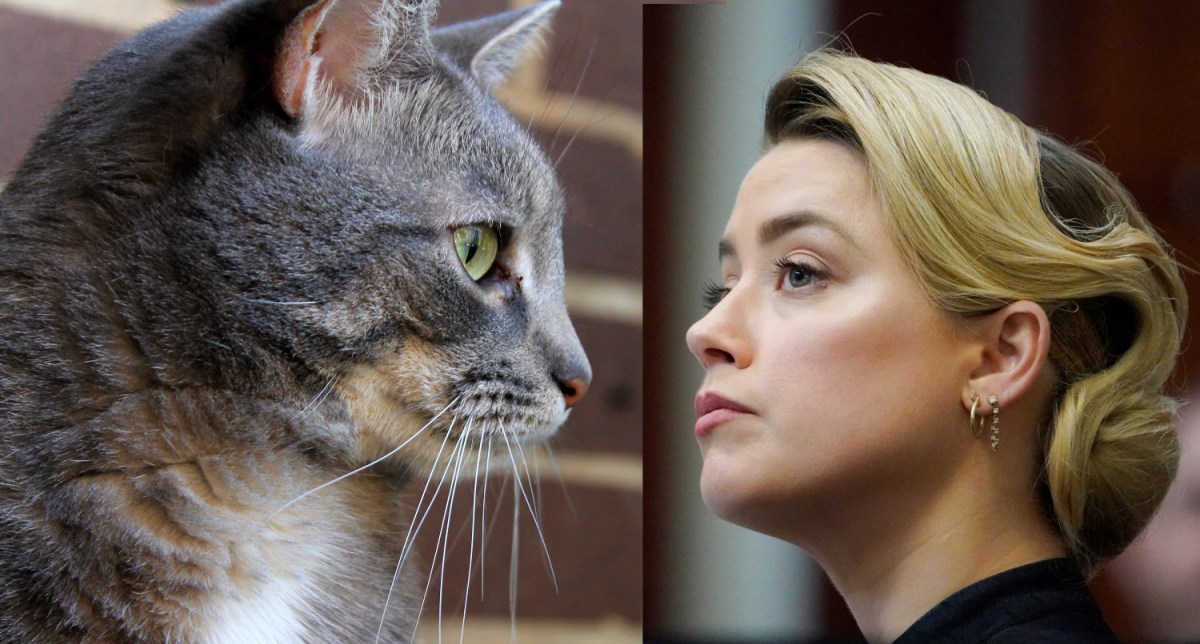
Denying the allegations against him, Buddy the Cat suggested a certain Aquaman actress was likely responsible.
NEW YORK — Buddy the Cat denied he had anything to do with an errant turd found approximately two feet from his litter box on Friday, instead blaming actress Amber Heard for the breach of poopiquette.
The stool in question, a roughly cylindrical piece consistent in color and texture with typical cat feces, was discovered at approximately 10:52 a.m.
“I am not the poopetrator,” a defiant Buddy said in a statement issued through his attorney. “It’s obvious that someone out there is hell bent on destroying my reputation as a good boy who always does his business in the box.”
The silver tabby’s lawyer, Johnny Clawchrane, told reporters he intends to prove his client could not have been responsible for the mystery stool. He said he would prove to the court that Buddy had an alibi, could not have produced the offending nugget, and has a long history establishing him as a consummate user of the litter box who never exits without meticulously burying his business.
“Buddy the Cat has a staunch record of being a very good boy and is personally offended at the suggestion that he could have been responsible,” Clawchrane said.
Instead, the high-powered attorney said, he intends to prove the offending party is none other than actress Amber Heard, who is currently embroiled in another lawsuit centered around the mysterious appearance of feces.
“Who was responsible? Let’s look at Occam’s Razor, folks,” Clawchrane said. “There is a very famous person whose modus pooperandi, such as it is, involves retaliatory defecation.”
Clawchrane pointed to testimony in the ongoing trial between actor Johnny Depp and Heard, his ex-wife. Depp and his house manager testified that Heard dropped anchor on the bed she shared with the Piratesof the Caribbean actor. Heard herself called it a “practical joke gone horribly wrong.”
“We will prove that Ms. Heard had the motivation and means to, uh, smear Buddy the Cat,” Clawchrane insisted. “Justice will be served!”
Heard’s attorney, Benjamin Rottenborn, said the accusation was “patently ridiculous.”
“My client doesn’t even know Buddy the Cat,” Rottenborn said. “Furthermore, just look at him. He looks like precisely the kind of scoundrel who would poop outside the litter box.”
We’ll assume people who like to snooze with their furry buddies have normal cats. Buddy is not a normal cat.
Do you sleep better with your cat or dog in bed?
A significant majority of respondents in a recent survey said yes. British polling and survey firm OnePoll asked 2,000 Americans that question, with about 70 percent saying they get better rest with their furry friend next to them.
Most said having their cat or dog snoozing with them made them feel safer and more comfortable, while 58 percent admitted they sleep better with their pet in the bed than their significant other. While most people like having their animals sleep in their beds, some said pets could disrupt their sleep.
Of course if you’re like me, you never really had a choice. There was no adjustment period when I brought Buddy home for the first time. He didn’t hide under the bed and refuse to come out, or dash for the nearest small space.
That’s pedestrian behavior for a cat of his stature. Instead, the little guy came striding out of his carrier like a feline Genghis Khan and immediately started conquering territory.
“So this is my new bedroom, huh?” Buddy the Kitten seemed to say as he mewed excitedly. “Oh, look at this bed. Mine! Hey, that’s a sweet chair. Mine! I’m just gonna climb up onto your desk and survey my new territory if you don’t mind. The desk, by the way? Mine!”
He decided from the very beginning that my bed was his bed, and while I was to be his butler, waiter, masseur and personal groomer, I would also make a fine human mattress.
Thus our nightly routine: Buddy watches me impatiently as I get settled in bed, then makes himself comfortable either by draping himself over me, or wedging himself between my legs.
Readjusting and changing sleeping positions are severely frowned upon. I swear I can hear the annoyance in Bud’s voice, and his impatience as he waits for me to turn over so he can attend to what’s really important — his comfort.
“You should be deeply honored that I have deemed you acceptable to sleep upon. Now stop moving and don’t toss and turn during the night. I need my beauty sleep!”
Do I sleep better with him there? Mentally, yes. Physically, no.
Recently I wrote about his new habit of getting “sleep scritches,” which came about after he realized he could get me to raise my hand while I sleep. It took me a while to realize it was happening: At most I was dimly aware until I had a dream I was petting him, woke up and realized I was holding my hand up while Buddy was rubbing his face against my palm and purring happily.
He doesn’t wake me up for food, since I set aside a bowl of dry kibble and a bowl of fresh water for him before bed every night. If he gets hungry, he slides lazily off the bed, pads over to his little dining nook and quietly munches a snack before going back to sleep.
The little stinker’s proximity, and his tendency to meow in his sleep, also means he gate crashes my subconscious while I’m sleeping and appears in my dreams.
I can’t get away from him, but that’s okay with me.
Following in the scientific footsteps of Sir Isaac Newton, Buddy seeks to understand a fundamental force of reality.
NEW YORK — Buddy the Cat recorded the results of his 412,377th gravity experiment on Tuesday after successfully swatting his human’s smartphone off of a nightstand.
The silver tabby, who is a longtime enthusiast of experimentation with gravitational forces, said his most recent experiments were opportunistic.
“Usually my human secures his phone and his glasses before going to sleep, because he’s jealous of my scientific exploits and seeks to impede my progress,” Buddy explained. “But he must have been really tired the night before, because I noticed the glasses and phone were just sitting there unattended. They were calling out for me to swipe them onto the floor.”
It would have been rude not to take advantage, Buddy said.
The scientist: Buddy is committed to unlocking the mysteries of gravity.
Gravity experiment #412,377 went as predicted with the smartphone landing on the floor with a satisfying slap, the scholarly feline reported.
Gravity experiment #412,376 was equally successful, with an added bonus — the glasses ricocheted off the nearby wall and became wedged between the mattress and the wall.
“My human, Big Buddy, was very angry when he woke up and couldn’t find his glasses,” Buddy admitted. “It was fun watching him fumble around like he was blind. He came close a couple of times and I considered meowing to let him know he was getting warm, but decided it was crucial to the experiment to see how long it would take him to find them. After all, what is a scientist without his integrity?”
Buddy the Cat said he expects a Nobel Prize at some point in the future for his groundbreaking work.
“Gravity is remarkably consistent,” the feline scientist noted. “No matter how many times I swipe things off of flat surfaces, they always fall to the floor. But I haven’t even tried 500,000 times yet. I feel I need at least a million attempts to have a really robust dataset, and my experiment could benefit from more variety as well. Maybe I’ll try the TV next, or maybe the dishes in the kitchen cabinet. The possibilities are endless!”