Study: Even Experienced Caretakers Give Cats ‘Unwelcome Affection’

When it comes to petting cats, less is more. Not everyone knows that.

By chance, one of the first things I saw Tuesday in my post-wake-up browsing was a short video of three guys standing in a triangle formation, each of them with a puppy. A drum recording began, and the men began drumming an overturned pot in the middle with the puppies’ paws.

The dogs, of course, had no idea what was going on. They were confused and stressed. Then I saw this from the official TikTok page of Imperial Point Animal Hospital in Delray Beach, Florida:

That’s a veterinarian abusing a kitten.

It might not be overt abuse. She’s not hitting or screaming at the poor cat. But she’s taking a sentient being with its own feelings, likes and dislikes, comforts and discomforts, and using it as a toy for clicks and likes on social media.

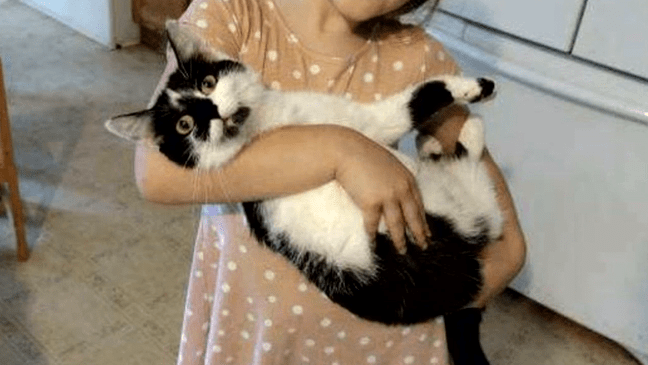
I thought about that when I read the newest study from Nottingham Trent University and the University of Nottingham, which looks at the way people interact with their cats and how their behavior may or may not align with what cats prefer and what they’re comfortable with.

Although Bud and I have a deep bond formed over more than seven years of spending time together, establishing trust, mutual respect and love, he would tear my face off if I did to him what the vet tech is doing to the kitten in the above video.

And you know what? He’d be justified, once he got over the shock and wondered if I’d been replaced with a doppleganger.

The UK study involved more than 100 felines at Battersea Dogs and Cats’ London cattery, with scientists recording interactions between humans and cats via a GoPro camera in a large pen where people can interact with cats one-on-one. There were 120 human participants of various ages and from different walks of life. Each person interacted with three cats separately.

Researchers looked at whether the cat or the human initiated interaction, where the human touched the cat, whether the human restrained the cat, and the cat’s response.

They also collected information on each human participant, such as how many cats they have at home and how long they’ve been caring for felines. Human participants rated themselves on how well they know cats and how well they take care of them.

They used a system that corresponds to the below image to grade physical affection. The image is mostly self-explanatory, but to be clear, the green areas are where cats like to be touched, the yellow areas are “meh,” and the red areas are no-go zones for most cats:

greenyellowredcatareas

In earlier studies, the team established what many cat caretakers know: Allowing cats to initiate physical interactions, going easier and lighter on petting, letting cats control how long the interactions last, and avoiding any kind of restraint are “best practices” for petting cats. They reaffirmed that scratching cats under the chin, rubbing their cheeks and forehead are “the best ways to increase their affection and reduce aggression.”

That might seem obvious, but in research there’s an important distinction between knowing something (or thinking you know it) and proving it with research. It’s important to prove it, and to forgo assumptions, to produce credible and repeatable experiments.

Animal behaviorist Lauren Finka, lead author on the new study, said although the above may seem like common knowledge among experienced caretakers, that’s not always true, and it’s not always reflected in their behavior.

“Our findings suggest that certain characteristics we might assume would make someone good at interacting with cats—how knowledgeable they say they are, their cat ownership experiences and being older—should not always be considered as reliable indicators of a person’s suitability to adopt certain cats, particularly those with specific handling or behavioral needs,” Finka said.

We should point out here that these are “best practices” for establishing a healthy, trusting relationship with cats, and taking their feelings into consideration. Lots of people might force their cats to do things without much push back, but that doesn’t mean the cat is happy. No one’s perfect, and there are always things we can learn about how to do better by our furry friends.

Finka also said she hopes people who run shelters and rescues take the research into consideration. That’s because some people run into the same problems I did: When you’ve never had a cat, and/or you don’t fit the profile of what people think a “cat person” is or should be, you could encounter resistance or skepticism from shelter staff.

One volunteer at an animal shelter asked me if I was adopting a kitten for my kids or girlfriend, because it didn’t occur to her that I’d want a cat. Some shelters require references from a veterinarian, which you can’t get if you’ve never had a pet before.

“Importantly, within shelters, we should also avoid discriminating against potential adopters with no previous cat ownership experience,” Finka said, “because with the right support, they may make fantastic cat guardians.”

For us, it’s more confirmation of what we’ve always believed: The more you take your cat’s feelings into consideration, and treat the little one with the respect he or she deserves, the happier your cat and the deeper your bond will grow.

Finally, Wild Cat ‘Ownership’ Could Be Banned Under The Big Cat Public Safety Act

The legislation aims to ban all private big cat ownership throughout the United States.

There are more tigers living in cramped backyards in Texas than there are in the wild.

At roadside zoos, shady people like Joseph Maldonado-Passage, Joe “Exotic” of Tiger King fame, breed big cats like rabbits so they have an endless supply of cubs to steal from their mothers before they’re weaned, pumped full of sedatives, and handed off to tourists who take selfies with them but never stop to consider the welfare of those baby cats or the harm they’re enabling.

And in states like Florida, where “Muh freedoms!” reign supreme over all other values, people can own any wild animals they want, with no real oversight and no mechanisms to ensure they’re doing right by the animals. There’s nothing forcing “exotic” animal “owners” to keep the big cats, monkeys and other mammals in proper enclosures where they have stimulation and — just as importantly — won’t escape and hurt neighbors.

India the tiger Transported to BBR
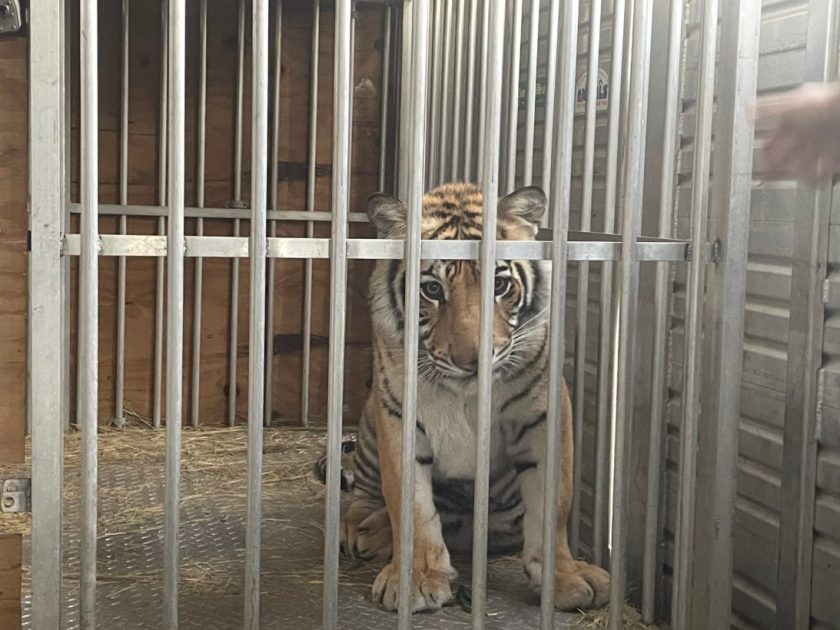
India the tiger was still just a cub when he was spotted wandering through residential neighborhoods in Texas, where he’d been dumped by his former “owner.” Credit: Humane Society

Thankfully, things could change soon as lawmakers are expected to vote on the Big Cat Public Safety Act, a rare bipartisan effort that would finally make it illegal to keep tigers, lions, jaguars, leopards, cheetahs, pumas and other wildcats privately, whether in homes, businesses or non-accredited “zoos.”

Currently keeping big cats is illegal or severely restricted in most states, but like many things in the US, there’s a confusing patchwork of laws and things that would be unthinkable in other states are perfectly acceptable in places like Texas and Florida.

Because, you know, “muh freedoms.”

Now is a good time to point out that this blog has always been, and will remain, politically agnostic. I have my own political beliefs as any other person does, but PITB is a cat humor, news and advocacy blog, and the only politics we discuss here are those that relate to animal welfare. Equally important, Buddy and I want people of all political persuasions to feel comfortable as readers and commenters on PITB. (Although that could change if one or both political parties suddenly makes a move against the nation’s Strategic Turkey Supply. Then Buddy’s gonna have to get biblical.)

The Big Cat Safety Act is co-sponsored in congress by representatives Mike Quickly, D-IL, and Brian Fitzpatrick, R-PA, and in the senate by senators Susan Collins, R-ME, Tom Carpenter, D-DE, Richard Burr, R-NC, and Richard Blumenthal, D-CT.

It’s endorsed by a wide range of groups, from the National Association of Zoos and Aquariums to the Humane Society and various bar associations. The proposed legislation also has the support of the White House, which released a statement this week urging its passage.

If your congressional representative or your senators aren’t publicly on board with the Big Cat Safety Act, you can make your voice heard via the Humane Society’s site, which allows you to draft and send letters to the offices of your lawmakers.

shallow focus photography of cheetah
Cheetahs, already critically endangered, have been almost entirely wiped out by poachers who sell their cubs on the illegal wildlife market. Credit: Magda Ehlers/Pexels

Uvalde And Buffalo Mass Shooters Both Had History Of Killing Cats

The revelations about the shooters underscore the link between animal abuse and violence toward people.

One of the takeaways from the 2019 documentary Don’t F*** With Cats: Hunting An Internet Killer is the connection between violence toward animals and violence toward humans.

The 30-year-old who killed college student Jun Lin previously announced himself to the world with a series of videos in which he killed cats and kittens, then led online groupies on a years-long goose chase, parceling out crumbs of information to keep them interested until he finally “graduated” to humans and murdered Lin.

If police had taken the cat-killing videos more seriously, some of the documentary’s subjects believed, detectives could have caught the killer before he set his sights on a person. Of course, this blog’s position is that animal life has intrinsic value and animal abuse should be investigated for its own sake, but if police are more motivated out of fear that animal abusers could commit violent crimes against people, that helps cats and other animals too.

Now we’ve learned that the 18-year-old gunman responsible for the Texas school shooting and the 18-year-old who gunned down 10 people in a Buffalo, NY, supermarket were both cat killers before they were murderers of human beings. The former murdered 21 people, including 19 children and two teachers at a school in Uvalde, Texas, on May 24 while the latter took the lives of 10 people, all black, in a hate-motivated massacre on May 14.

The Texas shooter filmed himself grinning while holding “a bag of blood-soaked dead cats,” the New York Post reported on Sunday. David Trevino Jr., who knew the shooter, said he was “known for hurting cats.”

“He liked hurting animals,” Trevino told the Post. “I’m told he killed the cats and carried around the bag of bodies for s–ts and giggles The video shows he was not right in the head. He’s not all there. The video raises all sorts of red flags.”

The Buffalo murderer told online acquaintances he’d beheaded a cat, and wrote about it in a journal as well. Like the Texas shooter, his animal abuse wasn’t a secret. His mother knew, and gave him a box to bury the dead animal.

brown tabby cat lying down on gray bed sheet
Credit: Mark Burnett/Pexels

The shooters both fit the profile of animal abusers who move on to hurting people: Most animal abusers are men younger than 30, according to the Humane Society, and studies have found men who abuse cats often target them as an emotional proxy for women. More than 70 percent of women who have companion animals and were in an abusive relationship reported their significant others harming their pets.

Classmates of the Texas shooter described him as “eerie,” “scary” and quick to lose his temper. He was known for physically threatening girls and women, and for harassing them online. One classmate, 17-year-old Keanna Baxter, said he got “super violent” when he dated her friend.

“He was overall just aggressive, like violent,” Baxter said. “He would try and fight women. He would try and fight anyone who told him no — if he didn’t get his way, he’d go crazy. He was especially violent towards women.”

The Texas shooter spent a lot of time creeping on women on social media and in group chat services, which brings us full circle back to Don’t F*** With Cats. In a conversation with a teenage girl on group video chat app Yubo, he told her he “wanted his name out there” like the deranged killer at the center of that documentary.

The shooter, who lurked in group chats uninvited, also showed off the guns he bought after he turned 18 on May 16.

“He would be active every day and join our lives, repeating girls’ names until they paid attention to him,” the girl said.

Rolling Stone
Rolling Stone was widely condemned for putting one of the Boston marathon bombers on its cover as if he were a rock star, but the issue was its best selling of the year.

Although the blame game begins while the bodies of the victims are still warm, as shrieking heads speculate on cable news, no one ever talks about the obvious and uncomfortable truth, which is that these disaffected young loners desperately want to show people they’re important, that they matter.

If they can’t find fame, infamy is a second prize they’re happy to embrace, and they’re motivated in part by the notoriety that previous members of their grim brotherhood “achieved” by massacring fellow human beings.

Major media figures aren’t merely willing to grant that wish. They’re wholeheartedly, enthusiastically in on it, filling hours of airtime looping the same short bits of footage, breathlessly reporting every nugget of information, and holding court over panels of “experts” who are happy to speculate on motivations regardless of how little they know. They blame video games, society, the lack of nuclear families, the lack of male role models, white supremacy, bullying, guns — everything but their own role in turning the killers into household names.

After all, almost everyone who was alive in 1999 can name the two trenchcoated murderers who perpetrated the Columbine massacre, back when things like that still shocked the country. But how many of us can name a single one of the 13 victims?

That’s why I won’t name the killers on this blog. It’s just one blog, in one small corner of the internet, and it won’t make a difference. But if everyone stopped naming them, stopped making them household names and the stars of obsessive crime porn, stopped turning them into objects of fascination whose faces are plastered on magazine covers like rock stars, maybe it would change things.

If would-be killers knew infamy was off the table, that if they survive they’ll remain anonymous nobodies without prison groupies begging for face time, journalists begging for interviews, and grief vampires discussing them for years in “true crime” books and on podcasts, would they go through with it?

UK Soccer Player Pleads Guilty To Kicking, Slapping Cat

The 27-year-old UK soccer star was fined and lost sponsorships after the release of a video showing him brutally abusing one of his cats.

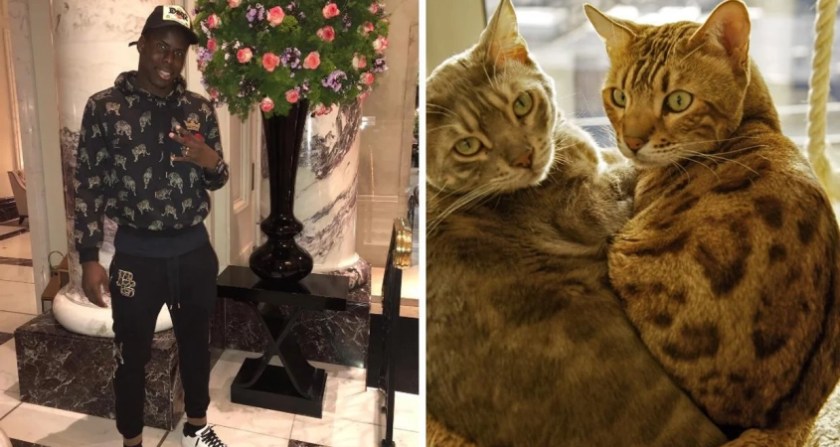
Remember Kurt Zouma, the soccer player who kicked and slapped his cat in a video posted online in February?

The West Ham United footballer pleaded guilty on May 24 to “causing unnecessary suffering to a protected animal,” the BBC reported. His 24-year-old brother Yoan, who is also a professional soccer player, pleaded guilty to a single charge of abetting the crime when he filmed the violence and posted it to Snapchat.

An RSPCA investigation uncovered new details about the incident. Zouma was reportedly enraged when the cat scratched a chair.

“I swear I’ll kill it, I swear I’ll kill it,” he says in the video.

In the video, the elder Zouma, 27, drop-kicks the Bengal cat “like a football” in the prosecutor’s description, and slaps it hard in the face with a shoe. Both brothers were laughing in the footage, and Zouma’s child was present.

His brother Yoan uploaded the clip to Snapchat, and it would have remained private if not for the disgusted reaction of a woman Yoan asked on a date.

“I don’t think hitting a cat like that is OK – don’t bother coming today,” she wrote in a message to Yoan  Zouma, canceling their meet-up.

“I do not want to associate with people who find that funny, in front of a child as well,” she wrote.

Bengal_Cat_(Fia)
A Bengal cat. Credit: Marius Engesrønning/Wikimedia Commons

The outraged woman reported the brothers, and condemnation was swift: Zouma lost several sponsorship contracts, including his most lucrative deal with Adidas, and he was fined $250,000 by his team, which is the maximum a Premier League club can levy against a player.

The brothers don’t yet know the full consequences of their actions. They’ll return to court for sentencing on June 1, and although Zouma has been contrite and has people vouching for him to the court, there may be other considerations after Zouma’s video apparently inspired others to hit their cats and post the videos online.

People who imitated Zouma’s animal abuse formed an online group, calling themselves the “Kick the Cat Club.”

“Since this footage was put in the public domain there has been a spate of people hitting cats and posting it on various social media sites,” Thames Magistrate’s Court prosecutor Hazel Stevens said.

In the meantime, Zouma’s two Bengal cats have been in the custody of the RSPCA. The cats, Bonbon and Cherie, didn’t suffer any lasting physical injuries from the abuse, and despite enduring trauma, the RSPCA said both cats are friendly and will be ready for rehoming soon.

“What makes this case even more sad is the way the video was filmed and shared, making light of such cruelty,” the RSPCA’s Dermot Murphy said. “We hope this case will serve as a reminder that all animals deserve to be treated with kindness, compassion and respect, and that we will not tolerate cruelty.”

Sunday Cats: Buddy The Philly Cat Makes A Friend, His Attackers Get A Trial Date

Buddy, the cat who survived an attack by two dogs, continues to recover in a foster home, where he lives with the emergency vet who cared for him after the attack.

Two Philadelphia minors will head to trial in May after they sicced their dogs on a cat sitting on a porch a month ago.

The juveniles, who are 17 and 12 years old, were walking their dogs in Philadelphia on March 22 when they set them loose on Buddy, a black cat who was cared for by a local family but spent most of his time outside. They shouted encouragement as their dogs mauled Buddy on his family’s porch and Buddy would have been killed if the commotion hadn’t drawn attention from inside.

When one of Buddy’s caretakers stepped outside and tried to stop the dogs, the teens pulled their canines back and fled. They turned themselves in to authorities a few days later after the story went viral and they realized the attack was captured by a doorbell camera system.

They each face felony and misdemeanor charges for animal cruelty, inflicting harm on an animal and other alleged offenses. Since they’re charged as minors the court system is not releasing their names, which is common practice in juvenile cases in most states.

Buddy was so badly injured that veterinarians weren’t sure if he’d make it at first. With a lot of care and love, the little guy pulled through the first few critical days and continued to recover until he was well enough to go to a foster home in early April.

His new caretaker is Katie Venanzi, a veterinarian who specializes in emergency care and operated on him that first day when he was brought in to Blue Pearl Vet Hospital by the Pennsylvania SPCA.

“He was kept secluded in one room initially, but now he has a run of the house and he is doing so well with his foster sibling cat Teddy. His foster parents affectionately say they are the two most awkward cats in Philadelphia, but their relationship is blossoming and we hope it continues that way so that Buddy can officially stay in that home forever,” the SPCA’s Gillian Kocher said. “Hopefully in the coming weeks, we will have some additional details and will let everybody know when we can make an official announcement about Buddy’s adoption, but for now he’s doing wonderfully.”

The reason Buddy was outside in the first place is that, as a stray, he resisted an indoor life when his original family tried to keep him inside.

Venanzi told a local radio station that her and her husband are trying to help Buddy adjust to an indoor life and hope they can adopt him.

“We want to do whatever he needs,” she said. “We understand that he used to live outside. If he is not comfortable living in our house, we are willing to work with other people who are going to give him an opportunity to be in a safe environment but still exposed to the outdoors. We are going to take it day by day and see how he does, but we are really hoping to keep him.”

When Buddy’s story went viral, people around the world responded by making donations to the Pennsylvania SPCA and buying t-shirts with Buddy’s likeness on them, allowing the group to raise thousands. Meanwhile, in a post to social media, the Pennsylvania SPCA noted it had taken in 158 abused animals since Buddy was attacked: “That’s more than five Buddys a day.”

Some of those dogs and cats were shot or stabbed, while others were neglected or starved, Kocher said. Leftover money from Buddy’s surgeries and treatment will be used to help the other abused animals in the SPCA’s care.