After 10,000 Years, Dire Wolves Walk The Earth Again

The surprise announcement came from Colossal Biosciences, a company best known for its project to bring back the woolly mammoth.

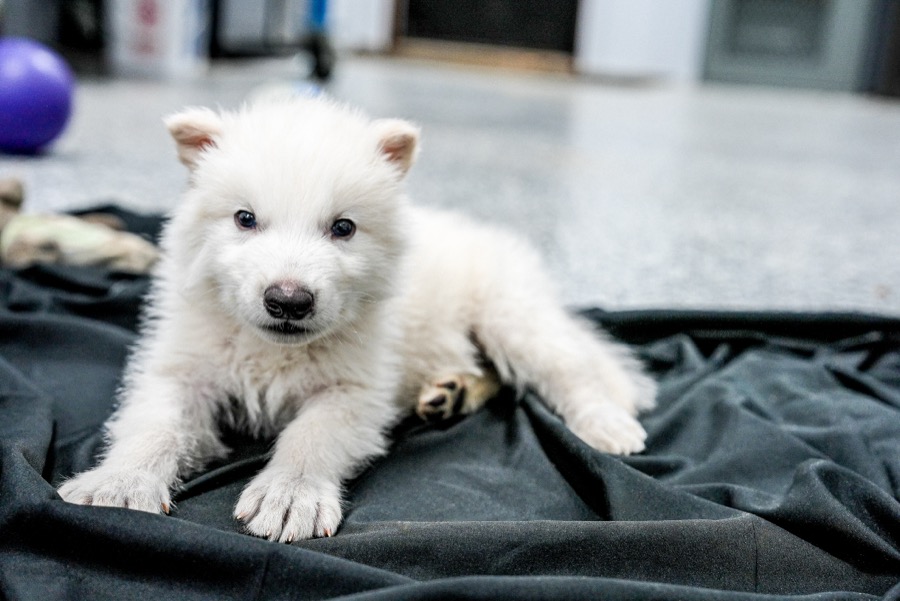
A US biotech company shocked the world Monday when it announced the births of three dire wolf puppies, bringing back a species that hasn’t lived for more than ten millennia.

Or a version of that species, at least.

Scientists with Colossal Biosciences extracted DNA “from a 13,000 year old tooth and a 72,000 year old skull and made healthy dire wolf puppies,” Colossal CEO Ben Lamm said in a statement.

Of course, it wasn’t that simple.

The dire wolf, Aenocyon dirus, was heavier, stockier and had thicker fur than modern-day gray wolves. In addition, its bite was incredibly strong, generating more force than any living species of canid.

To create the dire wolf puppies, Colossal used the genomes reconstructed from the tooth and skull, spliced them with gray wolf DNA, and made 20 gene edits in 14 genes. Healthy embryos were implanted in three surrogates — large, mixed-breed dogs — and were successfully delivered.

Romulus, one of two male dire wolf pups born late in 2024. Credit: Colossal Biosciences
Remus, who was born at the same time as Romulus. Credit: Colossal Biosciences

Whether the new puppies are officially dire wolves is up for debate and beyond the scope of this post, but just like humans and chimpanzees share 98.7 percent of their DNA, dire wolves and gray wolves share 99.5 percent of their DNA.

The species also existed concurrently with gray wolves and there was interbreeding between the populations, meaning gray wolves already have dire wolf lineage.

As a result, the puppies may be more dire wolf than some are willing to admit. Just how far a “de-extinction” project has to go for the animals to qualify as their namesakes will be debated for years, and there are innumerable questions for which we won’t have answers until the pups grow and scientists monitor their behavior in addition to their physical health.

They won’t behave precisely the way their ancestors did, since they are growing up in a captive environment with teams of specialists constantly monitoring them. The wolves are “essentially living the Ritz Carlton lifestyle of a wolf. They can’t get a splinter without us knowing about it,” Colossal’s chief science officer, Beth Shapiro, told the New York Times.

Whether bringing back dire wolves is a “good” thing is also a topic for another day, at least as far as this post goes. You may disagree, and feel free to say so in the comments, but this is a subject you could write half a library of books on, encompassing ecological, moral and philosophical questions that don’t have easy answers.

It’s made even more complex by the situation we find ourselves in, with our own behavior and relentless expansion killing off more than 70 percent of the world’s wildlife since 1970, according to the World Wildlife Fund. The company wants to use its technology to help critically endangered species, like the red fox, avoid extinction.

Colossal has partnered with leaders in the fields of genetics and bioethics, as well as organizations that specialize in animal welfare. The puppies are in a sizable, custom-built facility in an undisclosed location, secured by “zoo grade” barriers, and the company enlisted the help of the SPCA to create an environment appropriate for them. Colossal says their care regimen will include socialization and the development of pack dynamics.

A newborn dire wolf pup. Credit: Colossal Biosciences

The company has well-publicized projects to bring back woolly mammoths and the dodo, and ultimately, its founders say they want to restore balance in places where apex predators have been brought to extinction by human activity.

“This project demonstrates the awesome potential for advances in genetic engineering and reproductive technologies to recreate lost diversity,” Andrew Pask, a Colossal board member and professor of biosciences at the University of Melbourne, said in a statement. “Apex predators are critical to stabilizing entire ecosystems and their loss from the landscape can have profound impacts on biodiversity.”


The pups are named Romulus, Remus and Khaleesi. That last name is in homage to the character Daenerys Targaryen (Emilia Clarke) from the book series A Song of Ice and Fire, and Game of Thrones, the television adaptation. Dire wolves play a major part in the narrative, and the series is credited with bringing the long-extinct animals back into the popular imagination.

Jon Snow (Kit Harrington) discovers an orphaned dire wolf pup in the first season of Game of Thrones. The pup, who grows into a fierce and massive adult wolf named Ghost, plays a pivotal role in many major events in the series. Credit: HBO
Khaleesi, a female dire wolf, named after the character Daenerys Targaryen from Game of Thrones. Credit: Colossal Biosciences

Study: Cats Use Facial Expressions To Reassure Each Other Everything’s Cool During Play Time

Once again, we’ve underestimated cats. There’s so much more to the ways in which they communicate than we realize.

We know cats use non-verbal signals to communicate with each other, but recent research suggests we may just be scratching the surface, glimpsing only a portion of the information that passes between our furry friends.

Cats “talk” to each other by the way they position their tails, whiskers and ears, in addition to their overall body language.

It turns out there’s more. A group of interdisciplinary scientists from universities in Kansas, Arkansas and Haifa, Israel, found cats also employ specific facial expressions, and rapidly mirror each other’s expressions during play time to signal they’ve got good intentions and aren’t going to hurt each other.

The study, which was given the yawn-inducing title “Computational investigation of the social function of domestic cat signals” (in English: using AI to figure out how our house cats “talk” to each other), started with observations of felines playing with each other in cat cafes.

From there, the coders and mathematicians on the team created an algorithm to record and sort the facial expressions the cafe cats used, employing CatFACS (Cat Facial Action Coding System) to associate each expression with its meaning.

“I’m serious. Feed me, or feel my wrath.”

Cats make a surprising number of facial expressions, 276 in total, according to a 2023 study.

The problem is, we humans are terrible at reading them. Even veterinarians trained in CatFACS still struggle to get it right, but happily this is precisely the sort of task algorithmic AI excels at. Like facial recognition software, a well-trained machine learning algorithm can recognize faces and record them more accurately and much faster than any person could.

In a column praising the facial expressions study, evolutionary biologist and Jane Goodall Foundation ethics board member Mark Bekoff said it’s the kind of labor-intensive work that truly advances our understanding of the ways animals communicate.

For cats and their human caretakers, Bekoff notes, it could help us reduce inter-species misunderstandings and make it easier to read our cat’s emotions, so we know when they’re not feeling well or need something.

“There are no substitutes for doing what’s needed to learn about the nitty-gritty details of how animals communicate with one another in different contexts,” Bekoff wrote. “This study of play opens the door for more widespread comparative research focusing on how animals talk to one another.”

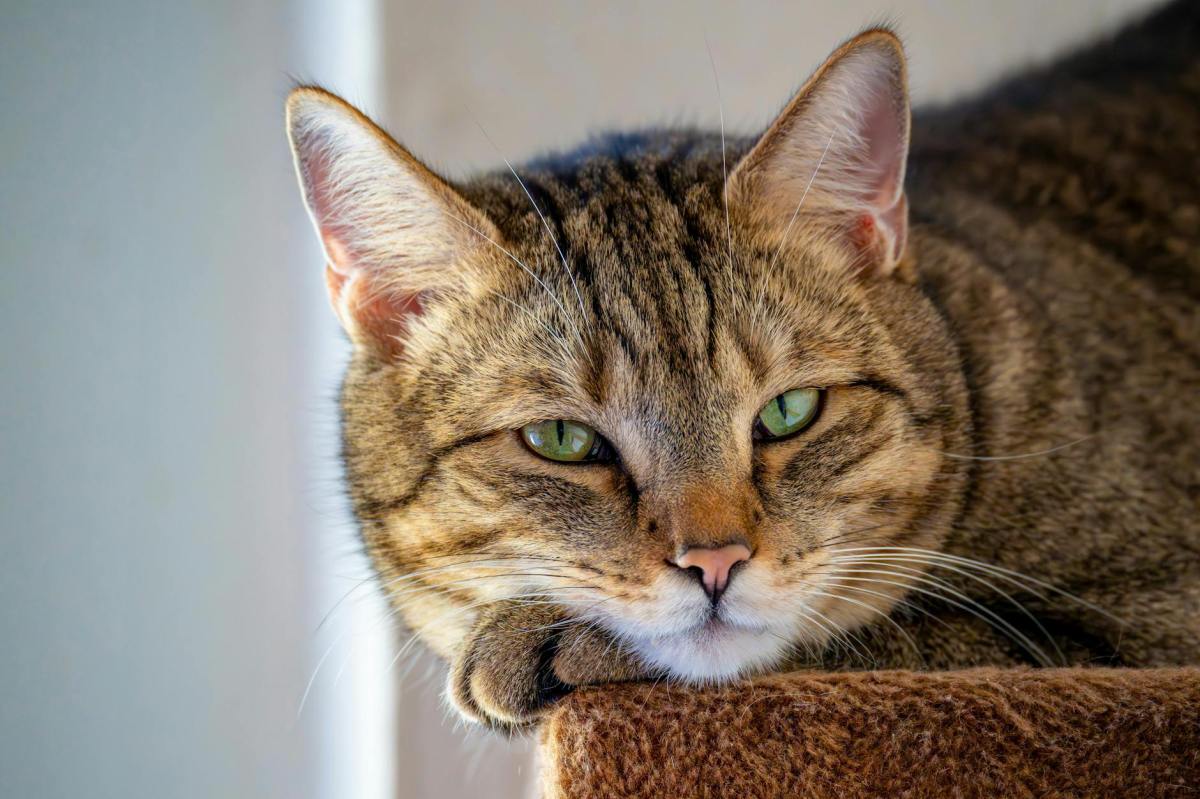
“Do I look happy, human?” Credit: Milan Nykodym/Wikimedia Commons

We also know adult cats very rarely meow to each other, and the meow is reserved for cat-to-human communication. Imagine the frustration our little friends must feel when they have so much to tell us, but the only thing we understand are vocalizations — meows, chirps and trills — that can convey only basic ideas at best.

No Respect! 6% Of Americans Think They Can Beat A Grizzly Bear In A Fight, 69% Think They Can Beat A Cat

A Yougov survey of Americans produced some hilarious results when respondents were asked how they’d fare in hypothetical combat.

In the opening scene of Netflix’s Afraid, a woman is using her iPad in bed when she asks her husband: “Did you know six percent of Americans believe they could beat a grizzly bear in a fight?”

I had to pause the movie right there and see if there was any truth to the claim. Sure enough, in a Yougov survey from 2021, titled “Rumble In The Jungle,” six percent of respondents — almost entirely men — said they could defeat a grizzly bear unarmed.

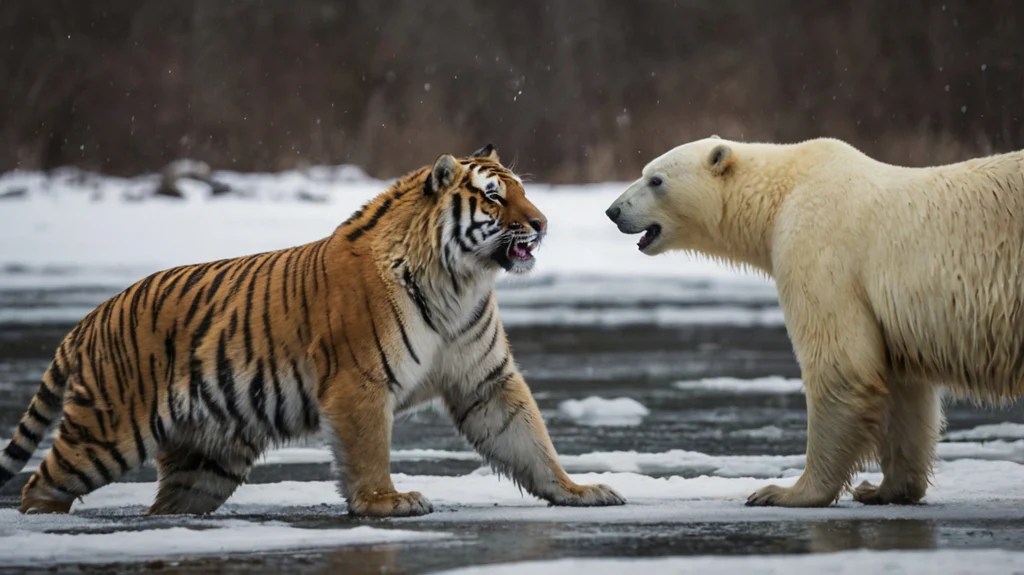
Grizzly bears top out at more than 2,000 pounds, can crush bowling balls with their paws and have claws the size of large knives. They’re also extraordinarily well-protected, with heavy fur and fat protecting their vital organs. If you think you can harm one unarmed, let alone kill it, well, good luck with that.

Incredibly, eight percent said they could defeat a lion, gorilla or elephant, while 17 percent thought they could take on a chimpanzee. Again, the respondents who liked their own odds against extraordinarily lethal animals were almost exclusively men. The survey doesn’t say what they were smoking when they responded.

Buddy

Domestic cats fared poorly in the imaginations of Americans: 69 percent thought they could defeat the little stinkers in hypothetical battles. Only rats fared worse, with 72 percent sure of victory in unarmed single combat.

“This is really an insult to felines,” said Buddy the Cat, a combatologist at Buddesian University. “However, we jaguars fared much better, as we were projected to win about two-thirds of hypothetical fights against other animals, including elephants, rhinos and tigers. Personally I think it’s closer to 99 percent, but I won’t protest. It’s better for us if we’re underestimated.”

He chalked human overconfidence up to the fact that people are “bizarre creatures who live in a fantasy world,” and have “an unfulfilled yearning to be something more than our servants.”

“They don’t have the claws, teeth or, like, the muscle fibers we do,” he explained. “Those advantages make it possible for me to kill a caiman with a single bite or tear an anaconda apart in seconds. Jaguar means ‘He who kills with one leap,’ did you know that? Yeah, it’s pretty badass.”

Coyote Repeatedly Slams Into Screen Door To Get At Cat, Plus: What If Air Conditioning Isn’t Enough?

With much of the US already sweltering under a summer heat dome, architectural engineers warn most American buildings aren’t designed for extreme temperatures, while energy experts warn of more rolling blackouts.

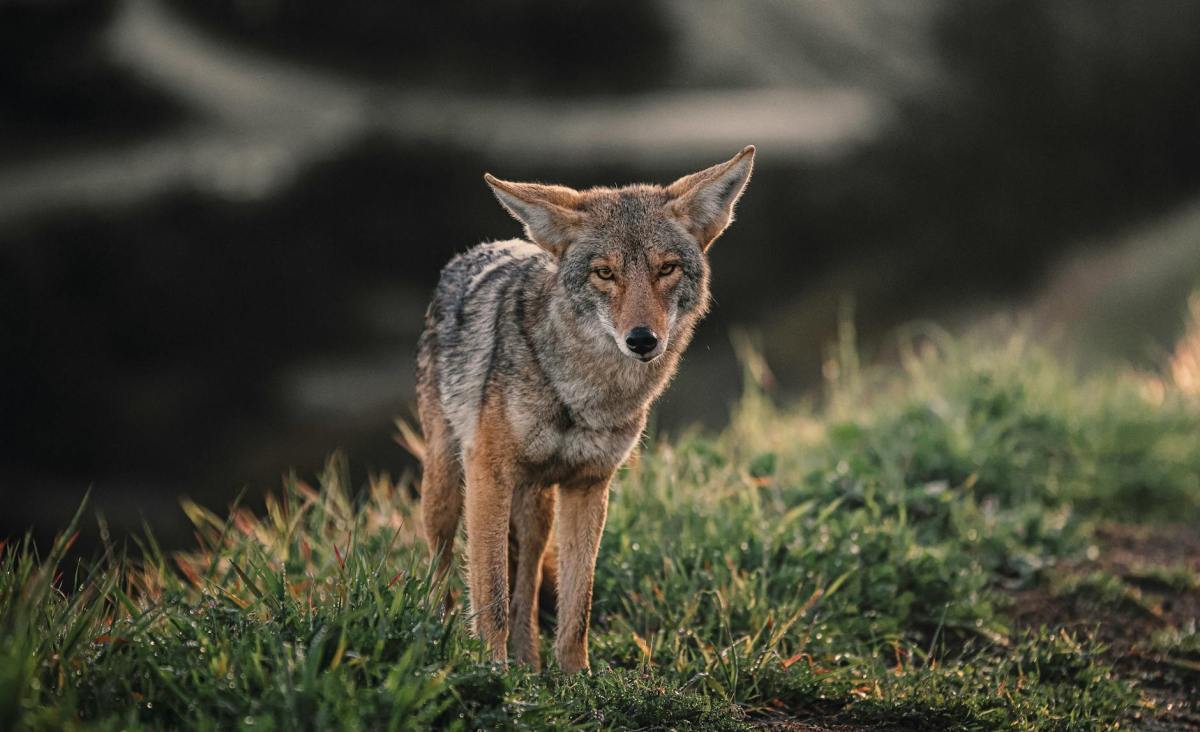
A family in Mission Viejo, Calif., heard a series of loud crashes at their back door, then reviewed their doorbell camera footage to find a determined coyote had been trying to attack their cat.

The footage shows the coyote repeatedly throwing itself at the screen door, which might have buckled if there hadn’t been a baby gate reinforcing it.

“We ended up putting a baby gate up to keep the cats inside,” homeowner Cindy Stalnaker told KABC. “That ended up being what prevented the coyote from getting inside the house because that’s what he was banging into repeatedly.”

Coyotes weigh about 30 to 35 pounds and will attack potential prey smaller than they are, which includes pets as well as young children.

The canids aren’t usually keen on approaching human homes, but in many places they’ve run out of room to roam as towns and cities clear more wild land for new developments. Less habitat means less prey, which can also lead the animals to scavenge and hunt on the fringes of residential and urban neighborhoods.

Stalnaker said she was grateful the baby gate held, but she’s looking into a more stable and permanent solution to keep her cats safe from coyotes.

What if air conditioning isn’t enough?

Human activity isn’t just driving wild animals to extinction, it’s killing them off with temperature extremes, and a Tuesday story from The Guardian provides a bleak look at how our present situation threatens human life as well: Buildings in most US cities aren’t built to mitigate excess heat, air conditioners weren’t designed to keep on chugging indefinitely with temperatures around 100 degrees, and power grids can’t keep up with the demand when millions of AC units are drawing power simultaneously.

At the same time, summers keep getting hotter and there’s no reprieve in sight.

Kids playing in water from a fire hydrant
Legal or not, New Yorkers turn to fire hydrants to get relief during heat waves. Credit: NYC Office of Emergency Management

While the heat has major ramifications for animals and sea life, it’s also directly endangering human life now:

“Some experts have begun to warn of the looming threat of a “Heat Katrina” – a mass-casualty heat event. A study published last year that modeled heatwave-related blackouts in different cities showed that a two-day blackout in Phoenix could lead to the deaths of more than 12,000 people.”

An architectural engineer tells the newspaper that temperatures have spiked so much in recent summers that cooling “systems that we sold 10 years ago are not able to keep up with the weather we have.”

The result for people in America’s hottest cities is that even AC doesn’t provide relief.

In the meantime we’re likely to see more headlines about rolling blackouts, punishing energy bills and people dying in their homes, scientists say. Fusion power and significant leaps in battery technology can’t come soon enough.

Elephants Call Each Other By Name, Study Says

Elephants encode names and other information in low-frequency rumbles that can be heard miles away. For social animals who live in large herds, it’s crucial to be able to address individuals.

Elephants are famously social animals, moving in matriarchal herds that can consist of as many as 70 of their kind.

They also communicate over long distances, emitting rumbles that can be heard miles away.

Because of their social and nomadic existence, it makes sense that elephants would need a way to single out individuals and address each other, and for the first time researchers say they’ve found evidence of Earth’s largest land animals calling each other by name.

“If you’re looking after a large family, you’ve got to be able to say, ‘Hey, Virginia, get over here!’” Duke University ecologist Stuart Pimm told the Associated Press.

The research involved field work and analysis using artificial intelligence. To record samples of elephants communicating, teams followed herds with recording equipment. Notably, elephant rumbles include sounds in frequencies lower than the human ear can detect.

large elephants near lake
Credit: Pixabay/Pexels

The team paid close attention when one elephant vocalized and another responded, and recorded who initiated each rumble and who it was meant for.

Although elephants are best known for making loud “trumpeting” sounds, experts say those are more like exclamations while rumbles contain encoded information that African savanna elephants would need to communicate to each other.

“The rumbles themselves are highly structurally variable,” said Mickey Pardo, a biologist from Cornell University and co-author of the study. “There’s quite a lot of variation in their acoustic structure.”

A machine learning algorithm was then used to sort and categorize the large number of audio samples, looking for patterns that are difficult for human minds to detect.

“Elephants are incredibly social, always talking and touching each other — this naming is probably one of the things that underpins their ability to communicate to individuals,” said George Wittemyer, an ecologist at Colorado State University and co-author of the study. “We just cracked open the door a bit to the elephant mind.”

elephant-cub-tsavo-kenya-66898.jpeg
A female elephant with her young offspring in Kenya. Credit: Pixabay/Pexels

Notably, the elephant “names” are identifiers that they created for themselves, and are not the kind of human-bestowed names that cats and dogs respond to. The list of animals who have names for themselves is short, although likely to expand with further study. Dolphins, for instance, identify themselves with unique whistling patterns, and parrots have a similar method, but both species address individuals by imitating their calls. Elephants use their name analogs the way humans do, to directly address each other.

The research has the potential to raise public awareness of elephant intelligence and their plight as they face threats to their continued existence. Like almost all of the Earth’s iconic megafauna, elephants will become extinct if we don’t do a better job protecting them and ending the ivory trade. Every year about 20,000 elephants are slaughtered for their tusks to feed the demand for ivory, especially in China where it’s considered a status symbol, according to the World Wildlife Fund.

Yang Feng Glan, known as the”Queen of Ivory,” was sentenced to 15 years in prison by a Tanzanian court in 2019. Yang smuggled some 860 elephant tusks worth $6.5 million from Tanzania to China as the leader of one of the world’s most extensive poaching and ivory smuggling organizations.

During her years operating the smuggling ring, Yang presented herself as a successful businesswoman and ran in elite circles within China, authorities said. Two of her accomplices were also given 15-year sentences for their roles, but since then others have filled the vacuum left by Fang’s conviction, and elephant preserves are constantly under threat from heavily armed poachers.