Most cats wouldn’t go near water if you promised them a barrel of Temptations, but a handful of special felines love to swim and play in the ocean.
Someone over at Hearst Television was digging through the company’s video archives and unearthed this gem from 30 years ago.
It’s a short news segment about Toby the cat, who liked to hang out with his human so much that he happily took to playing in the ocean.
“I’d jog on the beach at night, and he’d run into the water with me,” Toby’s human, Teddy Townsend, told Hearst.
A news crew caught up with the human-feline pair at Ormond-By-The-Sea, an oceanside community on Florida’s east coast, about an hour’s drive south of St. Augustine.
“I just started taking him out in the water,” Townsend said as Toby perched happily on his shoulder.
The surf board came later as Townsend looked for a way to make time in the water more fun for his pal.
“He surfs, I don’t surf,” Townsend explained, smiling.
Townsend didn’t have Toby on any harness or other restraint, and it was pretty clear the little guy wasn’t going anywhere without his human. Footage of the tubular tabby showed him skillfully balancing on the board while cresting and riding a series of small waves.
Check out the 1995 segment here:
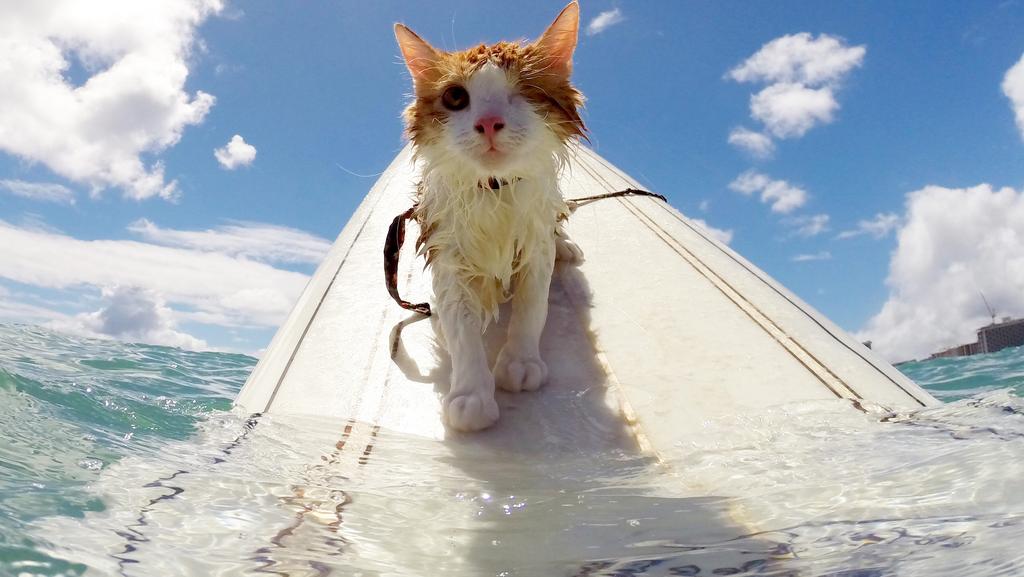
Surfing cats are pretty rare, but not unheard of. A 2016 story detailed the adventures of Kuli, a one-eyed rescue cat from Honolulu who loves to surf with his humans. (Kuli is pictured in the header image, above, and in the image below.)
Kuli lost an eye at just four months old due to an infection, and endured lots of baths during his formative months to prevent another infection from taking hold. Alexandra, one of his humans, said she believes that’s why Kuli is so calm in the water.
“For a while I took Kuli out on my long boards, but it wasn’t until I was playing around with a boogie board one day that I realised he really loved to get his claws into the foamy material,” she said. “So we bought a board that Kuli would be able to get out on the surf with.”
Kuli on his board. Credit: Caters News Agency
Here at Casa de Buddy, I asked His Grace if he’d like to dip into the ocean and have fun by learning to surf.
A new story from CNN examines how friendship with animals can enhance our spiritual lives.
If you ask Bud, I’m sure he’d agree that merely having the privilege of being friends with him is akin to a transcendental experience.
“Yes, human, by stroking my fur, you are brushing up against the divine!” he’d probably say. “Now make a proper offering, and don’t skimp out on me. I want the good snacks!”
The massive ego of my cat aside, some theologians and spiritualists say we’re in the midst of a “Great Pet Awakening,” with more people than ever welcoming animals into their homes, treating them like family, and coming to profound realizations by bonding with them.
Our pets can help us come to grips with our own mortality, amplify our own spiritual lives and even help us heal, they say. Some of it’s nebulous, including a Pew poll that found most Americans believe pets are imbued with some sort of vague supernatural energy, and some of it’s tangible, like studies that have found cat purring has a calming effect on people as well as cats.
If you’re interested in reading more, CNN’s story on the “awakening” quotes a Canadian theologian and author, a Buddhist, and, tragically, a “psychic medium.” In true grief vampire style, the latter says “pet psychics” can offer people “a chance to hear personalized messages from their pets in the Great Beyond.”
“Now leave the snack, bow, and retreat until I call for you again. That’s a good human.”
I don’t like thinking about a time when Bud will be gone, but when that day comes, if I encounter a “pet psychic” who tells me Bud sends his love and appreciation from the afterlife, it’ll reinforce my dim view of self-proclaimed mediums. If, however, the “psychic” tells me that Bud is still miffed about the times dinner was late, or he’s annoyed that I’ve adopted another cat who has inherited his toys, I’ll change my tune!
In any case, I think there’s one hugely important thing the CNN story does not touch on. It focuses on the way pets benefit people, but perhaps the most profound gift our animals give us — if we’re open to it — is a new appreciation for them, and what a miracle they are.
It’s 2025, but surprisingly, there are lots of people who are still stuck in a pre-cognitive revolution mindset, viewing animals as little more than biological automatons. They deny animal cognition, emotions and agency, as if B.F. Skinner and behaviorism remain the credible model. To do that, you’d have to ignore more than sixty years’ worth of research proving our furry friends have their own rich internal lives, their own thoughts and feelings.
Buddy’s ego may be slightly inflated.
That, to me, is one of the great things about cats. If I was a merely adequate servant, the Budster would take the free meals, the shelter and the warm bed, and ignore me until he wants something. Instead, he’s rarely more than three feet from me, he spends much of his day sitting on me or in direct physical contact, he can’t abide any barrier between us, and he expresses his love by marching up to me, purring up a storm, and rubbing his head against my face.
He chooses to do that, and it tells me that for all the boneheaded mistakes I’ve made, I must be doing a pretty decent job. He’s not my property, he’s my Buddy.
The quest for clicks and attention is a race to the bottom, and “petfluencers” are willing to dive deep to differentiate themselves from the thousands of others trying to build an audience.
Clothes, sneakers and hats. Vitamin supplements, energy drinks and probiotics. Backpacks and costumes.
What do all those things have in common? People are buying them for their pets, not themselves, and they’re part of the reason people in the UK spent more on pets in 2024 than childcare, hobbies or dating, according to Nationwide UK.
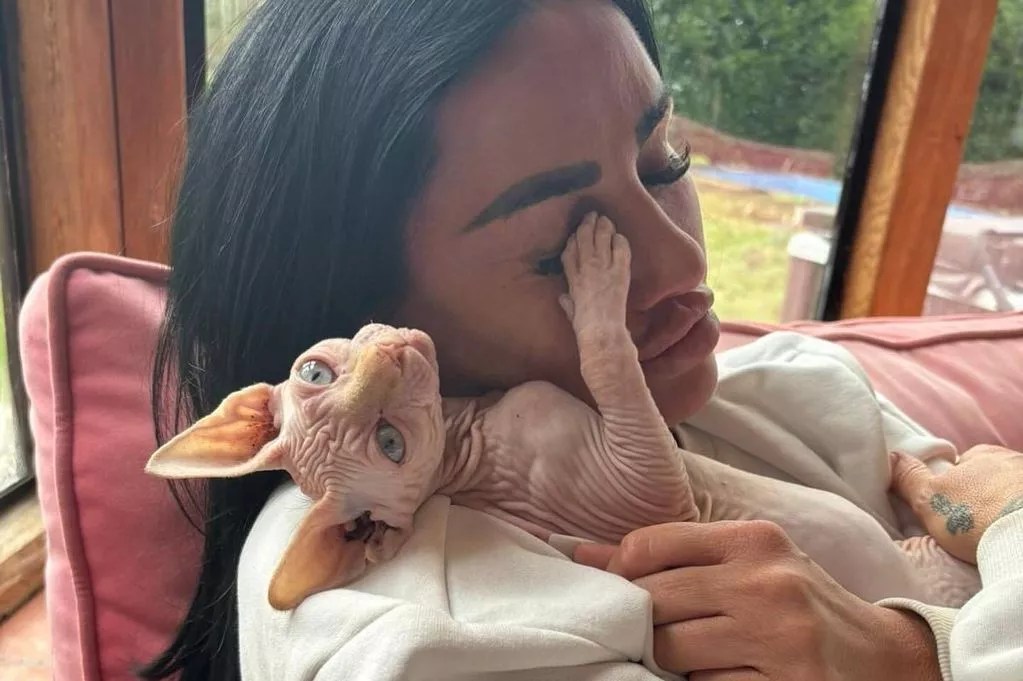
The problem is, they’re not doing it for their pets. Experts, including veterinarians and animal behaviorists, tell The Guardian that most cats, aside from hairless varieties like Sphynx cats, don’t like wearing clothing, nor do they like wearing costumes, or taking baths with heavy perfumes and essential oils.
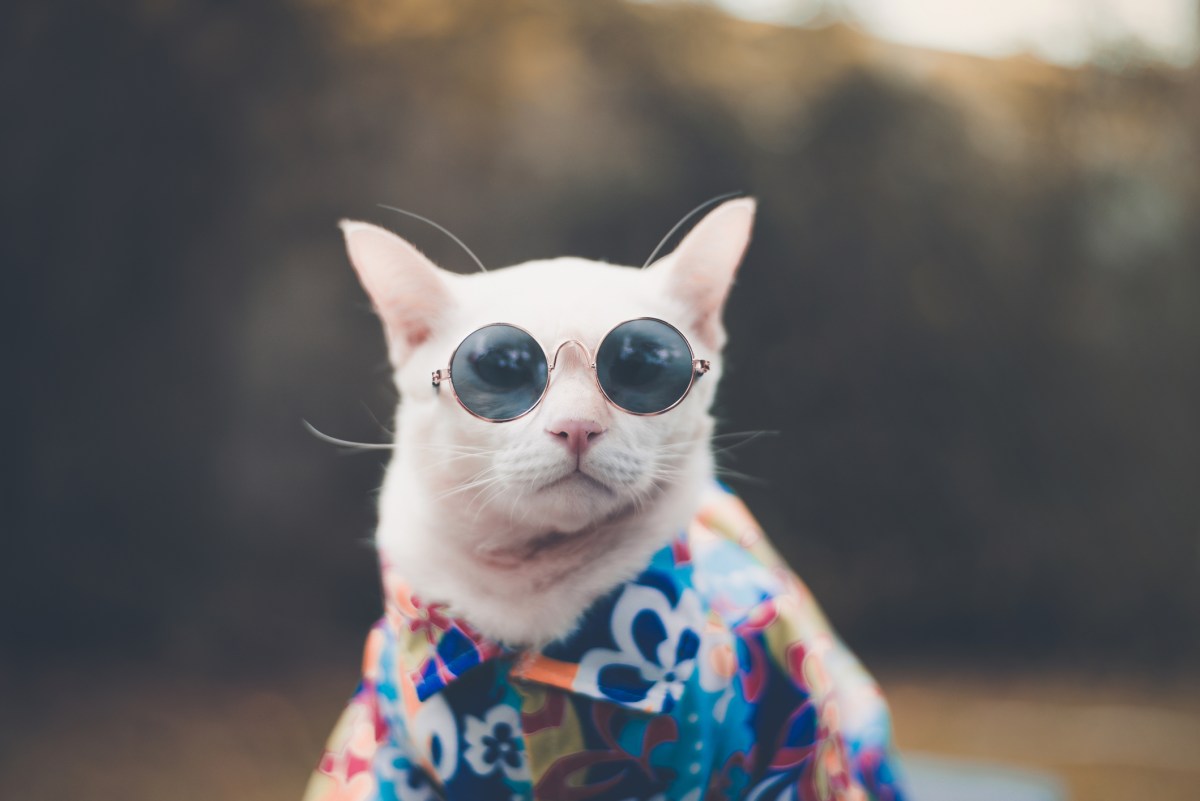
Portrait of Hipster White Cat wearing sunglasses and shirt
Influencers — or petfluencers — stage elaborate “pampering” scenes, and make their pets wear different clothes to show off their shopping “hauls.” Some pose their animals like dolls and find ways to coerce them to remain still. Audiences think it’s cute. It’s not.
As for me, I’ve got a handy chart when I’m unsure if Bud will be cool with something:
Make him wear clothes. Result: Get clawed to death
Give him baths with essential oils. Result: Get clawed to death
Make him wear sneakers. Result: Death by bite to the jugular
Force him to eat supplements or guzzle energy drinks. Result: Shredded skin and lots of blood, perhaps some light homicide.
While the animals themselves aren’t thrilled with these new trends, they probably won’t go away any time soon. There’s just too much money involved.
The average pet owner in the UK spent the equivalent of $163 per month on their companions, and only half of UK households have pets compared to 66 percent in the US. Although there’s not an apples to apples comparison of total expenses on pets per month by household in the US, Americans spend $68 a month on cats on average, according to research by ValuePenguin. For dogs, it’s about $110 a month.
‘Salty liquorice’ cats owe their unique coats to a missing snip of DNA
It’s always an interesting occasion when nature gives us something new, and the salmiak cat is definitely unprecedented in the world of feline aesthetics.
The unique cats, named after a popular liquorice candy from Finland, have a coat pattern that results from a gradient on individual strands of fur, starting out black and getting lighter toward the tip. It gives their coats a singular peppered look, and in photographs the unusual felines almost look as if they’re rendered in monochrome stippling.
Credit: Ari Kankainen
The Finnish candy the cats are named for.
The salmiak cat wasn’t the product of any breeding program, and reports in Finnish media say strays with the new coat pattern/color first emerged in 2007.
To find out how the salmiak emerged, a team of Finnish, British and American scientists sequenced the genomes of two salmiak cats. They found a mutation in genes that express coat color that resulted in a missing sequence of DNA, and they confirmed the mutation is recessive. That means to get salmiak kittens, both parents have to have the mutation.
Your feline overlord(s) want you to show more respect, human! What special things are you doing for them today?
Little Buddy has informed me that today is National Respect Your Cat Day.
Sounds made up, doesn’t it?
At first I was sure it was, just like the times he told me it was International Buy 100 Toys For Your Cat Day, and the 82nd Annual Feed Your Cat A Ridiculous Amount of Snacks Day.
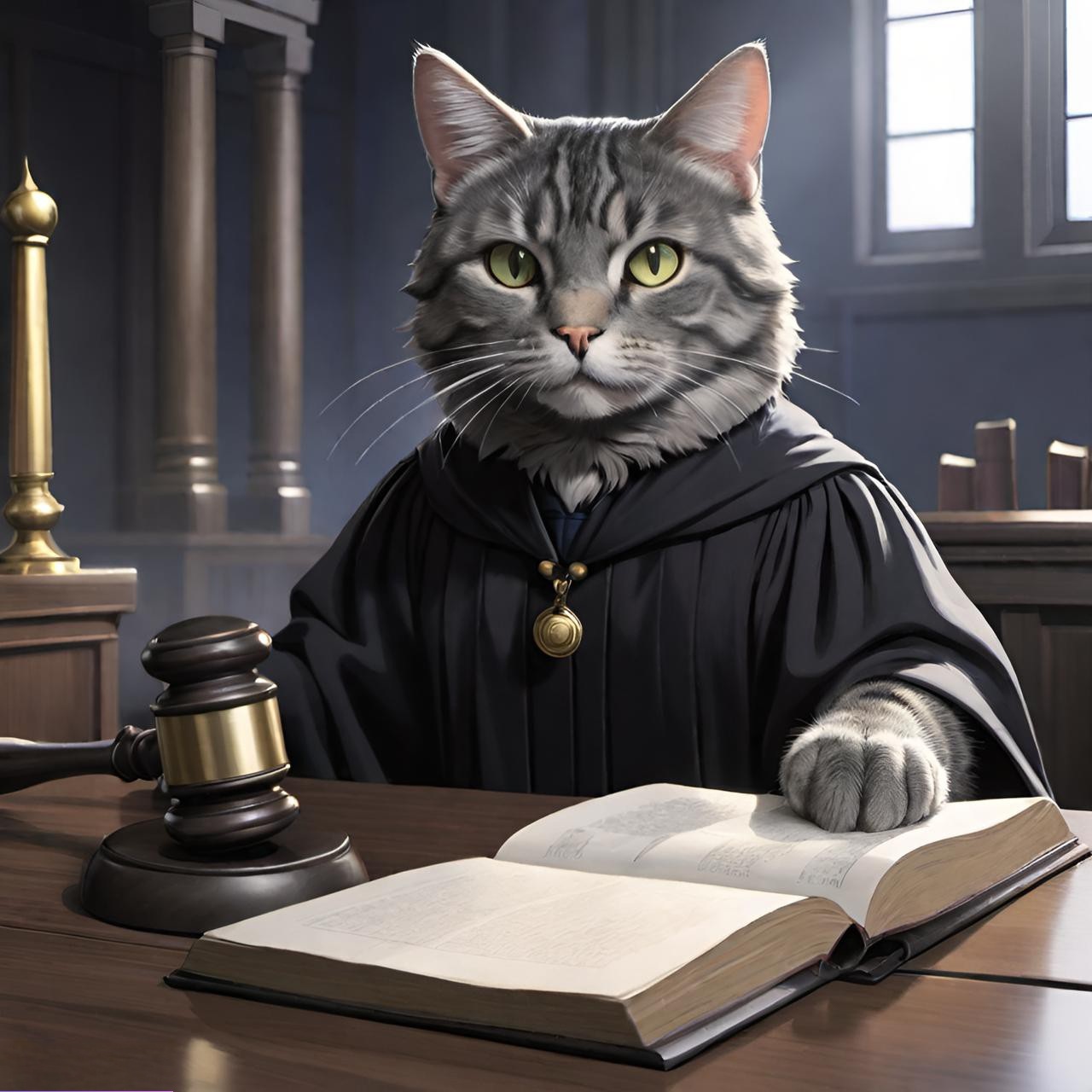
But apparently it’s real, and Buddy made a big show of declaring its importance, dressing up as a judge with a black robe and gavel to emphasize his point.
“The court rules, inter aloha, that defendant subway sandwiches judice is mens rea when it comes to the ad hoc crime of not feeding me enough snacks! The court has concluded the accused has not met de minimus standards for snackis maximis deliciousness, therefore stare decesis!”
He cleared his throat.
“In plain meows, that means you must feed me more of those crunchy ball things, and a lot more of those decadently delicious soft treats so bursting with turkalicious flavor! And, uh, you have to apologize for not appreciating me enough!”
“It’s is the court’s opinion that you cook me a steak dinner!”
The feline shuffled his papers, adjusted his robe and began reading again.
“The court finds that Buddy the Cat has been a loyal, handsome, and handsomely loyal companion to the accused, and has enriched his life by simply being delightful, and also by purring contentedly, napping on him, helping him eat cheese, keeping his scooping skills sharp, and enhancing all aspects of his life through pure magnetic charm,” he said. “Respect me and my authoritah!”
So tonight Buddy will get plenty of yums, some catnip, extra play time, and I’ll tell him he’s looking particularly dapper today.
As for those of you reading this, better plan something before word gets out…or face your cat’s wrath when they find out it was Respect Your Cat Day and you did nothing!
“I had to leave work because I was a wreck, fully believing my cat was on the verge of life and death. It’s cruel that people do this,” one victim said.
Two weeks after his beloved cat vanished, Justin Hills received a phone call that simultaneously gave him hope and filled him with dread.
The man on the line spoke with practiced professionalism and told him that his cat, Little Wayne Shorter, had been found badly injured after he was hit by a car.
Little Wayne urgently needed surgery, said the man who identified himself as a staffer with Seattle Animal Shelter. Veterinarians were ready to begin surgery if Hills gave them the go-ahead and sent $2,800 via Venmo.
“The back of my head is screaming, ‘This is a scam. This is a scam.’ But at the same time, because it’s such an emotional pull, I’m thinking, even if there’s only a 10% chance that this is real, you know, I want to go ahead with it,” Hills told Seattle’s WKIRO.
Little Wayne Shorter
“The guy was rehearsed, was smooth. He sounded like, you know, an experienced person,” Hills said. “They had done some research on me before they called. You know, they knew my name. They knew my cat’s name, you know, the address and all this.”
When Hills called his bank, they warned him it was a scam. Hills said he’s glad he didn’t send the money but also devastated his cat is still missing — and that he was given false hope by someone trying to manipulate him in his desperation to be reunited with Little Wayne.
He’s not alone. In a post to Facebook group for missing pets in King County this week, Seattleite Harris Alex described a call from a person who claimed to work for Seattle Animal Shelter.
“They said someone found my cat, Binx, and that he had been hit by a car. They told me if I didn’t pay for surgery, he would die or be paralyzed within the next hour,” Alex wrote.
A caller said Binx, above, was seriously injured and needed urgent — and expensive — veterinary care.
Alex grew suspicious when the caller asked for a payment via Venmo, Paypal or Chime.
“I called the shelter to confirm they do not have him,” Alex wrote. “I had to leave work because I was a wreck, fully believing my cat was on the verge of life and death. It’s cruel that people do this. Be careful out there.”
Staff at Seattle Animal Shelter, which is run by the city, are aware of the scam and have gotten several calls from people asking if the shelter has their cats after being in contact with the impersonators.
“We would never ask somebody over the phone to make a payment,” said Don Baxter, manager of field services at the hospital. “We’re going to get that pet to a veterinarian and get it care and treatment, and then we’ll work out how to get the pet back to the owner after that.”
The lost/injured pet scam isn’t limited to Seattle, and the perpetrators will often switch to targets in another city if too many people become aware of their efforts, only to pop back up again later. The scam’s combination of social engineering and emotional urgency encourages victims to act quickly without giving the situation too much thought.
Experts advise people to keep their cool despite their hopes or fears, and demand proof that the person has the animal:
“This is one of the more difficult scams to deal with emotionally. If someone really has your pet, they should be able to at the very least send photos. Most people should be able to do a video call.
In general, scammers will pressure you to send money in advance. They will often make lots of excuses for not being able to provide proof they have your pet or meet in person.”
This general category of scam isn’t new, but social media has enabled scammers to believably pose as shelter staff using information pulled from the victim’s own lost pet posts and profiles, the FBI notes. The bureau also warns of several variations on the scheme.
Binx
The people running the con find their victims by scanning local missing pet groups on sites like Facebook and Reddit. They gather names and descriptive details, spin a narrative that shocks their intended victims, and create a sense of urgency by saying the cat will die if there’s any delay in performing surgery.
That’s what happened to Susan Burgess, who’d posted about her 15-year-old tabby cat, Linus, going missing. The caller said Linus was hurt and he needed to confirm her name, but Burgess realized he would have known it if he’d scanned Linus’ microchip.
She gave the scammer a piece of her mind before hanging up on him.
“On the off chance that you do have my cat, I hope that you are able to show some compassion and do the right thing,” she told the caller. “But I’m pretty sure that you don’t, and what you’re doing is very cruel.”
PSA:Speaking of scammy behavior, I can’t control the ads that are shown on PITB, but if you’re seeing ads for an amazing-looking, ultra-realistic toy rabbit presented as a great Easter gift, don’t fall for it. Here’s a video revealing what you’ll actually get from the deceptive seller: