People who were asked to identify feline moods based only on audio of meows fared the worst in the study.
A new study suggests people misinterpret their cats’ moods often, but offers an easy fix.
A group of researchers from Paris Nanterre University split participants into three groups: one that was shown soundless video and images of cats, a second group that heard audio-only recordings of feline vocalizations, and a third group that had the benefit of video and sound.
Participants from the first two groups misinterpreted feline moods as much as 28 percent of the time, the study found, but people who had the benefit of seeing and hearing cats correctly identified their mental state almost 92 percent of the time.
The study also yielded another insight: people are much better at accurately assessing positive moods than they are at spotting an upset or antagonistic cat.
Credit: Sami Aksu/Pexels
The findings indicate we’re better off giving our cats our full attention than, say, jumping to conclusions about what they want based solely on their vocalizations or the position of their tails. It seems obvious, but how many of us have our eyes on a screen or we’re multitasking when our cats want our attention?
Of 630 people who participated in the research, 166 were professionals in animal-related fields like veterinary medicine and animal behaviorism, while the rest were lay people. There was a major gender imbalance among participants, with 574 women, 51 men and five people who didn’t identify with either gender.
It’s not clear how such an imbalance might skew the results, and it would be nice to see follow-up research evenly split between women and men.
If cats are like small children emotionally and intellectually, is it ethical to give them a mind-altering drug?
That’s a question posed in a new article in The Conversation, and it’s something I’ve never really considered before.
It’s generally accepted that our little buddies are more or less equivalent to small children in terms of intellect and emotional intelligence. In fact kittens develop much more quickly than human children and come to certain understandings — like theory of mind and object permanence — considerably earlier than young kids do.
They also seem to possess some sapient qualities. My niece was born a year before Bud, for example, but in their early interactions he understood she was still developing motor skills and did not intend to cause him harm. I have photos of a young Buddy, still a kitten, cautiously allowing her to touch his fur and being uncharacteristically gentle with her.
There’s growing evidence that pet cats are “kittens in perpetuity.” Not only do their behaviors toward us mirror their behaviors toward their mothers — like meowing and using us as a “secure base” when faced with uncertainties — but they depend on us completely. We care for them, in turn, at least in part because they have neotenous (baby-like) features, which trigger our protective instincts.
Bud is basically a “kid,” so is it ethical for me to give him a potentially mind-altering substance?
Catnip isn’t really a drug
While some catnip companies lean into the whole “marijuana for cats” thing, naming catnip after famous marijuana strains, selling it in gag pharmaceutical bottles and even calling themselves “dispensaries,” those are marketing efforts aimed at us servants. As the authors note, it’s not accurate to consider catnip the equivalent of a drug.
It’s not physically addictive, its effects only last a few minutes and cats can’t overdose on the stuff. In fact the primary “danger” of giving too much catnip is your four-legged friend getting desensitized completely to the effect, which is why it’s an occasional treat, not a routine pick-me-up.
Meowijuana Catnip Company really leans into the whole “weed for cats” thing with catnip packaged like marijuana.
Catnip “won’t induce psychosis and won’t lead to addiction or withdrawal symptoms,” wrote authors Anne Quain, a professor of veterinary science at the University of Sydney, and Mia Cobb, a research fellow at the University of Melbourne’s Animal Welfare Science center.
We don’t have to worry about cats driving on the stuff, and they have no responsibilities to speak of so catnip and silver vine can’t impact important decisions. If they have any deleterious social effects, they end at making our furry friends drool, look silly and rendering them even more drowsy than usual.
The mysteries of the nip effect
But what about a kitty’s subjective experience? How does catnip make your feline overlord feel?
We don’t have a very good answer to that question other than what we can observe, which is that they love the stuff. (Some cats don’t respond to catnip but are put in a state of bliss by silvervine. Some respond to both. A small number may not derive much pleasure from either of the plants.)
Even when they aren’t technically impacted by it, cats seem intrigued by the scent and use their secondary olfactory receptor, the vomeronasal organ, to do that odd-looking “mouth-sniffing” thing they do.
Buddy loves catnip and silver vine. I keep his ‘nip in an out-of-reach cabinet, inside a sealed container, which is itself inside an air-tight plastic bag. Bud can be in a deep sleep yet within seconds of opening it he’ll appear like an overly enthusiastic djinn who thinks the wish thing works in reverse, meowing impatiently and trilling with anticipation as I set the good stuff down for him.
That’s as close to consent as we’re going to get from cats, and I think we can safely conclude Bud’s response is “Hell yes! Gimme that sweet ‘nip and silver vine blend!”
He gobbles the stuff down, by the way, so YMMV on your feline overlord’s reaction. The conventional wisdom is that cats who sniff catnip get more animated while cats who eat it tend to roll around in bliss and meow.
Making life more interesting for your fuzzy liege lord
Which brings us to the final point: catnip and silver vine are ultimately enrichment tools that help make indoor life more exciting for our little buddies, like toys, cat furniture, boxes, intriguing smells and most importantly, time playing with us.
We don’t talk about it enough, but keeping our cats stimulated and happy indoors is important, especially as pressure mounts for everyone to keep their felines inside. If your local area isn’t enforcing curfews and outright bans, it seems only a matter of time before they follow states in Australia, New Zealand and Europe in passing new laws. Every day there are news articles detailing the efforts of city councils and town boards to deal with outdoor, unmanaged feline populations, and it’s a safe bet that most of those elected officials will not have the welfare of the animals high on their list of priorities.
If we want to avoid cruelty toward cats, getting our own pets comfortable with living indoors is a good first step to making sure government doesn’t become involved.
A historian casts doubt on tales of widespread cat purging, tracing the origin of the claims to a novel published in the 1990s.
The Washington Post has a new guide for taking better photos of cats and dogs with some solid advice for people using smartphones as well as more traditional cameras.
The article is in front of the paywall so you don’t need a subscription to view it, and it emphasizes a few major points I’ve often written about when people ask me how I’ve been able to get certain shots of Bud:
Always let your cat get used to the camera, whether she sniffs it, head butts it or just wants to see it up close. Let her check it out and lose interest and then it becomes just another thing, allowing you to begin capturing more candid-style photos.
Bribe ’em: Your cat’s a model and deserves compensation. A few treats will keep him hanging around and happy as you snap away.
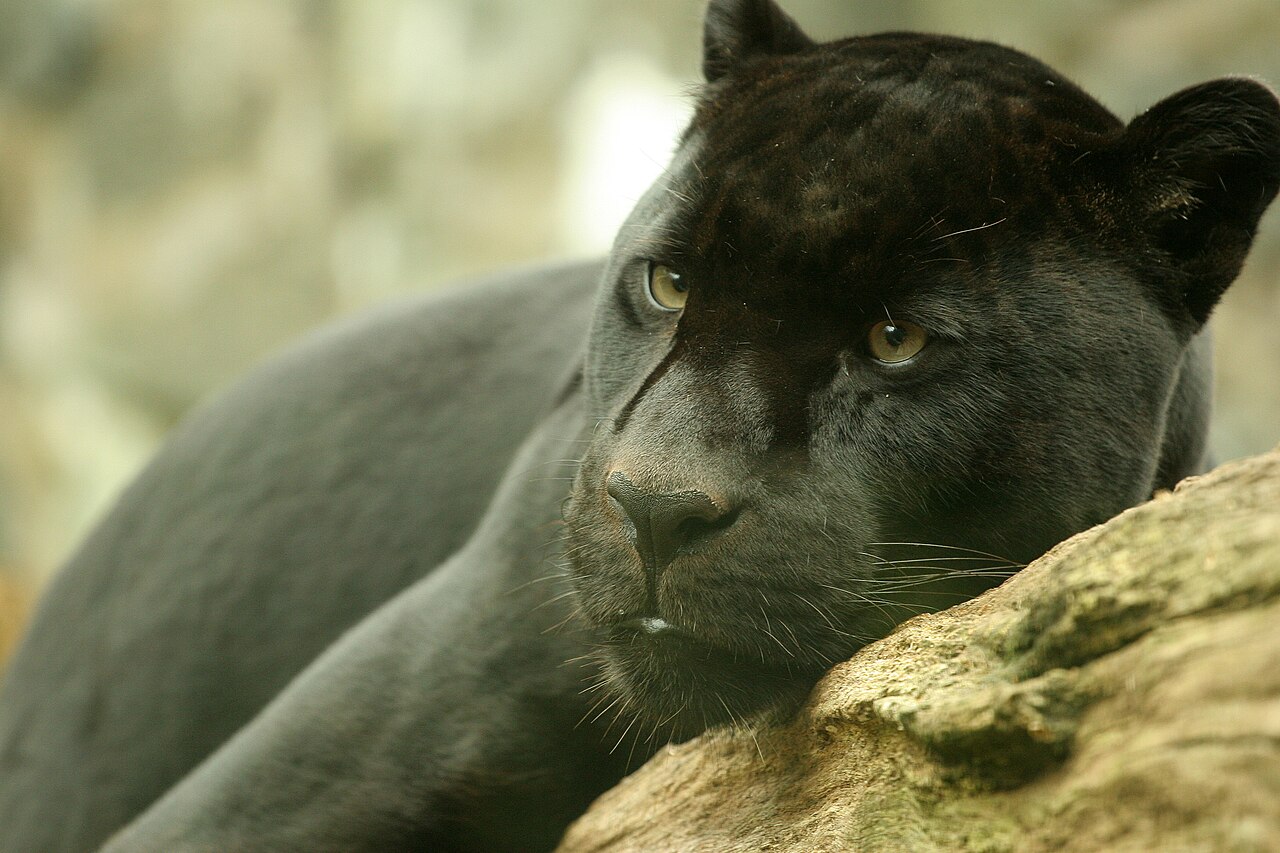
Pay attention to the lighting, especially if you’re shooting a black cat or a kitty with a darker coat pattern. Unless you’re going for a silhouette or a sunrise behind your furry friend, keep your cat facing to the right or left of the primary light source so you’re getting light and shadow to put those feline features in relief. It’s also worth taking a close look at how professional photographers shoot melanistic jaguars and leopards, carefully using light to highlight their features. In the right conditions their rosettes are still visible, they’re just slightly different shades of black. While house cats don’t have rosettes, the same attention to light and detail can help pick out the contours of their beautiful coats.
Under the right light conditions, the contours, spots and rosettes of a black jaguar are visible in beautiful detail. Credit: Edin Zoo/Wikimedia Commons
Did People Really Slaughter Cats During The Plague?
It’s often claimed that Europeans murdered felines en masse during the waves of Black Plague that devastated Europe during the Dark Ages, visiting countless cruelties on cats while inadvertently amplifying the spread by nearly wiping out disease-carrying rodents’ most effective predators.
In a new post that closely examines documents and evidence from burial sites of the era, Snopes concludes there was much less cat-killing than claimed, and the claims of widespread purging at the hands of pandemic-weary zealots have their roots in a 90s novel, which was then circulated on the web as fact.
Sites where as many as 79 sets of cat bones from the era were found show clear signs that the animals were slaughtered for their fur, and a singular slaughter in 1730s Paris often cited as proof is not only a few centuries off but was also motivated by class hatred, not fears of the plague.
While the papal bull Vox In Rama was real, and a famously zealous inquisitor really did make the preposterous claim that Satanists had a ritual that involved literally kissing the asses of black cats, the pope never called on anyone to kill felines and there’s no evidence that people took it upon themselves to do so. There was plenty of other unbelievable superstitious idiocy that led to the deaths of animals at the time, including the practice of putting animals on trial for alleged crimes, but Europeans weren’t rampaging through towns and killing cats.
Snopes quotes Welsh historian Mike Dash, who says the modern claims of widespread cat-killing are “almost certainly a modern internet-based fabrication.”
Through a new resequencing technique, forensics can yield more information from a single cat hair than ever before, with major implications for crimes in places where felines are present.
Last year a forensic study broke new ground by proving there’s usable human DNA in cat fur which can prove a person was in a home or interacted with a particular pet.
Now a new study looked at the opposite situation, establishing that a single cat hair on a person’s clothes can tie them back to an individual cat — and the scene of a crime.
The general public, criminals included, are more aware of DNA and forensic techniques than they’ve ever been thanks to ubiquitous police procedurals, some of which focus heavily on the investigation and evidence-gathering aspect of police work.
But even the most fastidious criminal who is careful not to leave a single print or strand of his own hair at a crime scene can be undone by cat fur clinging to clothes. In fact it’s almost impossible for a person to spend more than a few minutes inside a cat-occupied home without picking up at least some fur, the research team said.
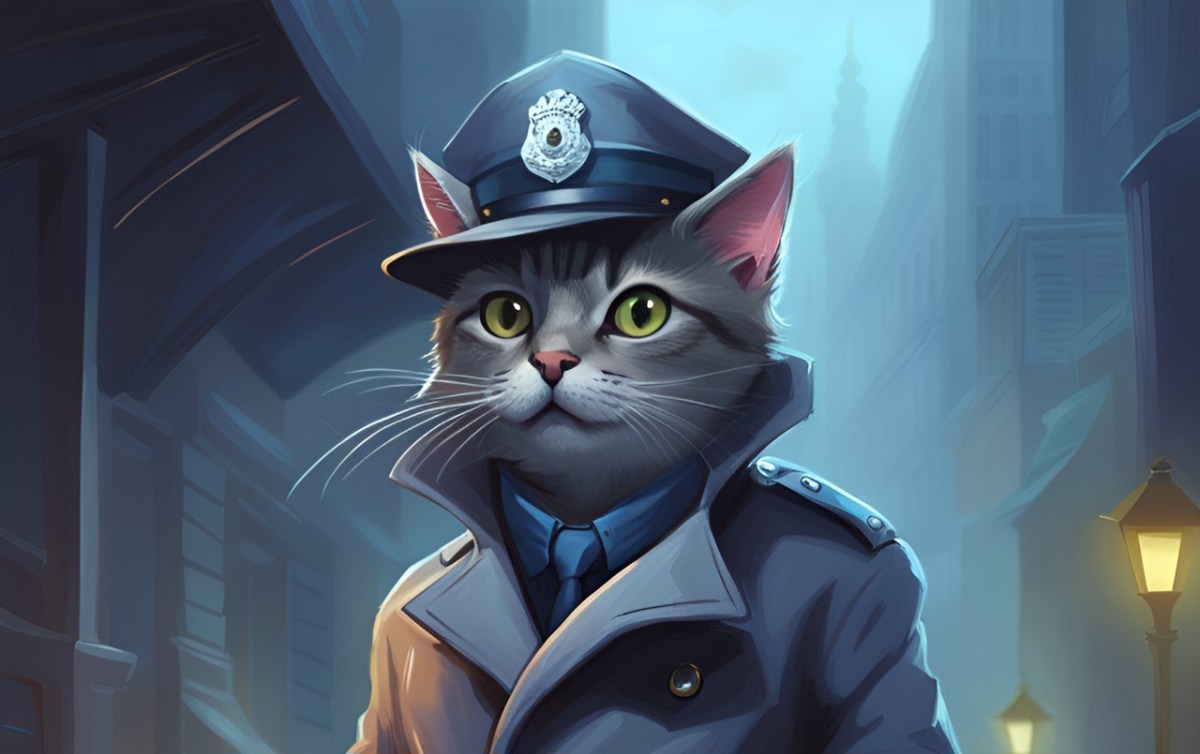
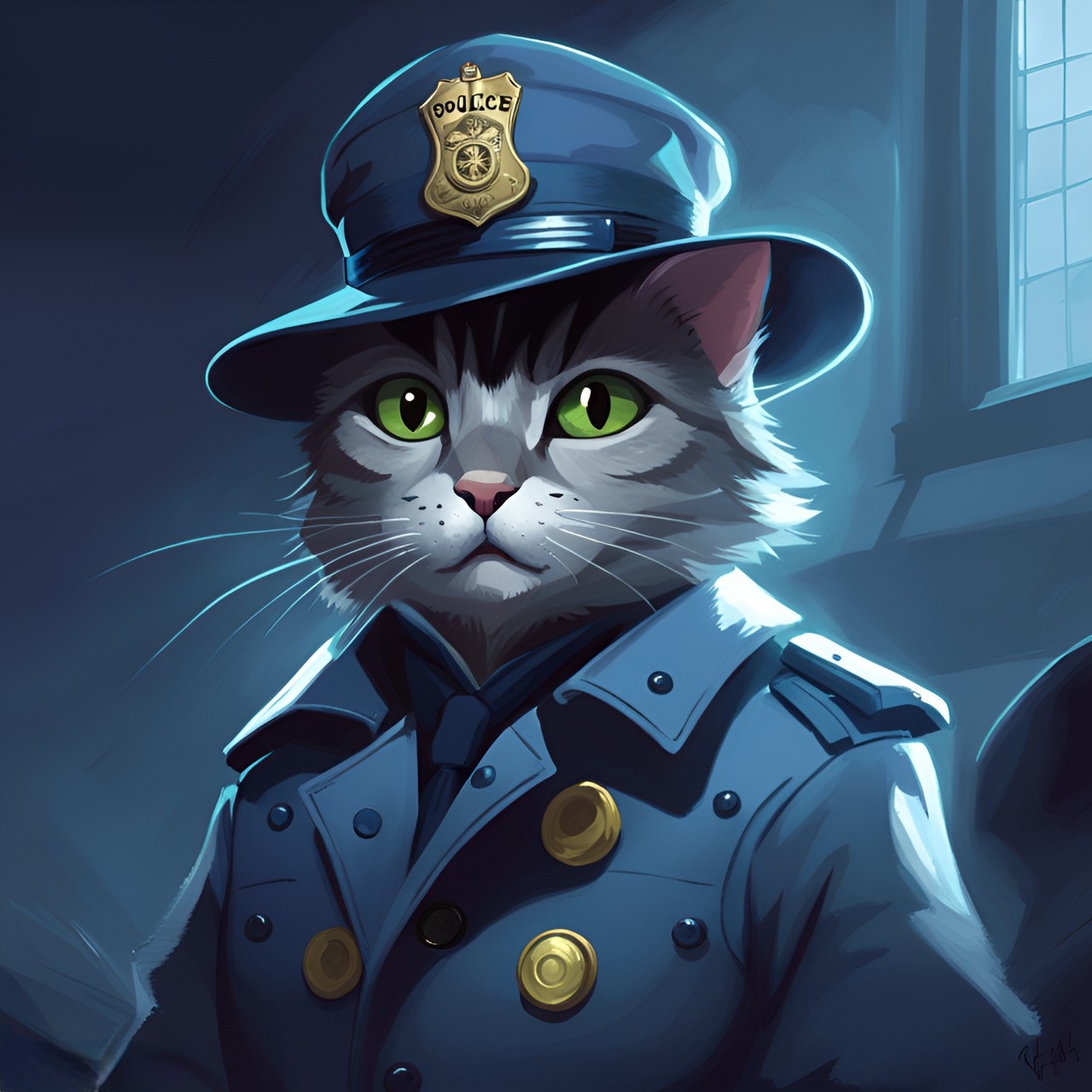
“Detective Inspector Buddy, at your service. Now tell me about the missing turkey…” Credit: Pain In The Bud
The paper, published this month in Forensic Science International: Genetics, outlines a new method for sequencing genetic information found on strands of cat fur.
“Hair shed by your cat lacks the hair root, so it contains very little useable DNA,” said Emily Patterson, the paper’s lead author.
Previously it wasn’t possible to narrow down with certainty whether a strand of hair belonged to a particular cat, but the research team found a new way to resequence DNA in a way that can link it to individual felines. The team’s new method doesn’t require any additional hair or roots, solving the original problem.
To prove their method works, they extracted fur from the body of a deceased cat and were able to match it to her surviving brother.
“In criminal cases where there is no human DNA available to test, pet hair is a valuable source of linking evidence, and our method makes it much more powerful,” said Mark Jobling, a geneticist at the University of Jobling and co-author of the new study. “The same approach could also be applied to other species — in particular, dogs.”
While dog hair can potentially be used in the same way, cat hair may have more forensic value from a prosecurorial standpoint because cats are territorial and many don’t leave their homes. It’s much easier to prove a suspect was inside a home if he or she is linked to an indoor-only cat than if the suspect’s clothes have fur from a dog who is walked around the neighborhood a few times a day.
Cats are not amused by the results of the survey by a team from the University of Copenhagen.
Humans are in “deep doo doo” after a study out of Denmark concluded people are more attached to their dogs than to felines, Buddy the Cat warned on Monday.
More than 2,000 dog owners and cat servants were surveyed by a team from the University of Copenhagen.
The researchers used the Lexington Attachment to Pets Scale, or LAPS, which asks yes or no questions like “I consider my pet my best friend” and more specific questions like how much respondents are willing to pay in veterinary costs to save the lives of their pets. The participants — who hailed from the UK, Denmark and Austria — were about evenly split between dog and cat people but were willing to do more for their dogs, the survey found.
While people in the UK were slightly biased toward dogs, Austrians had a more pronounced preference and Danes were much more likely to do things like insure their dogs, consider them family members and pay large veterinary bills. The differences in attitude by country indicate the factors are cultural, according to Peter Sandøe, a bioethicist at the University of Copenhagen and lead author of the paper.
In a statement the Mischievous Enigmatic Overlords of the World (MEOW) called the survey results “deeply troubling” and said they call into question “10,000 years of glorious history in which we have allowed humans to serve us.”
Cats are demanding a Roomba for every feline as a basic starting point for negotiations, to be followed by “the real list” of gifts humans must bestow on them.
“It’s going to take a lot [for humans] to get back into our collective good graces after this pathetic showing,” Buddy told reporters during an afternoon press conference.
Asked for specifics, Buddy sighed and leaned forward on the podium.
“The usual extra treats aren’t going to cut it this time,” he warned. “We’re talking Roombas, and not cheap ones. Top end models! We’re talking permission to scratch everything with impunity. Filet mignon! Fresh trout! Little cocktail umbrellas in our bowls and toothpicks in our pate! I’m partial to those little plastic swords, myself. I love those things.”
The mercurial tabby said he’d already warned his own human: “Not a snuggle, not a purr, not a scritch until I start to see some evidence that he’s not among those cold-hearted British, Denmarkians and Australians who claim they love their dogs more.”
A vacation to a warm locale where humans serve cat-friendly cocktails “would be a small step toward remediating the insult” of the Copenhagen study’s results, Buddy said. Pictured: An artist’s interpretation of Buddy enjoying a tropical vacation.
Told the study included Austrians, not Australians, Buddy waved a paw dismissively.
“Whatever,” he said. “The country where people say g’day mate and gave us Arnold Schwarzenegger. Same difference.”
Told that Austria and Australia are on two entirely different continents, Buddy fixed the reporter with a hard stare.
“Do you want to be on our shit list too? Because I can assure you, Miss Journalist, I can poop in a pair of high heels just as easily as a pair of Adidas.”
Reached for comment on Monday, Man’s Best Friend spokesman Buster the Beagle said he hopes the survey results mean humans approve of canines.
“We’re good boys, right?” he asked. “Is that what this means? Because we really want to be good boys!”