Buddy The Cat And The Search For The Lap Of Luxury

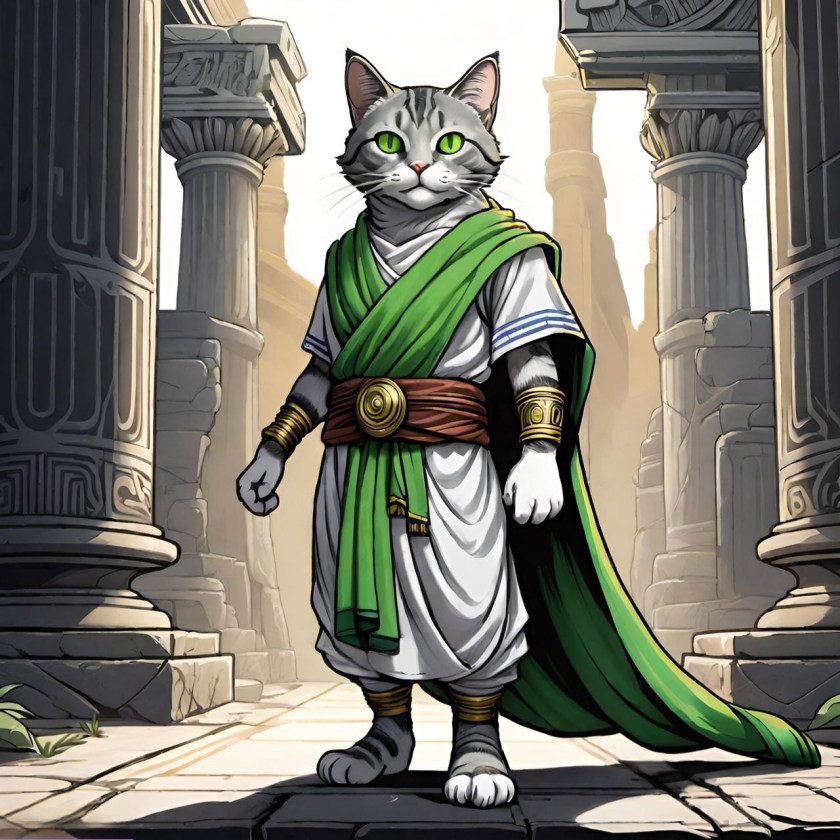
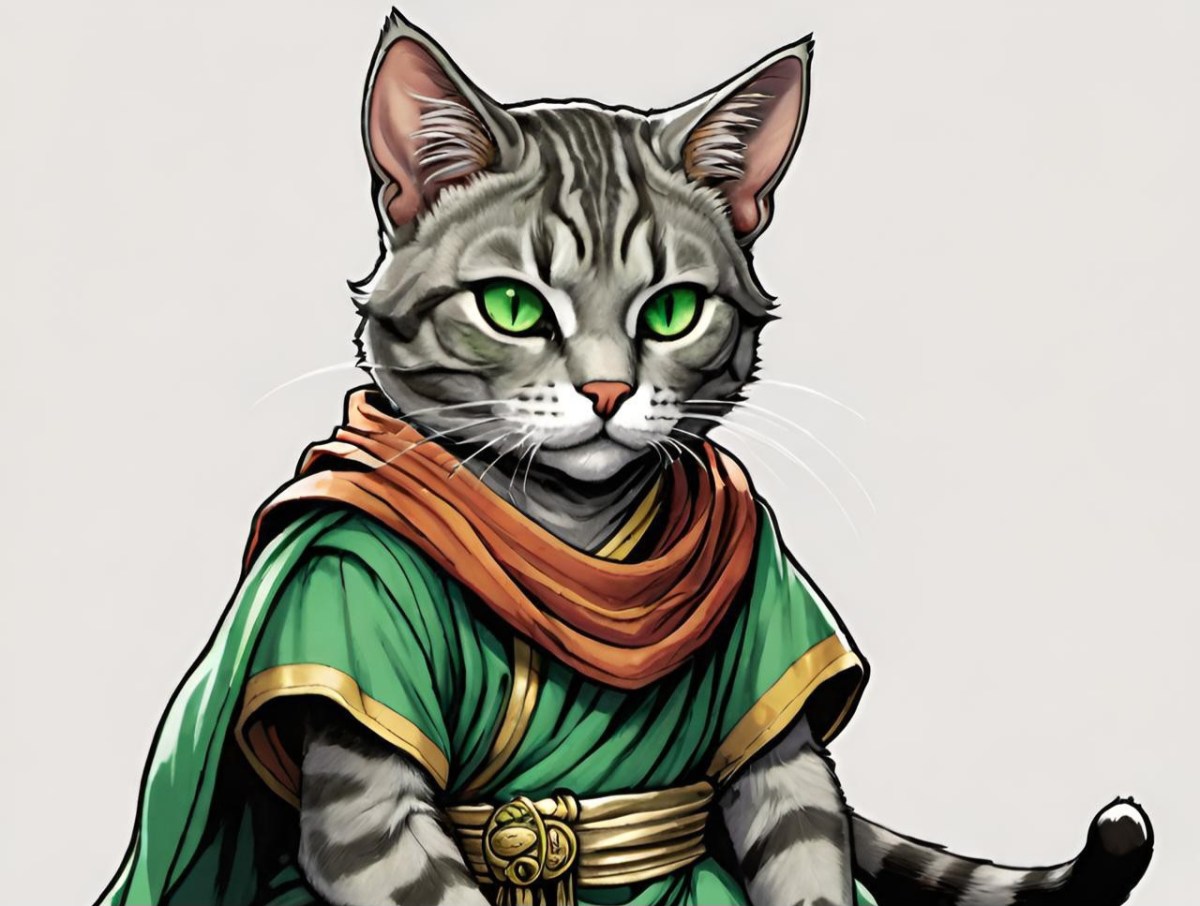
Sir Buddy leads an expedition into the jungle to find the legendary Lap of Luxury.

AMAZON RAINFOREST — At the peak of the hill, still well within the darkness of the tree canopy where only a few slabs of light penetrate through the understory to the jungle floor, a path stops abruptly.

In its place is a steep drop and the mouth of an underground chasm carrying water over the edge, creating one of the planet’s most spectacular waterfalls — and a sweeping vista of the lake and its shores below, where structures from deep antiquity seem to exist only as outlines in the mist.

It is here in the Lost City of Casarabe that intrepid explorer Buddy the Cat believes he’ll find the legend his species has sought for more than a thousand years.

It is, he believes, the site of the Lap of Luxury.

“Many explorers have braved these jungles in search of the legendary Lap of Luxury,” Sir Buddy says as members of his team pad around their camp. “I stand on the shoulders of some pretty big cats here, on the cusp of history, to finally achieve what so many felines set out to do.”

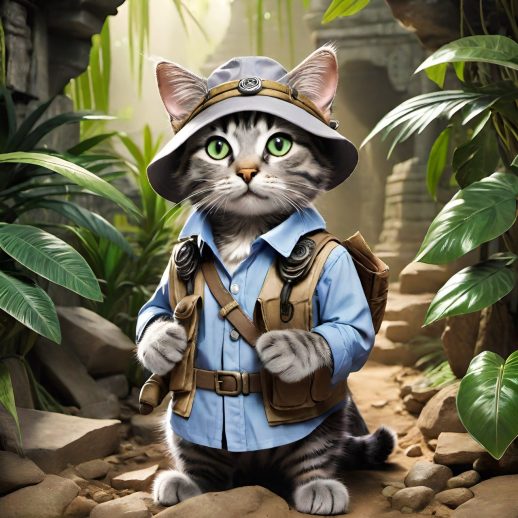
buddy_archaeologist2
Buddy on the hunt for the legendary Lap of Luxury, which may be located in the Lost City of Casarabe.

Buddy believes the Lap of Luxury will be found in this ancient city, which was abandoned more than a thousand years ago for reasons that so far elude the experts accompanying him. Only a very small part of the Lost City of Casarabe is visible even this deep in the jungle. The flora here is too dense and the jungle floor too dark to give up its secrets so easily.

Under Sir Buddy’s direction, teams have cleared a thick network of vines to reveal a stepped pyramid, the twelve spires of a temple dedicated to a mysterious jaguar deity, and a remarkably well-preserved palace that Buddy believes once belonged to an aristocratic feline.

Some seventy rooms are contained in the palace, including a chamber the team has dubbed the Hall of a Thousand Naps, where stunning stone-carved reliefs depict an advanced felid civilization that engaged in napping not only as a biological necessity, but a function of religious fervor.

“The Caztecs were known for their brutality and the Layans were known for their enduring empire, but the hallmark of Casarabian society was the elevation of napping into high art,” says Ferdinand Lyle, an expert on South American antiquities with the British Museum. “Indeed, grand murals depict a civilization that measured time in naps and meals, and even military disputes with neighboring powers were scheduled around shut-eye. To the Casarabians, violating the sanctity of the Nap Schedule was considered an affront to the very fabric of society.”

jaguar lying on tree log
Otorongo, one of Buddy’s buddies, met the intrepid explorers deep in the jungle and accompanied them to the Lost City, facilitating a cultural exchange of napping technique. Credit: Benni Fish/Pexels

Legends and the surviving records of neighboring civilizations mention the Lap of Luxury using a dictionary’s worth of superlatives to describe its magnificence. Aztec scholars called it “simultaneously radiant and outrageously comfortable, always the perfect temperature, the substrate upon which kings enjoyed serene naps and gentle massages while being fed candied figs.”

It is alternately described as gilded, soft, gem-like in its facets and silken in tactile sensation.

“Of its comforts, it knows no equals,” wrote 19th century explorer Percy Fawcett, who spent the latter part of his life searching for Casarabe. “If today’s artisans were capable of emulating such perfection, which they are obviously not, all of civilization would grind to a halt as millions fall into deep, satisfying slumber.”

Khalbalique, a jaguar historian and contemporary of the Casarabians, wrote that the Lap of Luxury “thrillified me down to my paws.”

“Such was the lazification of this tremendulomentous relaxatory,” the big cat wrote, “that I found it extraordinatiously operose to extractify my personage from its embraculations.”

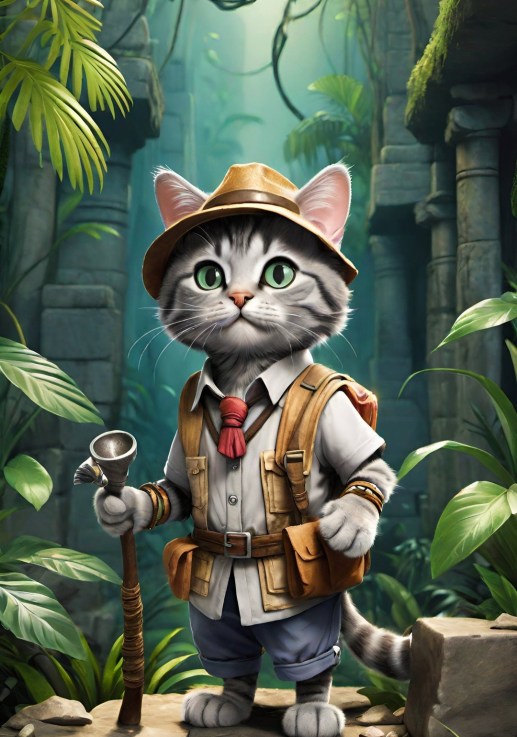
buddy_archaeologist
Sir Buddy strides fearlessly through the jungle, determined to find the Lost City and its most precious treasure, the Lap of Luxury. Here he poses for a portraitist who will send his likeness back to the Explorer’s Club to be hung on its walls alongside Mewis and Clarke, Claward Carter, Catto the Navigator and other intrepid legends.

Regardless of the conflicting accounts, all agree on one thing: the Lap of Luxury is magnificent.

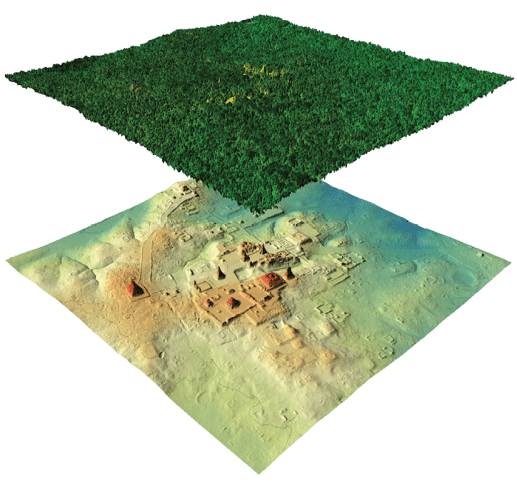
Sir Buddy and his team are working out the details of bringing a helicopter into the deep jungle in order to use LIDAR, or light detection and ranging, to sweep the area. Using a mix of near-infrared, ultraviolet and visible light, a team using LIDAR from the air can digitally “remove” the dense jungle to reveal the structures underneath, natural and man-made.

For the intrepid explorers it’s an advantage their forebears never had, and it’s one reason why Sir Buddy believes he will succeed where those who came before him did not.

“With this technology we can map the entire city and find its most opulent palaces and temples, the places most likely to house the elusive Lap of Luxury,” Sir Buddy says. “When we find it, it shall be my honor to be the first cat in more than two hundred years to settle into it, get comfortable and have a nice nap.”

lidar
LIDAR reveals the jungle’s secrets by peering through the trees and the thick blanket of foliage that has swallowed once-glorious cities.

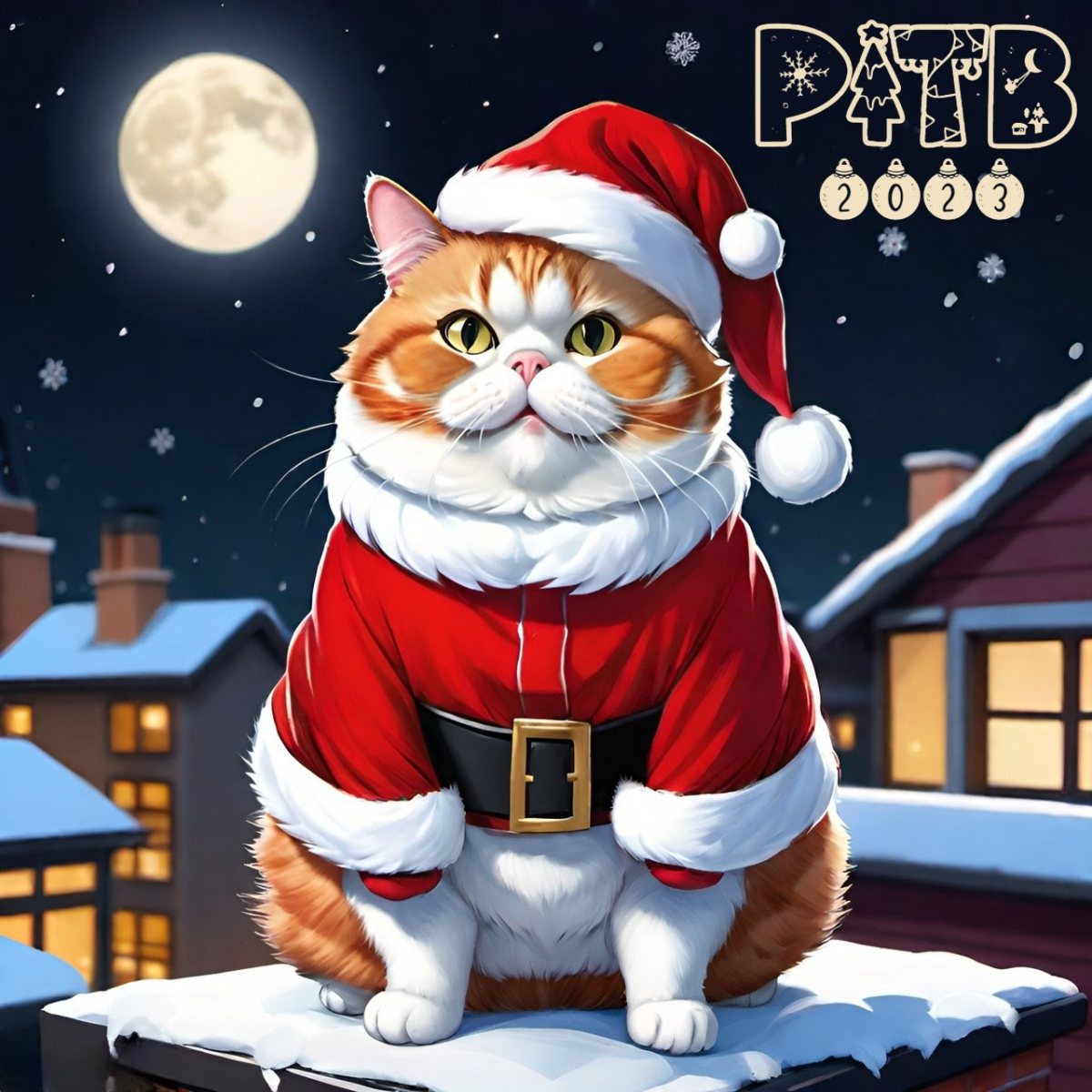
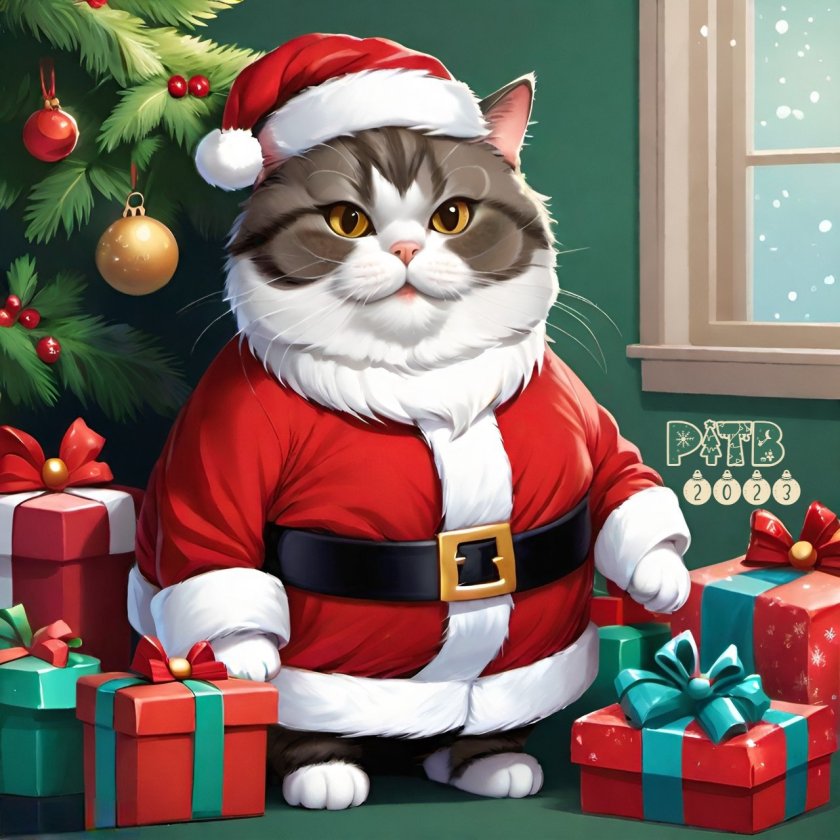
Merry Christmas From The Buddies

Santa Claws is coming to town.

Merry Christmas from the Buddies!

We will be with our extended family on Christmas Eve and Christmas Day. Buddy won’t be at the large family gatherings on Christmas Eve (allergic family members) or Christmas Day (three pooches will be present and obviously you can’t have a Buddinese tiger walking loose, for the dogs’ protection), but he will get to participate in the Christmas morning gift-giving among immediate family, he’ll get leftovers and he’s already had quite a bit of excitement with my nieces around.

PITB Christmas 2023
We have Santa Claus, cats have Santa Claws. He’s chonky.

We hope all of you are able to be with family or friends this holiday, and that your gathering is delicious. Cookie spreads are important, people! It’s not all about hors d’oeuvres and main courses. You’ve gotta go out with a bang! And make turkey so the leftovers can be taken home to your cat, of course.

Thanks for helping PITB — and Buddy’s legend — grow in 2023. We’re looking forward to 2024 when Bud will continue his quest for world domination.

buddies_handprints

Dear Buddy: Why Do Humans Watch Horror Movies?

Dear Buddy,

What’s with these horror movies? My human likes to curl up on the couch under a blanket, with me protectively in her lap of course, and watch these ghastly movies about serial killers, ghost infestations and lurking monsters.

Why would anyone want to scare themselves? You don’t see us creating an entire film genre dedicated to horrors like empty food bowls or late dinners, so why do humans make these movies?

Your fan,
Mildly Curious in Manhattan


Dear Mildly Curious,

This is a question I’ve pondered for some time, inasmuch as I care about anything human-related to ponder. My human also watches those movies and he also does so with me sitting protectively in his lap.

Then I realized something. None of the people in these horror movies have cats!

The family from The Conjuring? They have a dog. Stanley Tucci’s family in that crappy movie about flying monsters that kill everyone? Dog! The family in that other crappy movie about giant axolotl-type things that terrorize people living in a coastal community?

You guessed it! They have a dog too.

You see where I’m going with this, right? Humans who serve us cats literally have no fear because no monster or crazy cereal killer would ever risk attacking a home with a cat in it.

Suppose a hungry evil monster is let loose in my neighborhood and is making its way through the street at night, then sees me in all my meowscular, intimidating, tigeresque glory sitting at the window, keeping watch over the nocturnal world.

That monster is going to skip right over The Buddy Domicile and go in search of easier pickings because it sure as heck doesn’t want to tangle with me and my claws. I have that effect on monsters.

They may be monsters, but they’re not stupid. Breaking into a home with a cat is like breaking into a t-rex enclosure. You’re asking to get mauled by a huge, meowscular apex predator who will eviscerate you and look handsome and badass while doing it.

People who serve us cats know this. They know no monster or killer or robber would be stupid enough to go near a house with a cat. They can probably sense my meowscularity two miles away!

So sometimes our humans may want to know what it feels like to be vulnerable, what it would be like if they didn’t have tigers like us guaranteeing that no intruder approaches. THAT is why they watch horror movies. Take it to the bank!

Your genius friend,

Buddy the Cat

Cat Domestication Was The Start Of A Beautiful Friendship

Domestication’s real goal: to make cats cuddly as well as great mousers.

Cats have been doing things their way since the very beginning.

Unlike literally every other domesticated animal, cats were not domesticated by humans. They did it to themselves.

As if that didn’t make them unique enough, they lay claim to another major distinction: they’re the only species of obligate carnivores to undergo domestication in the entire history of human existence.

That explains why cats, more than any other animal that depends on humans, so closely resemble the wild animals they were before signing up for the good life of naps, warmth, endless rodents to hunt and free food from their new human friends.

In a new essay for The Conversation, evolutionary biologist Jonathan Losos, author of The Age of Cats: From the Savanna to Your Sofa, notes new DNA analysis settles the question of where cats came from once and for all.

Domestic cats are descended from North African wildcats, specifically the species felis sylvestris lybica. Unlike dogs, who underwent telltale physical transformations when they evolved from wolves, house cats “appear basically indistinguishable from wildcats.”

“In fact,” Losos writes, “only 13 genes have been changed by natural selection during the domestication process. By contrast, almost three times as many genes changed during the descent of dogs from wolves.”

While the change in genetics that happen with domestication left cats pretty much as they were physically, the process made dramatic changes in the feline brain, reducing regions governing fear and expanding those related to social behavior. The result? The major difference between house cats and their wildcat ancestors is disposition.

In other words, domestication made cats cuddly.

buddyevolution
Housecat evolved.

Notably, felis sylvestris lybica had to be pretty friendly in the first place, as well as bold and driven by the now-legendary feline curiosity to risk padding into human settlements with their bright lights, strange smells, open flames and the two-legged giants striding around them.

They didn’t have a way of negotiating or signaling their intent. They couldn’t say: “Hey guys, we’re here to kill and eat the tasty rodents who have been giving you problems by chowing down on your yums, but we don’t want your yums for ourselves. Plants are disgusting!”

So they had to demonstrate their usefulness, prove their worth, and enjoy the fruits of it by curling up in front of warm fires or on human laps.

That explains why it was the African wildcat that became a human companion species and not European wildcats, whom Losos notes are often “hellaciously mean” in interactions with people, even if they’re raised around humans when they’re young. It was also a matter of being in the right place at the right time, as nascent human civilization took root in the Fertile Crescent.

But ultimately, just like cats decided to domesticate themselves and didn’t really bother to consult us about it, so too do they bend us to their will with an entire repertoire of manipulative behavior, from solicitation purrs to incessant meowing and having a talent for looking their cutest when they want something.

While we may think we set the rules and parameters of our relationship with the furry little ones, as Losos notes, “cats usually train us more than we train them.”

Read the whole thing here:

Feline evolution: How house cats and humans domesticated each other