Tigers Make A Triumphant Return To Russia’s Far East, Bringing Hope To The Species’ Future

For the first time, humans have successfully returned orphaned tiger cubs to the wild after raising them and training them to hunt.

For more than 50 years, tigers were absent from Russia’s Pri-Amur region.

Sparsely-populated, mountainous and blanketed in forest, the domain borders the heart of the Russian Far East, offering hundreds of thousands of contiguous square miles for the most robust sub-species of Earth’s most magnificent predator.

Here, tigers can roam without fear of conflict with local farmers, or roads that carve up habitat and pose a danger to animals trying to cross. Prey is abundant, and adaptations for surviving in the local terrain are coded into the tigers’ DNA.

Now that scientists have proven for the first time that tigers can be successfully reintroduced into such an environment, big cat advocates imagine Russia’s Far East as a haven for the large felids. It’s a place where tigers can thrive, mate, reproduce and change the outlook for their species, which has dwindled to only 4,000 or so remaining in the wild.

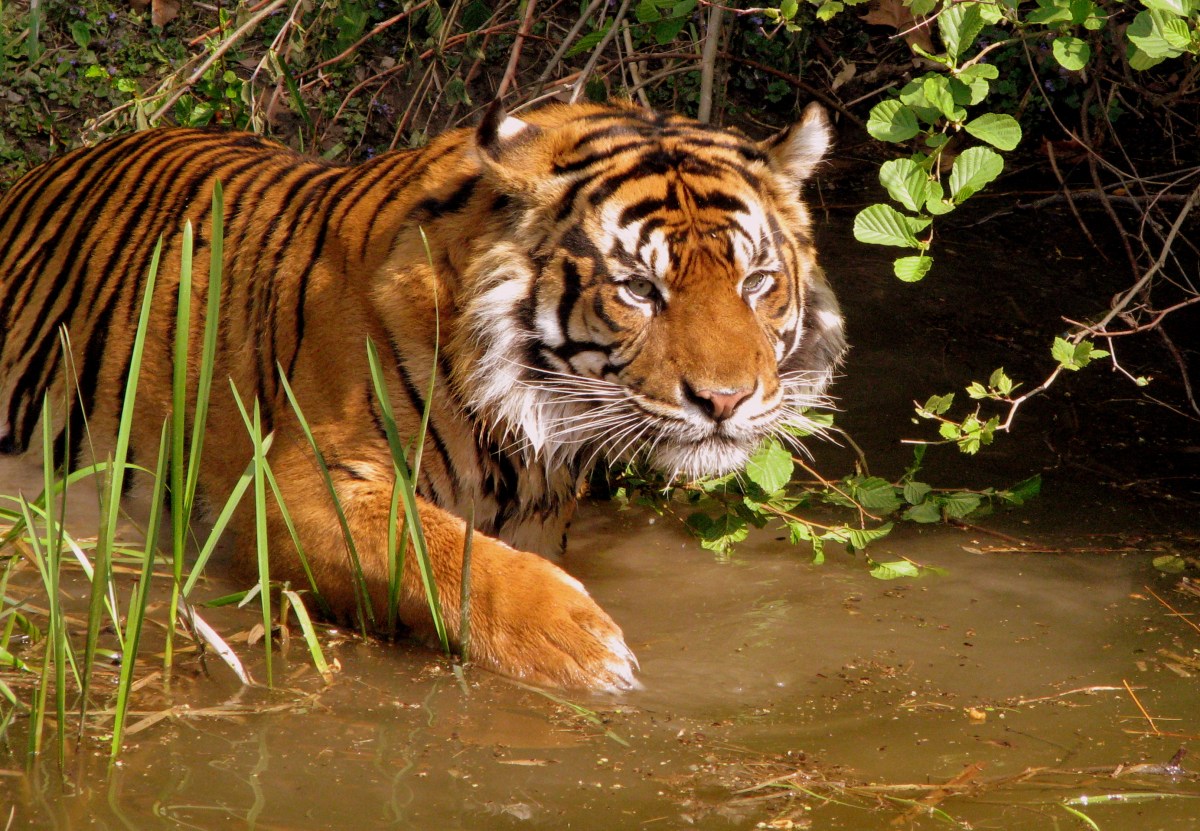
tigers in nature
Credit: Leon Aschemann/Pexels

The project to reintroduce Amur tigers to their native habitat is a cooperative Russian-American endeavor. The team started by building a tiger conservation center in the Amur oblast a decade ago.

The facility is built in a way that orphaned tigers can be raised and taught how to hunt without directly interacting with their human caretakers. That’s a crucial component, because tigers who see humans as potentially friendly or sources of food have drastically reduced chances of surviving in the wild, and are easier marks for poachers.

After 18 months, the cubs are brought to remote locations in Pri-Amur and released. Of the first group of orphan tigers released into the wild, 12 were able to survive on their own.

One gluttonous tiger failed: he crossed over the border into China and began eating domesticated animals, including 13 goats in what researchers called “a single event.”

The fattened tiger then retraced his steps to Pri-Amur, and when he didn’t show fear of humans, the team decided he had to go. They captured him and sent him to a zoo, where he gets all the free meals he wants and contributes to the captive breeding program helping his species maintain genetic diversity.

With 12 out of 13 tiger re-introductions successful, the program provides “a pathway for returning tigers to large parts of Asia where habitat still exists but where tigers have been lost,” said Viatcheslav V. Rozhnov, who leads the reintroduction project.

tiger
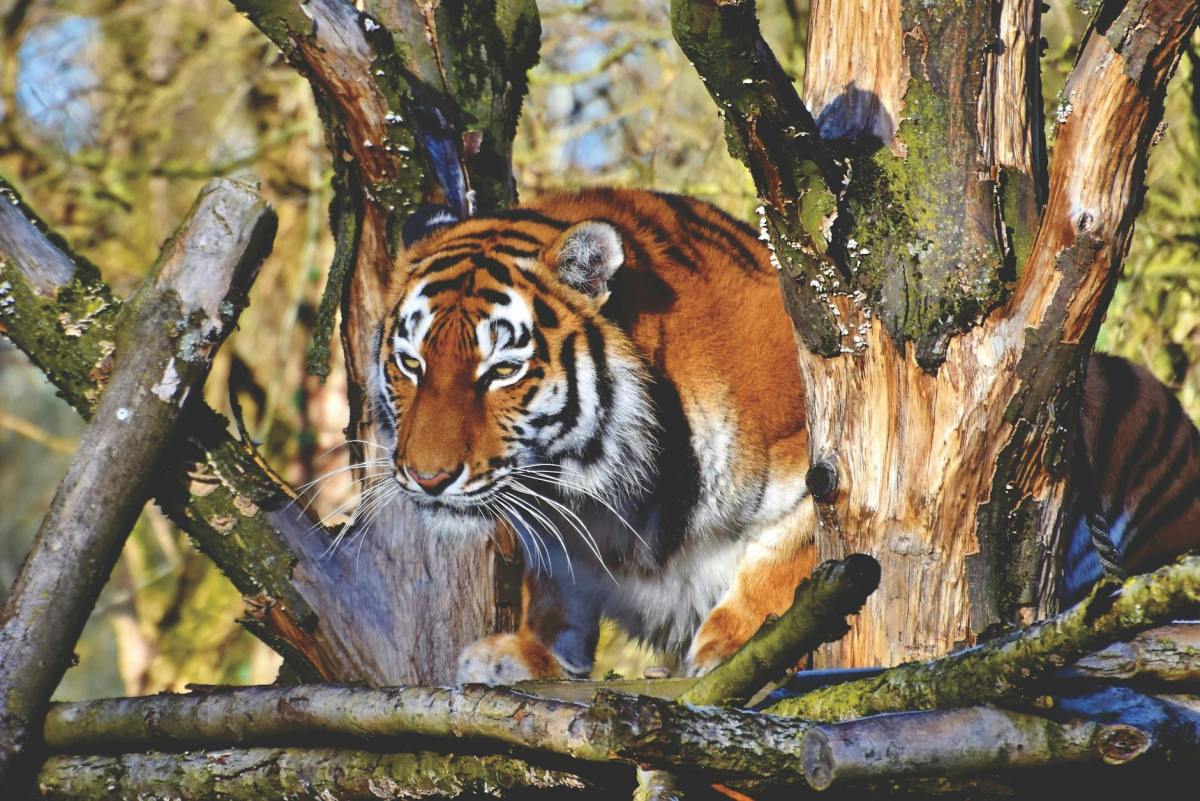
Amur tigers are the largest cats on Earth. They’ve evolved to survive in regions where winters can be brutally cold and snowy, but they also thrive in spring and summer when the snows melt and prey is abundant. Credit: Pexels

The successful reintroduction has also led to some surprising developments. Two of the cubs, Boris and Svetlaya, were unrelated but were rescued at about the same time and raised in the Russian orphanage for their species.

Using tracking devices they’d placed on the newly-released young tigers, the research team watched as Svetlaya settled into a home range and Boris made a beeline for her, “almost in a straight line,” crossing 200km (120 miles) of terrain to reunite.

The team’s hopes were confirmed six months later, when Svetlaya gave birth to a healthy litter of cubs, the first natural-born tigers to result from the reintroduction project.

Another tigress, Zolushka, also gave birth to a healthy litter when she was reintroduced in an area closer to a still-extant population of Amur tigers. The researchers believe the father was born wild in the region and was not part of the reintroduction program.

The wilderness in Pri-Amur and its environs is so vast, untouched and undesirable to human habitation that it could be home to generations of tigers, securing their future after so many decades of grim news for the iconic big cats.

“The grand vision is that this whole area would be connected,” Luke Hunter, executive director of the Wildlife Conservation Society’s Big Cats Program. “There’s lots of habitat that could be recolonized by tigers.”

Amazing Cats: The Adorable Colocolo, Feline Of The Pampas

With a perpetual kitten-like appearance and mismatched coat patterns, colocolos may look like the product of AI or Photoshop, but these little ones are very real — and very feisty.

We’re heading back into obscure territory with this edition of Amazing Cats, focusing on a little-known species that ekes out an existence in the forests and plains of South America.

The colocolo, also known as the Pampas cat, superficially resembles the familiar house cat, but a closer look reveals some striking differences.

Colocolos are small, about the same size and weight as felis catus, but their tails can be quite a bit shorter and extremely fluffy.

Colocolo full
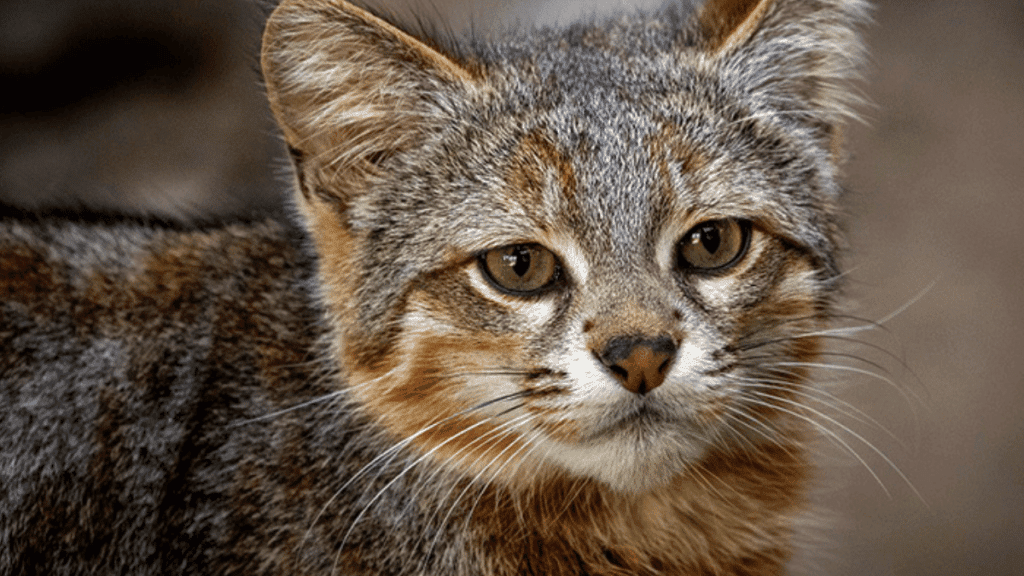
Colocolos have pattern and color combinations seen only in their species. This one has rosettes on his body and tabby stripes on his limbs and tail. Some colocolos have thick tails with tabby-like rings, while others have bushy tails more commonly associated with long haired domestic cat breeds.

There are at least five variations of fur color and pattern, ranging  from marbled to jaguaresque rosettes and, most strikingly, a seemingly mismatched pattern in which the legs have dark stripes over rusty/cinnamon-colored fur, which contrasts dramatically with the gray, gold, silver or tan of their bodies. The overall effect makes some colocolos look like they’ve been photoshopped, or assembled from spare parts.

Some colocolos appear to have solid-color coats which are actually an agouti pattern with barely visible bands of slightly darker fur.

While the species may look stocky, conservationists say it’s smaller than it appears, with its fur making up the majority of its “bulk.”

Colocolo color variant
This photo might look like a fake, but it’s a documented combination of coat pattern and color among colocolos.
Colocolo color variant
Another photograph of a colocolo with the rusty/cinnamon limb coloring.

As if that wasn’t enough to distinguish them, Pampas cats have neotenous features that give them an even stronger kittenlike appearance compared to house cats and comparable species like the rusty spotted cat.

In other words, they’re very cute and looking at them can trigger the same protective instincts we feel when we see kittens and cute adult cats. But don’t let their disarming features deceive you — these little guys are not cuddly, don’t respond well to people who get close, and will turn aggressive if you encroach on their space.

Cute colocolo
This adorable colocolo appears to be giving the side-eye to someone. Note the slight suggestion of the classic tabby “M” on the forehead.

While they’re alternately called the Pampas cat, the word “colocolo” comes from the language of the Mapuche, an indigenous group that lived in lands that are parts of modern day Chile and Argentina.

In the Mapuche language, Colo Colo was the name of a Mapuche warrior who led his people in their resistance against Spanish conquistadors in the 16th century, but it’s also the name of an evil rat-like creature in Mapuche folklore. It’s not clear how a feline came to bear the name, but the species — leopardus colocolo — is often called gato colocolo to distinguish between the historical figure and the modern-day Chilean football club, Colo-Colo.

Colocolo
You might feel an urge to hug a colocolo, but that would not be a good idea. Experts say the small cats don’t take kindly to close human proximity.

Although they’re associated with the pampa, the flatlands in and around Peru best known for the mysterious Nazca lines, colocolo are adaptable and thrive in forests, jungles, wetlands, and mountain ranges like the Andes, among other terrain.

Their range stretches from Argentina in the south through Chile, Bolivia, Paraguay, Ecuador, western Brazil and an isolated population in Uruguay.

Despite their relatively wide distribution and variety of habitat, colocolos are not well understood. Experts still haven’t settled the question of whether they’re all one species or whether subgroups qualify as their own subspecies. Their hunting habits are not well-documented, although it’s known they prefer small rodents, and there is ongoing debate about whether they are crepuscular, like most felid species, or nocturnal.

Colocolo share a continent with jaguars, pumas, ocelot, jaguarundi, margay, oncilla, kodkod, Geoffrey’s cat and the Andean cat, and the fact that they live in the deep wilderness makes them more difficult to study.

Because their coloration and coat patterns can vary so widely, Pampas cats are often mistaken for other small wildcats living in South America, and people unfamiliar with their species sometimes mistake them for domestic felines.

They’re also very rare in zoos, with only one US zoo (Cincinnati) counting them among their exhibits, and only four Pampas cats in captivity worldwide. (Excluding private captivity by poachers and illegal wildlife traders.)

Like virtually every species of wildcat, the colocolo’s numbers are declining due to a number of factors, primarily human activity like habitat destruction, sport hunting and development cutting populations off from each other.

The more people are aware of these beautiful and little-known felines, the better their chances for long term survival as conservation groups receive more donations to help protect them, and lawmakers are pressured to protect the wilderness where they live.

Yawning colocolo
Like all cats, colocolos appreciate the value of a nice nap.

Previously:

Amazing Cats: The Mysterious Marbled Cat
Amazing Cats: The Rusty-Spotted Cat
Amazing Cats: ‘He Who Kills With One Bound’
Amazing Cats: The Puma

Amazing Cats: The Sunda Clouded Leopard