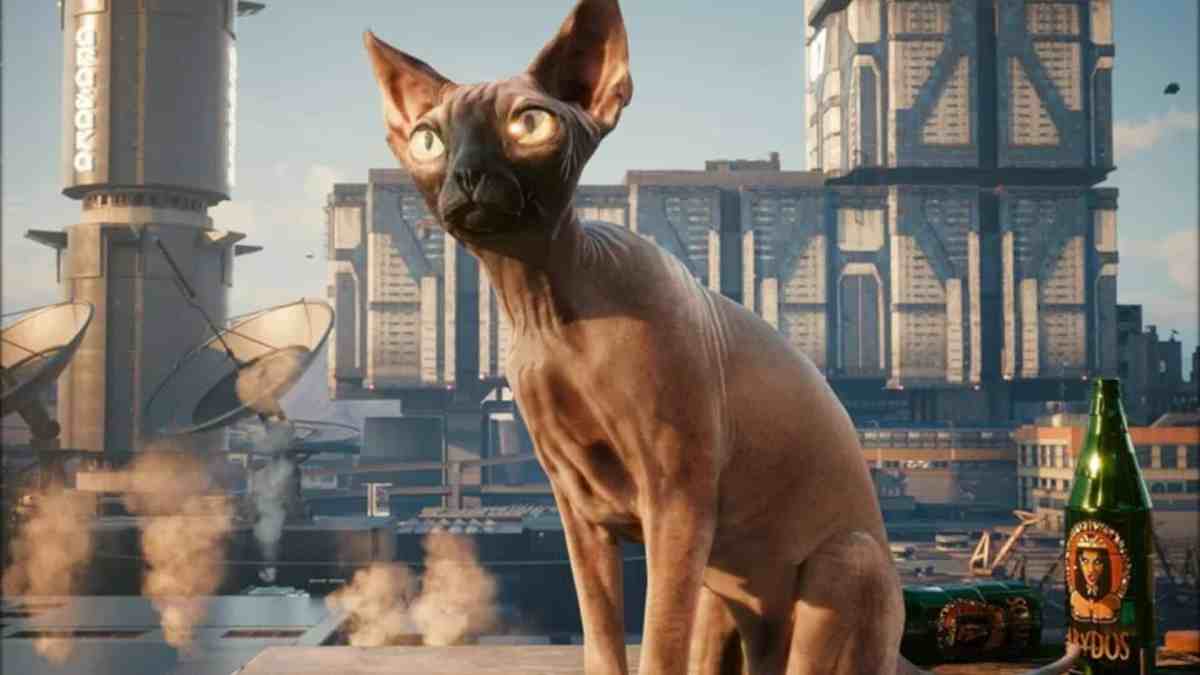
Nibbles is the feline star of Cyberpunk 2077, a little buddy who adds a little levity and fun to the game’s dystopian future.
For PITB’s inaugural Wordless Wednesday, which is turning out to be a somewhat Wordy Wednesday, we’re celebrating Nibbles, the pet cat of protagonist V in Cyberpunk 2077.
Cyberpunk is an open world video game set in Night City, a sprawling dystopian city-state. If you’ve ever wondered what it would be like to live in the perpetual gloom of Blade Runner’s rainy, neon-soaked future, Cyberpunk 2077 is as close as you’re going to get.
Notably, you don’t start the game with Nibbles, who is initially a stray living in the filthy hallways of your apartment building and subsisting on garbage. You’ve got to find him, feed him real food and convince him you’ll be a worthy servant, because even trash-eating strays have standards.
A gamer shows off her pet cat, who bears a striking resemblance to Nibbles. Credit: Elissa Ayadi/Instagram
After you rescue Nibbles, he makes himself at home in your apartment, faithfully greets you when you return, protests when you use the shower, and meows impatiently for yums. He also enjoys lounging in your laundry basket.
You can pose with Nibbles anywhere in Night City for screenshots.
Nibbles is quite demanding, like all members of his species.Another gamer with a sphinx cat doing her best Nibbles impression.Johnny Silverhand, played by Keanu Reeves, also takes a liking to Nibbles. Meanwhile, Nibbles takes a liking to the laundry basket.Nibbles lounging.
Finally, some screenshots I took of Nibbles, V, Johnny Silverhand (Keanu Reeves) and Reed (Idris Elba):
Nibbles with V and Idris Elba.Nibbles: “Feed me, lady.”Nibbles is the star of the show
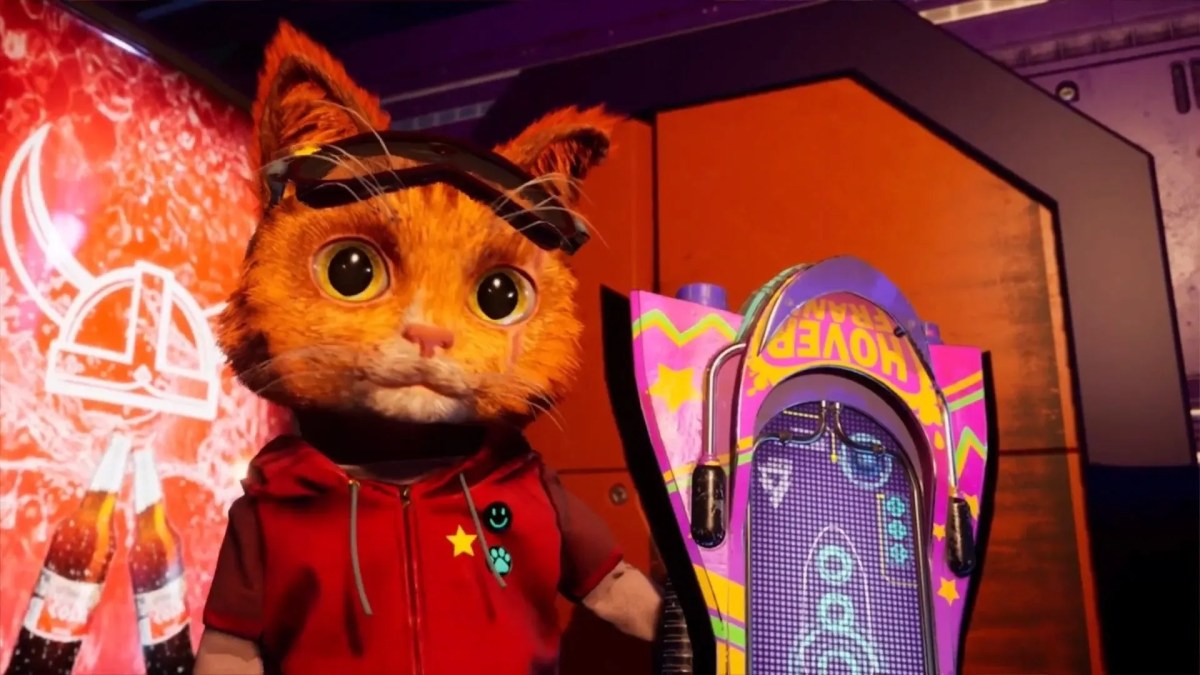
Gori is a cat game for people with a sense of humor and a love for high-octane, chaotic fun.
There’s a moment in the very first stage of Gori: Cuddly Carnage when you get your first weapon upgrade, and your talking hoverboard, Frank, chimes in: “Yeah! A new weapon! Let’s try it on those little shits!”
The “little shits” Frank is referring to are undead unicorns, cute little bad guys who squeak and hop but will murder feline protagonist Gori if he doesn’t kill them first.
And that’s what Gori: Cuddly Carnage is about: killing enemies, and doing it in the most stylish way possible, with satisfyingly-animated moves that involve spinning, smashing and slashing the bad guys with your hoverboard as you zoom through neon-lit levels at a frenetic pace. All of this is set to a grinding metal soundtrack, with high-sustain solos and singers extolling the awesomeness of Gori.
Gori himself is a cute orange tabby cat who happily meows as he executes rail slides and jumps, but this is not a game for children. Developers Wired Productions and CouchPlay have aimed this at cat lovers with a dark sense of humor and gamers who enjoy the nonstop war dance of games like Ghostrunner and the modern Doom franchise, which reward you for an improvisational and fast-paced approach to challenges.
The more quickly you complete levels, the more acrobatic your approach, the higher your score.
Cuddly Carnage’s gameplay feels more like Jet Grind Radio and Ghostrunner than Tony Hawk, despite our hero getting around on a board. Credit: Angry Demon Studio
The game gives you four difficulty choices, from Indoor Cat (“Easily slay enemies left and right in between naps!”) to Cuddly Carnage, the most difficult setting that promises aggressive enemies who hit hard. I’m terrible at games that involve heavy wall-running and constant speed, so I chose the second-easiest difficulty, although the difficulty level seems to have less to do with pace than it does the challenge posed by enemies. Next time I’ll kick it up a notch.
If there’s a story here, it’s almost incidental and serves only to introduce the comically absurd setting. Gori’s spaceship is destroyed, and he’s landed on the ruin of a planet abandoned by its human settlers to find a new ship. Why does he need a ship? To find yums and toys, of course.
The early game looks a bit like the third installment of Borderlands and plays like a faster version of Jet Grind Radio with the aforementioned elements of balletic violence. Hilariously, the first level is littered with what look like abandoned Tesla Cybertrucks, which you can slash in half with your hoverboard to collect resources.
Gori hovers and battles his way through bright, neon-lit streets filled with bizarre and hilarious enemies. Credit: Angry Demon Studio
Cuddly Carnage eases you in, showing you how to execute moves and how to navigate the levels by rail grinding. The idea is to stay airborne as long as possible, using your feline agility and Frank’s boost abilities, descending only to unleash whoopass on your enemies.
While Gori: Cuddly Carnage represents another welcome “play as a cat” game, it’s a completely different beast than 2022’s slow-paced, thoughtful Stray or this year’s playful Little Kitty, Big City.
We played the PC version via Steam, but the game is also available on current versions of XBox, Nintendo Switch, and PS4/5. Steam reviews are extremely positive so far, with 97 percent of reviewers recommending taking a spin with the manic meowster.
Gori is designed as a cute orange tabby, but he’s also a slob: his ship is littered with toys and empty cat food cans, and he loos like he could use a good grooming.
Have you ever wanted to own or design your own zoo?
Visitors to Buddy’s Tropical Paradise are greeted by friendly staff who man the entrance, a broad vertical garden shaped like an arch that straddles the main path leading inside.
When they walk through the gate a new vista opens up before them: tiered tropical gardens, waterfalls, and wide boulevards lined with palm trees and flowers. They hear the rumble of big cats calling to each other in the distance and monkeys shrieking as they fling themselves from branch to branch.
Welcome to Buddy’s Tropical Paradise!
A monorail carries passengers above, its tracks looping over animal enclosures and threading tunnels that emerge amid the terraced jungle, eateries and souvenir shops.
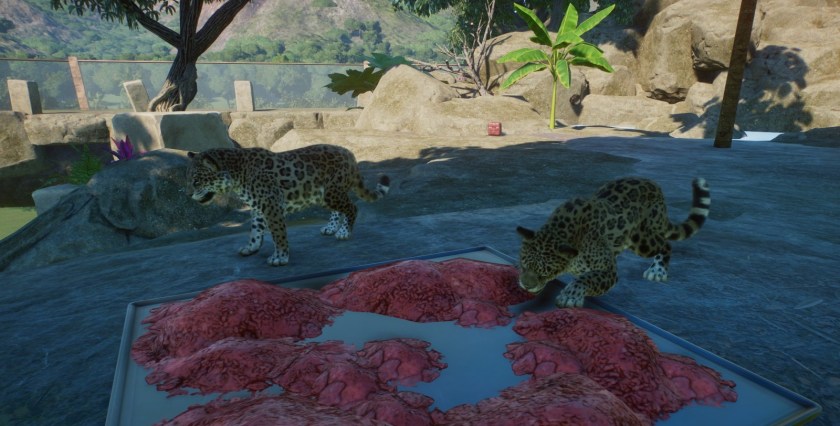
And straight ahead, the first exhibit: a sprawling habitat occupied by jaguars who are enjoying some yums and will probably have a nap in a few minutes.
Buddy’s Tropical Paradise doesn’t exist in the real world, of course. It’s my first attempt at fully functional, guest-attracting park in Planet Zoo, a simulator that allows you to do practically anything you can think of.
You can design your own habitats, enclosures, buildings and scenery. Fancy a monorail that laps the entire zoo? You can do that. Picturing a 1940s style Tarzan-themed jungle boat ride where visitors can see caiman, capuchin monkeys and jaguars up close? Start carving up the river, my friend!
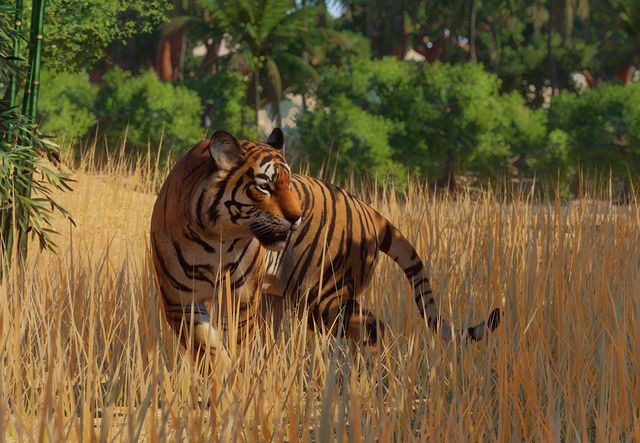
A Bengal tiger stalking the tall grass in Planet Zoo.Lunch time in the jaguar habitat, followed by the all-important nap time.
As the zoo’s architect, you’re responsible for everything. You’ll need veterinary facilities, animal quarantine, keeper huts. You’ll need to staff your park with veterinarians, keepers, security officers, maintenance staff and mechanics.
And don’t forget the vendors to run the souvenir shops and man the food stalls, where your guests can grab hot dogs or cool off with slushies on a hot day.
A suitable home for your animals
Designing a habitat is about a lot more than reserving space for your animals. You’re tasked with picking the right barriers, mindful of which species can climb or leap great heights. A good habitat should reflect the animal’s home in the wild with appropriate flora, temperatures the species thrives in and a feeding system that mimics the way they’d naturally obtain food.
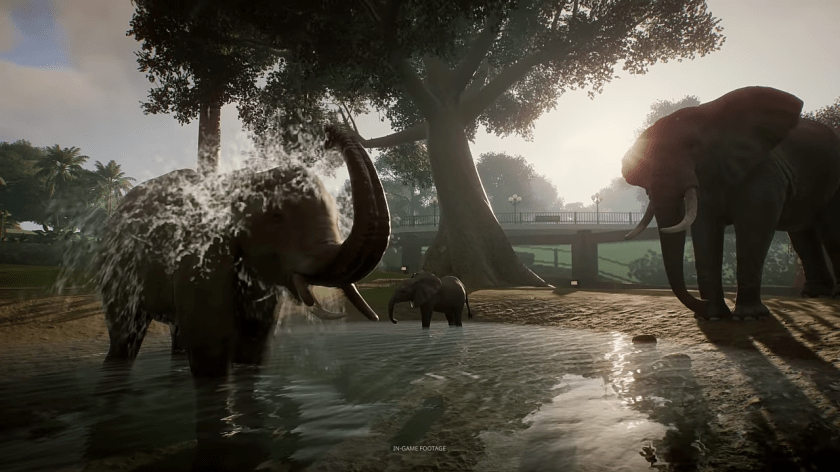
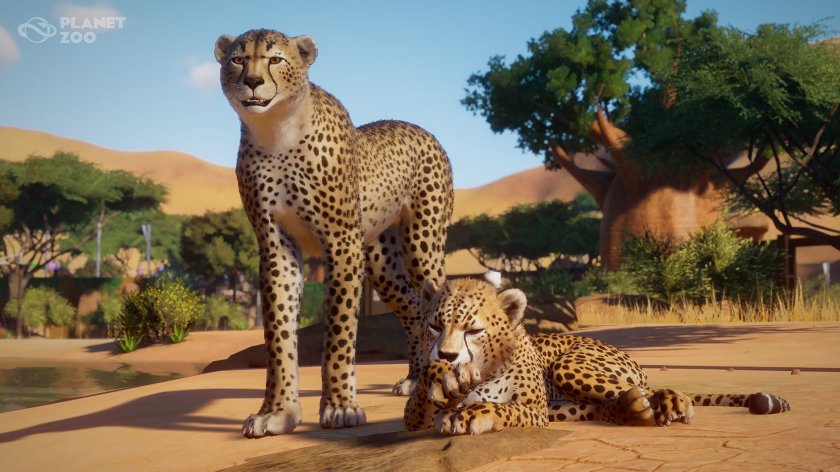
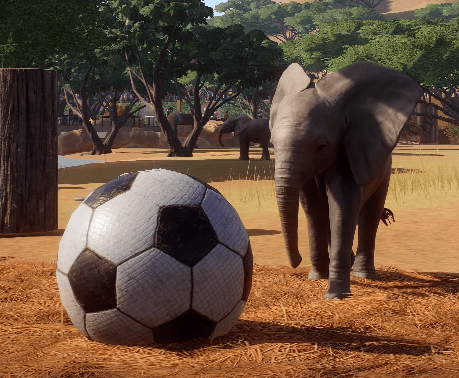
Elephants cool off in their enclosure in Planet Zoo. Every habitat must be designed with the right atmosphere, flora, terrain, shelter and enrichment appropriate for the species it houses.A wide view of my orangutan habitat. Two orangutans are at the base of the stone steps in the distance.Cheetah sisters.
Then there’s enrichment. Trees for your monkeys to climb, ponds for your tigers to take a dip, bushes for your elephants to strip. Different species enjoy different toys and challenges. An ice block with meat in the middle would hit the spot for carnivores on a hot summer day, but your pandas will want bamboo.
Designing habitats and getting them just right is not only fun, it’s an intuitive way to learn about the needs of individual species and how they live.
The leopard learning incident
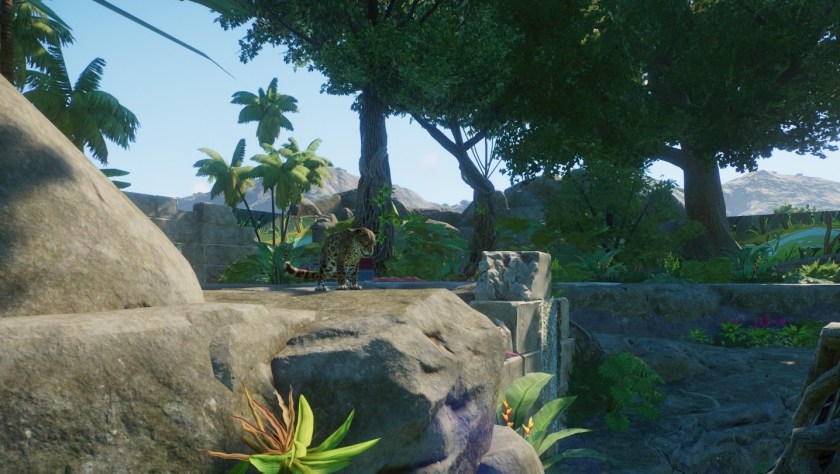
My first stab at building a leopard enclosure was a disaster. It looked pretty enough with its Hindu-inspired temple architecture and pond. There were plenty of scratching posts and trees that could withstand claws.
I installed a sprinkler to help the big cats cool off, designed a series of raised platforms for them to climb, and scattered enrichment items all over the habitat. The leopards had balls to bat around, boxes to sit in, rubbing pads, logs and rocks to climb, and plenty of cover and shade.
But when I had the leopards brought into the zoo, through quarantine and into their exhibit, I realized you can’t just design a home for animals from an aesthetic perspective. I’d used several plant and tree species that weren’t native to leopard habitats, the terrain was wrong and I hadn’t paid any mind to ambient temperature.
Making those mistakes was truly educational. When your animals aren’t happy in Planet Zoo, protesters show up, and it’s up to you to read the alerts about where you went wrong and how to remedy your mistakes. It’s an intuitive and fun way to learn about each species and the environments they thrive in.
The escaped jaguar
I’m still learning the ropes, although I do have a basic knowledge of the way the game is designed thanks to some time playing Frontier’s theme park building game, Planet Coaster. The first time I tried to build a jaguar enclosure, I forgot to wall off a viewing cave with protective glass, which my guests did not appreciate.
Even though jaguars don’t like to confront humans, a big cat is a big cat, and the game sent me urgent warnings as people ran for the exits. When I found the escaped jag, he was lounging not far from his enclosure, watching people freak out.
Enrichment is a key aspect of habitat design. Toys, puzzles, obstacles, climbing platforms for arboreal species, ponds for animals who like to get wet — they’re all necessary to keep animals healthy and happy.
In real life it’d be a disaster, but I was able to revert to a previous save, make sure the viewing cave was sufficiently protected, and this time around I placed only two jaguars — a male and a female — in the large enclosure.
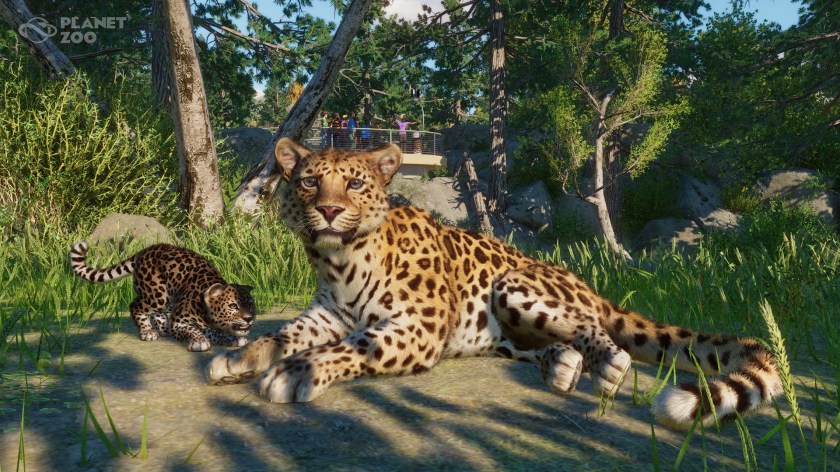
After a while, while I was tinkering with an exhibit meant for capuchin monkeys, the game sent me an alert: the female jaguar was pregnant! She gave birth to two energetic, curious cubs who are currently having fun chasing each other around the enclosure and going for dips in their pond.
Part of the main boulevard in Buddy’s Tropical Paradise, viewed at night. Players are responsible for everything you see here — lighting, shops, flowers and plants, benches, waste baskets and more.Shops and a monorail station in an unfinished Asia-themed area of the zoo.
As in real life, the game has you source animals from an international pool, with information on breeding and genetics so you can contribute to conservation. When you adopt animals, their first stop is the veterinary facilities for examination, then quarantine. When they pass quarantine, you can have your staff release them into their enclosures.
It took me several hours to familiarize myself with the basics, design an entrance and a main boulevard for the guests, create some tiered gardens with eateries and shops, and get my jaguar and orangutan exhibits up and running.
My monorail currently runs out of track a quarter of the way through the park, and my river boat ride looks pretty cool, with dense jungle, towering trees and the ruins of Mayan temples not far from shore, but completing it will require appropriate barriers to keep the animals in as well as building out more scenery.
A jaguar in her habitat.
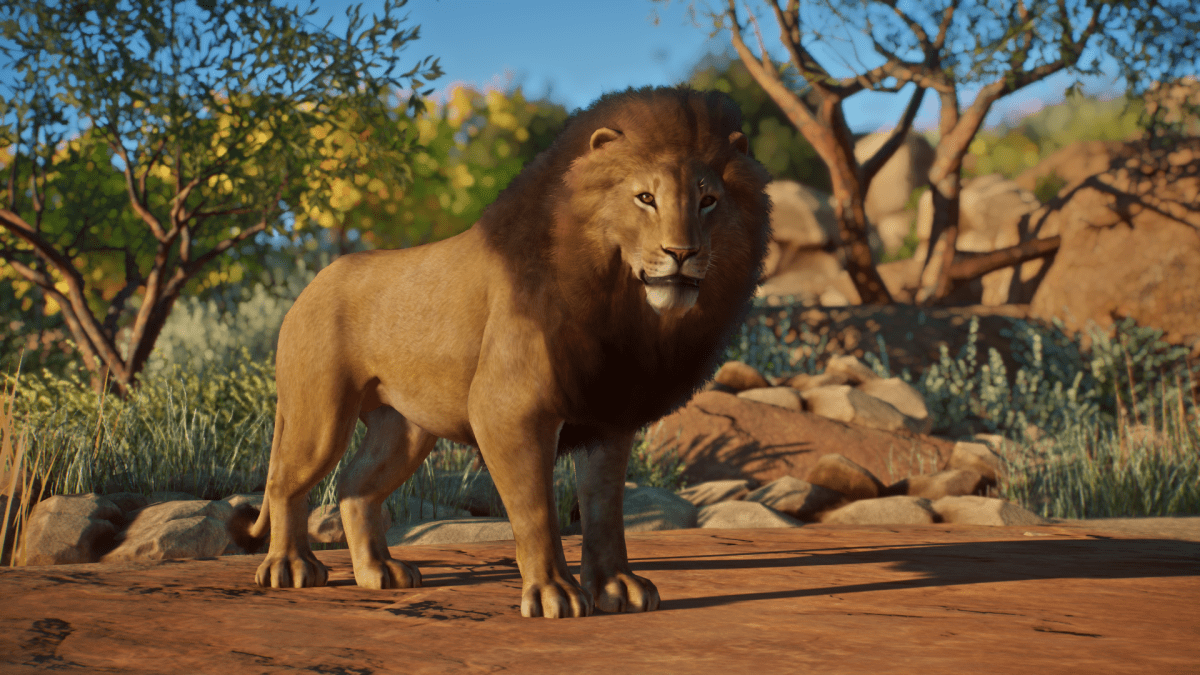
I’ve got my sights set on an elephant exhibit next. It will be necessarily huge, so it’s good to reserve the land early and plan smaller exhibits and facilities around it. I’d also like to put the elephants, lions, zebra, giraffes etc into one Africa-themed section of the park, while the tigers, giant pandas and snow monkeys will be housed in an Asia-themed section, with buildings that reflect the architectural styles of countries like Japan and China.
There are also aquatic exhibits, animals for your own reptile house and aviaries. Those enclosures are more complex than the relatively straightforward orangutan exhibit, for example, so I’ll have to spend some time figuring out what makes a good home for peacocks, sharks and komodo dragons.
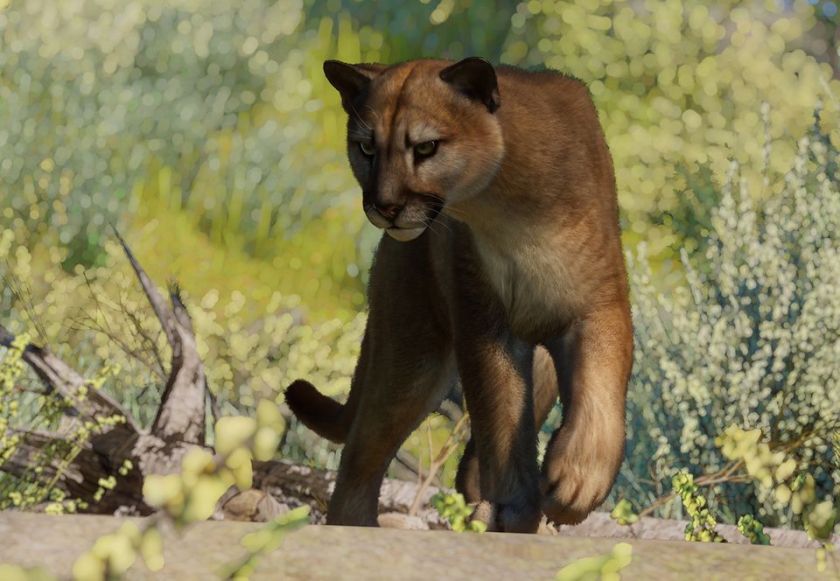
So far I’ve resisted the temptation to make one giant felid park, with snow leopards, pumas and cheetahs joining the tigers, lions, jaguars and others. Of course I did name it Buddy’s Tropical Paradise, so I may be forced down the all-cat road if Bud gets his say.
Planet Zoo is not a traditional video game. There are no winners or losers, and there’s no “end state” unless you intentionally include one.
It’s more relaxing and much slower-paced than your typical game, and it’s a great feeling when you’ve managed to take something from your imagination and perfect the design. When you want to check your progress or just admire your own work, you can set the camera to follow guests and watch as people stroll through your zoo, taking in the sights and sounds.
In that sense it’s more like a virtual model train set or living diorama. You can load up the game and tinker with your zoo when you’ve got a spare 15 minutes, or spend a few hours getting absorbed in the finer details of how to keep pangolin and red pandas happy.
Planet Zoo is appropriate for all ages, although its depth and complexity would probably be a lot for younger kids. In that case, it’s probably best to have an adult guide them so they understand the game is built on interlocking systems: exhibits need power and water, shops need staff, veterinary surgeries need veterinarians and so on.
It’ll have enormous appeal to kids who enjoy Lego, Minecraft and other building games, so if you’ve got a little builder in your life, this could be a good fit. But make no mistake, there’s a lot here for adults to enjoy too.
PITB verdict: Four out of five paws!
The only thing keeping Planet Zoo back from a five-paw rating is the DLC (downloadable content) scheme, which requires users to pay extra for certain “packs” containing extra animals, scenery pieces and scenarios. That’s a problem plaguing the larger video game industry, but if you wait for a sale, the normally $44.95 game can be had for as low as $11.24 on Steam. DLC is likewise discounted. Steam’s summer sale is a great opportunity to get games like this for a fraction of their normal price. This year’s summer sale is scheduled for June 27, though it’s possible Planet Zoo could be put on sale before then as well.
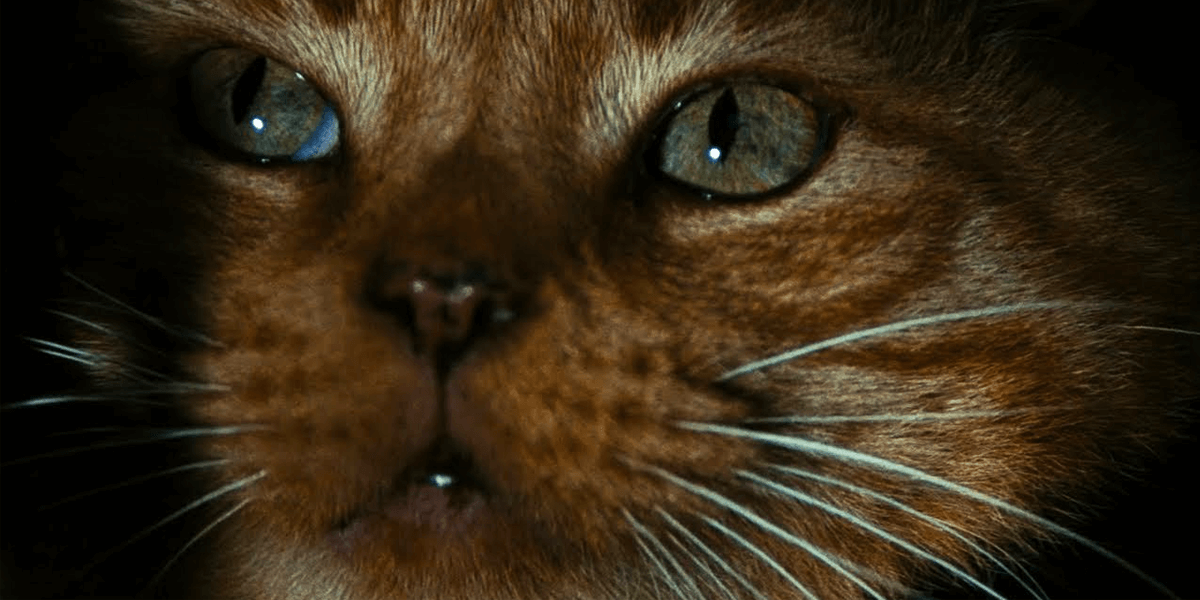
Making his debut in 1979’s Alien, Jonesy is one of the most famous felines in cinema history.
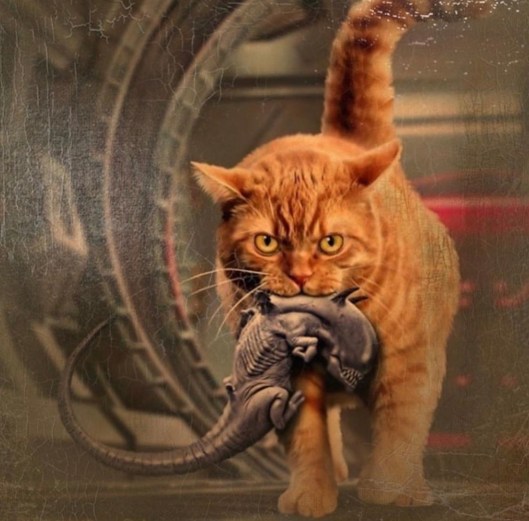
There’s a popular meme among Alien fans that depicts Jonesy the Cat walking nonchalantly down one of the starship Nostromo’s corridors with his tail up, carrying the corpse of the recently-spawned alien in his mouth like he’s about to present a dead mouse as a gift to his humans.
The joke is self-evident: if the crew of the Nostromo had allowed Jonesy to take care of business from the get-go, the alien would have been disposed of before it had the chance to grow into the monstrosity that haunted the decks of the Nostromo and the nightmares of viewers.
“Who’s a good boy? Who just saved his crew from certain violent death at the claws of a ruthless alien predator? That’s right, you did!”
Of course then there’d be no movie. No ripples of shock in theaters across the US as audiences were confronted by something more nightmarish and utterly alien than popular culture had ever seen before. No indelible mark left on science fiction.
Despite the film’s retrofuturistic aesthetic, it’s difficult to believe Alien first hit theaters almost half a century ago.
That’s testament to director Ridley Scott working at the height of his powers, the carpenters, artists and set dressers who created the starship Nostromo’s claustrophobic interior, the design of the derelict starship where the alien was found, and the bizarre creature itself.
The alien ship and creature designs were the work of Swiss surrealist H.R. Giger, who was little-known at the time but floored Scott and writer Dan O’Bannon with his hyper-detailed paintings of grotesque biomechanical scenes.
Signourney Weaver and one of the cats who played Jonesy in the first film.
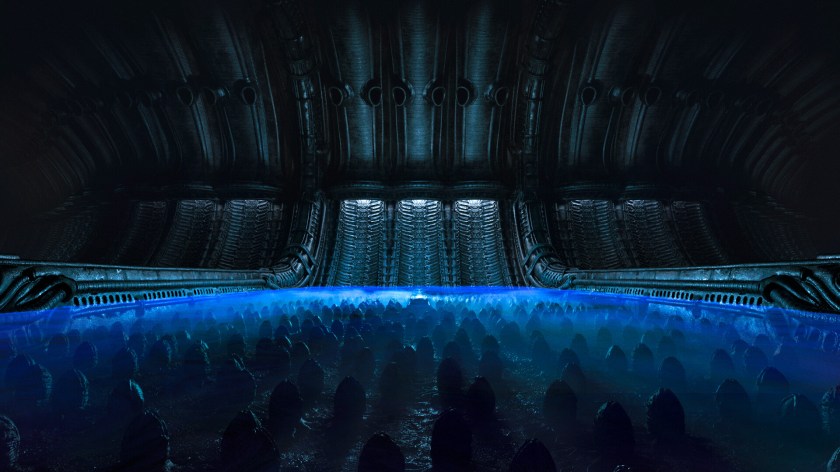
Kane explores the infamous egg chamber in the derelict alien ship.
Fan art of Jonesy
A close-up shot of the retrofuturistic tech used in the series, a design decision that departed from the gleaming visions of the future common at the time.
A set photo showing the first film’s crew on the iconic space jockey set.
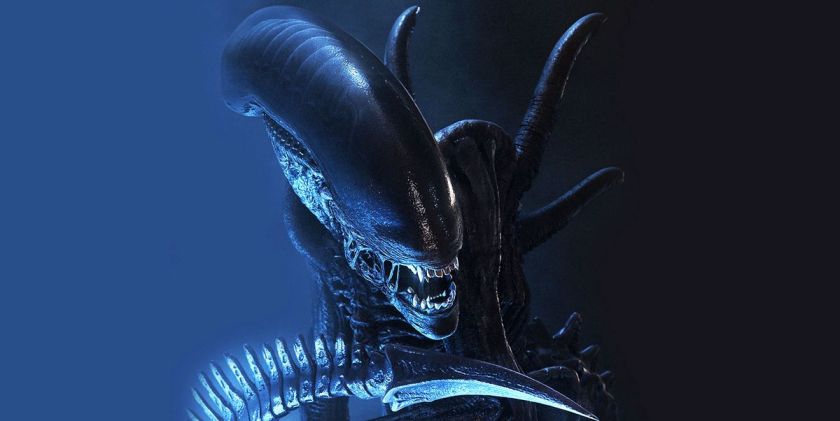
Giger’s work, specifically his 1976 painting Necronom IV, was the basis for the titular alien’s appearance. The alien, called a xenomorph in the film series, is vaguely androform while also animalistic. It is bipedal but with digitgrade feet and can crawl or run on all fours when the situation calls for it. It hides in vents, shafts and other dark spaces, coiling a prehensile tail that ends in a blade-like tip.
But it’s the creature’s head that is most nightmarish. It’s vaguely comma-shaped, eyeless and covered in a hard, armored carapace that ends just above a mouth full of sinister teeth like obsidian arrowheads. There’s perpetually slime-covered flesh that squelches when the creature moves but there are also veins or tendons or something fully exposed without skin, apparently made of metal and bone. Maybe those ducts feed nutrients and circulate blood to the brain. Maybe they help drain excess heat from the creature’s brain cavity.
Regardless, it’s a biomechanical nightmare that the Nostromo’s science officer, Ash, admiringly calls “the perfect organism” whose “structural perfection is matched only by its hostility.”
The alien, Ash declares, is “a survivor, unclouded by conscience, remorse, or delusions of morality.”
The alien, also referred to as a xenomorph, “that thing,” a “dragon,” “the perfect organism” and various other names by characters in the series. Credit: 20th Century Studios
Part of what makes Jonesey so beloved is the fact that, together with the xenomorph and Ripley, he completes the triumvirate of survivors. We see Jonesy scurry into the protection of tiny confined spaces to escape the alien, hissing at it in the dark. We see him dart into the bowels of the ship after sensing the stalking creature, adding another blip to the crew’s trackers. Finally we see him settling into a cryosleep pod with Ripley, like so many other cats with their humans, when the threat has passed.
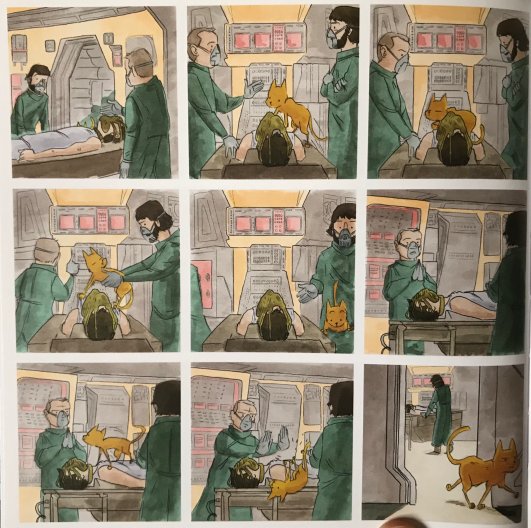
Jonesy — affectionately referred to as “you little shithead” by Ripley in the second film — appears in the franchise’s two most famous films, his own comic book series titled Jonesy: Nine Lives on the Nostromo, a 2014 novel (Alien: Out of the Shadows), and in hundreds of references in pop culture over the last half century, from appearances in video games (Halo, World of Warcraft, Fortnite) to references and homages in movies and television shows.
A page from Jonesy: Nine Lives On The Nostromo, which tells the story of Alien from the cat’s perspective. These panels depict Jonesy watching Ash and Dallas examining Kane in the ship’s medical lab.
He’s like the anti-xenomorph. Cats are predators, after all, and Jonesy might be the xenomorph to the ship’s rodents just like every ship’s cat in thousands of years of human naval endeavors. But to the crew members Jonesy’s a source of comfort, a warm, furry friend to cuddle with. Unlike the xenomorph he’s got no biological programming urging him to impregnate other species with copies of himself in one of the most horrific gestation processes imaginable.
Xenos are like predators on steroids, gorging themselves on their victims to fuel unnaturally swift cell reproduction and growth. As a result, over the decades some have speculated that the alien simply ignored the cat, deeming its paltry caloric value unworthy of the effort to kill.
The idea that Jonesy was too small to interest the alien is proved a fallacy in later franchise canon when we see the aftermath of a xenomorph consuming a dog. It’s indiscriminate in its quest for energy, feasting on adult humans and animals alike until two or three days pass and it’s a 12-foot-tall, serpentine nightmare the color of the void of interstellar space.
Just imagine sitting in a theater in 1979. Your idea of science fiction is sleek jet-age spacecraft, Star Trek and Stanley Kubrick’s clinical orbital habitats from 2001: A Space Odyssey. You’re expecting astronauts, heroes, maybe a metal robot or an alien who looks human except for some funky eyebrows, green skin or distinct forehead ridges.
Instead you get a crew of seven weary deep space ore haulers inhabiting a worn, scuffed corporate transport ship, complaining about their bonuses and aching for home, family and the familiar tug of gravity.
But home will have to wait. The ship has logged an unusual signal of artificial origin broadcasting from a small planet in an unexplored star system. The crew has no choice but to investigate. It’s written into their contracts, which stipulate the crew will forfeit their wages if they disregard the signal.
So they land, suit up, move out and find a derelict starship. An incomprehensibly massive vessel so strange in detail and proportion that it could only have been built by an alien mind, with unknowable motivations and psychology.
The egg chamber of the derelict alien ship, designed by Giger.
Inside, hallways that look like ribcages lead to vast chambers with utterly bizarre, inscrutable machinery that seems to consist of biological material — skin, bone, joints, organs — fused with metal. In one of them the corpse of an alien, presumably a pilot, is integrated into a complex array. It’s at least twice the size of a large human man. Its elephantine head is thrown back in the agony of its last moment, when something exploded outward from its body, leaving a mangled ribcage, torn papery skin and desiccated organs.
And beneath that, a shaft leading to another horror — a chamber that seems to stretch for kilometers in either direction, where leathery eggs are cradled in biomachinery and bathed in a bioluminescent cerulean mist.
The decision to enter that chamber sets off one of the most shocking scenes in cinema history, leads to the birth of pop culture’s most terrifying monster, and sent millions of theater-goers home with nightmares in the spring and summer of 1979.
It’s almost too much to handle. But take heart! The unlikely female protagonist makes it to the end, and so does the cat. What more can you ask for?
Jonesy grooming himself on the flight deck of the starship Nostromo. Credit: 20th Century Studios
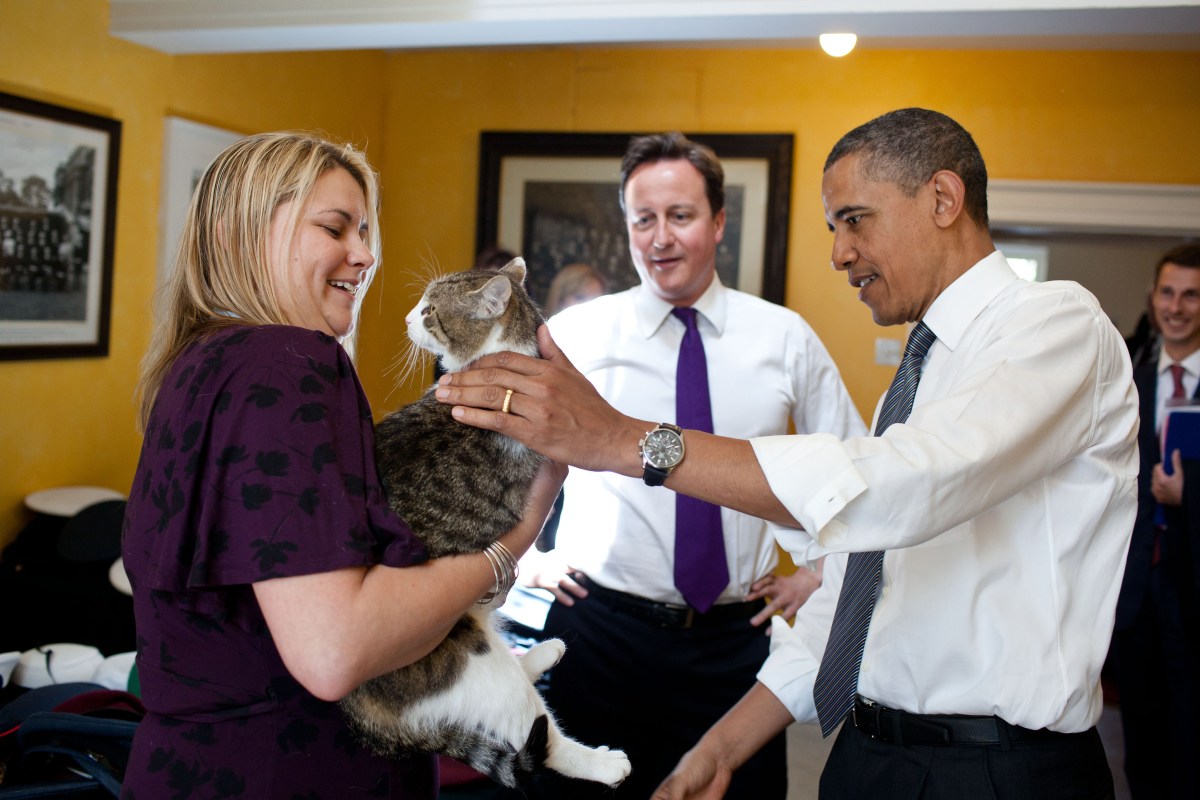
As we noted on Sunday, Larry the Cat just celebrated his 12th anniversary as chief mouser at No. 10 Downing St., the UK prime minister’s residence and office. The Atlantic has a new gallery featuring photos of Larry’s adventures over the years, and it’s fantastic.
See Larry chase a pigeon, tolerate former President Barack Obama, pose for the press, bolt from a Mitsubishi bigwig, cautiously supervise a police dog working on his turf, hang out with photographers and steal the show during meetings of world leaders.
The gallery also includes rare photos of Larry inside No. 10 (during which he’s mostly gazing longingly at his turf outside) and other amusing moments from his long tenure as de facto head of government in the UK.
(Top image credit: Pete Souza/White House photo)
Cuddly carnage!
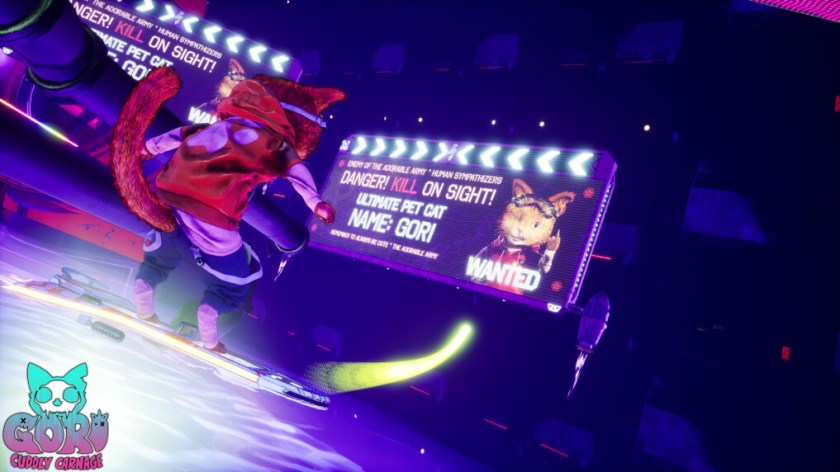
The camera pans from a wet, neon-lit street to the jagged remains of a wall spray painted with “Death to Humans” when a tiny head pops up, with the unmistakable shape of cat ears and the markings of a ginger tabby.
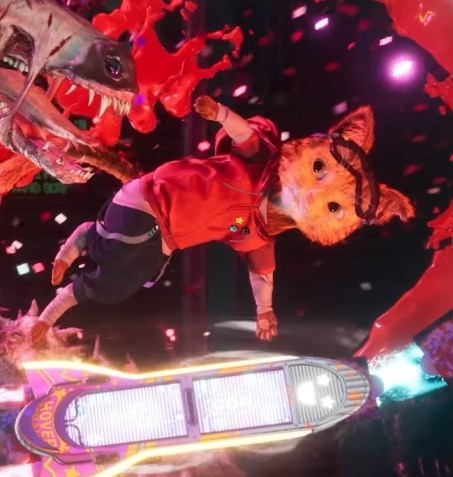
Zoom in: An orange tail speeds by, its owner just out of the frame, then the guitars kick in and Gori the cat stylishly disembowels some freak monster from atop his trusty Back To The Future-style hoverboard.
The game is called Gori: Cuddly Carnage, and it looks completely ridiculous, absolutely glorious and a hell of a lot of fun.
Gori stylishly puts down a monster. Credit: Angry Demon Studio and Wired Productions
It’s from Angry Demon Studios and Wired Productions, the same people behind the well-received 80s/90s nostalgia trip Arcade Paradise, so the production values look great and Gori shares some elements of the retrowave aesthetic prevalent in Paradise.
It probably won’t get the kind of hype that the feline-centricStray received, nor will people laud it for educating players about cat behavior, but that’s okay. It’s not that kind of game. Gori: Cuddly Carnage is still in development with no announced release date, but we’ll be keeping an eye on it.
Gori the “ultimate pet cat” on his hoverboard. Credit: Angry Demon Studio/Wired Productions












 Pain In The Bud