Do You Speak Cat? This Quiz Tests Knowledge Of Real Feline Language

Studies show most of us are pretty bad at interpreting our cats’ moods. A research team in Australia wants to change that.

Cats are constantly telling us how they feel, but many of us aren’t listening.

We’re not talking about chirping, trilling and meowing, although those are some of the ways our cats try to communicate with us.

While they might seem protective of their own thoughts and feelings, cats are actually transparent, and they can’t lie.* Their tails, ears, whiskers, facial expressions and body language all broadcast a cat’s mood.

The question is, are we picking up that broadcast?

In The Conversation, the University of Adelaide’s Julia Henning introduces us to a quiz she designed to answer that question, and invites us to take it.

The goal: to correctly assess each cat’s mood. What I liked most was that we’re asked to evaluate videos — clear, well-lit high resolution clips — instead of the low resolution stills that are often used for quizzes like this.

Sir Talks-a-lot

Henning has been studying the human-cat communication issue because when we misread cats, there’s a good chance we’re stressing them out. Henning and her team published the results of a study in September in which 368 participants from Australia were asked to evaluate a series of clips human-feline interaction.

It turns out they didn’t do so well at reading the signs that a cat is agitated, stressed or doesn’t want to play.

“For videos of cats who weren’t playing and were showing subtle negative cues (such as sudden tension in the body or avoiding touch), participants only recognised the negative cues about as well as chance (48.7%),” the authors of the study wrote.

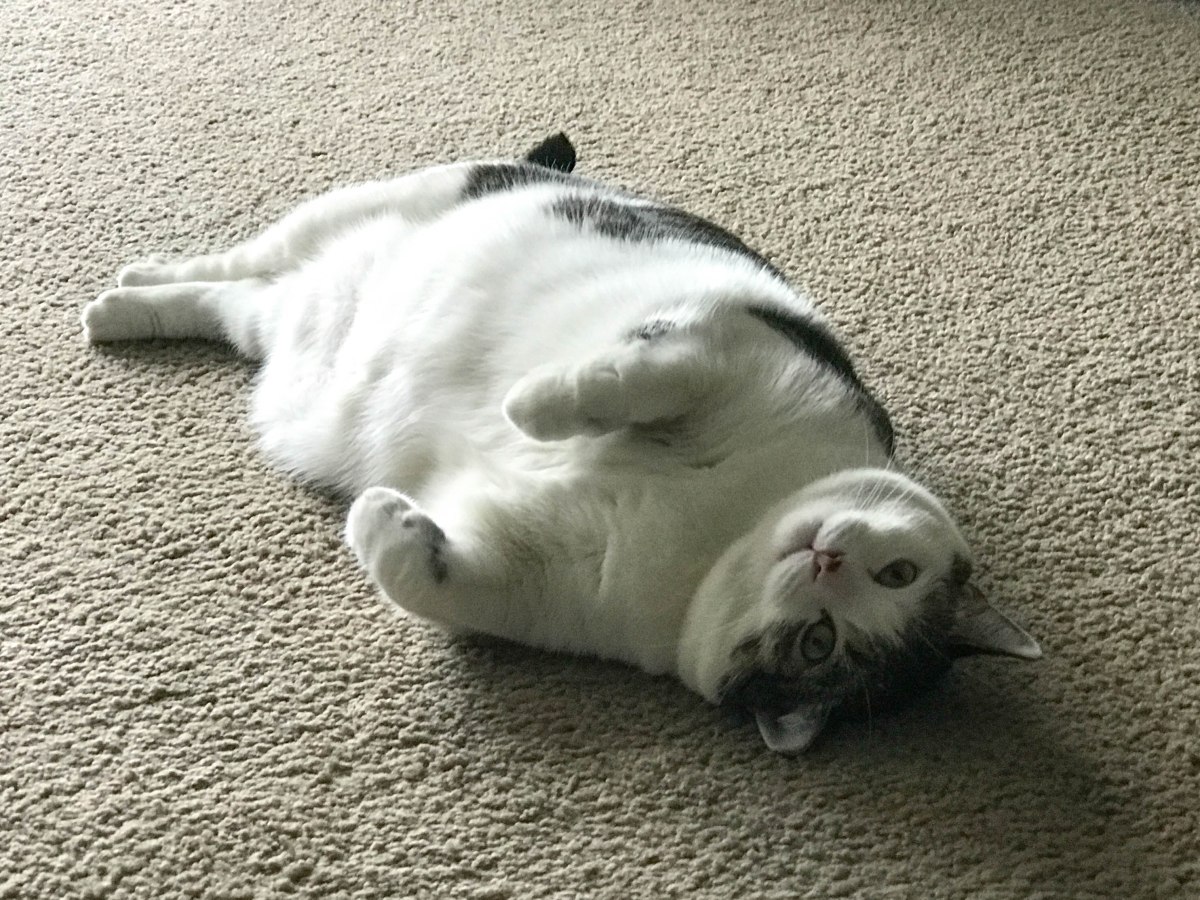
Even when study participants correctly read a cat’s ears, tail, whiskers and body language, some of them indicated they’d do things that would unknowingly make a cat more agitated and stressed. A classic example is trying to pet a cat’s belly and misinterpreting their derpy way of trying to block you as a playful gesture.

Did you know? Approximately 96% of Buddy’s communication is related to yums.

In the paper, which was published in Frontiers in Ethology, Henning and her colleagues lay out the case for making sure we — the people who take care of cats — are sensitive to what our little buddies are feeling.

It’s not just about strengthening the bond, although that’s an important part. It’s about reducing stress and miscommunication, and increasing quality of life.

Cats are incredibly sensitive to our actions and moods because we are the most important living beings in their lives. We feed and house them, and we’re their pals. If we’re constantly subjecting them to play they don’t like or overstimulating them, they get stressed, and stressed cats can become depressed, sick or resentful cats.

If we want to make sure our buddies live their best lives, we have to understand what they’re trying to tell us.

(*) Except when it comes to food. When food is involved, these innocent, cute little furry creatures become master manipulators and can convince anyone they’re starving.

Note: The first version of this story linked to the study page twice when the first link should have pointed to the quiz. It’s fixed now, and email subscribers can follow the link through this version of the story. Apologies for the error.

Header image credit: cottonbro studio/Pexels

Actress Shares Why She’s A ‘Crazy Cat Lady,’ PLUS: Waymo Denies Responsibility For SF Cat’s Death

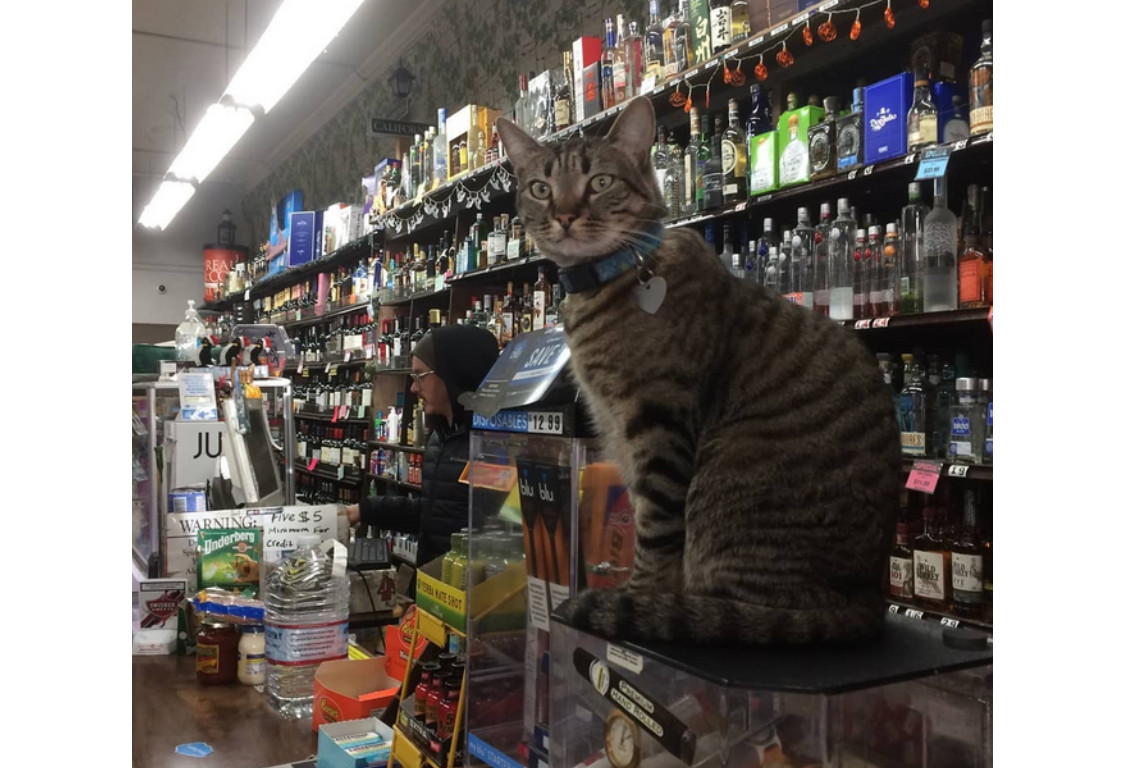
Waymo says KitKat “darted under our vehicle as it was pulling away” in the accident that killed the popular bodega cat.

Last week when we wrote about a San Francisco cat hit by an autonomous taxi, the Google subsidiary that produces the cabs hadn’t responded to media requests for comment.

Now Waymo has confirmed one of its driverless taxis did strike KitKat late on the night of Oct. 27, but claims the nine-year-old tabby got in the car’s way as it began to move. Here’s Waymo’s statement:

“The trust and the safety of the communities we serve is our highest priority. We reviewed this, and while our vehicle was stopped to pick up passengers, a nearby cat darted under our vehicle as it was pulling away. We send our deepest sympathies to the cat’s owner and the community who knew and loved him, and we will be making a donation to a local animal rights organization in his honor.”

People in the neighborhood where KitKat was a fixture are not happy with the response. Per Mission Local: “Waymo did not reply to a request to review the video, and did not say how much it would donate or what group would receive the gift.”

Mission Local noted witnesses gave slightly different accounts of the collision, saying KitKit was in front of the taxi for several seconds before it began moving.

As testament to how well-known and beloved KitKat was, there’s now a considerably sized memorial to him in front of the store he called home, with flowers, candles, drawings of KitKit and even cans of cat foot left on the spot. The San Francisco Chronicle has photos of the memorial.

KitKat featured prominently on Instagram, where photos show him hanging out with customers, patrolling the sidewalk in front of the store, and curling up for naps on the counter. Credit: https://www.instagram.com/randasmarket/

The paper also quotes a local who explained the outpouring of grief: “If you’re not a 16th Street regular this can seem silly, but this cat meant so much to this community. If you knew KitKat, you’d understand.”

KitKat’s death has soured more people on Waymo, with the Chronicle noting it “struck an emotional nerve in a neighborhood already wary of driverless cars weaving through its crowded streets.”

Waymo, a subsidiary of Alphabet Inc. (Google’s parent company), operates driverless fleets in San Francisco, Los Angeles, Phoenix, Austin (TX) and Atlanta, with plans to offer automated taxi service in Washington, D.C., and Miami.

“When they show up in your yard and they need you, we can’t look away.”

As someone who avoids medical dramas like the plague, I’m not familiar with Wendi McLendon-Covey’s work, but I’m sure many PITB readers will know the St. Denis Medical star. In an interview, McLendon-Covey talks about rescuing cats, earning their trust, and getting satisfaction from knowing she’s improving one life at a time.

The actress with one of her feline friends. Credit: https://www.instagram.com/wendimclendoncovey/

Most recently she’s been earning trust with a stray she calls Harvey, saying it’s “taken me forever to bond with him” and she still has work to do before he trusts her enough to go indoors.

Cats, she said, are “cuddly, they’re cute, they’re hilarious. They all have their different personalities and they have their little meetings and their little way of talking to each other, and it’s just fascinating to watch. So that’s a hot Friday night for me, is just throwing treats to the cats.”

You can read the rest of the interview here.

What’s Good About Having A Pet? Everything!

Animals are a real source of joy in this world, and few things are better than cozying up on a couch with a book and a purring cat in your lap.

Daily writing prompt
What is good about having a pet?

For more than two weeks after adopting him, I still didn’t have a name for my cat.

I imagined something badass, something funny, something better than all those boring pet names. But the playful, energetic, bold little kitten in front of me was no Brasidas (my favorite Spartan), Mo (my favorite pitcher) or Timothy Cavendish. (My favorite character from David Mitchell’s Cloud Atlas.)

So I kept calling him buddy while I waited for something to come to me, and then it became obvious: He is Buddy.

Original? Nah. But it describes him perfectly, and to me that’s the best part about adopting him, my first-ever pet.

We’re pals. Amigos. Chums. Accomplices. Buddies.

Buddy as he exists in his mind!

I don’t consider myself his “dad” even though I have parental, protective feelings for him. He’s my buddy who wants to be involved in everything I do, whether it’s helping me greet trick-or-treaters at the door like he did last night, batting a paw at my guitar strings to add his special touch to my recording takes, or just hanging out while I’m reading.

I knew it intuitively, but the best advice I ever got was to always remember your little friend, be it a cat or dog, has his or her own feelings.

There’s a lot of confusion around the word sentience and people often confuse it with the concept of sapience, but there is no doubt about it: mammals like cats and dogs, avian species like corvids (ravens, jays, crows and magpies), and even cephalopods like octopus are sentient.

They think. They feel. They experience emotions like joy, sadness, excitement, anxiety, love, loneliness and more, just as intensely as we do. They may not be able to articulate those feelings in words, but they’re real.

More than half a century’s worth of science has confirmed that fact at every step, and we continue to learn more about animal cognition with every advance in technology that allows us to peer deeper into their minds.

Awww, he tolerates me!

When you treat your pet with respect and keep their feelings in mind, you’ll have a friend for life.

A loyal friend whose love comes without condition.

A friend who won’t lie to you…except maybe when it comes to food. After all, Bud could win an Oscar for his role as a starving cat, even though a single glance at him confirms he’s never missed a meal.

If you’re where I was years ago and considering bringing a pet into your life, ask yourself if you’re ready for a commitment that could last two decades, if you’re ready and motivated to give an animal not just a forever home, but the best life the little one can live.

Remember that kittens and puppies grow up fast, and think about whether you’d rather have a whirlwind of energy who will wreck your sleeping habits for months, or an adult furball who is much more chill. Remember that you will have to do things you don’t like, whether it’s scooping a litter box or bagging poop on a walk. There will be expenses, scares, the occasional puked-on rug.

But the joy you’ll get, and the friendship you’ll have, will make it all worth it.

And if you’re sure, find yourself a buddy at your local shelter. Your life will be better for it.

P.S. If you’re a fool like me, you can also have fun imagining your cat or dog in absurd scenarios based on their personalities.

Morbidly Obese Cat Completely Transformed After Shedding Half His Weight

Patches was the biggest cat the staff at a Virginia animal shelter had ever seen, and was within snacking distance of the all-time record.

When Patches was surrendered to a Virginia animal shelter in mid-April of 2023, the staff — including longtime veterans of cat rescue — were taken aback.

The six-year-old feline weighed in at a staggering 40-plus pounds and was so big, the shelter staff had to keep him in an office because the largest crates they had were barely large enough for Patches to turn around.

“We thought we had seen big cats before, but he was definitely the biggest that we’ve ever seen,” Richmond Animal Care and Control’s Robin Young told the Washington Post at the time.

Patches was in dangerous territory for his personal health, and if allowed to continue gaining weight, he’d threaten the world record for a domestic cat, which is more than 46 pounds. (Guiness World Records stopped recognizing the heaviest cats decades ago because the organization didn’t want to encourage people to overfeed their cats in pursuit of the record.)

Top row: Patches in the early days shortly after his adoption. Bottom row: Patches after losing a significant amount of weight.

Last week, Patches reached a new milestone, weighing in at 18.94 pounds after more than two years of eating healthy and getting exercise with the help of Kay Ford, a retired businesswoman who adopted him.

It’s an incredible achievement, and one that was hard-fought, as anyone familiar with cats will know. Many well-fed cats can convince almost anyone they’re starving.

Ford’s pitch to the shelter made it easy for them as they fielded a flood of adoption applications for the chonkster, who had attracted plenty of attention as soon as the shelter posted about him online.

Ford told the shelter she was experienced, committed to helping Patches get down to a healthy weight, and would look forward to the challenge. She’d put on a few pounds during the pandemic, she added, and would lose weight alongside her new pal.

“I’ve had cats all my life,” Ford told the Post at the time. “It just seemed like the right thing.”

Ford with Patches shortly after meeting him. Credit: Richmond Animal Care and Control

She agreed to meetings at the shelter to review a weight loss plan and began documenting Patches’ progress on a Facebook page, Patches’ Journey, which now has more than 53,000 people following the feline’s transformation.

His diet isn’t over, and it’s a lifestyle change meant to be permanent, but there are a lot of people who are proud of the (much less) big guy, who now looks like a completely different cat.

Images via Patch’s Journey/Facebook

California Becomes 6th State To Ban Cat Declawing

Three states have banned declawing so far in 2025.

Six down, forty four to go.

California became the sixth and latest state to ban cat declawing this week when Gov. Gavin Newsom signed Assembly Bill 867, which makes it illegal to remove a feline’s claws unless it’s medically necessary for the health and survival of the cat.

Declawing may sound like a sort of kitty manicure, but the neutral name disguises a cruel form of elective mutilation that involves amputating a cat’s toes at the first knuckle.

It’s the equivalent of chopping off a third of each finger, all to prevent potential damage to inanimate objects like furniture. The procedure has been condemned by every major animal welfare group including the Humane Society and the SPCA.

Credit: Tamba Budiarsana/Pexels

Declawing inflicts a lifetime of pain on cats, changes feline gait and posture, leads to early arthritis and causes a long list of secondary problems. For example, declawed cats are much more likely to bite because they have no other form of defense when they feel threatened, and they’re also much more likely to stop using litter boxes because it hurts to walk on the sand-like and granule texture of the litter with half-amputated toes.

Lawmakers haven’t worked out the details on how the new law will be enforced or what the penalties will be if veterinarians illegally perform the procedure. Other states have implemented a system of increasingly harsh fines and the suspension of veterinary licenses for repeat offenders.

New York became the first state to ban declawing in 2019. Maryland and Virginia followed in 2022 and 2023, respectively, and in 2025 Massachusetts, Rhode Island and now California have all passed similar laws.