Police used the kitty’s mugshot to reunite her with her family. Meanwhile, a judge in California has issued a warrant for a man accused of murdering dozens of cats in his neighborhood.
When a kind passerby scooped up a lost cat and brought her to a nearby police station in Bangkok last week, police were happy to help reunite her with her family.
But the cat, whom they later learned is named Nub Tang (“Counting Money”) wasn’t particularly happy about being rescued, and she tried to chomp down on several officers who were trying to help her.
So a lieutenant who goes by the name Inspector Da online devised a novel way of making the best of the situation and reuniting Nub Tang with her family.
The Inspector “arrested” and “booked” Nub Tang on charges of assaulting an officer. He took a mugshot of the grumpy shorthair and took her paw prints, then posted them online.
Nub Tang even looked grumpy in her “mugshot.” Clearly, she’s a criminal.
The amusing images and story helped draw attention to the post, and the next day, after Inspector Da had taken Nub Tang home with him overnight to make sure she was comfortable and felt safe, Nub Tang’s humans saw the posts and contacted the precinct.
Inspector Da — real name Parinda Yukol Pakeesuk — happily handed the feisty feline back to her people, but not before posing for some photos with them and saying goodbye to his temporary pal.
Nub Tang has a lot of personality for such a tiny cat. Credit: Da Parinda/Facebook
Warrant issued for alleged cat killer who didn’t show for court
A California man accused of killing dozens of cats skipped out on his initial court appearance.
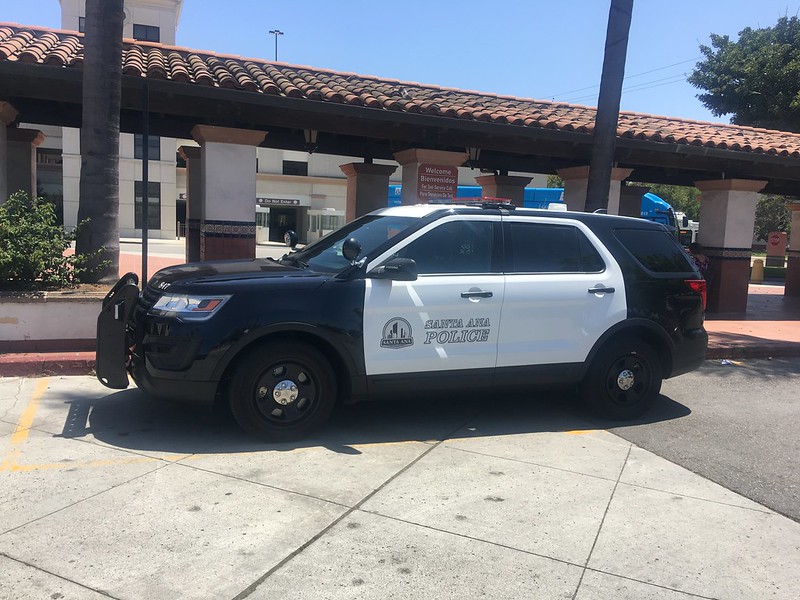
Police in Santa Ana arrested 45-year-old Alejandro Oliveros Acosta in April after media pressure prompted them to finally take reports of a cat killer seriously.
Neighbors had been lodging complaints and asking police to act for more than a year after pets and strays went missing. Acosta and his white pickup truck were captured on several doorbell cameras and home security cams, including one that caught a clear view of him allegedly luring and abducting a neighbor’s pet cat.
After their complaints failed to prompt action from police, people in the neighborhood turned to local media, sharing footage and information.
A local TV news report finally cranked up pressure on the cops, who arrested Acosta in late April. A search of Acosta’s home turned up the bodies of deceased neighborhood cats and evidence that Acosta had allegedly killed “dozens” of felines, a Santa Ana police spokeswoman said.
Acosta didn’t show up for a May 21 preliminary hearing. Now police are looking for him and the court has issued a warrant for his arrest.
The Santa Ana man previously posted $40,000 bail, money he will forfeit if he remains a scofflaw.
The gathering, originally billed as a vigil, turned violent when the mob began breaking windows, tore down part of a fence, and pepper sprayed a father who tried to shield his children from the crowd’s wrath.
A mob of protesters, enraged by the actions of an accused cat killer, terrorized an innocent family on Sunday night.
The crowd gathered in Santa Ana, Calif., for what was billed as a vigil for the slain cats and a condemnation of their alleged killer, 45-year-old Alejandro Oliveros Acosta. The Santa Ana man was arrested last week and charged with felony cruelty to animals after “dozens” of felines in the neighborhood disappeared under suspicious circumstances, per police.
With emotions running high, the crowd followed its more unruly members to a house they mistakenly identified as Acosta’s. The homeowner said he was related to Acosta’s wife but didn’t know anything about the cat killings until Acosta was arrested. He told the protesters he hadn’t seen Acosta since the arrest and asked them to calm down, but they broke windows, attacked him with pepper spray and terrorized children living there.
“The peaceful protesting wasn’t so peaceful. They’re scaring kids here. It’s scaring the whole family. There are kids, seven kids in this house. Two little babies, one that is autistic,” the man told KTTV. “You know, breaking our fences… pepper spraying us for no reason. If you did what you did, I didn’t know anything about it. You know, when we found out [about the cat murders] we were shocked.”
It took Santa Ana police an hour to respond, according to multiple news reports. Even after the police told the protesters that they had the wrong house and were breaking the law, the mob refused to leave and accused the victims of being complicit in Acosta’s alleged crimes. Officers had to manually break up the crowd by physically removing individual protesters.
On Monday, police took the unusual step of publicly commenting on the fallout from Acosta’s arrest, pleading with people to “allow the judicial process to take its course.”
“I don’t think it needs to be like this. I think it should have remained a vigil,” one protest participant told KTTV, a Fox affiliate in Los Angeles. “I knew it’d be a protest, but I didn’t think it would get violent. I don’t think anybody should be touching property.”
Needless to say, we don’t need people making the animal welfare community look like a bunch of lunatics, and vigilante “justice” is wrong. As humans, we’re at our worst when we engage in mob behavior, which obliterates reason, civility and empathy.
Although a lot of people seem to have difficulty with this simple concept nowadays, everyone is entitled to due process, and we’re a nation of laws where alleged crimes are litigated in court, not on the street, on front lawns or online.
Zeus the mighty, meowing from atop Olympus
A cat named Zeus has been turning heads lately, and for good reason: he’s huge even by Maine Coon standards.
Zeus is fluffy, imposing, and so big that he can help himself to food left on a counter just by getting up on his hind legs.
At almost 30 pounds, he’s practically three Buddies in mass. I texted a photo of Zeus to Buddy, and Bud responded with a photo of his own, claiming he’d just finished a grueling bench press session:
Bud hitting the gym to pump iron and stuff.
Hmmm.
Something tells me Buddy’s going to complain that I didn’t bestow him with the name of a Greek god. Is there a diminutive, glib deity to be found in the Olympian pantheon?
When serial cat killers serve sentences of less than a year due to plea deals and early release for good behavior, how much deterrent value do our laws have? Not much, it seems.
Note, 5/3/2025: We’ve heard from two readers who say the MyNorthWest report contains inaccuracies. We’ve reached out to the police and will follow up with police and courts on Monday to verify the facts and correct potential misinformation. Apologies for the confusion.
Every couple of months, at least in the last year or two, I’ve slowed down on posting, and almost always for the same reason: my cat-related news alerts are seemingly endless streams of depressing stories about people shooting, strangling or dismembering cats.
It never ends, and sometimes it’s so overwhelming that I’m put off from writing for days. At the same time, I am not a believer in the idea that all animal blogs should be saccharine feel-good fests about fluffy kittens and TikTok videos of cats doing silly things.
There’s always a place for celebrating cats, but if they’re in danger, and if the stories point to wider trends that cat lovers should know about, then I think it’s our responsibility to remain educated. Not only so we can guard against threats to our little friends, but also so we can add our voices to the chorus calling for tougher laws and greater accountability.
That’s ultimately what this is about: accountability.
Stories about two cat serial killers in about a week have made it clear that even the strengthened animal protection law — the Preventing Animal Cruelty, or PACT Act — passed in 2019, during the first Trump administration, raising animal cruelty and murder to the level of a felony, are still not enough. They’re not a deterrent, especially when the convicted abusers and killers end up serving a year or less because prisons are overcrowded and the wider law enforcement community still doesn’t take animal-related crime as seriously as other violence.
Antoine Leander Runner Jr. is a serial murderer of cats. The Seattle man was recently released from prison after serving just a year for a felony animal cruelty conviction.
The 43-year-old’s modus operandi was setting up crude, homemade snares and traps to capture and harm felines. He was also known in cat rescue circles, where he posed as a cat lover and took advantage of programs to get free supplies, including “cat food, kennels, collars, leashes, and treats to lure cats and kill them,” according to MyNorthWest, a Seattle news site.
When locals discovered new homemade traps in Runner Jr.’s old haunts and trail cameras picked up images of the man himself stalking wooded areas, neighbors called police and area shelters. The evidence showed Runner Jr. was allegedly visiting cat colonies at night and had picked up right where he left off. One colony cat’s body was discovered on March 31, “disemboweled and publicly displayed.”
“Animal Control confirmed the injuries to the cats were human-caused,” MyNorthWest reported, adding that it appears Runner Jr. was visiting colonies “every night” to hunt cats.
Above images by u/picardhasyourback, posted to the SeattleWA subreddit. Click on the images to see full-size versions.
Runner Jr. was picked up by Seattle police this weekend after a neighbor spotted him in a wooded area and phoned authorities. The convicted cat killer, who had a new bench warrant out for his arrest, was charged with a misdemeanor, but more charges are likely as police investigate his latest alleged attacks on Seattle-area cats.
The Seattle man was originally arrested for killing cats in 2023, but was released early. The Seattle area was also terrorized by a serial cat killer who stalked the area in 2018, mutilating cats so badly that I won’t repeat the details on this blog out of respect for readers.
It should be made clear that Runner Jr. was not connected to the 2018 killings, but police should reconsider those cases as well because if it turns out Runner Jr. is guilty of these latest cat murders, it will be abundantly clear that he is a high recidivist offender who cannot be trusted to leave the animals alone. He should serve a long, unabridged prison sentence and be subject to constant monitoring when he’s released.
Antoine Leander Runner Jr. was arrested this weekend by Seattle police. Credit: Sarah Seiler/Facebook Georgetown Community Discussion Group
What’s the solution here? Increasingly tough criminal penalties for animal abuse and murder? Expensive monitoring equipment to watch over every cat colony? Education and training for law enforcement so violence toward animals is taken as seriously as it should be?
I hate to keep pointing out that people who harm animals are likely to “graduate” to harming humans, as many studies have shown, because it implies that we should only be concerned about animal abuse for its tendency to turn into human abuse. It obscures the fact that animal life is intrinsically valuable, and that cats — and dogs, many bird species, mammals and marine life — are sentient, with their own thoughts and emotions. But if that’s what it takes for people to take this sort of thing seriously, then it’s worth repeating the point.
The suspect had been spotted by several people who live in the neighborhood, who said they saw him luring cats with food and injecting at least one feline with a needle.
For the past two years, people in Santa Ana, California, have sworn there was a serial cat killer in their midst.
The allegations picked up steam this week after a local TV station aired a segment from angry and confused neighbors whose pets disappeared, as well as others who saw the suspect injecting at least one cat and scooping up others. The neighbors shared information on a hyper local platform, zeroing in on one particular neighbor.
On Wednesday, the Santa Ana Police Department arrested 45-year-old Alejandro Oliveros Acosta and charged him with felony animal cruelty in connection with the case. Investigators were able to put together enough information to obtain a warrant, and a search of Acosta’s home turned up the corpses of “dozens” of cats, according to Officer Natalie Garcia, public information officer at the Santa Ana Police Department.
Heartbreakingly, Garcia said there were too many bodies in Acosta’s home for police to put an exact number on how many cats he’s allegedly killed. Police are still putting together the details, and more charges are likely.
A press release from Santa Ana police says the department is working with animal control and a neighboring police department. In addition to the evidence they collected in Acosta’s home, several neighbors positively identified Acosta as the man they saw luring neighborhood cats with food, scooping up a breed cat, and injecting another. One cat was left hanging from a tree, while others simply disappeared, preventing their people from finding closure.
“Isaw this same man grab [a] neighbor’s cat, inject it with a needle and some sort of substance,” one local told KTTV, a Fox affiliate in Los Angeles. “And [the neighbor] saw him and she yelled, ‘Hey!’ at him to get his attention. He got up and ran, jumped in his truck and left. And from what we know that cat died, and the owner went and put in a police report.”
Santa Ana is about 10 miles southeast of Anaheim, not far from Long Beach. Acosta was charged and sent to county jail. It wasn’t immediately clear if he’d retained an attorney.
As veterinarians treat the surviving animals for ailments like smoke inhalation and burned paws, donors from all over the world have contributed $750,000 to help the newly homeless moggies and ensure Happy Cat continues in some form.
Investigators are still looking for the exact cause of Monday’s fire, which claimed the life of a New York cat sanctuary founder and about 100 of its feline residents, but they now say the blaze doesn’t look suspicious.
The fire started inside the main structure at Happy Cat sanctuary, Brookhaven Fire Marshal Chris Mehrmann told local media, and investigators “cannot rule out a fire caused by propane-fed portable heaters that were in the area of fire origin.”
Happy Cat founder Christopher Arsenault, 65, was found on the second floor of the building surrounded by animals he was trying to rescue. Neighbors told investigators that they saw Arsenault emerge from the home with several cats, then dash back inside in an attempt to rescue more of the felines he cared for.
When Arsenault converted the home into a sanctuary, he cut holes in the walls and floors to create passages for the cats. Unfortunately, Mehrmann said, the fire spread more quickly because of those modifications.
In the meantime, people from the local community, the SPCA and privately run animal welfare organizations have teamed up to care for the 200 or so surviving felines. Donations have also come pouring in from all over the world, totaling more than $750,000 as of Friday morning.
More than $670,000 of the funds have come from 13,000-plus cat lovers from dozens of countries who contributed to a GoFundMe drive started by Lisa Jaeger of Jaeger’s Run Animal Rescue in nearby Port Jefferson, NY.
A memorial image created by Loving Paws, a small rescue in Suffolk County, Long Island.
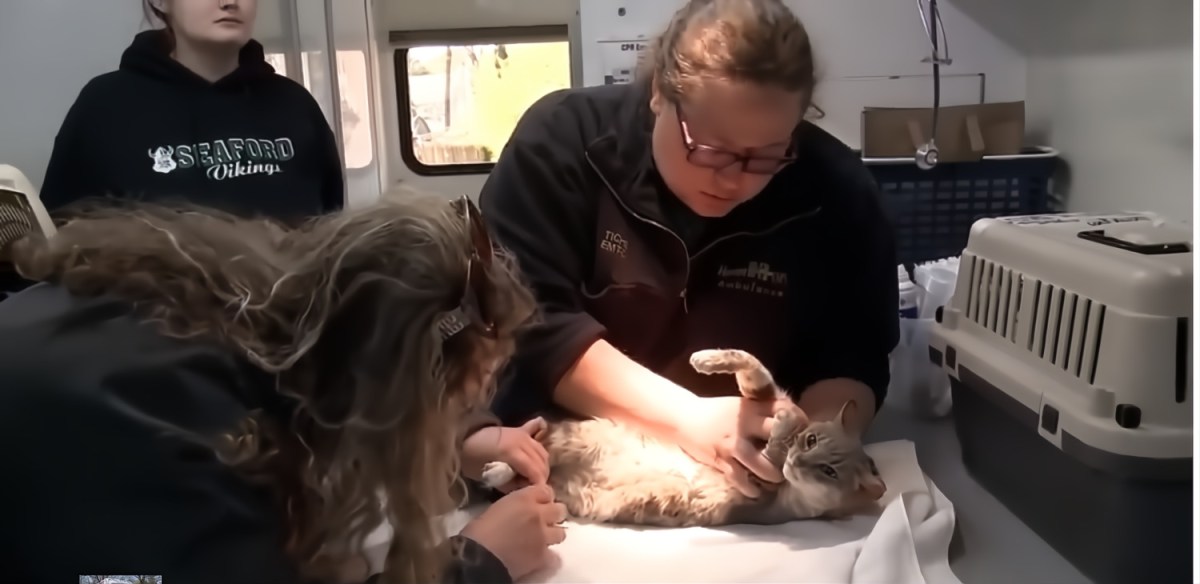
The surviving cats have a range of injuries, from minor sprains to life-threatening lung damage from smoke inhalation. Volunteers have spent the past several days trying to collect the traumatized animals from the vicinity of the destroyed sanctuary.
“I knew Chris well. I knew when he started. He died doing what he loved… rescuing animals,” said Robert Misseri, co-founder of Paws of War, which brought a mobile veterinary clinic to the site of the former sanctuary this week. “The very least we can do is continue his legacy and make sure that every single one [of the] cats get the proper love and care that they need to move forward.”
Veterinarians said they’ve treated lots of cats with burnt paws. Although the animals are skittish from the harrowing experience, rescues and shelters in the area are helping them find forever homes, veterinarian Jason Michael Heller told ABC News.
“We’re going to ask for our colleagues in the area here, hopefully, to take a few cats and try to get them healthy enough to be able to eat and be adopted,” Heller said.
People in the Long Island rescue community are also working on a public memorial for Arsenault, a man who dedicated his entire life to the animals in his care.
“There’s not going to be another Chris, ever, who does this,” said John Spat of Animal Protection Service, “and all we can do is try to recover what he was trying to do and try to move forward and help his organization work forward.”







 Pain In The Bud