Blog Posts

It’s Actually Really Easy To Teach Your Cat To High Five

Training is also fun for your cat since it’s interactive, challenging and a diversion from routine. Plus, kitty gets treats.

My cousin thought I was joking when I told him my cat would come when called, sit when told and give me some love with a high five.

“Get outta here,” he said as we watched an NBA playoff game.

“Okay then,” I said. “Hey Bud!”

Buddy popped up from wherever he’d been lounging with a “Mrrrrrrrrppp!” He regarded me quizzically with his parakeet green eyes, knowing there was probably a treat in it for him as he padded toward me.

“Sit,” I said, gesturing for him to park his behind about two feet away from me. He sat.

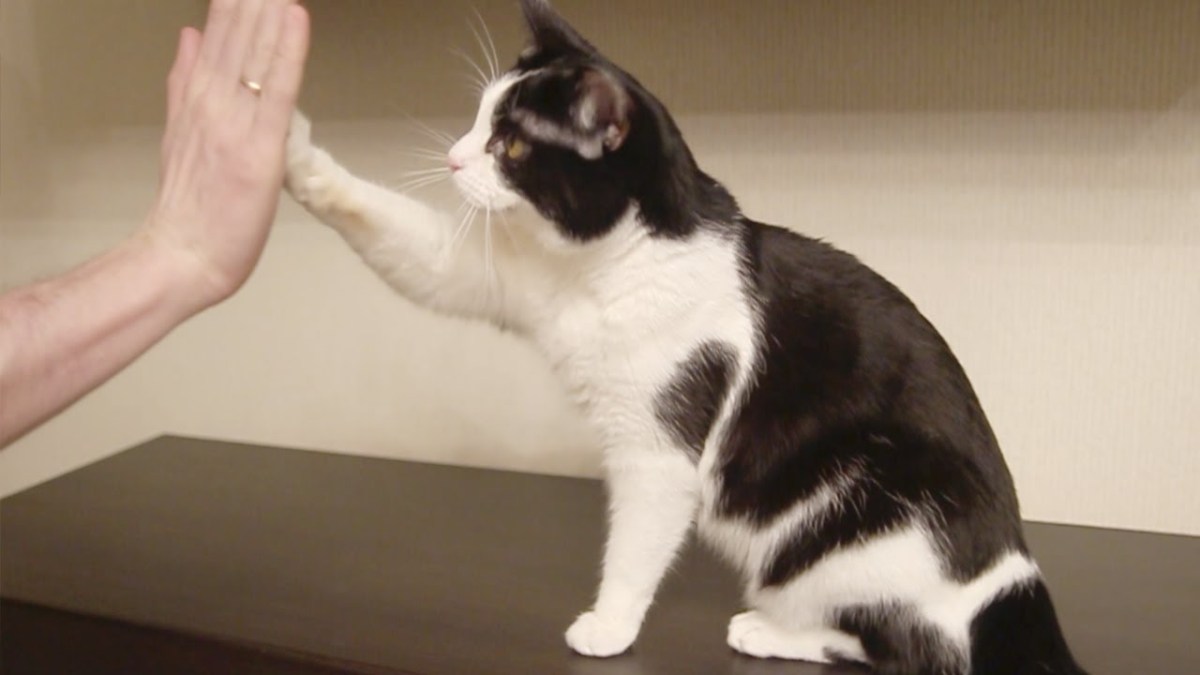
“High five!” I said as Buddy leaned forward and slapped his paw against my palm.

I tossed him a treat for a job well done. If it were up to Bud, we’d high-five another 10 times.

There are a lot of misconceptions about cats, and one of them is the idea that felines aren’t amenable to training. It’s why people use the phrase “trying to herd cats” to describe an impossible task.

People don’t expect to see a cat complying, and they definitely don’t expect to see our feline friends pulling off tricks, which makes it more fun to defy expectations.

It’s easy to train your cat to pull off simple tricks — so easy that I almost couldn’t believe it when Bud was reliably high fiving me within a week.
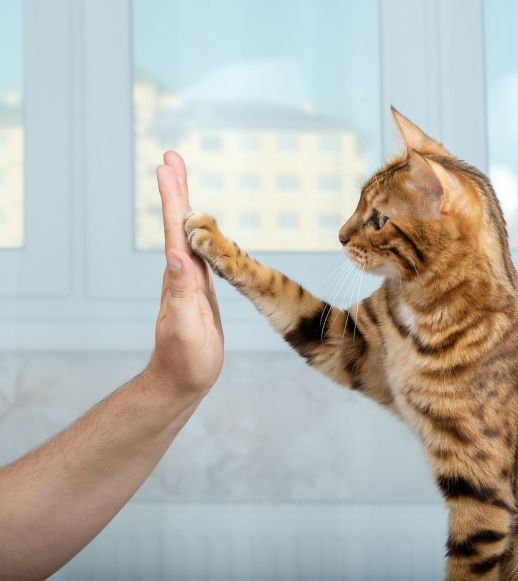
Cat High Five
It makes for a good party trick and a way to bond with your feline friend.

Teaching a cat to sit is a prerequisite for high fives. It’s a straightforward and easy process.

After that, it’s really just a matter of building trust with your cat so she’ll allow you first to touch her paw, then to gently take it in your hand and raise it. The first few sessions, all you need to do is touch or hold your cat’s paw. On the second day, start to raise it slightly.

Cats don’t do well with long training sessions anyway, so the time commitment is minimal. One or two sessions a day, 10 to 15 minutes each.

Every time you touch kitty’s paw, bring it a little bit higher than the last time, rewarding your cat with encouragement and a treat. After a few sessions, your cat will anticipate this new ritual you’ve got going and will raise her paw as soon as you start.

The last step is holding kitty’s paw against your outstretched palm for just a second or two, then rewarding her with a treat.

That’s it. You’re done.

Run through the trick a few times a day after your cat’s got it down, to reinforce good high fiving form and whichever affirmations you choose. (I chose to say “Good boy!” each time Bud pulled it off rather than use a clicker.) Either method works, since the important things are consistency and positive reinforcement immediately after your cat does well. You want to make sure you click or say “Good boy!” right away so your cat knows the praise is triggered by a successful high five. (Or an intermediary paw raise if you’re still working on the trick.)

For a more detailed breakdown of how to do it, check out this video from CatManToo, a professional dog trainer who adjusted his methods for cats. This is the method I used to train Bud. Again, you don’t actually need a clicker, just a consistent method of feedback to signal that your cat is doing well:
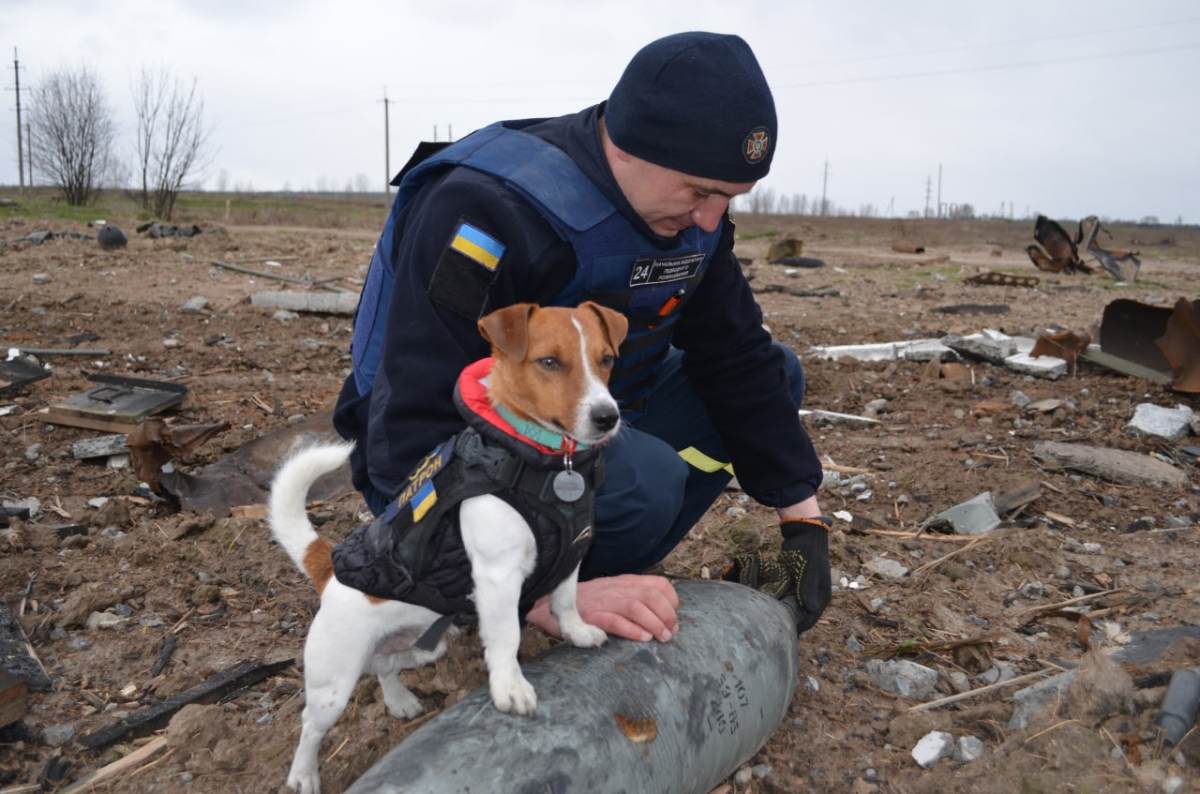
This Good Boy Has Helped Defuse 150 Russian Explosives In Ukraine

Ukranians are thankful for Patron, a Jack Russell Terrier who has become a prolific revealer of hidden landmines and other dangerous ordnance left as traps by Russian forces.

This is a cat blog, but every once in a while Little Buddy the Cat magnanimously allows us to issue well-deserved props to dogs who do extraordinary things, like Patron, a two-year-old Jack Russell terrier in Ukraine.

The bomb-sniffing good boy has so far sniffed out 150 dangerous explosives, including landmines and live ordnance left behind by the retreating Russians, according to Ukraine’s foreign ministry. He finds the explosives, tells his human buddies, and the de-miners go to work on neutralizing the devices.

Not only does Patron help save lives at a crucial time in the war, when Russian forces are covering their retreat with mines and other traps, he’s also a handsome little guy and he happily cuddles with kids who could really use a little brightness after what they’ve endured. Is there anything Patron can’t do?

Patron and other bomb-sniffing dogs perform a critical task as they help their human handlers sweep cities and towns before civilians can return. While some “experts” predicted Ukraine would fall in days, the country has shocked the world by not only enduring the Russian invasion, but pushing the invaders back after inflicting heavy losses on them.

Making home safe for returning refugees

As a result of their failure Russian units are consolidating in eastern Ukraine, and some Ukrainians are cautiously returning to what’s left of their cities and neighborhoods for the first time since the Feb. 24 invasion. Since Russia abandoned efforts to take Kyiv and the entire country, tens of thousands of Ukrainians have been returning home every day, according to a United Nations report.

While Kyiv was a ghost town just a few weeks ago, people have returned to the streets, bakeries and cafes have reopened, and churches are holding services again. Patron and his buddies are making sure hidden mines and other traps are neutralized before people come home, avoiding further tragedy after so much loss.

Patron has been helping clear Chernihiv and its surrounding environs. The northern Ukrainian city, which is about 150 kilometers northeast of Kyiv, has been designated a “Hero City” by Ukrainian President Volodymyr Zelensky. The title has also been given to cities like Kharkiv, Volnovakha and Mariupol, and marks sites where Ukrainians dug in to defend their homes despite the brutality of the Russian invasion.

“One day, Patron’s story will be turned into a film, but for now, he is faithfully performing his professional duties,” staffers at Ukraine’s Centre for Strategic Communications and Information Security wrote on Twitter when they shared a video of Patron last month.

Cats have your back, dawgs!

Buddy the Cat salutes Patron and says cats “would totally would help sniff out explosives, but the dogs seem to have a handle on that and we don’t want to steal anyone’s thunder.”

Instead, Buddy said, he’s sure the felines of Ukraine are engaged in some other kind of dangerous, patriotic work, such as reminding humans when it’s dinner time, keeping seats warm and providing delightful company to the war-weary.

Who Has A Box? I Has A Box!

A new box arrived today from Amazon, the company that sends boxes!

I have a new box. Didn’t know if you knew that. Yeah, it’s awesome! It’s square, and made of cardboard, and you can sits in it.

After Big Buddy removed the irrelevant item inside — something that came in its own smaller box, which shall be investigated at a later time — I inspected the box from the inside and outside to make sure it was suitable.

Sure enough it turned out to be a good box, so I sat in it! Isn’t that awesome?

Who doesn’t love boxes? They’re so…boxy. You can sits in them. When you’re inside a box, you can see humans, but humans can’t see you. Also, boxes are cozy.

I have a new box!

Buddy In A Box!
“Hi, you ordered a new Buddy?”

Sunday Cats: Buddy The Philly Cat Makes A Friend, His Attackers Get A Trial Date

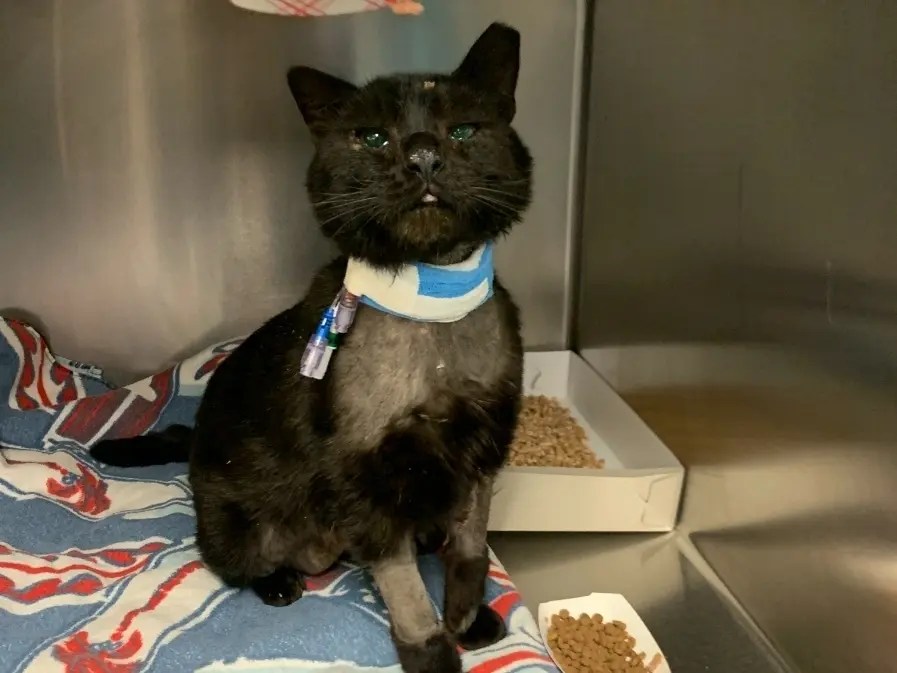
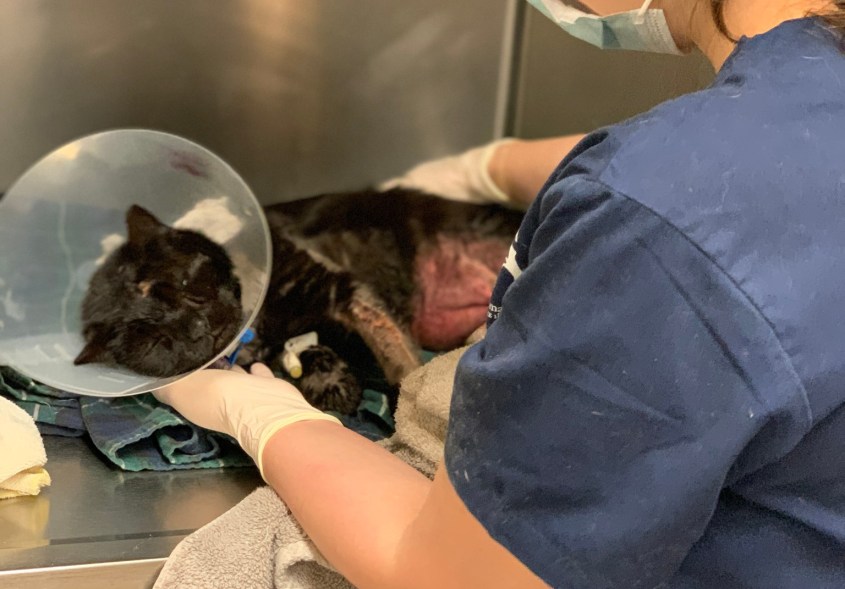
Buddy, the cat who survived an attack by two dogs, continues to recover in a foster home, where he lives with the emergency vet who cared for him after the attack.

Two Philadelphia minors will head to trial in May after they sicced their dogs on a cat sitting on a porch a month ago.

The juveniles, who are 17 and 12 years old, were walking their dogs in Philadelphia on March 22 when they set them loose on Buddy, a black cat who was cared for by a local family but spent most of his time outside. They shouted encouragement as their dogs mauled Buddy on his family’s porch and Buddy would have been killed if the commotion hadn’t drawn attention from inside.

When one of Buddy’s caretakers stepped outside and tried to stop the dogs, the teens pulled their canines back and fled. They turned themselves in to authorities a few days later after the story went viral and they realized the attack was captured by a doorbell camera system.

They each face felony and misdemeanor charges for animal cruelty, inflicting harm on an animal and other alleged offenses. Since they’re charged as minors the court system is not releasing their names, which is common practice in juvenile cases in most states.

Buddy was so badly injured that veterinarians weren’t sure if he’d make it at first. With a lot of care and love, the little guy pulled through the first few critical days and continued to recover until he was well enough to go to a foster home in early April.

His new caretaker is Katie Venanzi, a veterinarian who specializes in emergency care and operated on him that first day when he was brought in to Blue Pearl Vet Hospital by the Pennsylvania SPCA.

“He was kept secluded in one room initially, but now he has a run of the house and he is doing so well with his foster sibling cat Teddy. His foster parents affectionately say they are the two most awkward cats in Philadelphia, but their relationship is blossoming and we hope it continues that way so that Buddy can officially stay in that home forever,” the SPCA’s Gillian Kocher said. “Hopefully in the coming weeks, we will have some additional details and will let everybody know when we can make an official announcement about Buddy’s adoption, but for now he’s doing wonderfully.”

The reason Buddy was outside in the first place is that, as a stray, he resisted an indoor life when his original family tried to keep him inside.

Venanzi told a local radio station that her and her husband are trying to help Buddy adjust to an indoor life and hope they can adopt him.

“We want to do whatever he needs,” she said. “We understand that he used to live outside. If he is not comfortable living in our house, we are willing to work with other people who are going to give him an opportunity to be in a safe environment but still exposed to the outdoors. We are going to take it day by day and see how he does, but we are really hoping to keep him.”

When Buddy’s story went viral, people around the world responded by making donations to the Pennsylvania SPCA and buying t-shirts with Buddy’s likeness on them, allowing the group to raise thousands. Meanwhile, in a post to social media, the Pennsylvania SPCA noted it had taken in 158 abused animals since Buddy was attacked: “That’s more than five Buddys a day.”

Some of those dogs and cats were shot or stabbed, while others were neglected or starved, Kocher said. Leftover money from Buddy’s surgeries and treatment will be used to help the other abused animals in the SPCA’s care.

Maryland Joins New York In Banning Barbaric Declawing Procedures

Two down, 48 to go.

Two U.S. states have now banned declawing as ‘Merica inches closer to joining the rest of the civilized world in prohibiting the brutal practice.

With a stroke of Gov. Larry Hogan’s pen, Maryland became only the second state to ban declawing, joining New York, which outlawed the practice in 2019. Like New York’s version, the new Maryland law prohibits declawing unless it’s deemed medically necessary.

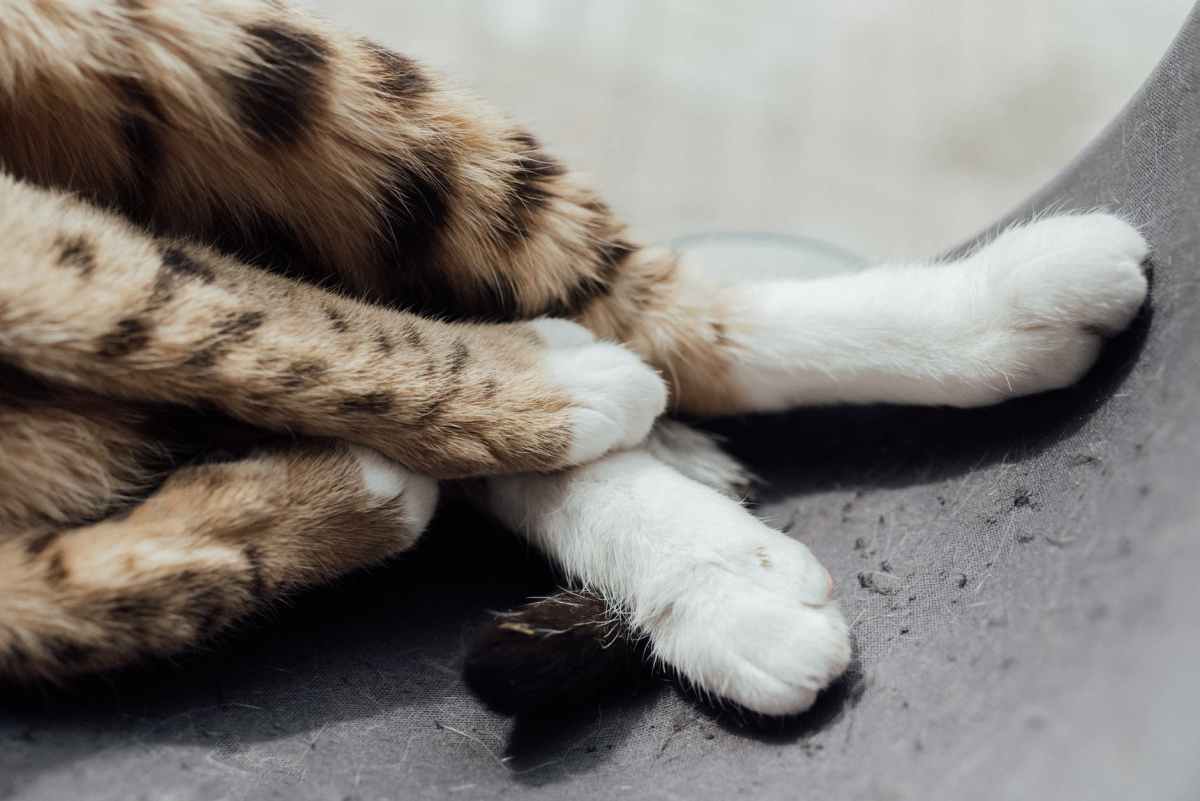
As most cat lovers know, declawing isn’t the manicure-like operation it sounds like. It’s the totally unnecessary, horrific amputation of a cat’s toes up to the first knuckle.

Declawing inflicts a lifetime of pain on cats, changes feline gait and posture, leads to early arthritis and causes a long list of secondary problems. For example, declawed cats are much more likely to bite because they have no other form of defense when they feel threatened, and they’re also much more likely to stop using litter boxes because it hurts to walk on the sand-like and granule texture of the litter with half-amputated toes.

The fact that so much misery is inflicted on innocent animals to protect furniture is indefensible.

The law goes into effect on Oct. 1, and veterinarians who perform the procedure after that time face fines of $1,000 and disciplinary action by the state veterinary board. We’d have preferred immediate implementation and stiffer penalties to prevent a last-minute rush on declawing appointments and discourage anyone considering breaking the law, but a win is a win, and all the major animal advocacy groups are celebrating, as they should.

Now we’ve only got 48 states to go.

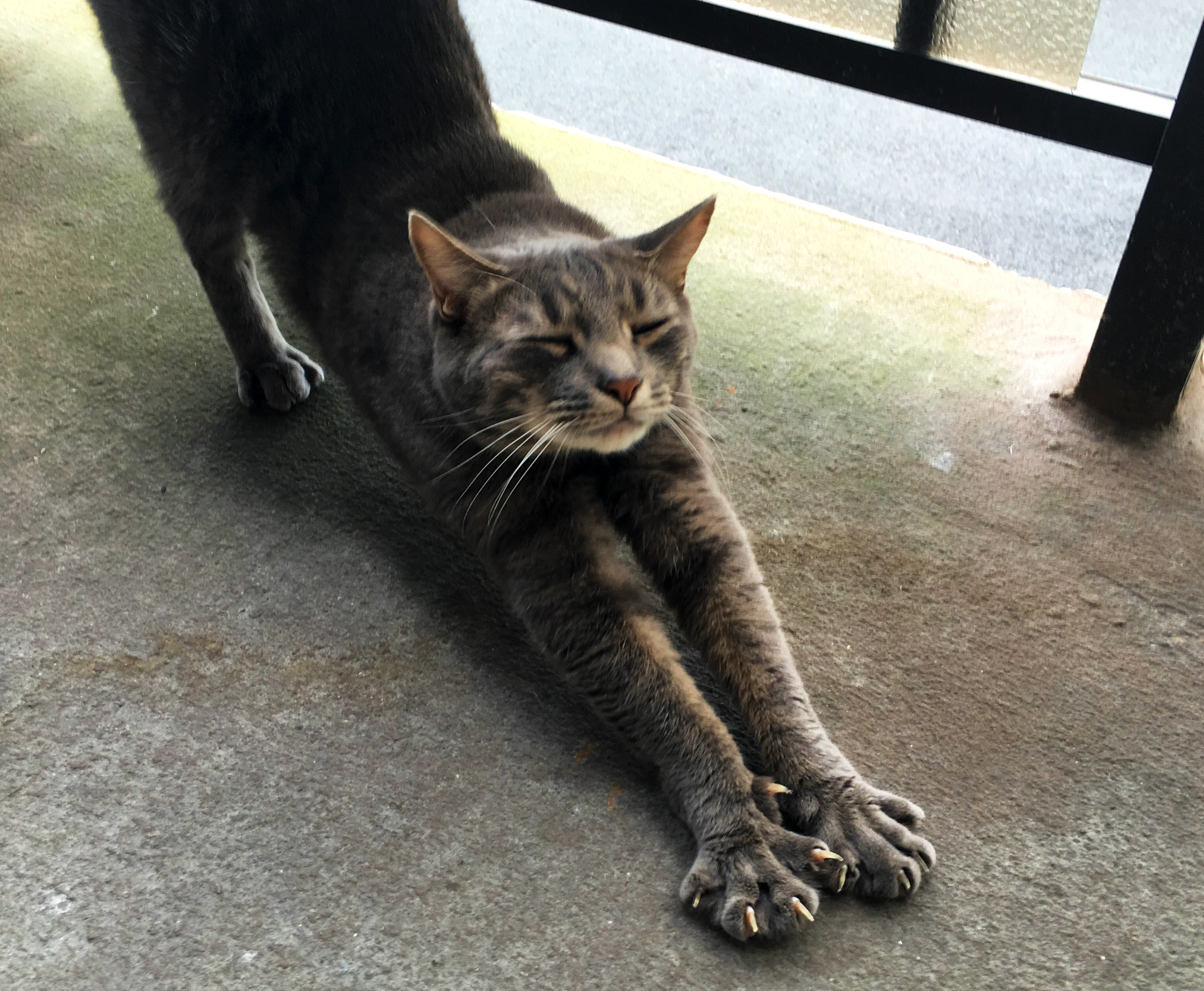
buddy_stretching
Buddy and his Claws of Cosmic Doom.