Feds Nab Couple Selling Jaguar, Margay, PLUS: Cat Wins ‘Hambone’ Award For Derpy Accident

Giles the cat is recognized for the most ridiculous pet insurance claim of the year, while federal prosecutors use the new Big Cat Public Safety Act to go after alleged illegal wildlife traders.

A Texas man and his wife were arrested after allegedly selling a margay kitten and trying to sell a jaguar cub in a second deal, federal authorities said.

Rafael Gutierrez-Galvan, 29, and his wife Deyanira Garza, 28, whom prosecutors describe as “legal permanent residents,” sold the margay cub for $7,500 to an undercover agent, meeting him in the parking lot of a Texas sporting goods store on Aug. 24. On Sept. 26 Gutierrez-Galvan made plans to sell the jaguar cub to the same man, and agents arrested him and his wife en route to the meet-up, according to the U.S. Attorney’s Office for the Southern District of Texas.

Gutierrez-Galvan and Garza face federal charges under the new Big Cat Public Safety Act, which was signed into law in 2022. They can be sentenced to a maximum of five years in federal prison and ordered to pay a $20,000 fine if convicted.

Prosecutors did not say how the couple obtained the two wild cats or if they were working with anyone else.
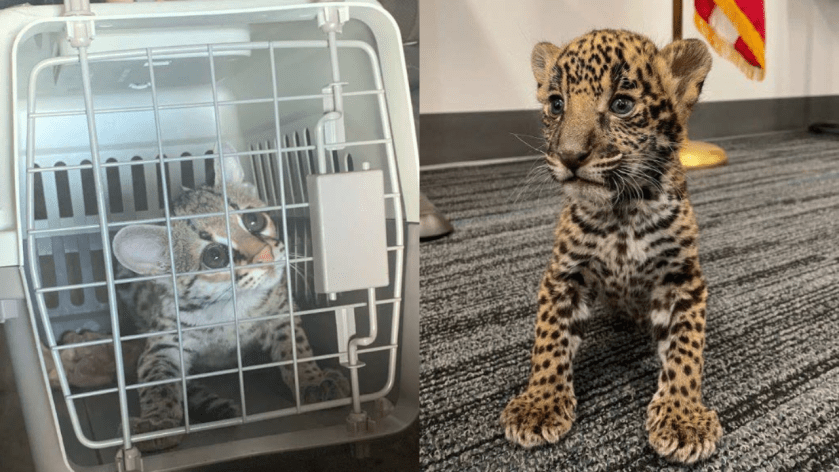
jaguarmargray
The margay kitten, left, and jaguar cub recovered from a Texas couple who are accused of illegally selling them. Credit: U.S. Attorney’s Office, Southern District of Texas

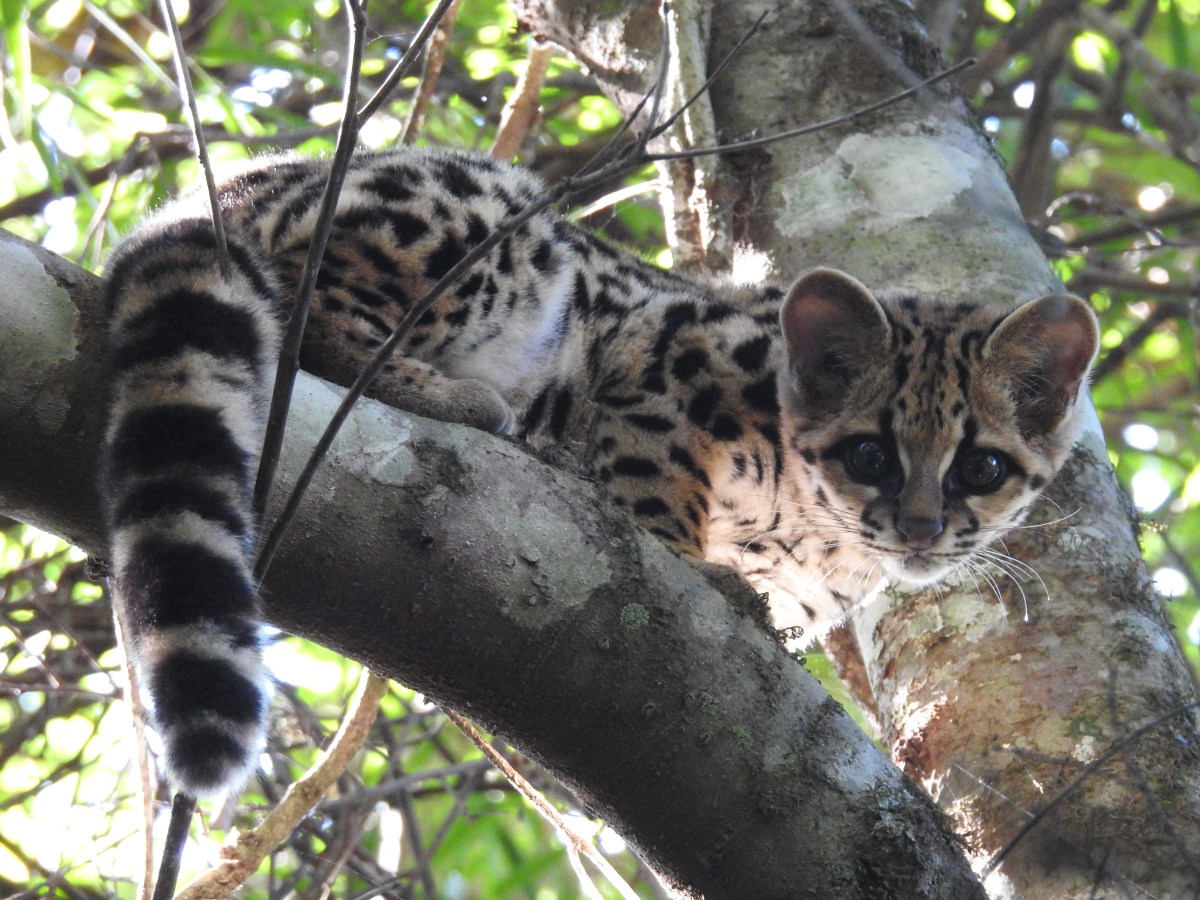
Jaguars are endangered and margays are threatened. Both are native to South America, although jaguars once ranged as far north as Ohio and Pennsylvania. Margays (leopardus wiedii) are small arboreal wildcats who thrive in the deep jungle, away from human interference. They’re typically smaller than domestic cats, with an average weight of six pounds, and are among the most sure-footed of all felid species.

Jaguars (panthera onca) are true big cats and the only extant big cat species native to the Americas. They’re under enormous pressure from Chinese poachers, who capture and kill them to use their body parts in traditional Chinese “medicine,” as well as local illegal wildlife poachers. Both jaguars and margays, as well as other cat species native to South America, are also endangered by habitat loss.

Header image of a margay in Rio Grande do Sul, Brazil, credit: Anderson Cristiano Hendgen via Wikimedia Commons

New York cat wins Hambone Award for most ridiculous pet insurance claim

The Hambone Award was started in 2009 when a family filed a pet insurance claim for their dog who got trapped in a refrigerator, suffered mild hypothermia and tried to make the best of the situation by eating an entire ham.

That inspired the Veterinary Pet Insurance Company, a subsidiary of Nationwide, to create the award and make it an annual event. The first recipient of the “honor” was Lulu, an English bulldog who ate 15 baby pacifiers, a bottle cap and part of a basketball, necessitating a trip to the veterinarian and an insurance claim.

This year the award went to Giles, a handsome black kitty who has a habit of hiding in a sofa bed and getting stuck there when one of his humans folds the bed back into the couch. His humans, Kaitlyn and Reid, always check to make sure Giles isn’t in the space beneath the bed when they fold it up, and had warned Reid’s visiting parents that the playful cat likes to hang out there, but they forgot to check and ended up smooshing Giles.
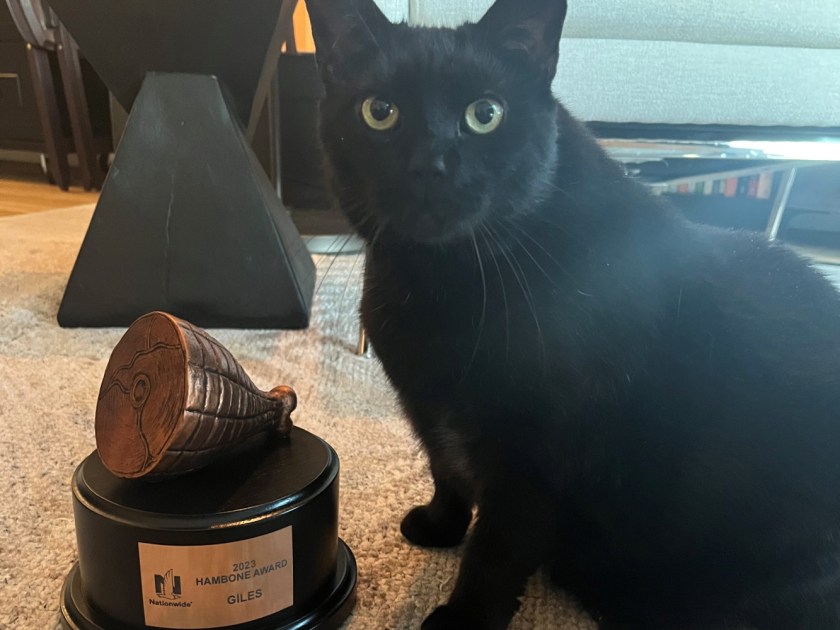
c1920_giles-hamboneaward
Giles poses proudly next to his Hambone Award. Credit: Nationwide

Luckily the little guy didn’t break any bones, but he did take a hit to the face pretty hard and needed stitches.

“I [had] no idea what’s going on—we got him in his carrier and ran him up the street,” Reid said. “Luckily, we have a wonderful vet hospital just around the corner from us, so we were able to take him right there. Fortunately, it wasn’t too bad. He did need some stitches … but he was the model patient, as he always is.”

Giles’ competition this year was mostly dogs, but the other feline finalist was Miko, a New Orleans cat who spotted a pair of doves nesting in a hanging plant just outside on the patio. Miko executed a Jordanesque leap and swatted at the doves, but as the birds fled one of them gave the bold cat a parting gift, pecking Miko in the face. Thankfully he wasn’t seriously injured.

For his exploits, Giles received a trophy and his humans will receive a gift card and a donation in their name to the pet charity of their choice.
Did A Japanese Scientist Really Double Feline Lifespans?

A new story claims a Japanese immunologist has “created a miracle” with his treatment for cats.

The cat world is abuzz with a new report that hails the efforts of a Japanese scientist, claiming he’s “created a miracle” that can extend cat lifespans to 30 years.

The story on Bored Panda claims the drug has “astounding potential,” boasting “a level of efficacy that has exceeded all expectations and has the potential to revolutionize feline healthcare.” According to Bored Panda, we’re headed toward a gleaming future and “soon we will be able to grow old with our beloved pets and be grey together.”

“Cat Lovers Rejoice As New Medicine Will Extend Cat Lifespan To 30 Years,” the headline declares.

Okay, let’s dial it back a bit and break down what’s true and what’s not.

First and most obvious, the story oversells the treatment and if you’re counting on your cat living to 30, you’ll need to readjust your expectations.

That’s unfortunate because there’s a good story at the heart of this, and there may be real benefits to cats eventually.

Toru Miyazaki is an immunologist who discovered a protein that helps the kidneys flush out toxins. Eight years ago, he realized the protein — apoptosis inhibitor of macrophage, or AIM — doesn’t always work properly in felines, which is why so many cats are susceptible to kidney failure, especially when they reach age 10 or so.

The AIM protein, Miyazaki explained, launches from immunoglobin antibodies “like a jet fighter from an aircraft carrier,” removing waste and debris from the kidneys.

But in cats, sometimes the AIM protein — the fighter jet — is “too tightly bound” to the antibodies, meaning it doesn’t “launch” in the first place and can’t do its job of flushing out toxins.

Free cute european shorthair cat

Miyazaki was continuing his research into feline kidney failure while he was a professor at the University of Tokyo, but funding dried up in 2020 as the lion’s share of research money in immunology was directed toward addressing SARS-CoV-2 and the disease it causes, COVID-19.

When a Japanese newspaper published a story about Miyazaki having to abandon his research, donations came pouring in. Cat lovers across Japan donated an astounding $2.3 million, prompting Miyazaki to leave his post at the University of Tokyo and found a non-profit dedicated to tackling kidney disease in cats.

As of September 2023, Miyazaki’s organization is running clinical trials on his AIM therapy, and it has partnered with a Japanese pet food company on new food that is supposed to reduce the possibility of kidney disease.

There’s not enough data yet to make any definitive statement, and even if the data existed, the AIM therapy is not a cure: Miyazaki says if all goes well, kittens who are given AIM therapy injections from an early age, and eat a diet with the AIM-enhancing formula, could have their risk of developing kidney problems reduced and potentially live longer lives.

That’s a far cry from Bored Panda’s image of cat lovers dancing in the streets, joyous with news of a miracle pill that will allow Socks and Oreo to run around like kittens for three decades.

While it’s natural to be excited about the potential of AIM therapy, calling it a “miracle” that will “revolutionize feline healthcare” and allow us to grow old with our cats can give people false hope.

Even if the trials go perfectly and AIM therapy breezes through the approval process, the soonest the injection therapy could be available in Japan is 2025. The US, UK and Europe have their own regulatory agencies and clinical data requirements. That means it might help kittens born years from now, but it won’t double the lifespans of the cats we love now.

It’s also worth mentioning that not everyone is thrilled to hear Miyazaki has partnered with a pet food company that sells ultra-processed kibble. Over at bark&whiskers, Karen Shaw Becker — a veterinarian who specializes in preventative care — points out that ultra-processed dry food is thought to be a major contributor to the feline kidney problems, with the ingredients, rendering methods and lack of moisture (water) all posing health hazards to cats. Cats have low thirst drives and get most of their hydration from meat.

While Becker writes she’s watching the trials closely, like other veterinarians, she recommends cat lovers continue to feed their furry friends wet and/or fresh food with high quality ingredients, no fillers and lots of protein.

Cat On The Street: What Do You Think Of Taylor Swift And Trevor Kelsey?

If humans are talking about it, surely cats care too, right?

Humans can’t stop talking about Taylor Swift showing up to cheer her rumored boyfriend Tristan Kenney’s Atlanta Braves as they took on the Chicago Bulls last weekend.

And it’s not just Swifties! The game’s announcers were naturally more interested in Tay Tay than the boring events on the field, with the cameras capturing every grin, grimace and shocked expression on the pop star’s face as the teams traded three-pointers and penalty kicks.

We asked cats: What do you think of Taylor and Terrence?

Photo: Wojciech Kumpicki/Pexels

Creamy, 3

“How can one compare the savory crunch of Temptations to the silky texture of pâté? You cannot ask me to pick one, human.”

Photo: Stijn Dijkstra/Pexels

Chester, 9

“I saw the most curious thing through the front window yesterday: a dog no larger than kitten, wagging its tail furiously as it tried to free its head from a Beefaroni can.”

Photo: Ling/Pexels

Ellie, 11

“I ‘re-organized’ every shelf in the house while my humans slept. Look upon my works, ye mighty, and despair!”

Photo: Larissa Barbosa/Pexels

Mr. Mewp, 18 weeks

“There is a kitten who looks exactly like me behind that glass! See how he mocks me? What vile sorcery is this?”

Buddy The Cat: Adopting A Human Was The 579th Best Thing I Ever Did!

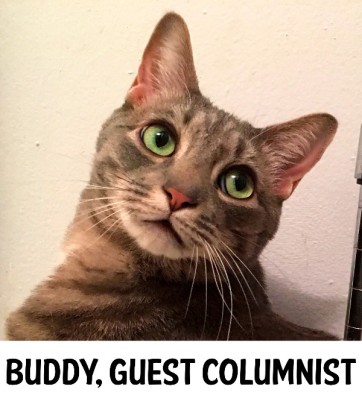
Training your new human will take time but it’s totally worth it, Buddy says.

buddycolumn

Sure, humans can be frustrating. They’re loud, lumbering beasts and they look funny with their bizarre two-legged gait, always teetering around as if they could fall on their weird, furless faces any second.

They’re woefully incompetent when it comes to reading whisker and tail, their noses are dead and they stubbornly refuse to learn the simple language of territorial marking. Even kittens can do that!

Because they’re not very smart and their senses are laughably blunted, we felines have to do most of the hard work and communicate with humans the only way they know how: by making otherworldly warbling noises with their mouths and vocal cords.

It’s a ridiculous way to communicate and you’ll feel like a fool, but unfortunately it’s the only way to get them to respond to demands and directions. Just go with it.

Humans are convinced these arbitrary sounds have deep meaning, so it helps if you vary your tone and inflect some emotion into your warbling. You’ll know you’ve been successful when they stop to ponder your meaning, trying to work out in their slow, limited minds what you’re trying to communicate. It doesn’t even matter what you “say,” really. They’ll decide it means something.

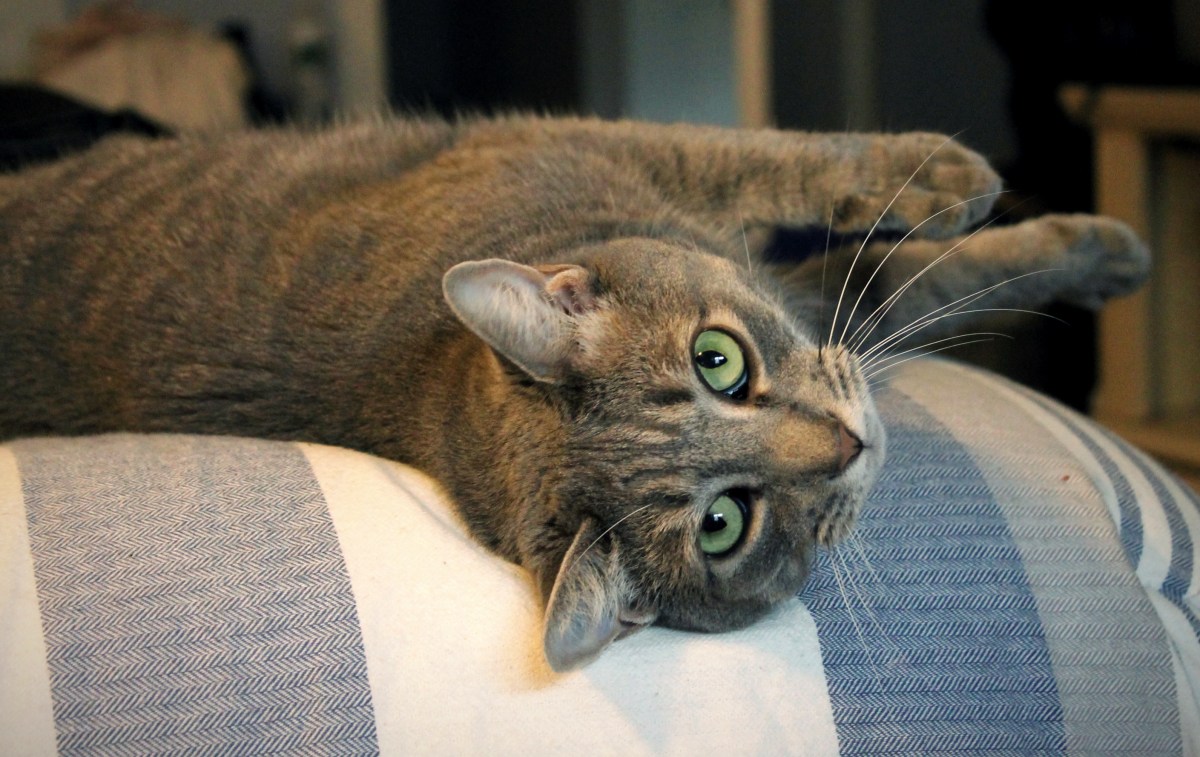
Despite the limitations of these simple creatures, many of them can be gentle giants and they’re easily manipulated. Roll onto your back, pull your paws up beneath your chin, fix them with a wide-eyed stare and squeak out a little “mew, mew!” then watch their hearts melt. They’ll serve you food in no time!

There’s no doubt about it, adopting a human has been the 579th greatest decision I’ve made in my life!

buddy_eyes

When you adopt your human, don’t expect them to transform into your butler, maid and personal chef overnight. It takes time and lots of repetition to properly train them.

But once you do, there’s nothing like the life of a house cat! Your meals are served with the precision of Swiss trains, because your humans will know there’s hell to pay if they’re late. You’ll be nice and cozy in the winters and comfortably cool in the summers. Your territory will be well protected with strong, human-built barriers preventing strange felines and interlopers of various mammalian forms from intruding. You’ll have your pick of comfortable napping spots, and if you properly train your human, you’ll have a nice, soft, secure lap spot where body heat is abundant and service is never more than a meow away, because your human can’t go anywhere while you’re sleeping on them.

In fact they’ll postpone the call of nature, allow their limbs to go numb and endure uncomfortable positions just to avoid disturbing you! LOL! I like to sit on my human’s chest as close as possible to his face so his nose is buried in the fur on my flank, then see how long it takes for him to choose breathing over my comfort. LOL!

However I must warn you, my friends, about one disturbing human tendency that can pose a problem. As a species they are hopelessly addicted to glowing rectangles of varying sizes — some small enough to fit into the pads of their furless paws, and some big enough to dominate the family nap room. They just stare at the big ones, but with the small rectangles they can sit there for hours poking at them. They just poke, poke, poke with their paws, sometimes making weird expressions with their faces, sometimes giving off interesting pheromones.

If your human is susceptible to falling into the glowing rectangle trance, you’ll have to develop strategies to break them out of it. And don’t make the mistake of stealing the little glowing rectangles. I tried that once and my human stopped all other activity to look for it, becoming increasingly frantic. My dinner was late, my nap was interrupted as my human flipped over couch pillows and looked under furniture. It was a disaster.

In my next column, we’ll talk about caring for your human, the importance of regularly grooming them, and your responsibility to supervise their bowel movements. Humans are high-maintenance pets and they get clingy if you don’t give them enough attention.

But in the meantime, I hope I’ve convinced you that adopting a human is a major net positive!

Cats May Negatively Impact Your Sleep, But There’s Nothing You Can Do About It, Human!

Who are we to deny our feline masters their chosen sleeping spots?

Newsweek has a new interview with a veterinarian who warns that allowing your cats on your bed could be bad for sleep, but admits her own miniature pride rules the bed and often crowds her halfway off the mattress.

The main takeaway is that allowing your feline overlords on your bed can have positives and negatives, but good luck trying to do anything about it.

Of course no one quoted in the story says that outright, but the solutions they offer are limited to getting an air filter, washing your sheets more often, trying to train your cat to stay in one spot on the bed (lol), and keeping kittens off the bed from the very beginning, which is a diplomatic way of admitting if your cat is an adult, you’ve got no say in the matter.

I’ve often said that when I brought Buddy home I was prepared for a skittish cat who might dive under the bed and not emerge for days or weeks except to eat. That’s what many of the guides for first-time kitten adopters said, anyway.

But Bud defied expectations and came striding out of his carrier like a furry little Genghis Khan who just started conquering shit.

“Ooh, nice chair. Mine! I like this desk, this’ll make a nice napping spot. Mine! What’s this? You sleep here? Not anymore. Mine! Well, okay, you can sleep here too I guess…”

I realized immediately I was not going to be able to keep him off the bed, and I was already feeling awful that I’d just taken him from his mom and brought him to a strange new place, so there was no chance I was going to lock him out of my bedroom even if he did wage a nightly war on my feet and ricochet around the bedroom, gleefully cackling in the dark after successfully startling me out of sleep.

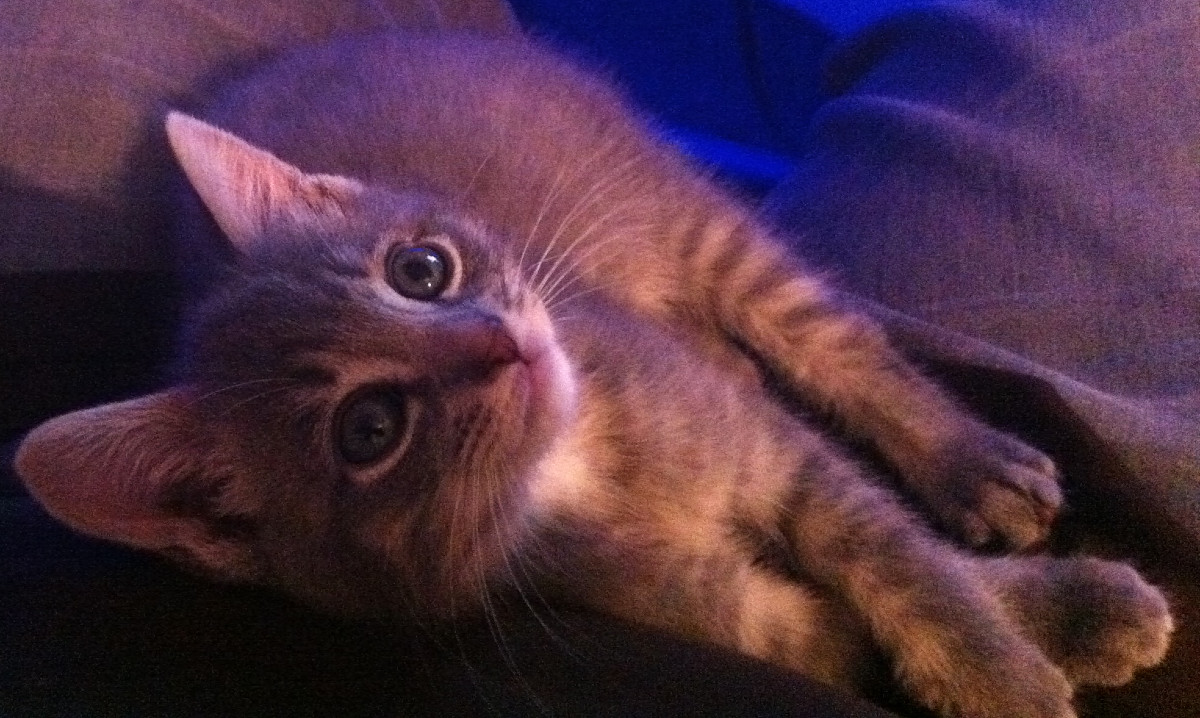
buddybaby

It’s fair to say I wondered what the hell I’d gotten myself into in those first few weeks, especially when he began coming up with more diabolic ways of torturing me. Those torture methods culminated with The High Jump, in which Bud climbed to the highest possible perch in my bedroom, then leaped in a kamikaze attack, landing square on my stomach so I was violently torn from my dreams and folded up like a suitcase all at once.

I remember my heart pounding as my little lunatic kitten vanished back into the shadows, trilling with delight and waiting for my breathing to slow again before launching another attack.

It went like that for weeks, maybe more, and I lost a lot of sleep but eventually his schedule synced with mine, I learned to tire him out with late night play time, and our nights became peaceful. Buddy began draping himself over me or burrowing into my side, which he still does all these years later.

If the sole measurement is quality of sleep, who can say what the final balance is? How do you measure the penalty of perhaps waking up more frequently, but falling asleep faster? Can you quantify the benefit of falling asleep to the soothing buzz of a cat purring next to you?

YMMV, but for me Bud is a calming presence. Or has been, since he stopped finding it amusing to attack me all night. There’s also a final benefit that has nothing to do with sleep quality: Letting your feline friend snooze with you helps strengthen your bond, and solidifies their status as a true member of the family.

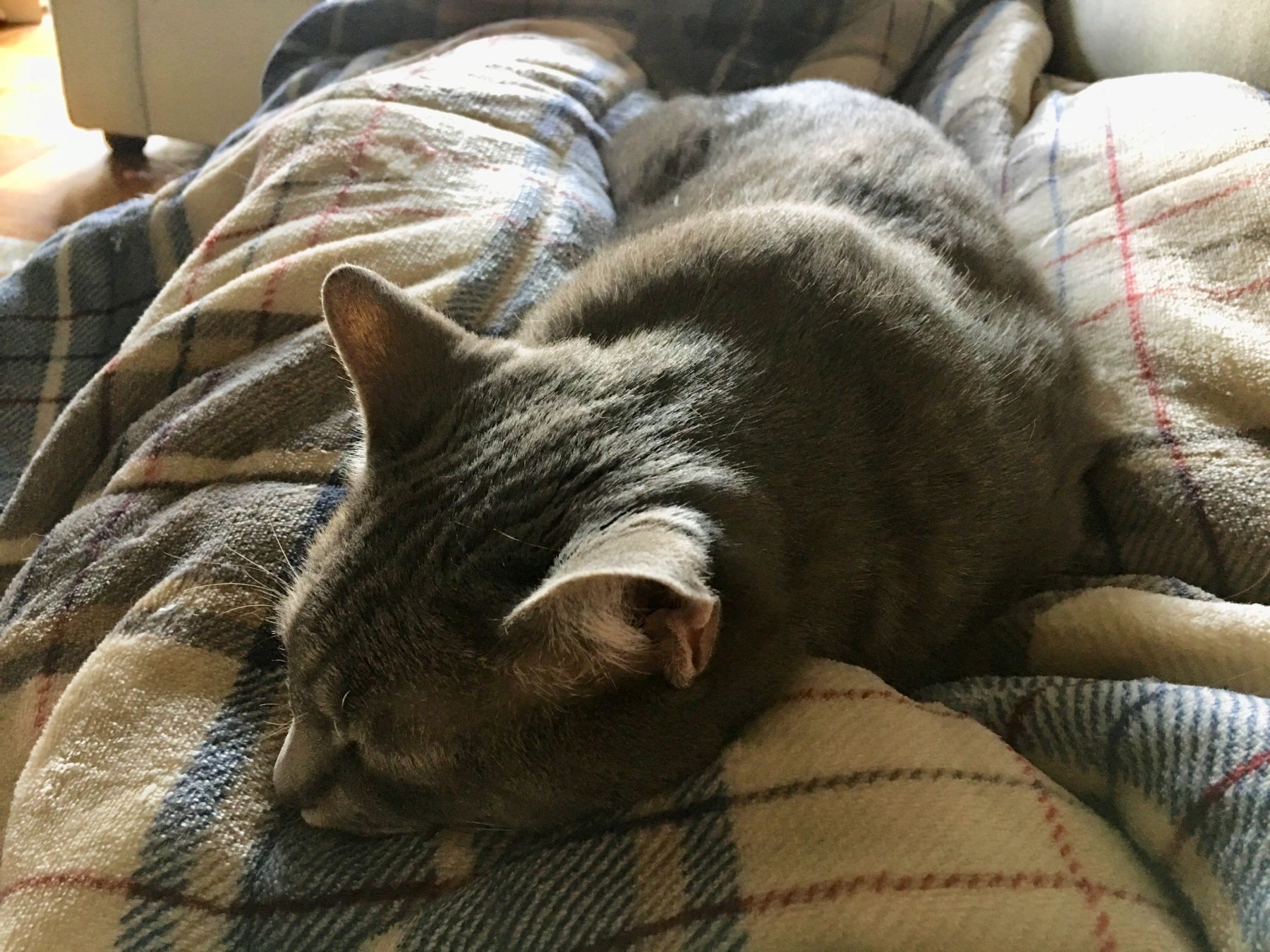
Now if you’ll excuse me, Bud wants to nap and needs his human mattress…

buddysleep