Buddy puts his considerable detective skills to good use, uncovering the link between Corona virus and Corona beer.
Dear Buddy,
My humans have been stressed out lately, rubbing every surface with weird-smelling wipes and going on incessantly about something called the Coronavirus. I’m starting to get a little worried now. What is the Coronavirus, and do we cats have to worry about a disease that infects lesser animals like humans?
– Unsure In Utah
Dear Unsure,
I’d never heard of that there Coronavirus, so I did a little research. It turns out that my Big Buddy has six (!) Coronas in the refrigerator and is either unaware they carry viruses or doesn’t care.
Actually there may be more than six. I got kinda distracted when I found the cheese and helped myself to some Gouda.
So I went on the Internet, because everyone knows only true things are allowed on the Internet, and I found this:
Also, the search term “Corona beer virus” is trending, so there are people who are smart like me who have also made the connection:
Searches for “Corona beer virus” and “Coronavirus beer” have spiked sharply over the past month, Google Trends shows.
I also looked at the most trustworthy source, Wikipedia, and it says Corona is a beer made in Mexico.
I’m not exactly sure whether Mexico is a city or a province of China, but I heard some humans saying Corona Virus originated in China, so I can tell you for sure that Corona Virus started with Mexican Chinese people drinking Corona.
So it is my informed and professional opinion that we felines are safe from Coronavirus as long as we do not drink Corona, and as long as our humans don’t put Corona beer in our water bowls.
Talk to birders, casual conservationists or anyone who says they’re worried about the ecological impact of cats on native bird and mammal populations, and without fail they’ll bring up The Study.
Yeah, that one: A 2013 study, published in Nature Communications, that claimed cats kill “billions” of prey animals each year in the U.S. alone — including 3.7 billion birds and up to 20 billion small mammals in the contiguous states.
– The researchers don’t actually know how many animals cats are responsible for killing. Both the 2013 Nature Communications study and the 2020 Animal Conservation study rely on owner questionnaires to estimate the number of animals pet cats kill outdoors and to assign numerical scores to their cats’ “hunting skills.” In other words, the study authors are relying on people who have no idea what their cats are doing outside to give them supposedly accurate figures on how many birds, rabbits and reptiles little Fluffy and Socks kill every year. As for people evaluating the hunting skills of their cats, how exactly do they do that? Do they consult nonexistent scoreboards? Do they find a dead mouse or two and conclude that Socks is the GOAT hunter?
– The people who took the surveys were self-selected. These aren’t random samples. The questionnaires were given to people who actively volunteered to participate in the studies.
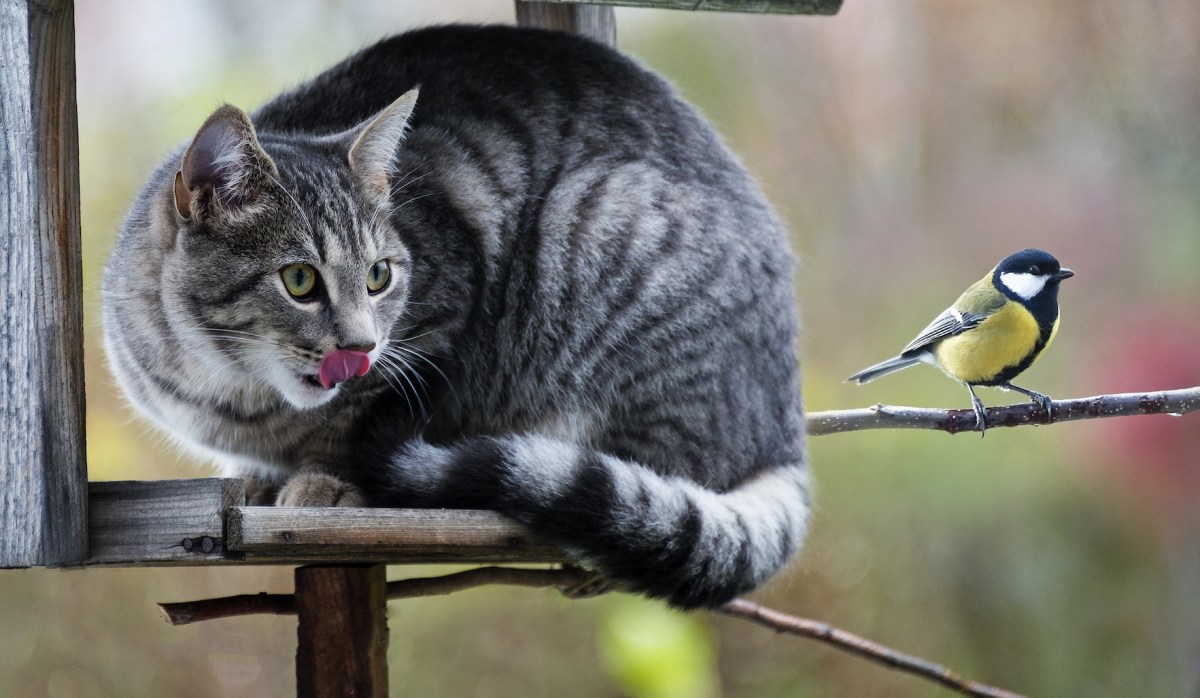
Friend or snack?
In both cases, researchers supplemented their questionnaire data with estimates of “additional” animals killed by cats. Or to put it bluntly, the research teams invented numbers and plugged them in. They’ll claim they arrived at those numbers via analysis, but again, these are studies that rely on owner questionnaires for the bulk of the predation data. Any conclusions drawn from that data are automatically suspect.
The 2013 study was centered around a meta-analysis of earlier studies, not fresh data. For the numbers they didn’t have, researchers derived figures from older published studies. For example, they added billions of “kills” to the tally and attributed those phantom kills to “unowned cats.” The problem? No one knows exactly how many stray and feral cats roam America’s streets and countrysides, a fact the research team admitted in the 2013 study: “no empirically driven estimate of un-owned cat abundance exists for the contiguous U.S.,” they wrote.
The best estimates claim between 20 million and 120 million feral and stray cats live in the contiguous U.S.That’s a spread of 100 million! How can a research team estimate how many prey animals are killed by cats when they can’t even get a fix on the cat population? The numbers matter: If there are only 20 million ferals and strays, each of them would have to kill more than 1,000 animals a year to account for the study estimates.
Headlines trumpeting the 2020 study say it’s based on GPS data, but that’s only partially true. Yes, the team used GPS data from a small number of cats belonging to self-selected study participants, but that data tells them nothing about how many animals those cats are killing. The GPS data only indicates where cats go when they wander, not what they do. In this study, as in the last, researchers relied on questionnaires, which in turn assumes cat owners have exceptional memories and can account for everything their furry friends do outdoors when no one’s watching them.
The stakes are high, as NPR noted in a story about the 2013 study: The resulting headlines are repeated as gospel in newspapers across the country and on countless news sites, which in turn influences how people feel about cats. They influence politicians and proposed laws as well, with several countries looking to ban outdoor cats.
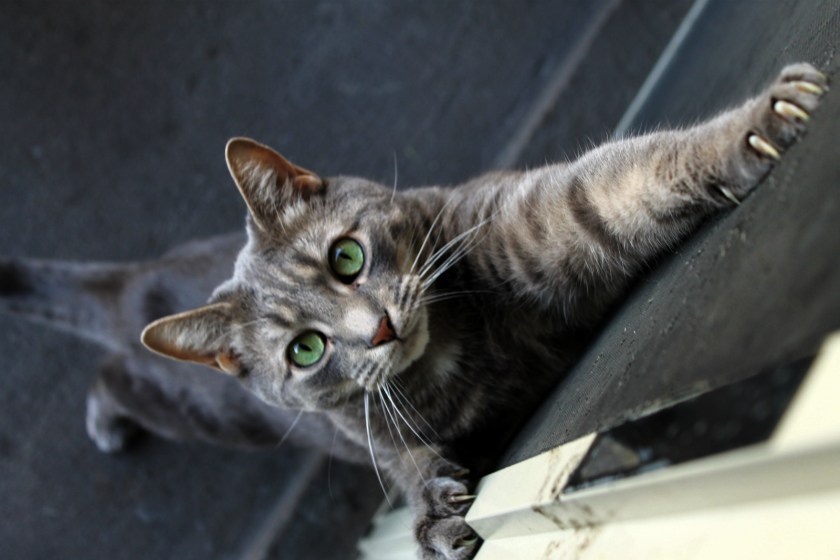
One cat who has zero kills: “I am NOT an inept hunter! You don’t want to tangle with these talons, bro.”
Nuance, such as the 2013 study’s admission that an unknowable number of animals are killed by “collisions with man-made structures, vehicles [and] poisoning,” is usually left out of those stories.
After all, no one’s seriously proposing an end to the automobile industry despite studies claiming untold billions of animals die as roadkill annually.
In some Australian territories, authorities have open bounties offering $10 for the scalps of adult cats and $5 for the scalps of kittens. Is this what we’ve come to? Killing baby animals based on hysteria over bunk science?
“It’s virtually impossible to determine how many cats live outside, or how many spend some portion of the day outside,” Wayne Pacelle, former president of the Humane Society of the United States, told NPR at the time. The scientists “have thrown out a provocative number for cat predation totals, and their piece has been published in a highly credible publication, but they admit the study has many deficiencies. We don’t quarrel with the conclusion that the impact is big, but the numbers are informed guesswork.”
And that’s the important thing here: Instead of calling for a mass culling of cats based on wild estimates of their environmental impact, we should be working cooperatively on solutions to curb their opportunities to hunt, starting with simple measures like keeping cats indoors.
We don’t need another study with wild estimates of feline impact on small wildlife. What we need are smart plans and the will to implement them as a society.
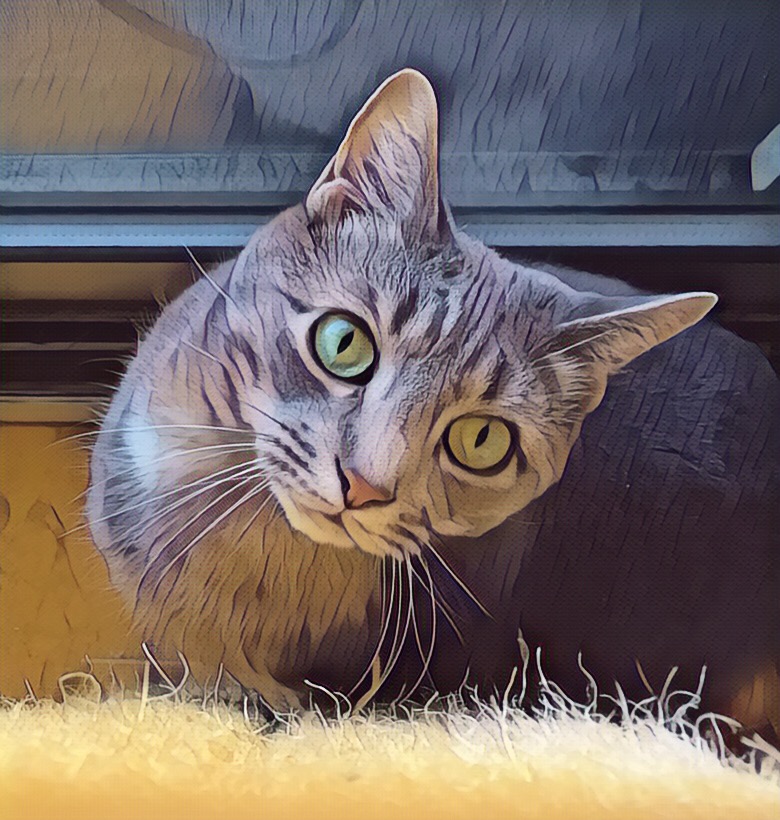
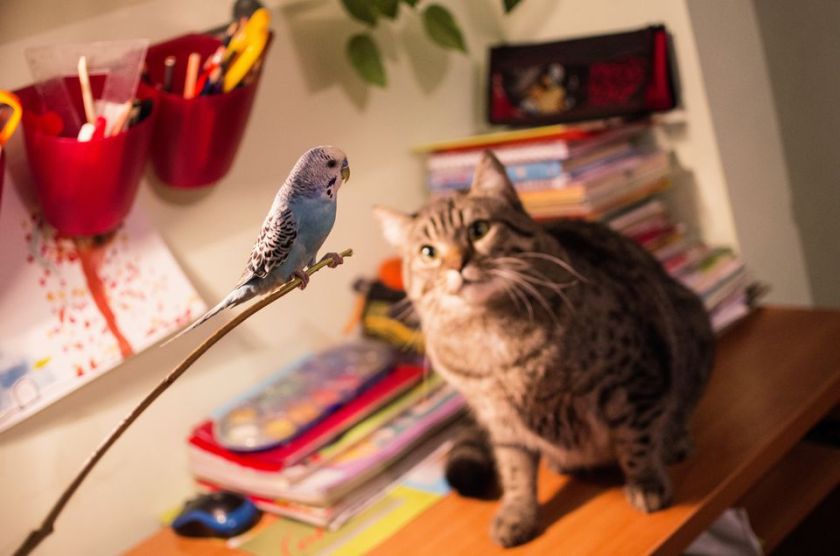
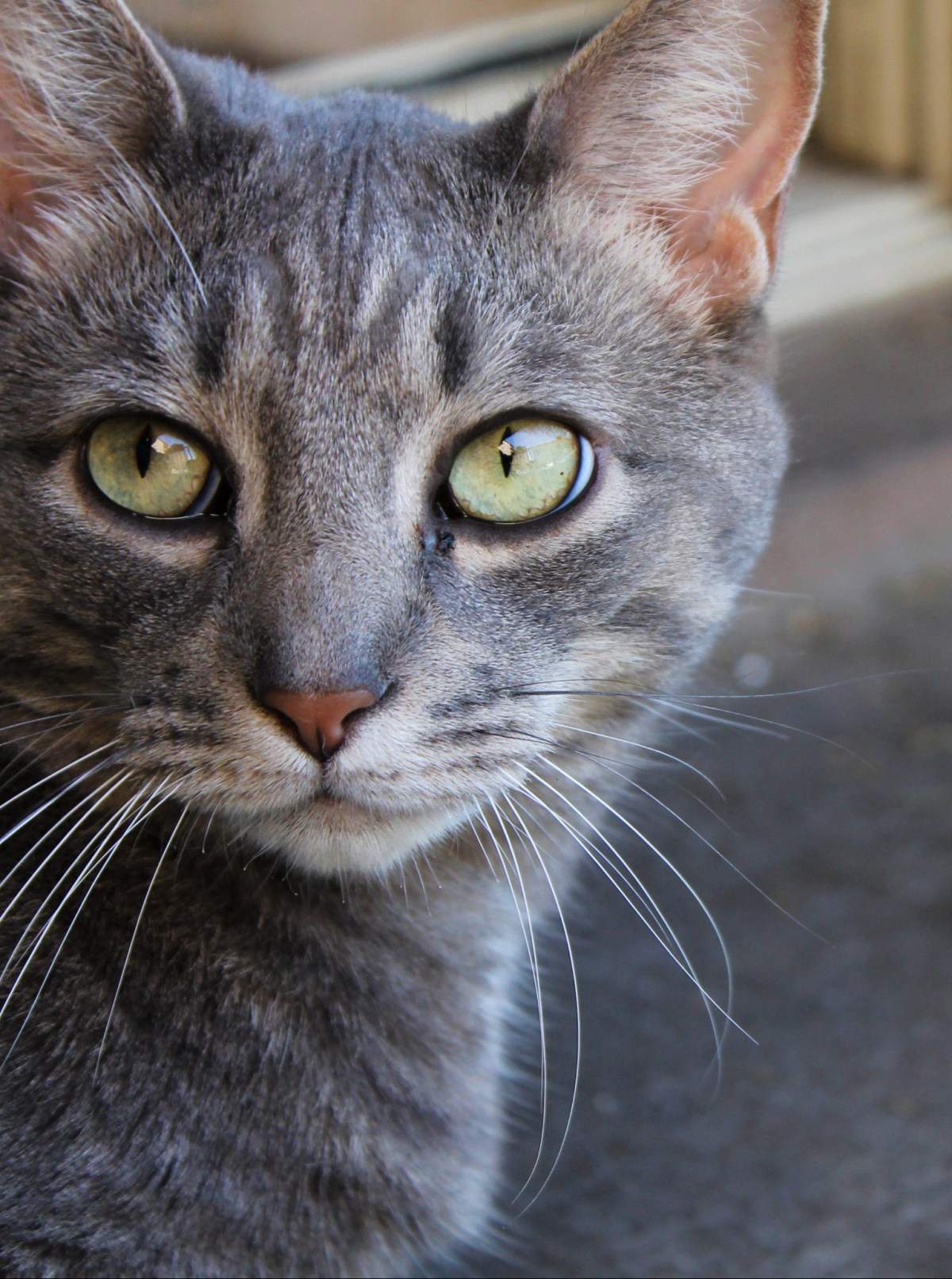
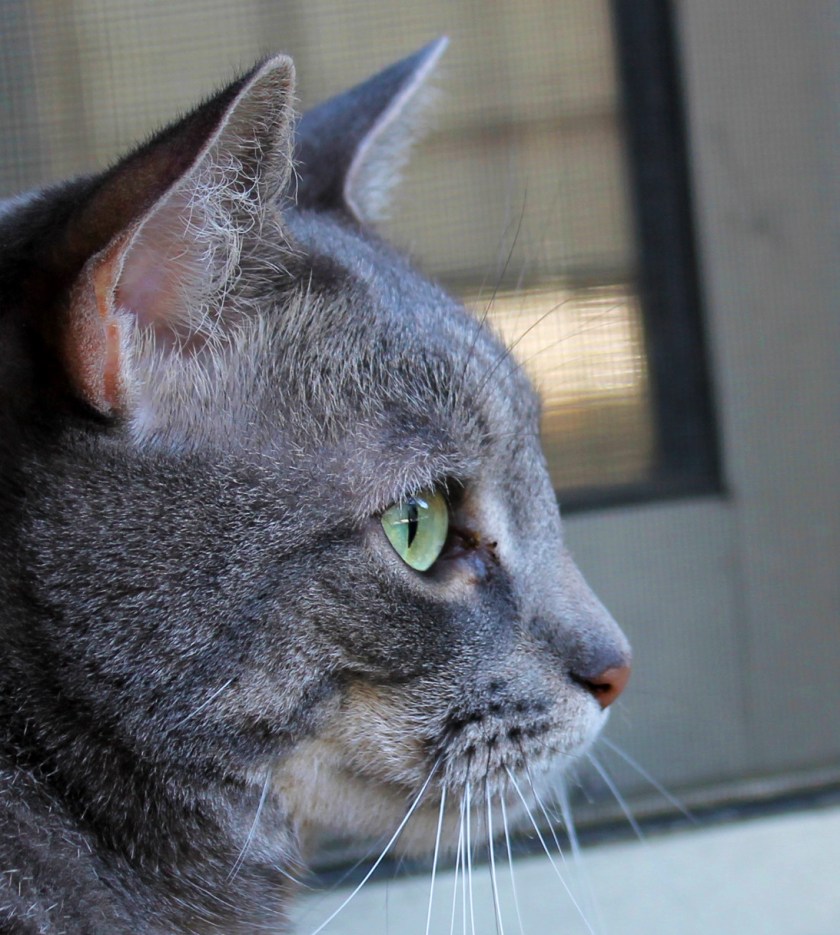
(First image credit Earth.com. Second image credit CatsAndBirds.ca. Third photo is Buddy, the Inept Hunter.)
OPEN THE DOOR AND LET ME INSIDE, GOOD SIR. NOW I WANT TO GO BACK OUT.
Hey! Hey, I’m talking to you, human!
Yes, you!
Open the door right meow!
Didn’t we have this discussion like 26,413 times? We don’t close doors in this house!
Ah! Thank you! Now that’s better, isn’t it? The door is open and everything is just fine!
Hold on, hold on. Let’s not be too hasty. I’m not sure I want to actually go in there. Well, give me a minute! I’m deciding. Lots to think about here.
Okay, I’ve thought about it and I don’t want to go in.
No! Don’t close the door! What are you doing?! Open it! Open the door!
OPEN IT OPEN IT OPEN IT! *scratch scratch scratch scratch*
MEEEEEOOOOWWW! Open the door! You see my little paws reaching desperately under the door?
Open the — yes, thank you! Yes, I’m sure. I’m coming in this time. What do you mean, indecisive?
Okay. So I’m in here now. Watcha doing? Is that the new issue of GQ? Not really much going on in here, is there?
I mean, you’re there, just sitting there, and I’m just supposed to sit here? Yes, I realize this is technically your litter box.
I want to go out. Open the door. No, I’m serious. Let me out. I’m not waiting 10 minutes for you to finish that article, wash your hands, maybe brush your teeth. Nope.
Thanks, amigo. Ah, it’s nice to be back out again.
Actually, not really much going on out here, is there? I mean, you’re in there. I’m out here.
Okay, I wanna come back in. Can you open the door again?
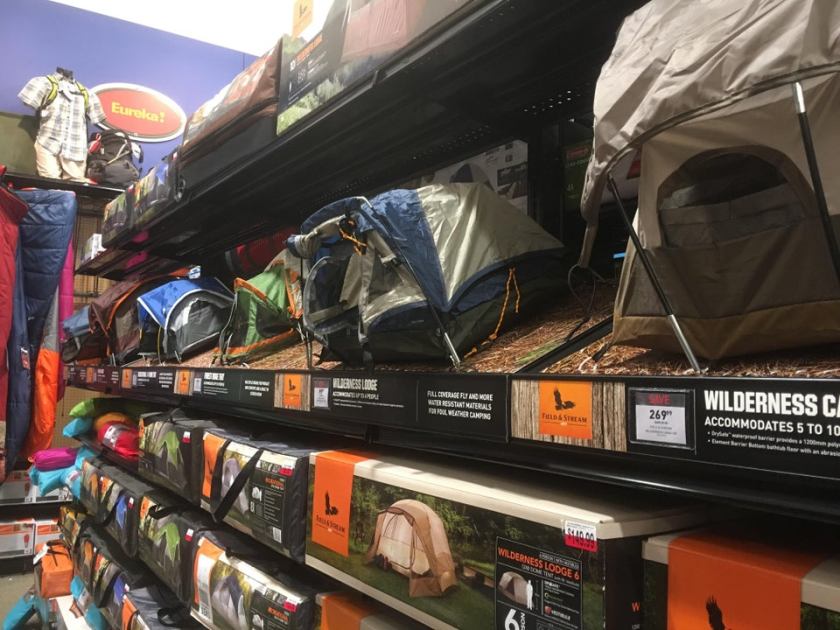
Go to any store that sells camping gear and you’ll see display tents — tiny versions of the real thing, so customers can see exactly what they’re buying.
A few people, mostly employees at various sports and camping supply stories, got their hands on display tents, brought them home for their cats to use, and a trend was born when they began posting photos of their camping kitties online.
Miniature tents at a sporting goods store. Credit: Arkenzi/Reddit
The hashtag #tinytents turns up Instagram photos of cats lazing in their own tents. They’re apparently even more appealing to them than boxes, according to some cat servants whose felines are taken with the miniature camping shelters.
Because the tents are just smaller versions of real models, they’ve got all the bells and whistles, including bug netting, awnings, tie-back doors and zip-up windows. (There’s also a company that markets them at cat owners for $59.99, but you can find them for 20 bucks on TinyTent.com.)
I think I’m going to have to get one of these for Bud!
Click the thumbnails below for larger versions of the photos:
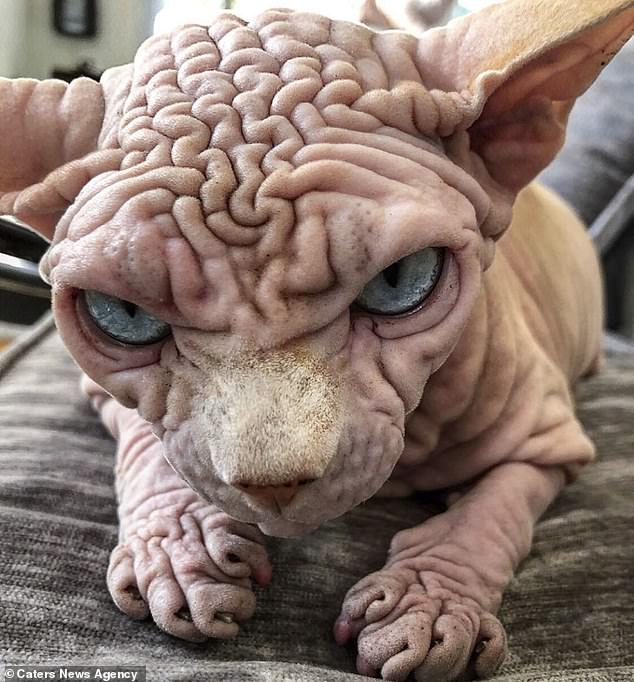
Also, we assume, known as Xherdan the Sun Eater, Xherdan the Bane of Hope, He Who Sups on Souls, and Xherdan the Earthcrusher.
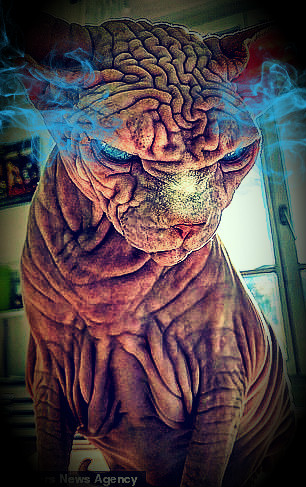
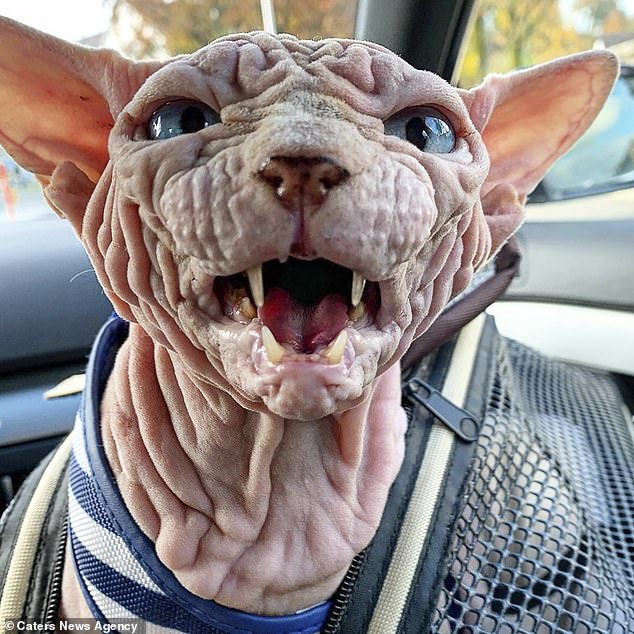
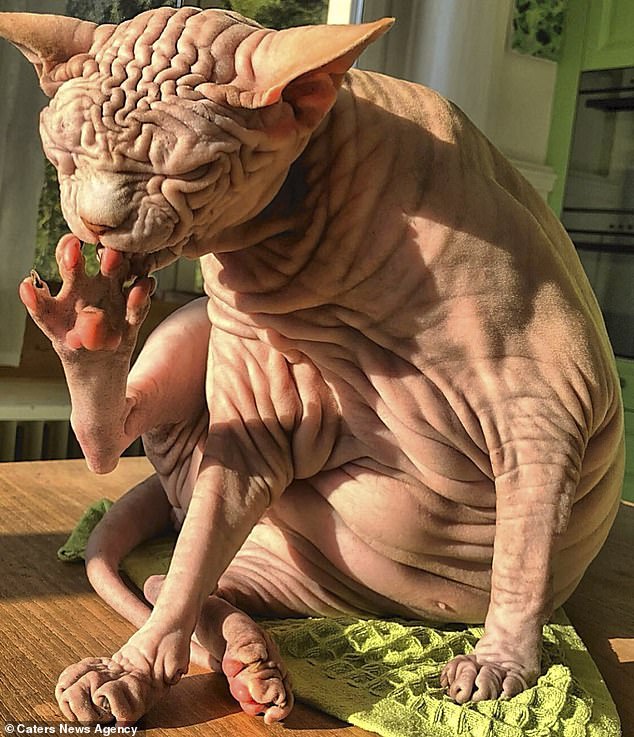
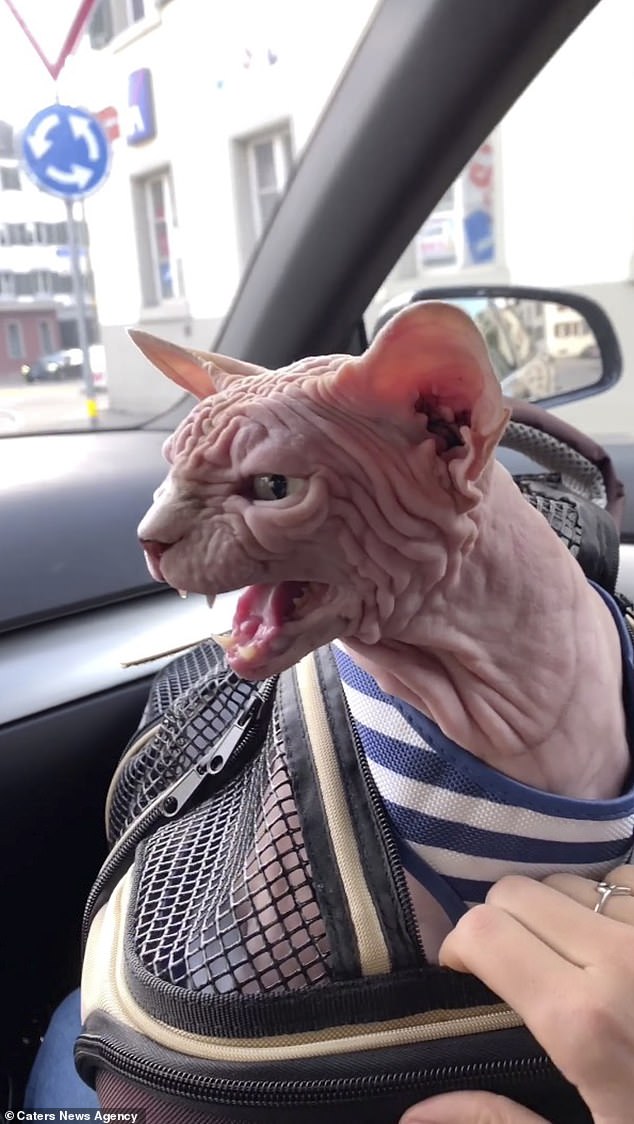
The incredibly wrinkly Sphinx cat is served by a Swiss woman named Sandra Filippi, who insists the feline, despite looking like the brain of a malevolent alien, is just a big softy who enjoys cuddling and napping when he’s not talking. We’ll give Filippi the benefit of the doubt and won’t allege those talks include nefarious plans for the subjugation of the human race, but only until we get solid evidence.
Where some of us see a Lovecraftian horror from the deepest Cthulian depths, Filippi sees an adorable kitty.
“When I first saw him, he immediately stole my heart,” Filippi told the Daily Mail. “His wrinkled pink skin, as fine as a peach, and his turquoise eyes, I was in love.”
Although she doesn’t explicitly say so, it appears her cat is named after footballer Xherdan Shaqiri, a Swiss midfielder who plays for Liverpool.
We’ve taken the liberty of making some very small adjustments (barely noticeable, really) to one of Xherdan’s photos in Pixlr, just to show our readers what an excellent Evil Overlord this cat would make:
But the truth is, he doesn’t need glowing smoke coming from his eyes or dramatic lighting. He looks terrifying enough as it is:
Xherdan orders his minions to feast on the corpses of unbelievers.Xherdan grooms himself after easily reducing another human city to rubble and salting the earth it stood on.Xherdan threatens to wipe motorists from existence in a column of balefire if they don’t make way for his vehicle.







 Pain In The Bud